
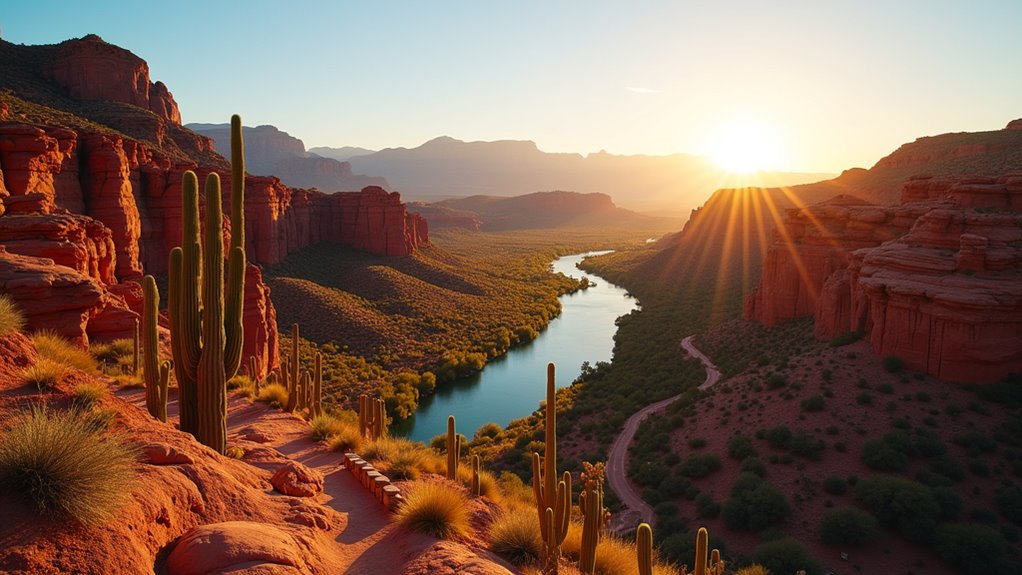
You can explore Arizona’s iconic Grand Canyon South Rim, photograph stunning light beams in Upper Antelope Canyon, and hike Sedona’s red rock formations without spending a fortune. Walk through towering saguaro forests near Tucson, marvel at Horseshoe Bend‘s dramatic curves, and step into Tombstone’s Wild West history. Don’t miss Canyon de Chelly’s sacred Navajo lands or the challenging Wave trail in Vermilion Cliffs. These desert adventures offer unforgettable experiences that’ll transform your perspective on the Southwest’s natural wonders.
- Stand at the Edge of the Grand Canyon’s South Rim
- Photograph Light Beams in Upper Antelope Canyon
- Hike Among Sedona’s Red Rock Formations
- Walk Through Saguaro Cactus Forests Near Tucson
- Marvel at the Colorado River’s Horseshoe Bend
- Explore Ancient Cliff Dwellings at Montezuma Castle
- Hunt for Colorful Petrified Wood in the Painted Desert
- Drive Through Monument Valley’s Iconic Buttes
- Discover Desert Plants at Phoenix’s Desert Botanical Garden
- Step Back in Time in Tombstone’s Wild West Streets
- Navigate Canyon De Chelly’s Sacred Navajo Lands
- Search for The Wave in Vermilion Cliffs National Monument
- The Sum Up
Stand at the Edge of the Grand Canyon’s South Rim
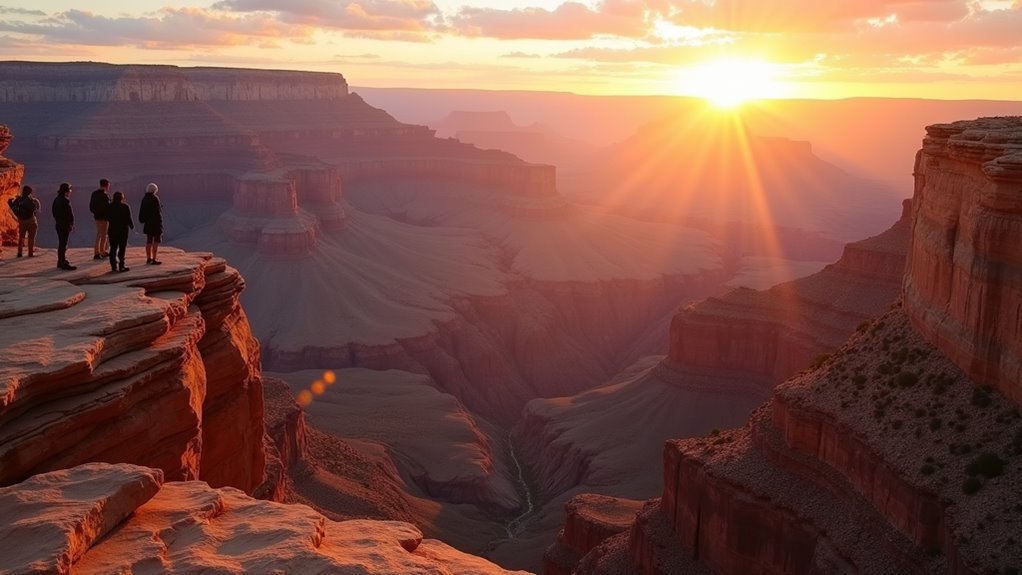
Standing at the South Rim’s edge delivers one of America’s most iconic natural experiences, and you don’t need to break the bank to witness it. You’ll join roughly 90% of Grand Canyon’s 4.92 million annual visitors who choose this accessible rim over alternatives.
Start at Mather Point near the visitor center for expansive panoramas, then explore less crowded spots like Grandview Point or Lipan Point for colorful rock layers without the masses.
Visit during winter months when daily crowds drop 77% compared to peak July numbers. The South Rim stays open year-round, unlike the seasonal North Rim.
Free shuttle buses connect major viewpoints, saving parking headaches. Your visit contributes to the regional economy that generates approximately $1 billion annually from Grand Canyon tourism.
At 7,000 feet elevation, dress in layers and stay behind railings—those drop-offs are serious business.
Photograph Light Beams in Upper Antelope Canyon
Capturing those ethereal light beams in Upper Antelope Canyon requires precise timing and a willingness to pay premium prices for midday photography tours.
You’ll need to visit during summer months (May-August) on completely clear days, booking tours that place you in the canyon between 10 a.m. and 1 p.m. when beams are strongest.
Since this is Navajo land, you can’t enter independently—guided tours are mandatory. Photography tours cost more than regular sightseeing tours but target prime beam conditions.
Bring a wide-angle lens (16-35mm), shoot at f/8-f/11 with ISO 400-800, and bracket your exposures for HDR blending. Protect your camera with a plastic sleeve or large bag sealed with tape, as the dusty environment can damage sensitive equipment.
Guides will throw sand into light shafts to make beams more visible.
Book well ahead—summer midday slots sell out quickly.
Hike Among Sedona’s Red Rock Formations
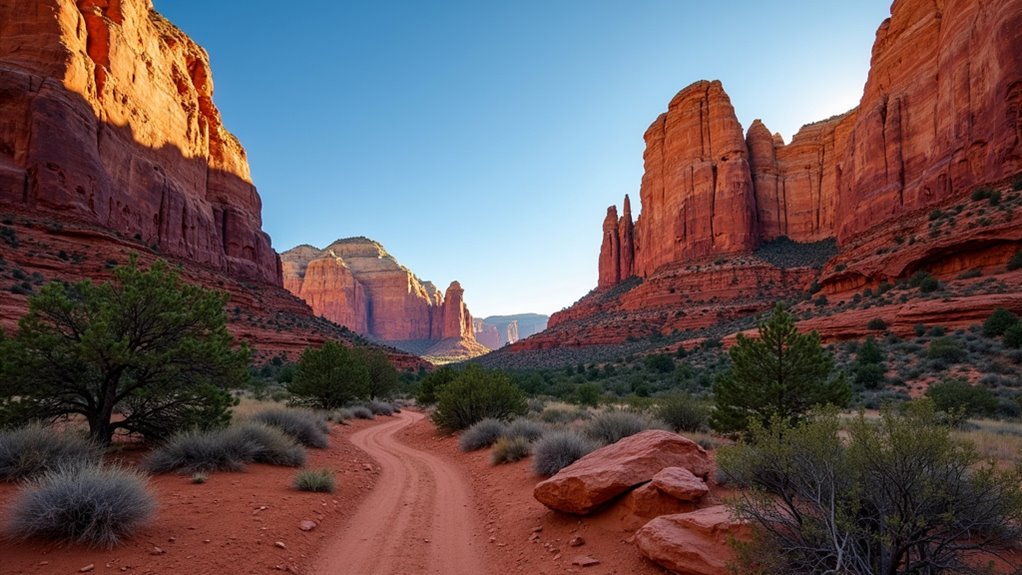
When you’re craving dramatic desert scenery without the crowds of more famous parks, Sedona’s red rock formations deliver stunning hiking experiences at a fraction of the cost. You’ll need a Red Rock Pass for most trailheads, but it’s cheaper than national park fees.
Start with Bell Rock Loop for easy panoramic views, or tackle Cathedral Rock’s steep scramble for incredible vistas. Courthouse Butte Loop offers four miles of continuous red rock scenery, while Boynton Canyon takes you deep between towering walls.
The iron oxide coating gives these formations their signature red color. Popular trails fill up fast, so arrive early for parking. Red Rock State Park provides gentler options with interpretive trails. At Sedona’s 4,350 feet elevation, proper hydration becomes essential for safe hiking. Pack water and expect loose sand and rocky scrambling sections.
Walk Through Saguaro Cactus Forests Near Tucson
Just fifteen minutes from downtown Tucson, you’ll find yourself surrounded by towering saguaro cacti that dwarf everything else in the Sonoran Desert. Saguaro National Park‘s east and west districts protect nearly two million of these giants, some reaching 60 feet tall and living over 150 years.
The 8-mile Cactus Forest Drive offers easy access with pullouts and short trails perfect for sunset walks. Try the Freeman Homestead Trail or Desert Discovery Trail for gentle walks through dense cactus forests. You’ll spot fishhook barrel cacti, cholla, and prickly pear alongside the iconic saguaros.
Visit during fall through early spring when temperatures stay comfortable. Summer heat exceeds 120°F, making walks dangerous.
The park costs $15 per vehicle for seven days – an affordable way to experience Arizona’s signature landscape. These majestic cacti hold deep cultural significance for the Oodham people, who have traditionally used them for food, tools, and ceremonial purposes.
Marvel at the Colorado River’s Horseshoe Bend
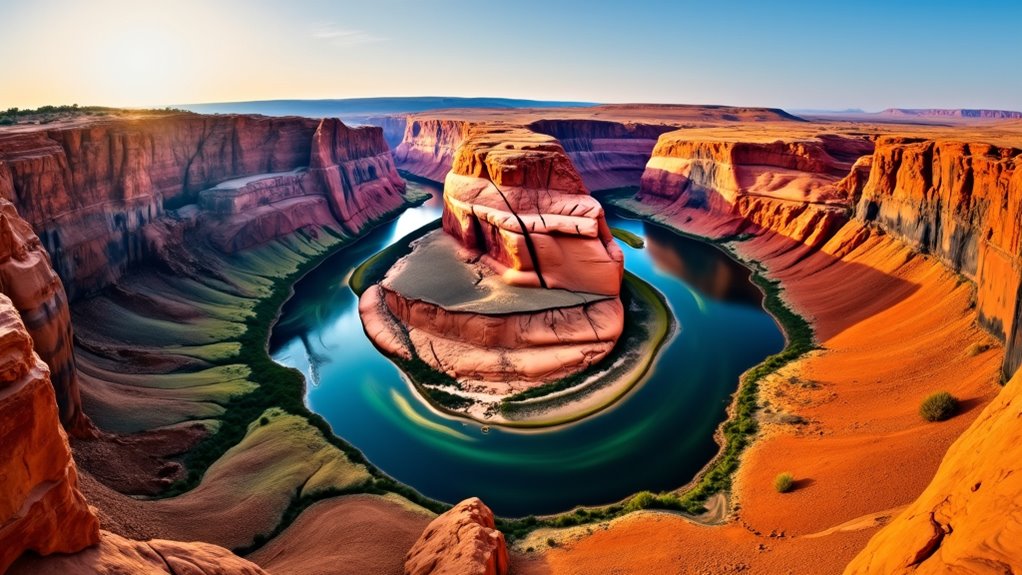
One thousand feet below the rim, the Colorado River carves a perfect horseshoe through red Navajo Sandstone, creating Arizona’s most photographed natural wonder. You’ll reach this spectacular overlook via a manageable 1.5-mile round-trip hike from Page, Arizona. The $10 parking fee gets you access to multiple vantage points along the cliff edge.
Visit mid-morning when lighting’s prime for photos – late afternoon casts shadows across the canyon. Bring plenty of water since there’s no shade on the desert trail, and summer temperatures can be brutal. The trail features two shade structures along the way to provide relief from the sun.
The rim offers dramatic views with a 270-degree river bend carved over 5-6 million years.
Expect crowds during peak times, especially at sunset. Exercise caution near the 1,000-foot drop-offs where safety railings are limited.
Explore Ancient Cliff Dwellings at Montezuma Castle
Five stories above Beaver Creek, Montezuma Castle showcases some of Arizona’s most impressive ancient architecture. You’ll marvel at this 20-room cliff dwelling built by the Sinagua people between 1125-1173 AD, perched 80-100 feet above the valley floor on sheer limestone cliffs.
The stone-and-mortar construction using local limestone and Arizona sycamore timber demonstrates remarkable engineering skills. These ancient builders chose this elevated location to protect their homes from seasonal flooding while accessing the creek’s water and fertile soils below.
Walk the paved loop trail for excellent viewing angles of this five-story marvel. Despite its name, the site has no actual connection to the famous Aztec emperor Montezuma, as it predates him by over 40 years.
At just $15 per vehicle for a seven-day pass, it’s an affordable way to experience nearly 900 years of history. The site’s compact size makes it perfect for a half-day adventure.
Hunt for Colorful Petrified Wood in the Painted Desert
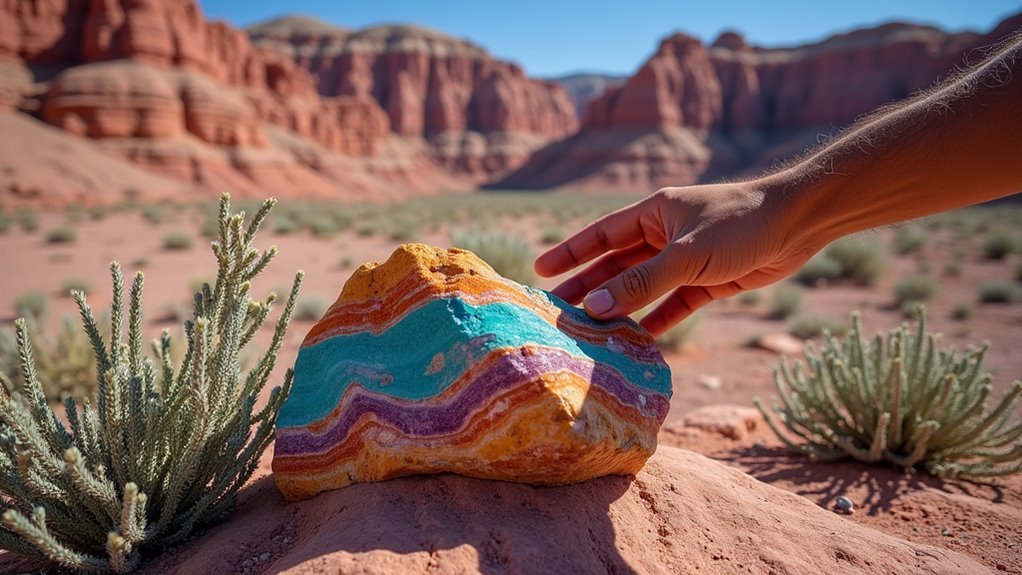
Step into a world where ancient trees turned to rainbow-colored stone millions of years ago. Petrified Forest National Park offers incredible “hunting” opportunities – with your eyes only, since removing specimens carries hefty fines starting at $325.
Head to the southern section for the densest concentrations of colorful logs. The Giant Logs Trail showcases massive specimens like the 44-ton “Old Faithful,” while Crystal Forest‘s 0.75-mile loop reveals glittering quartz interiors.
Iron minerals create vibrant reds and yellows, while manganese produces stunning blues and purples. The park’s 28-mile road connects viewpoints and trailheads throughout the expansive landscape.
The park straddles Interstate 40 between Holbrook and Winslow, making access easy. If you want souvenirs, visit rock shops in nearby Holbrook instead. Remember, this 200-million-year-old treasure deserves protection for future generations.
Drive Through Monument Valley’s Iconic Buttes
From ancient petrified forests, shift your adventure northward to experience the towering sandstone monuments that define the American Southwest. Monument Valley’s 17-mile dirt loop road takes you through iconic formations like The Mittens, Merrick Butte, and Three Sisters for about $8 per person.
You’ll need a high-clearance or 4WD vehicle for the bumpy, ungraded terrain—standard cars are allowed but risky. The self-guided drive typically takes 2-3 hours, though budget 3-5 hours for photo stops at John Ford’s Point and other scenic overlooks.
This route through Navajo Tribal Park lets you explore independently, while restricted backcountry areas require paid Navajo guides. Known to the Navajo as Ts Biiʼ Ndzisgaii, this sacred valley of the rocks holds deep cultural significance beyond its cinematic fame. Check seasonal hours and weather conditions before visiting, as wet conditions can make sections impassable.
Discover Desert Plants at Phoenix’s Desert Botanical Garden
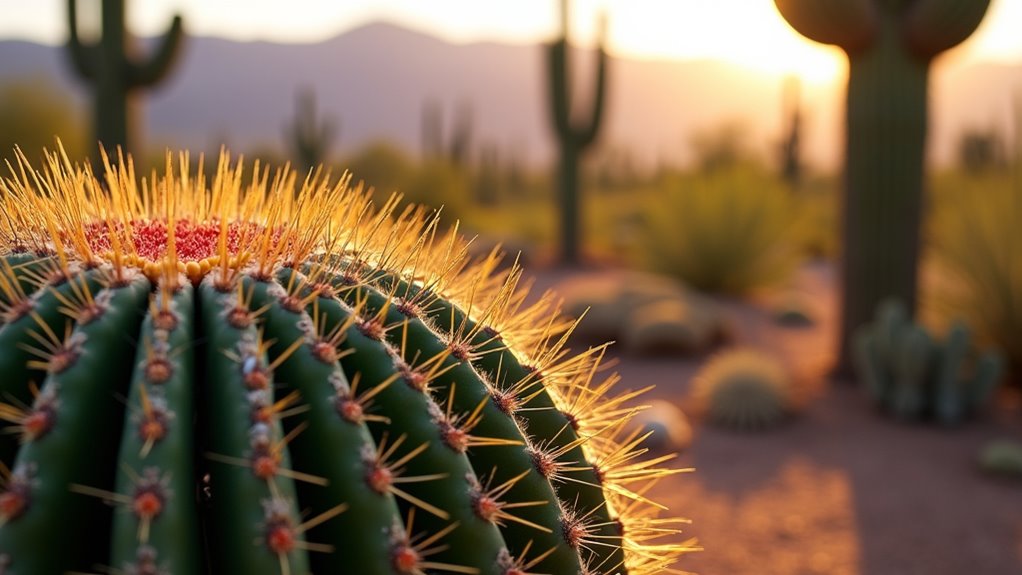
While the red rocks of Monument Valley showcase desert geology, Phoenix’s Desert Botanical Garden reveals the incredible plant life that thrives in Arizona’s arid landscape. This 140-acre garden houses over 50,000 plants representing 4,000 species from deserts worldwide, including one of the largest cactus collections anywhere.
You’ll explore five themed trails showcasing towering saguaros, colorful prickly pears, and rare agaves. The garden’s conservation work is impressive—they’re tracking over 25,000 saguaros across Phoenix and growing heat-resistant seedlings for future planting. Recent research shows that 72% of urban saguaros are located in residential areas, making homeowners crucial partners in conservation efforts.
Visit during cooler months for comfortable hiking, or attend evening events when desert plants create stunning silhouettes. At $24.95 for adults, it’s an affordable way to understand Arizona’s remarkable desert ecosystem.
Step Back in Time in Tombstone’s Wild West Streets
Arizona’s desert landscape shaped more than just unique plant life—it also forged some of the wildest frontier towns in American history. Tombstone’s Allen Street offers you an authentic 1880s streetscape with original brick buildings, wooden boardwalks, and covered awnings. You’ll walk the same paths where over 100 saloons once served rowdy miners who struck it rich with $40-$85 million in silver.
Don’t miss the daily gunfight reenactments at the O.K. Corral, where you can witness the famous 30-second showdown between the Earps and Clantons. Visit Boot Hill Cemetery to see where 250-440 outlaws and townspeople rest. The town’s legendary entertainment venue, the Bird Cage Theatre, operated as a saloon, gambling hall, and cultural center that witnessed 26 deaths during its eight years of operation. This National Historic Landmark truly earned its nickname “The Town Too Tough to Die.”
Navigate Canyon De Chelly’s Sacred Navajo Lands
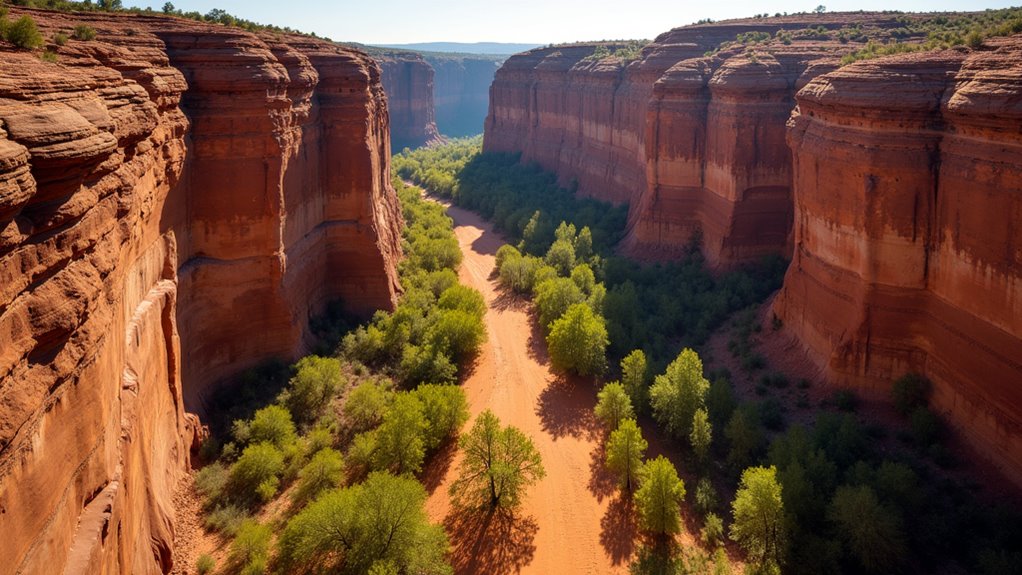
Unlike most national monuments, Canyon de Chelly remains a living community where Navajo families still farm ancient fields and tend sheep in the same red-walled canyons their ancestors called home for over 700 years.
You can’t just wander into these sacred lands—access requires authorized Navajo guides, except for the White House Trail, which you can hike solo.
Start with the free rim drives: North Rim offers morning light at Antelope House overlooks, while South Rim provides afternoon views of towering Spider Rock’s 800-foot spires.
For deeper exploration, book affordable “shake and bake” flatbed truck tours with local Navajo operators—they’ll take you to hidden ruins and petroglyphs you can’t see from above while sharing stories passed down through generations. These guided canyon tours typically cost around $75-$90 per person depending on group size and tour length.
Search for The Wave in Vermilion Cliffs National Monument
One of Arizona’s most coveted geological treasures, The Wave, draws photographers and hikers from around the world to its swirling sandstone formations—but securing access requires winning what’s fundamentally a lottery. Only 64 visitors daily can enter Coyote Buttes North, where this 180-million-year-old Navajo Sandstone masterpiece sits.
You’ll need to win permits through advance online drawings or same-day mobile app lotteries while physically near the area.
The 6-mile round-trip hike from Wire Pass Trailhead isn’t technically difficult, but you’ll navigate unmarked terrain using GPS and photo guides across deep sand and slickrock. Along the route, you’ll discover natural formations like High Heel Arch and Moby Dick Arch that serve as landmarks on your journey to The Wave. Bring 3-4 liters of water per person—there’s virtually no shade.
High-clearance 4WD vehicles work best for the rough House Rock Valley Road approach.
The Sum Up
You’ve got incredible adventures waiting across Arizona’s diverse landscapes. Don’t try cramming everything into one trip—you’ll burn out and miss the magic. Pick 3-4 experiences that excite you most, then plan your route to minimize driving. Book permits early for places like The Wave, and visit during shoulder seasons for better weather and smaller crowds. Arizona’s natural wonders aren’t going anywhere, so take your time and soak it all in.