
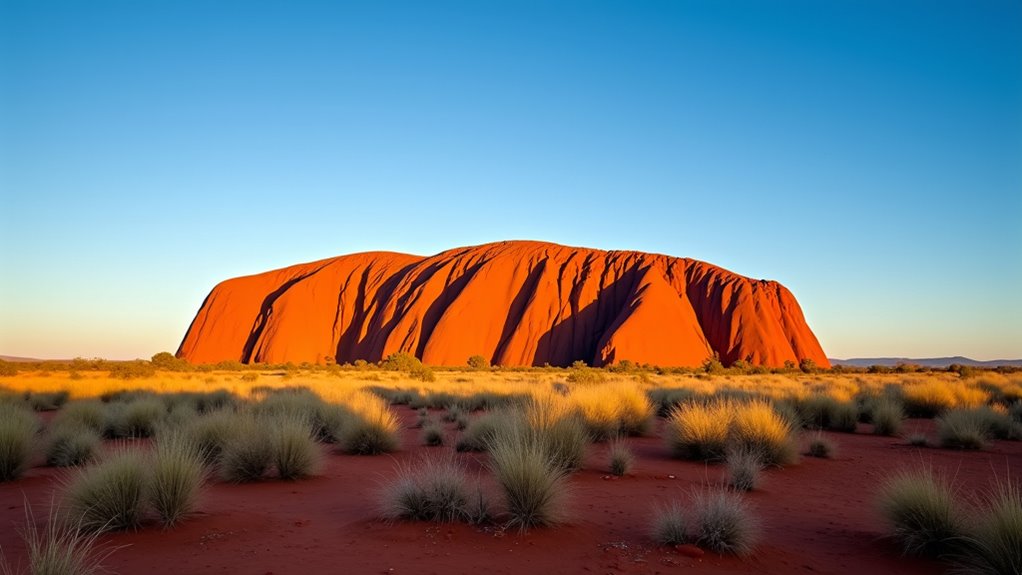
You’ll stand before one of the world’s most recognizable monoliths, but Uluru offers far more than its iconic silhouette suggests. This sacred landscape demands respect while rewarding visitors with extraordinary experiences that blend ancient Aboriginal culture, stunning natural phenomena, and unforgettable outdoor adventures. Whether you’re drawn to sunrise spectacles, challenging hikes, or cultural enlightenment, your approach to this UNESCO World Heritage site will determine how deeply it impacts you. Here’s how to make your first encounter truly meaningful.
- Walk the Full Uluru Base Circuit at Your Own Pace
- Experience Uluru’s Color Show at Sunrise or Sunset
- Join the Free Ranger-Guided Mala Walk to Kantju Gorge
- Immerse Yourself in Anangu Culture at the Cultural Centre
- Explore Kata Tjuta’s Valley of the Winds Trail
- Take to the Skies for Aerial Views of the Red Centre
- Cycle Around Uluru’s Base for a Different Perspective
- Discover Ancient Rock Art Sites Along the Walking Trails
- Stargaze in Some of Australia’s Darkest Desert Skies
- The Sum Up
Walk the Full Uluru Base Circuit at Your Own Pace
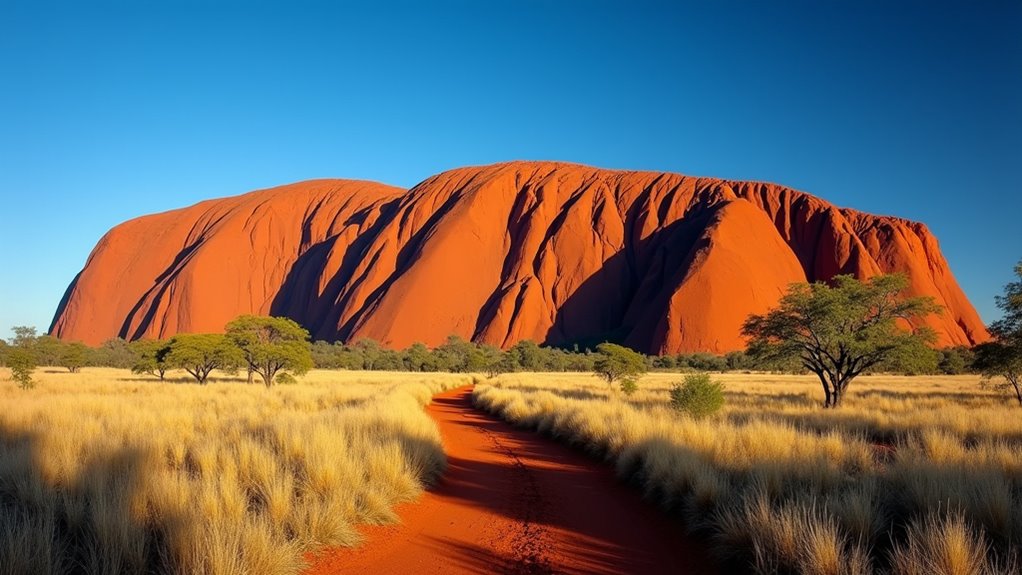
When you’re ready to truly experience Uluru’s majesty, the 10 to 11-kilometer Base Walk offers an unmatched opportunity to connect with this sacred monolith at ground level. Despite its length, this mostly flat trail suits various fitness levels and takes 2.5 to 4 hours to complete.
Start at Mala carpark for the best clockwise route, passing significant cultural sites like ancient rock art, Kantju Gorge, and Mutitjulu Waterhole. You’ll traverse diverse landscapes from acacia woodlands to waterholes while learning ancestral stories through interpretive signage. Up close, you’ll witness Uluru’s remarkable color shifts and intricate textures that can’t be appreciated from distant viewpoints.
Begin early to avoid desert heat—finish by 11:00 am during warmer months. Carry plenty of water and wear sun protection. The trail accommodates prams and wheelchairs, though some sections are unsealed.
Don’t feel pressured to complete the entire circuit; partial walks still provide meaningful experiences.
Experience Uluru’s Color Show at Sunrise or Sunset
As sunlight strikes Uluru‘s iron-rich sandstone surface, the monolith transforms into a natural canvas displaying one of Australia’s most spectacular color shows. You’ll witness dramatic shifts from orange to deep blood red, with occasional pink and purple hues during dawn and dusk changes.
The park offers five dedicated viewing areas, including Talinguru Nyakunytjaku for sunrise and the main sunset zone near Uluru’s car park.
Sunrise experiences (5:45-7:15am) provide quieter, more serene conditions, while sunset viewing (6:00-7:45pm) attracts larger crowds.
Arrive 60-90 minutes early to secure ideal positions, especially for sunset. Access requires a 3-day pass costing $38 per adult, with children under 18 entering free.
Color intensity depends on atmospheric conditions like cloud cover and moisture.
The golden hour immediately before and after sunrise or sunset produces the most vivid effects, with colors shifting rapidly within minutes.
Join the Free Ranger-Guided Mala Walk to Kantju Gorge
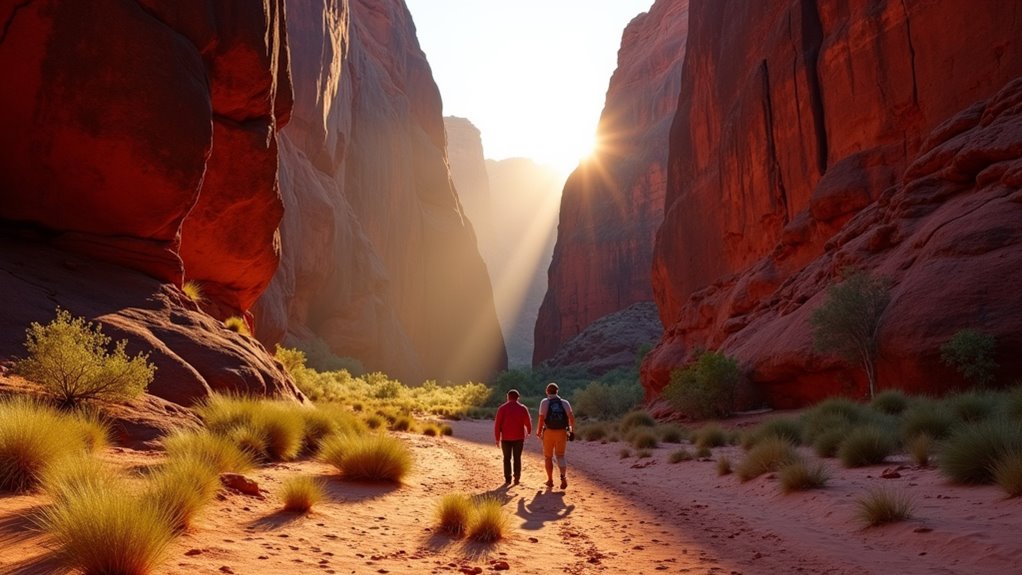
Beyond witnessing Uluru’s stunning color transformations, you’ll gain a deeper appreciation for this sacred landscape through the free ranger-guided Mala Walk to Kantju Gorge.
This wheelchair-accessible 2km return trail takes 1.5 hours and departs daily from Mala car park at 8am (October-April) or 10am (May-September).
Rangers share Anangu culture and Mala Tjukurpa creation stories while guiding you past ancient rock art sites including Kitchen Cave and Men’s Cave.
The walk culminates at Kantju Gorge’s dramatic red cliffs and sacred Mutitjulu Waterhole, where waterfalls cascade 90 meters after rainfall. The towering cliffs create a natural amphitheater that provides breathtaking views of the surrounding landscape.
While self-guided options exist, ranger guidance provides invaluable cultural context you can’t get elsewhere.
Bring water and sun protection, and respect photography restrictions at culturally sensitive sites.
Immerse Yourself in Anangu Culture at the Cultural Centre
Before exploring Uluru’s physical trails, you’ll want to understand the spiritual and cultural foundation that makes this landscape sacred at the Uluru-Kata Tjuta Cultural Centre. Spend at least two hours exploring exhibits that showcase Tjukurpa—the foundational spiritual law guiding Anangu life, creation stories, and cultural practices.
Visit the two main galleries: Maruku Arts and Walkatjara Art, both Aboriginal-owned and operated. You’ll find traditional paintings, wood carvings, and contemporary artworks while observing live artist demonstrations.
The centre offers daily presentations, hands-on workshops, and artists-in-residence programs where you can watch Anangu craftsmen at work. Walk through the Tjukurpa Tunnel, an educational feature that uses visual art and displays to teach about the spiritual laws and creation narratives of the land.
The building itself reflects sustainable practices using locally sourced materials. Don’t miss the free presentations by Anangu people and park rangers that deepen your understanding of this sacred landscape’s cultural significance.
Explore Kata Tjuta’s Valley of the Winds Trail
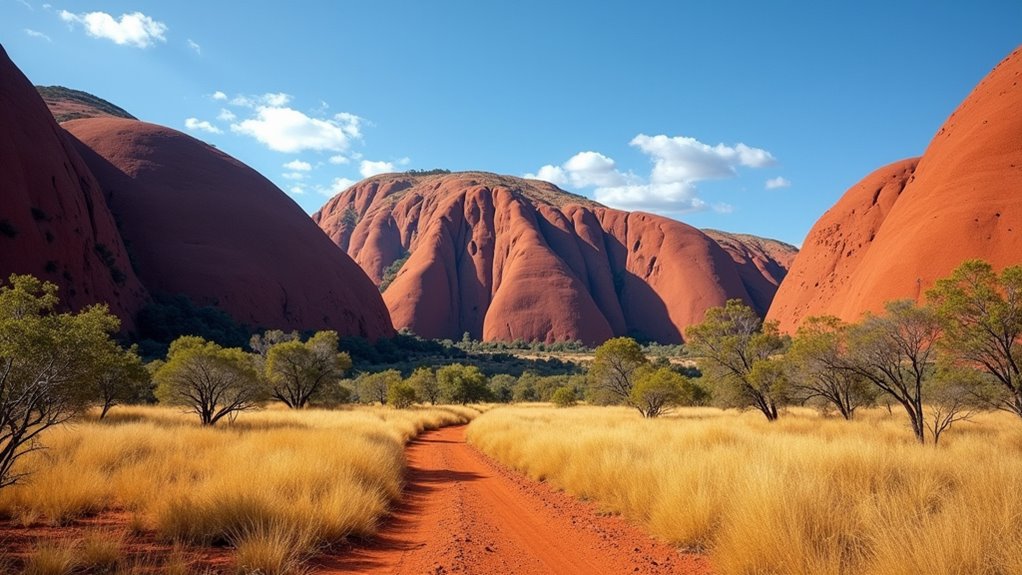
When you’re ready to tackle Kata Tjuta’s most challenging adventure, the Valley of the Winds Trail offers a spectacular 7.4-kilometer circuit that weaves between ancient rock domes through narrow gorges and atop dramatic formations.
This moderate-to-difficult hike takes 3-4 hours and demands good fitness plus sturdy footwear for steep, rocky terrain.
You’ll encounter two major lookouts: Karu Lookout (2.2km return) provides panoramic desert views, while Karingana Lookout (5.4km return) delivers dramatic valley vistas.
If you’re short on time or energy, either makes an excellent turnaround point.
Start early—the trail closes beyond Karu Lookout when temperatures reach 36°C by 11am. Pack at least 1.5L of water per person to stay hydrated throughout the challenging trek.
Remember that photography within the valley is culturally restricted; you can only photograph from designated lookouts out of respect for Anangu traditions.
Take to the Skies for Aerial Views of the Red Centre
While ground-level exploration reveals Uluru’s imposing presence, aerial tours reveal the Red Centre’s true scale and breathtaking context across the vast Australian Outback. You’ll choose between helicopter and fixed-wing flights ranging from 25 to 60 minutes, starting around AUD 160 per person from Ayers Rock Resort.
These tours showcase Uluru’s complete 348-meter monolith alongside Kata Tjuta’s 36 ancient domes, plus striking Lake Amadeus with its red and white salt formations. Informative pilot commentary enhances your understanding of the landmarks and their cultural significance throughout the flight.
Since climbing Uluru’s been prohibited since 2019 for cultural respect, aerial viewing offers the only way to appreciate restricted perspectives while honoring Anangu traditions.
Book sunrise or sunset flights for dramatic color changes. Reserve in advance during peak seasons, and consider combining aerial tours with ground experiences for all-encompassing Red Centre exploration.
Cycle Around Uluru’s Base for a Different Perspective

After soaking in Uluru’s majesty from above, you’ll discover an entirely different connection to this sacred monolith by exploring it at ground level on two wheels. The 15-kilometer cycling path around Uluru’s base offers a flat, vehicle-free route that takes 2-3 hours at a leisurely pace.
You can rent bikes from Outback Cycling at the Cultural Centre, with 3-hour rental periods including helmets and family-friendly options. Cycle early morning to avoid extreme desert temperatures and carry water, sunscreen, and sun protection.
The route showcases stunning highlights like Mutitjulu Waterhole and culturally significant Mala carpark, providing close-up views of Uluru’s unique rock formations and changing colors. Along the way, you’ll have opportunities to spot caves and waterholes that are often missed on other types of tours.
This environmentally friendly experience combines physical activity with cultural education, offering intimate perspectives you can’t achieve from vehicles or distant viewpoints.
Discover Ancient Rock Art Sites Along the Walking Trails
As you venture beyond Uluru’s perimeter on foot, you’ll encounter some of Australia’s most significant Aboriginal rock art sites, where ancient paintings tell creation stories that have guided the Aṉangu people for tens of thousands of years.
The Mala Walk offers free daily ranger-guided tours from Mala Carpark, showcasing sacred rock art within a 2km return journey. You’ll discover ancestral narratives through paintings that depict daily life and spiritual teachings.
At Mutitjulu Waterhole via the Kuniya Walk, rock art panels illustrate the ancestral serpent story around this permanent desert oasis. The 1km trail suits all ages and provides cultural context to the wanampi creation lore. The walk follows a well marked path that remains flat throughout, making it accessible for visitors of varying fitness levels.
For extensive exploration, tackle the 10.6km Base Walk, which circles Uluru and passes multiple rock art sites depicting the lungkata creation story and other ancestral beings.
Stargaze in Some of Australia’s Darkest Desert Skies
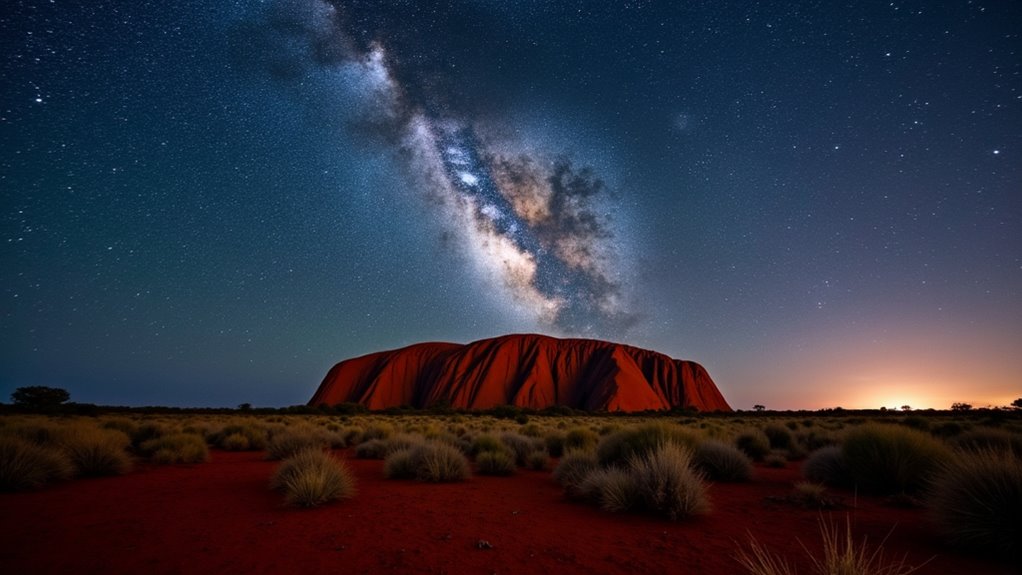
When darkness falls over the Red Centre, you’ll witness one of Australia’s most spectacular natural displays across Uluru’s pristine night sky. The Australian Outback’s minimal light pollution creates exceptional viewing conditions where you’ll see the Milky Way in vivid colors, the Magellanic Clouds, and Southern Cross constellation with remarkable clarity.
Book Uluru Astro Tours, which holds exclusive nighttime access to the national park. These 2.5-3 hour guided experiences blend scientific astronomy with Indigenous star lore, providing telescopes for close-up planetary viewing and astrophotography opportunities. Tours include transport from Yulara and warm blankets for cool desert nights. Many tours also feature local dishes served under the stars, creating an immersive dining experience that complements the celestial viewing.
For independent stargazing, visit Ewing or Imalung Lookouts with personal vehicles, as shuttle access is limited after dark. Plan moonless nights for superior star visibility and book tours well in advance.
The Sum Up
You’ll discover Uluru isn’t just a photo opportunity—it’s a transformative experience that connects you with ancient culture and breathtaking landscapes. Don’t rush through these activities; take time to absorb each moment, respect Anangu traditions, and appreciate the desert’s raw beauty. Pack sun protection, comfortable walking shoes, and plenty of water. Most importantly, approach this sacred site with reverence and openness to create memories that’ll last a lifetime.