
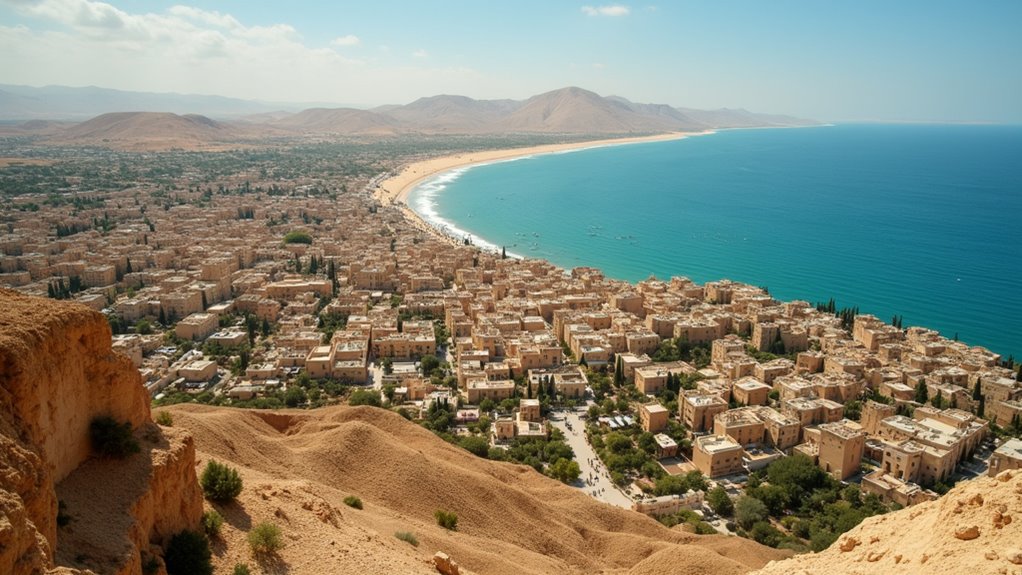
You’ll find Israel packs an extraordinary range of experiences into a surprisingly small country. Whether you’re drawn to ancient religious sites, floating in otherworldly waters, or exploring vibrant modern cities, this destination offers something that’ll resonate with your travel style. From sunrise climbs over desert fortresses to bustling market haggling sessions, each experience here carries weight—both historical and personal. The challenge isn’t finding things to do; it’s deciding which unforgettable moments deserve your limited time.
- Walk the Western Wall and Explore Jerusalem’s Old City
- Float in the Dead Sea’s Mineral-Rich Waters
- Stand Where Jesus Was Born at Bethlehem’s Church of the Nativity
- Climb Masada at Sunrise for Desert Views and Ancient History
- Wander Tel Aviv’s Bauhaus Architecture in the White City
- Experience Nightlife and Beach Culture in Tel Aviv
- Visit the Church of the Holy Sepulchre in Jerusalem
- Hike Ramon Crater in the Negev Desert
- Explore the Baha’i Gardens in Haifa
- Walk Through Nazareth’s Religious Sites
- Discover Jaffa’s Ancient Port and Artist Quarters
- Remember at Yad Vashem Holocaust Memorial
- Shop and Eat at Jerusalem’s Mahane Yehuda Market
- Take a Boat Ride on the Sea of Galilee
- The Sum Up
Walk the Western Wall and Explore Jerusalem’s Old City
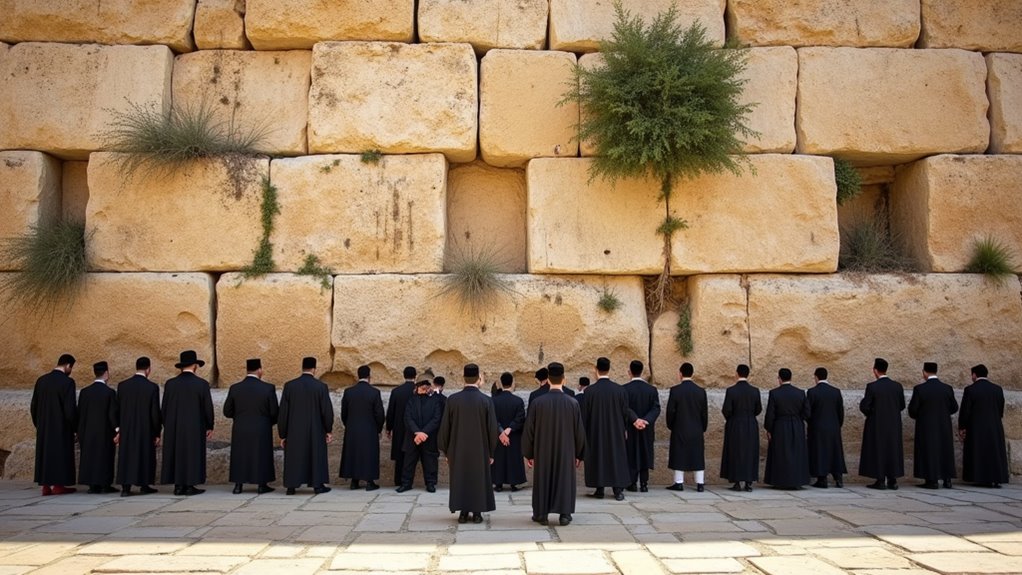
While Jerusalem pulses with thousands of years of history, nowhere will you feel that weight more powerfully than at the Western Wall, where Jews have prayed for nearly two millennia. You’re standing before the last remaining retaining wall of the Temple Mount, where Solomon’s First Temple and Herod’s Second Temple once stood.
Join the tradition by writing a prayer and placing it between the ancient stones. The Wall’s divided into separate men’s and women’s sections, so dress modestly and respect the guidelines. Over one million prayers are placed at the Wall annually, with notes collected twice yearly and respectfully buried in the Mount of Olives cemetery.
After experiencing this sacred site, you’ll want to explore the Old City’s four quarters. Walk the narrow cobblestone streets, browse the bustling souks, and discover layers of history at every turn. Each quarter offers distinct cultures, cuisines, and centuries-old stories waiting to unfold.
Float in the Dead Sea’s Mineral-Rich Waters
Though you’ve likely heard about the Dead Sea’s famous buoyancy, nothing prepares you for the surreal experience of effortlessly floating on water so dense you can’t sink. The mineral concentrations here are 80 times higher than regular seawater, creating therapeutic benefits you’ll feel immediately.
Your skin absorbs magnesium, calcium, and potassium while you float, improving hydration and reducing inflammation. Don’t miss slathering yourself with the mineral-rich black mud found along the shores – it’s nature’s spa treatment that stimulates cell renewal and enhances skin elasticity.
The warm waters also provide relief for joint pain and muscle stiffness. The unique mineral composition includes 17 to 26 trace elements that researchers have identified as biologically important for therapeutic benefits. Visit early morning for fewer crowds and better photo opportunities of this otherworldly experience.
Stand Where Jesus Was Born at Bethlehem’s Church of the Nativity
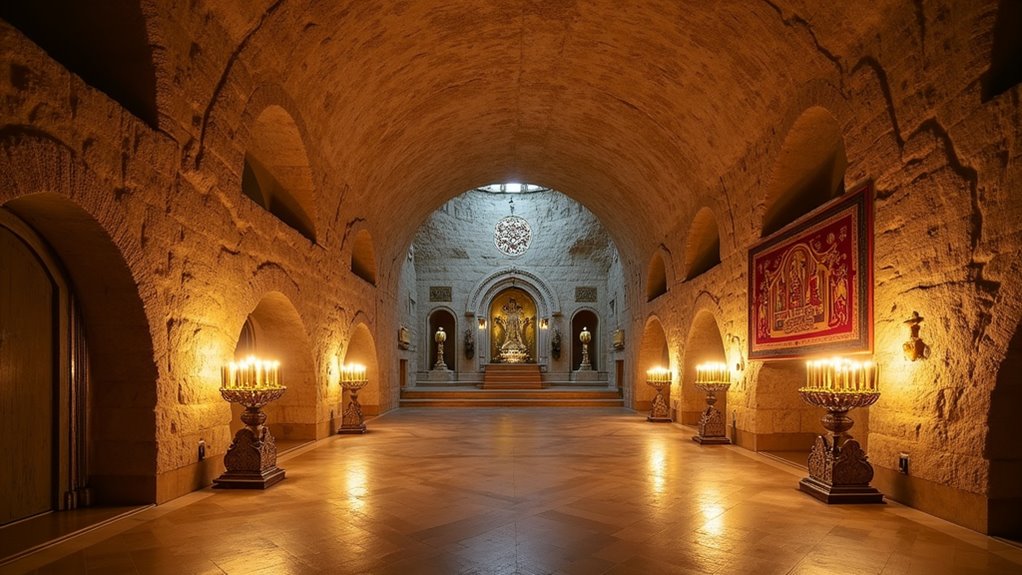
When you descend into the Grotto of the Nativity beneath Bethlehem’s Church of the Nativity, you’re standing in Christianity’s most sacred birthplace – the exact cave where tradition holds Jesus was born over 2,000 years ago.
The narrow stone stairway leads you to a small, oval-shaped cave where a 14-point silver star marks the precise spot of Christ’s birth. This isn’t just any historic site – it’s the world’s oldest continuously operating Christian church, built over a cave venerated since the 2nd century.
You’ll notice the church’s stunning architecture spans centuries, from Constantine’s 4th-century foundations to Justinian’s 6th-century reconstruction. The basilica features 50 columns made from local Jerusalem stone, each standing about 18 feet tall. The experience requires patience, as three Christian communities share this sacred space and pilgrims queue respectfully.
Climb Masada at Sunrise for Desert Views and Ancient History
From Bethlehem’s sacred caves, you’ll find Israel’s desert holds equally powerful moments at Masada – but here, ancient drama unfolds against the stark beauty of the Judean wilderness.
Start your Snake Path ascent around 5:00 AM to catch sunrise over the Dead Sea and Moab mountains. The 2.7-kilometer trail climbs 350 meters through 1,200 stone steps, taking most hikers 45-90 minutes.
You’ll beat both crowds and desert heat while watching dramatic color shifts paint the rocky landscape.
Bring 1.5 liters of water, sturdy hiking shoes, and sun protection – the trail’s completely exposed. The eastern entrance opens at 5:00 AM for 28-29 NIS.
From Jerusalem, leave by 3:00 AM to account for travel time. This challenging climb rewards you with breathtaking views and profound historical connection to the site where Jewish Zealots made their final stand against Roman forces in 73 AD.
Wander Tel Aviv’s Bauhaus Architecture in the White City
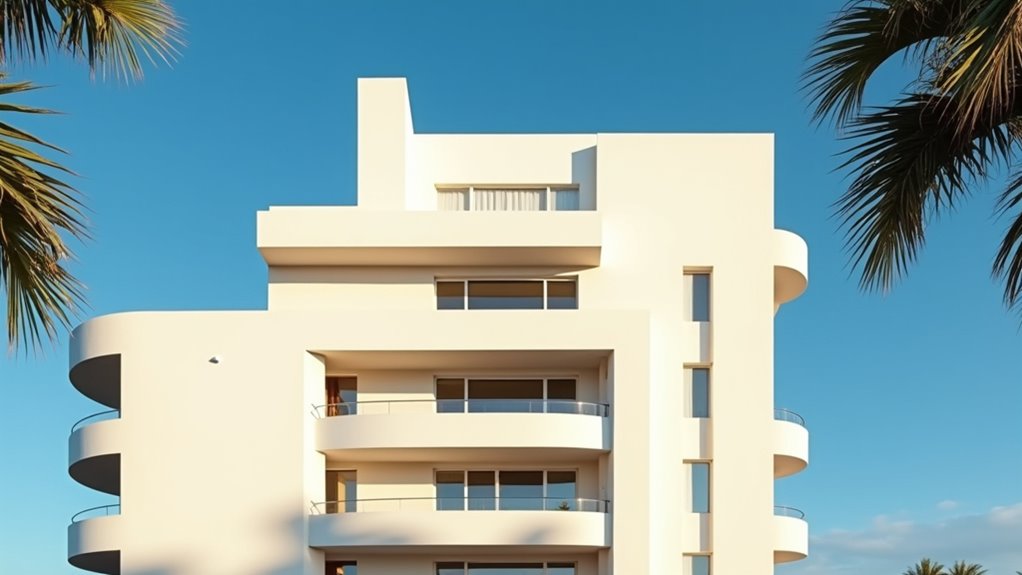
While most cities showcase architectural history through scattered landmarks, Tel Aviv presents the world’s largest collection of Bauhaus buildings in a compact, walkable neighborhood that earned UNESCO World Heritage status. You’ll discover approximately 4,000 modernist structures built by German Jewish architects who fled Nazi Germany in the 1930s, adapting European design principles to Mediterranean climate.
Start your exploration at the Bauhaus Center on Dizengoff Street for maps and context, then wander the three heritage zones covering 1.5 square miles. You’ll notice distinctive white facades, flat roofs, rounded balconies, and recessed windows designed for intense Middle Eastern sun. The Tel Aviv Museum of Art hosts a comprehensive Bauhaus exhibition featuring documentation and works by masters like Walter Gropius and Oskar Schlemmer.
The U-shaped buildings surrounding central gardens reflect Bauhaus socialist principles, creating Tel Aviv’s unique architectural identity that synthesizes European modernism with local environmental needs.
Experience Nightlife and Beach Culture in Tel Aviv
After exploring Tel Aviv’s architectural heritage by day, you’ll discover the city transforms into one of the world’s most concentrated nightlife destinations once the sun sets. With 1,750 cafes, bars, and clubs packed into a small area, you’ll find everything from dive bars in Florentin’s converted warehouses to upscale cocktail lounges along Dizengoff.
The party starts late—bars fill around midnight, clubs at 2 AM.
Tel Aviv’s beach culture seamlessly blends with its nightlife. You can start with sunset drinks at beachside venues, then migrate inland to neighborhood hotspots. Florentin attracts alternative crowds, while Kerem HaTeimanim offers excellent dining before drinks. The city maintains its reputation as “the bubble” – a secular, creative enclave where the vibrant social scene continues despite broader regional challenges.
Consider joining guided tours like TLVnights to navigate the scene efficiently and discover authentic local favorites.
Visit the Church of the Holy Sepulchre in Jerusalem
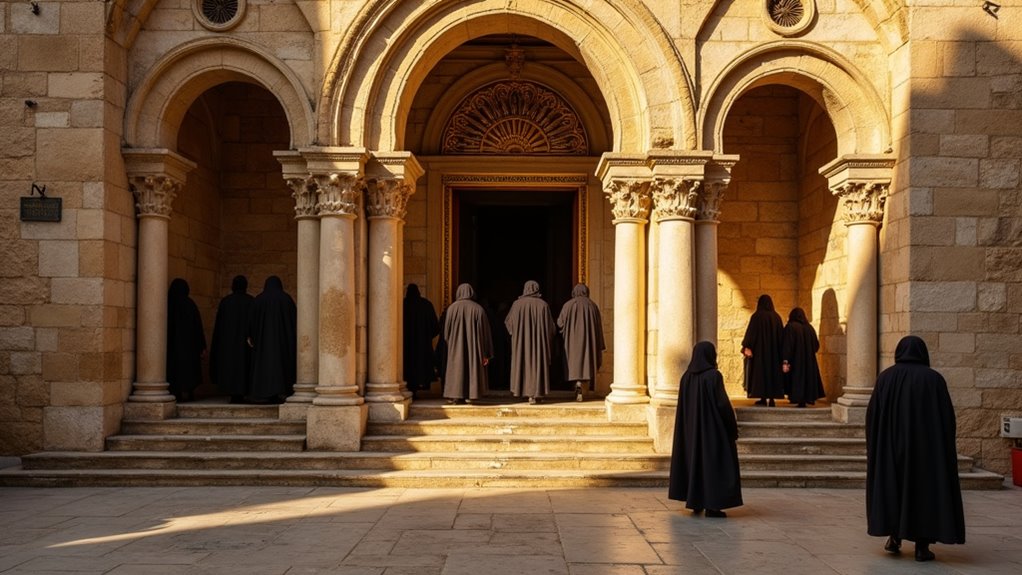
Standing at Christianity’s holiest site, you’ll enter a church that’s housed Jesus’s tomb for nearly 1,700 years—making the Church of the Holy Sepulchre Jerusalem’s most profound pilgrimage destination.
Built over both Calvary and Christ’s burial site, this architectural marvel layers Byzantine, Crusader, and Ottoman styles across centuries of reconstruction.
You’ll find the Edicule—a 19th-century shrine encasing the empty tomb—within the original 4th-century rotunda.
Don’t miss Golgotha in the south transept, where tradition places Jesus’s crucifixion.
Six Christian denominations share custody here, creating a fascinating religious tapestry of Greek Orthodox, Catholic, Armenian, and other liturgical traditions. The entrance features an immovable cedar ladder that has remained in the same position since the 18th century, symbolizing the delicate agreements between the various Christian communities.
Arrive early to avoid crowds, and respect the ongoing religious ceremonies that’ve continued uninterrupted since Constantine’s era.
Hike Ramon Crater in the Negev Desert
Deep in Israel’s Negev Desert, you’ll discover the world’s largest erosion crater—a 40-kilometer geological wonder that’ll challenge your hiking boots and reward you with otherworldly landscapes. Ramon Crater’s colorful rock formations, basalt hills, and ancient volcanic remnants create hiking experiences ranging from easy 3-kilometer walks to challenging 13.5-kilometer loops.
Start with the red trail to Mount Ramon’s summit for dramatic panoramic views, or tackle the popular 13.4-kilometer circular route from Selina Ramon glamping site. The Nekarot Horseshoe Loop offers water-filled canyons and Nabatean ruins along its 6.5-kilometer path.
Pack plenty of water and use GPS navigation—desert conditions demand preparation. Follow color-coded trail markers and explore Lot’s Cisterns, ancient water storage sites dating to the 10th century BCE. For spectacular fossil discoveries, visit the Ammonite Wall where hundreds of 70-million-year-old marine fossils from the Cretaceous period are embedded in the rock face.
Explore the Baha’i Gardens in Haifa
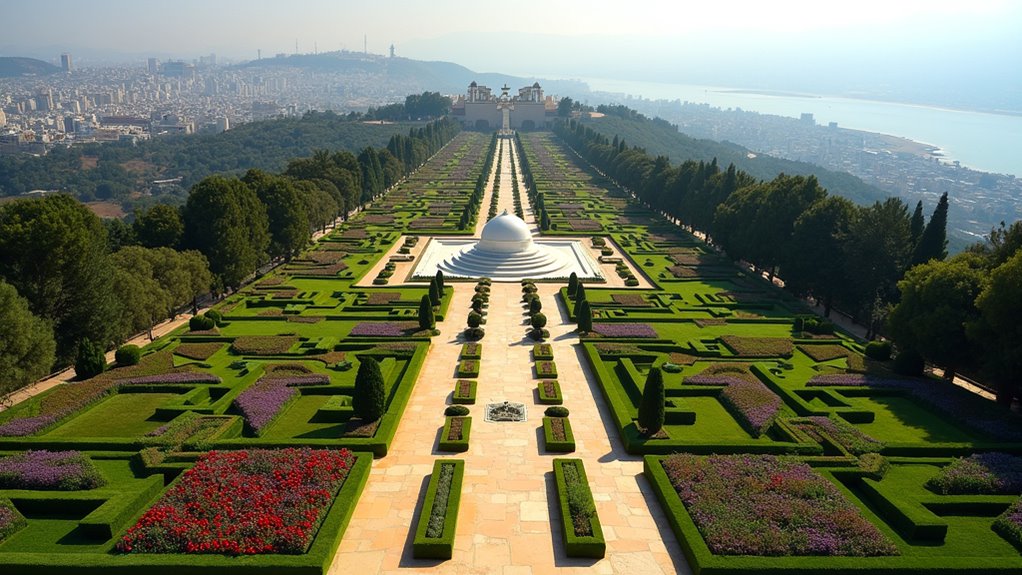
While most UNESCO World Heritage Sites require hefty entrance fees, you’ll discover the breathtaking Baha’i Gardens in Haifa offer free guided tours of their 19 golden-terraced masterpiece cascading down Mount Carmel’s slopes.
You’ll start near Louis Promenade and descend through meticulously maintained terraces surrounding the golden-domed Shrine of the Báb. The architect Fariborz Sahba designed these gardens to blend Eastern and Western influences, incorporating local olive and citrus trees alongside exotic species.
Each terrace holds deep symbolism—the 19 levels represent the Báb and his 18 disciples, while nine concentric circles around the shrine symbolize world religions’ unity.
You’ll witness cascading water streams and perfectly manicured gardens that reflect Baha’i teachings about spiritual transformation and humanity’s interconnectedness. The gardens serve as the administrative hub for the Baha’i World Center, making this both a spiritual pilgrimage site and the faith’s global headquarters.
Walk Through Nazareth’s Religious Sites
When you step into Nazareth’s winding streets, you’ll find yourself walking through Christianity’s most significant childhood home—where Jesus spent his formative years among stone houses and ancient wells that still flow today.
Start at the Basilica of the Annunciation, the Middle East’s largest Christian church, where you’ll descend into the grotto marking Mary’s home. The mosaics inside showcase global Marian devotion from different cultures.
Walk to nearby St. Joseph’s Church, built over first-century archaeological remains of what’s believed to be Joseph’s carpentry workshop. You’ll see cave systems where the Holy Family likely lived and worked. For a deeper understanding of Mary’s story and her significance across faiths, visit the Mary of Nazareth International Center, which explores her Jewish background and mentions in both Christian and Islamic traditions.
Don’t miss Mary’s Well in the bustling Old Market, where locals still draw water from the ancient spring. The surrounding bazaar offers authentic culture with traditional crafts and food stalls.
Discover Jaffa’s Ancient Port and Artist Quarters
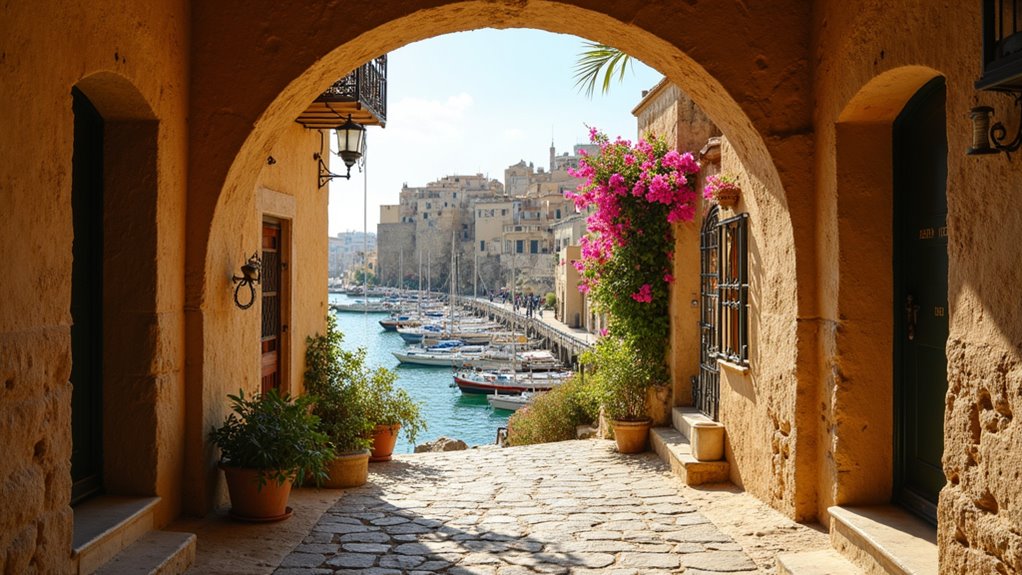
As you wander through Jaffa’s ancient streets, you’ll discover one of the world’s oldest continuously operating ports—a Mediterranean gateway that’s welcomed ships for nearly 4,000 years.
You’ll find remnants of ancient piers near the sea mosque and the legendary Andromeda rock, where Greek mythology comes alive.
The cobbled lanes reveal layers of history, from Canaanite foundations to Ottoman architecture.
You can explore stone buildings that once housed merchants trading Cypriot pottery and Egyptian goods during the Middle Bronze Age.
Today’s marina buzzes with fishing boats and leisure vessels, while the surrounding artist quarters showcase local galleries and studios. The vibrant flea market comes alive at night, offering vintage finds and eclectic treasures alongside the creative energy of the artist community.
Don’t miss the strategic vantage points along the kurkar sandstone ridge—the same spots that made this port invaluable to King Solomon’s temple construction.
Remember at Yad Vashem Holocaust Memorial
Standing on Jerusalem’s Mount of Remembrance, you’ll encounter Yad Vashem—Israel’s profound tribute to the six million Jews murdered during the Holocaust. This isn’t just another museum visit; it’s an emotional journey through one of history’s darkest chapters.
You’ll navigate the underground Holocaust History Museum‘s 183-meter concrete corridor, experiencing a chronological narrative from Nazi rise to liberation.
Don’t miss the Hall of Names, where photographs honor known victims, while the cone below remembers the nameless.
The Children’s Memorial will move you deeply—candles reflect infinitely while names of 1.5 million murdered children echo softly.
Plan three to four hours minimum. The museum closes Friday afternoons and Saturdays.
Given the intense content, this experience suits adults and older teens best. Beyond remembrance, Yad Vashem houses the world’s largest collection of artwork created by Jewish victims, with over 10,000 pieces documenting their experiences under Nazi occupation.
Shop and Eat at Jerusalem’s Mahane Yehuda Market
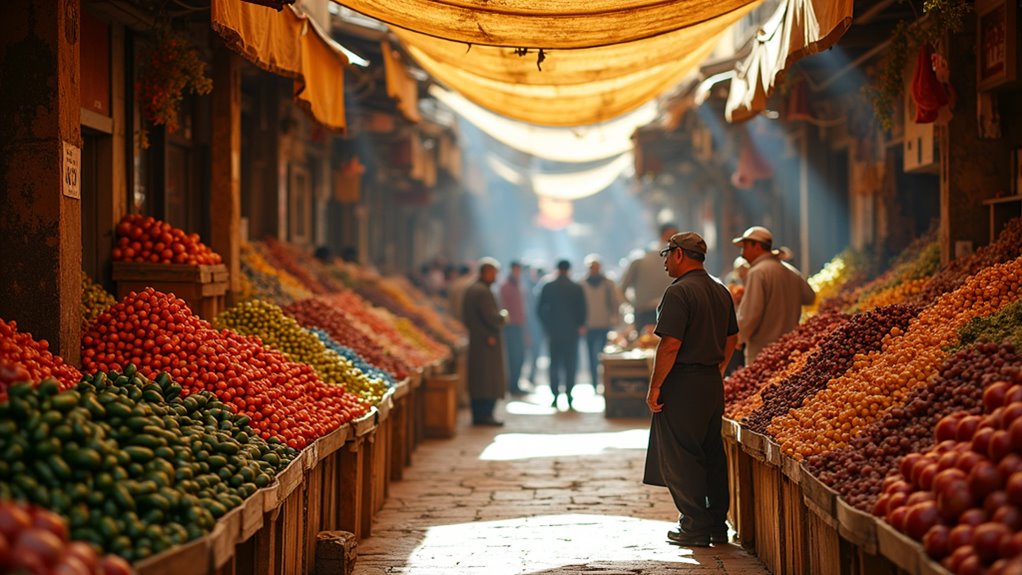
Over 250 vendors pack into Mahane Yehuda Market, Jerusalem’s bustling culinary heart where you’ll find everything from century-old spice shops to trendy wine bars. You’ll navigate covered walkways lined with fresh produce, aromatic spices, halva vendors, and fishmongers alongside locals from every background.
This isn’t just tourist territory—it’s where Jerusalemites actually shop.
During the day, grab street food classics like falafel and shawarma from both kosher and halal stalls. Sample olives, cheeses, and baked goods from second-generation vendors who know their craft inside out.
Come evening, the market transforms completely. Produce stalls close while over 20 bars and restaurants take center stage, creating an electric nightlife scene. You’ll discover why locals call this centuries-old marketplace a “national treasure.”
The market’s layout reflects Jerusalem’s cultural divides, with traditional haredi shoppers typically found in the northern sections while more diverse, upscale visitors gravitate toward the southern end.
Take a Boat Ride on the Sea of Galilee
You’ll find yourself on the same waters where Jesus called his first disciples when you take a boat ride on the Sea of Galilee, Israel’s largest freshwater lake and one of Christianity’s most significant sites. These 45-minute cruises offer perfect vantage points for viewing biblical locations like Capernaum, Tabgha, and the Mount of Beatitudes around the shoreline.
Book early morning departures for calmer waters – afternoons get choppy, helping you understand those dramatic Gospel storm accounts.
Worship-focused tours include Scripture readings and hymn singing, while standard rides feature onboard music and flag ceremonies. These spiritual experiences are highly rated, with pilgrimage groups giving tours an average 4.9/5 rating based on their memorable worship and prayer sessions on the water. Expect to pay $7-$9 per person depending on group size.
Most operators depart from Tiberias, and you can often bundle your boat ride with visits to nearby biblical sites for a complete Galilee experience.
The Sum Up
You’ve got an incredible journey ahead exploring Israel’s diverse landscapes and rich history. From floating in the Dead Sea to walking ancient Jerusalem streets, each experience will leave you with lasting memories. Don’t try to rush through everything—take time to savor the spiritual moments, taste the local flavors, and connect with the stories that shaped this remarkable land. Pack comfortable shoes and bring an open mind for the adventure.