Exploring the Gilded Age City around Madison Square: An Insider’s Review
If you’re fascinated by the Gilded Age—that glittering, ambitious period at the turn of the 20th century when New York City was transforming into a hub of wealth, innovation, and social stratification—then this private tour might just be your perfect match.
It offers a detailed walk through the neighborhood that was the epicenter of this dramatic era, revealing how a small part of Manhattan became a microcosm of American prosperity and excess.
What immediately drew us in were two aspects: first, the way the tour ties together architecture, social history, and urban development into a compelling narrative; second, how it bridges the lavish lifestyles of families like the Roosevelts and Astors with the seedier, more illicit nightlife of the old Tenderloin district. It’s a balanced look at both the grandeur and the grit.
The only potential challenge is the pace and physicality—covering multiple neighborhoods and buildings in just three hours means walking briskly between stops. For travelers with limited mobility or those seeking a more leisurely exploration, some parts might feel a bit rushed. Still, for those eager to see a concentrated slice of history, this tour offers more than enough to justify the price.
This experience is best suited for history buffs, architecture lovers, and anyone curious about how New York became the city it is today. It provides a rich, nuanced perspective beyond the usual tourist highlights and is ideal for those who value a private, personalized approach.
- Key Points
- A Walk Through History: The Itinerary in Depth
- Starting at the Flatiron Building: A Landmark of Change
- Madison Square: Center of Commerce and Entertainment
- Broadway: The Heart of Wealth and Vice
- Fifth Avenue: The Fashionable Spine of Wealth
- Sixth Avenue: The Middle-Class Shopping Corridor
- Beyond 23rd Street: The Old Tenderloin
- The Flatiron District and Early Multi-Family Housing
- Wrapping Up in Madison Square Park
- What Travelers Can Expect
- The Experience of the Guide
- Practical Considerations
- The Value for Money
- Who Should Book This Tour?
- The Sum Up
- FAQ
- The Best Of New York City!
- More City Tours in New York City
- More Tours in New York City
- More Tour Reviews in New York City
Key Points
- In-depth exploration of New York’s Gilded Age neighborhoods around Madison Square.
- Private group ensures a personalized experience with expert guidance.
- Focus on architecture, social history, and urban development—not just sightseeing.
- Walks through historic districts like the Flatiron, Broadway, Fifth Avenue, and Tenderloin.
- Insight into the lives of wealthy families like the Roosevelts and Astors, alongside the city’s seedy nightlife.
- Balanced pacing but may be a bit brisk for those wanting a relaxed stroll.

👉 See our pick of the The 15 Top Workshops & Classes In New York City: Which Is Best?
A Walk Through History: The Itinerary in Depth
You can also read our reviews of more city tours in New York City



Starting at the Flatiron Building: A Landmark of Change
The tour kicks off at the iconic Flatiron Building, a symbol of early skyscraper innovation. From here, we learn about how the area evolved from farmland to a fashionable city center. Use of old photographs vividly illustrates this transformation, giving us a sense of the neighborhood’s rapid growth in the late 19th century.
We’re introduced to the Astor family, one of the most influential families of the era. Their creation of the first Waldorf-Astoria hotel underscored the rise of luxury hospitality and social clout. It’s fascinating to see how the Astors interacted socially with families like the Vanderbilts—old money and new wealth living cheek by jowl. The guide emphasizes that during this period, the city was remarkably compact: wealthy mansions, big department stores, and grand hotels all clustered close together.
Madison Square: Center of Commerce and Entertainment
Next, we find ourselves at Madison Square, home to MetLife and the first Madison Square Garden. The history of these institutions paints a picture of a bustling, ever-evolving hub of commerce and entertainment at the height of the Gilded Age. The guide shares stories about the early days of this vibrant space, including how the Garden’s location made it a center for sporting events, concerts, and political rallies.
Broadway: The Heart of Wealth and Vice
As we move along Broadway, we start to see how the different social classes inhabited the city. The stretch along Broadway was once lined with carriage trade shops, including Lord & Taylor and Arnold Constable & Co—symbols of upper-class shopping and social life. Here, the architecture reflected wealth and modernity, with early department stores pioneering the retail experience.
But Broadway also reveals the city’s contrasting worlds—just blocks away, the old Tenderloin district with its concert saloons, brothels, and gambling halls thrived. The guide explains that this was the entertainment of the common man—piano music in cheap taverns, raucous nightlife, and all the illicit activities that came with the city’s underbelly.
Fifth Avenue: The Fashionable Spine of Wealth
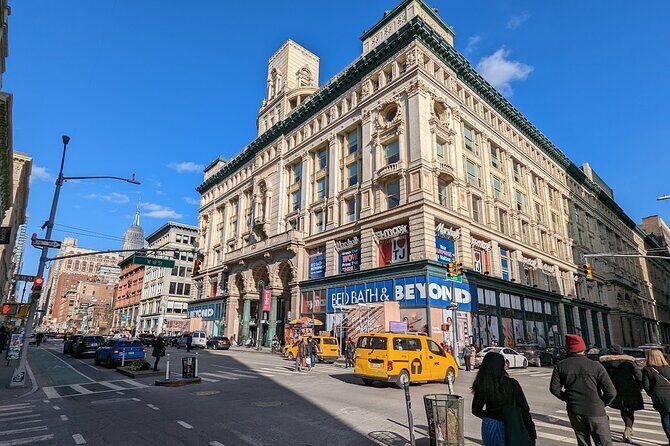
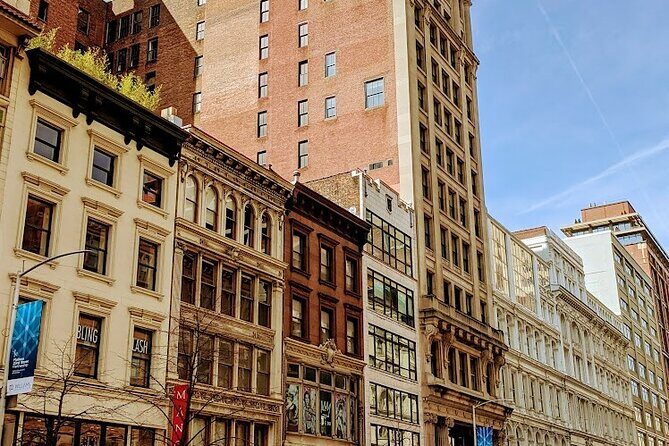
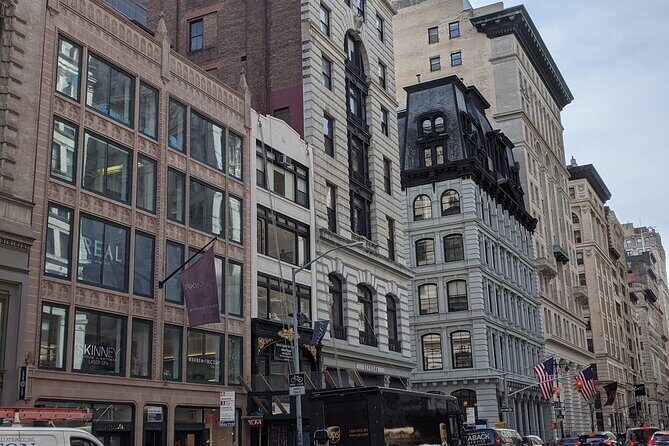
Moving south to Fifth Avenue below 23rd Street, we learn how this stretch became the epicenter of the garment industry and luxury retail. The area was once the site of the Garment District, but it also housed grand residences and early coops—buildings designed for the rising middle class. The architecture here hints at a city in transition, with newer steel-frame buildings replacing older cast-iron structures.
You can also read our reviews of more private tours in New York City






Sixth Avenue: The Middle-Class Shopping Corridor
The tour then proceeds to Sixth Avenue, known as the Avenue of the Americas, where the focus shifted to middle-class shopping. We see buildings like Siegel-Cooper and Hugh O’Neill’s, landmarks of the department store boom. The quick look at the architecture reveals a city moving from cast iron to steel-framed structures, indicative of technological progress and urban growth.
Beyond 23rd Street: The Old Tenderloin
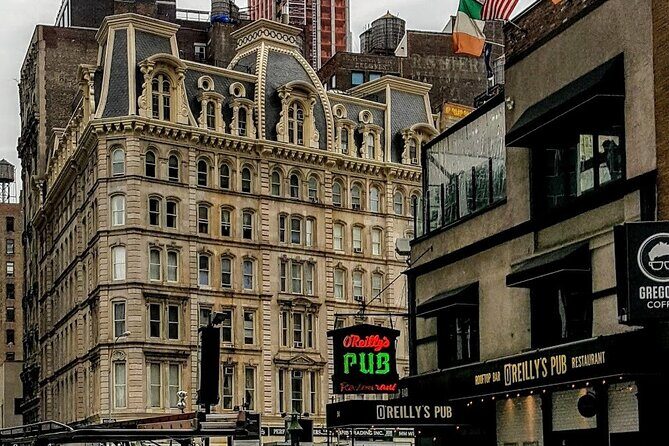
One of the most captivating parts of the tour is the walk into the Tenderloin district, just above 23rd Street. Here, history flips its script—this was once a neighborhood of concert saloons, brothels, and casinos. The guide shares tales of how entertainment shifted from the refined theaters to more gritty, rowdy venues—piano music in “penny arcades” with a very different crowd. It highlights the city’s wide social spectrum and the close proximity of wealth and vice.
The Flatiron District and Early Multi-Family Housing
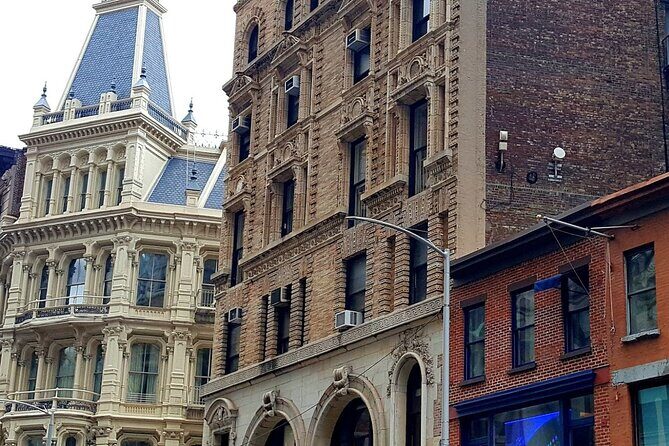
Crossing back to Fifth Avenue, we explore the Flatiron District, where early apartment hotels, French flats, and coops began to replace single-family mansions. Buildings like the Holland House exemplify this shift, signaling the city’s move toward densification and urban living for the middle class.
Wrapping Up in Madison Square Park
Our final stop is Madison Square Park, where the guide shares stories about the Worth Monument, Delmonico’s restaurant, and the Brunswick Club. These landmarks connect the city’s elite social life with the everyday experiences of New Yorkers, offering a fitting end to a journey through the Gilded Age’s contradictions—wealth and poverty, innovation and vice.
What Travelers Can Expect
This private tour, priced at $225 for up to 9 people, offers a focused, intimate experience. It’s designed for travelers who want more than just a surface overview; it’s about understanding how the city’s physical and social fabric came to be. With a knowledgeable guide leading the way, you’ll get detailed stories, historical context, and architectural insights.
The tour lasts around three hours, making it a manageable, engaging block of sightseeing. Since it’s private, you can tailor questions or linger at particular spots—though be prepared for a brisk pace across several neighborhoods. The use of photographs and visual aids helps bring history alive, making it easier to picture what the city looked like during its opulent Gilded Age days.
The Experience of the Guide
From reviews, we know that guides are enthusiastic and well-versed, adding personality and local insight. They reveal the interconnectedness of neighborhoods—how the wealthiest families lived close to the city’s darker corners—and paint vivid pictures of what life was like during this transformative period.
Practical Considerations
The tour begins at 175 5th Ave and is suitable for people with moderate physical fitness, given the amount of walking involved. It’s near public transportation, making it accessible for most visitors. Since it’s a private tour, it’s easier to customize your experience or ask for more detail on specific areas of interest.
The Value for Money
At $225 for a private tour for up to 9 people, this experience offers strong value, especially if you’re traveling with a group. The cost includes expert guiding, personalized attention, and a deep, contextual understanding of New York’s Gilded Age. Compared to more generic sightseeing options, this tour delivers a more meaningful, informative experience that illuminates the city’s architectural and social evolution.
Who Should Book This Tour?
This tour is ideal for history enthusiasts, architecture buffs, and curious travelers who want a comprehensive look into New York’s past rather than just seeing the sights. It suits those with an interest in urban development, social history, and architectural design. If you enjoy private, flexible guided walks, you’ll appreciate the customized approach.
It’s also perfect for groups or families who want a focused, educational outing that offers a deeper understanding of the city’s transformation during the Gilded Age.
The Sum Up
For travelers eager to go beyond the usual attractions and really understand how New York City grew into the metropolis of contrasts and innovations, this private tour around Madison Square provides a thoughtful, engaging, and informative experience. It’s a chance to see where wealth, architecture, and vice once coexisted in close quarters, revealing a vibrant snapshot of America’s past.
While brisk pacing might not suit everyone, the stories and insights offered are well worth the effort. The tour’s value lies not just in its content but in its ability to connect you with the city’s living history—an experience that enriches your understanding of New York far beyond the typical sightseeing checklist.
If you’re curious about the city’s social fabric, love architecture, or simply want an in-depth look at a pivotal era, this private exploration of the Gilded Age neighborhoods around Madison Square is a carefully curated window into New York’s dazzling, complex past.
Private Tour of the Gilded Age City around Madison Square
FAQ
Is this a walking tour?
Yes, it involves walking between multiple stops around Madison Square and neighboring districts.
How long does the tour last?
Approximately three hours, allowing for a thorough exploration without feeling rushed.
Is it suitable for children or those with mobility issues?
The tour requires moderate physical activity, so it’s best for travelers comfortable walking briskly.
Can I customize the tour?
Since it’s a private experience, you can ask your guide for specific interests or sites you want to focus on.
What is the group size?
Up to 9 people per group, making it intimate and flexible.
Where does the tour start and end?
It begins at 175 5th Ave and ends back at the same point.
What is included in the price?
A knowledgeable guide, personalized attention, and an in-depth look at historic districts.
Is there a cancellation policy?
Yes, free cancellation up to 24 hours in advance, with full refund.
Are tickets included?
Most admission tickets mentioned in the itinerary are free; some stops are just walk-by or viewing.
Would this tour be good in bad weather?
It’s weather-dependent; if canceled, you’ll be offered a different date or a full refund.
In all, this private Gilded Age tour around Madison Square offers a compelling, well-rounded look at a fascinating period in New York’s history—ideal for travelers who want to understand the city beneath its modern veneer.