
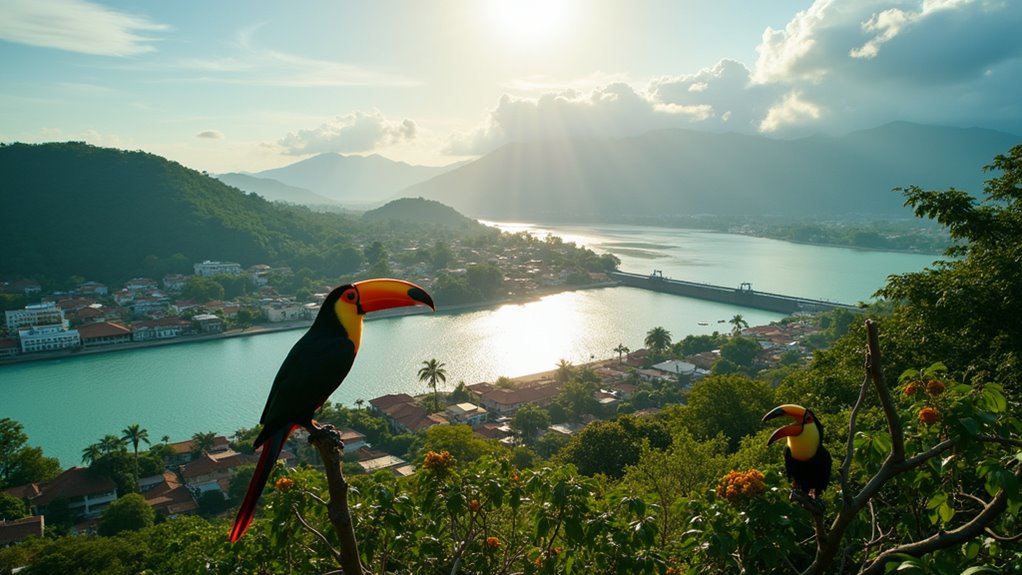
You can witness massive cargo ships navigate the iconic Miraflores Locks, explore UNESCO World Heritage sites in colonial Casco Viejo and ancient Panama Viejo ruins, or hike above rainforest canopy at Soberanía National Park. Adventure seekers should summit Volcán Barú for rare two-ocean views or dive Coiba’s pristine reefs with hammerhead sharks. Don’t miss strolling the waterfront Cinta Costera, sampling fresh ceviche at local markets, and walking the Amador Causeway for spectacular canal perspectives—each destination offers deeper experiences awaiting your discovery.
- Watch Ships Navigate the Miraflores Locks at the Panama Canal
- Wander the Colonial Streets of Casco Viejo
- Explore the Archaeological Ruins at Panama Viejo
- Hike Above the Canopy at Soberanía National Park
- Stroll the Cinta Costera Waterfront Promenade
- Island-Hop in the Pristine San Blas Archipelago
- Experience Caribbean Culture in Bocas Del Toro
- Summit Volcán Barú for Two-Ocean Views
- Dive the Protected Reefs of Coiba National Park
- Sample Fresh Ceviche at the Seafood Market
- Walk Across the Amador Causeway for Canal Views
- The Sum Up
Watch Ships Navigate the Miraflores Locks at the Panama Canal
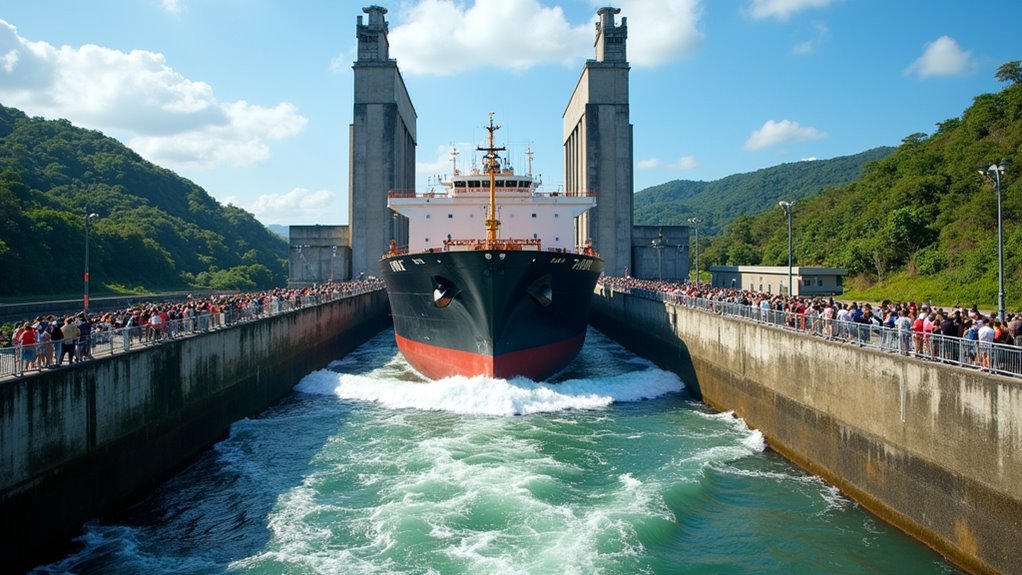
When massive cargo ships carrying thousands of containers approach the Pacific entrance of the Panama Canal, they must navigate through the Miraflores Locks—one of engineering’s most impressive displays you can witness firsthand.
You’ll watch as 700-ton gates raise vessels 54 feet through two chambers using gravity-fed water from Gatun Lake. The Miraflores Visitor Center offers ground-level terraces, bleachers, and elevated viewing decks accommodating 450 people with wheelchair access.
Located 15 minutes from downtown Panama City, the center operates daily from 8:00 a.m. to 6:00 p.m. Admission costs $7.22-$17.22 and includes access to four exhibition halls and a 45-minute IMAX film. The 3D documentary is narrated by Morgan Freeman and provides an immersive experience about the canal’s history and operations.
Plan 60-90 minutes for your visit, timing arrival with scheduled ship transits for live bilingual narration explaining each operational step.
Wander the Colonial Streets of Casco Viejo
Three centuries of history unfold beneath your feet as you explore Casco Viejo’s cobblestone streets, where Spanish colonial architecture mingles with French neoclassical influences in Panama’s most atmospheric district. Founded in 1673, this UNESCO World Heritage Site captivates with its vivid orange, lemon, and strawberry-colored facades beneath century-old iron balconies.
Navigate the narrow walkable streets between Plaza de la Independencia, anchored by the Cathedral Basilica completed in 1796, and Plaza de Francia’s bayfront promenade overlooking Panama City’s skyline. The narrow streets were originally designed for horses rather than cars, making walking the primary mode of transportation through this historic quarter. The Esteban Huertas Promenade along the old sea wall provides panoramic Pacific views.
While exploring, you’ll discover colonial landmarks like Casa Góngora, which showcase preserved 18th-century domestic architecture. You’ll find restored townhouses alongside partially decayed structures throughout this compact peninsula.
Explore the Archaeological Ruins at Panama Viejo
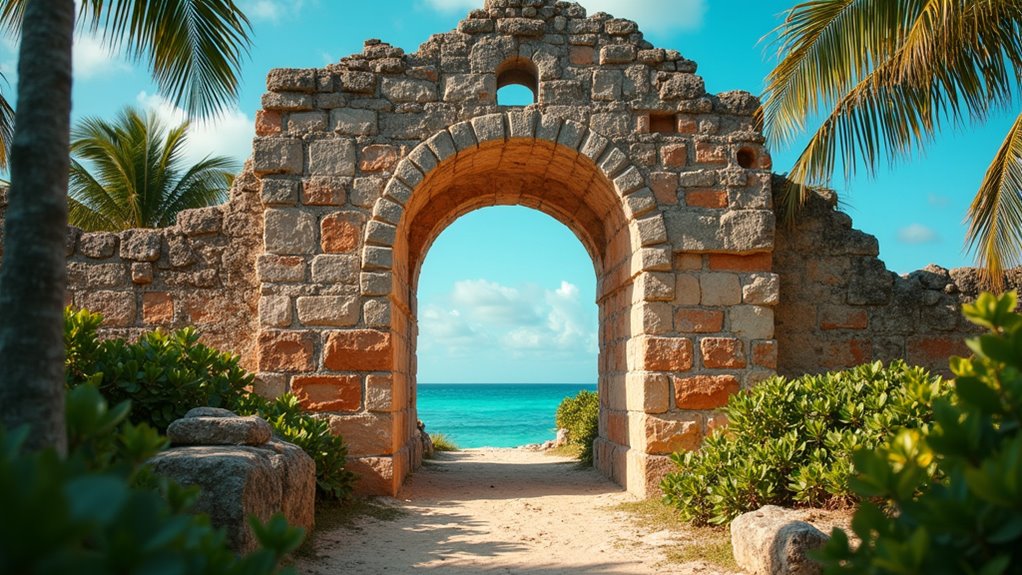
Step back five centuries to explore Panama Viejo, where the crumbling stone walls and coral foundations of the Americas’ first Pacific coast settlement tell the story of Spain’s ambitious New World empire. Founded in 1519, this UNESCO World Heritage Site preserves the ruins of what once housed 10,000 inhabitants before Henry Morgan’s devastating 1671 raid destroyed the prosperous colonial capital.
You’ll discover the iconic Cathedral of Nuestra Señora de la Asunción, whose bell tower offers panoramic views of the archaeological complex. Wander through the Casas Reales royal district and examine remnants of convents, churches, and elite residences like Casa de los Genoveses. The site’s grid layout demonstrates sophisticated 16th-century colonial urban planning principles that shaped this strategic Pacific settlement.
These weathered stones witnessed the flow of Peruvian gold and silver along the Camino Real, making this Pacific terminus central to Spain’s treasure fleet system.
Hike Above the Canopy at Soberanía National Park
Just thirty minutes from Panama City, Soberanía National Park‘s 105-foot observation tower launches you above 22,000 hectares of pristine rainforest canopy, where over 500 bird species inhabit multiple forest layers invisible from ground level. You’ll spot toucans, cotingas, and sloths from 360° viewing platforms that complement ground trails like Plantation Trail’s 7-10 kilometer route through former cacao plantations.
Start early at 6:30 a.m. when birdsong peaks and wildlife activity surges. The dense triple-canopy creates humid microclimates below while providing natural rain protection. Listen for the distinctive calls of howler monkeys echoing through the morning mist as mothers carry their babies through the forest canopy.
Combine tower visits with 3-4 hour hikes on Semaphore Hill or Cruces Trail for complete forest exploration. Most visitors handle these easy-to-intermediate trails with moderate fitness and proper footwear.
Stroll the Cinta Costera Waterfront Promenade
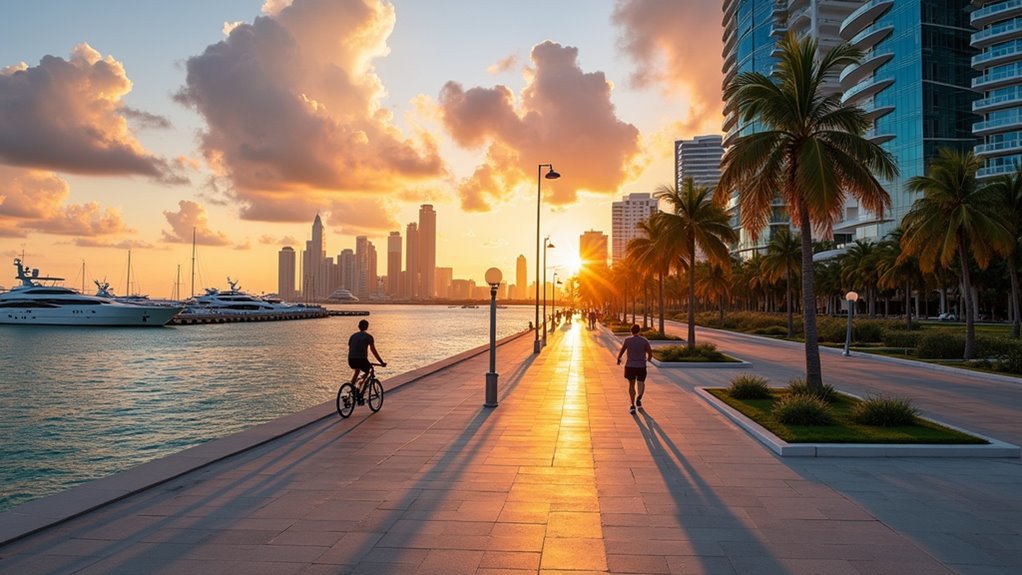
While Panama City’s skyline commands attention from every angle, you’ll experience its most dramatic panorama from the Cinta Costera, a 7-kilometer waterfront promenade that transforms reclaimed bayfront into Panama’s premier urban recreation corridor. This coastal belt stretches from Punta Paitilla to Casco Viejo, offering continuous Pacific Ocean views alongside the financial district’s towering skyline.
You’ll find wide paved walkways perfect for strolling, jogging, or cycling, with separated lanes ensuring comfortable movement. The promenade features landscaped gardens, playgrounds, sports courts, and the popular Mirador del Pacífico lookout with its colorful “PANAMA” sign. The waterfront park operates 24/7, providing flexible visiting times to accommodate any schedule.
Access the waterfront easily from Avenida Balboa or Casco Viejo, walking approximately 1.5 kilometers from the historic quarter. Visit during sunrise or sunset for ideal lighting and cooler temperatures.
Island-Hop in the Pristine San Blas Archipelago
Where else can you discover an untouched Caribbean paradise scattered across 350 pristine islands, each more stunning than the last? The San Blas Archipelago offers Panama’s ultimate island-hopping adventure through turquoise waters and powdery white-sand cays.
You’ll explore this autonomous Guna territory via local boat tours, hopping between 49 inhabited islands and countless uninhabited gems. Start near Cartí port for easy multi-island access, then venture to remote Cayos Holandeses—20 mostly uninhabited islands considered the comarca’s most beautiful.
Don’t miss tiny Guanidup’s iconic palm-fringed scenery or Isla Diablo’s swimmable shipwreck. Plan 2-3 days minimum to reach pristine outer islands. Experience the crystal-clear waters with snorkeling visibility reaching up to 30 meters, revealing vibrant coral reefs and marine life beneath the surface.
All tourism is locally owned by the Guna people, ensuring your visit supports Indigenous communities while respecting this fragile coral ecosystem.
Experience Caribbean Culture in Bocas Del Toro
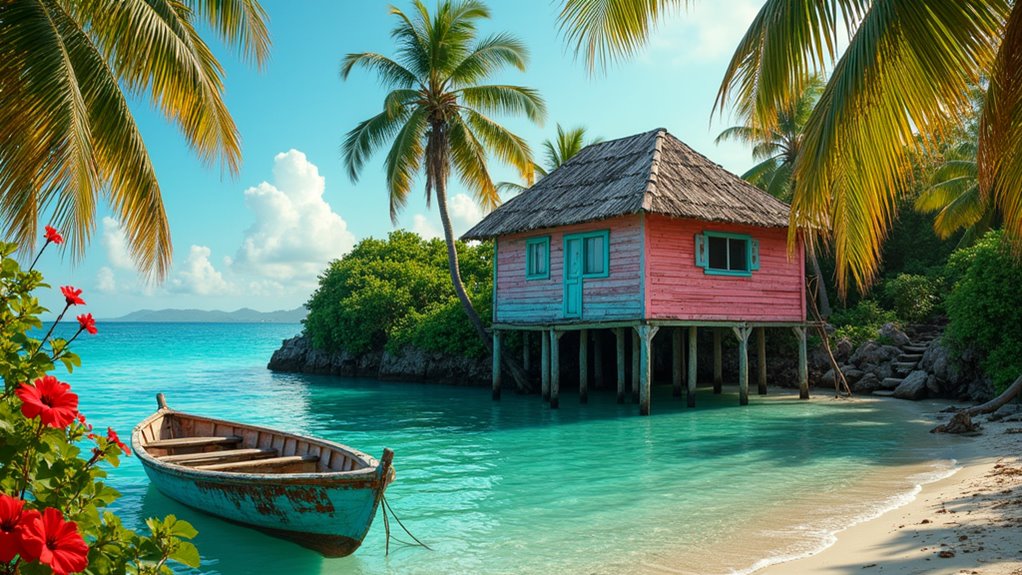
Beyond the typical Central American experience, Bocas del Toro archipelago pulses with authentic Afro-Caribbean rhythms that transport you straight into island life. You’ll hear calypso and reggae echoing through Bocas Town’s colorful streets, where bright wooden houses reflect traditional Caribbean architecture.
Take a $5 water taxi to Old Bank on Isla Bastimentos—one of the region’s last authentic Afro-Caribbean communities. Here, locals speak Guari-guari creole and maintain traditional customs along small lanes lined with elevated wooden homes. The Ngäbe-Buglé people with their rich cultural traditions also call this region home, offering visitors authentic experiences through community-led tours in places like Salt Creek.
Dive into Afro-Caribbean cuisine featuring coconut-spiced seafood and plantains at waterfront restaurants. Experience nightlife at over-the-water bars where Caribbean music fills the air. This tourism-driven economy creates vibrant cultural exchange while preserving the relaxed “old Caribbean” atmosphere that makes Bocas del Toro genuinely special.
Summit Volcán Barú for Two-Ocean Views
Standing 11,411 feet above sea level, Volcán Barú claims the distinction of being Panama’s highest peak and one of the few places on Earth where you can potentially witness both the Pacific Ocean and Caribbean Sea from a single vantage point.
This active stratovolcano requires serious preparation—the 13.5-kilometer trek from Boquete’s ranger station demands 10-12 hours of sustained climbing with 2,270 meters of elevation gain.
Start your midnight ascent equipped with headlamps, insulated clothing, and gloves, as summit temperatures hover near freezing with fierce winds. The volcano sits within Barú Volcano National Park, which was declared a protected area in 1976 and spans 14,325 hectares as part of the larger Mesoamerican Biological Corridor.
The rocky, rutted trail passes through cloud forest and highland pastures before emerging above the clouds.
On crystal-clear mornings, you’ll witness sunrise panoramas spanning both oceans—a rare phenomenon that rewards only the most determined hikers.
Dive the Protected Reefs of Coiba National Park
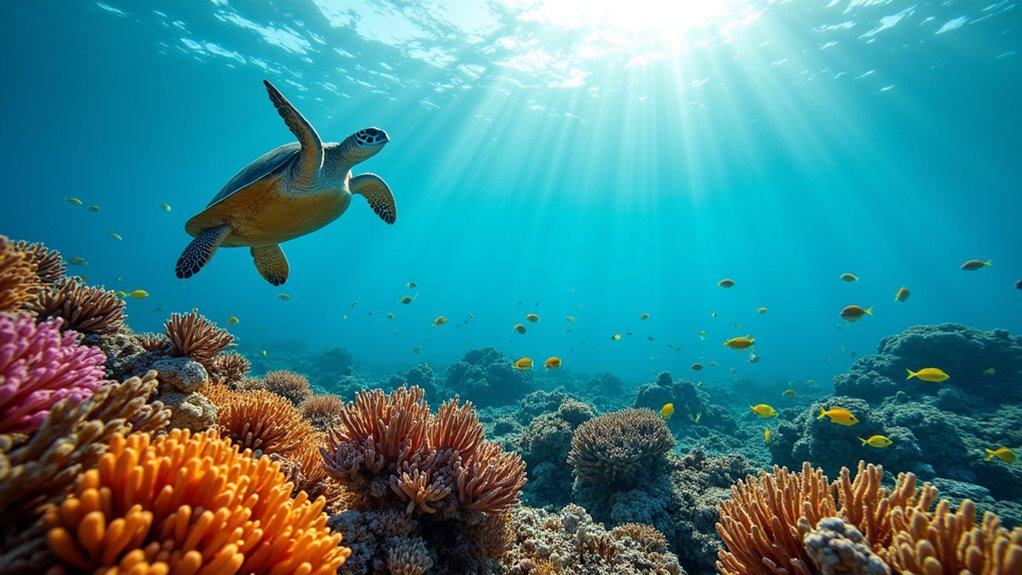
While most divers dream of encountering pristine reefs teeming with apex predators, Coiba National Park delivers this fantasy as reality. This UNESCO World Heritage marine reserve protects 760-800 fish species and 33 shark species across 31+ mapped dive sites.
You’ll explore Bahia Damas Reef—the largest reef on the American continent’s western coastline—alongside walls, pinnacles, and cleaning stations around Coiba’s 38 islands.
Plan your visit strategically: whale sharks appear January-April during plankton blooms, while hammerhead aggregations peak June-July near Contreras Islands. Humpback whales use these waters as breeding grounds July-October.
Most encounters occur at 18-30 meter depths, but strong currents and open-ocean conditions require advanced diving experience. You’ll share waters with manta rays, tiger sharks, and four turtle species in this world-class destination. During your dives, you may even hear the haunting whale songs that echo through Panama’s underwater realm.
Sample Fresh Ceviche at the Seafood Market
Panama City’s waterfront Mercado de Mariscos delivers the country’s freshest ceviche experience just steps from where fishing boats dock each morning.
You’ll find this bustling fish market at Casco Viejo’s entrance, where vendors on the upper level serve generous cups of ceviche for $1-$4.50.
The Panamanian style features corvina or shrimp marinated in citrus with onions and cilantro, prepared differently from Peru’s quick-serve method—here, fish cubes pickle for hours in large containers kept on ice.
Choose busy stalls with high turnover for maximum freshness.
You’ll eat standing at simple ceviche bars, paired with soda crackers or patacones. Despite being a fish market, the clean environment is maintained by keeping fish on ice to prevent any fishy odors.
This authentic, budget-friendly experience offers superior quality compared to many city restaurants, making it Panama City’s essential culinary stop.
Walk Across the Amador Causeway for Canal Views
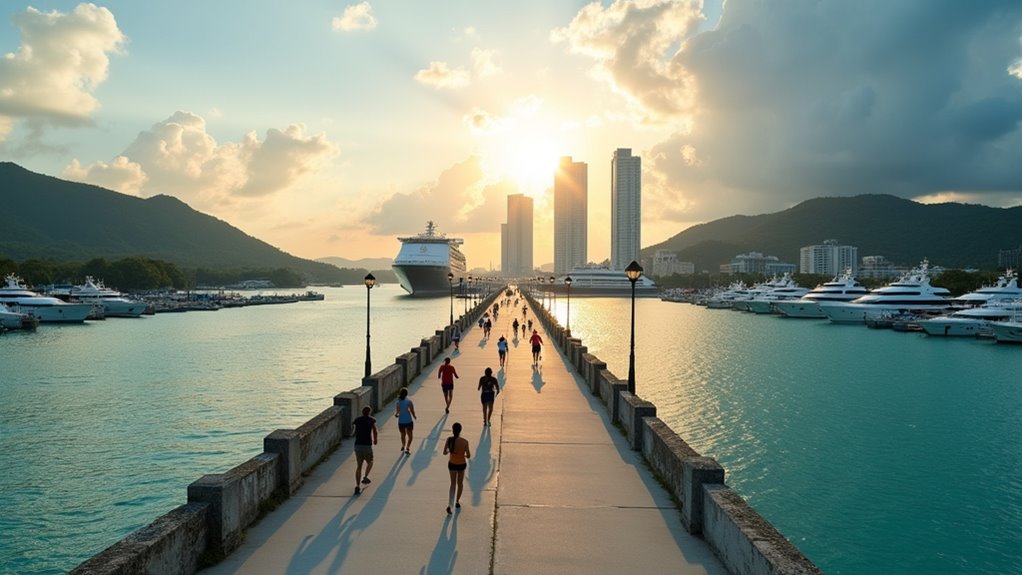
Stretching 6 kilometers into the Pacific Ocean at the Panama Canal‘s entrance, the Amador Causeway offers Panama City’s most spectacular vantage point for watching massive container ships and cruise vessels queue for canal passage.
You’ll walk along paved pedestrian paths connecting four islands—Naos, Perico, Flamenco, and Culebra—built from canal excavation spoil in 1913. One side showcases Panama City’s modern skyline while the other faces the canal approach and Panama Bay.
The flat, 7-8 kilometer round-trip walk takes half a day at moderate pace. Multiple viewpoints provide close ship observation and Bridge of the Americas views. Lucky visitors may spot marine life including dolphins and sea turtles in the surrounding waters.
Visit early morning or late afternoon to avoid heat exposure. The causeway’s open 24/7 with no entrance fees, making it accessible for canal-watching and skyline photography.
The Sum Up
You’ve got endless opportunities waiting in Panama, from engineering marvels to pristine wilderness. Don’t rush through—each experience deserves time to truly appreciate its significance. Plan at least a week to cover the highlights, but you’ll likely want longer once you’re exploring. Pack layers for varying elevations and waterproof gear for marine adventures. Research current conditions and book popular activities in advance. Panama’s diversity means you’ll never run out of discoveries to make.