
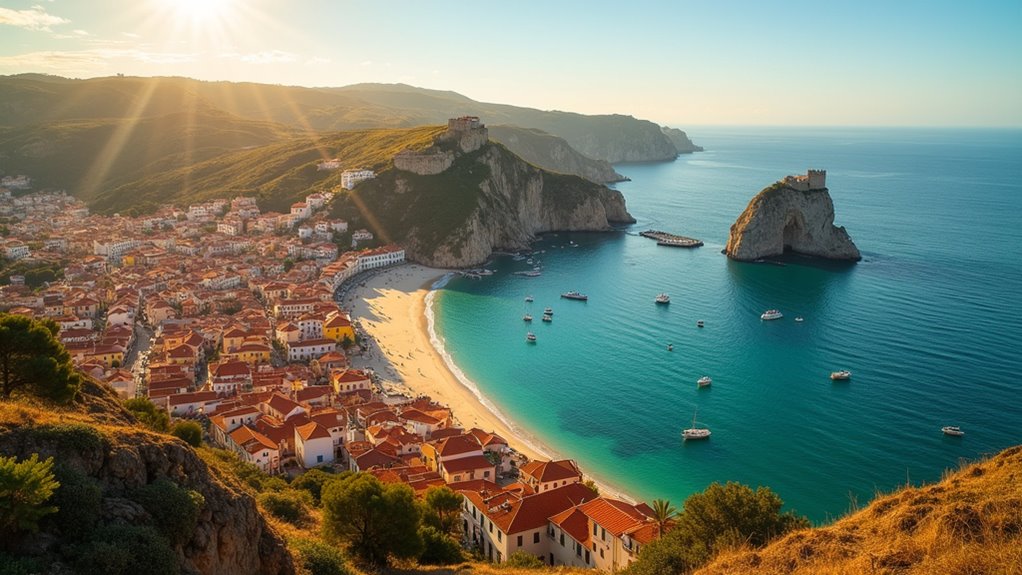
You’ve probably heard Portugal’s having a moment, but beyond the Instagram-worthy azulejo tiles and coastal cliffs lies a country that rewards curious travelers with unexpected discoveries. Whether you’re drawn to Lisbon’s melancholic fado echoing through narrow alleys, Porto’s wine cellars aging liquid gold, or medieval towns where time seems suspended, Portugal offers experiences that’ll shift your perspective on what European travel can be. Here’s how to uncover the soul of this Atlantic gem.
- Explore Lisbon’s Belém District and Its Maritime Monuments
- Wander Through Porto’s Ribeira and Sample Port Wine
- Beach-Hop Along the Algarve’s Dramatic Coastline
- Take a Day Trip to Sintra’s Fairy-Tale Palaces
- Discover the Medieval Charm of Óbidos
- Hike the Volcanic Landscapes of the Azores
- Experience Fado Music in Lisbon’s Alfama Neighborhood
- Tour the Douro Valley’s Terraced Vineyards
- Visit Madeira’s Levada Trails and Botanical Gardens
- Explore Évora’s Roman Temple and Bone Chapel
- Surf and Relax on the Silver Coast
- Taste Your Way Through Portugal’s Wine Regions
- Walk the Pilgrim Routes of Central Portugal
- The Sum Up
Explore Lisbon’s Belém District and Its Maritime Monuments
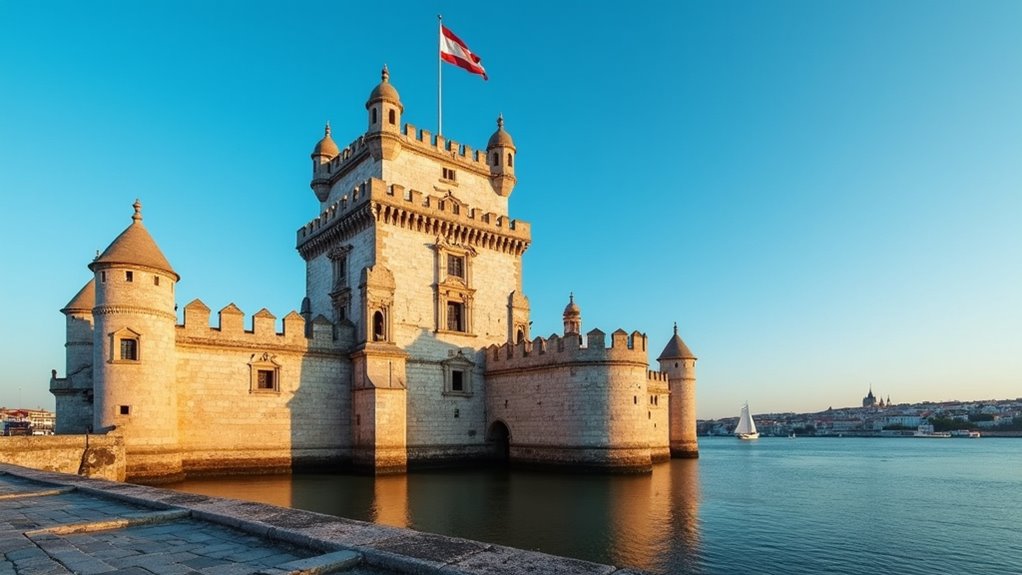
When you step into Lisbon’s Belém district, you’re entering Portugal’s most concentrated showcase of maritime glory. Start with Jerónimos Monastery, a Manueline masterpiece built from spice trade wealth that houses Vasco da Gama’s tomb. The intricate stone carvings and maritime motifs tell Portugal’s Age of Discovery story perfectly.
Next, climb Belém Tower‘s narrow staircases for panoramic Tagus River views. This 16th-century fortress exemplifies Manueline architecture with Gothic and Moorish influences. The Monument to the Discoveries offers another spectacular viewpoint from its 52-meter height, designed like a caravel’s prow with statues of famous Portuguese explorers.
Don’t miss the National Coach Museum’s royal carriages, then grab authentic pastéis de nata at Pastéis de Belém. The district is easily accessible by taking the E15 tram from the city center, which takes about 15 minutes. Both UNESCO World Heritage Sites anchor this district’s unmatched historical significance.
Wander Through Porto’s Ribeira and Sample Port Wine
Moving north from Lisbon’s maritime grandeur, you’ll discover Porto’s Ribeira district offers an entirely different yet equally mesmerizing riverside experience. This UNESCO World Heritage site captivates with its narrow cobblestone streets and colorful 16th-18th century buildings showcasing Gothic, Renaissance, and Baroque elements.
You’ll find yourself surrounded by street musicians playing traditional Portuguese music while artisans sell crafts in the scenic Ribeira Square. The square features a monumental fountain from the 1780s, beautifully decorated with Portugal’s coat-of-arms as its centerpiece.
Cross the iconic Dom Luís I Bridge to Vila Nova de Gaia for essential port wine tastings. Historic rabelo boats still dot the Douro River, reminding you of the wine trade’s legacy. The guided cellar tours reveal production secrets and aging processes.
Take the modern funicular back up to Battle Square, completing your perfect blend of architectural exploration and authentic Portuguese wine culture.
Beach-Hop Along the Algarve’s Dramatic Coastline
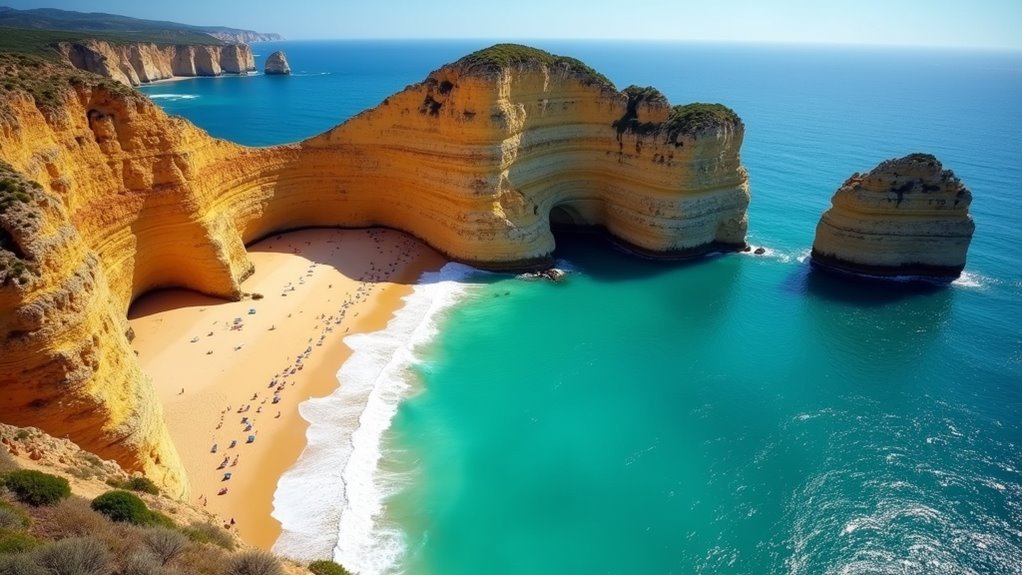
While Porto enchants with its historic charm, the Algarve’s southern coastline delivers an entirely different Portuguese experience through its spectacular 200-kilometer stretch of diverse beaches.
You’ll discover dramatic contrasts between the rugged western cliffs and calmer eastern bays.
Don’t miss Praia da Marinha‘s iconic rock arches or the famous Benagil Cave with its stunning skylight opening.
For quieter experiences, head to Porto Mós Beach or Praia da Luz, where you’ll escape the crowds plaguing popular spots during summer.
Western beaches like Praia do Amado and Sagres offer excellent surfing conditions, while sheltered coves around Lagos provide perfect snorkeling and kayaking opportunities. These beaches are surrounded by limestone cliffs topped with desert foliage, creating the Atlantic Ocean’s most dramatic coastal scenery.
With over 300 sunny days annually, you can beach-hop year-round, though visiting during off-season guarantees more peaceful exploration of this coastline’s hidden gems.
Take a Day Trip to Sintra’s Fairy-Tale Palaces
Just 40 minutes from Lisbon by train, Sintra transports you into a UNESCO World Heritage wonderland where fairy-tale palaces emerge from misty hilltops like something straight out of a storybook.
Start with Pena Palace, where colorful red, pink, and yellow facades create Portugal’s most Instagram-worthy castle. You’ll find Gothic, Moorish, and Renaissance styles blended into one fantastical structure built on a monastery’s earthquake-damaged ruins. The palace sits surrounded by Sintra’s dense forest with its uniquely humid and foggy climate that creates an otherworldly atmosphere.
Don’t miss Quinta da Regaleira‘s mysterious gardens and spiraling Initiation Well – it’s like exploring a Dan Brown novel come to life. The enigmatic tunnels and grottos reference Dante’s Divine Comedy and secret societies.
End at Sintra Palace in town center, where intricate Mudéjar tilework showcases centuries of royal summer retreats. Book tickets online beforehand, and wear comfortable shoes for hilltop exploring.
Discover the Medieval Charm of Óbidos
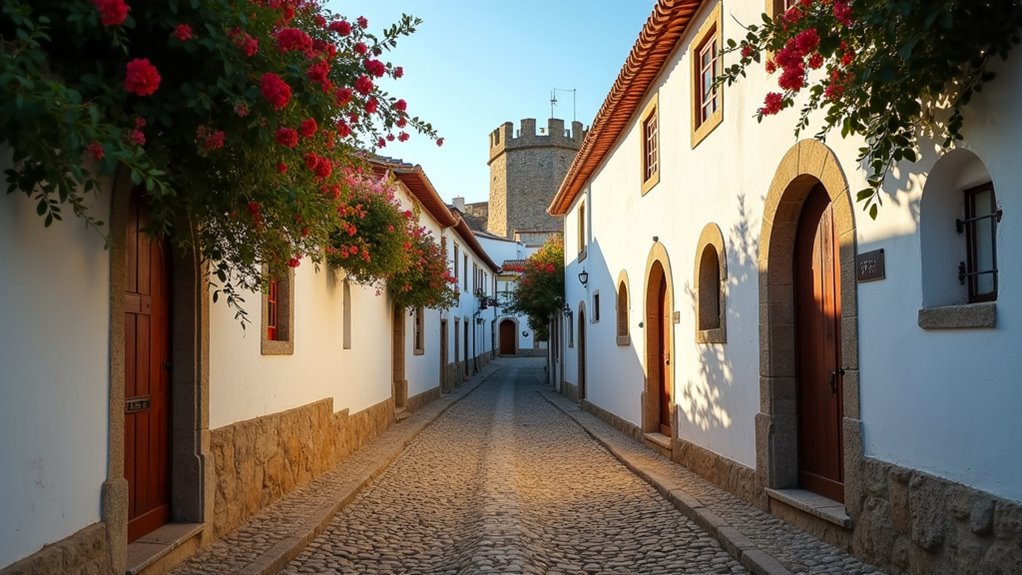
Step through the medieval gates of Óbidos, and you’ll find yourself wandering cobblestone streets that haven’t changed much since the 13th century. This perfectly preserved walled town was once gifted from kings to queens, and you’ll understand why as you explore its whitewashed houses and flower-lined paths.
Walk the 1.5-kilometer perimeter atop the ancient walls for panoramic countryside views. Don’t miss the ornate Porta da Vila entrance with its beautiful azulejo tiles, or the Church of Santa Maria where Portuguese royalty once wed.
The castle itself is now a luxury hotel, but you can still admire its mix of Gothic and Manueline architecture. This remarkable town earned recognition as a UNESCO City of Literature in 2015, celebrating its exceptional contribution to literary culture.
End your visit by sampling ginja, the town’s famous cherry liqueur served in edible chocolate cups—a sweet tradition you won’t find elsewhere.
Hike the Volcanic Landscapes of the Azores
When you venture into the Azores, you’ll discover some of Europe’s most dramatic volcanic hiking terrain spread across nine remote Atlantic islands. You can tackle Mount Pico, Portugal’s highest peak at 2,351 meters, where steep volcanic stone demands proper boots and layers for cold summit conditions.
For easier adventures, explore Faial’s Caldeira loop—a 3-4 mile trail around a massive crater with lush vegetation and panoramic views.
The challenging Ten Volcanoes Trail stretches from Faial Caldeira to Capelinhos Volcano, covering diverse landscapes from laurel forests to exposed volcanic sections. This strenuous 12-mile route requires approximately 6 hours to complete and passes through eight volcanoes with numerous steep ascents and descents.
On São Miguel, you’ll find the stunning Sete Cidades rim trail showcasing blue and green volcanic lakes, plus the steep Lagoa do Fogo ascent.
Pack gear for variable weather and rugged terrain—these volcanic landscapes reward prepared hikers with unforgettable geological wonders.
Experience Fado Music in Lisbon’s Alfama Neighborhood
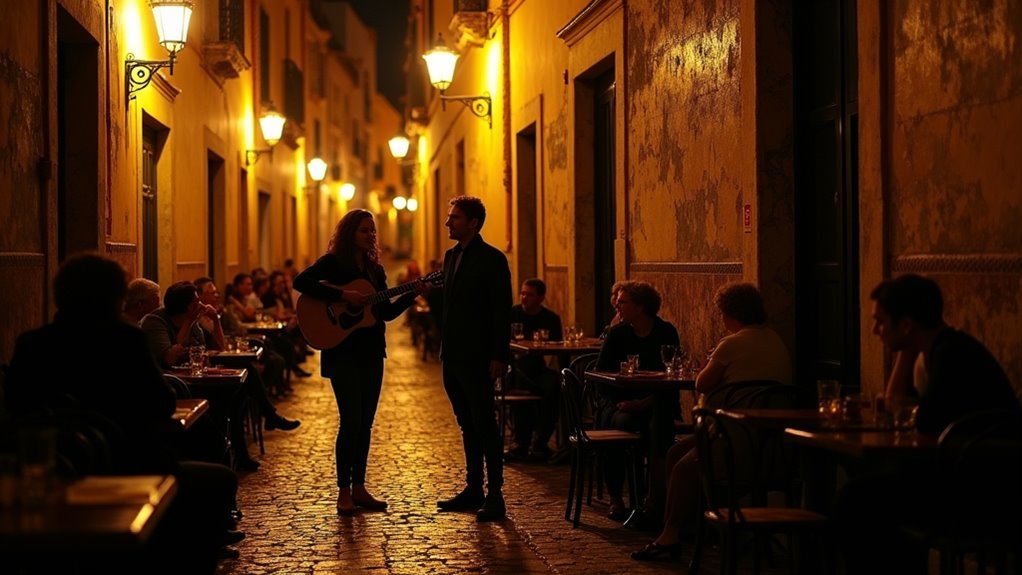
While the Azores offer Portugal’s most dramatic natural landscapes, Lisbon’s Alfama neighborhood serves up the country’s most soul-stirring musical experience.
You’ll find fado’s birthplace in these winding cobblestone streets, where 19th-century maritime workers first sang about longing and fate. Head to authentic casas de fado like Clube de Fado or Parreirinha de Alfama for intimate performances featuring a solo fadista accompanied by Portuguese and classical guitars.
The melancholic music centers on saudade – that untranslatable Portuguese sense of profound longing. The word “fado” itself derives from the Latin fatum, meaning fate, creating a poetic double meaning that permeates every song. Book an evening tour through Alfama’s atmospheric alleys, then settle into a traditional fado house where you’ll pair haunting melodies with Portuguese cuisine.
Don’t miss the Fado Museum to understand this UNESCO-recognized cultural heritage.
Tour the Douro Valley’s Terraced Vineyards
Beyond Lisbon’s soulful melodies lies Portugal’s most breathtaking agricultural masterpiece—the Douro Valley’s hand-built terraced vineyards that cascade down mountainsides like ancient amphitheaters. You’ll discover the world’s oldest demarcated wine region, where UNESCO-protected stone terraces represent centuries of backbreaking labor. Book a river cruise at twilight for spectacular views, then explore family-owned quintas offering intimate tastings of Touriga Nacional and Port wines.
Don’t miss the traditional foot-crushing demonstrations—machines simply can’t replicate the quality. Visit ancient cellars where aging processes unfold before your eyes, and join blending workshops led by passionate vintners. Modern patamares platforms carved with earth-moving equipment have replaced many historic stone-walled terraces, creating sweeping contour lines across the mountainous landscape.
The valley’s scorching summers and flint-rocky soils create Portugal’s most distinctive wines, while those pyramid-step terraces provide Instagram-worthy backdrops at every turn.
Visit Madeira’s Levada Trails and Botanical Gardens
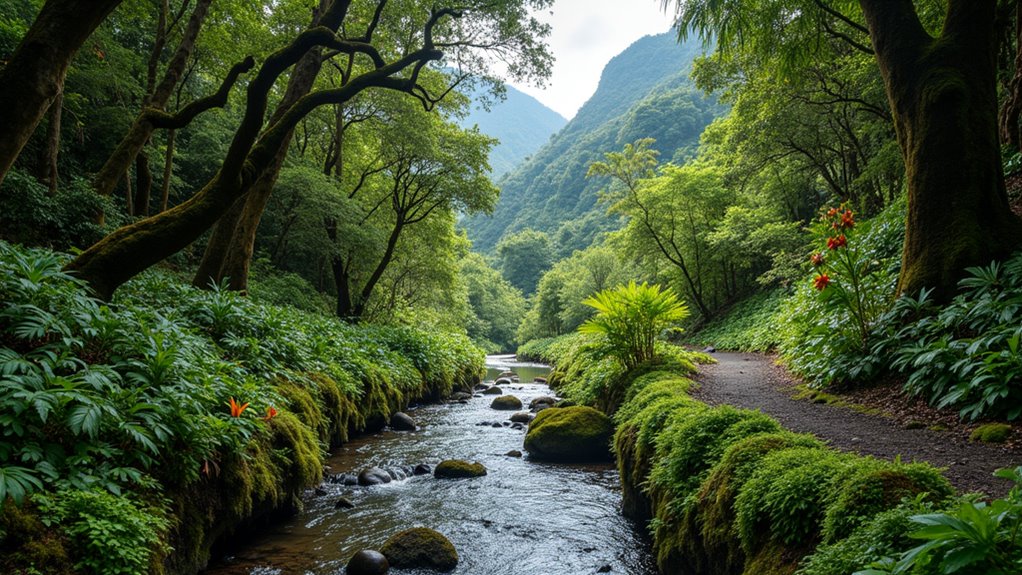
Though Madeira’s volcanic peaks steal most postcards, you’ll find the island’s true magic along its ingenious levada trails—ancient irrigation channels that double as hiking highways through laurel forests and misty mountains.
Start with PR9 Levada do Caldeirão Verde for jungle-like scenery and waterfalls, or tackle PR18 Levada do Rei if you prefer fewer crowds. Official PR trails cost €3 daily but offer better safety features like handrails and signposting.
Pack a headlamp for tunnel sections and sturdy shoes for muddy paths. Always check NetMadeira webcams before heading out to monitor current trail conditions across the island’s diverse microclimates.
Between hikes, explore Funchal’s Botanical Gardens showcasing endemic species and tropical collections. The orchid house and panoramic bay views provide perfect rest stops.
This combination lets you experience Madeira’s engineering heritage and biodiversity in one unforgettable adventure.
Explore Évora’s Roman Temple and Bone Chapel
When you step into Évora’s historic center, you’ll discover one of Portugal’s most remarkable archaeological treasures—the Roman Temple that’s dominated the city’s skyline for nearly 2,000 years. Built in the 1st century CE and originally dedicated to Emperor Augustus, this Corinthian-style temple features fourteen granite columns topped with white marble capitals from nearby Estremoz.
Though locals call it the “Temple of Diana,” that’s actually a 17th-century mistake that stuck.
After exploring the temple, walk to the nearby Church of Saint Francis to experience the haunting Bone Chapel. Franciscan monks constructed this 17th-century chapel using thousands of human skulls and bones, creating an unforgettable reminder of mortality. The temple survived Germanic invasions in the 5th century that destroyed much of the original structure. It’s Portugal’s largest bone chapel and provides a striking contrast to the ancient Roman architecture you’ve just witnessed.
Surf and Relax on the Silver Coast
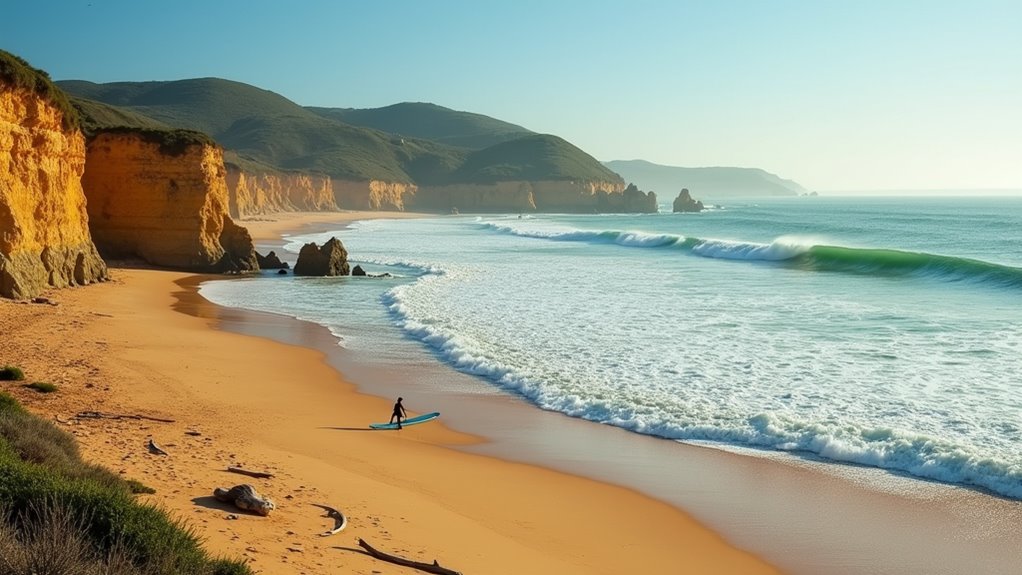
Just ninety minutes north of Lisbon, Portugal’s Silver Coast delivers some of Europe’s most consistent surf breaks without the crowds you’ll find at more famous destinations. You’ll discover Baleal’s diverse spots—from beginner-friendly Almagreira to the powerful barrels of Supertubos, where international competitions happen.
Summer offers smaller waves perfect for learning, while autumn and spring bring bigger swells for experienced surfers.
Beyond surfing, you can explore golden sand beaches like Praia Azul for windsurfing or paragliding. Don’t miss Salir do Porto’s towering 50-meter dune—Portugal’s highest.
The Obidos Lagoon provides calmer water for sailing and rowing. The lagoon’s waters are known for their therapeutic qualities, making it a perfect spot for relaxation after active water sports. Baleal’s surf schools and rental shops make it easy to get started, while authentic fishing villages maintain their charm despite growing tourism infrastructure.
Taste Your Way Through Portugal’s Wine Regions
While Portugal’s beaches draw millions of visitors, the country’s wine regions offer equally compelling reasons to explore beyond the coast. Start in the UNESCO-listed Douro Valley, where you’ll discover the world’s oldest demarcated wine region and sample legendary Port wines among terraced vineyards cascading toward the river.
Head south to Alentejo, Portugal’s largest wine territory, where eight subregions produce rich reds and crisp whites from indigenous grapes like Touriga Nacional and Antão Vaz. Don’t miss the mountain-protected Dão region, birthplace of Portugal’s flagship red grape, where granite soils create wines with elegant tannins.
In northern Minho, taste Vinho Verde‘s revitalizing whites with their characteristic slight effervescence. The region spans 34,000 hectares, making it Portugal’s largest wine region by area and offering countless opportunities to sample these fresh, aromatic wines best enjoyed young.
Finally, explore Setúbal Peninsula for the intensely aromatic Moscatel fortified dessert wines that showcase Portugal’s unique winemaking heritage.
Walk the Pilgrim Routes of Central Portugal
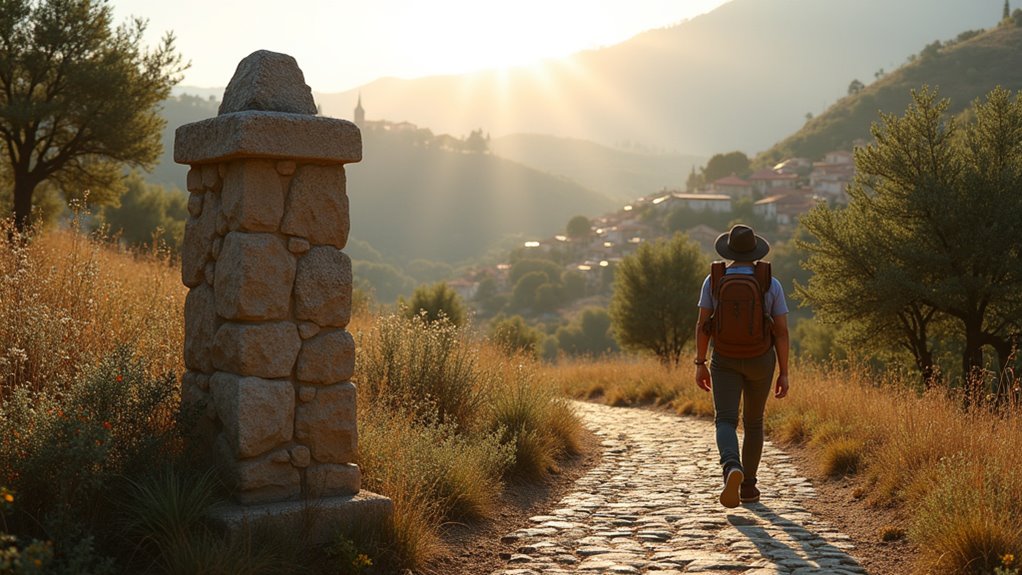
For centuries, pilgrims have walked Portugal’s ancient pathways toward Santiago de Compostela, and you can follow their footsteps along the Portuguese Central Route—the most historic and authentic pilgrimage trail in the country. Starting in Porto, you’ll traverse diverse landscapes from urban streets to rural olive groves and forests along the Tejo River valley.
The route follows ancient Roman roads like Via XIX, passing through historic gems including Coimbra and Ponte de Lima with its remarkable Roman bridge. You’ll encounter medieval religious heritage sites, Templar castles, and UNESCO World Heritage locations that have welcomed pilgrims since the Middle Ages. The Knights of Santiago played a crucial role in protecting and providing hospitality to pilgrims along these routes, particularly in cities like Braga and Tomar.
This isn’t just hiking—it’s walking through living history where Queen Isabel of Portugal once traveled in 1325, experiencing the same spiritual and cultural journey that has connected peoples across political borders for nearly a millennium.
The Sum Up
You’ve got endless possibilities waiting in Portugal, from Lisbon’s historic neighborhoods to Porto’s wine cellars and the Algarve’s pristine beaches. Don’t try to cram everything into one trip—you’ll miss the magic of lingering over a sunset fado performance or discovering that hidden beach locals told you about. Pick a region, slow down, and let Portugal’s rhythm guide you. Trust me, you’ll already be planning your return before you’ve left.