
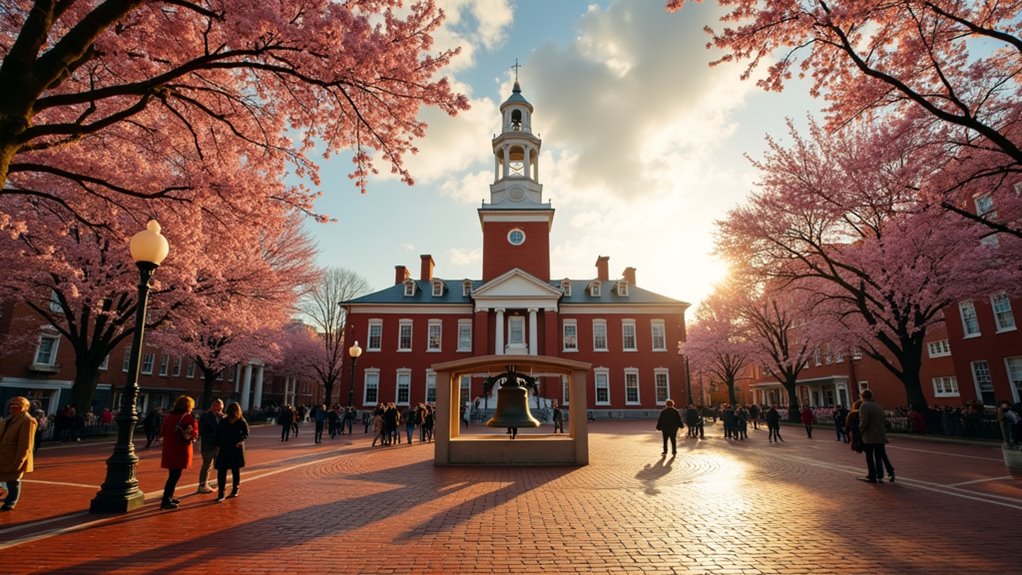
You’ll find plenty to explore in Philadelphia, from stepping inside Independence Hall where America was born to climbing the famous Rocky Steps at the Philadelphia Museum of Art. Wander through Reading Terminal Market‘s 80+ food vendors, stroll the cobblestone streets of Old City, and relax in Rittenhouse Square’s European-inspired gardens. Don’t miss the Barnes Foundation’s world-class art collection, Eastern State Penitentiary’s haunting history, or biking the scenic Schuylkill River Trail for even more discoveries.
- Step Inside Independence Hall Where America Was Born
- Ring in History at the Liberty Bell Center
- Climb the Rocky Steps at the Philadelphia Museum of Art
- Wander Through Reading Terminal Market’s Food Wonderland
- Explore the Cobblestone Streets of Old City
- Get Lost in Isaiah Zagar’s Magic Gardens
- Take a Peaceful Stroll Through Rittenhouse Square
- Discover World-Class Art at the Barnes Foundation
- Experience Eastern State Penitentiary’s Haunting History
- Bike or Walk the Schuylkill River Trail
- The Sum Up
Step Inside Independence Hall Where America Was Born
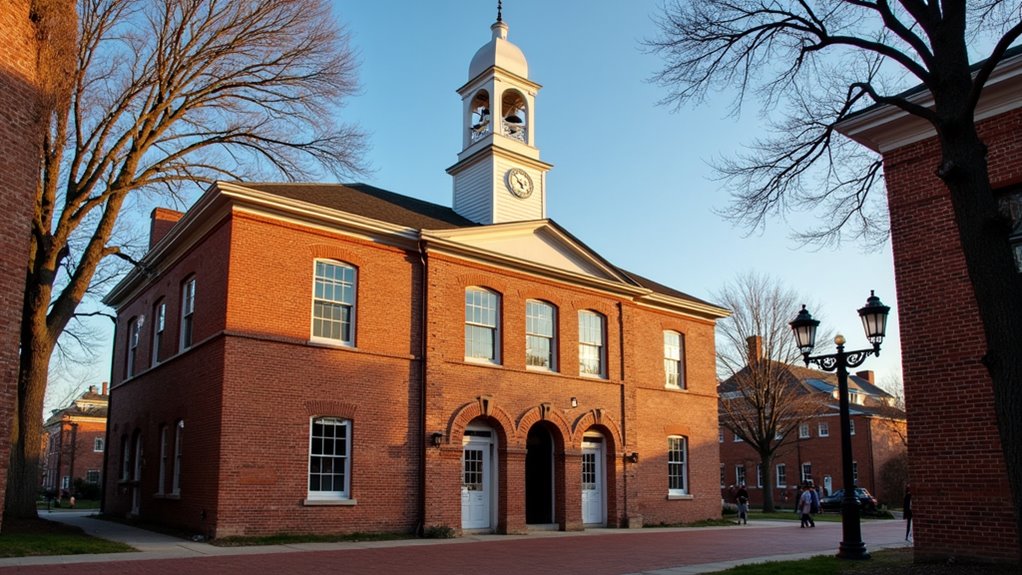
Since Independence Hall sits at the heart of Philadelphia’s historic district, you’ll want to plan at least two hours to fully appreciate where America’s founding documents came to life. You’ll need free timed tickets from the Independence Visitor Center, available same-day or reserved online in advance during peak season.
Inside the Georgian-style building, you’ll stand in the actual Assembly Room where the Declaration of Independence was signed in 1776 and the Constitution was drafted in 1787. Rangers guide you through the restored chambers, explaining how the Second Continental Congress transformed this Pennsylvania State House into America’s birthplace. This historic venue also hosted the ratification of the Articles of Confederation in 1781, cementing its role as the cradle of American governance.
Don’t miss the wooden steeple and bell tower dating to 1828. The building’s red brick facade and classical proportions remain remarkably authentic to its 1753 completion.
Ring in History at the Liberty Bell Center
Where else can you stand face-to-face with America’s most iconic symbol of freedom? The Liberty Bell Center offers exactly that experience, housing the 2,080-pound bronze bell that summoned colonists to hear the Declaration of Independence’s first public reading in 1776.
You’ll walk through spacious exhibits that trace the bell’s journey from a simple State House bell to a global symbol of liberty. The famous crack that silenced the bell in 1846 tells its own story of American perseverance. While you can’t hear it ring anymore, interpretive displays bring its revolutionary history to life.
Located at Sixth and Market Streets since 2003, admission is completely free. The center’s linear design guides you naturally toward the bell, creating an unforgettable encounter with living history. The bell’s biblical inscription “Proclaim LIBERTY Throughout all the Land unto all the Inhabitants Thereof” greets visitors as they approach this treasured artifact.
Climb the Rocky Steps at the Philadelphia Museum of Art
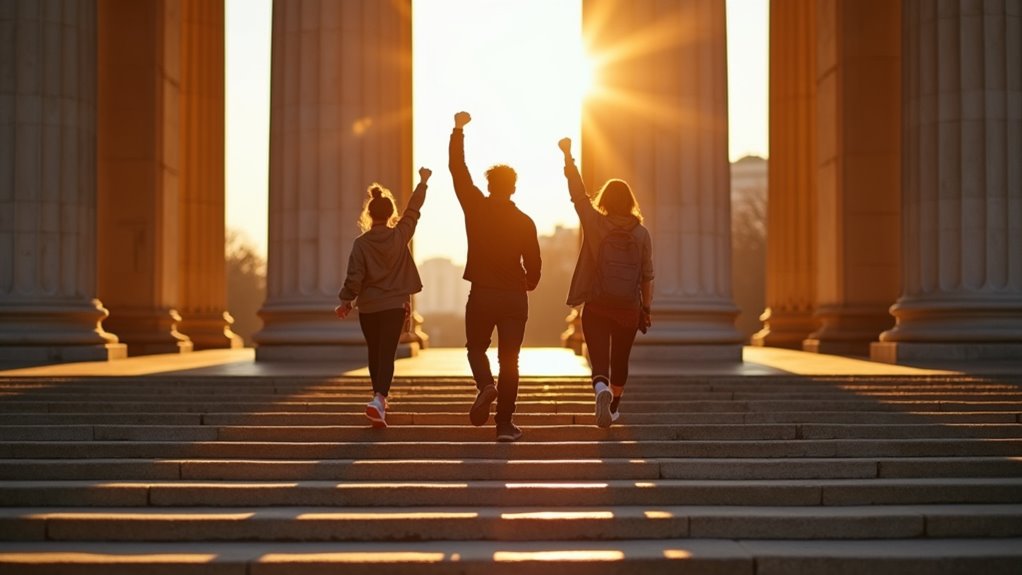
While most movie locations fade from memory, the 72 stone steps at the Philadelphia Museum of Art have become one of the world’s most recognizable cinematic landmarks. Thanks to Rocky’s iconic 1976 training montage, you’ll find yourself among tens of thousands who climb these steps annually, reenacting Balboa’s triumphant ascent with raised arms at the summit.
Start at the bronze Rocky statue for photos, then tackle the east-facing staircase. The panoramic views from the top showcase the Benjamin Franklin Parkway and Center City skyline—perfect for victory shots. The steps are architecturally divided into six parts, with the top section featuring 7 steps and each of the five lower sections containing 13 steps.
This free experience captures Philadelphia’s underdog spirit while offering scenic vantage points.
Consider combining your climb with museum entry, though the steps themselves provide enough entertainment for budget-conscious visitors seeking that authentic Rocky moment.
Wander Through Reading Terminal Market’s Food Wonderland
After working up an appetite from your Rocky Steps adventure, head to Reading Terminal Market where food vendors have been feeding Philadelphia since 1893. This 120,000-square-foot food hall houses over 80 merchants selling everything from fresh produce and meats to prepared foods from around the world.
You’ll find the market beneath the historic Reading Terminal building, conveniently located above Jefferson Station for easy transit access. Wander the long, narrow hall and explore sections dedicated to baked goods, seafood, specialty items, and hot meals.
The market’s mix of traditional Pennsylvania Dutch vendors and diverse international cuisines means you can grab anything from a cheesesteak to authentic Amish pastries without breaking the bank. It’s a genuine local experience that locals and travelers alike have enjoyed for over 130 years.
The market was built after the Philadelphia and Reading Railroad Company consolidated four Philadelphia terminals into one large downtown terminal in 1890, creating the need for a central marketplace beneath the new Reading Terminal.
Explore the Cobblestone Streets of Old City
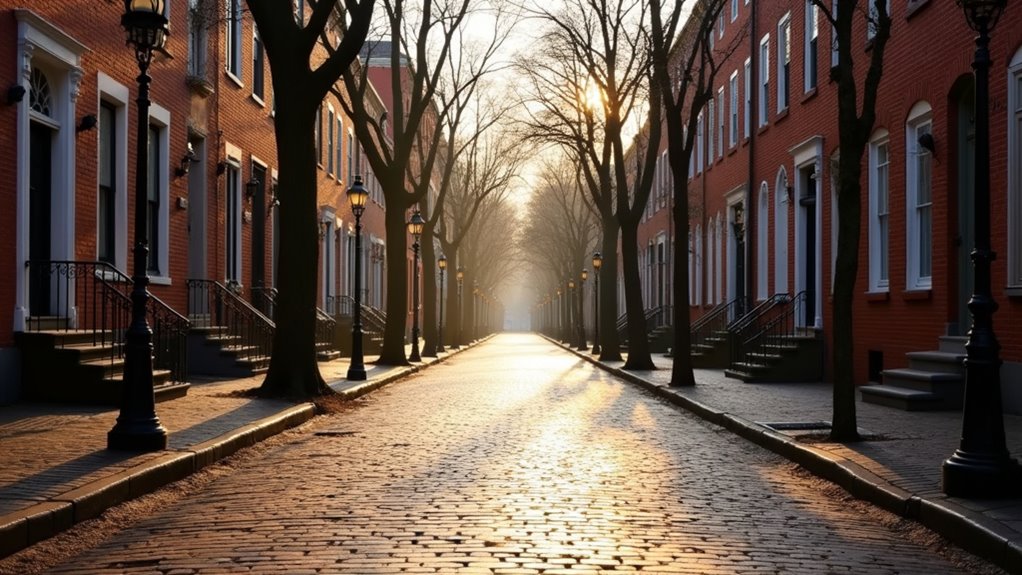
Seven blocks of original cobblestone streets survive in Philadelphia’s Old City, where you can literally walk the same paths that colonial merchants and revolutionaries once traveled. These irregularly shaped river stones, collected from the Delaware and Schuylkill rivers in the early 18th century, create an authentic time machine experience that costs nothing to enjoy.
Start at Elfreth’s Alley, America’s oldest residential street dating to 1703, then follow the cobblestone corridor toward Christ Church and the Betsy Ross House. The uneven stones beneath your feet are the real deal – not replicas. These cobblestones served as the solid foundation for horse-drawn carriages and wagons that were central to Philadelphia’s transportation and commerce during colonial times.
You’ll find these historic stretches between Front and Sixth Streets, where 93% of Philadelphia’s streets were once paved this way. It’s free history lesson with every step.
Get Lost in Isaiah Zagar’s Magic Gardens
Step through the entrance at 1020 South Street, and you’ll find yourself in Philadelphia’s most spectacular fever dream – a three-lot mosaic wonderland where every inch screams with color, mirrors, and found objects. Isaiah Zagar spent fourteen years transforming vacant lots into this labyrinthine art environment, using handmade tiles, bicycle wheels, bottles, and Latin American folk art to create tunnels, grottos, and maze-like passages.
You’ll wander through narrow corridors where walls, floors, and ceilings shimmer with kaleidoscopic mosaics. The outdoor sculpture garden connects to indoor galleries featuring rotating exhibitions. The Gardens also offer hands-on mosaic workshops where visitors can learn Zagar’s techniques and create their own artistic pieces. Plan to spend an hour exploring the bi-level paths and discovering hidden iconography.
Buy tickets in advance – it’s open six days weekly but closed Tuesdays, with typical hours from 11 a.m. to 6 p.m.
Take a Peaceful Stroll Through Rittenhouse Square
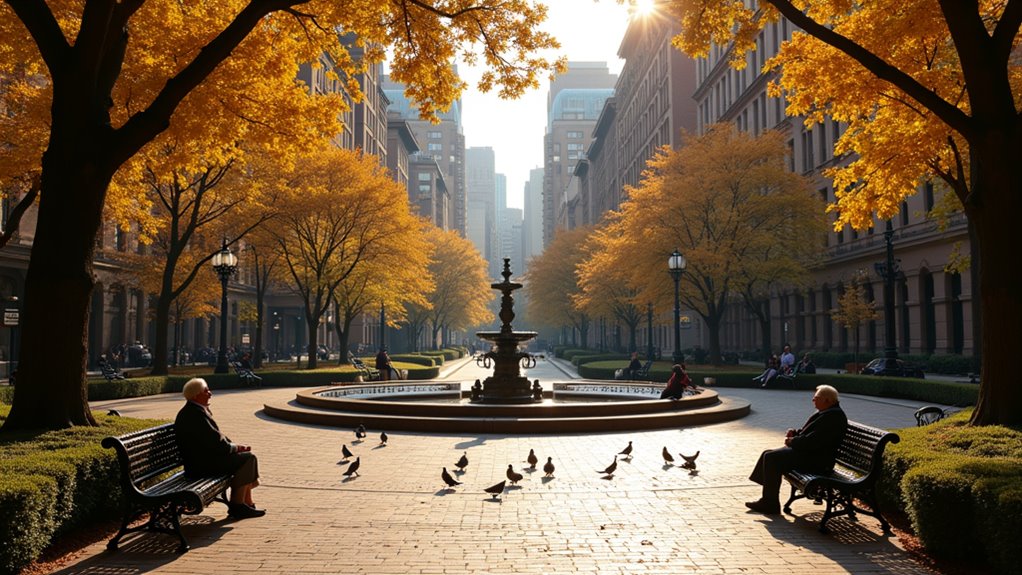
When you need a break from Philadelphia’s bustling streets, Rittenhouse Square offers six acres of European-inspired tranquility right in the heart of Center City. This historic park, redesigned in 1913 by French architect Paul Philippe Cret, features Parisian-style gardens, classical Greek statues, and a stunning central reflection fountain.
You’ll find plenty of shaded benches under century-old trees, perfect for people-watching or enjoying lunch. Kids love the bronze goat sculpture by Philadelphia artist Albert Laessle – it’s been a favorite climbing spot for generations.
The well-maintained walking paths wind through manicured gardens surrounded by elegant high-rises and historic townhouses. The square was renamed in 1825 to honor David Rittenhouse, a prominent Philadelphia astronomer and Revolutionary War leader.
Best of all, it’s completely free. Whether you’re escaping tourist crowds or simply want to experience one of America’s most beautiful urban squares, Rittenhouse delivers peaceful respite.
Discover World-Class Art at the Barnes Foundation
After soaking up some outdoor serenity, you’ll want to experience Philadelphia’s crown jewel of fine art. The Barnes Foundation houses one of the world’s greatest collections of impressionist and post-impressionist paintings, featuring 181 Renoirs and 69 Cézannes—the largest groups worldwide.
What makes this museum unique isn’t just the masterpieces, but how they’re displayed. Forget traditional layouts—paintings hang alongside African sculptures, wrought iron, and furniture in dense “ensembles” that highlight visual relationships rather than chronology.
You’ll see Matisse’s *The Dance* paired with medieval objects and Native American textiles.
Founded as an educational institution in 1922, the Barnes teaches you how to really look at art through these unconventional arrangements that remain exactly as collector Albert Barnes left them. Dr. Barnes began his collecting journey in 1912 after making his pharmaceutical fortune.
Experience Eastern State Penitentiary’s Haunting History
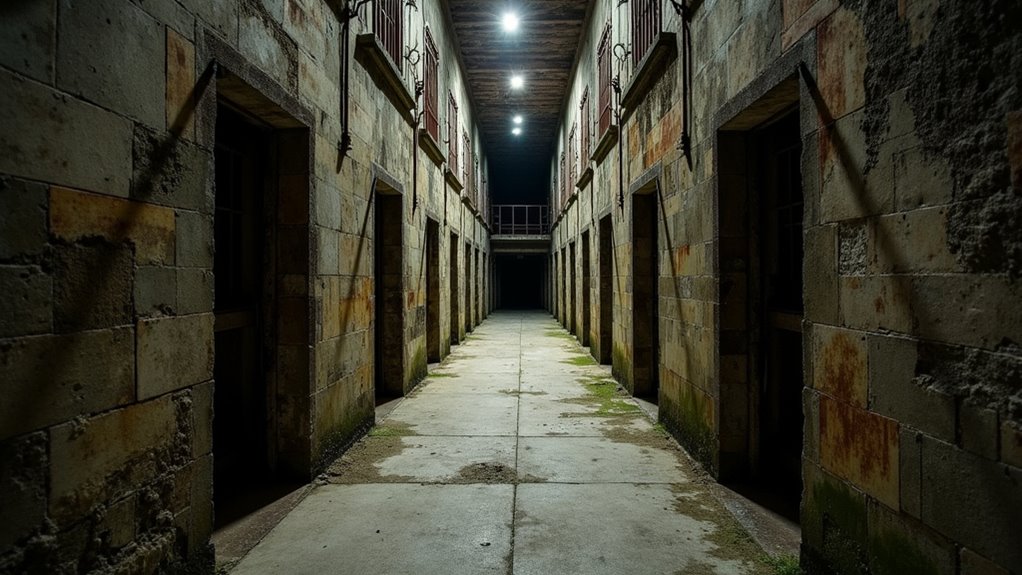
While most travelers flock to Independence Hall, you’ll find Philadelphia’s most chilling piece of history at Eastern State Penitentiary. This crumbling fortress pioneered solitary confinement when it opened in 1829, housing over 75,000 inmates including Al Capone before closing in 1971.
You’ll walk through deteriorating cellblocks where prisoners spent 24 hours daily in isolation, designed to inspire penitence rather than punishment. The radial “hub-and-spoke” layout maximized surveillance, while cells featured advanced amenities like flush toilets and central heating—luxuries for their time.
Today’s self-guided tours reveal harsh realities behind the reform experiment that influenced 300 prisons worldwide. The prison earned recognition as a National Historic Landmark in 1965 for its groundbreaking contributions to penal reform. Don’t miss Al Capone’s furnished cell or the windowless underground punishment cells that’ll send shivers down your spine.
Bike or Walk the Schuylkill River Trail
Since most of Philadelphia’s iconic sights cluster along the waterfront, you’ll cover serious ground by exploring the Schuylkill River Trail—a multi-use path that stretches over 75 miles when complete, with about 30-60 miles currently rideable or walkable in the Philadelphia area.
You’ll cruise past Boathouse Row, the Philadelphia Museum of Art, and Fairmount Water Works on smooth asphalt surfaces. The 10-15 foot wide trail accommodates cyclists, walkers, and joggers from sunrise to sunset.
Start near 30th Street Station for car-free access, then head through Manayunk’s canal towpath or explore Bartram’s Mile for skyline views. The former railroad route offers gentle grades and connects to Valley Forge National Historical Park, where revolutionary war sites add historical depth to your workout. Recent federal funding has allocated over $13 million in early 2025 for trail extension projects that will further expand connectivity throughout the region.
The Sum Up
You’ve got plenty to explore in Philly without breaking the bank. Most of these attractions won’t cost you much—many are free or under $20. Pack comfortable walking shoes since you’ll cover serious ground between Independence Hall and the art museums. Don’t miss the food scene at Reading Terminal Market where you can grab affordable bites. Whether you’re into history, art, or just soaking up the city’s vibe, Philadelphia delivers authentic experiences.