
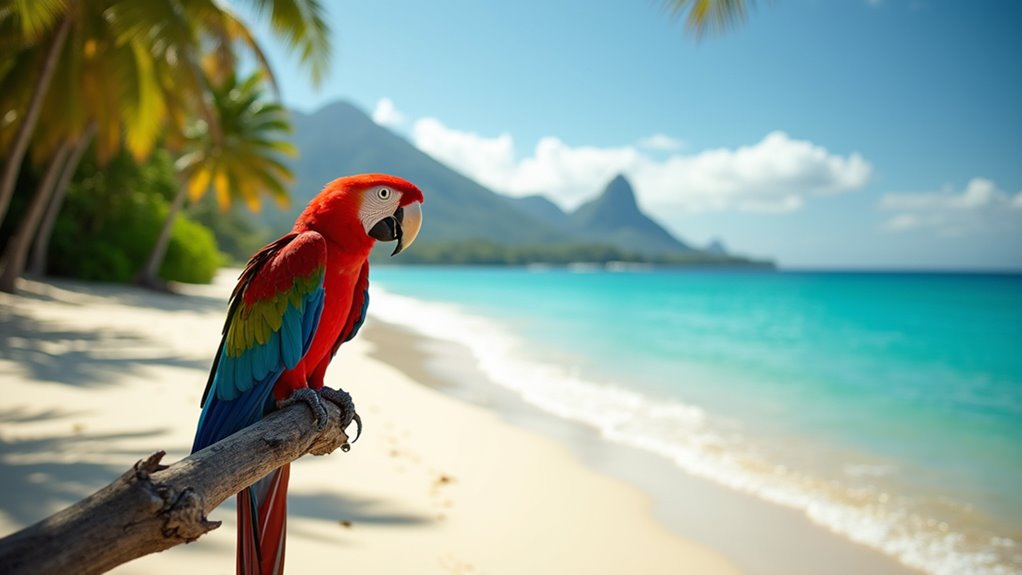
Costa Rica offers incredible biodiversity experiences you can’t find anywhere else. You’ll walk jungle trails at Manuel Antonio spotting sloths overhead, witness green sea turtle nesting at Tortuguero’s moonlit beaches, and explore Corcovado’s pristine wilderness home to jaguars and scarlet macaws. Don’t miss surfing Tamarindo’s beginner-friendly waves, soaking in La Fortuna’s thermal springs, or rafting Pacuare River‘s world-class rapids through dense rainforest where toucans call from the canopy above—and there’s so much more waiting.
- Walk the Trails at Manuel Antonio National Park
- Watch Green Sea Turtles Nest at Tortuguero
- Search for Wildlife in Corcovado National Park
- Hike Through Monteverde’s Cloud Forest
- Take a Dip at La Fortuna Waterfall
- Marvel at Rio Celeste’s Electric Blue Waters
- Peer Into Poás Volcano’s Active Crater
- Soak in Natural Hot Springs Near Arenal
- Learn to Surf at Tamarindo Beach
- Snorkel With Sea Turtles at Caño Island
- Raft the Rapids on Pacuare River
- Explore San José’s Markets and Museums
- The Sum Up
Walk the Trails at Manuel Antonio National Park
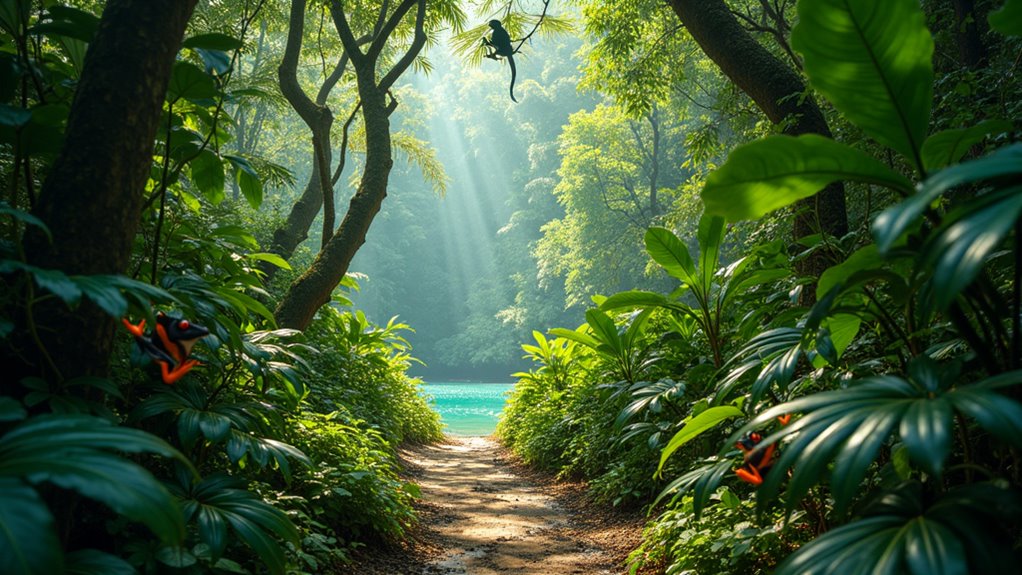
Ten interconnected trails wind through Manuel Antonio National Park‘s compact 16 square kilometers, offering you direct access to primary rainforest, mangrove wetlands, and dramatic coastal viewpoints within a single day’s exploration.
You’ll want to prioritize the Punta Catedral loop for sweeping ocean vistas, though the challenging Mirador Trail rewards steep climbs with panoramic coastline views.
For wildlife encounters, take the accessible Perezoso Trail where sloths frequent the canopy, or explore Caña Blanca’s three-mile stretch for exceptional birdwatching opportunities. The short La Catarata trail leads you to a small waterfall where frogs can be spotted along the 900-meter route.
The elevated Manglar boardwalk protects fragile ecosystems while providing barrier-free access.
You can easily combine multiple trails—link Gemelas to Puerto Escondido via Los Congos for a comprehensive circuit showcasing Costa Rica’s remarkable biodiversity within this biodiverse coastal sanctuary.
Watch Green Sea Turtles Nest at Tortuguero
Where else can you witness one of nature’s most ancient rituals unfold under a canopy of stars? Tortuguero National Park offers this extraordinary experience, hosting the Western Hemisphere’s most important green sea turtle nesting site.
You’ll need to book certified guides for nighttime tours running 7-10 pm during peak season (July-October). The park’s same-day allocation system requires flexible evening plans, so secure your spot early in the afternoon.
Groups are limited to 15 visitors to minimize disturbance as massive females emerge under darkness to dig pear-shaped chambers and deposit roughly 100 eggs. The park’s 22-mile beach serves as a crucial nesting and hatching site for multiple sea turtle species.
You might witness false crawls when conditions aren’t perfect, demonstrating these ancient mariners’ incredible instincts. This protected sanctuary safeguards endangered species, making your visit both thrilling and meaningful for conservation efforts.
Search for Wildlife in Corcovado National Park
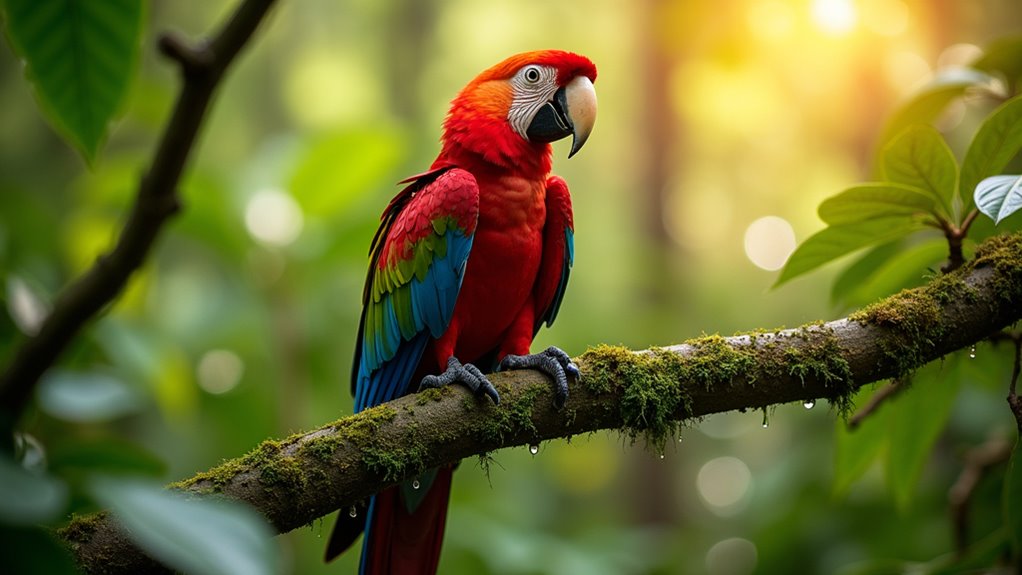
While most parks offer glimpses of wildlife, Corcovado National Park delivers an immersive encounter with Earth’s most biodiverse ecosystem, hosting roughly 2.5% of global biodiversity within its 424 square kilometers of pristine rainforest.
You’ll spot all four Costa Rican monkey species, including endangered Central American squirrel monkeys traveling in troops up to 70 individuals. The park shelters jaguars, Baird’s tapirs, and Costa Rica’s largest scarlet macaw population.
Plan multi-day stays at ranger stations like Sirena, where overlapping habitats—mangroves, rivers, and beaches—maximize wildlife encounters. Hire experienced guides who’ll detect sloths, anteaters, and elusive cats using motion cues and tracks.
Early mornings and late afternoons offer ideal viewing conditions. Between July and October, witness green turtles returning to nest along the park’s pristine shores.
Hike Through Monteverde’s Cloud Forest
Thirteen kilometers of trails wind through Monteverde’s legendary cloud forest, where you’ll hike among some of Earth’s rarest ecosystems suspended between the Pacific and Caribbean slopes. The persistent mist creates an otherworldly environment where epiphytes, mosses, and bromeliads blanket every surface in emerald green.
You can tackle the main loop in 1.5 hours or commit to a half-day perimeter circuit covering 5 kilometers. Start with Sendero Nubloso to reach La Ventana’s Continental Divide viewpoint, then continue via the suspension bridge for canopy-level perspectives.
The wide, flat Camino trail suits beginners, while Roble and Wilford Guindon offer steeper challenges.
Keep watch for the elusive Resplendent Quetzal along Sendero Bosque Nuboso. Strong winds and frequent cloud cover demand layers and waterproof gear year-round. Consider hiring Ocotea Tours to explore the core forest areas with local naturalists who provide optical gear like telescopes for enhanced wildlife viewing.
Take a Dip at La Fortuna Waterfall
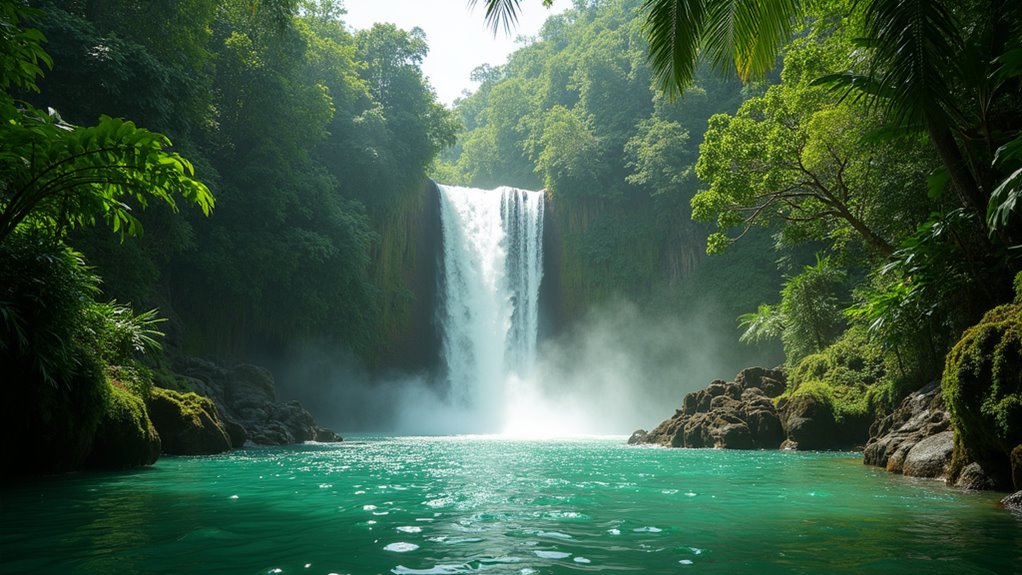
From the misty heights of Monteverde, head to the volcanic lowlands of Alajuela Province where La Fortuna Waterfall thunders 230 feet into an emerald swimming hole. You’ll descend nearly 500 concrete steps through dense tropical forest—allow 15 minutes down, 30 minutes back up.
The cool mountain water offers perfect relief from humid hiking, though swimming’s restricted during rainy season when currents strengthen.
Plan three hours total and arrive early (gates open 7 AM) to beat crowds that peak after 10 AM. Entry costs $18 for foreign adults. Bring sturdy shoes for wet steps, quick-dry clothes, and waterproof phone protection.
The challenging ascent demands moderate fitness, but locals have maintained this trail for decades, using entrance fees to support conservation and community development around La Fortuna. Your ticket also includes access to an Orchid Garden showcasing native Costa Rican species near the visitor center.
Marvel at Rio Celeste’s Electric Blue Waters
Deep within Tenorio Volcano National Park, Río Celeste displays one of Costa Rica’s most extraordinary natural phenomena—waters that glow electric blue through a fascinating collision of volcanic chemistry and physics. This stunning color emerges where two tributaries meet at El Teñidero, creating suspended aluminosilicate particles that scatter sunlight into brilliant turquoise hues.
You’ll hike a 5-6 kilometer trail to reach the iconic 98-foot waterfall, passing bubbling hot springs and the mesmerizing Blue Lagoon. Pack sturdy shoes and rain gear—the jungle path becomes treacherously muddy during Costa Rica’s wet season. The park welcomes fewer than 24,000 visitors annually, ensuring you’ll experience this natural wonder without overwhelming crowds.
While swimming’s prohibited for conservation, you can photograph this natural wonder from designated viewpoints. Plan your visit during dry season (December-April) when reduced rainfall enhances the electric blue intensity.
Peer Into Poás Volcano’s Active Crater
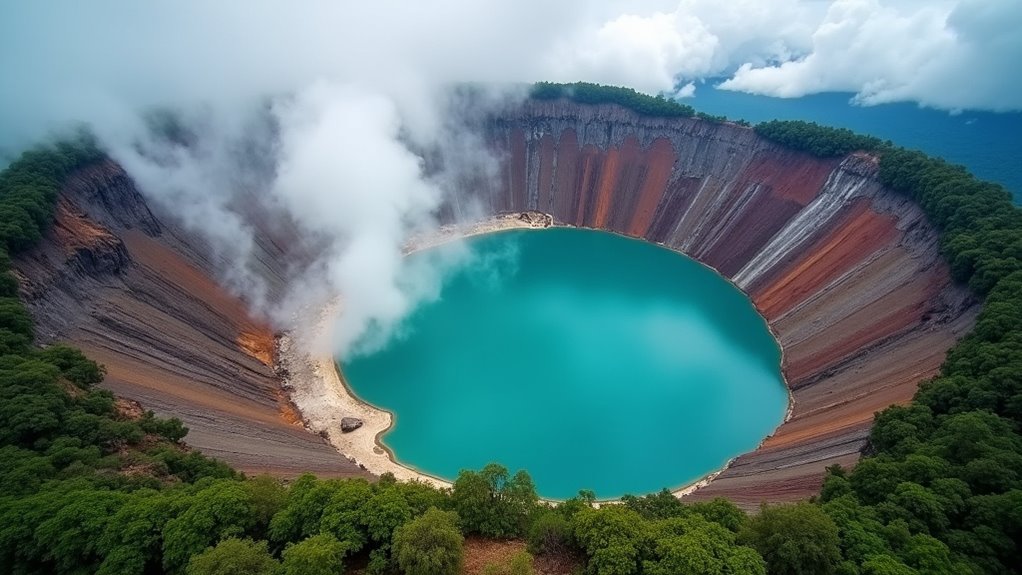
While most volcanoes keep their secrets hidden beneath solid rock, Poás Volcano offers you a rare window into an active crater’s churning depths. You’ll peer into one of the world’s largest active craters, nearly a mile wide and over 900 feet deep, containing the hyperacidic Laguna Caliente lake that shifts from aquamarine to green.
Located just 1.5 hours from San José in the Central Valley, this stratovolcano reaches 8,885 feet above sea level. You must book timed entry slots in advance since the park closes during eruptions and high volcanic activity. The crater maintains extreme temperatures reaching up to 819°C at the active vents, creating the intense thermal conditions that fuel the dramatic volcanic displays.
The 15-minute paved walk from the visitor center leads to reinforced viewpoints where you’ll witness steaming fumaroles, gas plumes, and occasionally spectacular water geysers shooting 820 feet high.
Soak in Natural Hot Springs Near Arenal
After exploring Arenal’s volcanic peaks, you’ll discover that the same geothermal forces create Costa Rica’s most spectacular hot springs experience.
The region’s mineral-rich thermal pools, heated by underground magma, offer temperatures ranging from 95–106°F and proven therapeutic benefits for muscle relief and stress reduction.
You’ll find luxury options like Tabacón’s rainforest setting or The Springs Resort’s 25 pools with volcano views, perfect for romantic getaways.
For budget-conscious travelers, local spots like Termalitas charge around $6–15, while premium experiences reach $80–170. Natural river pools at Río Chollin provide completely free access for adventurous visitors seeking an authentic thermal experience.
Family-friendly complexes feature waterslides and play areas, while upscale resorts emphasize quiet ambiance with swim-up bars.
Most facilities sit along Route 142, just 8–20 minutes from La Fortuna, making day trips convenient for any itinerary.
Learn to Surf at Tamarindo Beach

When you’re ready to catch your first wave, Tamarindo Beach delivers Costa Rica’s most beginner-friendly surf experience with consistent 1–4 foot rollers breaking over forgiving sand. This exposed beach break receives groundswell over 90% of the time, ensuring reliable conditions year-round.
Book morning lessons during dry season (November–April) when easterly offshore winds create glassy conditions perfect for learning. The warm 28–29°C water means you’ll only need boardshorts and a rash vest.
Multiple surf schools operate on the main sandy stretch, providing soft-top longboards and focusing on paddling technique before you progress to unbroken waves. While January offers winter consistency, be prepared that conditions are typically too small for advanced surfing, making it ideal for first-timers.
As your skills develop, you can tackle nearby Playa Grande’s stronger breaks or Playa Langosta’s punchier waves. Always surf at mid to high tide to avoid exposed rocks, and respect the local lineup etiquette in this popular surf town.
Snorkel With Sea Turtles at Caño Island
Since Caño Island Biological Reserve sits 52 kilometers offshore in some of Costa Rica’s clearest Pacific waters, you’ll find yourself snorkeling alongside olive ridley and hawksbill sea turtles in 20–30 meter visibility that rivals any Caribbean destination.
You’ll encounter these ancient mariners year-round rather than waiting for seasonal migrations, making trip planning straightforward.
Tours typically depart from Uvita or Drake Bay, though expect bumpy boat rides depending on Pacific swells. You’ll need life jackets for safety and boat visibility, while strong currents require respect and awareness. The 6-hour tours include two snorkel sessions at different reef sites with departure from Punta Uvita at 7:30 AM.
The reserve’s strict regulations protect these pristine ecosystems—use reef-safe sunscreen and maintain distance from wildlife.
Beyond turtles, you’ll spot white-tip reef sharks, rays, and massive schools of tropical fish in some of the Eastern Pacific’s healthiest coral communities.
Raft the Rapids on Pacuare River
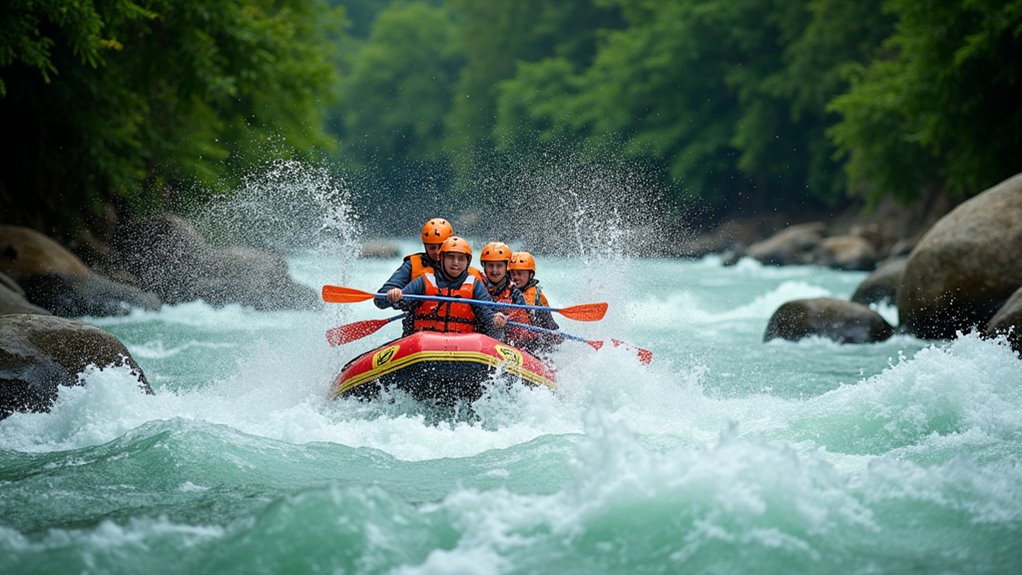
While Costa Rica’s marine adventures offer incredible underwater encounters, the country’s rivers deliver equally thrilling experiences above the surface. The Pacuare River ranks among the world’s top 10 whitewater destinations, featuring 50+ rapids ranging from Class II-IV difficulty through dense tropical rainforest.
You’ll navigate powerful rapids separated by calm pools where monkeys, toucans, and sloths frequent the canopy overhead. The standard day trip covers 19-26 kilometers from San Martín to Siquirres, requiring about 4-5 hours of paddling. No prior experience is necessary for guided trips, though moderate fitness helps.
Prime conditions occur during the May-December rainy season when water levels create more continuous rapids. The 108-kilometer river flows through the Talamanca mountain range on Costa Rica’s Caribbean side, providing stunning jungle scenery throughout your adventure.
Professional guides and safety kayakers ensure your adventure remains thrilling yet secure.
Explore San José’s Markets and Museums
Costa Rica’s capital city offers five exceptional cultural destinations that showcase the country’s rich heritage and vibrant local life. Start at Central Market, an 1880 landmark where you’ll find 350+ stalls selling everything from fresh produce to souvenirs alongside traditional sodas serving authentic olla de carne.
The Municipal Crafts Market on Avenida 6 provides a safer, organized space for purchasing handmade Costa Rican crafts and gifts.
For museums, grab the “Museum Walk” pass covering three premier institutions. The National Museum, housed in former military barracks, requires at least three hours to explore Costa Rica’s archaeological and cultural evolution.
The Jade Museum displays the world’s largest American jade collection in a striking five-story building.
The underground Pre-Columbian Gold Museum showcases thousands of artifacts from 500-1500 AD. The Gold Museum serves as one of the key landmarks that can be easily reached during a walking tour of the compact city center.
The Sum Up
You’ll discover Costa Rica’s incredible biodiversity spans from pristine beaches to misty cloud forests. Don’t rush—you can’t experience everything in one trip. Focus on two or three regions to truly appreciate the wildlife and landscapes. Pack lightweight, quick-dry clothing and waterproof gear for sudden downpours. Remember that “pura vida” isn’t just a saying—it’s the Costa Rican way of embracing life’s simple pleasures. You’ll leave planning your return before you’ve even departed.