
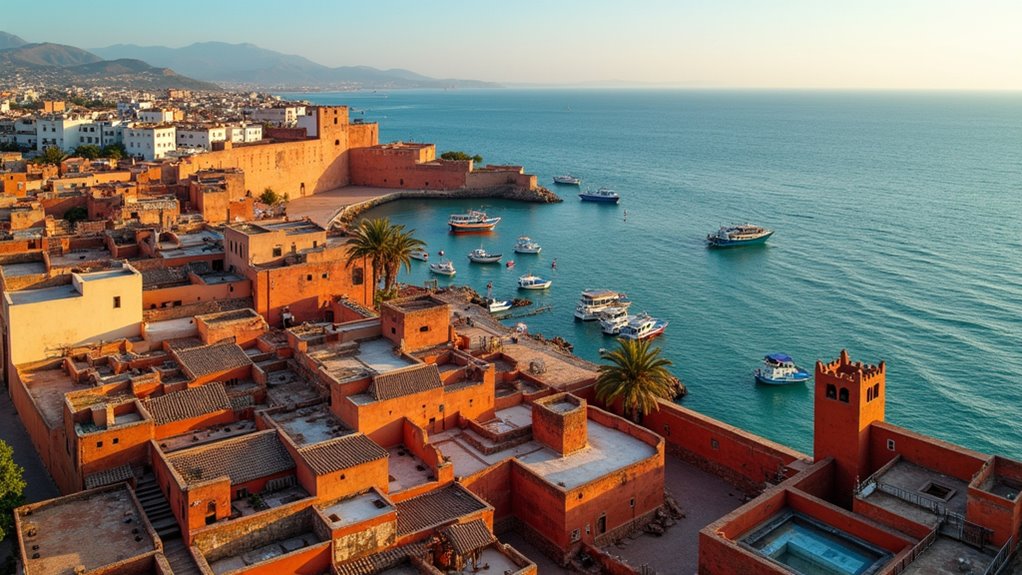
You’re probably thinking Essaouira is just another Moroccan coastal town, but you’d be missing something special. This UNESCO World Heritage site offers a perfect blend of history, culture, and ocean views without the crowds of Marrakech or the price tags of Casablanca. Whether you’re drawn to ancient ramparts, bustling fishing ports, or world-class music festivals, there’s a strategic way to experience everything this Atlantic gem has to offer.
- Wander the UNESCO-Listed Medina’s Grid Streets
- Walk the 18th-Century Ramparts for Ocean Views
- Explore Skala Du Port and Skala De La Ville
- Watch the Action at Morocco’s Busiest Fishing Port
- Pass Through Historic Bab El Marsa Gate
- Stroll the Long Sandy Beach North of Town
- Browse Local Culture at Sidi Mohammed Ben Abdellah Museum
- Discover the Jewish Quarter in the Mellah District
- Time Your Visit for the Gnaoua World Music Festival
- The Sum Up
Wander the UNESCO-Listed Medina’s Grid Streets
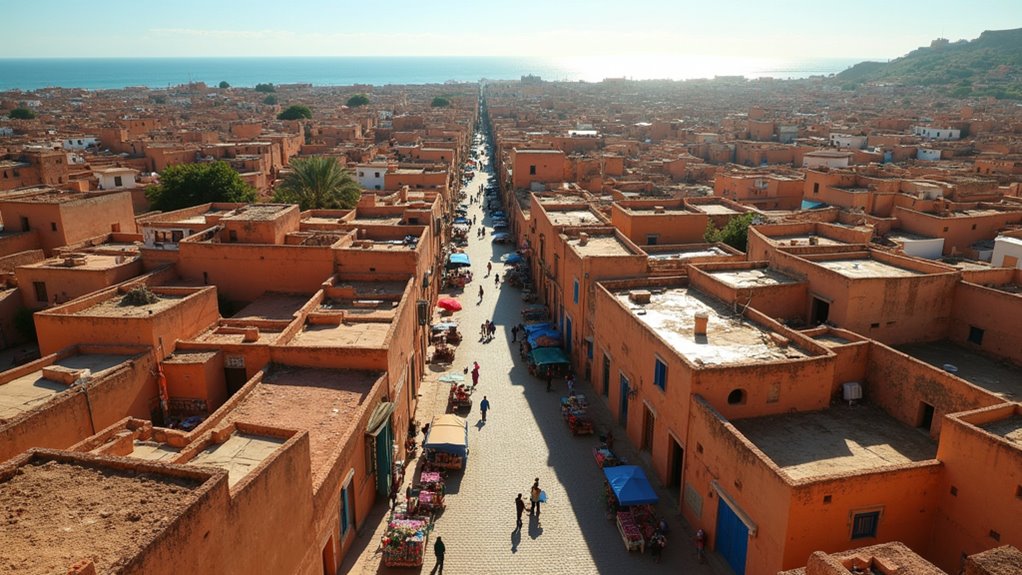
Unlike the labyrinthine medinas found elsewhere in Morocco, Essaouira’s UNESCO-listed old town greets you with an unusually organized grid pattern that makes exploration invigoratingly straightforward. This 18th-century design, influenced by French military planning, features wider streets lined with whitewashed walls and distinctive blue doors that create a stunning coastal aesthetic.
You’ll easily navigate between the bustling souks selling spices and saffron, the historic Jewish Quarter housing the free-to-visit Haim Pinto Synagogue, and the sea-facing Skala bastions with their defensive cannons. The well-planned layout also includes convenient parking lots strategically located throughout the city center for visitors arriving by car.
Don’t miss the Sidi Mohamed Ben Abdallah Museum showcasing regional artifacts, or Si Said’s spice shop behind the fish market for quality Moroccan spices at budget-friendly prices. The grid layout prevents getting lost while still offering charming alleyways to discover.
Walk the 18th-Century Ramparts for Ocean Views
After exploring the medina’s organized streets, you’ll want to climb up to Essaouira’s impressive 18th-century ramparts that crown the oceanfront edge of the old city. Built under Sultan Mohammed III with European military engineering influence, these fortifications offer stunning panoramic views of the Atlantic Ocean and Île de Mogador without any entrance fee.
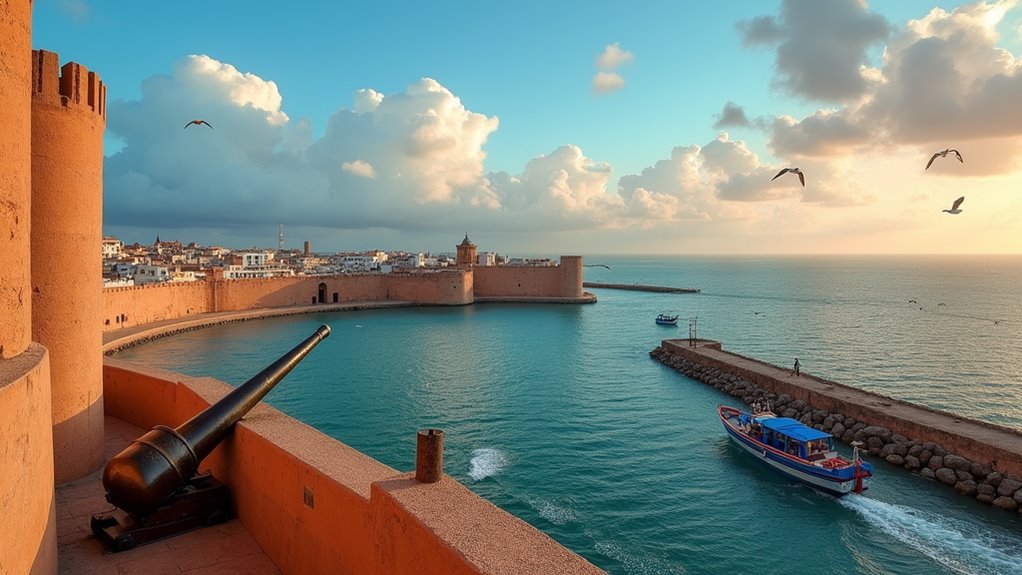
You’ll find original bronze cannons still positioned along the walls, creating perfect photo opportunities against the ocean backdrop. The best time to visit is during sunset when the coastal skies turn vibrant and crowds thin out. Seagulls frequently soar overhead, adding life to your experience.
The ramparts circle the medina’s perimeter, so you can walk the entire length while enjoying ocean breezes and crashing wave sounds below. The area serves as a vibrant social hub where you’ll encounter local artisans, musicians, and vendors adding cultural richness to your visit.
Explore Skala Du Port and Skala De La Ville
Where else can you explore authentic 18th-century fortifications that won’t cost you a dirham? Skala Du Port and Skala De La Ville offer exactly that – free access to UNESCO World Heritage bastions built during Sultan Sidi Mohammed ben Abdallah’s reign in the 1760s.
Start at Skala Du Port by the harbor, where you’ll find rows of historic European cannons, including Dutch artillery from 1744. The thick stone ramparts showcase Vauban-style military architecture blending Moroccan and European design. These fortifications once protected Morocco’s most important commercial port from naval invasions. The elevated position creates perfect conditions for capturing the sweeping vistas at sunrise and sunset.
Continue to Skala De La Ville along the medina’s sea-facing walls. Both sites provide stunning Atlantic Ocean panoramas while you walk through centuries of maritime history. The bronze and iron cannons remain strategically positioned, offering tangible connections to Essaouira’s defensive past.
Watch the Action at Morocco’s Busiest Fishing Port
From those historic fortifications, you’ll hear the sounds of Morocco’s busiest fishing port before you see it. The bustling harbor below handles 85% of Morocco’s demersal fish landings, making it a fascinating spectacle for visitors.
You’ll witness weathered fishermen sorting their overnight catches, repairing nets, and preparing boats for the next voyage. The adjacent fish market displays fresh sardines, bottom-dwelling fish, and cephalopods that locals negotiate over directly with vendors.
Despite declining catches—landings dropped 47% recently due to overfishing—the port remains Essaouira’s economic heartbeat. Interestingly, the market value of these catches has increased by 41%, reflecting higher prices for the remaining fish. You can watch this authentic slice of Moroccan life unfold for free, observing the intense labor and social dynamics that’ve sustained this community for generations.
It’s Morocco’s fishing industry in action.
Pass Through Historic Bab El Marsa Gate
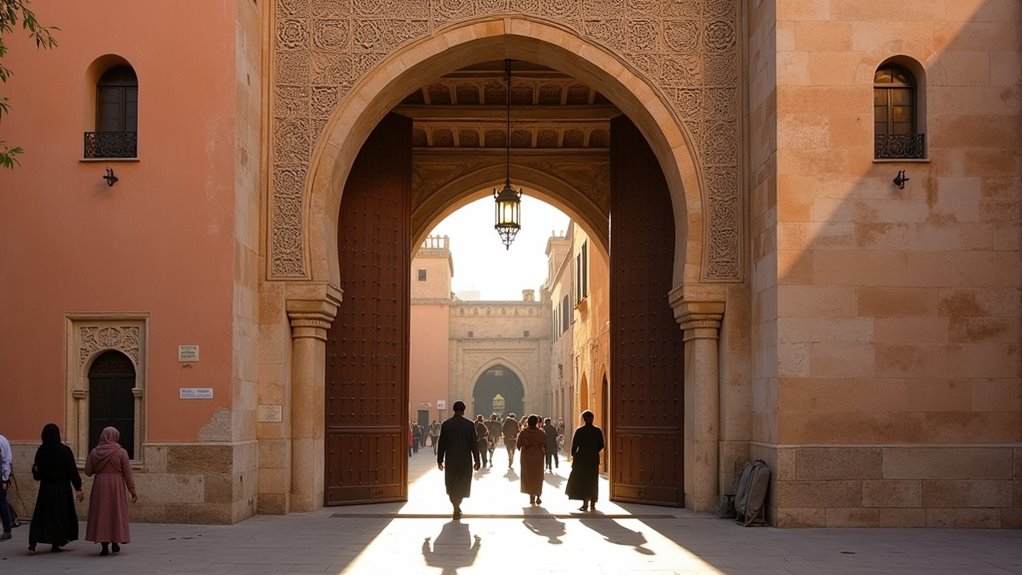
Once you’ve absorbed the port’s energy, head toward the magnificent Bab El Marsa Gate—Essaouira’s most symbolically rich entrance. Built in 1770, this stunning stone gateway connects the bustling harbor to the medina’s historic heart.
You’ll immediately notice the unique religious symbols carved into its pediment: Islamic crescents, Jewish Stars of David, and Christian scallop shells representing the city’s remarkable tolerance.
The gate’s neoclassical design blends Moroccan craftsmanship with European military architecture, creating an Instagram-worthy backdrop that’s completely free to admire. The structure was designed by Ahmed El Inglizi, an architect who masterfully combined these diverse architectural traditions. Take your time studying the Arabic inscriptions and fluted columns before stepping through into the medina’s narrow alleys.
The progression from Atlantic breezes to ancient stone corridors perfectly captures Essaouira’s timeless appeal. Don’t rush—this UNESCO-protected passage deserves contemplation.
Stroll the Long Sandy Beach North of Town
After exploring the medina’s historic walls, you’ll discover that Essaouira’s northern beach offers something the crowded southern stretch doesn’t—space to breathe.
This 2km golden sand stretch, called Plage Akskis, begins near the fishing port and extends toward the Frina Quarter.
You can access it by walking north from Sqala du Port along the ramparts—just climb over a small wall to reach the sand.
At low tide, the firm beach becomes perfect for barefoot walks with unique views of the medina’s northern walls.
Visit during early morning or late afternoon when winds calm down.
While swimming isn’t ideal due to strong currents, you’ll find excellent rockpools to explore and enjoy a quieter seaside experience away from tourist crowds. The beach is poorly maintained with scattered litter, so don’t expect the pristine conditions of the main southern beach.
Browse Local Culture at Sidi Mohammed Ben Abdellah Museum

While the beach offers natural beauty, Essaouira’s cultural heart beats strongest inside the Sidi Mohammed Ben Abdellah Museum. Here, you’ll discover the fascinating blend of civilizations that shaped this coastal city.
Housed in a stunning 19th-century mansion, this museum takes you through local history from prehistoric times to the 18th century. It showcases Berber, Jewish, Arab, and Gnawa traditions.
You’ll find traditional jewelry, weapons, costumes, and musical instruments spread across two floors surrounding a peaceful courtyard. The museum also displays beautiful cedar wood crafts and painted wooden ceilings that highlight the region’s artistic heritage.
The building itself tells a story—formerly a seigniorial residence turned town hall, now preserving Essaouira’s multicultural heritage.
Plan accordingly though: it’s closed on Tuesdays, and most information is in French and Arabic only.
Discover the Jewish Quarter in the Mellah District
Just steps from the bustling medina, you’ll find the Mellah—Essaouira’s historic Jewish quarter that once housed nearly 60% of the city’s population. You can explore this fascinating district for free, wandering through streets lined with distinctive balconied houses that reflect Andalusian architectural influences.
Look for commemorative plaques marking former synagogue locations—there were once 37 active synagogues here.
Don’t miss the well-preserved Jewish cemetery outside the city gates, which offers insight into the community’s rich heritage.
Visit Bayt Dakira (House of Memory), a cultural center dedicated to preserving Jewish history and memory.
Walk down the former Rue Moise, now called Rue Mellah, which served as the quarter’s main commercial thoroughfare when Jewish merchants controlled major trades. The area exemplifies a prosperous Jewish port town where merchants traded jewelry, sugar, and fish that brought significant wealth to the district.
Time Your Visit for the Gnaoua World Music Festival
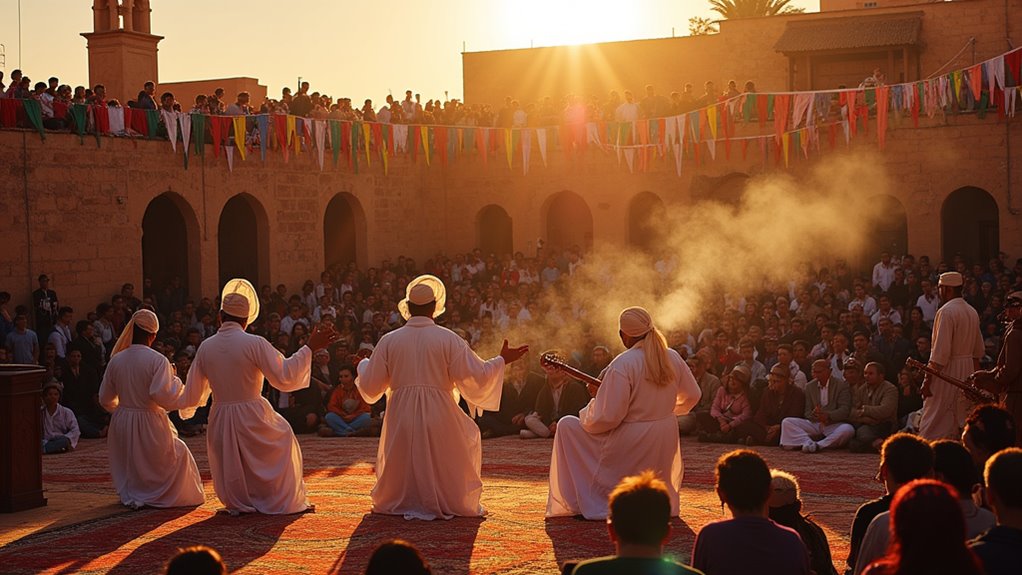
You’ll witness something truly special: ancient Gnawa music fusing with jazz, rock, and blues. Master musicians like Maâlem Hamid El Kasri headline alongside international artists, creating magical musical exchanges you won’t find anywhere else.
Here’s the best part – most concerts are free or highly accessible, making this a budget-friendly culture.
With over 300,000 attendees expected, you’ll experience Essaouira at its most vibrant.
The festival also features parallel events including the Human Rights Forum and Palaver Tree space, offering cultural dialogue beyond the musical performances.
Book accommodations early, as the city fills quickly during festival dates.
The Sum Up
You’ll find Essaouira won’t break your budget while delivering incredible experiences. Pack comfortable walking shoes since you’ll cover plenty of ground exploring the medina’s maze-like streets and ramparts. Don’t forget your camera for those stunning sunset shots from the fortifications. If you’re traveling during festival season, book accommodation early as prices spike. Most attractions are free or cheap, so you can easily spend several days here without emptying your wallet.