
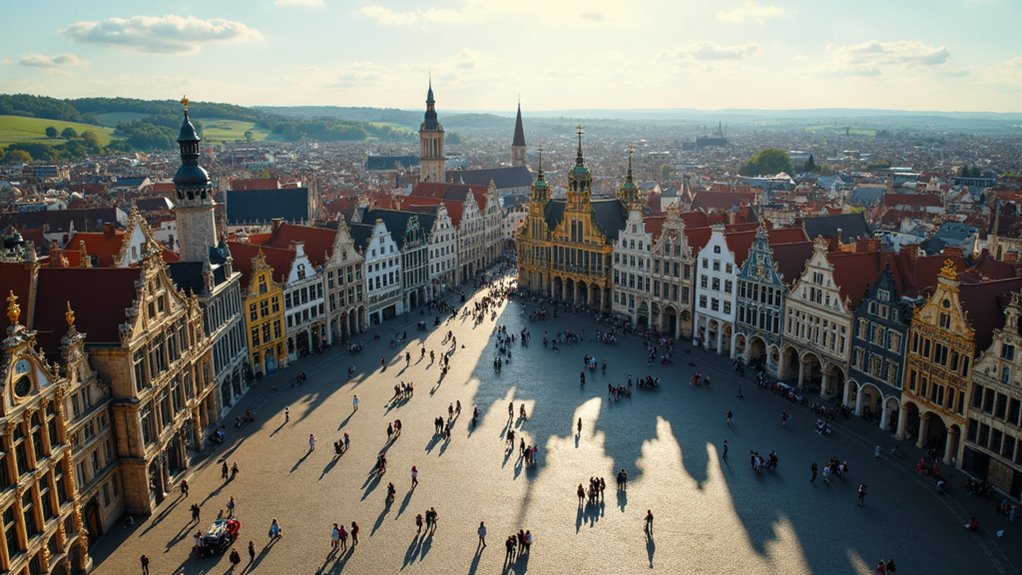
You’ll find Belgium packs more memorable experiences per square mile than almost anywhere in Europe. From standing alone in Brussels’ Grand Place at sunrise to sampling legendary beers in centuries-old breweries, this compact country delivers moments that’ll stick with you long after you’ve returned home. Whether you’re drawn to medieval architecture, world-class festivals, or simply the perfect plate of frites, there’s something here that’ll surprise you—and change how you think about this often-overlooked destination.
- Stand in Grand Place at Dawn Before the Crowds Arrive
- Climb the Belfry of Bruges for the Best Views in Flanders
- Take a Canal Cruise Through Medieval Ghent’s Waterways
- Experience Tomorrowland Festival or Gentse Feesten in Summer
- Explore the Gravensteen Castle in Ghent’s Historic Center
- Wander Through Bruges’ UNESCO-Listed Medieval Streets
- Visit the Atomium and Discover Brussels Beyond the EU Quarter
- Hike the Ardennes Forest and Stay in a Castle Hotel
- Sample Belgian Beer Culture During Belgian Beer Weekend
- Relax at the Original Spa Town’s Thermal Baths
- Walk the Waterloo Battlefield and Climb Lion’s Mound
- Hunt for the Best Chocolate Shops in Antwerp’s Diamond District
- The Sum Up
Stand in Grand Place at Dawn Before the Crowds Arrive
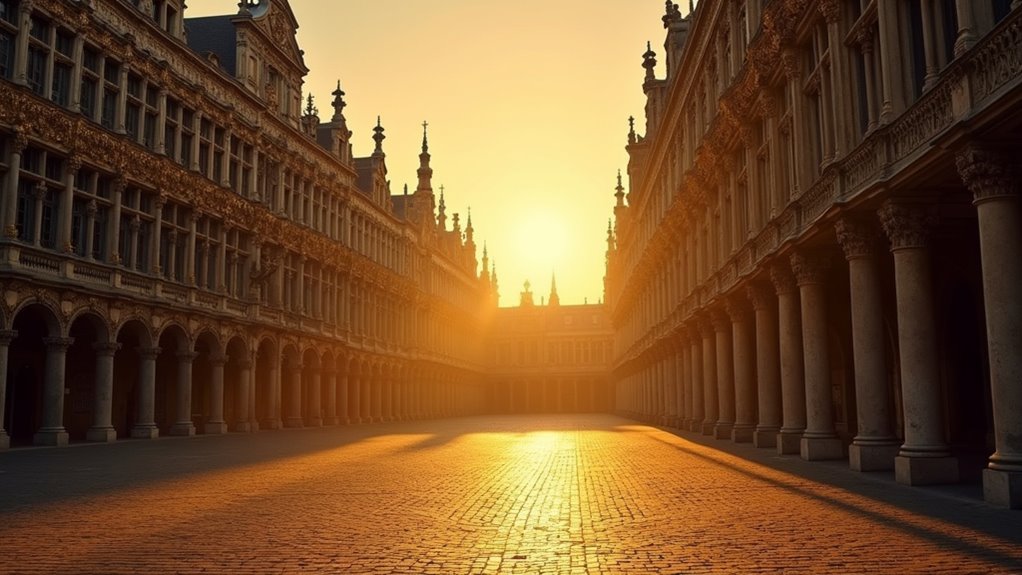
When you step into Grand Place at dawn, you’ll witness Brussels’ crown jewel in its most serene state—before tour groups flood the cobblestones and street performers claim their spots. This UNESCO World Heritage Site transforms into your private viewing gallery around 7:30-8:30 AM, when soft morning light illuminates the Gothic Town Hall and ornate guildhouses without harsh shadows.
December visits offer particularly dramatic contrasts as artificial lighting transitions to natural dawn—perfect for photography. You’ll need warm, waterproof clothing since temperatures hover between 1-6°C, and overcast skies are common.
The square’s accessible 24/7 from Brussels-Central Station, just a short walk away. While the official opening hours begin at 9:00 am, the square itself remains accessible for early morning exploration. Bring a tripod for long-exposure shots, though handheld photography works beautifully in the diffused light.
Climb the Belfry of Bruges for the Best Views in Flanders
After experiencing Brussels’ medieval grandeur at street level, you’ll find Flanders’ most spectacular elevated perspective awaits 83 meters above Bruges’ cobblestone streets. The Belfry of Bruges demands commitment—366 steep steps wind through narrow passages, with sections of 100+ steps without rest stops.
You’ll catch your breath in historic chambers, including the medieval treasury where city charters were stored and the carillonneur’s room housing the 47-bell carillon.
The climb’s challenging, but the payoff’s extraordinary. From the summit, you’ll capture panoramic views spanning Bruges’ canal-laced medieval rooftops, Market Square, and the surrounding Flemish countryside.
Bring comfortable shoes and prepare for crowds—no advance reservations are accepted. The tower’s slight eastward lean adds character to this UNESCO World Heritage site that’s defined Bruges’ skyline since 1240. This remarkable structure stands as one of Belgium’s oldest Gothic civil buildings, showcasing medieval architectural mastery that has endured for centuries.
Take a Canal Cruise Through Medieval Ghent’s Waterways
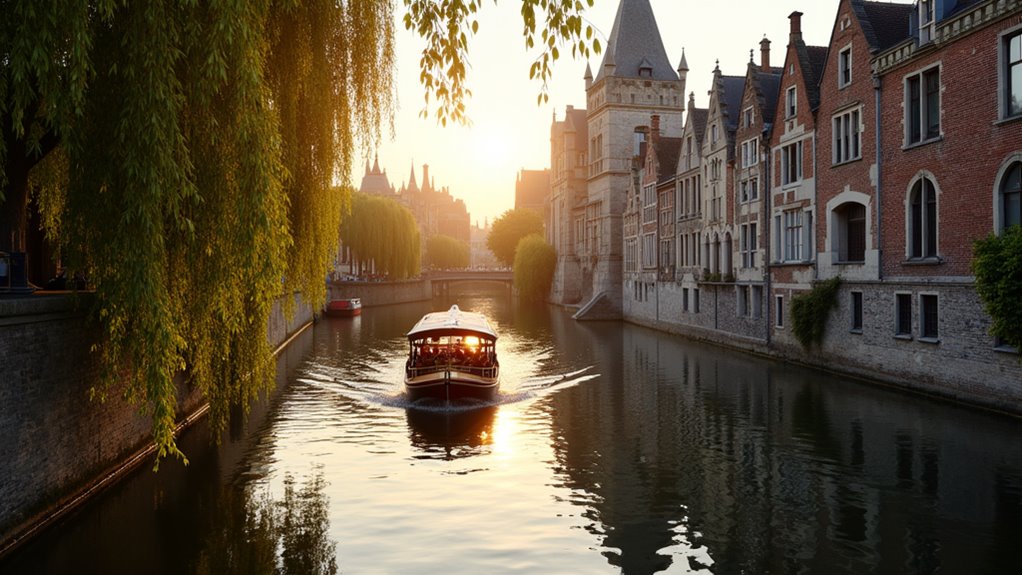
While Bruges captures headlines with its famous canals, Ghent’s medieval waterways offer an equally enchanting yet less crowded alternative for exploring Flemish history from the water.
You’ll glide past stunning landmarks including St. Bavo’s Cathedral, the imposing Gravensteen castle, and ornate guildhalls lining the historic Graslei and Korenlei quays. These 40-45 minute tours cost just €7-€10 and provide multilingual commentary about Ghent’s medieval trade history.
Board at the green boathouse near Korenlei 4a, where electric boats accommodate 20-30 passengers.
You’ll need to duck under low bridges as guides share stories about 13th-century monasteries and the ancient Port of Ghent. The experience requires participants to be able to climb 10 steps to board the canal boat.
While advance booking isn’t required, it’s recommended during peak season when tours run frequently until evening.
Experience Tomorrowland Festival or Gentse Feesten in Summer
Belgium’s summer festival scene explodes with two legendary celebrations that couldn’t be more different—the world-renowned electronic dance music spectacle Tomorrowland and Ghent’s sprawling cultural street party, Gentse Feesten.
At Tomorrowland in Boom, you’ll dance alongside 400,000 festival-goers across two July weekends to sets by Martin Garrix, David Guetta, and Charlotte de Witte. The elaborate themed stages feature immersive visuals that create a multi-sensory experience.
Tickets sell out in minutes, so you’ll need to register months ahead.
Alternatively, Gentse Feesten offers free cultural programming throughout Ghent’s historic streets. This massive celebration transforms the medieval city into an open-air festival with diverse music, theater, and local food.
Both festivals showcase Belgium’s ability to host world-class summer events. With attendees spending 4 hours actively engaged each day, these festivals create deep connections between visitors and Belgium’s rich cultural landscape.
Explore the Gravensteen Castle in Ghent’s Historic Center
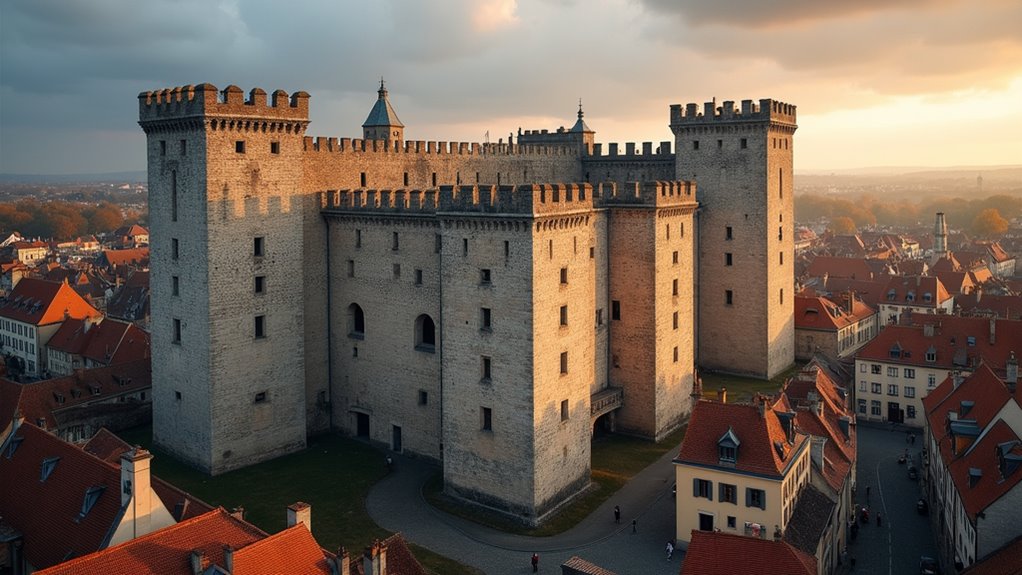
Rising above Ghent’s medieval streets like a fortress from a fairytale, Gravensteen Castle stands as one of Europe’s best-preserved medieval strongholds. You’ll step into nine centuries of history as you explore this imposing stone fortress built by Philip of Alsace in 1180, inspired by Crusader castles he’d seen in the Holy Land.
Walk the oval battlements with their 24 defensive turrets while enjoying panoramic views of the Lys River and Ghent’s historic center. Inside, you’ll discover the castle’s dark past through its torture collection and prison chambers where executions once took place.
The three-story donjon showcases lavish halls where the Counts of Flanders once lived. The castle served as the primary residence of the Counts of Flanders from 1180 until the 1350s before transforming into a military fortress and prison. Audio guides help you navigate the complex history of this intimidating symbol of medieval power.
Wander Through Bruges’ UNESCO-Listed Medieval Streets
Stepping into Bruges feels like walking through a living medieval manuscript, where every cobblestone street and canal-side pathway tells the story of Europe’s most perfectly preserved Gothic city. You’ll discover why UNESCO designated the entire historic center as a World Heritage Site in 2000—its brick Gothic architecture and canal network showcase medieval Europe’s commercial power.
Start at Market Square, then explore the towering Church of Our Lady with its 122-meter brick spire housing Michelangelo’s Madonna and Child, his only sculpture outside Italy during his lifetime. Don’t miss the Basilica of the Holy Blood’s ornate façade or the 13th-century Belfry’s panoramic views.
The stepped gable houses lining medieval streets create an authentic atmosphere that’s remained virtually unchanged for centuries. This fairytale-like setting has attracted film directors for decades, with movies like *In Bruges* and *The Nun’s Story* capturing its timeless medieval charm.
Visit the Atomium and Discover Brussels Beyond the EU Quarter
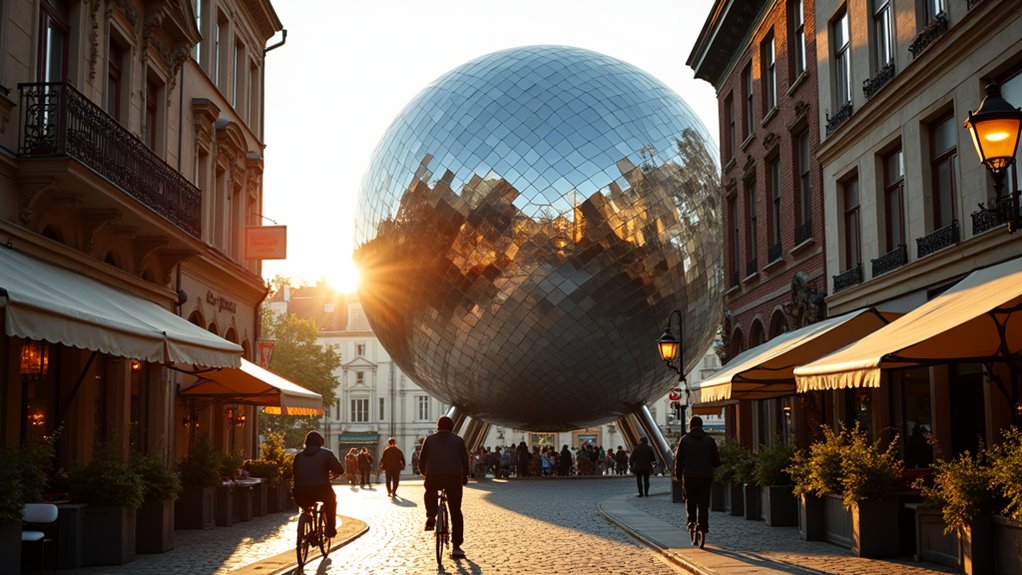
While Brussels’ EU Quarter showcases the city’s political importance, you’ll find the real Brussels spirit emerges in neighborhoods like Laeken.
Here, the iconic Atomium towers 102 meters above the Heysel Plateau as a gleaming symbol of 1950s optimism. This magnified iron crystal structure, originally built for Expo ’58, draws over 800,000 visitors annually who explore six accessible spheres connected by Europe’s longest escalators.
You’ll discover permanent exhibitions about the 1950s and temporary art displays while enjoying panoramic city views from the top sphere’s restaurant. The structure was wind tunnel tested to ensure its stability and safety. The Atomium’s aluminum-coated spheres and steel framework represent André Waterkeyn’s vision of atomic energy’s promise, making it Belgium’s most recognizable landmark beyond the traditional political corridors.
Hike the Ardennes Forest and Stay in a Castle Hotel
Beyond Belgium’s urban attractions, the Ardennes Forest beckons with 78-kilometer multi-day routes like the Between Lesse and Lomme trail and shorter adventures such as the 9-kilometer Les Deux Vallées loop that leads you past the thundering Cascade du Bayehon waterfall.
You’ll find well-marked trails following the Amblève and Lesse rivers, passing medieval ruins and fairy-tale Château de Veves. The challenging 16-kilometer Nisramont Lake loop rewards experienced hikers with steep climbs and panoramic views. Navigation is enhanced by GPX files that provide precise route details compatible with smartphones and GPS devices for these often unofficial trails.
After your forest adventure, you can retreat to converted castle hotels like Château de Mirwart near Saint-Hubert or Château de Noirmont near Houffalize. These historic properties offer grand rooms, period architecture, and fine dining, creating the perfect base for exploring Belgium’s wild southern frontier.
Sample Belgian Beer Culture During Belgian Beer Weekend
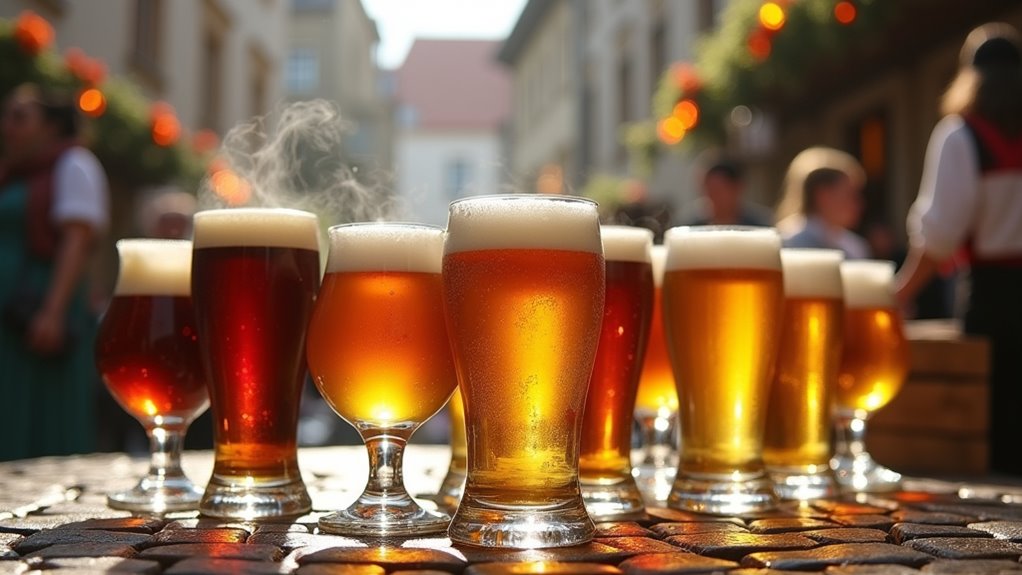
Every September, Brussels’ UNESCO World Heritage Grand-Place transforms into Belgium’s premier beer celebration during Belgian Beer Weekend.
You’ll find over 500 different Belgian beers from 50+ breweries set against the stunning backdrop of medieval guild houses and baroque architecture. You’ll sample everything from traditional Trappist ales to modern IPAs, lambics, and fruit beers while mingling with over 50,000 fellow beer enthusiasts.
Don’t miss Sunday’s brewers’ guild parade at 12:15pm, celebrating centuries-old brewing traditions. Entry’s free, but you’ll buy tasting tickets on-site.
The festival runs Friday evenings and full weekends, with ticket booths closing before beer service ends—so arrive early to maximize your sampling experience. Plan to dress in layers as cooler evenings are typical during early September in Brussels.
Relax at the Original Spa Town’s Thermal Baths
When you soak in the thermal baths of Spa, Belgium, you’re experiencing the original spa town that gave its name to wellness destinations worldwide. The naturally carbonated, iron-rich waters create thousands of bubbles that tingle against your skin at the modern Thermes de Spa facility.
You’ll find therapeutic benefits from the mineral-rich springs—effervescent baths help treat heart conditions and high blood pressure, while peat baths address rheumatism and skin ailments. The waters contain essential elements like sodium chloride, bromine, iodine, and sulphur that contribute to their renowned therapeutic properties.
The Marie-Henriette Spring supplies these 400-year-old waters containing over 40 minerals. Since Roman times, these thermal springs have attracted visitors seeking healing.
Today’s UNESCO World Heritage Site maintains this centuries-old wellness tradition with contemporary facilities offering panoramic city views, continuing Spa’s legacy as Europe’s premier thermal destination.
Walk the Waterloo Battlefield and Climb Lion’s Mound
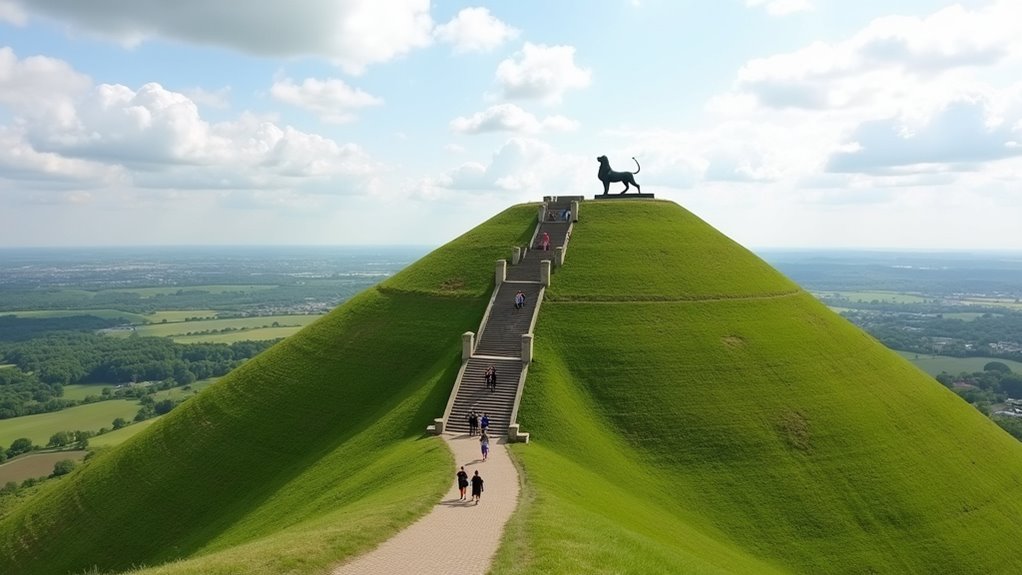
Two hundred twenty-six stone steps lead you to the summit of Lion’s Mound, where you’ll stand atop the exact spot where Prince William of Orange fell wounded during history’s most decisive battle. From this 40-meter-high vantage point, you’ll survey the entire Waterloo battlefield where Napoleon met his final defeat on June 18, 1815.
The panoramic views reveal key battle sites like Hougoumont farm and La Haye Sainte, helping you visualize how 140,000 soldiers clashed across these fields. Follow marked walking trails that trace troop movements and critical moments from Wellington’s closest-fought victory. The battlefield sits in what was then part of the Netherlands, as Belgium had not yet gained its independence when this momentous clash reshaped European history.
The bronze lion statue above symbolizes Allied triumph, gazing defiantly south toward France. This artificial hill, built between 1823-1826, transforms battlefield exploration into an unforgettable journey through European history.
Hunt for the Best Chocolate Shops in Antwerp’s Diamond District
While diamonds sparkle in every storefront window, Antwerp’s Diamond District harbors an equally precious treasure—some of Belgium’s finest chocolate shops nestled between centuries-old trading houses.
You’ll discover Pierre Marcolini’s exquisite pralines crafted with premium ingredients, while Chocolaterie De Boury impresses with innovative flavors and artistic presentations. The Chocolate Line pushes boundaries with bold chili and wasabi-infused varieties that’ll surprise your palate.
Don’t miss Erik Goossens’ luxury diamond-shaped chocolates—a clever tribute to Antwerp’s heritage. Yves Thuriès blends traditional techniques with modern flair, and Del Rey Chocolates consistently outshines other major Belgian brands. The district’s compact layout makes it perfect for walking from one chocolatier to another while admiring the diamond workshops.
As you explore this historic district where 80% of the world’s rough diamonds pass through, you’re experiencing two of Belgium’s most treasured crafts simultaneously.
The Sum Up
You’ve got incredible adventures waiting across Belgium’s diverse regions. Don’t rush through everything—you’ll want time to savor each experience fully. Pack comfortable walking shoes for those cobblestone streets and castle climbs. Book accommodations early if you’re visiting during festival season. Whether you’re drawn to medieval architecture, world-class beer, or battlefield history, Belgium’s compact size means you can easily combine multiple experiences in one trip. Start planning your Belgian adventure today.