
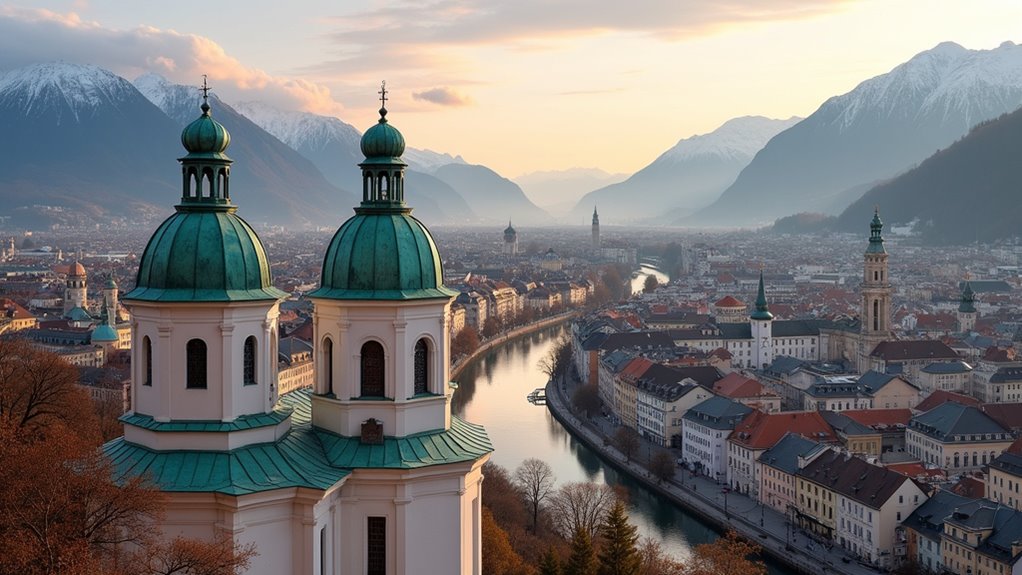
You’ve probably seen Salzburg’s iconic images plastered across travel magazines, but experiencing this Austrian gem firsthand requires more than just checking off the obvious tourist spots. While most visitors rush through the same handful of attractions, there’s a strategic way to explore Mozart’s birthplace that’ll save you money and help you avoid the worst crowds. The key lies in knowing which experiences deserve your time—and which hidden corners most travelers completely miss.
- Climb Up to Hohensalzburg Fortress Before the Crowds Arrive
- Follow the Sound of Music Trail Through Mirabell Gardens
- Get Lost Wandering the Medieval Lanes of Getreidegasse
- Step Inside Salzburg Cathedral Where Mozart Was Baptized
- Experience the Trick Fountains at Hellbrunn Palace
- Hunt for Mozart’s Musical Legacy at His Birthplace Museum
- Join Locals for a Proper Austrian Beer at Augustiner Bräu
- Cross the Salzach River for the Best Fortress Photos
- Savor Salzburger Nockerl at a Traditional Coffeehouse
- Take a Day Trip to Hallstatt’s Picture-Perfect Lakeside Village
- Explore the Hidden Catacombs at St. Peter’s Cemetery
- The Sum Up
Climb Up to Hohensalzburg Fortress Before the Crowds Arrive
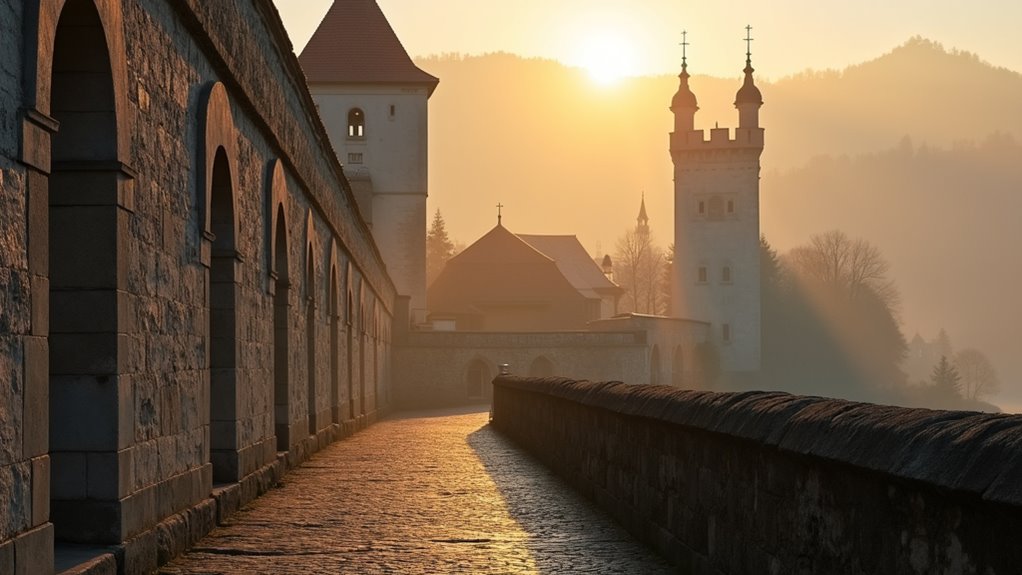
While most travelers sleep in, you’ll want to set that early alarm and head straight to Hohensalzburg Fortress when it opens at 9:30 AM (or 8:30 AM during summer months). You’ll beat the crowds that flood in later and actually enjoy exploring without fighting for photo spots.
Take the historic funicular from the city center – it runs every 10 minutes and costs less than climbing services elsewhere. If you’re feeling adventurous and want to save money, tackle the steep 20-30 minute footpath instead.
Pro tip: grab a Salzburg Card for free admission and fast-track access.
Once inside, explore the Prince’s Rooms, armory exhibition, and medieval architecture. Plan to spend about 3 hours if you want to thoroughly visit all the museum sites and truly appreciate the fortress’s historical treasures. The fortress stays open 365 days yearly, so there’s no excuse to miss this spectacular start to your Salzburg adventure.
Follow the Sound of Music Trail Through Mirabell Gardens
You’ll explore independently using free apps like Smart Guide for audio narration, or join the four-hour Original Sound of Music Tour that starts here daily.
The gardens open at 6 a.m., so you can beat crowds while enjoying panoramic views of Salzburg’s old town from the steps’ summit. The film’s story follows Maria Kutschera’s journey from governess to the von Trapp children to founding The Trapp Family Singers with her husband Captain Georg von Trapp.
Get Lost Wandering the Medieval Lanes of Getreidegasse
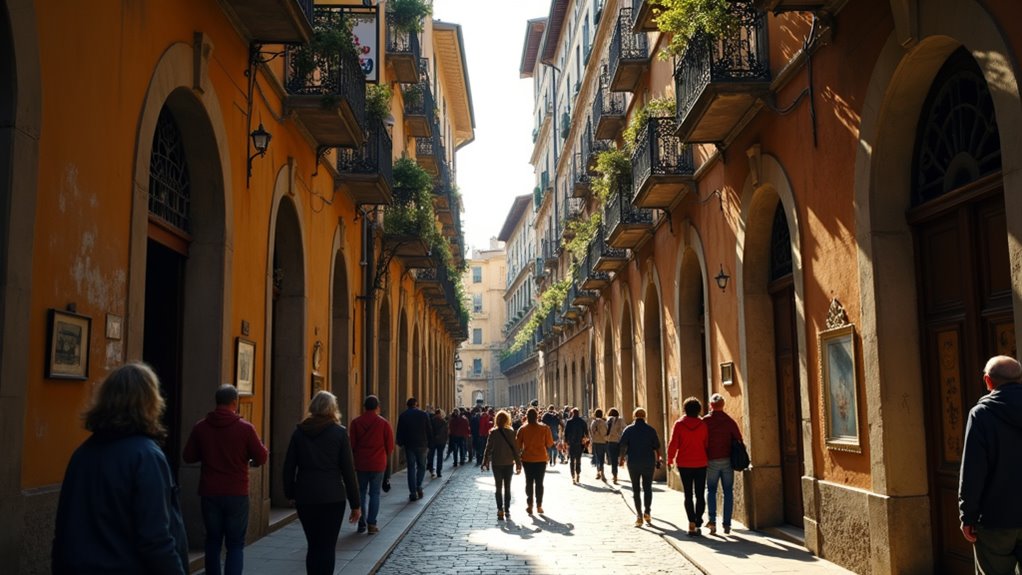
Step into Getreidegasse and you’ll instantly understand why this narrow medieval lane has captivated visitors for over 800 years. This bustling trade route, once called “Trot Lane” for its hurried merchants, showcases Salzburg’s best-preserved medieval architecture completely free of charge.
Look up to spot the famous wrought-iron guild signs jutting from every building—they’re artistic masterpieces that once advertised local trades. Duck through the hidden passageways called “Durchhäuser” connecting to quiet courtyards where you’ll discover centuries-old crests and reliefs without spending a cent.
The tall, narrow townhouses with their progressively smaller windows create perfect photo opportunities. Medieval merchants once offered exotic goods from Venice to Danube cities, stopping here for three days to sell wine, textiles, glass, jewelry, and spices. Don’t rush through like those medieval merchants—take time exploring the nooks and crannies of this living museum.
Step Inside Salzburg Cathedral Where Mozart Was Baptized
After exploring the medieval charm of Getreidegasse, make your way to nearby Domplatz where Salzburg’s magnificent cathedral awaits—completely free to enter.
You’ll step into one of the German-speaking world’s most important Baroque buildings, where Wolfgang Amadeus Mozart was baptized on January 28, 1756.
Head straight to the bronze baptismal font near the main entrance—it’s older than the cathedral itself, dating from 1321. This same font also baptized Joseph Mohr, who wrote “Silent Night.”
The cathedral’s stunning interior features marble galleries, ornate stucco, and soaring architecture that’ll leave you breathless. This colossal building has been shaping Salzburg’s cityscape for nearly 400 years as the visual and spiritual center of the old town.
Check the schedule for free concerts or Mozart performances, especially during festival season. It’s a budget-friendly way to experience Salzburg’s musical heritage in an absolutely spectacular setting.
Experience the Trick Fountains at Hellbrunn Palace
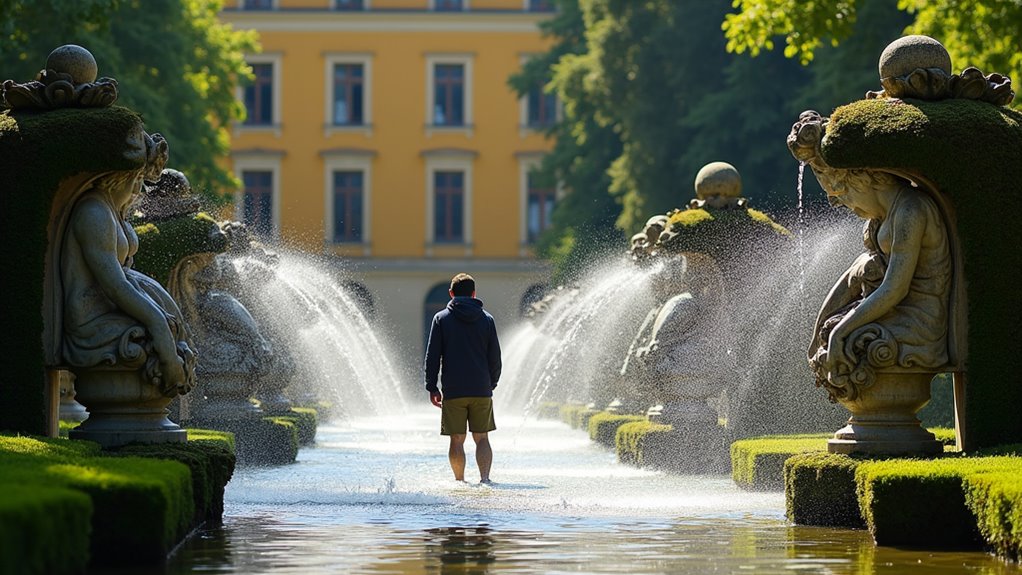
Just a short bus ride south of Salzburg’s city center, Hellbrunn Palace’s trick fountains offer one of Europe’s most delightfully mischievous attractions—and they’re well worth the €14.50 admission fee.
Created in the early 1600s by Prince-Archbishop Markus Sittikus, these ingenious water features will catch you off guard with hidden jets that spray unexpectedly as you explore the gardens.
You’ll witness water-powered mechanical theaters with over 100 moving figures depicting Baroque city life, plus mythological sculptures of Neptune and Diana.
The fountains operate from late March through early November, rain or shine.
Don’t worry about getting soaked—you’ll only get lightly sprayed during the interactive experience.
Audio guides at 21 stations help explain the Renaissance engineering behind this unique blend of art and amusement. While exploring the grounds, you can also visit the Stone Theater, Europe’s oldest open-air stage that was transformed from a stone quarry.
Hunt for Mozart’s Musical Legacy at His Birthplace Museum
While you’re exploring Salzburg’s charming Old Town, you can’t miss the yellow building at Getreidegasse 9—Mozart’s actual birthplace and one of Austria’s most visited museums.
You’ll walk through the same third-floor apartment where Mozart lived from 1756 to 1773, now featuring his childhood violin, original letters, and the clavichord he used to compose The Magic Flute.
The three-story museum takes about an hour to explore, with each floor revealing different aspects of his life—from childhood memorabilia to operatic passions.
Don’t miss the incomplete portrait by his brother-in-law and the period furnishings that recreate 18th-century middle-class living. The authentic kitchen retains its historical features and offers visitors a genuine glimpse into daily life during Mozart’s era.
The museum’s open daily from 9:00 a.m. to 5:30 p.m., with extended summer hours.
Join Locals for a Proper Austrian Beer at Augustiner Bräu

For an authentic taste of Salzburg’s 400-year-old brewing tradition, you’ll want to head to Augustiner Bräu Kloster Mülln, where locals have gathered since 1621 to drink beer straight from wooden barrels.
Located in a historic monastery complex, this massive beer hall operates uniquely—there’s no waitstaff, so you’ll grab your own stone stein and queue at the taps for fresh-poured beer.
The self-service system keeps prices reasonable, and you can bring your own food or buy from on-site stalls.
Open daily from 3 PM to 11 PM, it’s a 15-minute walk from the cathedral through Salzburg’s UNESCO-listed old town. The brewery produces over 18,000 hectoliters annually using traditional methods that have remained unchanged for centuries.
The sprawling beer garden becomes especially lively on weekends when over 1,200 locals create an unbeatable atmosphere.
Cross the Salzach River for the Best Fortress Photos
After sampling Salzburg’s finest brews, you’ll want to capture the city’s most iconic view. Head to Makartsteg Bridge for the best fortress photos without spending a cent. This pedestrian-only bridge offers unobstructed shots of Hohensalzburg Fortress perched dramatically above the old town’s baroque spires.
The Salzach River creates perfect foreground interest, especially when fortress lights reflect in the water during evening hours. You’ll get postcard-worthy compositions with church domes framing the medieval castle against alpine backdrops.
For varied perspectives, walk along the riverbanks near Mirabell Gardens, where colorful blooms add vibrant foregrounds to your fortress shots. The fortress provides comprehensive audio-guided tours of its relics, statues, weapons, and a marionette display for visitors wanting to explore beyond the exterior views. Visit during morning or clear weather for sharp, haze-free images. Multiple bridge crossings let you experiment with different angles of this UNESCO World Heritage scenery.
Savor Salzburger Nockerl at a Traditional Coffeehouse
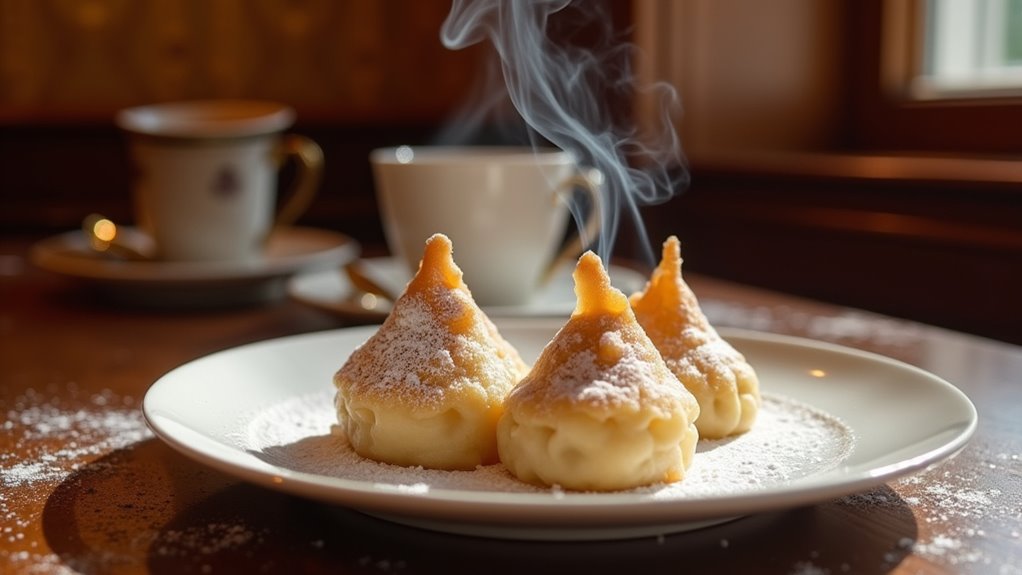
Since you’ve worked up an appetite exploring Salzburg’s photogenic spots, treat yourself to the city’s most celebrated dessert at a traditional coffeehouse. Salzburger Nockerl is a fluffy soufflé-style dessert that’ll give you a taste of local culture and history. The three golden mounds represent Salzburg’s surrounding hills, topped with powdered sugar resembling mountain snow.
Head to authentic spots like Café Tomaselli or Café Bazar in the Old Town for the real deal. Expect to pay €12-18 for this freshly-made specialty that’s substantial enough to share. The airy texture collapses quickly, so it’s served immediately from the oven with raspberry jam. This beloved dessert was even immortalized in the 1938 operetta “Saison in Salzburg,” where it was praised as “sweet like love and tender like a kiss.”
Don’t expect leftovers – this delicate dessert doesn’t keep, making each bite a fleeting Salzburg moment.
Take a Day Trip to Hallstatt’s Picture-Perfect Lakeside Village
When you’re craving a change of scenery from Salzburg’s baroque streets, escape to Hallstatt, Austria’s most photographed village that sits like a fairy tale between an alpine lake and towering peaks. The journey takes about 1.5-2 hours via train to Attnang-Puchheim, then regional rail to Hallstatt station, followed by a scenic ferry ride across the lake.
You’ll discover narrow cobblestone streets lined with pastel alpine chalets, the historic Market Square, and stunning lakeside views. Visit early morning or late afternoon to avoid crushing crowds – this UNESCO site receives over a million visitors annually, with peak days seeing 10,000 travelers overwhelming the 737 residents. Local authorities have implemented visitor restrictions to preserve the village’s charm and protect residents’ quality of life.
The Hallstatt Skywalk offers breathtaking panoramic views if you’ve got extra time.
Explore the Hidden Catacombs at St. Peter’s Cemetery
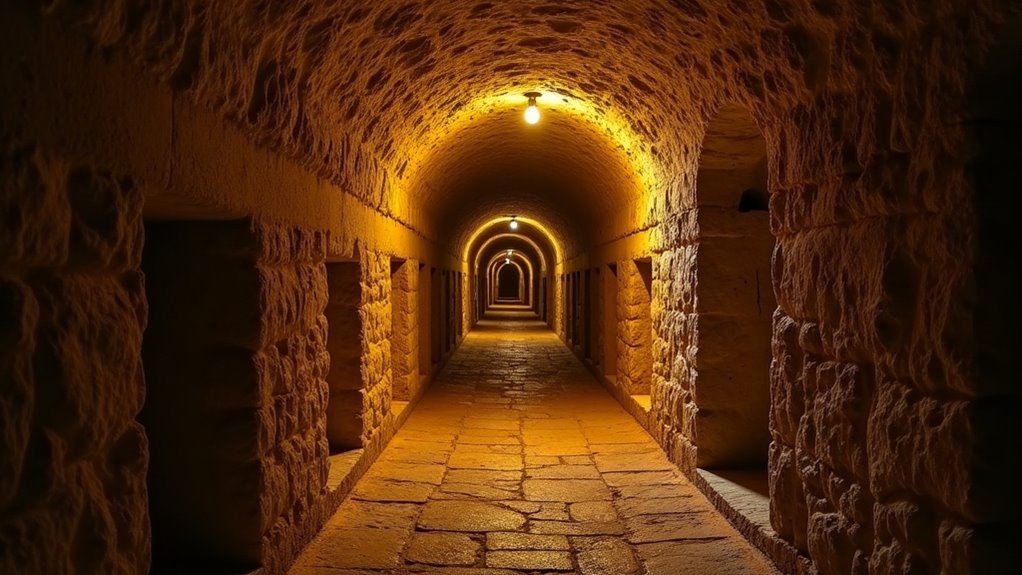
Back in Salzburg’s Old Town, you’ll find one of the city’s most atmospheric secrets tucked into the sheer rock face of Mönchsberg. St. Peter’s Cemetery’s ancient catacombs date back to 400-800 AD, carved directly into the mountainside as early Christian hermitages and meeting places.
You’ll pay a small admission fee to explore these remarkable chambers, though Salzburg Card holders get free access to Maximus Chapel.
Descend 48 stone steps to reach Gertraudenkapelle, then climb another 36 to Maximus Chapel. Inside, you’ll discover ancient altars, faded murals, and historical inscriptions throughout the interconnected rooms.
The cemetery itself houses notable burials including Mozart’s sister Nannerl and composer Michael Haydn. It’s also famous as a filming location from “The Sound of Music.” This historic burial ground is the oldest cemetery in Salzburg, sharing this distinction with nearby Nonnberg Abbey.
The Sum Up
You’ll discover Salzburg’s magic doesn’t require breaking the bank. Start early at the fortress for stunning views, wander free through Getreidegasse’s medieval streets, and explore the cathedral without spending a cent. Splurge on authentic Salzburger Nockerl at least once—it’s worth every euro. If you’ve got time for Hallstatt, book ahead for better transport deals. Pack comfortable shoes and embrace the city’s walkable charm. You’re about to create unforgettable memories.