
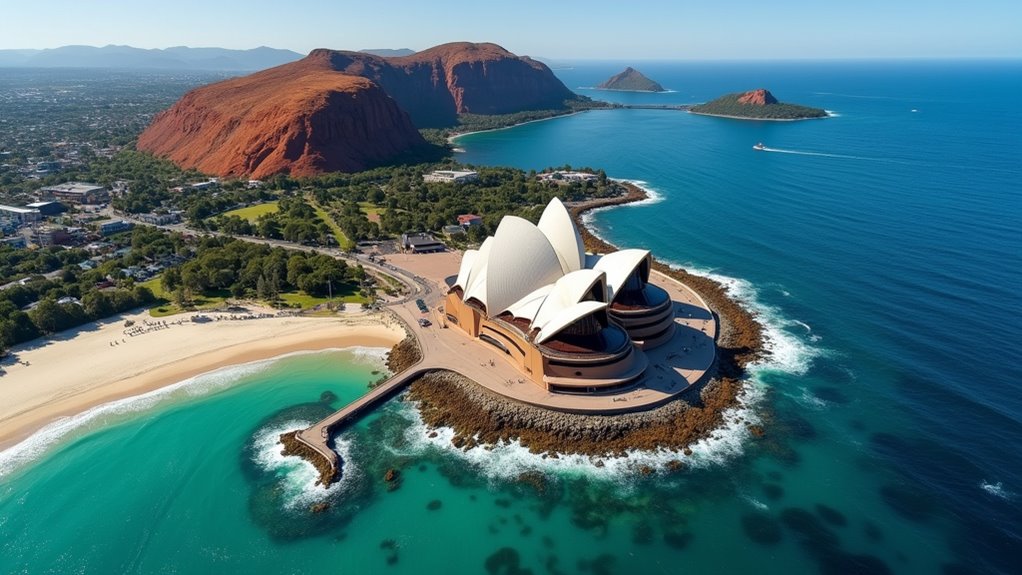
You’ll find Australia’s vast continent offers experiences that shift dramatically from one region to the next—ancient desert monoliths that glow at sunrise, underwater worlds teeming with marine life, and cities where world-class culture meets laid-back coastal charm. Whether you’re drawn to indigenous heritage sites, alpine adventures, or simply want to cycle alongside the world’s happiest marsupials, each destination demands different preparation and timing to truly maximize what awaits.
- Watch the Sunrise Over Uluru in Red Centre Australia
- Snorkel the Great Barrier Reef From Cairns or Port Douglas
- Take the Ferry to Rottnest Island and Cycle With the Quokkas
- Drive the Great Ocean Road and Stop at the Twelve Apostles
- Catch a Performance at Sydney Opera House
- Experience the Penguin Parade on Phillip Island at Sunset
- Explore the Ancient Daintree Rainforest in Far North Queensland
- Surf or People-Watch at Bondi Beach
- Sample World-Class Shiraz in the Barossa Valley
- Hike Through the Dramatic Landscapes of Kakadu National Park
- Take the Scenic Railway Down Into the Blue Mountains
- Spot Tasmanian Devils and Wilderness Wildlife in Tasmania
- Sail Through the Whitsunday Islands
- Walk Among the Sea Lions and Echidnas on Kangaroo Island
- Attend an AFL Match at the Melbourne Cricket Ground
- Swim With Whale Sharks at Ningaloo Reef in Western Australia
- Explore Melbourne’s Famous Laneways and Coffee Culture
- Trek Through the Rugged Gorges of the Kimberley Region
- Experience Aboriginal Rock Art and Culture in Arnhem Land
- Relax in the Bohemian Coastal Town of Byron Bay
- Discover Adelaide’s Festival Scene and Nearby Wine Regions
- Adventure Through the Alpine Scenery of the Australian Alps
- The Sum Up
Watch the Sunrise Over Uluru in Red Centre Australia
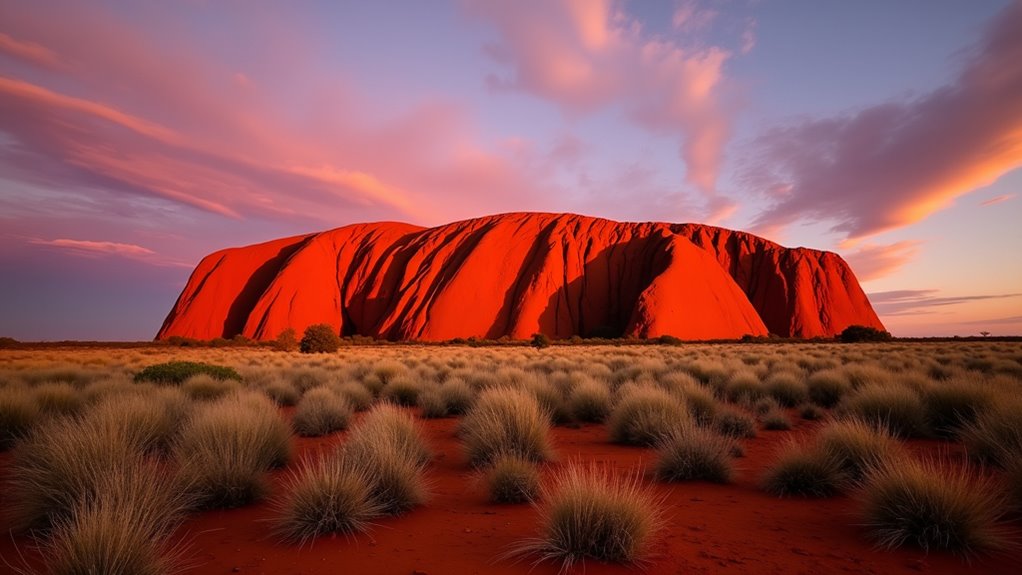
While Uluru transforms into a living canvas at sunrise, you’ll witness one of Australia’s most spectacular natural phenomena as the ancient monolith shifts through deep reds, ochres, and golds against the desert sky.
Head to Talinguru Nyakunytjaku viewing platform for panoramic vistas, arriving 30 minutes early to secure prime spots. For quieter experiences, take the 30-minute Minymaku Walk or 45-minute Watiku Walk, which offer unique vantage points and educational insights.
Plan your visit around seasonal sunrise times: summer brings 5:45-6:30am starts, while winter pushes times to 7:15-7:30am. In December, you can expect sunrise at 5:47 am with extended daylight hours perfect for exploring the area afterward. Pack warm layers, water, and snacks—desert mornings can be surprisingly cool.
Snorkel the Great Barrier Reef From Cairns or Port Douglas
From Australia’s red heart, head north to Queensland’s tropical coast where the Great Barrier Reef awaits beneath crystal-clear waters. You’ll find Cairns and Port Douglas serve as your primary gateways to this UNESCO World Heritage wonderland, stretching 2,300 kilometers with 2,900 individual reefs.
Choose from half-day excursions or multi-day liveaboard charters departing mainly from Cairns. The outer reefs like Agincourt near Port Douglas offer superior water quality and vibrant coral health. You’ll encounter over 1,625 fish species, 600 coral types, and marine turtles in these protected waters.
Visit May through October for ideal conditions—warm temperatures and excellent underwater visibility during the dry season. During stinger season from November to May, operators provide protective Lycra suits against jellyfish. Professional operators emphasize conservation through responsible snorkeling practices, ensuring this marine ecosystem remains pristine for future generations.
Take the Ferry to Rottnest Island and Cycle With the Quokkas
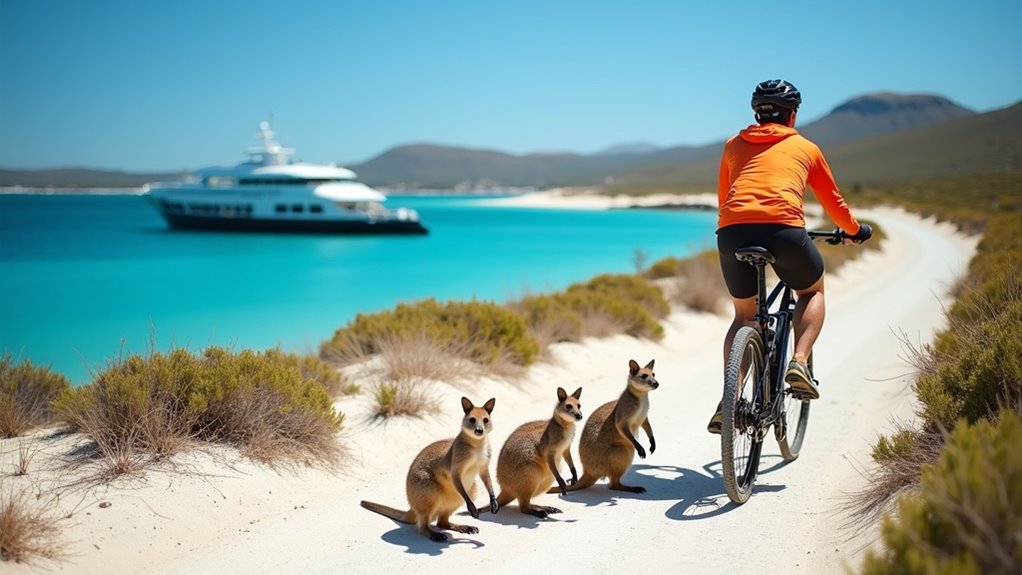
Just 19 kilometers off Perth’s coast, Rottnest Island beckons with its car-free streets, pristine beaches, and Australia’s happiest-looking marsupials. You’ll catch ferries from Perth, Fremantle, North Fremantle, or Hillarys Boat Harbour, with travel times ranging from 25 minutes to 90 minutes depending on your departure point.
Once there, hire a bicycle—the island’s primary transport—and explore well-maintained paths connecting scenic beaches like Pinky Beach, historic Wadjemup Lighthouse, and salt lakes teeming with birdlife. The island boasts an impressive 63 beaches and 20 bays, providing countless opportunities for swimming and snorkeling in crystal-clear waters.
The real stars are the quokkas, protected marsupials known for their photogenic “smiles.” You’ll spot them near visitor areas, especially at dawn and dusk. Remember: observe respectfully without feeding or handling them.
Book ferry tickets ahead during peak seasons, and pack sunscreen and water for your cycling adventure.
Drive the Great Ocean Road and Stop at the Twelve Apostles
Australia’s most scenic coastal drive stretches 243 kilometers along Victoria’s rugged southern coastline, where the Great Ocean Road delivers breathtaking ocean vistas, charming surf towns, and the iconic Twelve Apostles limestone stacks.
You’ll traverse diverse landscapes from Torquay to Allansford, passing surf beaches, rainforests, and rocky headlands dotted with coastal towns like Apollo Bay and Lorne.
The Twelve Apostles remain the showstopper—seven towering limestone formations carved by 15 million years of erosion, rising 50 meters from the Southern Ocean. Access them via boardwalks and viewing platforms for ideal photos. This iconic destination attracts over 2.8 million visitors annually, making it one of Australia’s most popular natural attractions.
Don’t miss nearby Loch Ard Gorge and The Grotto.
Explore the Shipwreck Coast‘s 25 signposted maritime disaster sites, then learn more at Port Campbell‘s visitor center.
Catch a Performance at Sydney Opera House
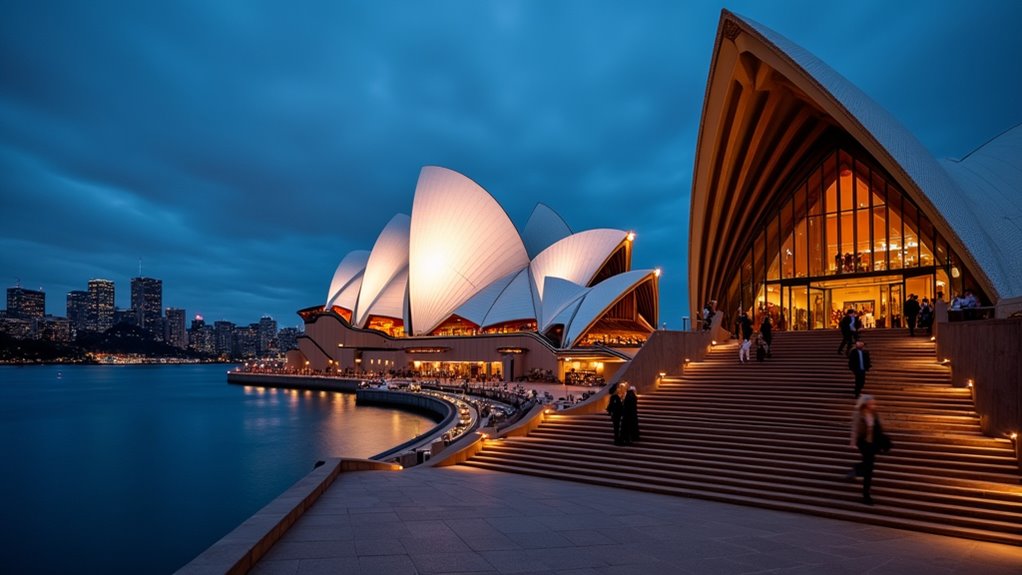
While Victoria’s coastline captivates with natural wonders, Sydney’s harbor showcases human artistic achievement at its finest through the world-renowned Opera House.
You’ll find over 1,500 performances annually across this iconic venue’s multiple theaters, from Opera Australia’s full seasons in the Joan Sutherland Theatre to Sydney Symphony Orchestra concerts featuring world-class artists like Lang Lang and Daniil Trifonov.
Plan ahead for 2025 highlights: Carmen runs November 15-25, while Madama Butterfly and Turandot premiere in early 2026. Don’t overlook The Sleeping Beauty ballet this November-December or the festive Opera Up Late series.
Beyond performances, you can explore Jørn Utzon’s architectural masterpiece through guided tours. With over 8 million annual visitors, book tickets early and arrive via Circular Quay for stunning harbor views. The venue’s foyers open 90 minutes before most shows, giving you ample time to enjoy refreshments at the theatre bars.
Experience the Penguin Parade on Phillip Island at Sunset
Every evening at Summerland Beach, thousands of little penguins waddle ashore in nature’s most charming commute as they return from their daily fishing expeditions. You’ll witness up to 5,000 fairy penguins during peak breeding season, making this Australia’s most celebrated wildlife spectacle. Arrive an hour before sunset—around 8:15 pm in summer—to secure prime viewing spots on the elevated platforms.
Flash photography’s strictly forbidden to protect these smallest penguins’ sensitive eyes.
The 50-60 minute parade showcases approximately 20,000 breeding pairs that call Phillip Island home, outnumbering human residents. Your ticket supports essential conservation research through the not-for-profit Nature Parks organization.
Located 90 minutes southeast of Melbourne, you’ll need private transport since public transit doesn’t reach the island. Consider premium ranger tours for closer encounters and educational insights about these 13-17 inch marine marvels. Recent habitat restoration efforts have dramatically increased penguin numbers in previously eroded eastern colony areas, enhancing your chances of witnessing record-breaking crossings.
Explore the Ancient Daintree Rainforest in Far North Queensland
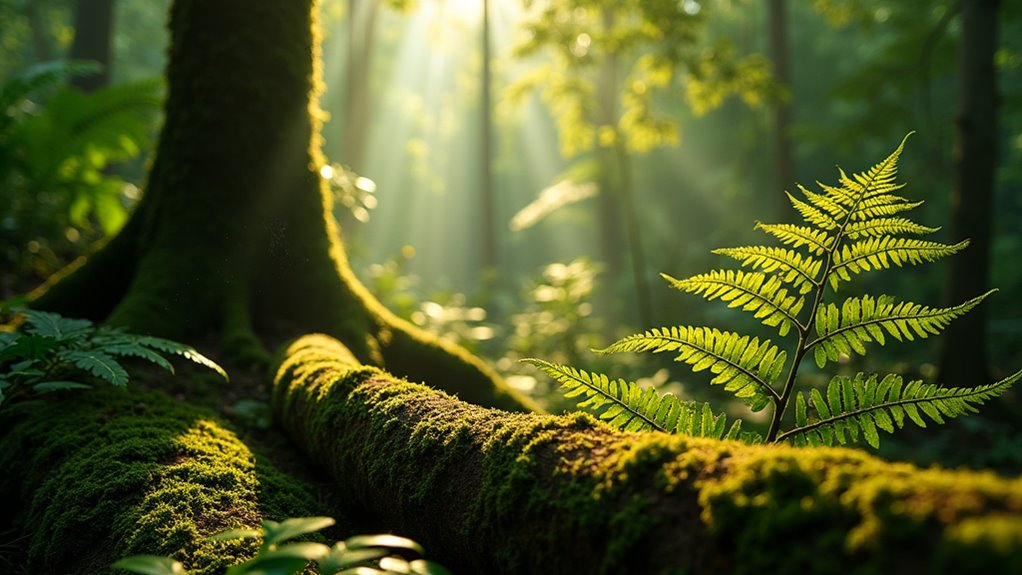
Step into the world’s oldest surviving tropical rainforest, where 180-million-year-old Daintree‘s ancient canopy predates the Amazon and harbors more tree species per hectare than all of Britain combined. You’ll discover 3,000 plant species across 1,200 square kilometers of pristine wilderness stretching from Mossman Gorge to Cape Tribulation.
Visit during the dry season (May-September) for peak hiking conditions along well-marked trails. Don’t miss the coastal strip where rainforest meets Great Barrier Reef—a unique convergence found nowhere else globally.
Look for nocturnal wildlife tours to spot some of Australia’s 65% bat species and bioluminescent plants that glow after dark. The rainforest supports an incredible 30% of Australia’s frog, reptile, and marsupial species within its ancient ecosystem.
Access points include Port Douglas and Cairns, with guided Aboriginal cultural tours offering traditional land management insights from the 20 tribes maintaining sacred connections here.
Surf or People-Watch at Bondi Beach
Australia’s most photographed beach draws 2.9 million visitors annually to its golden kilometer of sand, where you’ll witness the perfect blend of world-class surfing and vibrant people-watching. Waves reach up to 4 meters, challenging surfers of all levels while lifeguards from the world’s oldest surf lifesaving clubs patrol the waters year-round.
Position yourself at Bondi Icebergs Pool for premium spectator views, or grab a coffee at beachfront cafés to observe the dynamic mix of travelers, locals, and fitness enthusiasts. On scorching summer days, over 40,000 people create an electric atmosphere.
Don’t miss the historic Bondi Pavilion‘s galleries and the iconic graffiti wall from the 1980s, adding cultural depth to your beach experience. The beach’s name derives from an Aboriginal word meaning the noise of sea waves, connecting visitors to the area’s indigenous heritage.
Sample World-Class Shiraz in the Barossa Valley

Rolling hills covered in century-old vines produce some of the world’s most celebrated Shiraz, where you’ll taste the full-bodied intensity that’s made Barossa Valley Australia’s flagship wine region since 1842.
You’ll discover rich, chocolatey wines with blackberry and spice notes from iconic producers like Penfolds, Henschke, and Torbreck across 170 wine companies.
The warm Mediterranean climate and diverse soils create ideal conditions for Shiraz cultivation, with some vines over 100 years old producing concentrated, low-yield fruit. The region processes over 600,000 tonnes of wine grapes annually, demonstrating its massive scale and importance to Australia’s wine industry.
Experience dedicated Shiraz tastings, barrel sampling, and vineyard tours at cellar doors along the Barossa Valley Way.
Book blending sessions to understand how winemakers craft these intensely flavored wines that consistently rank among Australia’s most awarded.
Hike Through the Dramatic Landscapes of Kakadu National Park
While Australia’s wine country offers refined pleasures, the continent’s untamed wilderness provides equally compelling adventures across vastly different terrain. Kakadu National Park’s 19,804 km² showcase rugged escarpments, wetlands, and monsoon forests where you’ll encounter 40,000 years of Aboriginal culture through ancient rock art sites.
You can’t miss the highest-rated Barrk Sandstone Walk (5.0/5) for spectacular formations, or Bardedjilidji Walk (4.4/5) combining scenic views with cultural insights. The park’s dramatic waterfalls like Jim Jim Falls and Gunlom Falls offer challenging climbs with rewarding vistas. The park hosts diverse habitats that support an exceptionally rich variety of flora and fauna throughout its vast wilderness areas.
Critical safety note: heed crocodile warnings around waterways—fatal incidents have occurred. Plan visits during cooler months, as mid-August to mid-October brings extreme heat and limited water availability.
Take the Scenic Railway Down Into the Blue Mountains
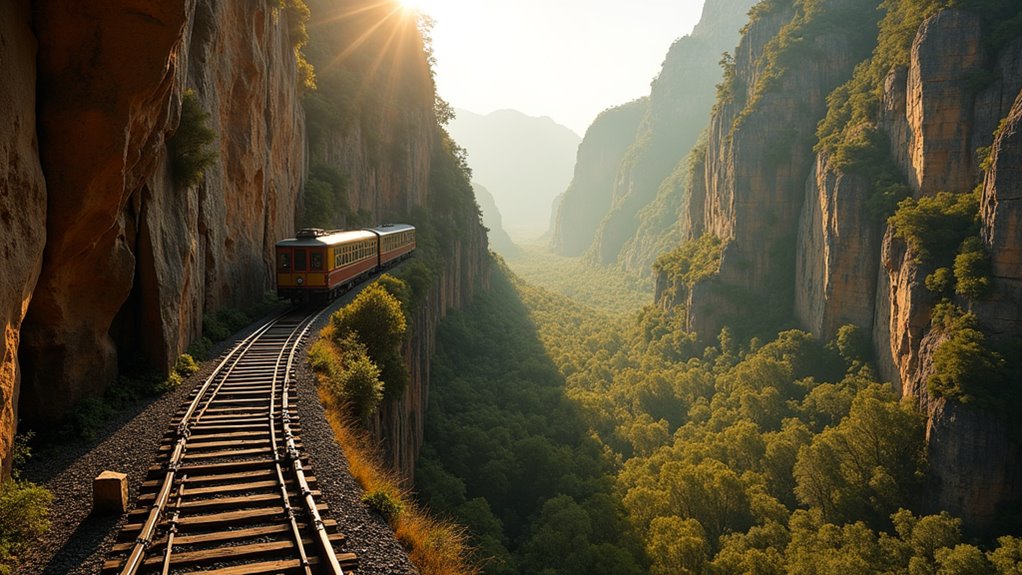
Just two hours west of Sydney, you’ll discover the world’s steepest passenger railway plunging into the ancient Jamison Valley at a heart-stopping 52-degree angle. The Scenic Railway transforms what began as an 1870s coal mining tramway into Australia’s most thrilling descent through Blue Mountains wilderness.
You’ll board the 84-passenger train every ten minutes for the 310-meter descent at 4 meters per second – an exhilarating ride regardless of weather conditions.
At the valley floor, explore the 2.4-kilometer Scenic Walkway’s rainforest boardwalks, choosing 10-, 30-, or 50-minute loops through ancient vegetation. The walkway leads you past historic coal mining sites that reveal the area’s industrial heritage beneath the pristine wilderness.
Complete your circuit via the Scenic Cableway’s gentle ascent back to the clifftop station.
This family-operated attraction has carried over 25 million passengers since 1945, offering unmatched perspectives of Australia’s most accessible wilderness escape.
Spot Tasmanian Devils and Wilderness Wildlife in Tasmania
Since nearly half of Tasmania exists as protected wilderness, you’ll encounter Australia’s most unique wildlife sanctuary where the iconic Tasmanian devil roams alongside ancient forests and pristine coastlines.
Visit Bonorong Wildlife Sanctuary for guaranteed close encounters with devils and expert-guided rehabilitation programs.
For wild sightings, head to Narawntapu National Park—Tasmania’s “Serengeti”—where devils emerge at dusk across open grasslands alongside wallabies and pademelons.
Cradle Mountain-Lake St Clair offers wombat and echidna spotting along highland trails.
Freycinet National Park combines Wineglass Bay’s beauty with diverse marsupials. Along the coastlines, you can observe seal colonies on offshore rocks, with boat tours providing the best viewing opportunities at Tasman Peninsula, Freycinet, and Bruny Island.
Maria Island provides predator-free wildlife viewing ideal for endemic bird species.
Schedule early morning or late afternoon visits when nocturnal animals are most active, and consider night spotlighting tours for supreme devil encounters.
Sail Through the Whitsunday Islands
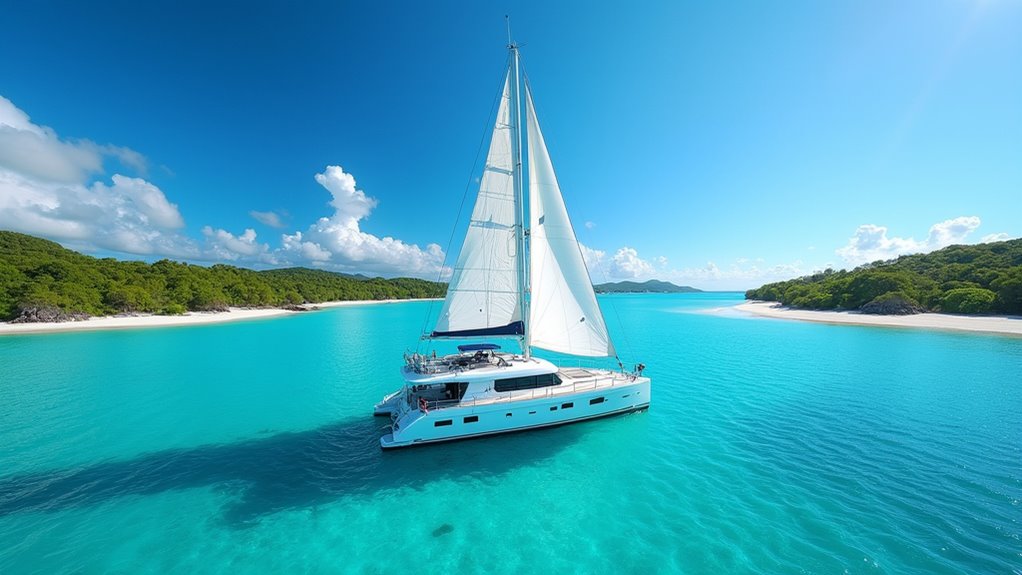
From Tasmania’s rugged wilderness, Australia’s tropical paradise awaits in the Whitsunday Islands, where you’ll discover some of the world’s most spectacular sailing waters. September offers ideal conditions with 25°C temperatures, gentle trade winds, and crystal-clear visibility perfect for beginners and seasoned sailors alike.
You’ll depart from Airlie Beach’s marinas aboard multi-day yacht tours ranging from AUD 130-440 per adult. Must-see destinations include Whitehaven Beach’s famous silica sands and Hill Inlet’s swirling waters—best explored at rising tide via dinghy.
Navigate carefully through Solway Channel during slack tide to avoid strong currents. During jellyfish season from October to May, wearing stinger suits provides essential protection while swimming and snorkeling in these tropical waters.
The region welcomes over 900,000 annual visitors who come for world-class snorkeling among vibrant coral gardens and tropical marine life. Pack light with soft bags only; operators provide meals, equipment, and onboard accommodation for hassle-free adventures.
Walk Among the Sea Lions and Echidnas on Kangaroo Island
Three hundred kilometers southwest of Adelaide, Kangaroo Island offers Australia’s most accessible wildlife encounters, where you’ll walk within meters of endangered Australian sea lions and spot elusive echidnas in their natural habitat.
At Seal Bay Conservation Park, you’ll observe 800 sea lions through ranger-guided tours that protect this third-largest colony while providing intimate wildlife viewing. Watch massive males return from deep-sea hunts for squid and rock lobsters, while playful juveniles practice dominance behaviors on warm beaches.
For echidna encounters, time your visit during May-September mating season when these solitary monotremes form “echidna trains”—groups of males following females. You’ll find them foraging through woodlands and coastal areas, using their sticky tongues to capture termites and ants beneath bark and rocks. When threatened, echidnas will curl into a ball to protect themselves with their sharp spines.
Attend an AFL Match at the Melbourne Cricket Ground
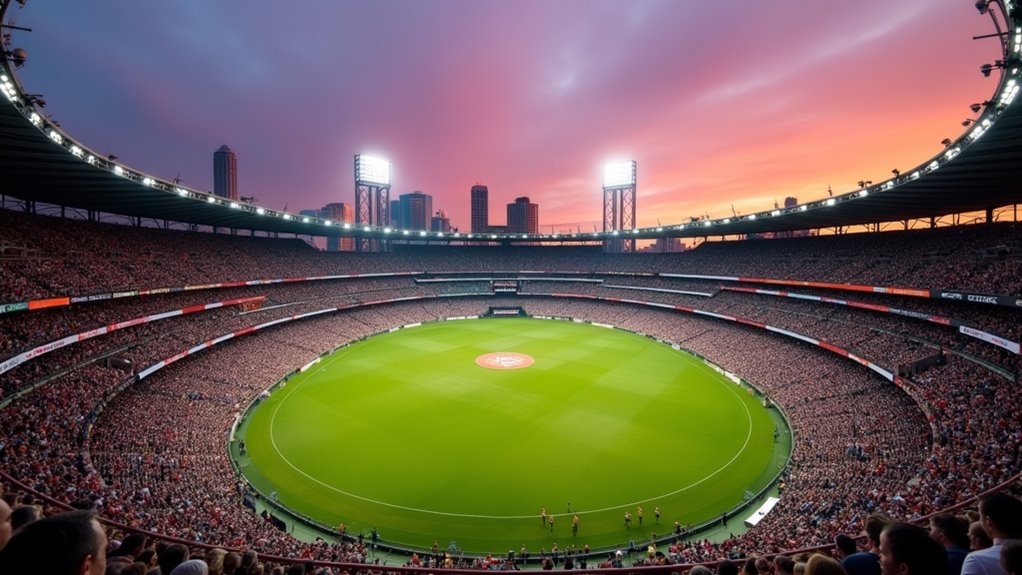
When 100,000 roaring fans pack the Melbourne Cricket Ground for an AFL match, you’ll witness Australia’s most electrifying sporting spectacle at the sport’s spiritual home. This iconic venue on Brunton Avenue hosts four AFL teams—Collingwood, Hawthorn, Melbourne FC, and Richmond—creating fierce rivalries that ignite the crowd.
You’ll experience dynamic fan participation with traditional Aussie Rules chanting and cheers reverberating throughout the stadium.
The $400 million redevelopment guarantees modern amenities while preserving the venue’s 171-year heritage. Among the home teams, Melbourne FC holds the distinction of being the oldest AFL club, founded in 1858.
Don’t miss marquee matches that draw 70,000-plus crowds, especially finals exceeding 90,000 spectators.
Book tickets early for popular fixtures like Collingwood vs Carlton, which regularly attract over 82,000 fans.
The atmosphere becomes particularly electric during evening matches when Melbourne’s skyline creates a stunning backdrop.
Swim With Whale Sharks at Ningaloo Reef in Western Australia
Swimming alongside the world’s largest fish at Ningaloo Reef offers one of Australia’s most extraordinary wildlife encounters. Gentle whale sharks measuring up to 16 metres glide through crystal-clear waters just metres from shore.
Plan your visit between April and July when these filter-feeding giants arrive to feast on coral spawn, ensuring the highest success rates for sightings.
Book tours from Exmouth or Coral Bay well in advance, as these 6-8 hour experiences fill quickly during peak season. Spotter planes locate whale shark groups, delivering over 90% success rates. Tours typically limit group sizes to around 20 people with about 10 in the water simultaneously to ensure safety and a quality experience.
You’ll spend 3-4 hours snorkeling with these docile creatures while potentially encountering manta rays, turtles, and dolphins along this UNESCO World Heritage-listed reef stretching 300 kilometres down Western Australia’s coast.
Explore Melbourne’s Famous Laneways and Coffee Culture
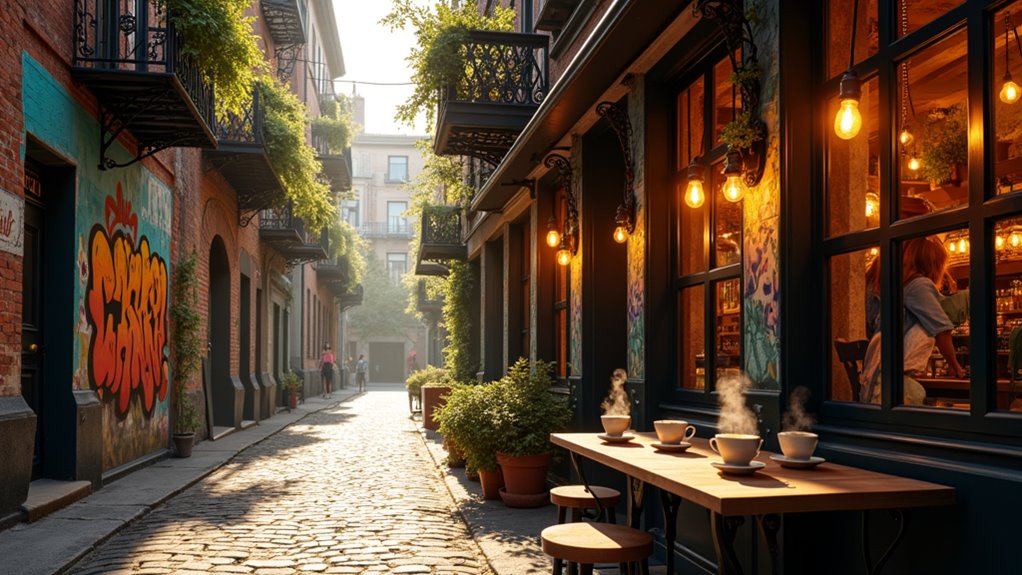
Melbourne’s labyrinthine laneways transform the city into an open-air gallery where world-class street art merges seamlessly with Australia’s most sophisticated coffee culture. You’ll discover iconic Hosier Lane’s dense graffiti layers and Matt Adnate’s towering Aboriginal Boy mural.
While exploring, Union Lane showcases daily-refreshed works by emerging artists. Blender Lane near Queen Victoria Market serves as street art’s spiritual home, featuring multimedia installations and stencil work.
Between art appreciation, you’ll find exceptional cafés nestled within these cultural corridors. Degraves Street and Centre Place offer specialty brews and artisan pastries, creating perfect urban retreats.
The constant evolution of murals—from political messages to indigenous tributes—ensures each visit reveals fresh perspectives. These dynamic spaces host pop-up exhibitions and cultural events, making them essential destinations for experiencing Melbourne’s creative soul.
Trek Through the Rugged Gorges of the Kimberley Region
Six hundred sixty kilometers of the legendary Gibb River Road reveal Western Australia’s most spectacular gorge country, where ancient sandstone cliffs plunge into emerald pools and thundering waterfalls reward intrepid trekkers. You’ll need a 4WD to tackle the corrugated dirt tracks leading to these geological wonders.
Start with accessible Galvans Gorge‘s multi-tiered waterfall and rope swing, then challenge yourself on Bell Gorge’s demanding 2km scramble to pristine cascades. Emma Gorge’s moderate 3.2km trail culminates at a stunning 65-meter waterfall, while Manning Gorge requires river crossings for ultimate swimming holes.
The multi-day Mitchell Falls expedition offers the region’s crown jewel.
Plan for dry season trekking when roads remain passable. Pack navigation skills for unmarked trails like Dimond and Sir John gorges, where solitude compensates for challenging terrain.
Experience Aboriginal Rock Art and Culture in Arnhem Land
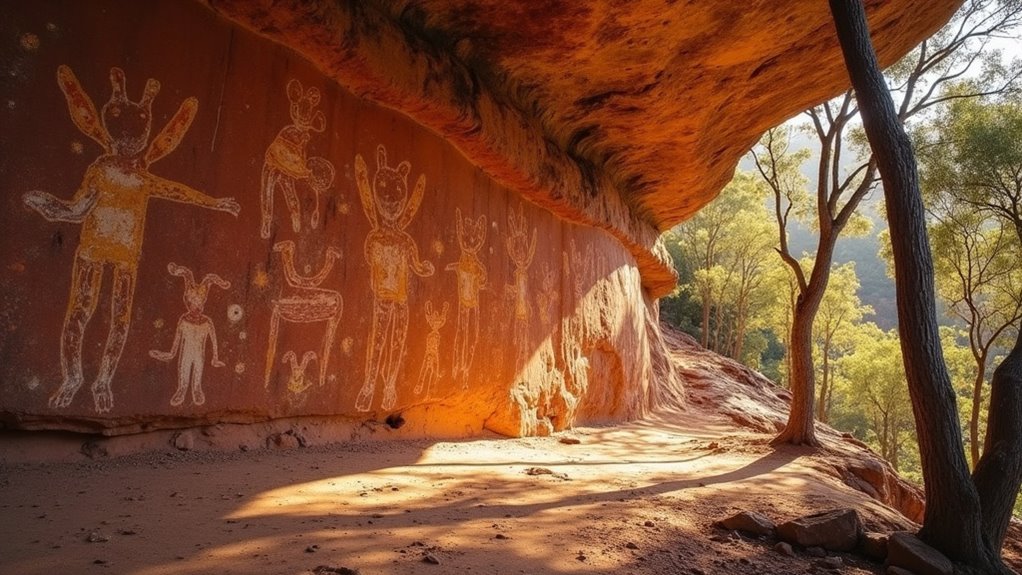
While Western Australia’s gorges showcase the continent’s geological drama, Northern Territory’s Arnhem Land reveals Australia’s deepest cultural treasures through the world’s oldest continuously practiced rock art tradition. You’ll need permits from Aboriginal land councils to access these sacred sites, but guided tours during the dry season provide invaluable cultural context.
At Ubirr Rock Art Site, you’ll witness the distinctive X-ray style paintings revealing animals’ internal anatomy alongside Mimi spirits and the Lightning Man.
Nourlangie Rock Art Gallery features dynamic hunting figures dating back thousands of years. The Yolngu and Bininj people maintain these living galleries as visual storybooks encoding Dreamtime creation stories, ancestral laws, and spiritual teachings.
Ranger-guided experiences ensure respectful access while supporting Traditional Owners who’ve preserved this extraordinary cultural heritage for over 9,000 years.
Relax in the Bohemian Coastal Town of Byron Bay
Beyond the rugged cultural landscapes of Arnhem Land, Byron Bay beckons with Australia’s most easterly sunrise and a laid-back vibe that’s captivated everyone from surfers to spiritual seekers since the 1970s.
You’ll find perfect waves at The Pass, while Wategos Beach offers sheltered swimming with free electric barbecues for sunset picnics.
The iconic Cape Byron Lighthouse, operational since 1901, provides spectacular whale watching from May to November and panoramic Pacific views along the coastal walking track.
With 1.9 million annual visitors discovering this bohemian haven, you’re experiencing a destination where the Bundjalung people’s 22,000-year connection to country meets modern coastal culture.
Book accommodation early—Byron’s popularity means limited availability, especially during whale season and festivals.
Discover Adelaide’s Festival Scene and Nearby Wine Regions
Since 1960, Adelaide has evolved into Australia’s undisputed festival capital, where you’ll experience everything from the massive Adelaide Fringe—one of the world’s largest open-access arts festivals—to the internationally acclaimed WOMADelaide world music celebration.
Time your visit for February through March to catch Adelaide Fringe’s diverse performance arts, or October for Adelaide Festival‘s curated international theatre, dance, and opera.
Beyond the city’s festival calendar, you’re perfectly positioned to explore world-class wine regions. Head to Barossa Valley for heritage Shiraz estates, Clare Valley for exceptional Rieslings and vineyard cycling trails, or Adelaide Hills for cool-climate varietals.
Don’t miss seasonal regional celebrations like Willunga’s Almond Blossom Festival or Winter Reds Festival, where cozy fireplace settings complement wine tastings.
Adventure Through the Alpine Scenery of the Australian Alps
Australia’s highest peaks await your exploration in the southeastern corner of the continent, where the Australian Alps stretch across 6,900 square kilometers of dramatic alpine terrain.
You’ll find Mount Kosciuszko’s summit at 2,228 meters, offering snow-capped vistas from May through October. The region’s diverse ecosystems span from montane forests to specialized alpine zones above 1,800 meters, where unique snow gums and endemic plants thrive.
Winter transforms the landscape into Australia’s premier skiing destination, while summer opens hiking trails through alpine meadows and rugged valleys carved by ancient glacial activity.
You can mountain bike, fish, or camp within Kosciuszko, Alpine, and Namadgi National Parks.
Indigenous groups including the Ngarigo and Walgalu peoples maintain deep cultural connections here, with interpretation programs revealing traditional land use and spiritual significance.
The Sum Up
You’ve now explored Australia’s must-do experiences, from Uluru’s sacred sunrise to the reef’s underwater wonders. Don’t rush—this continent rewards slow travel and cultural curiosity. Book accommodations early during peak seasons, respect Aboriginal cultural protocols at sacred sites, and pack for diverse climates. Whether you’re chasing perfect waves in Byron Bay or sampling Barossa wines, Australia’s vastness means you’ll barely scratch the surface on one trip. Start planning your return before you’ve left.