
Your first Banff visit should include arriving at Lake Louise before 8 AM to avoid crowds, driving the scenic Bow Valley Parkway for wildlife spotting, and taking the Banff Gondola for mountain panoramas. Don’t miss hiking to Lake Agnes Teahouse, paddling Vermilion Lakes at sunset, and soaking in the Upper Hot Springs. Visit Peyto Lake’s famous overlook, explore Cave and Basin Historic Site, and float the Bow River for a unique perspective. These experiences will transform your mountain adventure into unforgettable memories.
- Stand at Lake Louise’s Shore Before 8 AM to Beat the Crowds
- Drive the Bow Valley Parkway for Wildlife and Mountain Views
- Take the Banff Gondola Up Sulphur Mountain for Valley Panoramas
- Hike to Lake Agnes Teahouse for Historic Mountain Hospitality
- Paddle Vermilion Lakes at Sunset for Moose and Mountain Reflections
- Experience Moraine Lake’s Turquoise Waters From the Rockpile Viewpoint
- Walk the Easy Tunnel Mountain Trail for Banff’s Best Town Views
- Soak in Banff Upper Hot Springs After a Day of Hiking
- Stop at Peyto Lake Overlook Along the Icefields Parkway
- Learn Parks History at Cave and Basin National Historic Site
- Float the Bow River to See Banff From a Different Perspective
- The Sum Up
Stand at Lake Louise’s Shore Before 8 AM to Beat the Crowds
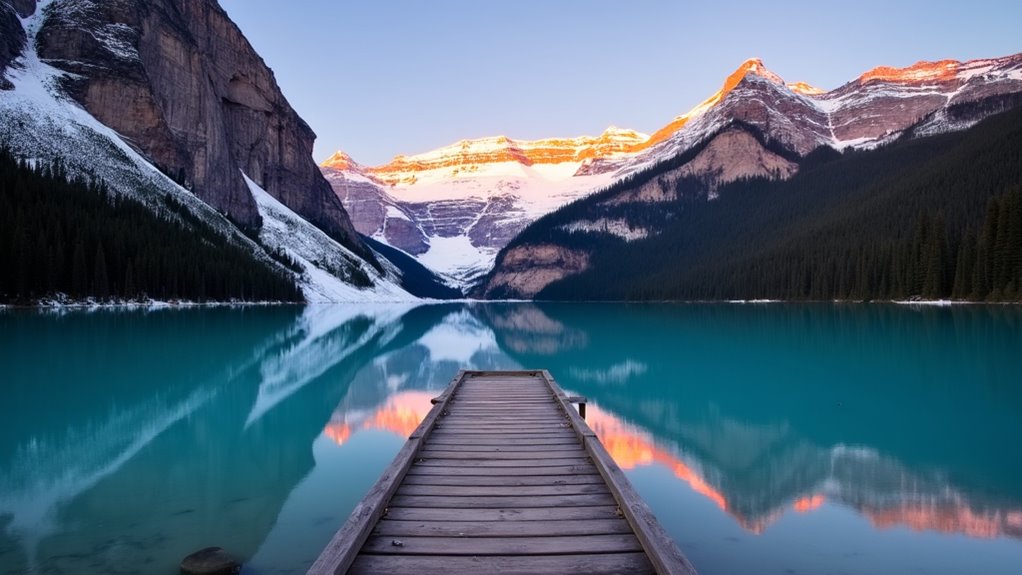
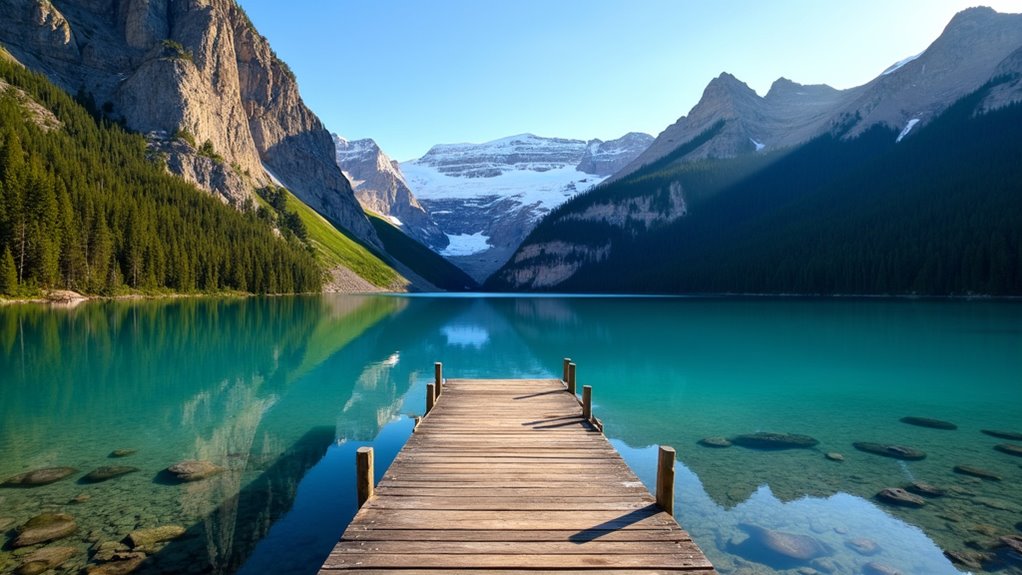
If you want to experience Lake Louise without fighting through shoulder-to-shoulder crowds, you’ll need to drag yourself out of bed before 8 AM. This famous lake hosts 10,000-12,000 visitors daily during summer, and parking fills completely between 8 AM and 6 PM, with up to 85% of cars turned away.
Arriving before 8 AM means you’ll encounter roughly a quarter of the daytime crowd. Tour buses don’t start rolling in until after 8 AM, so you’ll have prime photo spots to yourself. The early morning light creates stunning reflections on the calm lake surface, and you won’t deal with canoe ripples disrupting your shots. Consider staying at the Fairmont Chateau Lake Louise for after-hours access and the convenience of walking to the lake for those coveted early morning visits.
During July and August, aim for arrival before 7 AM on weekends for guaranteed parking and shoreline access.
Drive the Bow Valley Parkway for Wildlife and Mountain Views
While the Trans-Canada Highway gets you between Banff and Lake Louise in 45 minutes, the Bow Valley Parkway turns that drive into a 1-3 hour wildlife safari through some of the Rockies’ best scenery.
This 48-kilometer secondary road runs parallel to Highway 1 but limits speeds to 60 km/h, giving you time to spot elk, bears, bighorn sheep, and wolves—especially at dawn and dusk.
You’ll find countless pull-offs for photos, including the famous Morant’s Curve where trains curve along the turquoise Bow River. Castle Mountain dominates the central section, while interpretive stops explain the area’s geology and history. Along the route, 14 marked exhibits cover local fauna, the automobile era, and historical sites like the Castle Mountain Internment Camp.
The road’s closed to vehicles 8 PM-8 AM from March through June to protect wildlife, so plan accordingly.
Take the Banff Gondola Up Sulphur Mountain for Valley Panoramas
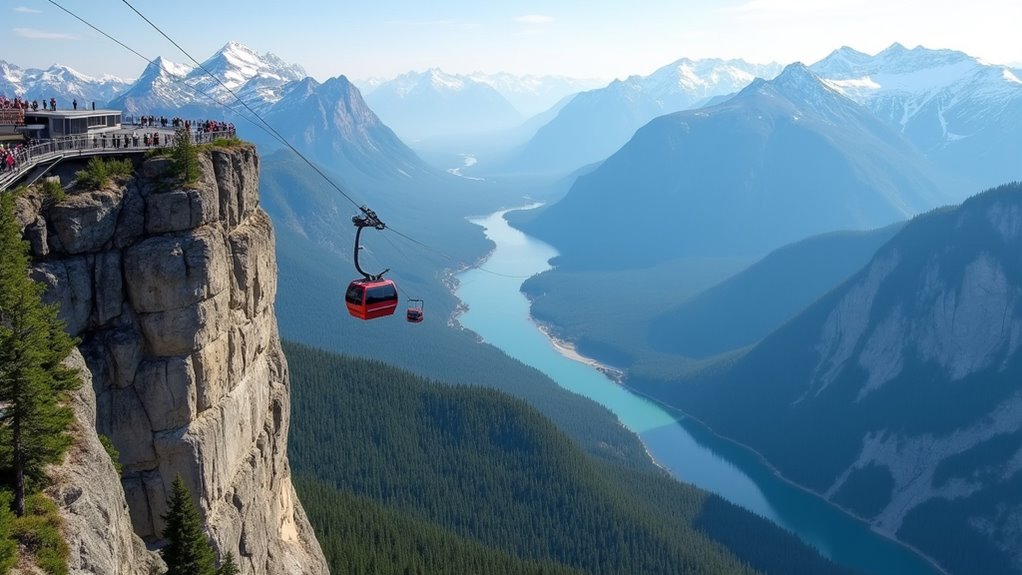
Though the CAD $70 ticket might make budget travelers wince, the Banff Gondola delivers some of the most accessible mountain panoramas in the Canadian Rockies. You’ll ascend 700 meters in eight minutes to reach sweeping 360-degree views over six mountain ranges, including Cascade Mountain and Mount Rundle.
The summit boardwalk leads to Sanson’s Peak, where you’ll capture classic shots of Banff townsite and the Bow Valley. Book online ahead—this attraction’s popularity means sellouts are common. Once up top, you’re not rushed; explore the interpretive centre, grab lunch at the summit restaurant, and spend time on the observation decks.
The wheelchair-accessible facilities make these spectacular vistas available to visitors of all mobility levels. For the more adventurous, you can hike the 5.5 km trail to the summit and take the gondola down for a leisurely descent.
Hike to Lake Agnes Teahouse for Historic Mountain Hospitality
Few hiking destinations combine scenery, history, and refreshment quite like the Lake Agnes Tea House. This 3.4-kilometer hike from Lake Louise takes you through subalpine forest to a high alpine cirque, where you’ll find one of Canada’s oldest teahouses operating since 1905.
The well-maintained trail climbs 400 meters with manageable switchbacks, stopping at Mirror Lake before reaching wooden staircases beside a waterfall. At the top, Lake Agnes sits dramatically beneath towering peaks, and the rustic teahouse serves homemade soups, fresh-baked goods, and 100 loose-leaf teas. The current log building was constructed in 1981, though it preserves original windows, tables, and chairs from earlier structures.
Expect a 1-2 hour ascent, and bring cash since they’re completely off-grid. Start early—Lake Louise parking fills quickly, and the teahouse operates June through October, 8 AM to 5 PM.
Paddle Vermilion Lakes at Sunset for Moose and Mountain Reflections
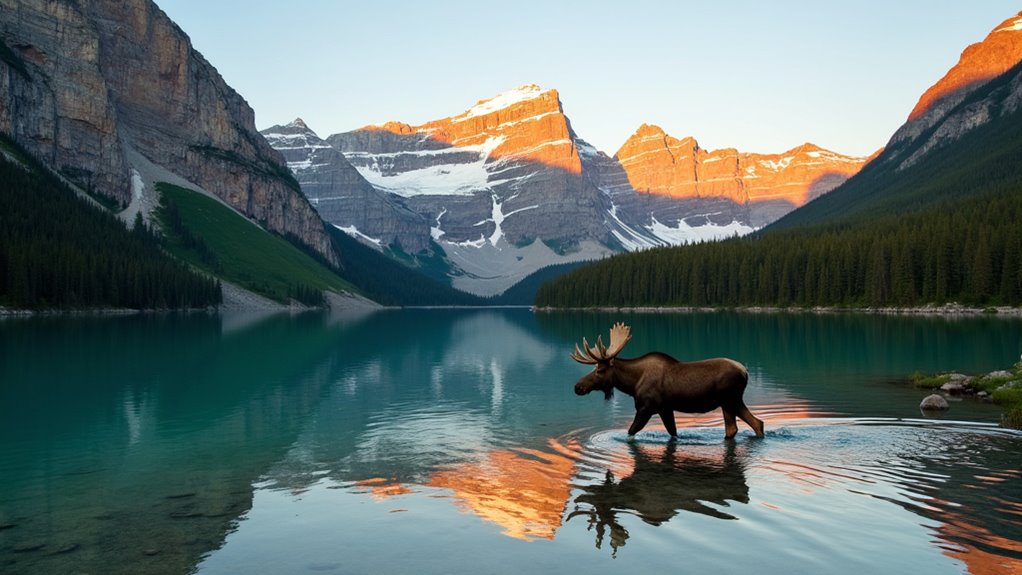
When the day’s crowds thin out and golden light bathes the Rockies, Vermilion Lakes transforms into one of Banff’s most magical paddling experiences. You’ll paddle three shallow lakes just 2.4 km from downtown, where Mount Rundle’s reflections shimmer in mirror-like water during calm evening conditions.
Rent canoes or kayaks from Banff Canoe Club, then launch from multiple access points along Vermilion Lakes Road. The shallow, interconnected waters suit beginners perfectly, connecting to 40 Mile Creek and the Bow River.
Time your paddle for late evening when moose emerge to feed in marshy shorelines and sedge beds. You’ll also spot elk, beavers, and waterfowl as alpenglow ignites the mountain peaks. Keep an eye on the sky during exceptionally clear nights, as the area occasionally offers views of the Aurora Borealis when atmospheric conditions align.
Fall evenings offer the richest colors and calmest conditions, though summer provides extended golden hour until after 9 pm.
Experience Moraine Lake’s Turquoise Waters From the Rockpile Viewpoint
If you’re seeking Banff’s most iconic view, the short climb up Moraine Lake’s Rockpile Trail delivers the legendary “Twenty Dollar View” that once graced Canadian currency.
This easy 0.8km return hike takes 30-45 minutes and features about 100 constructed steps up a natural moraine of massive boulders.
The payoff is spectacular: turquoise waters framed by the Valley of the Ten Peaks. You’ll get the best photos during early morning when reflections are clearest and crowds are thinner.
The trail’s well-defined but not wheelchair accessible, so wear sturdy shoes for the rocky terrain. Since you’ll be hiking at high elevation, even this shorter trail may feel more demanding than expected.
Visit between late June and mid-October when the road’s open.
Bring warm layers for chilly mornings and remember you’ll need a valid Parks Canada pass for entry.
Walk the Easy Tunnel Mountain Trail for Banff’s Best Town Views
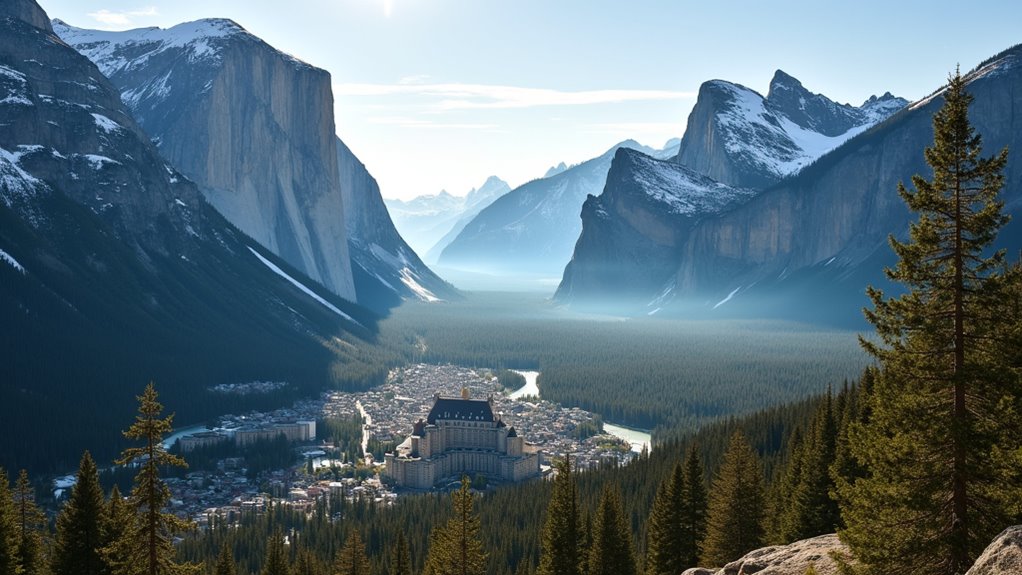
While Moraine Lake offers breathtaking wilderness views, Tunnel Mountain Trail puts Banff’s charming townsite at your feet without breaking the bank or requiring advanced hiking skills.
This free, 4.8-kilometer round-trip hike takes just 1-2 hours and starts only one kilometer from downtown Banff.
You’ll climb 260 meters through switchbacking forest paths that aren’t technical or exposed. The well-graded trail suits most fitness levels, including active kids and leashed dogs.
Multiple clearings reveal elevated views over Banff Avenue, the Bow River, Mount Rundle, and the iconic Fairmont Banff Springs Hotel.
Parks Canada’s red chairs near the summit provide perfect photo spots. The summit also features educational signage about the endangered limber pine.
Visit early morning for fewer crowds and easier parking at the St. Julien Road trailhead.
The trail’s accessible year-round, though winter requires traction devices.
Soak in Banff Upper Hot Springs After a Day of Hiking
After conquering Banff’s trails, nothing beats sinking into the mineral-rich waters of Banff Upper Hot Springs to soothe those tired muscles. Located high on Sulphur Mountain, these naturally heated pools maintain perfect temperatures around 38-40°C while offering stunning views of Mount Rundle and Cascade Mountain.
You’ll find modern facilities including hot pools, steam rooms, and change rooms at budget-friendly prices. The geothermal waters emerge from 3 km underground, creating an ideal post-hike recovery experience that’s been drawing visitors since 1886. The springs were originally discovered in 1883 by three railway workers exploring the lower slopes of Sulphur Mountain.
Skip the parking hassle and take Roam Transit Route 1 directly from downtown Banff. For the most relaxing soak, visit Monday through Thursday or during early morning hours when crowds thin out.
Stop at Peyto Lake Overlook Along the Icefields Parkway
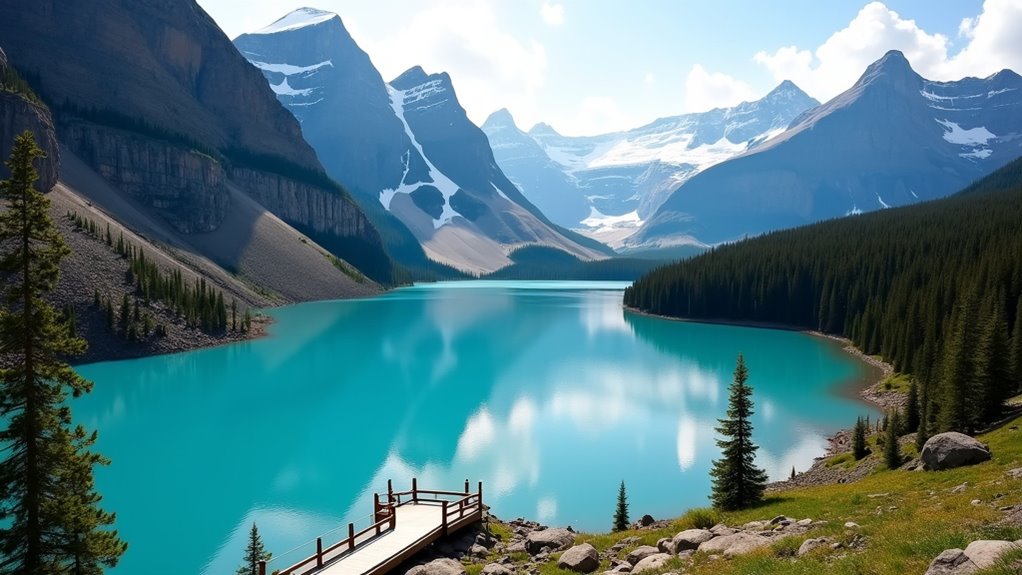
Though you’ll encounter crowds during peak season, Peyto Lake’s wolf-shaped silhouette and brilliant turquoise waters make it an essential stop on your Icefields Parkway journey. Located at Bow Summit, this viewpoint sits just 40 kilometers north of Lake Louise with no additional fees beyond your park pass.
The easy 0.8-kilometer paved trail takes about 30 minutes round-trip, making it perfect for families. You’ll reach a large viewing platform with interpretive signs explaining the lake’s glacier-fed turquoise color caused by suspended rock flour.
Beat the tour bus crowds by arriving before 9:00 AM or after 6:00 PM during summer. The parking area has vault toilets but no services, so bring snacks and water. For those planning to explore more of this 232 km highway, consider downloading the Icefields Parkway Guide Along App to enhance your learning experience en route. Winter visits offer solitude but require checking road conditions first.
Learn Parks History at Cave and Basin National Historic Site
Just 15 minutes from downtown Banff, the Cave and Basin National Historic Site offers an incredible journey through Canada’s national parks history for only $4 per adult. You’ll discover where it all began in 1883 when railway workers Frank McCabe and the McCardell brothers found these thermal springs, leading to Canada’s first national park in 1885.
The interpretive center tells fascinating stories about Indigenous peoples who considered this sacred land home for over 10,000 years. You’ll explore the original cave where those workers descended through a natural skylight and see the basin’s mineral-rich waters that still flow today. The site features observation decks that provide stunning views of the surrounding mountain landscape and thermal features.
Don’t miss viewing the endangered Banff Springs Snail’s habitat – these tiny creatures exist nowhere else on Earth, making this stop both educational and unique.
Float the Bow River to See Banff From a Different Perspective
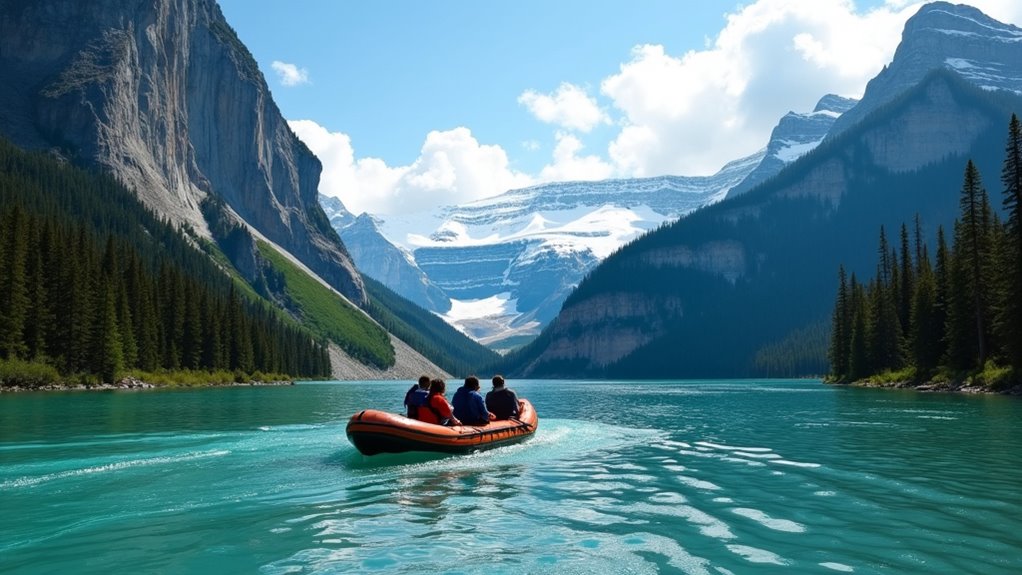
While hiking trails provide stunning mountain vistas, floating the Bow River gives you an entirely different perspective of Banff’s dramatic landscape. This gentle 7-km scenic float showcases Cascade, Rundle, and Sleeping Buffalo peaks from water level, revealing views you can’t get from roadside lookouts.
Guided rafts accommodate 25 passengers and run multiple daily departures, making it easy to fit into your schedule. The one-hour float costs less than helicopter tours while offering similar “wow factor” for families. Kids as young as two can join this calm, Class I experience.
For budget-conscious travelers, rent canoes or kayaks near Banff Canoe Club and paddle shorter sections independently. You’ll spot wildlife habitat, hoodoos, and the transition from manicured golf course banks to wild riverside forests downstream. The rafts feature elevated wood floorboards that keep your shoes dry throughout the peaceful journey.
The Sum Up
You’ve got enough adventures here to fill several trips, so don’t stress about checking every box on your first visit. Pick three or four experiences that excite you most and do them well rather than rushing through everything. Budget extra time for spontaneous stops – you’ll want to pull over constantly for photos. Most importantly, remember that Banff’s magic isn’t just in the destinations; it’s in those unexpected moments between them.