
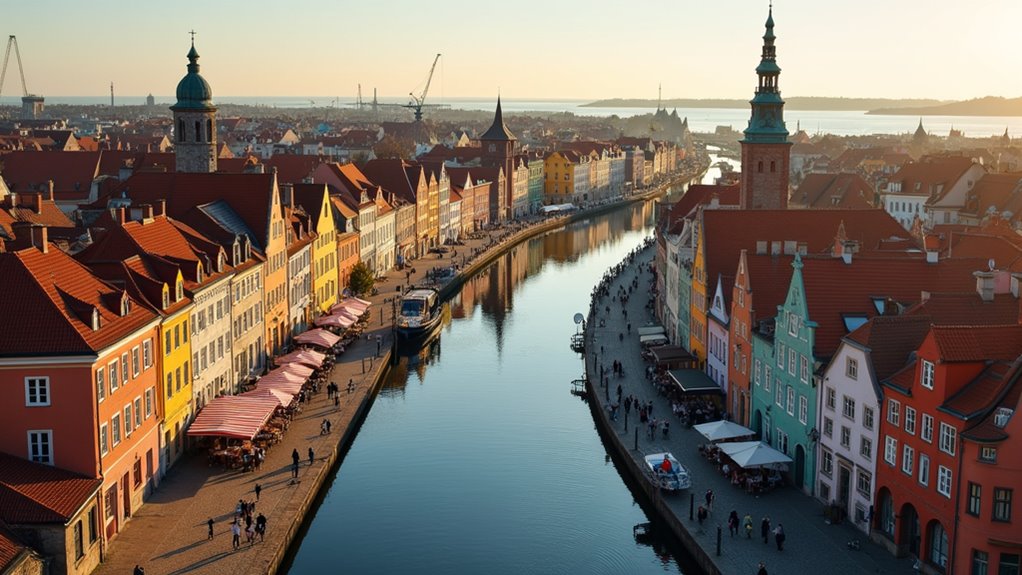
You’ll find Gdańsk isn’t your typical European city break—it’s where medieval charm meets maritime grit, and every cobblestone tells a story of resilience. Whether you’re drawn to climbing historic bell towers, hunting for amber treasures, or simply watching ships drift past Gothic warehouses, this Baltic gem offers experiences you won’t find elsewhere. The trick is knowing which moments will capture your imagination and which hidden corners deserve your time.
- Climb St. Mary’s Bell Tower for the Best Views in Town
- Hunt for Baltic Amber Treasures on Mariacka Street
- Experience Europe’s Largest Tiled Stove at Artus Court
- Take the Royal Route Walk From Golden Gate to Green Gate
- Escape the Crowds at Sobieszewo Island’s Wild Beaches
- Catch a Concert at Oliwa Cathedral’s Famous Organ
- Test the Whispering Caves’ Acoustic Magic in Oliwa Park
- Explore the Medieval Charm of Długi Targ at Golden Hour
- Discover Gdańsk’s WWII Stories at the Museum of the Second World War
- Stroll the Motława River Promenade Past Historic Warehouses
- Time Your Visit for the Christmas Market’s Mulled Wine and Local Treats
- The Sum Up
Climb St. Mary’s Bell Tower for the Best Views in Town
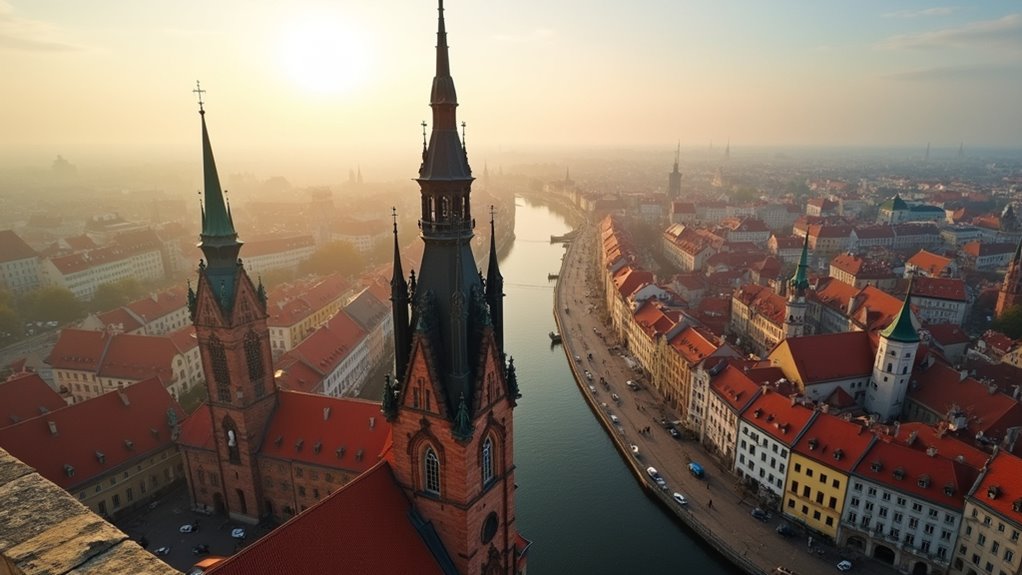
While Gdańsk’s skyline teems with Gothic spires and historic facades, nothing beats the bird’s-eye perspective you’ll get from St. Mary’s Basilica tower. At 78-82 meters tall, it’s the city’s highest building and offers unmatched 360-degree views.
You’ll tackle roughly 405 steps – the first 150-190 are tight spiral stairs, then it opens up. Bring decent fitness levels and comfortable shoes; the climb’s demanding but absolutely worth it.
For just 10 PLN (5 PLN for students), you’ll access both the tower and church. The interior features 31 chapels alongside other remarkable elements including an astronomical clock and Poland’s largest stained glass window.
The small terrace at the top showcases Gdańsk’s Old Town, the winding Motława River, shipyards, and Baltic Sea beyond. Visit during sunset for spectacular lighting.
This late Gothic masterpiece symbolizes the city’s medieval wealth – its interior could hold 20,000 people despite the era’s smaller population.
Hunt for Baltic Amber Treasures on Mariacka Street
After soaking up those panoramic views, descend into Gdańsk’s cobblestone heart where Mariacka Street beckons with its amber treasures.
You’ll discover why Gdańsk claims 70-80% of the world’s amber production along this medieval thoroughfare lined with galleries and artisan boutiques.
Browse everything from affordable pendants to elaborate designer pieces at prestigious dealers like Galeria Wydra.
Don’t rush—explore multiple shops since prices and styles vary markedly between stores.
You might catch local craftsmen shaping “Baltic Gold” in their workshops, witnessing centuries-old traditions firsthand.
The street’s intimate atmosphere, created by leaning buildings and cobblestones, enhances your treasure hunt. Look up to admire the fantastic beasts carved into the facades of historic burgher houses that line this narrow passage.
Visit after 10 AM when shops open and street stalls appear.
Remember: authentic amber feels warm to touch since it’s fossilized resin, not stone.
Experience Europe’s Largest Tiled Stove at Artus Court
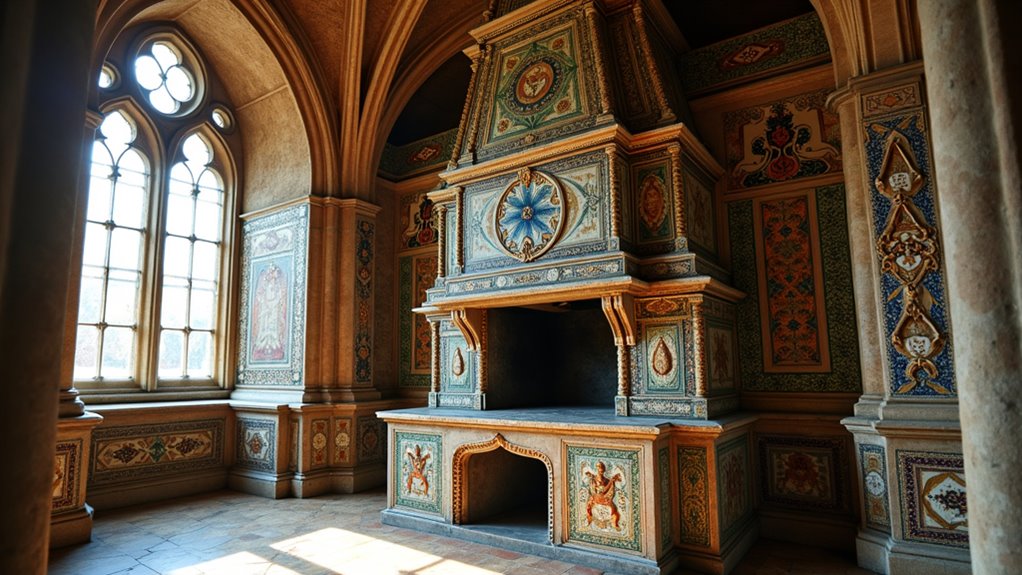
Once you’ve finished browsing amber treasures, make your way to Artus Court on Długi Targ to witness Europe’s most impressive Renaissance heating system.
Standing 35 feet tall, this magnificent tiled stove towers almost to the ceiling of the grand hall, showcasing over 520 intricately decorated tiles from 1545-1546.
You’ll marvel at the colorful glazed portraits of European monarchs, including Charles V and Isabella of Portugal, alongside allegorical figures that tell stories of 16th-century politics and power.
Master craftsmen Georg Stelzner and Jost created this masterpiece for Gdańsk’s wealthy merchant guilds, who met here to conduct business and social affairs.
The stove’s coats of arms connect you directly to local history, representing Poland, Gdańsk, and Royal Prussia in stunning Renaissance artistry. Of the stove’s 520 tiles, 437 originals remain from the Renaissance period, making this a remarkably well-preserved historical artifact.
Take the Royal Route Walk From Golden Gate to Green Gate
From the Golden Gate’s ornate archway, you’ll commence on the same ceremonial path that welcomed Polish monarchs for centuries. This Renaissance route showcases Gdańsk’s former merchant wealth through ornate townhouses lining Long Market.
You’ll pass the Neptune Fountain before reaching the Green Gate by the Motława River.
Notice the Dutch and Flemish architectural influences throughout—the Golden Gate’s Mannerist statues represent civic virtues like Peace and Prosperity, while the Green Gate’s distinctive mullioned windows earned its name. The Green Gate was designed by Regnier van Amsterdam and reflects the architectural style of the Antwerp City Hall that inspired its construction.
Originally planned as royal lodging, no monarch actually stayed at the Green Gate due to street noise.
The walk reveals Gdańsk’s maritime trading power and connects the city’s defensive medieval walls with its bustling port.
You’re literally following royal footsteps through Poland’s most historically significant urban procession route.
Escape the Crowds at Sobieszewo Island’s Wild Beaches

When city life becomes overwhelming, you’ll find your sanctuary on Sobieszewo Island’s untamed coastline, where 11 kilometers of pristine beaches stretch up to 70 meters wide along the Baltic Sea. This Natura 2000 protected area offers Gdańsk’s wildest escape, featuring largely empty beaches framed by pine forests and coastal dunes.
You’ll discover safe swimming zones with lifeguards at Falowa, Lazurowa, and Trałowa streets, though the fine sand can be challenging for long walks. The island’s home to nearly 300 plant species and over 120 bird varieties, making it perfect for nature enthusiasts. Lucky visitors might even spot wild seals occasionally appearing on the beaches near entrance 1.
Reach this green oasis via buses 112 or 186, or drive 35 minutes from city center. Pack provisions since commercial services are limited, preserving the island’s unspoiled character.
Catch a Concert at Oliwa Cathedral’s Famous Organ
While exploring Gdańsk’s spiritual landmarks, you’ll encounter one of Poland’s most magnificent musical treasures at Oliwa Cathedral.
The cathedral is home to the legendary Rococo organ, which commands attention with its 6,000 pipes and ornate 18th-century façade. Built between 1763-1788 by Cistercian monk Johann Wilhelm Wulff, this massive instrument features 96 registers across five keyboards, making it one of Poland’s largest and most complex organs.
You can catch regular concerts showcasing everything from Baroque masterpieces to contemporary compositions. The cathedral’s soaring acoustics amplify the organ’s dynamic range beautifully, creating an unforgettable sonic experience. The cathedral itself stretches 107 meters long, making it the longest Cistercian church in the world and providing exceptional acoustical properties for musical performances.
Professor Roman Perucki often performs here, drawing both locals and international visitors. Check the cathedral’s schedule before visiting – these concerts offer an authentic cultural experience that captures Gdańsk’s rich musical heritage.
Test the Whispering Caves’ Acoustic Magic in Oliwa Park

Just steps away from the cathedral, Oliwa Park conceals one of Gdańsk’s most delightful acoustic surprises – the Whispering Caves, or Groty Szeptów as locals call them. These two hemispherical stone structures face each other, creating a mesmerizing sound phenomenon that’ll amaze you and your travel companion.
Here’s how it works: stand with your backs to each other in separate caves and whisper. You’ll hear each other’s words crystal clear despite the distance. It’s pure acoustic magic that demonstrates fascinating sound physics in action.
The caves sit near the park’s southeast entrance, close to the French Baroque garden and a charming waterfall. Families love this interactive experience, and it’s completely free.
This 15th-century park perfectly blends education with entertainment, making it essential for curious travelers exploring Gdańsk’s hidden gems. The park’s rich heritage traces back to a 12th-century monastery garden originally established by Cistercian monks who created this tranquil oasis.
Explore the Medieval Charm of Długi Targ at Golden Hour
From Oliwa Park’s acoustic wonders, head back to Gdańsk’s historic heart where Długi Targ awaits your discovery. This medieval market square transforms into pure magic during golden hour, when warm light illuminates the ornate Baroque facades and gilded reliefs of patrician houses.
You’ll find yourself walking the same Royal Route that Polish kings once traveled, from the Golden Gate to the Green Gate by the Motława river. Don’t miss the Golden House, a stunning Flemish Mannerism masterpiece, and the iconic Neptune Fountain—Poland’s oldest secular monument symbolizing the city’s maritime heritage.
The cobblestone streets reflect the golden glow beautifully, creating perfect photo opportunities. Grab coffee at one of the historic cafes and soak in this UNESCO-worthy atmosphere that blends Dutch Renaissance architecture with modern cultural life. Nearby, the towering St. Mary’s Basilica stands as Poland’s largest brick church, its Gothic spires adding dramatic silhouettes to your evening exploration.
Discover Gdańsk’s WWII Stories at the Museum of the Second World War

As you leave behind the golden cobblestones of Długi Targ, you’ll encounter a striking contrast just minutes away—the Museum of the Second World War, where Gdańsk’s pivotal role in history unfolds through powerful storytelling.
The museum’s distinctive leaning cube design houses exhibitions 14 meters underground, creating an immersive journey through wartime experiences. You’ll discover authentic artifacts like Polish Enigma machines and haunting deportation boxcars that transported Jewish prisoners.
The multimedia presentations use dramatic visuals—mock shell-damaged walls with war footage—to bring civilian stories to life. The museum’s most prominent architectural feature is a 40-meter tall leaning tower with a glass façade that offers panoramic views of the city. Located symbolically near the Polish Post Office and Westerplatte peninsula where WWII began, this modern landmark offers profound cultural insights into how global conflict shaped local lives.
Plan three hours for the complete experience.
Stroll the Motława River Promenade Past Historic Warehouses
After absorbing the weighty history of wartime Gdańsk, you’ll find a perfect antidote in the cheerful waterfront atmosphere of Długie Pobrzeże. The Motława River promenade invites you to stroll past centuries-old warehouses and maritime treasures.
This nearly half-mile walkway showcases pastel-colored Hanseatic buildings that house cozy cafes and amber boutiques—perfect for leisurely browsing.
Don’t miss the iconic Żuraw, Europe’s largest surviving medieval port crane, now a maritime museum. You can explore historic ships like the SS Soldek or take boat tours for unique city perspectives.
The pedestrian-friendly promenade offers stunning photo opportunities, especially at sunset when colorful facades reflect on the water. The area served as Gdańsk’s main port until the 19th century, when maritime activities shifted elsewhere. It’s Gdańsk’s most picturesque spot for experiencing the city’s maritime soul.
Time Your Visit for the Christmas Market’s Mulled Wine and Local Treats

When December’s chill settles over Gdańsk’s cobblestone streets, the city transforms into a winter wonderland that’ll warm your heart—and your hands around a steaming mug of grzaniec.
The Christmas Market at Targ Węglowy runs from November 21 to December 23, offering traditional mulled wine alongside Polish specialties like pierniki gingerbread and kiełbasa sausage.
You’ll find artisan honey, regional cheeses, and paczki doughnuts at stalls throughout Bogusławskiego Street.
Visit weekdays or before 3 PM on weekends to avoid crowds, but stick around for the 5 PM advent calendar opening and evening light displays featuring 160 Christmas figures. The Venetian carousel serves as the market’s centerpiece and becomes especially enchanting after dark.
The market’s focus on handcrafted, locally sourced treats creates an authentic festive experience that perfectly complements your Old Town exploration.
The Sum Up
You’ll find Gdańsk rewards curious travelers who venture beyond the obvious tourist spots. Don’t just stick to the Main Town—wander into quieter neighborhoods where locals actually live. Pack comfortable shoes since you’ll be walking on centuries-old cobblestones, and bring layers for unpredictable Baltic weather. Most importantly, try pierogi at a milk bar rather than tourist restaurants. Gdańsk’s real magic happens when you slow down and embrace its authentic Polish rhythms.