
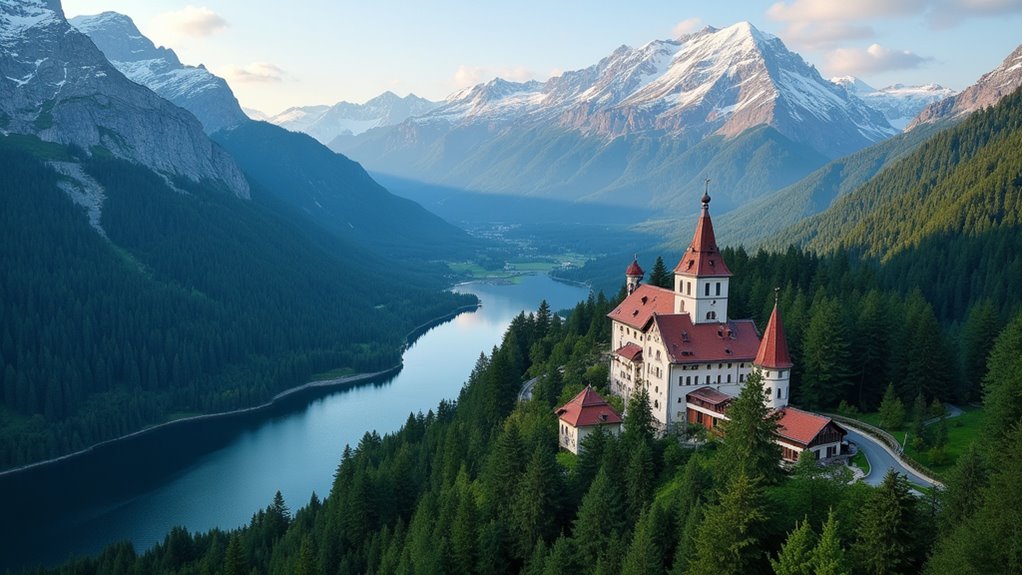
You’ll find Sinaia offers an impressive mix of royal castles, mountain adventures, and architectural gems that won’t break your budget. This charming Romanian town sits perfectly between Bucharest and Brașov, making it an ideal stopover that deserves more than just a quick visit. From exploring fairy-tale palaces to hiking scenic trails and discovering Belle Époque buildings, there’s enough here to fill several days—if you know where to look.
- Tour the Fairy-Tale Peles Castle in the Morning
- Explore the Peaceful Sinaia Monastery and Its Museum
- Ride the Cable Car to Bucegi Plateau for Mountain Adventures
- Stroll Through Historic Dimitrie Ghica Park and See the Art Nouveau Casino
- Visit the Smaller but Charming Pelișor Castle
- Discover George Enescu’s Legacy at His Memorial House
- Take a Day Trip to Bran Castle (Dracula’s Castle)
- Hike to Caraiman Monastery at the Base of Caraiman Peak
- Wander Sinaia’s Streets to Admire Belle Époque Architecture
- The Sum Up
Tour the Fairy-Tale Peles Castle in the Morning
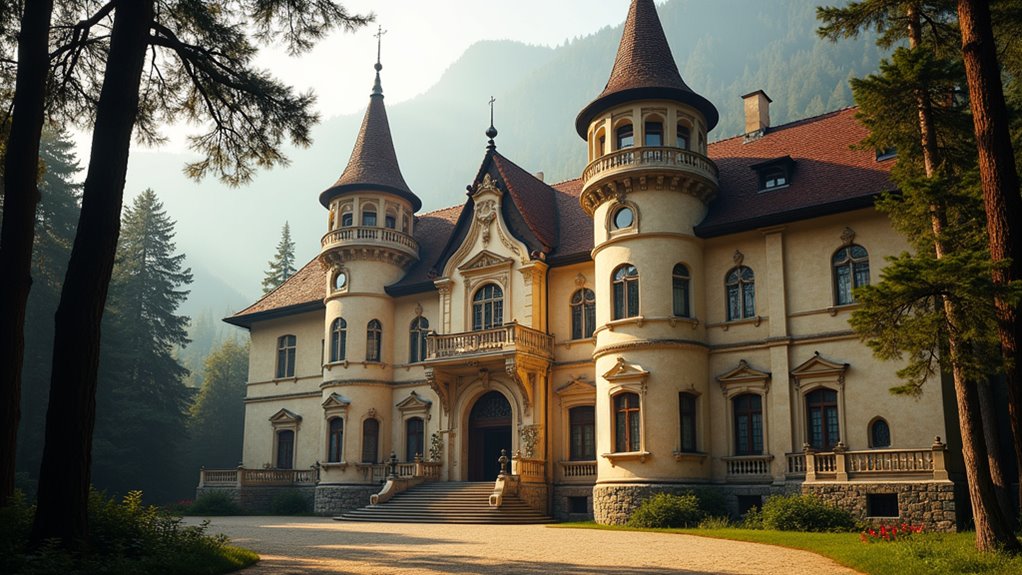
When you arrive in Sinaia, head straight to Peles Castle in the morning to beat the crowds and catch the best light for photos. This fairy-tale Neo-Renaissance castle was King Carol I’s summer residence and Romania’s first building with electricity and reinforced concrete foundations.
You’ll explore 160 uniquely decorated rooms, including the stunning Moorish Salon with its marble fountain and the Grand Armory displaying 4,000 weapons from the 14th-17th centuries. Don’t miss the Florentine Room’s bronze doors from Rome or the theater hall painted by Gustav Klimt. The castle also features a secret door in the Royal Library that leads directly to the king’s private suite.
The 66-meter tower offers impressive views, while the Italian-inspired terraced gardens provide perfect photo opportunities. Book tickets online in advance since daily visitor numbers are limited, and tours fill up quickly during peak season.
Explore the Peaceful Sinaia Monastery and Its Museum
After exploring Peles Castle, take a short walk to Sinaia Monastery for a completely different but equally rewarding experience. Founded in 1695 by Prince Mihail Cantacuzino, this peaceful Orthodox monastery offers a fascinating glimpse into Romania’s spiritual heritage without breaking your budget.
You’ll discover two beautiful churches – the Old Church from 1695 and the impressive Great Church completed in 1846. The architecture blends Moldavian and Wallachian Renaissance styles, creating a unique visual feast. Don’t miss the Neo-Byzantine Bell Tower housing a massive 1,700 kg bell.
Visit Romania’s first church objects museum, established here in 1895. You’ll find religious artifacts, manuscripts, and historical treasures including the earliest Romanian Bible translation from 1668. The monastery’s library also houses valuable jewels of the Cantacuzino family. The serene courtyards provide perfect spots for quiet reflection.
Ride the Cable Car to Bucegi Plateau for Mountain Adventures
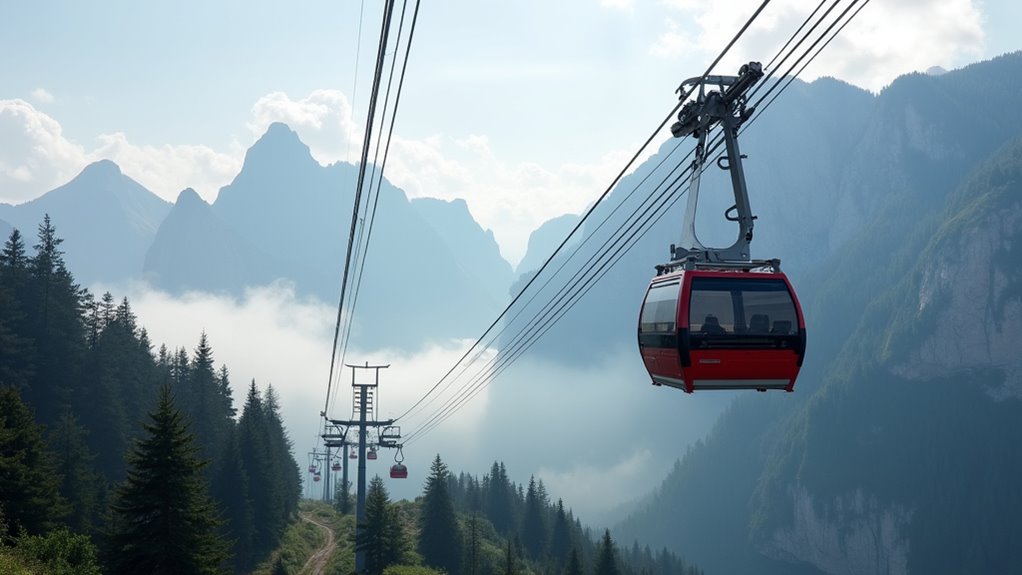
From Sinaia’s spiritual heart, you can shift gears and head straight for an adrenaline-pumping mountain adventure. The cable car whisks you up to Bucegi Plateau in just 20 minutes, offering stunning panoramic views as you ascend to 2000 meters. You’ll pay around 70 RON for a round trip from Bușteni, so budget accordingly.
Once you’re up there, don’t miss the iconic Sphinx and Babele rock formations – they’re perfect for photos. The plateau offers everything from easy walks to challenging hikes toward Omu Peak. You can grab food at Babele Chalet when it’s open seasonally. The trail to Babele takes approximately two and a half hours and is accessible during warm seasons without requiring special equipment.
Pro tip: arrive early to beat the weekend crowds and long queues. Check operating hours beforehand since they’re weather-dependent, and pack proper gear for changing mountain conditions.
Stroll Through Historic Dimitrie Ghica Park and See the Art Nouveau Casino
Once you’ve had your fill of mountain thrills, head down to Dimitrie Ghica Park for a completely different but equally rewarding experience. This romantic 1881 park offers free admission and serves as Sinaia’s cultural heart.
You’ll discover busts honoring Romanian figures like Mihai Eminescu and Nicolae Bălcescu while strolling winding paths beneath mature trees.
Don’t miss the stunning Art Nouveau casino, built in 1913 and inspired by Monte Carlo’s famous venue. Now functioning as a conference center, it’s perfect for photos and architectural appreciation.
The park features a central fountain where you can rent boats in summer, plus a playground for families. Pack your picnic basket to enjoy an outdoor meal surrounded by the park’s colorful flowerbeds and towering trees.
During weekends, catch free concerts on the outdoor stage.
It’s an ideal spot to relax between Sinaia’s pricier attractions.
Visit the Smaller but Charming Pelișor Castle
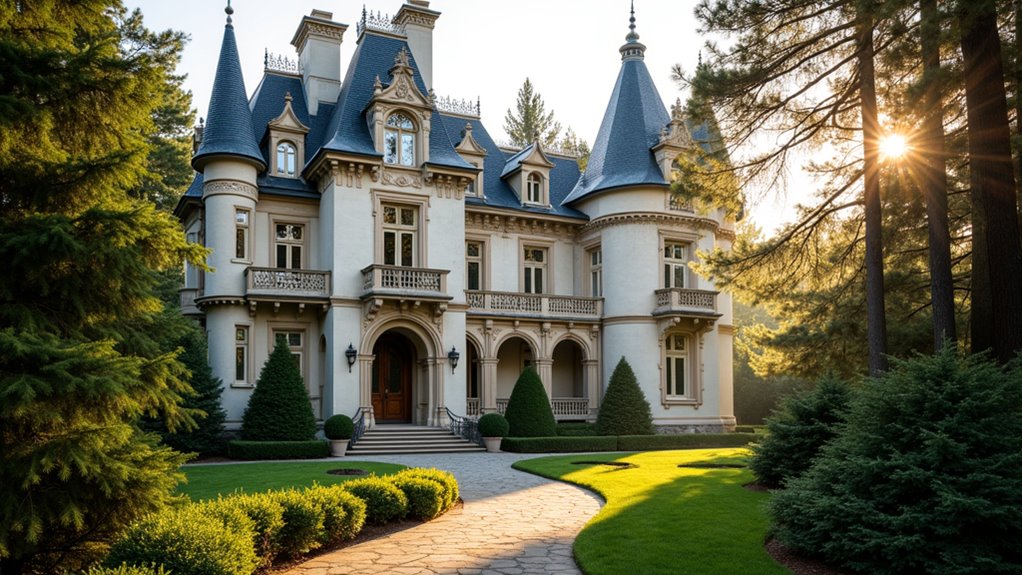
While Peleș Castle draws the crowds, you’ll find a more intimate royal experience at the nearby Pelișor Castle, built between 1899 and 1903 for Crown Prince Ferdinand and Princess Maria. This charming Art Nouveau gem features just 70 rooms compared to Peleș’s 170, making it perfect for a quieter visit.
You’ll love exploring Queen Maria’s famous Golden Room with its Scottish thistle motifs and oak-timber walls. The castle’s unique blend of Byzantine, Celtic, and Romanian architectural styles creates stunning photo opportunities around every corner. The castle showcases distinctive Fachwerk structures that add to its Germanic architectural influences.
Don’t miss the impressive Tiffany and Lalique glassware collections throughout the interior.
Since opening as a museum in 1993, Pelișor offers an affordable way to experience royal Romanian history without the overwhelming grandeur of its larger neighbor.
Discover George Enescu’s Legacy at His Memorial House
After exploring the royal castles, you’ll discover a different side of Sinaia’s cultural heritage at the George Enescu Memorial House. Romania’s greatest composer created some of his most celebrated works here. This beautifully preserved villa showcases traditional Romanian architecture and houses Enescu’s personal belongings, manuscripts, and memorabilia from his two decades as a summer resident.
You’ll explore rooms where he composed the famous Romanian Rhapsodies and opera Oedip. Though some areas remain off-limits for conservation, the guided tours provide fascinating insights into Enescu’s life and Romania’s musical heritage.
Don’t miss the courtyard sculpture by Ion Irimescu and the tranquil mountain setting that inspired his creativity. The memorial house sits nestled in the Carpathian Mountains, offering visitors the same inspiring natural backdrop that influenced Enescu’s compositions. It’s perfect for music lovers seeking cultural depth beyond Sinaia’s royal attractions.
Take a Day Trip to Bran Castle (Dracula’s Castle)
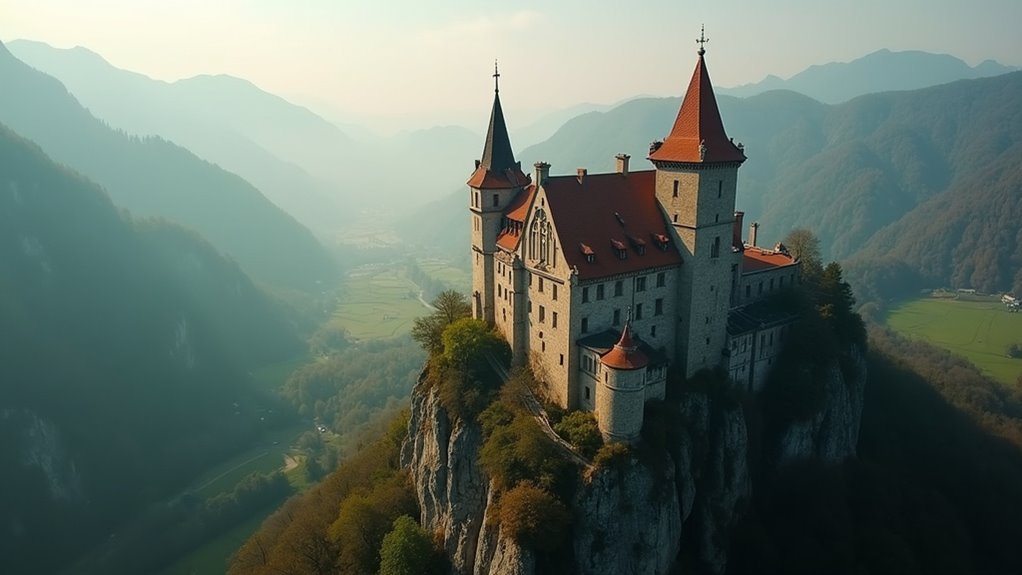
Just thirty minutes from Sinaia, you’ll find Romania’s most famous castle shrouded in Gothic mystery and vampire folklore. Bran Castle, marketed as “Dracula’s Castle,” draws millions seeking the legendary home of Vlad the Impaler, though he never actually lived there. Built in 1377 as a defensive fortress against Ottoman expansion, the castle controls the strategic Bran Pass between Transylvania and Wallachia.
You’ll explore Gothic towers, Renaissance additions, and royal quarters modified by Queen Marie in the 1920s. The castle’s dramatic architecture includes defensive walls, watchtowers, and medieval dungeons. While touring, you’ll learn the historical reality behind the vampire myths.
The entrance fee’s reasonable, and you can easily combine this trip with exploring nearby Brașov for a full day of Romanian castle culture. Inside, you’ll discover 57 rooms that house fascinating historical collections spanning from the 14th to 19th centuries.
Hike to Caraiman Monastery at the Base of Caraiman Peak
When you’re seeking a spiritual escape from Sinaia’s bustling castle scene, the forest trail to Caraiman Monastery offers both peaceful solitude and stunning mountain views.
You’ll find this remarkable Orthodox monastery nestled at 900 meters altitude in nearby Bușteni, making it one of Romania’s highest places of worship.
The moderate hiking trail winds through fir-lined paths with clear signage and religious icons guiding your way.
Built in traditional Romanian Orthodox style, the monastery completed in 2008 blends beautifully with its mountain setting.
You can light candles in the chapel, enjoy moments of reflection, and experience the monks’ warm hospitality. Like Sinaia’s historic monastery built in the distinctive Brancovenesc style, this mountain retreat showcases Romania’s rich Orthodox architectural heritage.
The trail’s accessible from Bușteni and connects easily with other Bucegi attractions, making it perfect for combining spiritual tourism with nature exploration.
Wander Sinaia’s Streets to Admire Belle Époque Architecture
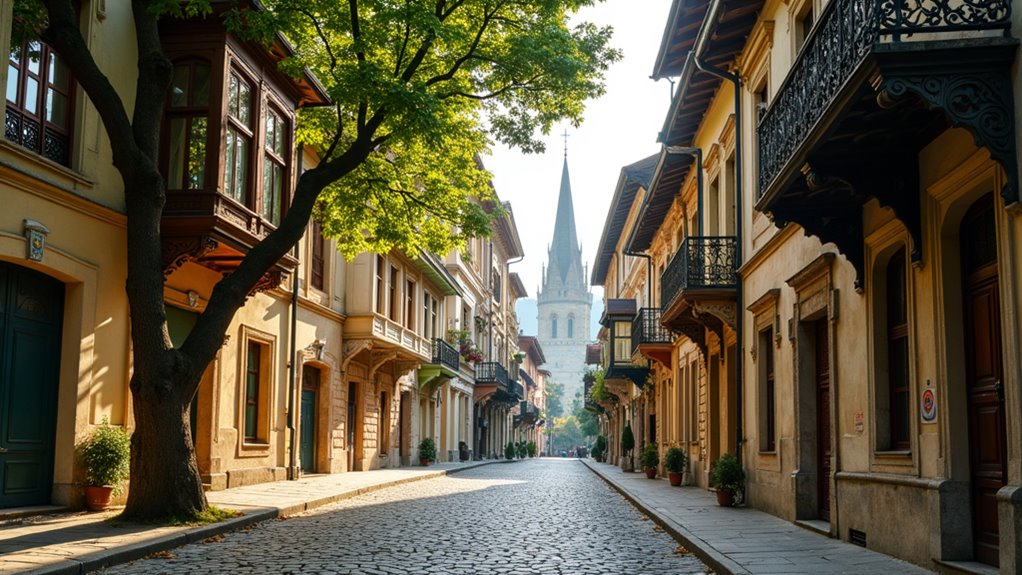
While castle tours grab most visitors’ attention, Sinaia’s tree-lined streets offer an equally impressive display of Belle Époque architecture that won’t cost you a penny to explore. You’ll discover nearly 100 monuments showcasing eclectic historicism—from Neo-Renaissance to Art Nouveau styles.
Start with the romantic stone villas of General Ion Florescu and Prince Dimitrie Ghica, featuring terraces and monumental stairs. Don’t miss the Știrbei Florescu Palace with its neoclassical chapel, or engineer Vasile Ionescu’s villa with distinctive wrought-iron balconies.
The neo-Romanian style City Hall (1905) and Villa Salamandra highlight the town’s architectural nationalism. You’ll also encounter unique three railway stations located within meters of each other, including the original general station from the 1870s and the cubist royal station completed in 1940.
Walk slowly through the historic center—you’re strolling through Romania’s royal summer retreat that’s transformed into a living museum of cultural heritage.
The Sum Up
You’ll find Sinaia offers incredible value for your travel budget. Most outdoor activities like hiking to Caraiman Monastery and exploring the historic streets are completely free. Castle visits are reasonably priced, and you can save money by packing lunches for mountain adventures. Don’t miss the free architectural walking tours through the Belle Époque districts. With affordable accommodations and budget-friendly local restaurants, you’ll experience Romania’s royal heritage without breaking the bank.