
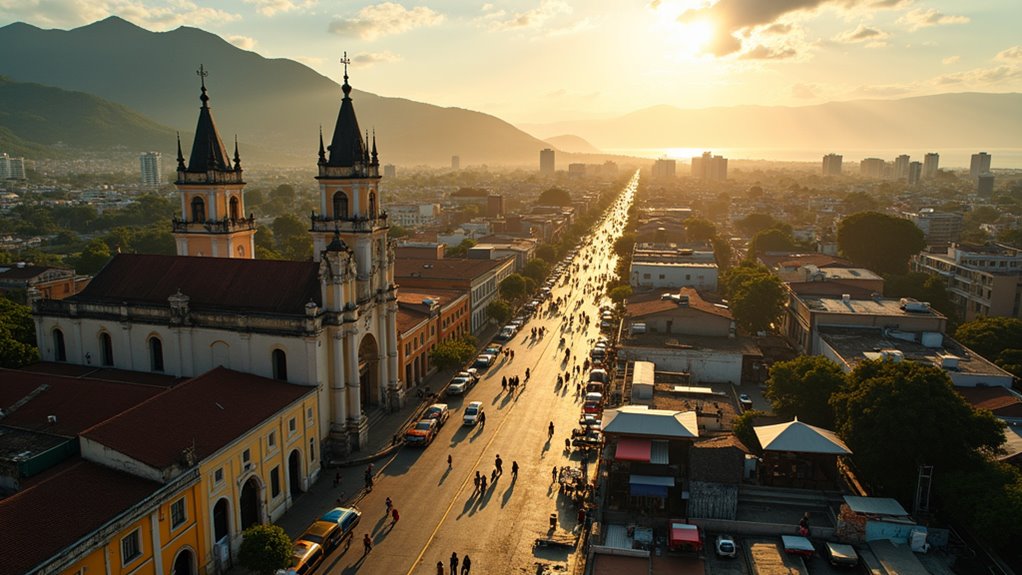
San Salvador offers authentic Central American experiences beyond typical tourist spots. You’ll explore Plaza Gerardo Barrios‘ revolutionary history, pay respects at Archbishop Romero’s tomb in the Metropolitan Cathedral, and discover volcanic craters within city limits at El Boquerón. Don’t miss the pre-Columbian artifacts at MUNA, pupusa-making traditions at local pupuserías, and the UNESCO site Joya de Cerén. Adventure seekers can surf El Tunco Beach or hike Santa Ana Volcano for emerald crater lakes—each destination reveals layers of Salvadoran culture waiting to unfold.
- Explore Plaza Gerardo Barrios and the Historic Center
- Pay Respects at Archbishop Romero’s Tomb in the Metropolitan Cathedral
- Experience Modern Art at MARTE and Pre-Columbian Culture at MUNA
- Hike to El Boquerón Crater on San Salvador Volcano
- Master the Art of Pupusa Eating at Local Pupuserías
- Take a Day Trip to Joya De Cerén Archaeological Site
- Surf and Unwind at El Tunco Beach
- Climb Santa Ana Volcano and Swim in Lake Coatepeque
- Discover Tamanique Waterfalls in the Coastal Mountains
- The Sum Up
Explore Plaza Gerardo Barrios and the Historic Center
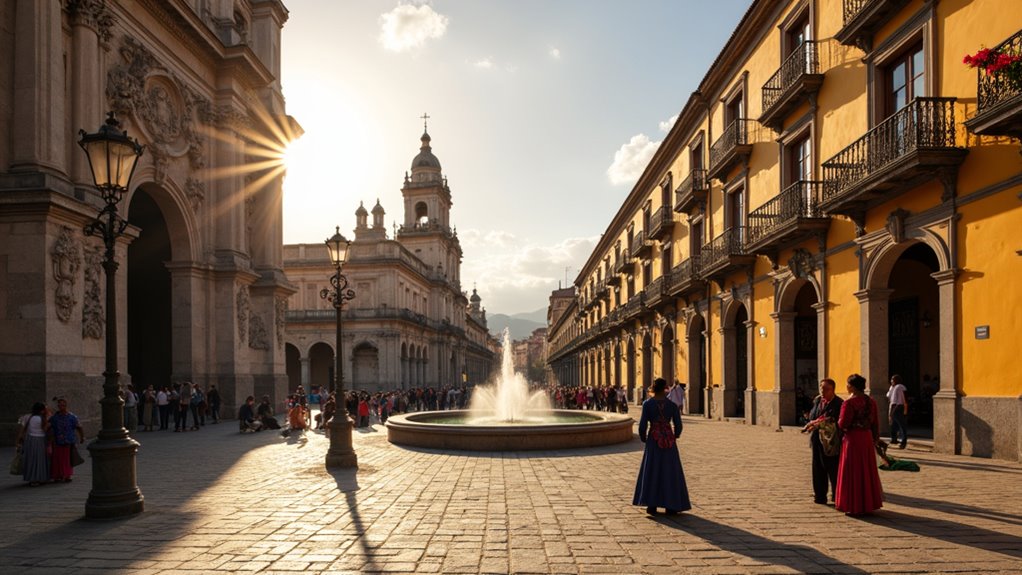
When you step into Plaza Gerardo Barrios, you’ll find yourself at the beating heart of San Salvador’s political and cultural life. This historic square sits directly in front of the Metropolitan Cathedral and has witnessed pivotal moments like Archbishop Óscar Romero’s funeral and the civil war’s end in 1992.
The plaza’s centerpiece is Francisco Durini’s 1909 equestrian statue of President Gerardo Barrios, positioned on a granite platform.
Don’t miss the colorful “El Salvador” letters in front of the National Palace—they’re perfect for photos.
Visit during evening hours when the surrounding landmarks are illuminated and street performers create a lively atmosphere. The plaza hosts various free events throughout the year, especially during holidays and national celebrations.
You can easily walk to nearby attractions like Plaza Libertad, the National Theatre, and the National Library, making this your ideal starting point for exploring the historic center.
Pay Respects at Archbishop Romero’s Tomb in the Metropolitan Cathedral
Just steps away from Plaza Gerardo Barrios stands the Metropolitan Cathedral, where you’ll find one of El Salvador’s most sacred spaces: the tomb of Saint Óscar Arnulfo Romero.
Descend to the simple crypt to see Paolo Borghi’s impressive bronze monument depicting the martyred archbishop in repose, supported by the four evangelists. Notice the red jasper stone marking where the bullet struck his chest and the rose branch symbolizing his devotion to Mary, Queen of Peace.
Join locals for the popular Sunday Mass held at the tomb since Romero’s death—it’s been running continuously since 1980. The cathedral’s free to enter, though expect crowds during liturgical celebrations.
Romero’s funeral took place on Palm Sunday in 1980, but the procession turned chaotic with explosions and gunfire that killed at least 31 people.
Combine your visit with the Chapel of Hospital Divina Providencia, where Romero was assassinated while celebrating Mass.
Experience Modern Art at MARTE and Pre-Columbian Culture at MUNA
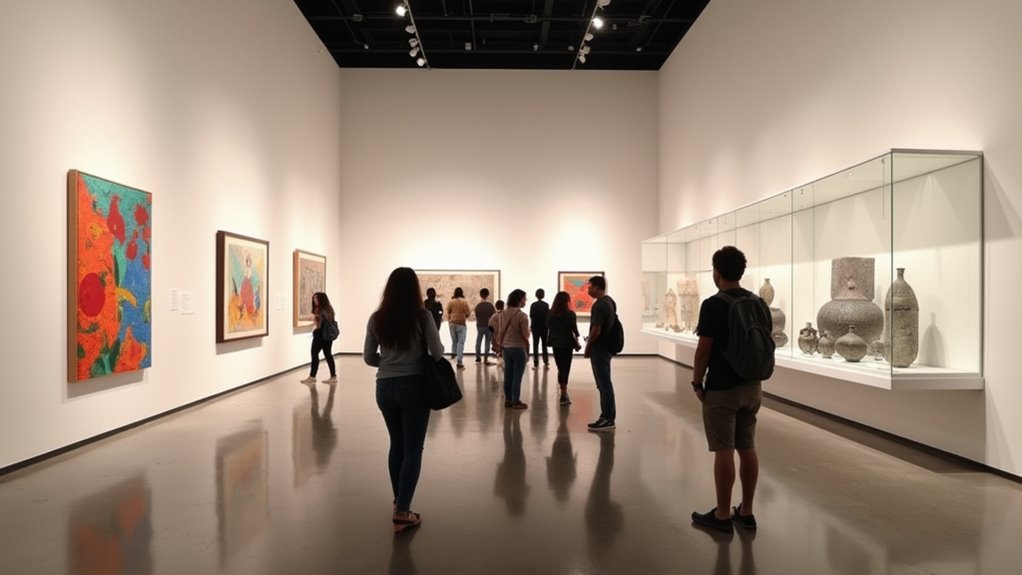
While San Salvador’s colonial architecture tells one story, the city’s two premier museums reveal another—spanning from ancient civilizations to cutting-edge contemporary art.
At MARTE, you’ll trace 150 years of Salvadoran artistic identity through 2,000+ works, from historic Baroque-framed still lifes to powerful civil war commentary like Carlos Cañas’s “El Sumpul.” Don’t miss Fernando Llort’s folk-inspired pieces that’ve become cultural symbols. The compact modernist building requires just 1-2 hours to explore. Visit Sundays for free admission or bring student ID for discounts. Engage with art students present in the galleries who offer informal guided tours and detailed insights into the collections.
MUNA complements this experience with pre-Columbian treasures—ceramics, jade, and obsidian tools from Maya, Lenca, and Pipil cultures.
Together, these museums offer essential context for understanding El Salvador’s layered cultural heritage, from ancient civilizations through contemporary artistic expression.
Hike to El Boquerón Crater on San Salvador Volcano
After exploring El Salvador’s cultural treasures, you’ll find the country’s natural wonders equally accessible than the massive crater atop San Salvador Volcano. El Boquerón National Park offers an easy 20-25 minute hike through well-maintained forest trails to spectacular rim viewpoints overlooking the 1.5-kilometer-wide, 550-meter-deep crater.
You’ll spot the smaller inner cone, El Boqueroncito, rising from the crater floor—evidence of the volcano’s layered eruption history. From the crater rim, you can enjoy panoramic views of San Salvador city, Lake Ilopango, and surrounding volcanoes stretching across the landscape.
Take public transport by catching a bus to Santa Tecla, then hop on a pickup truck for about $1.50 to reach the park entrance. The $2 entrance fee grants access to concrete viewpoints with safety barriers.
Visit early morning for the clearest views and cooler temperatures while avoiding weekend crowds. Don’t attempt the unmarked crater descent—it’s often restricted for safety reasons.
Master the Art of Pupusa Eating at Local Pupuserías
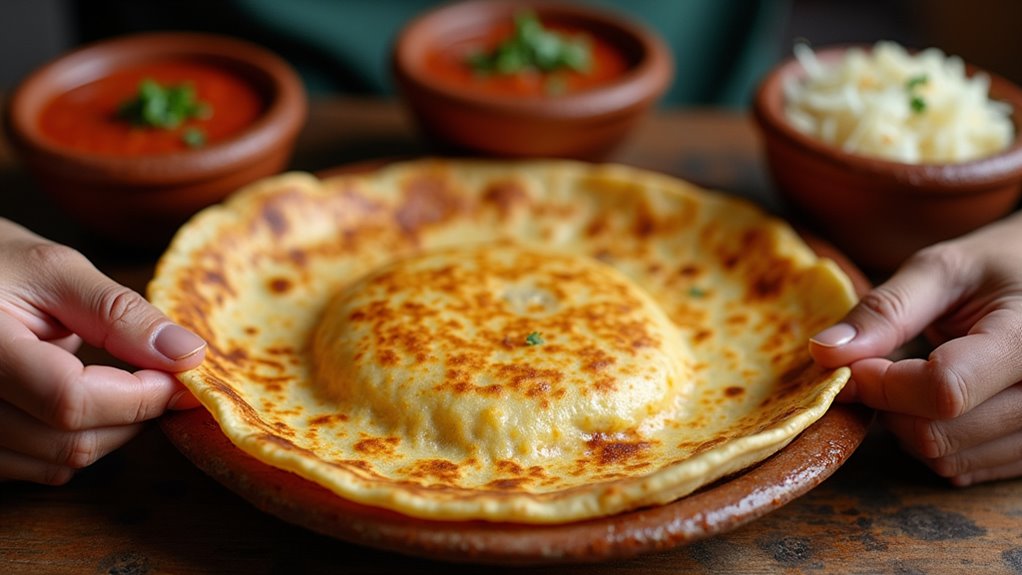
Though San Salvador boasts countless restaurants, you’ll discover the city’s soul through its humble pupuserías, where El Salvador’s national dish transforms from simple corn dough into crispy-edged perfection.
Order classic fillings like queso, frijoles, or chicharrón—or try revueltas combining all three. Skip the fork and eat like locals: tear your pupusa by hand, top with curtido (pickled cabbage slaw) and tomato salsa, then savor each bite.
Head to no-frills spots like Tipicos Margoth or Pupusería Mayarac, where pupusas cook on open comals. Visit during mid-afternoon through evening when these neighborhood gems hit their stride.
At around $1-1.20 per pupusa, you’ll enjoy a filling meal that captures authentic San Salvador street food culture. For an authentic introduction to this beloved dish, consider venturing to Comedor Pupusería La Ceiba in Santa Rosa de Lima, where freshly made pupusas showcase the traditional flavors that make this local favorite so special.
Take a Day Trip to Joya De Cerén Archaeological Site
When you’re ready to step beyond San Salvador’s urban energy, venture 36 kilometers northwest to Joya de Cerén, El Salvador’s most extraordinary archaeological treasure. This UNESCO World Heritage Site preserves a Maya farming village exactly as it was when Loma Caldera’s eruption buried it around AD 600.
You’ll walk along roofed platforms above excavated structures, observing perfectly preserved wattle-and-daub houses, storage buildings, and even a communal sweat bath. The on-site museum provides essential context about daily Maya life and the volcanic catastrophe that created this “Pompeii of the Americas.”
Plan three hours for your visit, including time to explore the interpretive trails. The site’s paleoethnobotanical discoveries, including the New World’s first archaeologically identified manioc field, offer fascinating insights into pre-Columbian agriculture beyond traditional maize farming. Excavations have revealed religious buildings that were used for communal festivities and shaman practices, providing glimpses into the spiritual life of this ancient community.
Surf and Unwind at El Tunco Beach
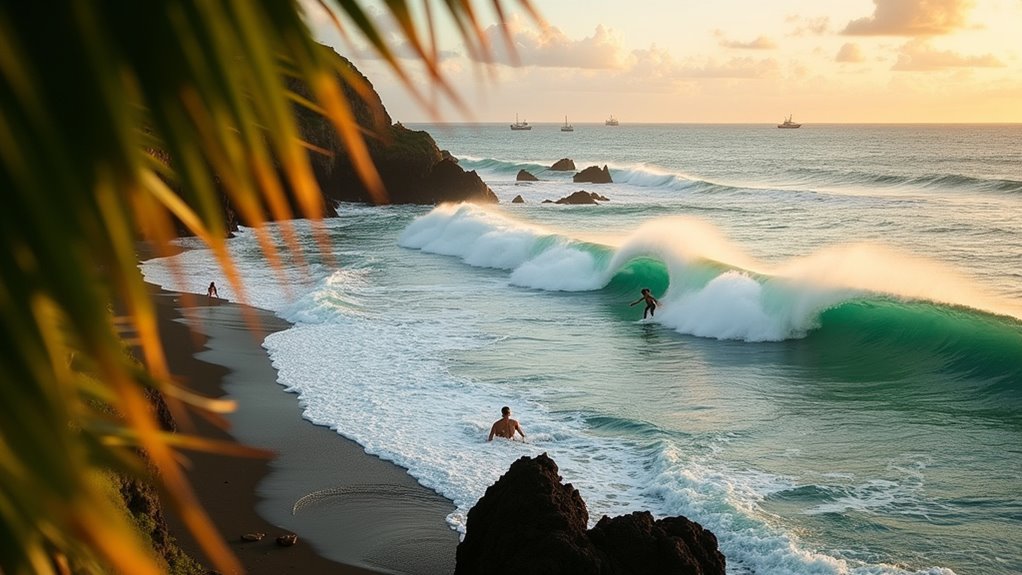
From ancient Maya villages to modern surf culture, El Salvador’s coast offers a completely different rhythm just 50 minutes southwest of San Salvador.
El Tunco’s “Surf City” infrastructure makes it perfect for beginners—you’ll find numerous surf schools offering lessons at beginner-friendly El Sunzal break, plus board rentals ranging from soft-top longboards to performance shortboards.
The beach divides into two distinct sections: rocky eastern pebbles create dramatic wave sounds, while the western sandy stretch toward El Sunzal works better for swimming.
Time your visit around low tide to explore sea caves about 10 minutes east along the rocky shore, but watch the tide carefully to avoid getting stranded. The town’s entrance fee of $1 per car on weekends helps fund community improvements like street cleaning and security.
End your day watching spectacular Pacific sunsets from the pedestrian promenade or Tunco rock formation.
Climb Santa Ana Volcano and Swim in Lake Coatepeque
Why settle for postcards when you can witness El Salvador’s most dramatic volcanic landscape firsthand? Santa Ana Volcano’s 4.3-mile trail delivers emerald crater lakes and panoramic vistas that’ll make your Instagram followers weep with envy.
You’ll need $9 USD total ($3 guide fee plus $6 park entry) and arrive by 10:30 AM to join mandatory guided groups departing from Cerro Verde National Park.
The first half weaves through shaded jungle on groomed paths, then shifts to exposed volcanic rock with steep switchbacks that’ll test your stamina. Pack 1.5 liters of water minimum—that final summit push is brutal under full sun. The trail features an elevation gain of about 1500 feet, making it suitable for families and older hikers in decent physical condition.
Bus #248 from Santa Ana departs 7:30 AM, but renting a car gives you flexibility to explore nearby Lake Coatepeque afterward.
Discover Tamanique Waterfalls in the Coastal Mountains
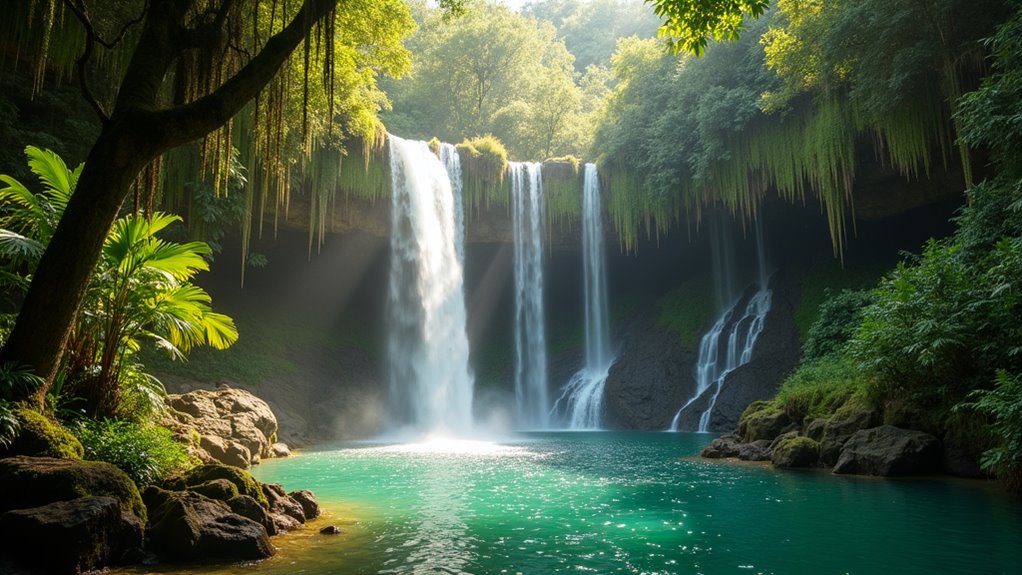
Though most travelers rush straight to El Tunco’s surf breaks, you’ll find El Salvador’s most rewarding nature escape just 30 minutes inland at Tamanique Waterfalls—a four-cascade system plunging through emerald pools in the coastal mountains.
Register at Parque de Tamanique’s tourism office before tackling the steep 20-45 minute descent to the main 50-meter waterfall. You’ll need sturdy hiking boots and basic fitness for the rocky trail, but the payoff’s worth it: crystal-clear swimming holes and guide-supervised cliff jumping from multiple ledges. Watch for large spiders inhabiting shady stones and tree branches near the water during your exploration.
The uphill return proves most challenging, so pack plenty of water. Local guides aren’t just recommended—they’re essential for orienting trail networks safely.
Budget three hours total for this hidden gem sitting 600 meters above sea level.
The Sum Up
You’ll discover San Salvador’s soul through these experiences—from savoring pupusas like locals do (tear, don’t cut!) to timing volcano hikes for sunrise views. Don’t miss the rainy season’s dramatic waterfalls at Tamanique, but pack proper hiking boots. El Tunco’s best waves come during dry months, while MARTE offers free entry on Sundays. Remember, Salvadorans eat pupusas with curtido and salsa roja—never ask for cheese inside a revuelta. You’re experiencing authentic Salvadoran culture.