
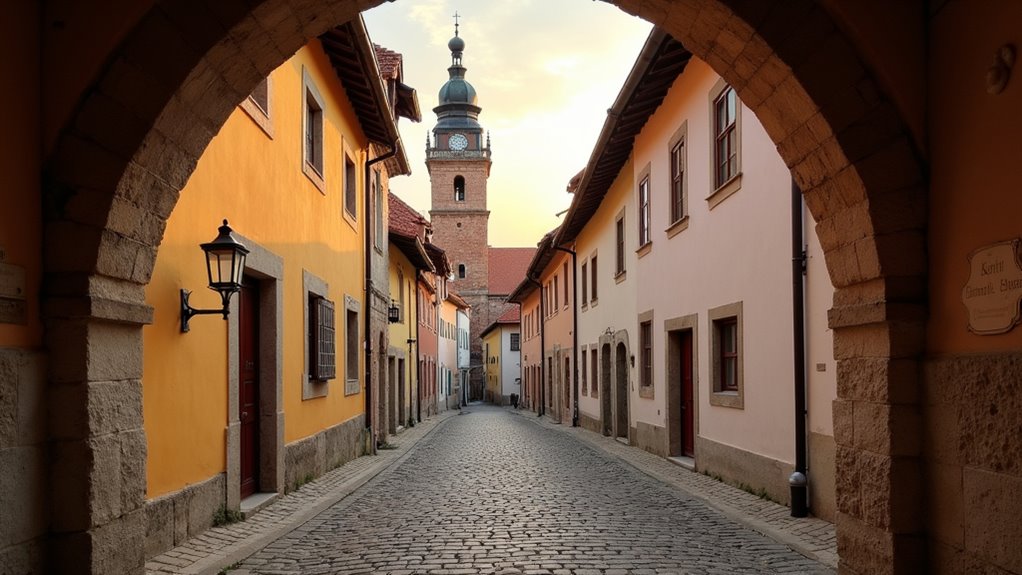
You’ll find yourself stepping back centuries when you explore Sighișoara’s cobblestone streets and medieval towers. This UNESCO World Heritage site doesn’t require a hefty budget to appreciate its Gothic architecture, fortress walls, and Dracula connections. Whether you’re climbing ancient staircases or sampling hearty Transylvanian dishes in 14th-century buildings, each corner reveals another layer of Saxon history. But here’s what most visitors miss when they stick to the main square.
- Climb the Clock Tower for Views and Medieval History
- Wander the Colorful Streets of Citadel Square
- Visit Vlad the Impaler’s Birthplace and Dracula Sites
- Take the Covered Stairway to the Upper Citadel
- Explore the Guild Towers Along the Fortress Walls
- Hunt for Panoramic Views From Multiple Vantage Points
- Sample Transylvanian Cuisine in Medieval Buildings
- Walk Through the Ropemakers’ Tower Neighborhood
- Day Trip to UNESCO Fortified Churches in Nearby Villages
- The Sum Up
Climb the Clock Tower for Views and Medieval History
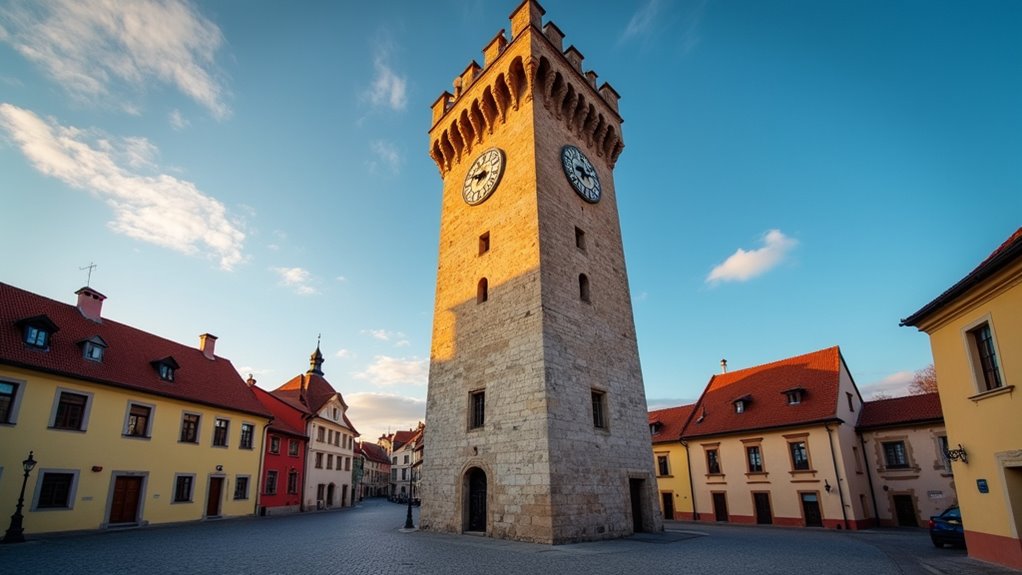
Rising 64 meters above Sighișoara’s cobblestone streets, the Clock Tower offers you the best panoramic views in the city for just a few lei. You’ll climb narrow wooden stairs through the History Museum, passing the 17th-century clock mechanism with its baroque figurines representing Roman gods.
The tower’s lower medieval sections date to the 14th century, while upper floors were rebuilt after a 1676 fire.
At the top, a wooden balcony provides 360-degree views of colorful medieval houses, winding cobblestone streets, and surrounding Transylvanian hills. You’ll spot directional markers showing distances to other cities. The clock mechanism still functions and produces hourly chimes that add to the historic medieval ambiance.
The museum opens Tuesday through Sunday from 9:00 to 15:30. Visit during sunrise or sunset for the most dramatic photos of this UNESCO World Heritage site.
Wander the Colorful Streets of Citadel Square
Step into Citadel Square and you’ll find yourself at the beating heart of Sighișoara’s medieval fortress, surrounded by a rainbow of perfectly preserved houses that look like they’ve been plucked from a fairytale. These colorful facades hide budget-friendly cafés, souvenir shops, and traditional restaurants serving hearty Romanian meals without breaking the bank.
You’ll spot guild symbols carved into buildings and red-tiled roofs that tell stories of the craftsmen who once defended this UNESCO World Heritage site. Don’t miss the Stag House with its striking mural, and keep an eye out for Vlad Dracul’s historic residence nearby.
The cobblestone streets radiating from the square invite leisurely exploration, leading you past Gothic and baroque architecture toward hidden gems and photo opportunities around every corner. The square transforms into a lively medieval scene during the annual Sighișoara Medieval Festival, complete with costumed performers and historical reenactments.
Visit Vlad the Impaler’s Birthplace and Dracula Sites
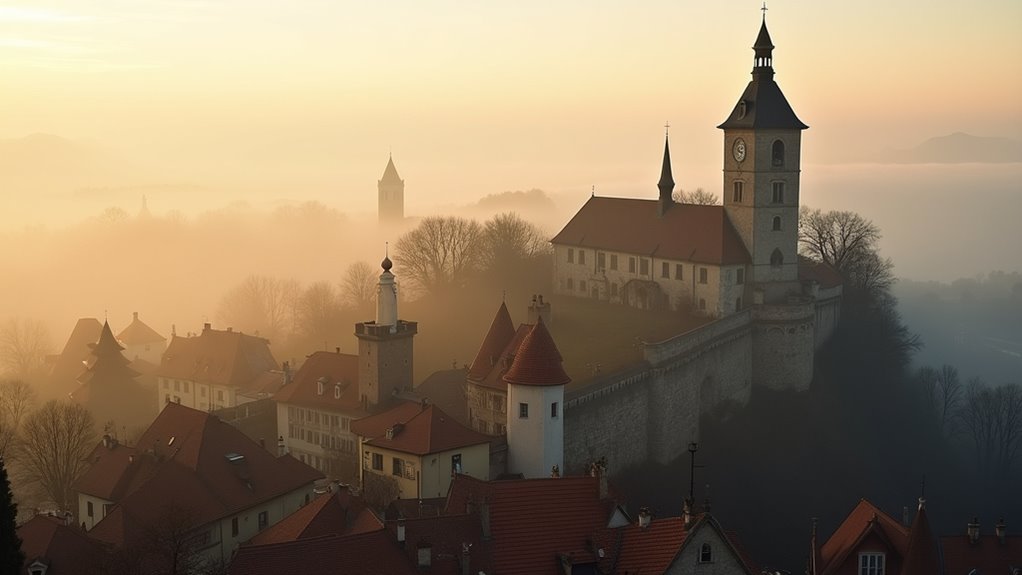
For just 5 lei (about $1), you can explore the actual birthplace of Vlad III—better known as Vlad the Impaler or Dracula—right here in Sighișoara’s medieval citadel.
The Vlad Dracul House sits at Tin Street No.1, where Vlad’s father lived from 1431 to 1435 during Turkish invasions.
This three-story medieval building now houses Restaurant Casa Vlad Dracul on the ground floor, serving traditional Romanian dishes like goulash.
Upstairs, you’ll find a modest museum with recreated living quarters and weapons displays.
While the exhibits lean more tourist-friendly than scholarly, you’ll get Clock Tower views and photo opportunities for an additional small fee. Vlad spent his first 4 years in Sighișoara before his family moved elsewhere in Wallachia.
Don’t expect rigorous historical authenticity—it’s mostly modern displays capitalizing on Dracula legends rather than serious archaeology.
Take the Covered Stairway to the Upper Citadel
One of Sighișoara’s most charming features awaits you just off the main square—the 17th-century Covered Stairway that’ll take you up to the Upper Citadel without getting soaked in bad weather. This wooden tunnel, known locally as the Scholars’ Stairs, was built in 1642 to protect students heading to school near the Church on the Hill.
You’ll climb 175 wooden steps (down from the original 300) with rest platforms along the way. The covered design shields you from rain, snow, and harsh sun while offering glimpses of medieval rooftops through gaps in the weathered wood.
At the top, you’ll reach the Gothic Church on the Hill and the atmospheric Saxon cemetery—both free to explore and perfect for photos. The Romanesque architecture of the fortified church, dating from 1345-1525, features a baroque organ and a distinctive quadrangular keep.
Explore the Guild Towers Along the Fortress Walls
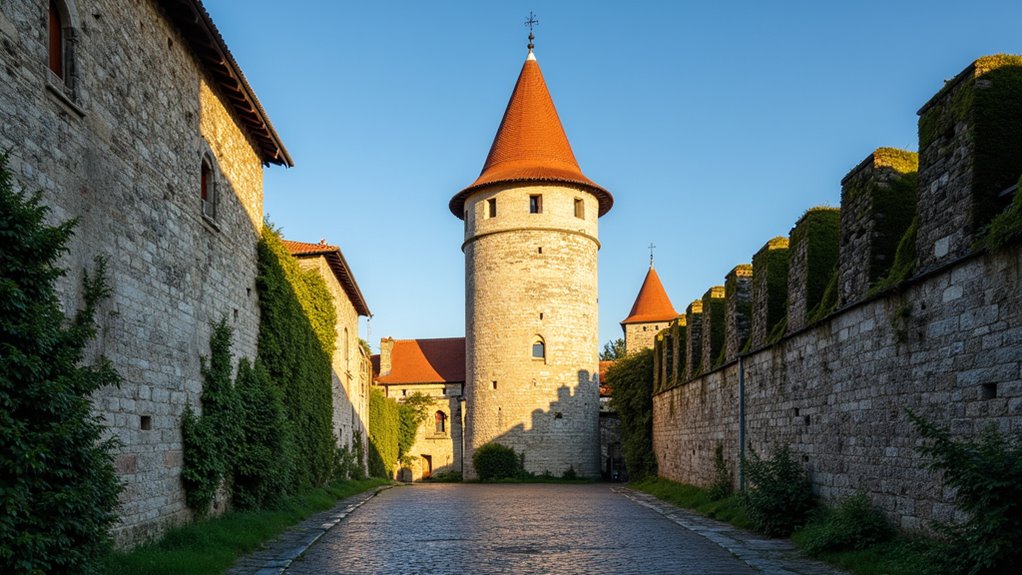
Nine medieval guild towers still stand guard along Sighișoara’s fortress walls, each one telling the story of the craftsmen who built and defended them centuries ago. You’ll discover how butchers, blacksmiths, tailors, and other artisans constructed these 50-foot defensive structures between the 13th and 17th centuries, each reflecting their guild’s unique style and needs.
Walk the perimeter to spot distinctive features like shooting holes, Romanesque arches, and varying roof designs. The Tanners’ Tower showcases a striking prism shape, while the robust Butchers’ Tower integrates directly into the wall itself.
Don’t miss the Ironsmiths’ Tower, rebuilt in 1631, which still houses authentic blacksmith tools. Each tower operated independently, creating a formidable defense system that protected this UNESCO World Heritage citadel from invaders. Originally, fourteen guilds maintained the complete fortress system, though only nine of these remarkable defensive structures survive today.
Hunt for Panoramic Views From Multiple Vantage Points
Whether you’re chasing the perfect Instagram shot or simply want to soak in Sighișoara’s medieval beauty, the citadel offers multiple stunning viewpoints that won’t cost you a fortune.
Start with the Clock Tower’s 360-degree viewing platform – it’s just 176 steps to panoramic views of colorful rooftops and surrounding hills.
For free alternatives, head to the terrace near Church on the Hill, which captures red rooftops and distant mountains beautifully.
Take a 15-20 minute walk outside the citadel to the Belvedere Viewpoint for sweeping landscape vistas. For the ultimate panoramic experience, make your way to the breathtaking observation deck on Unnamed Road, where you can enjoy unobstructed views of one of Europe’s best-preserved medieval towns.
You’ll find helpful signs identifying landmarks in the skyline.
Visit during sunrise or sunset when natural light bathes the medieval town in golden hues, creating that perfect shot without expensive photography equipment.
Sample Transylvanian Cuisine in Medieval Buildings
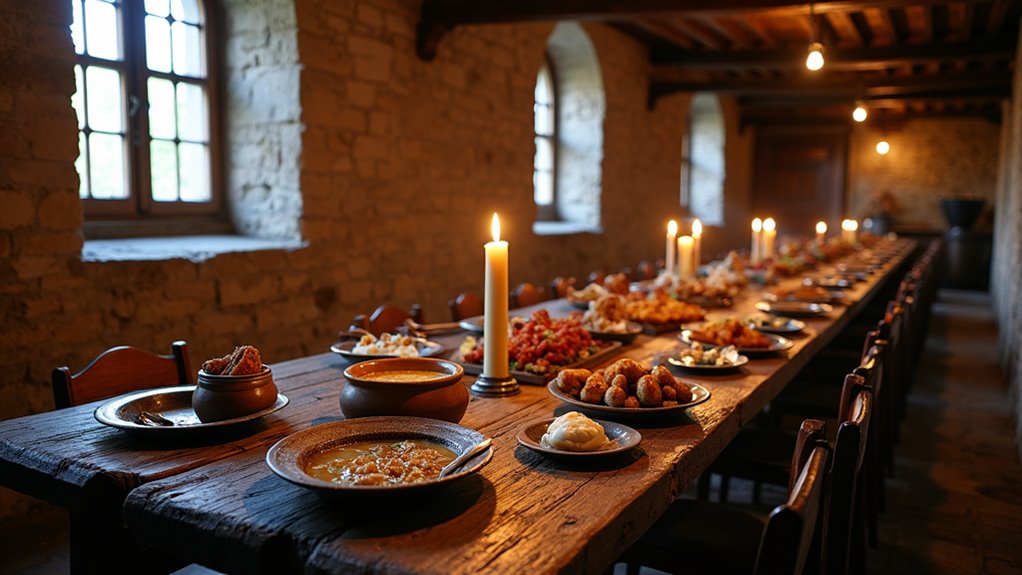
After capturing those perfect shots of Sighișoara’s skyline, you’ll work up an appetite that calls for hearty Transylvanian fare. You’ll find authentic medieval dining experiences behind the citadel’s historic walls, where restaurants occupy buildings dating back centuries.
Head to Medieval Cafe Restaurant for their secret courtyard overlooking a medieval tower, where you can try their unique “medieval omelet” with smoked bacon and paprika.
For budget-friendly portions, Gasthaus Alte Post serves traditional sarmale (cabbage rolls) and mămăligă (polenta) in the old postal office building.
Don’t miss the smoked beer at Medieval Cafe—it’s rare in Romania and pairs perfectly with hearty stews.
These cozy establishments offer authentic atmosphere without tourist trap pricing, making them perfect for experiencing genuine Transylvanian hospitality. Many restaurants blend rustic charm with modern elegance, creating inviting spaces that enhance your overall dining experience while maintaining the medieval atmosphere.
Walk Through the Ropemakers’ Tower Neighborhood
Beyond the main tourist clusters, you’ll discover the Ropemakers’ Tower neighborhood tucked into the Upper Citadel’s northwest corner. This 13th-century square tower stands out as the only inhabited guild tower among Sighișoara’s nine surviving structures, currently housing the German cemetery’s groundskeeper.
You’ll reach the area via the Scholars’ Stairs, where cobblestone streets connect this tower to nearby Tailors’ and Ironsmiths’ towers. Look for the filled-in loopholes and shooting slits that reveal the tower’s medieval defensive purpose—it once guarded the citadel’s northwest walls during the rope-makers’ guild era.
The residential quarters built onto the tower’s side show how medieval communities adapted defensive structures for daily life, making this neighborhood perfect for understanding authentic medieval urban living. The tower’s prism-shaped structure with its squared base demonstrates typical medieval fortification design, overlaying the original stone enclosure that formed part of the citadel’s ancient defensive network.
Day Trip to UNESCO Fortified Churches in Nearby Villages
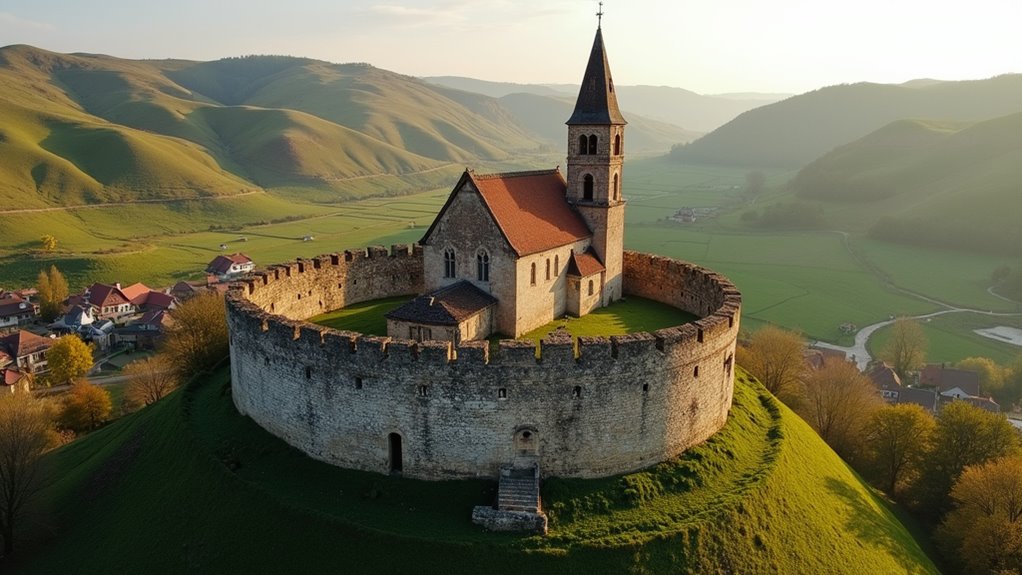
While Sighișoara’s medieval towers tell compelling stories, you’ll find equally fascinating fortified churches scattered across the Transylvanian countryside just minutes from the citadel. These UNESCO World Heritage sites showcase Saxon defensive architecture that’s survived centuries.
Start with Saschiz, just 10 miles west—its 22 buttresses and medieval citadel ruins make for an impressive introduction.
Biertan, 18 miles away, boasts Transylvania’s largest fortified church with triple-gate entrances and fortress-like walls.
For free entry, head to Calnic (50 miles southwest), perched dramatically on a hilltop.
You can easily visit multiple sites in one day by car, following the Sighișoara-Sibiu corridor. These fortified structures were part of Transylvania’s extensive defensive network that included major cities like Brașov and Sibiu alongside rural strongholds.
Most churches charge small entrance fees, and restoration work occasionally limits access, so bring flexibility along with your camera.
The Sum Up
You’ve got plenty to explore in Sighișoara without breaking the bank. Most attractions cost just a few euros, and you can easily walk everywhere within the compact citadel. Don’t miss the free fortress walls walk and scenic viewpoints. Pack snacks to save money, but definitely try one traditional meal in those atmospheric medieval restaurants. Plan two days if you’re including the nearby village churches – you’ll want time to soak up this fairy-tale atmosphere.