
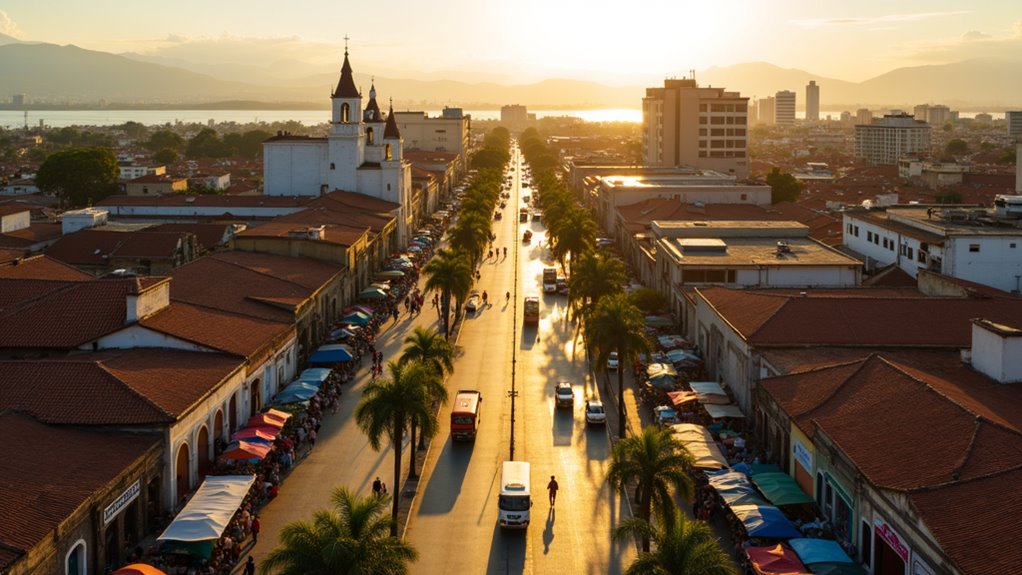
First-time visitors to Managua should climb Tiscapa Hill’s 147-meter summit for panoramic city views, explore the earthquake-damaged Old Cathedral with its frozen clock at Plaza de la Revolución, and witness 6,000-year-old fossilized footprints at Huellas de Acahualinca. You’ll want to stroll Puerto Salvador Allende’s 29-block waterfront at sunset, catch performances at Rubén Darío National Theater, and take day trips to volcanic Laguna de Apoyo for swimming in 80-degree waters. These essential experiences reveal Nicaragua’s fascinating blend of ancient history, natural wonders, and cultural resilience that awaits deeper exploration.
- Stand in the Shadow of the Old Cathedral at Plaza De La Revolución
- Climb Tiscapa Hill for the Best Views in the City
- Take an Evening Walk Along Puerto Salvador Allende’s Lakefront
- See 6,000-Year-Old Footprints at Huellas De Acahualinca
- Experience Real Managua Life at Mercado Roberto Huembes
- Drive to Masaya Volcano for a Night Crater Visit
- Catch a Performance at Rubén Darío National Theater
- Cool off With a Day Trip to Laguna De Apoyo
- The Sum Up
Stand in the Shadow of the Old Cathedral at Plaza De La Revolución
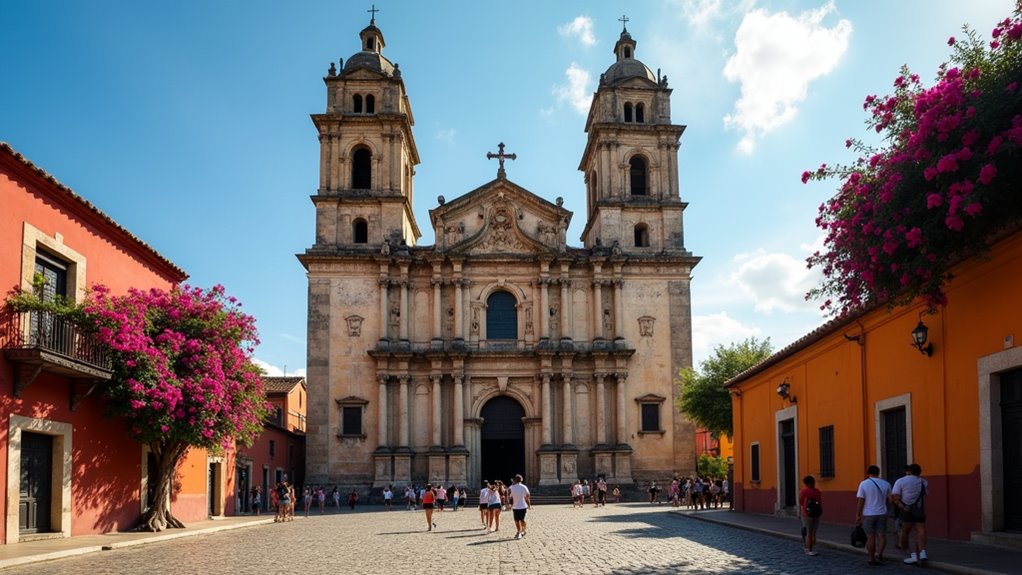
When you step into Plaza de la Revolución, the haunting silhouette of the Old Metropolitan Cathedral of Santiago de los Caballeros commands your attention with its damaged yet dignified neoclassical façade. This Belgian-designed masterpiece, completed in 1938, stands as Nicaragua’s most poignant earthquake memorial.
You’ll notice the clock frozen at 12:35 am—the exact moment the devastating 1972 earthquake struck Managua, condemning this architectural treasure.
Walk around the cathedral’s perimeter to admire the stone angels and classical columns that survived the disaster. Though you can’t enter the structurally unsafe interior, peer through doorways to glimpse the empty shell within.
The cathedral’s European neoclassical style, rare in Central America, creates a striking backdrop against the plaza’s political monuments, symbolizing Managua’s resilience through decades of natural disasters and political upheaval. For the most atmospheric experience, visit during evening hours when dramatic lighting enhances the cathedral’s haunting beauty and creates ideal conditions for photography.
Climb Tiscapa Hill for the Best Views in the City
Rising 147 meters above Managua’s bustling streets, Tiscapa Hill delivers the capital’s most commanding panoramic views from its strategic perch in the southeastern district. You’ll find this 40-hectare nature reserve just 2 kilometers from Xolotlan Lake, officially protected since 1991.
The climb rewards you with 360-degree city observation, showcasing Managua’s most representative buildings and surrounding terrain.
Navigate the hill’s distinct ecological zones—sparse northern slopes with rocky soil contrast sharply against the south’s dense forest canopy of ceiba and guanacaste trees. Don’t miss the Sandino statue marking the northern peak.
The circular reserve encompasses both hill and lagoon at 90 meters elevation, creating varied terrain that offers escape from the lower-altitude urban environment while maintaining pristine ecological integrity. The surrounding Sector Laguna de Tiscapa area features elevation variations ranging from 171 to 469 feet, providing diverse topographic features for exploration.
Take an Evening Walk Along Puerto Salvador Allende’s Lakefront
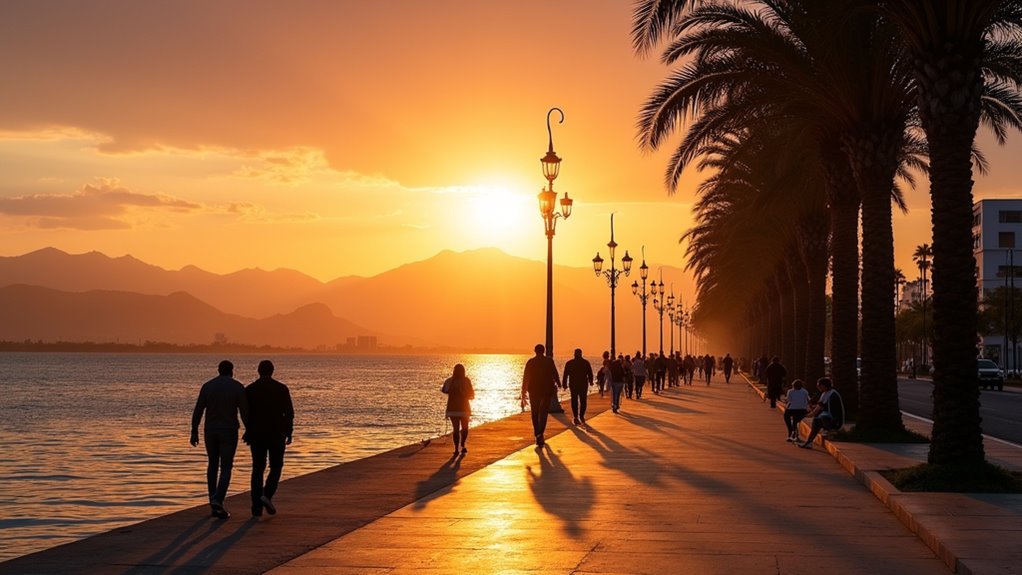
After the sun begins its descent over Lake Xolotlán, Puerto Salvador Allende’s 29-block waterfront promenade transforms into Managua’s premier evening destination. You’ll find restaurants, bars, and food stalls offering everything from casual snacks to full Nicaraguan cuisine with direct lake views.
The complex features children’s attractions including a massive Central American go-kart track, water park, and explorable Boeing 737.
Weekend evenings bring crowds, live music, and enhanced energy, while weekdays offer quieter strolls past the illuminated “Trees of Life” sculptures. For a romantic escape, take a boat trip to Isla del Amor, the charming island getaway accessible from the port.
You can explore scale replicas of pre-1972 earthquake Managua and Nicaragua’s famous Catholic churches.
Plan your visit for late afternoon to catch sunset views, then shift seamlessly into waterfront dining and nightlife.
See 6,000-Year-Old Footprints at Huellas De Acahualinca
While debates continue over their exact age, the fossilized human and animal footprints at Huellas de Acahualinca represent one of Central America’s most significant archaeological discoveries. You’ll find over 1,000 preserved prints embedded 4 meters beneath volcanic ash and sediment near Lake Managua’s southern shore.
The trackway records at least 15-16 humans—adults and children—walking barefoot toward the ancient lakeshore at an unhurried pace around 2,120-6,000 years ago.
The site’s museum showcases exceptional preservation detail, including toe impressions and squashed ridges in compacted volcanic mud. You’ll also see tracks from deer, raccoons, opossums, and birds alongside the human prints. The museum was restored in 1989 with support from ASDI and the Swedish Historical Museum.
This globally important geoheritage site offers you a rare glimpse into ancient life within Nicaragua’s active volcanic landscape.
Experience Real Managua Life at Mercado Roberto Huembes
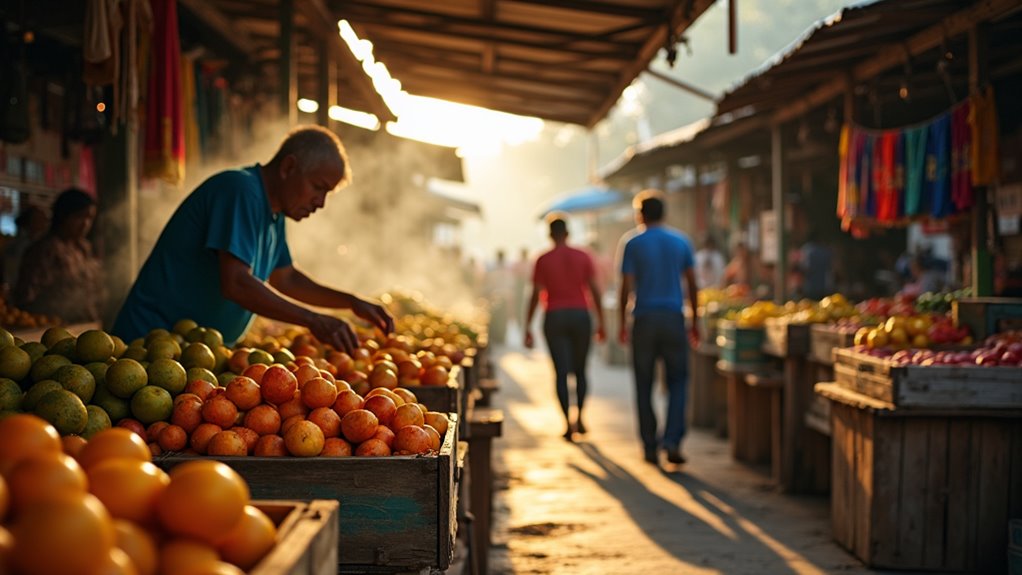
When you step into Mercado Roberto Huembes, you’ll immediately learn about authentic Nicaraguan culture where locals conduct their daily shopping routines. Located on Pista de La Solidaridad near Plaza Ana María, this sprawling market offers everything from fresh produce and traditional crafts to electronics and services.
You’ll find the central building houses food stalls serving gallo pinto, vigorón, and nacatamales for around $3. Navigate the surrounding sections for textiles, souvenirs, and household goods while experiencing the vibrant atmosphere of colors, sounds, and local music. The market provides an authentic Nicaraguan experience that attracts both travelers and locals seeking to explore the genuine culture of the region.
Visit early morning for fewer crowds and fresher produce. Bring small córdoba bills, wear comfortable shoes, and keep belongings secure. Bargaining is expected, especially for crafts.
Drive to Masaya Volcano for a Night Crater Visit
Just 30 minutes from Managua’s bustling markets lies one of Nicaragua’s most spectacular natural wonders—Masaya Volcano National Park, where you can witness an active lava lake glowing against the night sky.
Drive 23 kilometers southeast to reach this active stratovolcano, then continue 30 minutes from the visitor center to Santiago Crater’s rim.
Evening hours run 5:00-8:00 PM with first-come, first-served queuing that may require an hour’s wait.
You’ll get 15-20 minutes at the viewpoint to witness the orange-red glow and hear deep volcanic rumbling.
Arrive before sunset for the full experience—watching colors fade over lava fields before the crater’s glow intensifies in darkness. The park’s 54 km² expanse encompasses two volcanoes and five craters, making it one of Nicaragua’s most geologically diverse protected areas.
Bring closed shoes, a light jacket, and a mask for occasional volcanic gases.
Catch a Performance at Rubén Darío National Theater
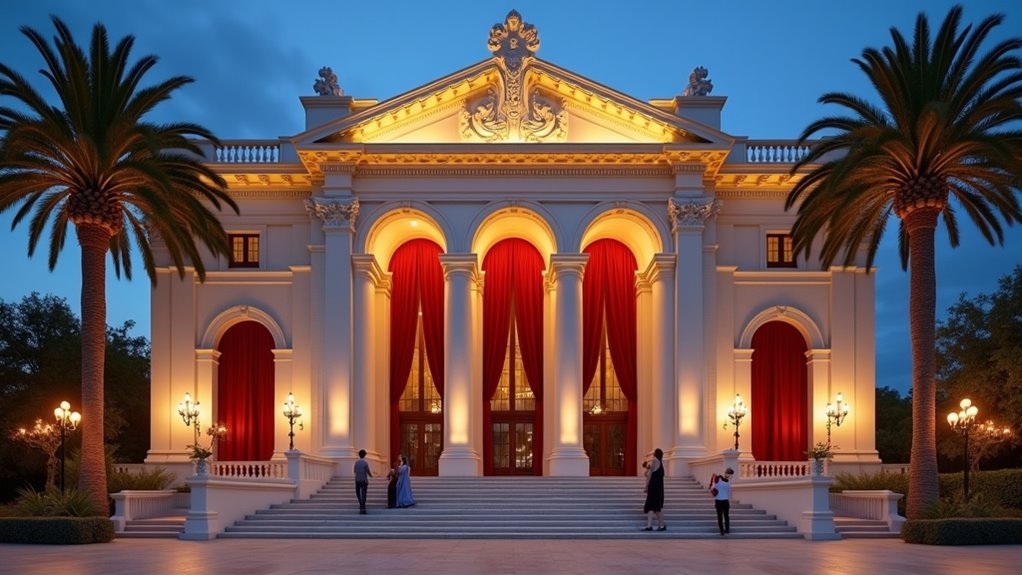
After witnessing Masaya’s volcanic spectacle, learn about Nicaragua’s premier cultural venue at the Rubén Darío National Theater, where world-class performances unfold in one of Central America’s most architecturally significant concert halls. This modernist masterpiece, designed by José Francisco Terán Callejas in 1963, remarkably survived the devastating 1972 earthquake with minimal damage, cementing its status as a national landmark.
The main hall seats 1,200–1,400 guests across raked stalls and three balcony levels, hosting everything from symphony orchestras to ballet companies. The theater’s interior showcases elegant murals that reflect Nicaragua’s rich cultural heritage and artistic traditions. You’ll find the theater facing Lake Xolotlán’s Malecón, easily accessible by taxi from downtown hotels.
Dress smart-casual for evening performances, though formal attire suits premieres and galas. Purchase tickets at the box office or local outlets, as popular shows sell out quickly.
Cool off With a Day Trip to Laguna De Apoyo
While Managua’s urban energy captivates most visitors, you’ll find Nicaragua’s most stunning natural respite just 30 minutes southeast at Laguna de Apoyo, a pristine crater lake that’s remained virtually unchanged since its volcanic formation 23,000 years ago.
This crystal-clear freshwater sanctuary maintains perfect swimming temperatures of 80-82°F year-round thanks to underwater volcanic fumaroles. You can swim, kayak, or explore in Central America’s most transparent waters, surrounded by tropical dry forest teeming with howler monkeys and over 200 bird species. The lake’s endorheic nature means it has no above-ground waterways, relying instead on underground water flow to maintain its pristine conditions.
Take the 10:30 a.m. bus from Masaya for convenient access, or drive directly from Managua. The protected reserve offers eco-lodges and hiking trails along dramatic crater walls, making it an essential escape from city heat.
The Sum Up
You’ll discover Managua’s rich blend of history, culture, and natural beauty through these eight experiences. Don’t miss the revolutionary significance of Plaza De La Revolución or the ancient footprints that’ll transport you back millennia. Balance urban exploration with natural adventures—from Tiscapa’s panoramic views to Masaya’s fiery crater. Pack comfortable walking shoes, bring sunscreen, and carry cash for markets. You’re now equipped to navigate Nicaragua’s capital with confidence and uncover its authentic character.