
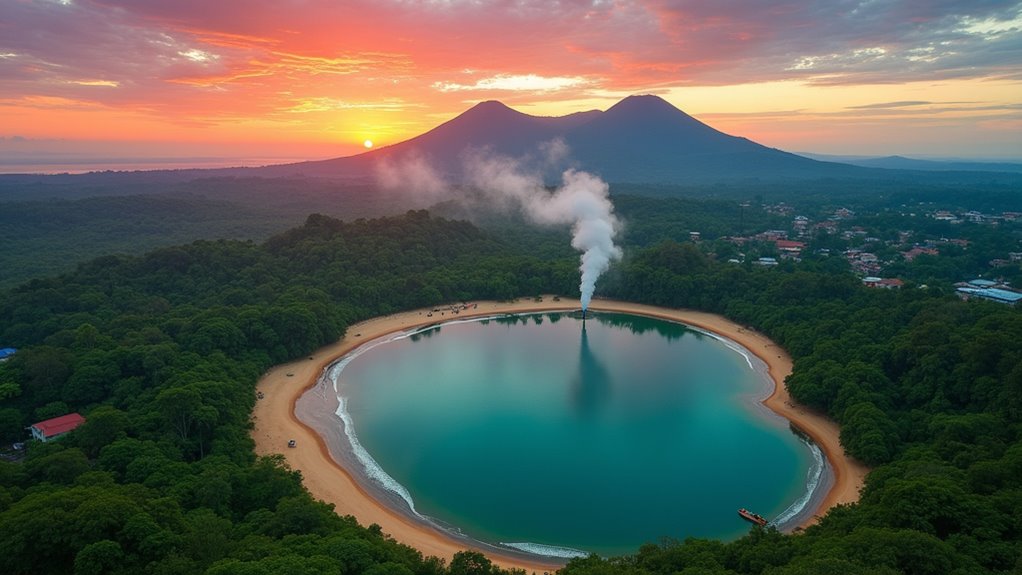
You’ll discover Nicaragua’s rich colonial heritage in Granada’s cobblestone streets, witness active lava at Masaya Volcano’s crater, and explore Ometepe Island’s twin volcanoes with ancient petroglyphs. Experience adrenaline-pumping volcano boarding down Cerro Negro’s black slopes, surf San Juan del Sur’s consistent Pacific breaks, and snorkel the Corn Islands’ vibrant Caribbean reefs. Cool off in Apoyo Lagoon’s volcanic waters, adventure through Somoto Canyon’s emerald pools, and hike to San Ramón Waterfall’s misty cascades for exhaustive insights into each unforgettable experience.
- Wander Granada’s Colonial Streets and Take a Boat Tour of the Isletas
- Hike to the Rim of Masaya Volcano’s Active Crater
- Explore Ometepe Island’s Twin Volcanoes and Ancient Petroglyphs
- Try Volcano Boarding Down Cerro Negro’s Black Slopes
- Surf the Consistent Breaks Around San Juan Del Sur
- Swim and Snorkel in the Corn Islands’ Caribbean Waters
- Cool Off at Apoyo Lagoon’s Volcanic Crater Lake
- Adventure Through Somoto Canyon’s Emerald Waters
- Discover San Ramón Waterfall in the Cloud Forest Near Matagalpa
- The Sum Up
Wander Granada’s Colonial Streets and Take a Boat Tour of the Isletas
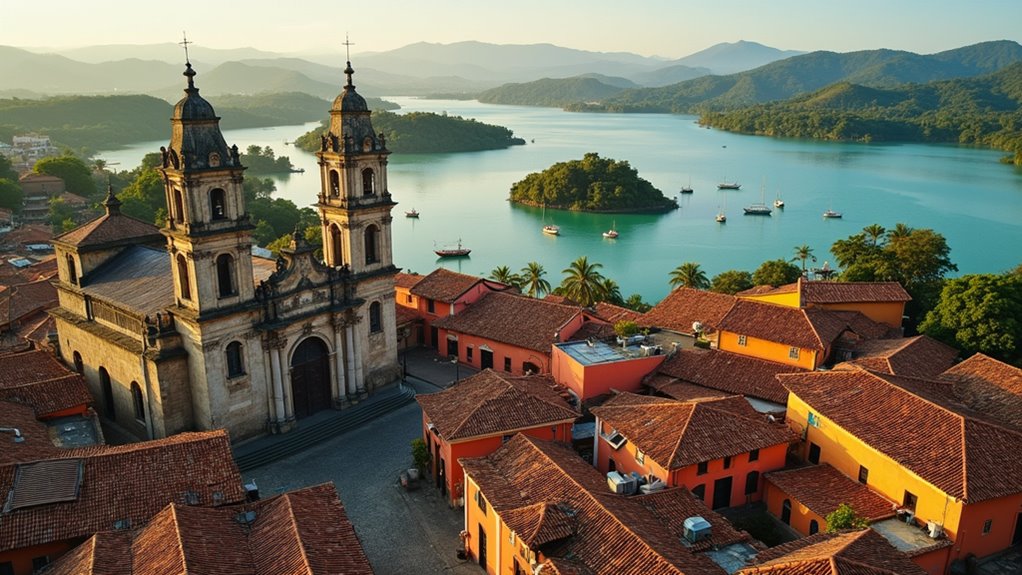
When you step into Granada’s historic center, you’re walking through the oldest Spanish-founded city on mainland Americas, where cobblestoned streets wind past brightly painted colonial houses that’ve stood since the 16th century.
Start at Parque Central, dominated by the neoclassical Granada Cathedral, then walk down Calle La Calzada to reach the lake.
Don’t miss climbing Iglesia La Merced’s bell tower for panoramic city views, and explore the baroque stone portal at Casa de los Leones. Notice the traditional wicker rocking chairs that line many porches and patios, serving as cultural symbols of Granada’s colonial identity.
Once you reach the Malecón, board a boat to tour the Isletas—over 300 small islands formed by Mombacho Volcano.
You’ll glide past private homes, wildlife refuges, and historic San Pablo Fortress, experiencing Granada’s colonial charm from both land and water.
Hike to the Rim of Masaya Volcano’s Active Crater
Standing at the rim of Masaya Volcano’s Santiago Crater, you’ll peer into one of the world’s most accessible active volcanic craters, where a persistent lava lake glows beneath dense sulfurous gas clouds.
Located within Masaya Volcano National Park, this extraordinary destination sits just one hour from both Managua and Granada.
You’ll need to drive or join a tour up the 4-kilometer paved road to reach the crater parking area, as walking isn’t permitted.
From there, you can access viewing platforms via short stairways or explore marked hiking trails to various miradors.
The Cruz de Bobadilla viewpoint requires climbing 280 concrete steps for panoramic crater views.
Expect time-limited viewing sessions due to toxic gas exposure, and bring gas masks for safety during your volcanic adventure. Many tours offer sunset experiences that provide spectacular views of both active and inactive craters as darkness falls.
Explore Ometepe Island’s Twin Volcanoes and Ancient Petroglyphs
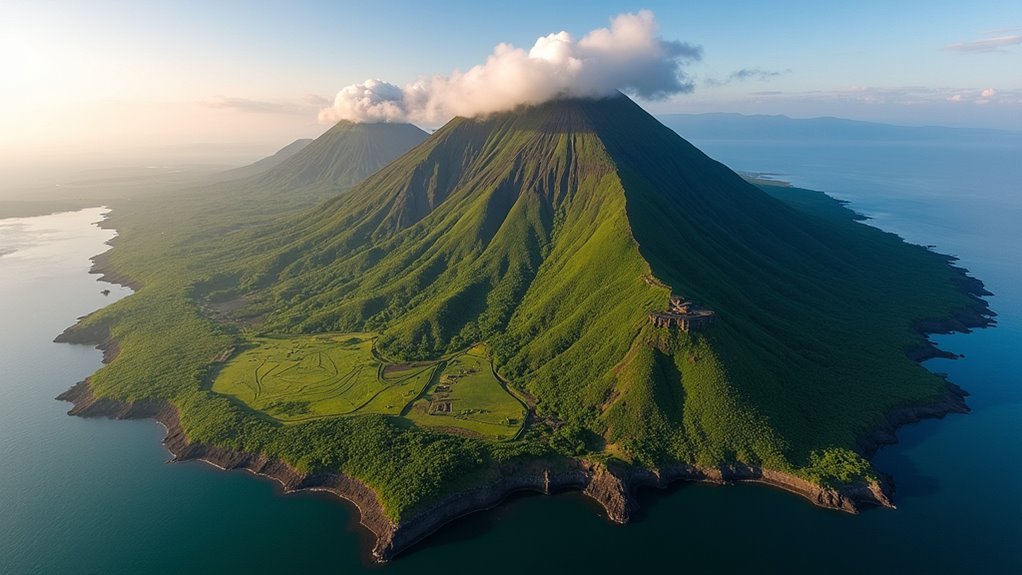
Rising dramatically from the waters of Lake Nicaragua, Ometepe Island presents you with an extraordinary geological wonder—two massive stratovolcanoes connected by a narrow isthmus to form the world’s highest lake island.
You’ll find Concepción (1,610m) towering to the north as an active volcano with barren, rocky slopes, while dormant Maderas (1,394m) offers lush cloud forest hiking to the south.
Plan 10 hours for Concepción’s challenging summit trek and 8 hours for Maderas’ crater lagoon hike—both requiring certified local guides.
Beyond volcanic adventures, you’ll discover hundreds of pre-Columbian petroglyphs carved into lahar boulders scattered across Maderas’ slopes. These ancient spirals, anthropomorphic figures, and geometric motifs reflect millennia of indigenous culture, making Ometepe a remarkable fusion of active geology and archaeological heritage. The island’s unique figure of eight shape showcases the fascinating interplay between volcanic formation and tectonic forces that continue to shape this remarkable landscape.
Try Volcano Boarding Down Cerro Negro’s Black Slopes
Though Cerro Negro may appear deceptively modest at 728 meters, you’ll discover Central America’s youngest volcano offers one of the world’s most unique adrenaline experiences—hurtling down its jet-black slopes on a specialized sandboard at speeds reaching 60 km/h.
After a 45-60 minute climb up loose cinder, you’ll descend the western flank’s unconsolidated volcanic ash in just 1-3 minutes of pure exhilaration. Tour operators provide full-body jumpsuits, goggles, gloves, and helmets while conducting safety briefings on proper braking techniques.
The activity runs year-round from León, though dry conditions offer ideal gliding on the scoria surface. Despite Cerro Negro’s active status—last erupting in 1999—monitoring ensures safe access to this extraordinary adventure. The volcano has produced frequent eruptions throughout its history, with over 20 recorded eruptions since its birth in 1850.
Surf the Consistent Breaks Around San Juan Del Sur
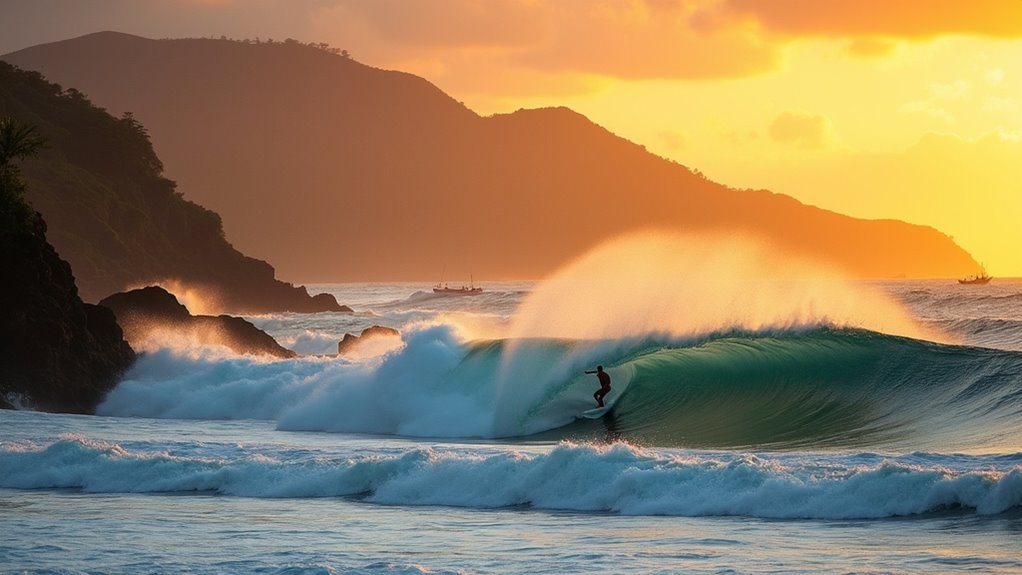
After experiencing the volcanic thrills of León, you’ll find Nicaragua’s Pacific coast offers another world-class adventure at San Juan del Sur, where consistent year-round swells create some of Central America’s most reliable surf breaks.
Beginners should head to Playa Remanso for gentle, rolling waves and easy paddling channels, while Playa Maderas delivers consistent A-frame breaks perfect for progression.
Advanced surfers can tackle the powerful waves at Playa Hermosa or challenge themselves at Playa Yankee’s technical breaks.
May through October brings the biggest, cleanest waves during wet season, while November to April offers smaller swells ideal for learning. The region’s offshore winds from the large northeast lake help create clean, long-lasting wave conditions.
You’ll find board rentals for $10-15 daily, with instructors available directly on beginner beaches.
Watch for rip currents at low tide and shuffle your feet to avoid stingrays in shallow water.
Swim and Snorkel in the Corn Islands’ Caribbean Waters
While the Pacific coast delivers world-class surfing, Nicaragua’s Caribbean side offers an entirely different aquatic paradise at the Corn Islands, where you’ll find some of the region’s healthiest coral reefs surrounded by crystal-clear waters.
Located 70 kilometers east of Nicaragua’s coast, these islands feature warm year-round temperatures (79-84°F) perfect for extended swimming without wetsuits.
Big Corn’s north side provides easy reef access directly from shore, while spots like Long Beach and Southwest Bay offer pristine white sand entries.
Little Corn delivers family-friendly lagoons and numerous nearshore snorkel sites. You’ll encounter rays, reef fish, octopus, and sea turtles among vibrant coral gardens.
The islands are also known for their copra and coconut production, adding to their authentic Caribbean island charm.
Visit during the dry season (mid-November to mid-May) for optimal visibility and calm conditions.
Cool Off at Apoyo Lagoon’s Volcanic Crater Lake
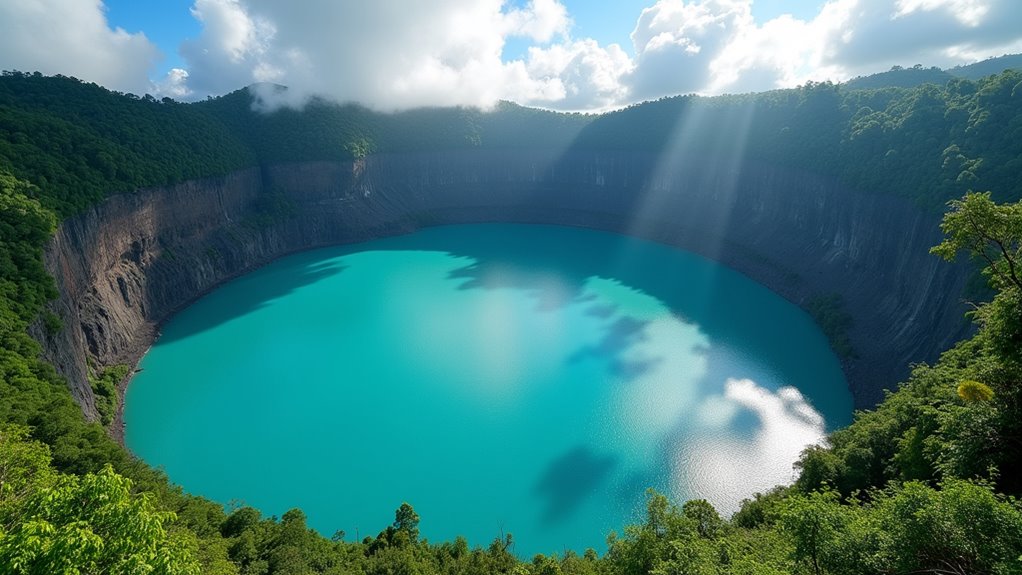
For an invigorating escape from Nicaragua’s tropical heat, Apoyo Lagoon offers one of Central America’s most pristine swimming experiences in the warm waters of an ancient volcanic crater.
Located just 20 minutes from Granada, this 175-meter-deep crater lake maintains a constant temperature of 80-82°F thanks to underwater thermal vents. You’ll find crystal-clear, mineral-rich waters perfect for swimming, kayaking, and stand-up paddleboarding—motorized boats are prohibited, ensuring tranquil conditions.
The lagoon sits within a protected reserve featuring over 500 plant species and 200 bird species along its forested crater walls. The lake was formed approximately 23,000 years ago from a massive volcanic explosion that created this natural wonder.
Day-use access is available at lakefront properties offering piers, floating platforms, and dining services. Whether you’re seeking beginner-friendly open-water swimming or advanced freediving opportunities, Apoyo’s calm, heated waters provide year-round aquatic recreation.
Adventure Through Somoto Canyon’s Emerald Waters
Hidden in Nicaragua’s rugged northern highlands, Somoto Canyon carves a dramatic 5-kilometer gorge through 13-million-year-old rock formations, creating one of Central America’s most thrilling aquatic adventures.
You’ll navigate emerald pools through hiking, swimming, boulder scrambling, and floating in this 120-150 meter deep canyon where walls narrow to just 5-10 meters apart.
Full circuits cover 13-15 kilometers over 5-6 hours, while shorter 3-hour routes focus on the scenic aquatic core. You’ll encounter 6-8 meter cliff jumps, natural rock slides, and a 200-meter swimming section requiring life vests.
From Somoto city, catch El Espino-bound buses (30 minutes, $0.40) to the Sonis trailhead.
Visit during dry season (November-April) for ideal water conditions and clearer visibility in the canyon’s famous emerald waters. This national monument was officially designated in 2006 to preserve its unique geological features and growing ecological significance.
Discover San Ramón Waterfall in the Cloud Forest Near Matagalpa
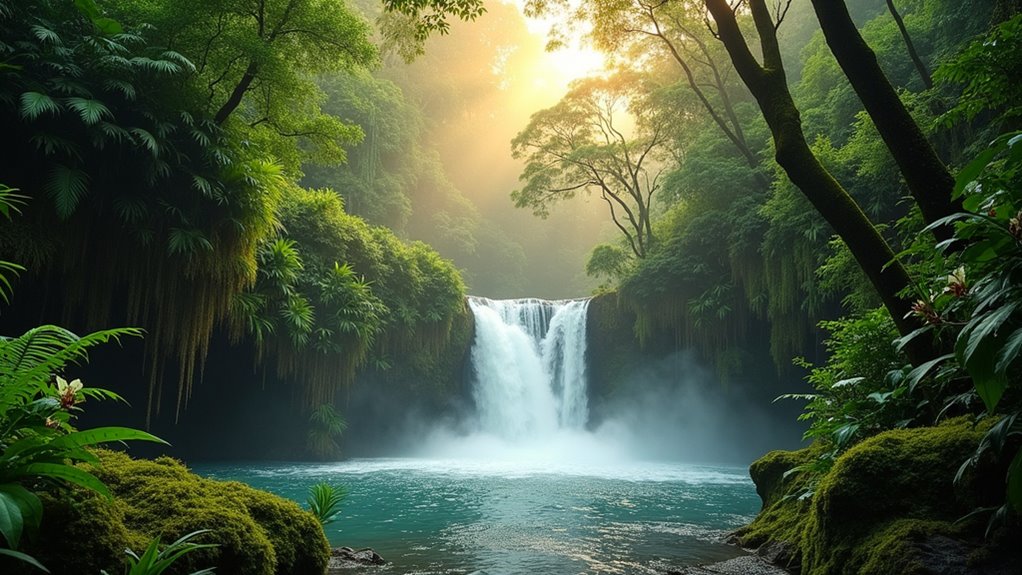
Though its name suggests a location near Matagalpa, San Ramón Waterfall actually plunges 40 meters down the mossy rock faces of Maderas Volcano on Ometepe Island, creating one of Nicaragua’s most rewarding yet challenging waterfall hikes.
You’ll tackle a demanding 7.2-kilometer round trip requiring 3-4 hours total hiking time. The trail begins with two kilometers on gravel road before narrowing into steep jungle terrain with over 300 meters elevation gain.
Expect deceptively difficult conditions on the final segment to reach the natural swimming pool. Renting an ATV to drive partway up the rocky roads can save nearly two hours of hiking time.
Pay 100 córdobas entrance fee plus 50 córdobas for vehicle access. Visit during rainy season for ideal water flow—dry months may leave only spray.
Access the trailhead via Mérida, roughly 75 minutes from Moyogalpa.
The Sum Up
You’ll discover Nicaragua offers incredible diversity within a compact territory. Pack sturdy hiking boots for volcano treks, bring reef-safe sunscreen for Caribbean waters, and don’t forget your camera for Granada’s colonial architecture. Book accommodations early during dry season (November-April), carry cash since ATMs aren’t always reliable, and learn basic Spanish phrases to enhance your interactions with locals. Nicaragua’s raw beauty and affordability make it Central America’s best-kept adventure secret.