

You’ll find Bath perfectly balances must-see history with unexpected discoveries that won’t break your budget. While everyone knows about the Roman Baths, you’re probably missing some of the city’s best-kept secrets that locals actually enjoy. From free architectural walks to hidden viewpoints that rival expensive attractions, Bath offers experiences that guidebooks often overlook. Here’s how to make the most of your visit while spending less than you’d expect.
- Soak in the Roman Baths and Sample the Mineral Water
- Take the Waters at Thermae Bath Spa’s Rooftop Pool
- Walk the Royal Crescent and Step Inside No. 1 for Georgian Life
- Climb Bath Abbey’s Tower for the Best City Views
- Follow Jane Austen’s Footsteps Through Georgian Bath
- Cross Pulteney Bridge and Explore the Shops Above the River
- Hike the Bath Skyline Walk for Countryside Views
- Hunt for Local Treasures at Sally Lunn’s Historic Eating House
- Escape to Prior Park’s Secret Palladian Bridge
- Take a Day Trip to Nearby Lacock or Castle Combe Villages
- The Sum Up
Soak in the Roman Baths and Sample the Mineral Water
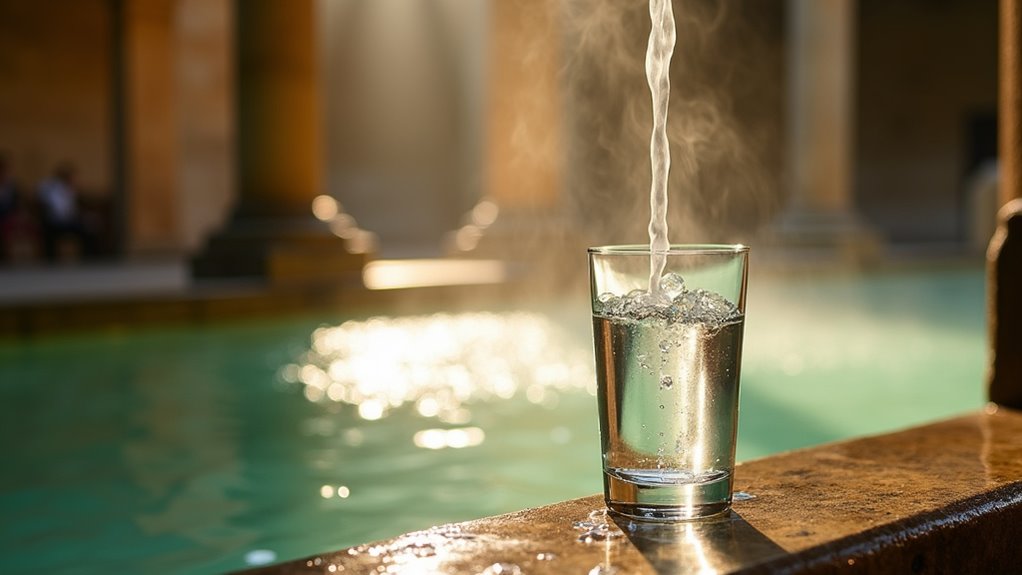
When you step into Bath’s most famous attraction, you’re walking where Romans soaked nearly 2,000 years ago. The Roman Baths complex showcases incredible engineering, with the Great Bath’s lead-lined pool still fed by naturally heated mineral water from the Sacred Spring.
You’ll explore the caldarium (hot), tepidarium (warm), and frigidarium (cold) bathing areas that Romans used for health and religious purification.
Don’t miss sampling the mineral-rich spring water in the Pump Room – it’s free and believed to have healing properties, just like the Romans thought. The water contains essential minerals like calcium, sodium, potassium, and magnesium from its journey through the Mendip limestone hills deep underground.
The museum displays fascinating artifacts including curse tablets where bathers asked goddess Sulis-Minerva to punish thieves who stole their clothes.
While you can’t bathe in the ancient pools today, you’re experiencing authentic Roman bathing culture.
Take the Waters at Thermae Bath Spa’s Rooftop Pool
After exploring Bath’s ancient bathing traditions, you can experience the same healing waters with a modern twist at Thermae Bath Spa’s rooftop pool. This open-air gem on the third floor offers stunning panoramic views of Bath Abbey and the surrounding hills while you soak in naturally heated mineral water at a perfect 35.5°C.
Your standard two-hour entry includes access to the rooftop pool, indoor Minerva Bath, and wellness facilities like steam rooms and saunas. The mineral-rich waters provide gentle buoyancy and therapeutic benefits, while built-in jacuzzi jets help soothe tired muscles from your sightseeing adventures. The water contains 42 minerals and trace elements, having traveled deep underground where it was naturally heated by rocks to 69°C before being cooled for the pools.
Book ahead or arrive early since it’s popular. The adults-only facility (16+) provides robes and towels, making it a relaxing end to your Bath exploration.
Walk the Royal Crescent and Step Inside No. 1 for Georgian Life
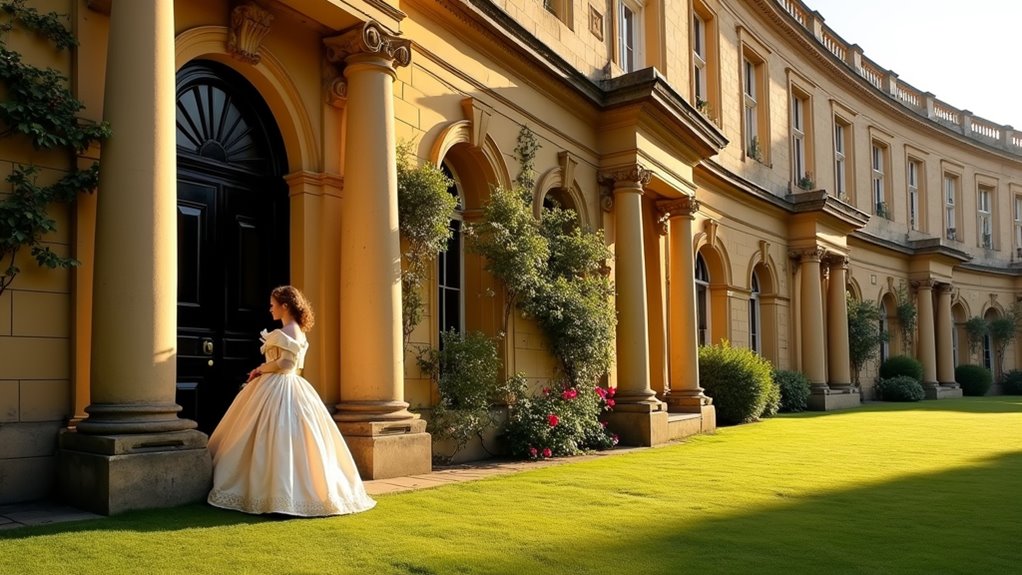
Though Bath boasts many architectural treasures, nothing quite compares to the sweeping grandeur of the Royal Crescent—a magnificent curved row of 30 Georgian townhouses that’ll take your breath away. Built between 1767-1774 by John Wood the Younger, this 500-foot limestone masterpiece features 114 towering Ionic columns and represents some of Britain’s finest Georgian architecture.
While you can admire the unified façade for free, don’t miss stepping inside No. 1 Royal Crescent museum. Here, you’ll discover authentic Georgian life through period furnishings, original artwork, and reconstructed rooms showing how wealthy 18th-century families lived.
The museum reveals fascinating details about social hierarchies, from grand drawing rooms to cramped servants’ quarters. It’s an affordable way to truly understand Bath’s golden age. The Crescent survived significant challenges throughout history, including wartime bombing during the 1942 Bath Blitz that damaged several houses.
Climb Bath Abbey’s Tower for the Best City Views
For just £8, you can climb Bath Abbey’s 161-foot tower and witness the most spectacular panoramic views in the city. The 212-step spiral staircase isn’t easy—it’s narrow and uneven—but the payoff is worth every step.
You’ll pass through the ringing room where 10 bells operate, then the clock room before reaching the open summit platform.
From the top, you’ll see Bath’s Georgian architecture spread below, including the Royal Crescent and Thermae Bath Spa. The 360-degree views extend far beyond the city on clear days. The tower itself is a masterpiece of architecture, featuring turret pinnacles and distinctive bell openings that add to its medieval grandeur.
Tours run Monday to Saturday from 10am to 5:30pm, taking 30-45 minutes total.
Skip this if you have mobility issues or vertigo, but otherwise, it’s Bath’s best photo opportunity.
Follow Jane Austen’s Footsteps Through Georgian Bath
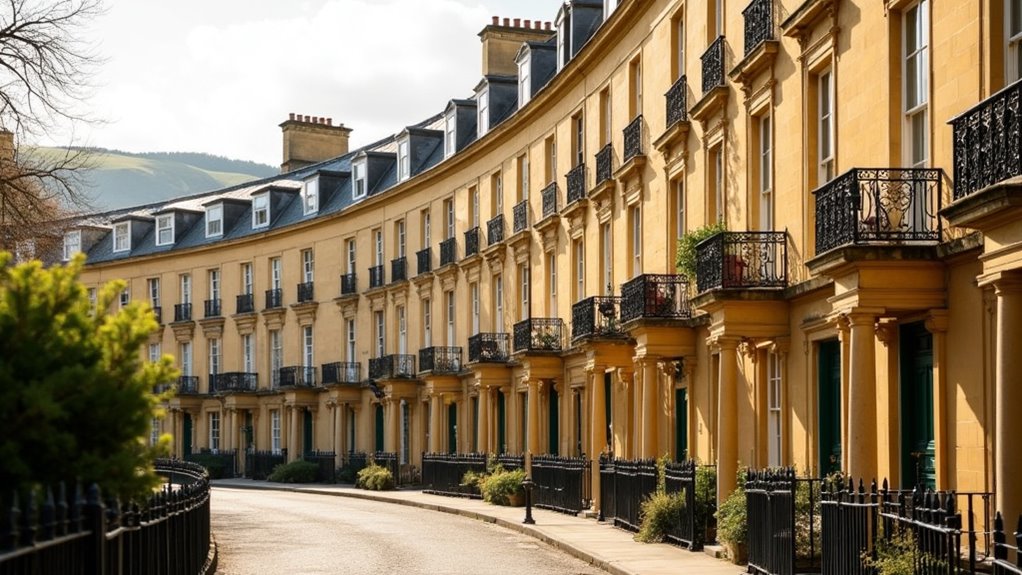
Start at 4 Sydney Place, her family home from 1801-1804, then stroll through nearby Sydney Gardens where she took daily walks. Visit the Assembly Rooms and Pump Room—social hubs that feature prominently in her novels.
The Royal Crescent and Circus showcase the Georgian architecture her characters would’ve admired. Bath’s designation as a UNESCO World Heritage Site makes it the only UK city with this prestigious status, preserving the very streetscapes Austen once knew.
Don’t miss the Jane Austen Centre for deeper insights into her Bath years. Join a “Strictly Jane Austen” walking tour to discover hidden filming locations from adaptations.
End with Regency afternoon tea at the Pump Room—you’ll experience Bath exactly as Austen knew it.
Cross Pulteney Bridge and Explore the Shops Above the River
Pulteney Bridge stands out as one of the world’s most unusual crossings—it’s lined with shops on both sides, creating a bustling commercial street that happens to span the River Avon. Built between 1769-1774, this Georgian masterpiece draws inspiration from Florence’s Ponte Vecchio, offering a unique shopping experience above flowing water.
You’ll find everything from antiques to local crafts in the historic shopfronts, many featuring original Venetian windows from Robert Adam’s design. The bridge’s dense commercial activity means you might forget you’re crossing a river—the shops often block river views, creating an immersive street-like atmosphere. As one of only four bridges worldwide with shops along its entire length, Pulteney Bridge offers a truly rare architectural experience.
Don’t miss exploring both sides of the bridge to appreciate the architectural details. The cantilevered extensions added over centuries give it medieval charm while maintaining its status as a remarkable example of Georgian urban planning.
Hike the Bath Skyline Walk for Countryside Views
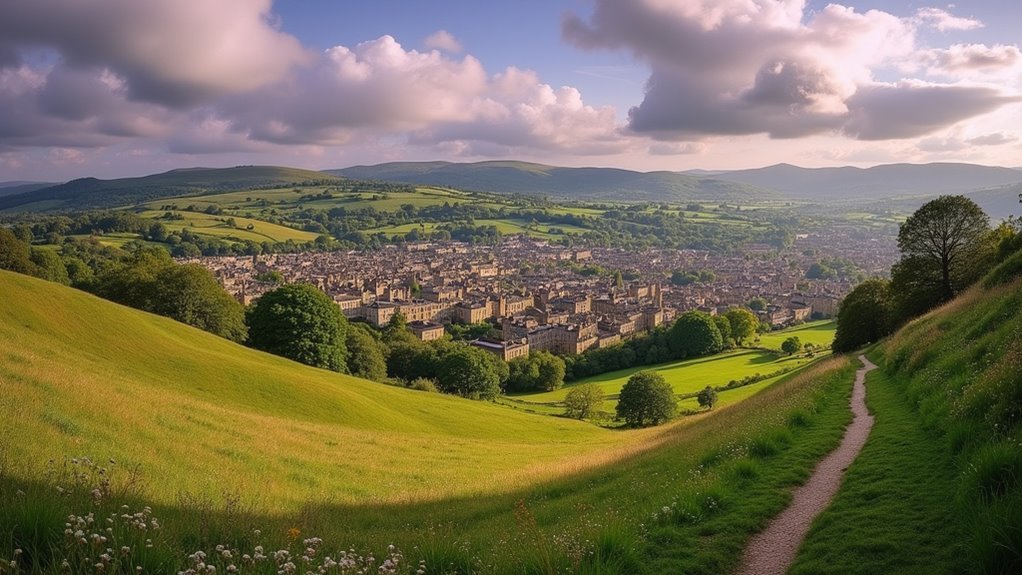
After soaking up Bath’s architectural wonders from street level, you’ll want to step back and see the city’s famous honey-colored Georgian terraces from above. The Bath Skyline Walk delivers exactly that – a 6-mile circular route offering panoramic views of the Royal Crescent, Bath Abbey, and the entire World Heritage city.
You’ll trek through meadows, woodlands, and fields while spotting wildlife and discovering Iron Age hillfort sites. The moderate difficulty trail takes 3-4 hours, though there’s a shorter 3-mile option if you’re pressed for time.
Wear sturdy shoes since you’ll encounter steep inclines and uneven terrain. Along the route, you’ll pass through Smallcombe Wood, the most ancient woodland in Bath where native trees provide habitat for birds like nuthatches, wrens, and blackcaps.
Start from Bath Abbey or Bathwick Hill – both accessible on foot from the city center. Pack water and prepare for stunning photo opportunities, especially during golden hour.
Hunt for Local Treasures at Sally Lunn’s Historic Eating House
While most visitors rush past the narrow entrance at 4 North Parade Passage, you’ll discover one of Bath’s most remarkable historical treasures tucked inside this unassuming doorway. Sally Lunn’s Historic Eating House operates from Bath’s oldest house, dating to 1482, where French refugee Solange Luyon created her famous bun recipe in 1680.
You’ll taste the original Sally Lunn bun—part bread, part cake—served with sweet jam or savory toppings like Bath ham. Don’t miss the basement kitchen museum showcasing Roman mosaics and medieval bakery equipment for free with your meal.
Open daily 10 AM-6 PM, it’s perfect for budget-friendly lunch combining authentic local food with fascinating history spanning nearly 2,000 years. The hotel blends historic architecture with contemporary artisan works throughout the dining spaces.
Escape to Prior Park’s Secret Palladian Bridge
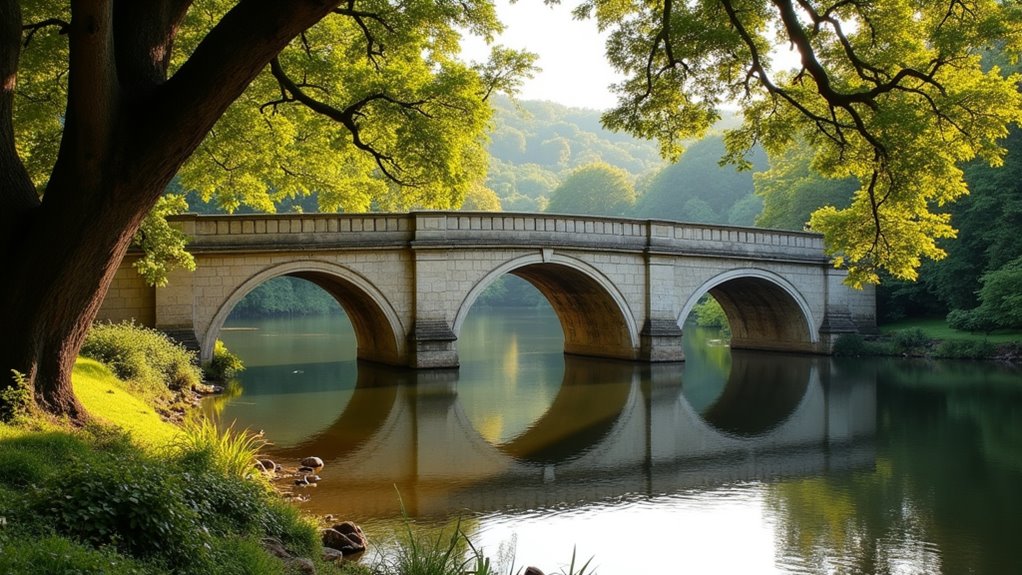
From the bustling streets of Bath’s historic center, you’ll find tranquility awaits just a 20-minute uphill walk to Prior Park Landscape Garden. This hidden gem houses one of only four Palladian bridges remaining worldwide – and England’s last surviving example.
Built in 1755, this Grade I listed architectural marvel spans ornamental lakes while offering spectacular views back toward Bath. You’ll explore 28 acres of restored 18th-century landscape gardens featuring Gothic temple ruins, Mrs Allen’s Grotto, and cascading pools. The gardens underwent major restoration over the last two years, with dam structures repaired and the middle lake refilled after being empty since 2017.
The National Trust maintains this picturesque estate, making it accessible for day visits. Pack comfortable walking shoes and a camera – the sweeping vistas from the bridge create Instagram-worthy moments. Entry fees support ongoing conservation efforts, ensuring future generations can enjoy this rare architectural treasure.
Take a Day Trip to Nearby Lacock or Castle Combe Villages
When you’re ready to venture beyond Bath’s city limits, two enchanting medieval villages await just a short drive away. Lacock and Castle Combe offer perfectly preserved cobblestone streets, historic stone cottages, and that quintessential English countryside charm you’ve been craving.
You’ll recognize Lacock immediately if you’re a Harry Potter fan – its medieval abbey cloisters doubled as Hogwarts corridors. The National Trust village also features a 15th-century church and houses fascinating exhibits about photography pioneer William Fox Talbot.
Castle Combe, dubbed “England’s prettiest village,” showcases a stunning 14th-century church and picturesque market cross.
Day tours from Bath typically last 10-12 hours with expert guides, small groups, and comfortable transport. You’ll enjoy guided walks, free exploration time, and hearty pub lunches while soaking up centuries of history. Most tours operate with 16-seat Mercedes mini-coaches that provide an intimate group experience while ensuring comfortable travel between destinations.
The Sum Up
You’ll find Bath offers incredible value with many free experiences like wandering the Royal Crescent or following Jane Austen’s trail. Mix paid attractions like the Roman Baths with budget-friendly options such as the Skyline Walk for countryside views. Pack a lunch for day trips to Lacock or Castle Combe to save money. Book spa sessions during off-peak times for better rates. Bath’s compact size means you can easily explore on foot, keeping transport costs down.