
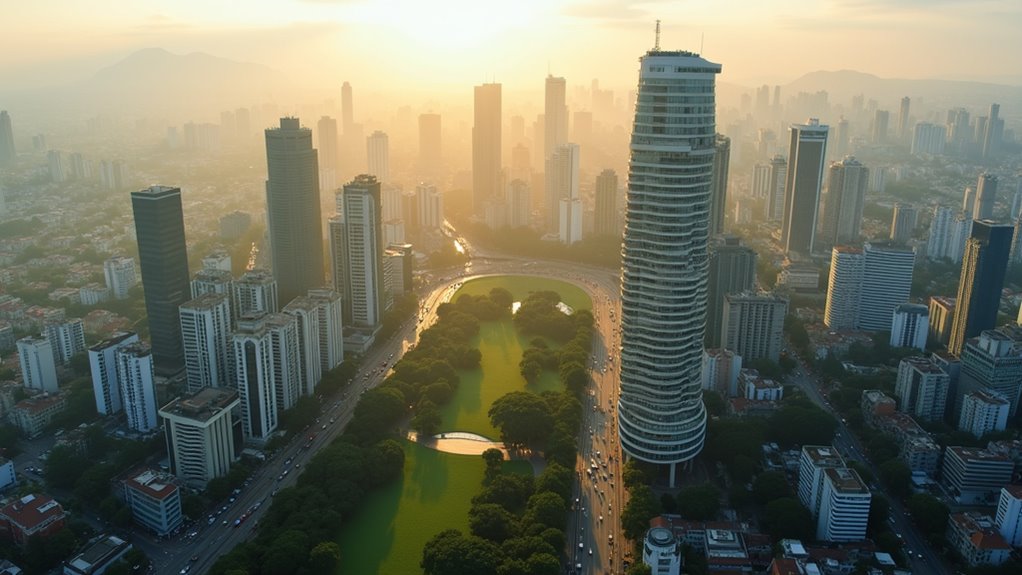
You’ll discover São Paulo’s soul through its car-free Sundays on Avenida Paulista, where 43 weekly events transform Brazil’s financial heart into a cultural playground. Explore world-class museums at Ibirapuera Park, hunt for street art in Vila Madalena’s Batman Alley, and experience the city’s football obsession at Museu do Futebol. Bar hop through Pinheiros neighborhoods, catch performances at the historic Municipal Theater, and find respite in Parque Trianon’s Atlantic Forest preserve. These experiences offer just the beginning of what this metropolis has in store.
- Walk Down Avenida Paulista When Cars Are Banned
- Spend a Morning at Ibirapuera Park and Its Museums
- Explore the Cathedral and Historic Center on Foot
- Hunt for Street Art in Vila Madalena’s Batman Alley
- Browse Brazilian Art at the Pinacoteca
- Sample Everything at Mercadão Municipal Market
- Dive Into Japanese Culture in Liberdade
- Take in City Views From Masp’s Floating Gallery
- Experience São Paulo’s Football Obsession at Museu Do Futebol
- Bar Hop Through Vila Madalena and Pinheiros
- Catch a Show at the Municipal Theater
- Find Green Space at Parque Trianon
- The Sum Up
Walk Down Avenida Paulista When Cars Are Banned
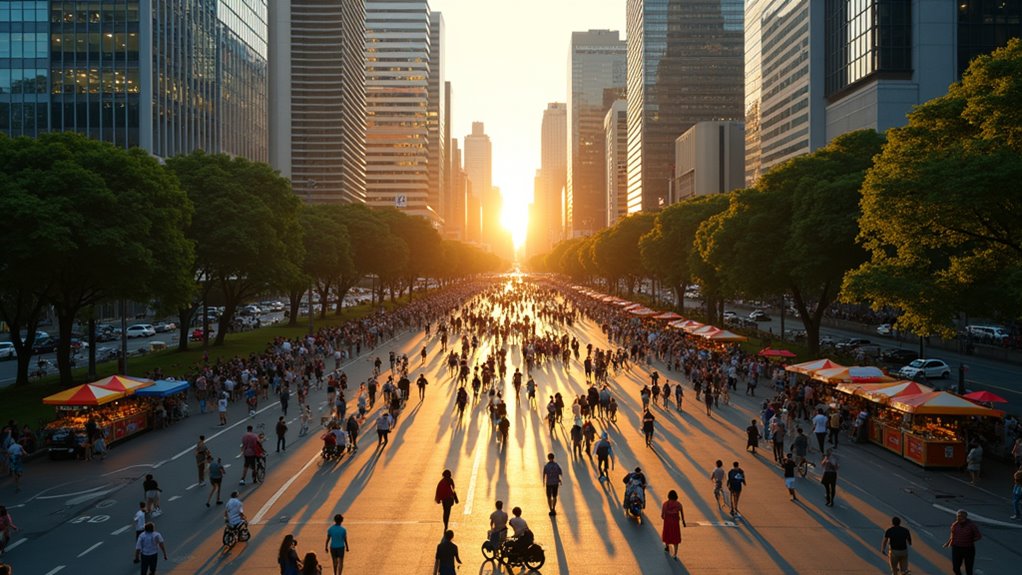
When São Paulo shuts down 2.5 kilometers of Avenida Paulista to cars every Sunday, you’ll witness one of South America’s most successful urban transformations in action. From 9:00–17:00, this former six-lane traffic artery becomes a linear park where street musicians occupy former traffic lanes and families cycle through Brazil’s financial heart.
You’ll walk beneath glass towers and early 20th-century mansions while experiencing São Paulo’s diverse subcultures—from art collectives to political demonstrations. The avenue’s position on the city’s highest point offers striking skyline views down cross streets. Each Sunday features an average of 43 cultural activities, from concerts and exhibitions to street performances.
Bring comfortable shoes for the full stretch, rent shared bikes for easier navigation, and stop at street food vendors. This weekly transformation illustrates three urban eras: elite residential boulevard, car-dominated artery, and now recurring pedestrian paradise.
Spend a Morning at Ibirapuera Park and Its Museums
As São Paulo awakens, Ibirapuera Park transforms into the city’s most concentrated cultural experience, where Oscar Niemeyer’s architectural masterpieces house world-class museums within Brazil’s answer to Central Park.
Start at the Afro Brasil Museum near Gate 10, exploring over 6,000 artifacts documenting African heritage’s profound influence on Brazilian society—entry’s free on Wednesdays.
Next, visit MAM near Gates 1-2 for modern Brazilian art and outdoor sculpture gardens, offering free Sunday admission.
The Planetarium provides immersive astronomy shows, while Niemeyer’s iconic structures—the white Oca dome, red-tongued Auditorium, and flowing Bienal Pavilion—create an architectural walking circuit. For nature enthusiasts, the Rosa dos Ventos area behind the Planetarium offers excellent opportunities for spotting both migratory and native bird species during early morning hours.
Arrive early for cooler temperatures and lighter crowds, combining culture with modernist design in São Paulo’s premier cultural destination.
Explore the Cathedral and Historic Center on Foot
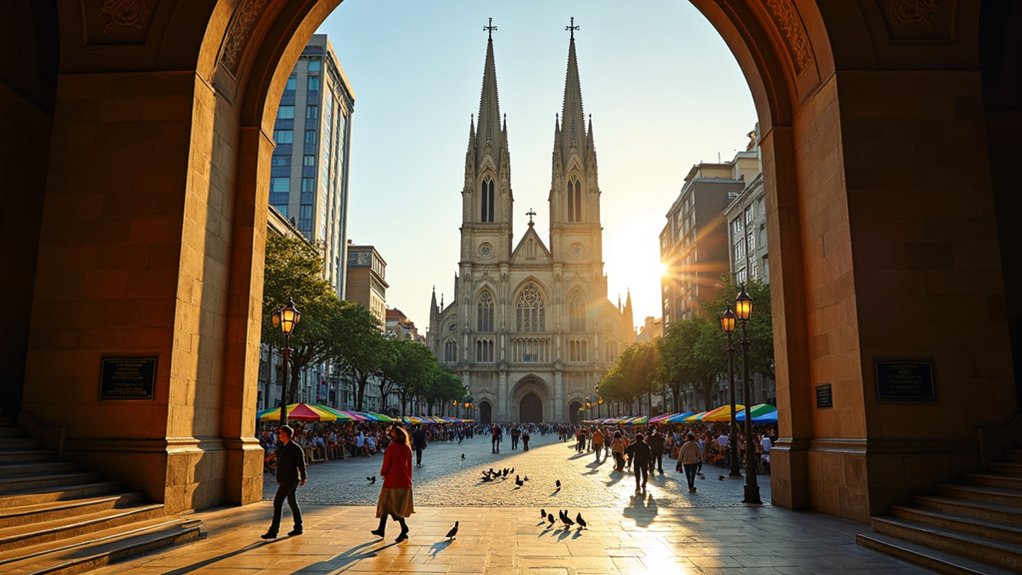
From the modernist curves of Ibirapuera, São Paulo’s historic heart reveals centuries of architectural evolution centered around the magnificent Neo-Gothic Cathedral da Sé. Standing at Praça da Sé—the city’s symbolic kilometer zero—you’ll witness where village origins transformed into metropolitan grandeur since 1589.
Inside the cathedral, examine capitals sculpted with Brazilian coffee branches and pineapples, merging Gothic traditions with local identity.
The massive Balbiani & Rossi organ ranks among Latin America’s largest with 12,000 pipes. Don’t miss the underground crypt housing Indigenous Chief Tibiriçá and early aviation pioneer Bartolomeu de Gusmão. The cathedral’s construction spanned four decades from 1913, incorporating over 800 tons of rare marble into its Gothic design.
Connect your visit to nearby Pátio do Colégio and São Bento areas via walking circuits that trace the city’s foundation story through layered architecture and urban transformation.
Hunt for Street Art in Vila Madalena’s Batman Alley
While cathedral spires represent São Paulo’s historic soul, the vibrant chaos of Vila Madalena’s Batman Alley reveals the city’s rebellious creative pulse through Brazil’s most concentrated outdoor gallery.
Named after a Batman graffito from the 1980s, this narrow cobblestone maze stretches three blocks with walls completely covered in psychedelic murals, cubist designs, and political commentary.
You’ll discover mythical creatures, cartoon figures, and abstract compositions layered in spray paint. The art constantly evolves as local and international artists collaborate, creating new pieces over older works with informal permission codes. Community members regularly undertake renovations to preserve the artwork’s vibrancy and maintain this living gallery.
Located behind São Paulo Cemetery, it’s easily accessible and free to explore.
Visit during daylight hours for ideal photography and safety, especially since crime increased following the 2014 World Cup tourism boom.
Browse Brazilian Art at the Pinacoteca
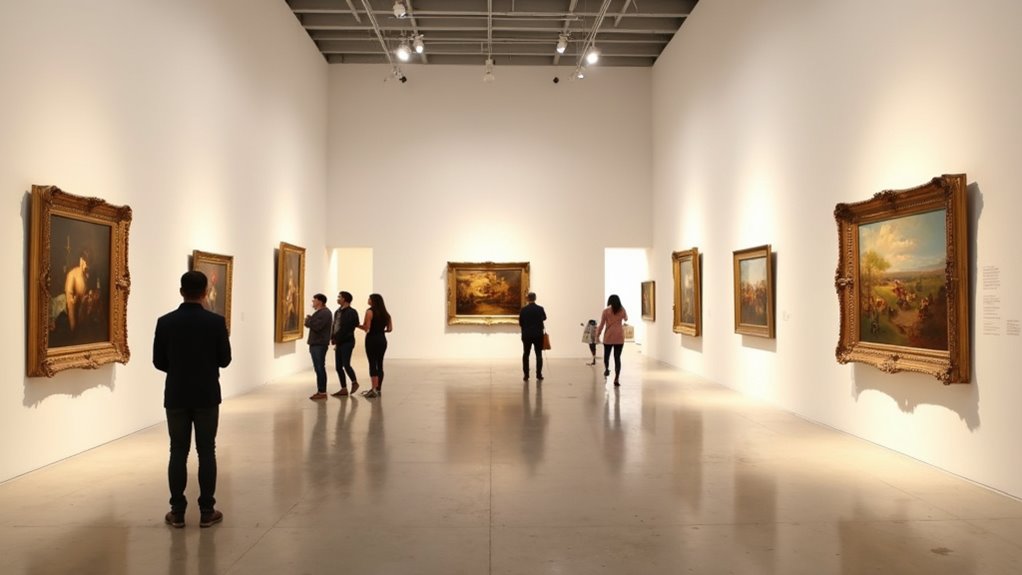
Street art captures São Paulo’s contemporary creative energy, but the Pinacoteca de São Paulo offers a deeper journey through Brazil’s artistic evolution spanning over a century. Founded in 1905, this historic institution houses over 10,000 works showcasing Brazilian masters like Almeida Júnior, Cândido Portinari, and Anita Malfatti.
Navigate the second floor’s permanent collection, where 1,000 pieces by 400+ artists trace Brazil’s artistic development from colonial traditions through modernism. The museum’s award-winning architecture—a 1990s renovation by Paulo Mendes da Rocha of the original 1900 building—creates luminous galleries with exposed brick and metal walkways.
Don’t miss the Brasiliana Collection featuring foreign artists’ interpretations of Brazil, or the outdoor sculpture garden adjacent to the main building near Luz Station. The museum also operates Pinacoteca Estação, a secondary venue housed in a restored 1914 warehouse that hosts rotating temporary exhibitions and cultural events.
Sample Everything at Mercadão Municipal Market
Although São Paulo’s restaurant scene commands international attention, the city’s culinary heart beats strongest at Mercadão Municipal, where over 280 stalls have fed Paulistanos since 1933. You’ll navigate Francisco Ramos de Azevedo’s architectural masterpiece beneath stunning stained-glass windows depicting agricultural scenes rather than religious imagery.
Don’t miss the legendary mortadella sandwich—nearly half a pound of meat piled high—or Hocca Bar’s pastel de bacalhau that draws daily crowds. Sample exotic Brazilian fruits as vendors offer generous tastings, then explore specialty counters selling everything from imported spices to fresh seafood. The market’s impressive scale becomes clear when you realize it processes 450 tons daily of food products across its vast 12,600 square meter space.
Visit during lunch for peak energy, when the granite floors buzz with chefs sourcing ingredients and locals savoring regional dishes on the mezzanine level overlooking the bustling main hall.
Dive Into Japanese Culture in Liberdade
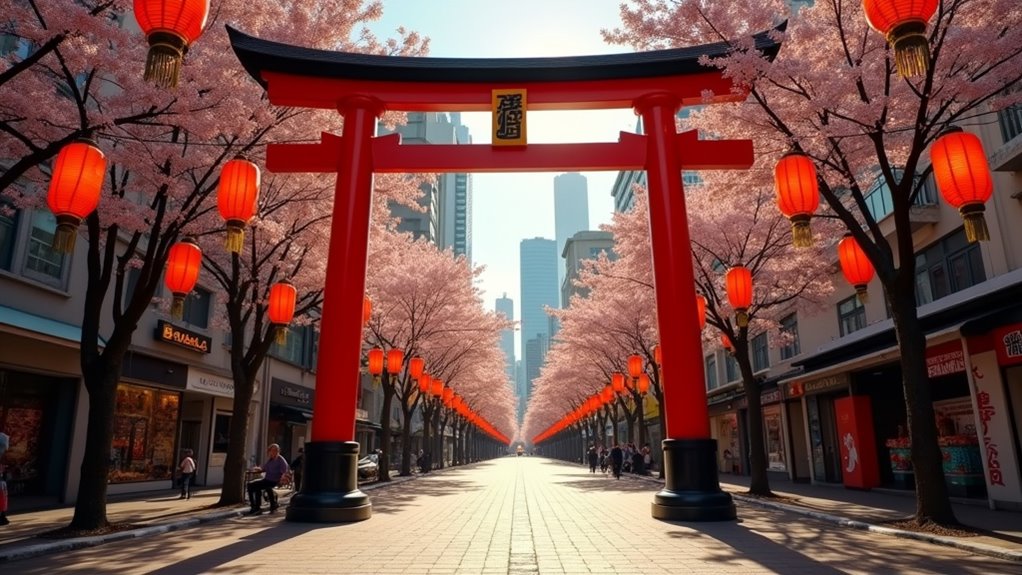
When you step into Liberdade’s lantern-lit streets, you’ll discover the largest Japanese community outside Japan has transformed this compact quarter into São Paulo’s most authentic slice of Asian culture. Navigate Rua Galvão Bueno’s main artery, where Japanese bookstores, anime shops, and traditional grocers line the walkable 500-meter stretch.
Visit weekends for the bustling Liberdade Market at Praça da Liberdade, sampling yakisoba, gyoza, and taiyaki from street vendors preserving century-old immigrant traditions.
Explore the Museu Histórico da Imigração Japonesa on Rua São Joaquim’s Bunkyo building, housing artifacts from 1912’s pioneering settlers. Pass through the iconic red torii gate marking the neighborhood’s entrance, a towering nine-meter landmark that has welcomed visitors since 1974.
Find spiritual grounding at Busshinji Temple’s Zen meditation sessions, then browse specialty stores for imported sake, miso, and manga that connect you to Brazil’s vibrant Japanese diaspora heritage.
Take in City Views From Masp’s Floating Gallery
From Liberdade’s street-level culture, elevate your São Paulo experience at MASP, where Lina Bo Bardi’s revolutionary 1968 design literally suspends art—and spectacular city views—eight meters above Avenida Paulista.
The museum’s glass-and-concrete block floats between red concrete beams, creating the Belvedere of Trianon beneath—offering 360-degree urban vistas perfect for sunset photography.
Inside, transparent crystal easels display paintings without walls, creating uninterrupted sightlines across artworks toward floor-to-ceiling windows framing the city skyline. The museum operates extended hours on Thursdays until 8 p.m., giving visitors extra time to watch the city lights emerge as evening falls.
This column-free gallery transforms your museum visit into a continuous urban observatory, where high-rises and street life become part of the artistic experience.
Access via Trianon-Masp metro station (Green Line) places you directly on Brazil’s most iconic cultural corridor for this architectural masterpiece.
Experience São Paulo’s Football Obsession at Museu Do Futebol
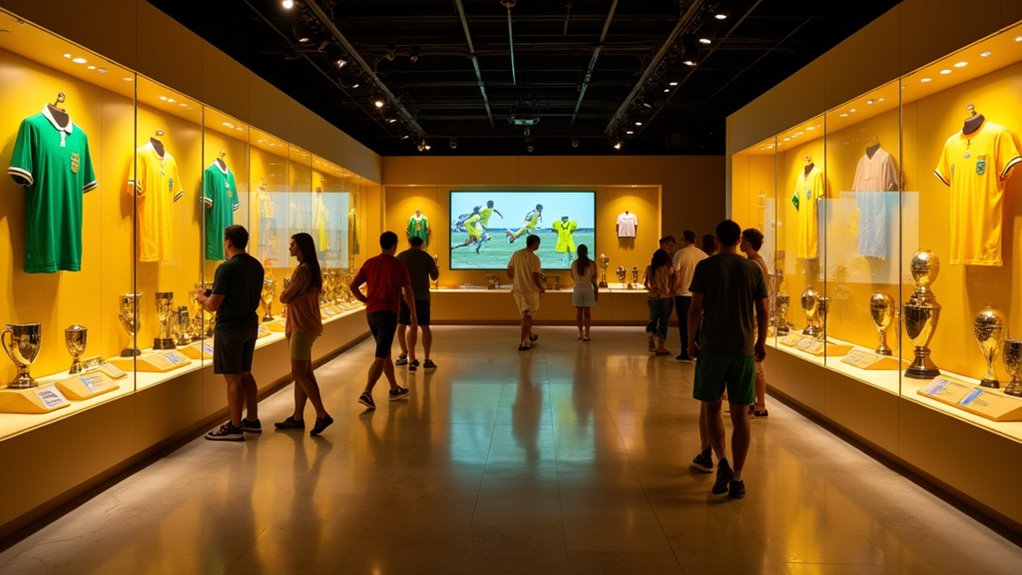
Since football pulses through every neighborhood corner and conversation in São Paulo, you’ll find no better introduction to this cultural obsession than the Museu do Futebol, where Brazil’s most beloved sport unfolds as social history rather than mere athletic spectacle.
Housed beneath the historic Pacaembu Stadium‘s stands, this multimedia museum traces football’s evolution from elite English pastime to Brazil’s defining cultural identity through 15 immersive rooms. The museum’s Brazilian Football Reference Centre contains over 4,000 titles including books, films, and DVDs that document the sport’s rich heritage.
You’ll experience match-day atmosphere through surround-sound crowd chants, test your skills at penalty simulators, and explore legendary moments from Pelé’s rise to World Cup triumphs.
Interactive displays reveal how football intersected with politics, race, and urban life throughout Brazil’s 20th-century transformation.
The museum’s trilingual content and smartphone audio guides ensure you’ll grasp football’s profound social significance beyond the pitch.
Bar Hop Through Vila Madalena and Pinheiros
While São Paulo’s nightlife sprawls across countless neighborhoods, you’ll discover the city’s most authentic bar-hopping experience by weaving between Vila Madalena’s bohemian energy and Pinheiros’ sophisticated gastropub scene.
Start your evening along Rua Aspicuelta or Mourato Coelho, where traditional botecos like Boteco São Bento serve ice-cold chopp alongside creative caipiroskas.
Graduate to speakeasy SubAstor Vila Madalena—ranked among the World’s 50 Best Bars—for elevated cocktails using Brazilian botanicals.
Cross into Pinheiros for craft beer at pioneering Cervejaria Nacional, then explore gastropubs along Rua dos Pinheiros. For adventurous eaters, stop by Trip Food for backpacker-inspired international cuisine like Korean hot dogs and Uruguayan choripán.
Follow São Paulo’s bar-hopping rhythm: spend one hour per venue across 3-4 bars before finishing at a late-night club.
Peak energy hits Thursday through Saturday from 9 pm to 3 am.
Catch a Show at the Municipal Theater
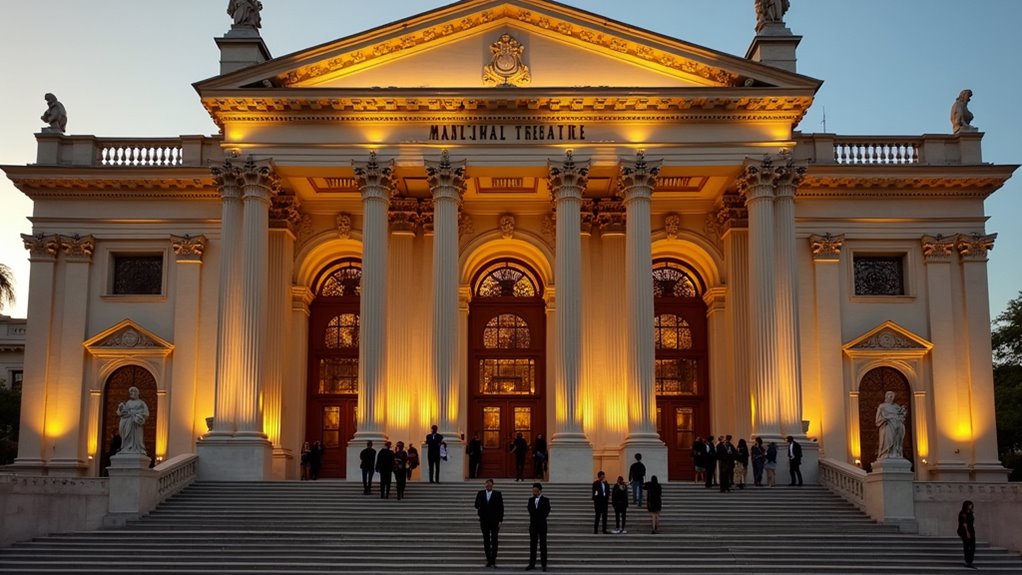
Standing majestically in the heart of downtown São Paulo since 1911, the Municipal Theater represents more than just an evening’s entertainment—it’s your gateway into the cultural soul of Brazil’s largest metropolis. This architectural masterpiece, inspired by Paris’s Palais Garnier, hosts world-class opera, ballet, and symphonic performances that showcase both classical repertoire and innovative Brazilian works.
You’ll experience the same ornate halls where the revolutionary Modern Art Week of 1922 transformed Brazilian culture forever. The theater’s resident orchestra, choir, and ballet companies deliver exceptional performances in an intimate setting that survived the city’s urban transformation.
Can’t catch a show? Book a guided tour to explore the historic interiors, decorative details, and panoramic city views that reveal São Paulo’s cultural evolution from coffee-elite enclave to modern metropolis. The theater’s stunning interior features Brazilian stones and European marbles that showcase the nation’s mineral wealth alongside monumental paintings by Oscar Pereira da Silva.
Find Green Space at Parque Trianon
Tucked between São Paulo’s towering skyscrapers on Avenida Paulista, Parque Trianon offers you an unexpected encounter with Brazil’s original Atlantic Forest—right in the heart of the city’s most vertical district. This 48,000-square-meter green oasis preserves centuries-old jequitibá and pau-brasil trees beneath a dense canopy that creates genuine rainforest conditions.
You’ll discover French designer Paul Villon’s 1892 vision of an “English garden in the tropics,” complete with Greco-Roman sculptures scattered throughout the forest floor. The park includes playground areas and recreational spaces perfect for families with children. Look up for two-toed sloths and over 29 bird species, including colorful parakeets.
Located directly opposite MASP, it’s perfect for a restorative 20-30 minute break during your Paulista explorations.
The Sum Up
You’ve barely scratched São Paulo’s surface with these nine experiences. The city’s true magic lies in its contradictions—where high art meets street culture, where green spaces interrupt urban chaos. Don’t try to see everything; instead, pick neighborhoods and dive deep. Talk to locals, eat at hole-in-the-wall restaurants, and embrace the city’s frenetic energy. São Paulo rewards those who surrender to its rhythm rather than fight it.