
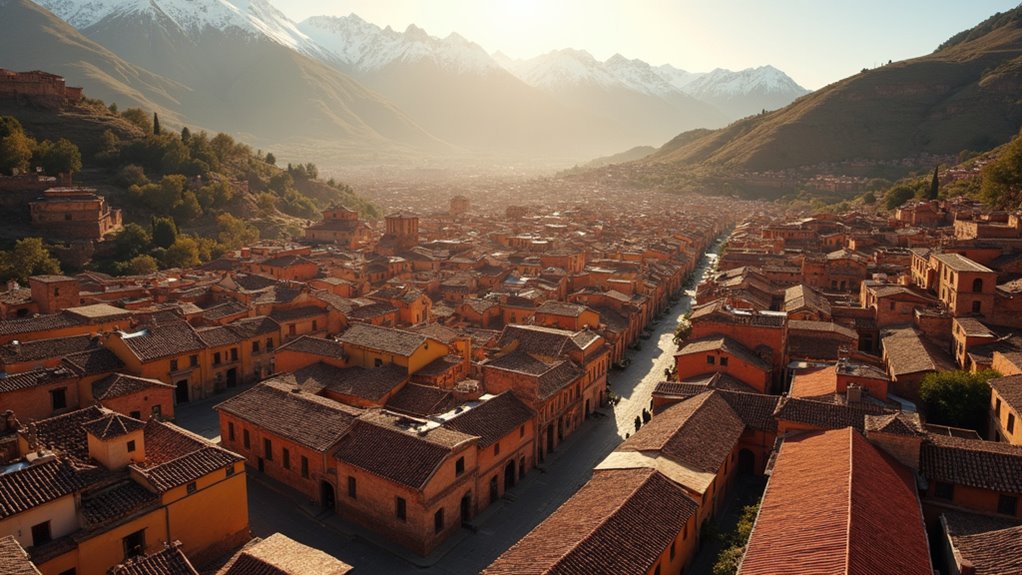
Start your Cusco adventure at Plaza de Armas, then explore the gold-adorned Cathedral and ancient Qoricancha Temple of the Sun. You’ll want to climb Sacsayhuamán fortress for stunning panoramic views and tackle the archaeological circuit including Q’enqo and Puka Pukara. Don’t miss Ollantaytambo’s royal Inca complex, Rainbow Mountain’s vibrant colors at 17,060 feet, and Cochahuasi Animal Sanctuary’s rescued condors. Time your visit for June’s spectacular Inti Raymi festival to witness authentic Incan ceremonies that’ll transform your understanding of this mystical city.
- Start Your Cusco Journey at Plaza De Armas
- Marvel at the Gold-Adorned Cusco Cathedral
- Discover Qoricancha, the Inca Temple of the Sun
- Climb to Sacsayhuamán Fortress for Panoramic Views
- Take the Archaeological Circuit to Q’enqo, Puka Pukara, and Tambomachay
- Plan Your Day Trip to Machu Picchu
- Explore the Sacred Valley’s Pisac Ruins and Market
- Visit Ollantaytambo’s Royal Inca Complex
- Hunt for the Perfect Shot at Rainbow Mountain
- Experience Andean Wildlife at Cochahuasi Animal Sanctuary
- Time Your Visit for Inti Raymi Festival of the Sun
- The Sum Up
Start Your Cusco Journey at Plaza De Armas
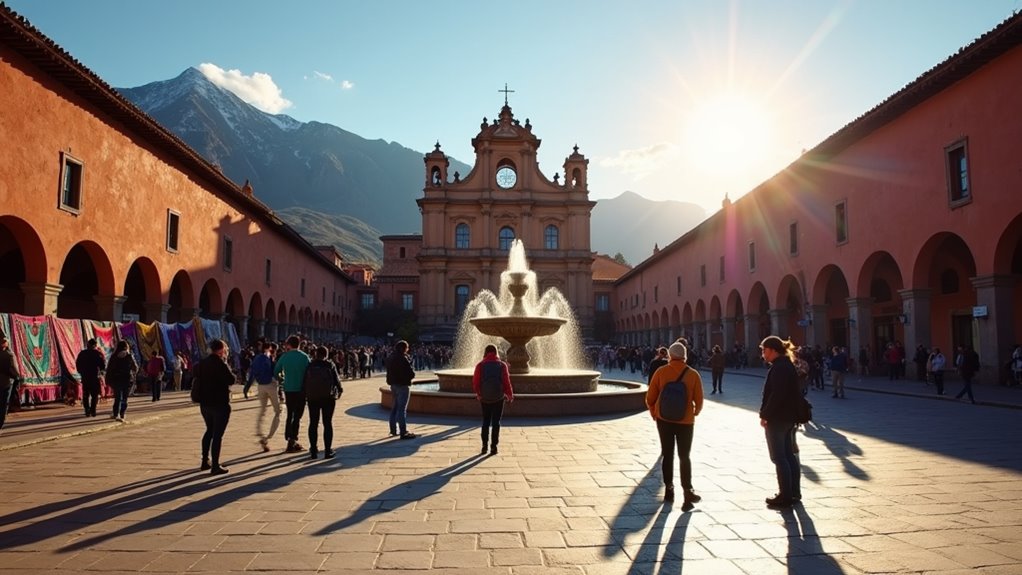
When you step into Plaza de Armas, you’re standing at the beating heart of both ancient and modern Cusco—the very spot where Inca emperors once held court in the ceremonial center of Huacaypata. This rectangular plaza serves as your perfect orientation point and natural base for exploring the city.
You’ll find everything you need within walking distance: hotels, restaurants, ATMs, and tour agencies clustered in the surrounding colonial arcades built atop Inca foundations.
Use the plaza strategically for altitude acclimatization—stroll the flat pathways, rest on benches, and soak in the atmosphere. At this 3,400-meter elevation, taking time to adjust is essential before tackling more strenuous activities. It’s also your departure hub for Sacred Valley and Machu Picchu tours.
Don’t miss the evening illuminations of the surrounding churches and colonial façades, creating an unforgettable first impression of Cusco’s layered history.
Marvel at the Gold-Adorned Cusco Cathedral
As you cross Plaza de Armas from your orientation point, the imposing Cusco Cathedral commands immediate attention with its twin bell towers and massive stone blocks quarried directly from the ancient Sacsayhuamán fortress.
Step inside to witness Peru’s finest colonial goldsmith work, where the entirely silver high altar contrasts dramatically with gold-adorned retablos covering every surface. Don’t miss the sacristy’s collection of 40 bishop portraits and the revered “Señor de los Temblores” image, Cusco’s earthquake patron.
The cathedral houses exceptional Cusco School paintings from the 16th-18th centuries, showcasing religious syncretism where Christian themes blend with Andean elements. The interior features 14 cruciform pillars supporting the three-nave basilica structure with its distinctive Gothic ribbed vaults. This Gothic-Renaissance masterpiece, built over Inca Viracocha’s palace, took 94 years to complete and represents colonial Peru‘s most significant religious monument.
Discover Qoricancha, the Inca Temple of the Sun
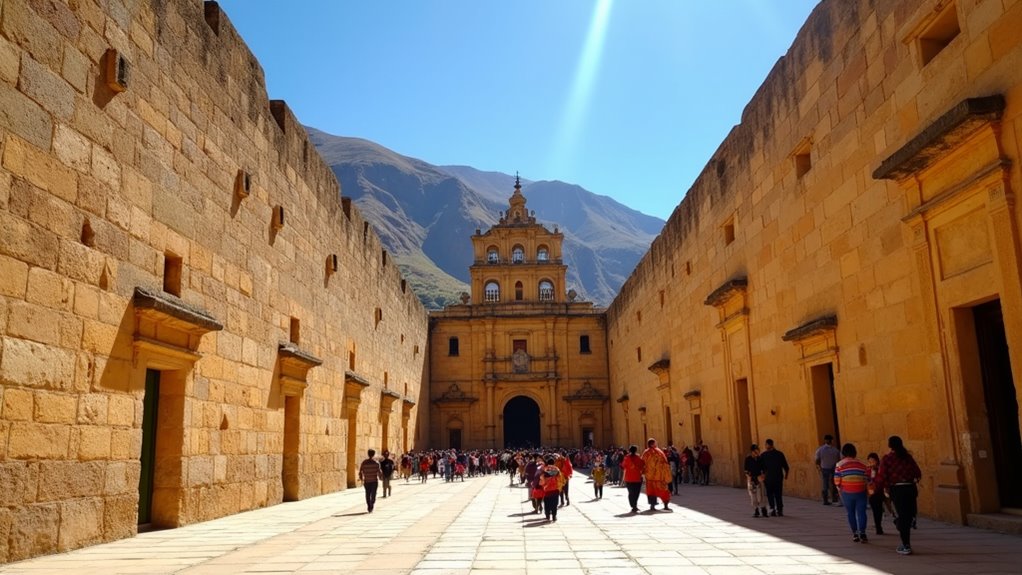
Where else can you witness the breathtaking collision of two civilizations literally built one atop the other? At Qoricancha, you’ll discover the Inca Empire’s most sacred solar temple, once nicknamed the “Golden Temple” for its walls lined with precious metal sheets.
The Spanish built Santo Domingo Convent directly over this spiritual nucleus of Tawantinsuyo, creating today’s fascinating hybrid complex.
You’ll marvel at the surviving andesite walls with their earthquake-resistant ashlar masonry—trapezoidal niches and inward-leaning structures that’ve withstood centuries of seismic activity while colonial buildings crumbled around them. The complex featured five fountains with secret water sources, each decorated with precious metals and carrying deep symbolic significance for Inca ceremonies.
Originally housing the gold idol Punchao and royal mummies, this astronomical observatory served as the empire’s religious and political center.
Visit early morning to appreciate the masterful stonework without crowds overwhelming this testimonial to Inca engineering brilliance.
Climb to Sacsayhuamán Fortress for Panoramic Views
Just two kilometers north of Cusco’s center, Sacsayhuamán’s colossal zigzag walls rise from an Andean hilltop like the spine of a sleeping giant. You’ll witness 15th-century Inca engineering mastery where stones weighing up to 200 tons interlock without mortar, creating earthquake-resistant fortifications that’ve endured five centuries.
The 45-minute uphill walk from Plaza de Armas rewards you with sweeping panoramic views over Cusco’s terracotta rooftops and surrounding valleys. You’ll clearly see the city’s puma-shaped layout, with Sacsayhuamán forming the head in Inca cosmology. The fortress’s impressive walls extend over 540 meters with their distinctive zigzag design featuring 22 protruding angles that resemble massive puma teeth.
Purchase your Boleto Turístico for site access and arrive during late afternoon for prime lighting. The 3,701-meter altitude demands proper acclimatization, so take frequent breaks.
Hawks often soar overhead, echoing the fortress’s Quechua name meaning “place where the hawk is satiated.”
Take the Archaeological Circuit to Q’enqo, Puka Pukara, and Tambomachay
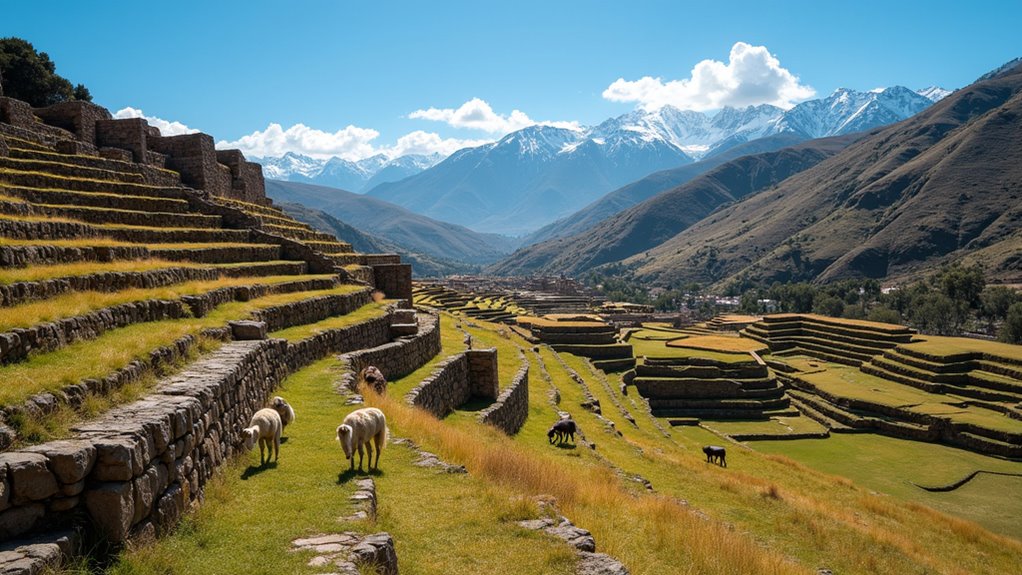
Beyond Sacsayhuamán’s towering walls, three remarkable archaeological sites await your discovery along the northeastern circuit from Cusco. Start at Q’enqo, where you’ll explore intricate zigzag channels carved into natural rock formations that once channeled chicha during Inca ceremonies. Navigate the underground labyrinth of tunnels and chambers where priests performed sacred rituals. The site features an astronomical observatory used by the Incas to track solstices and equinoxes.
Continue to Puka Pukara, the “Red Fortress” that served as a strategic military outpost. You’ll appreciate its defensive position overlooking the Sacred Valley route while examining the terraced walls and administrative quarters.
Finish at Tambomachay, the royal water sanctuary featuring perfectly engineered fountains that still flow today. The site’s polygonal masonry showcases Inca hydraulic mastery. Purchase the Cusco Tourist Ticket to access all three sites efficiently in one day.
Plan Your Day Trip to Machu Picchu
While Machu Picchu sits just 70 miles from Cusco, reaching Peru’s crown jewel requires careful planning and early morning commitment for a successful day trip.
You’ll need to depart your hotel by 5:00 AM to catch early trains from Ollantaytambo station, following a 1.5-2 hour road transfer. The train journey takes another 1.5 hours to Aguas Calientes, then a 25-30 minute shuttle bus climbs to the entrance. For those seeking adventure, you can opt to hike the final stretch from Aguas Calientes, which takes 1.5-2 hours instead of taking the bus.
Book your entry tickets online well in advance, especially during high season (May-September) when sellouts occur frequently. Choose Circuit 1-A, 1-B, 1-C, or 1-D for access to Guardian’s Hut viewpoints and classic photo opportunities.
Allow 2-4 hours for exploration before catching afternoon return trains around 2:30-4:00 PM, arriving back in Cusco by early evening.
Explore the Sacred Valley’s Pisac Ruins and Market
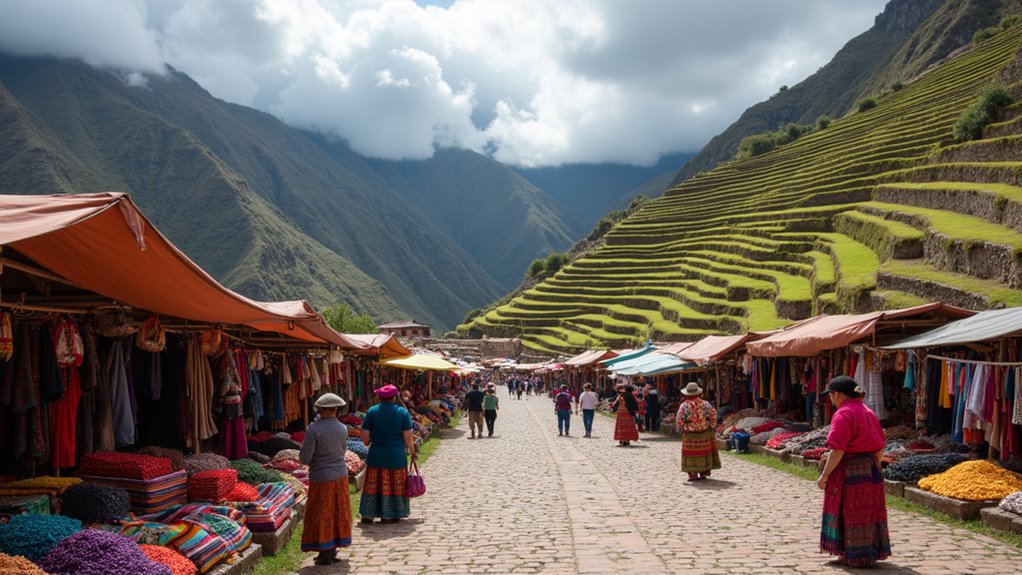
Perched dramatically on a ridge 33 kilometers from Cusco, the Pisac ruins represent one of the Sacred Valley‘s most spectacular archaeological sites.
Here, Emperor Pachacuti’s 15th-century royal estate showcases the engineering brilliance that defined the Inca Empire. You’ll discover dozens of curved agricultural terraces that follow the mountain’s contours, creating microclimates that supported diverse crops.
The Temple of the Sun features precision-cut stonework with astronomical alignments, while over 20 watchtowers demonstrate the site’s strategic defensive importance.
Explore distinct sectors like Intihuatana’s ceremonial complex with its carved ritual stone and liturgical fountains.
The clifftop cemetery contains thousands of tombs, offering remarkable insights into Inca burial practices while providing panoramic Sacred Valley views. At 9,751 feet elevation, Pisac sits lower than Cusco, making it an ideal acclimatization stop for visitors adjusting to high altitude conditions.
Visit Ollantaytambo’s Royal Inca Complex
Continuing your Sacred Valley exploration, Ollantaytambo stands as the most impressive living Inca town where you’ll walk the same stone streets that emperors once traversed. This royal estate of Pachacuti combines breathtaking architecture with strategic military positioning, making it essential for understanding Inca engineering mastery.
Climb the steep terraces to reach Temple Hill’s crown jewel—the Temple of the Sun, constructed from six massive rose-colored monoliths fitted without mortar. You’ll notice unfinished blocks scattered along pathways, frozen in time by Spanish invasion.
The 17 superimposed terrace levels showcase advanced agricultural techniques while doubling as defensive fortifications. Visit during sunset when the terraces cast long shadows for the most dramatic photographic opportunities and peaceful atmosphere.
Don’t miss the functioning hydraulic system channeling water through original Inca canals, and spot the granaries on Pinkuylluna Hill that once stored provisions for the empire.
Hunt for the Perfect Shot at Rainbow Mountain
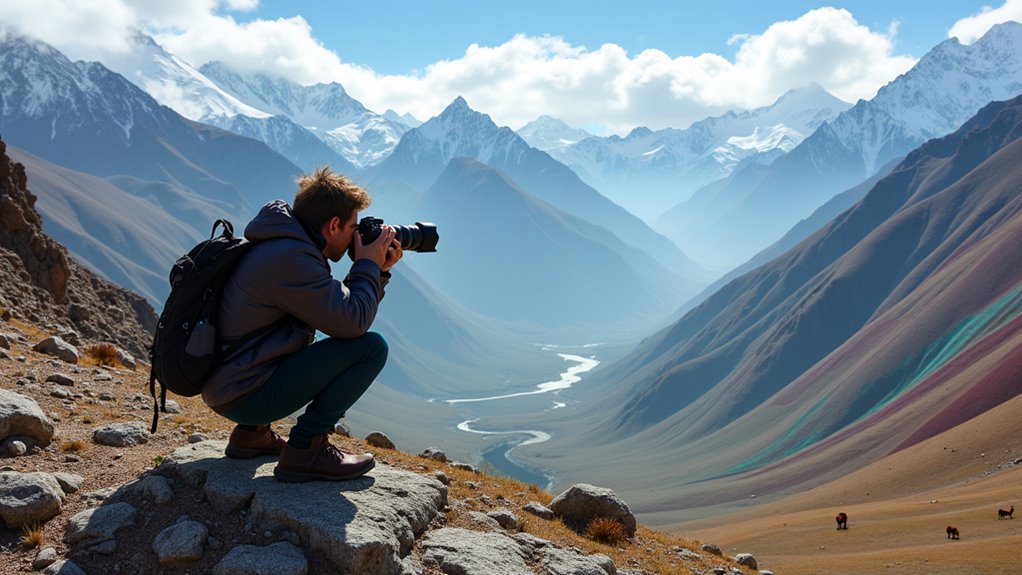
Beyond the Sacred Valley’s ancient ruins, Rainbow Mountain presents Peru’s most Instagram-worthy challenge where you’ll trade comfortable cobblestones for oxygen-thin air at 17,060 feet above sea level.
You’ll need three hours driving southeast from Cusco, followed by a demanding 4-5 mile trek through the Vilcanota range near Ausangate’s glaciated peaks.
Plan your arrival for sunrise when softer light reveals up to fourteen distinct mineral-created hues across Vinicunca’s sedimentary layers.
The dry season from April through November offers clearest skies, though expect 1,000+ daily visitors during peak months.
Acclimatize in Cusco beforehand—altitude sickness strikes hard above 5,000 meters.
Pack layers for freezing temperatures and intense UV exposure. The mountain’s spectacular rainbow appearance results from iron-rich red clays, calcium carbonate whites, and ferromagnesium-rich green layers deposited over 24 million years of geological formation.
Consider horse rentals if you’re struggling with the elevation during this physically demanding high-altitude photography adventure.
Experience Andean Wildlife at Cochahuasi Animal Sanctuary
While Rainbow Mountain tests your endurance against Peru’s highest peaks, Cochahuasi Animal Sanctuary offers an intimate encounter with Andean wildlife just 30 minutes from Cusco’s center. This non-profit rescue center houses 89+ animals, including endangered Andean condors, bears, and pumas rescued from trafficking and abuse.
You’ll spend 45 minutes to 2.5 hours exploring clean, spacious enclosures with guided explanations of each animal’s rescue story. Watch condors in flight therapy, observe powerful pumas up close, and interact with friendly llamas and alpacas. The sanctuary even creates prosthetic beaks for injured birds as part of their rehabilitation efforts.
Unlike traditional zoos, Cochahuasi prioritizes rehabilitation and release when possible.
Take a S/5 collectivo toward Pisac and exit at km 22. Entry costs S/15-25 including your guide, directly funding animal care and conservation efforts.
Time Your Visit for Inti Raymi Festival of the Sun
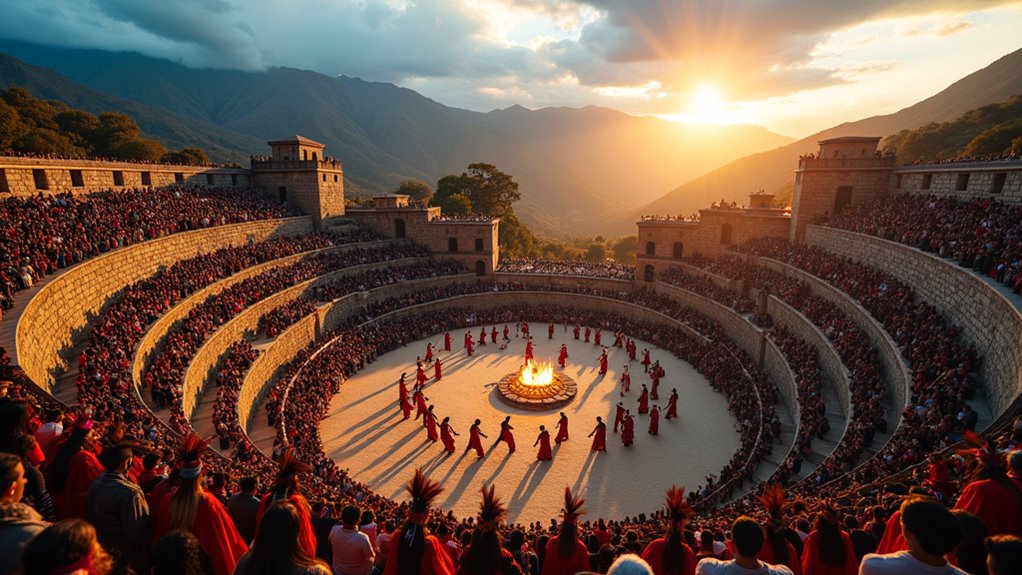
If you’re seeking Peru’s most spectacular cultural celebration, Inti Raymi transforms Cusco into a living theater every June 24th. This ancient Inca ceremony honoring the Sun God draws 60,000-80,000 spectators to witness elaborate reenactments across three sacred locations.
Arrive by June 21st for altitude acclimatization—Cusco sits at 11,150 feet. The eight-hour festival begins at Qoricancha temple, moves through Plaza de Armas, and culminates at Sacsayhuamán fortress with dramatic rituals and symbolic sacrifices. Originally established by Pachacútec in the 15th century, this celebration was banned for centuries before its revival in 1944.
Secure grandstand tickets months ahead—only 3,500 seats exist at the main venue. Free hillside viewing requires arriving before dawn to claim spots. June’s dry season promises clear skies, but pack warm layers for cool mountain temperatures.
Book accommodations early, as this period represents Cusco’s peak tourism season.
The Sum Up
You’ll find Cusco’s magic lies in balancing iconic sites with hidden gems. Don’t rush through the archaeological wonders—spend quality time at each location to truly absorb their significance. Book your Rainbow Mountain trek early, as permits sell out quickly. Pack layers for the unpredictable Andean weather, and give yourself at least three days to acclimate properly. These experiences will transform your understanding of Peru’s incredible cultural heritage and natural beauty.