
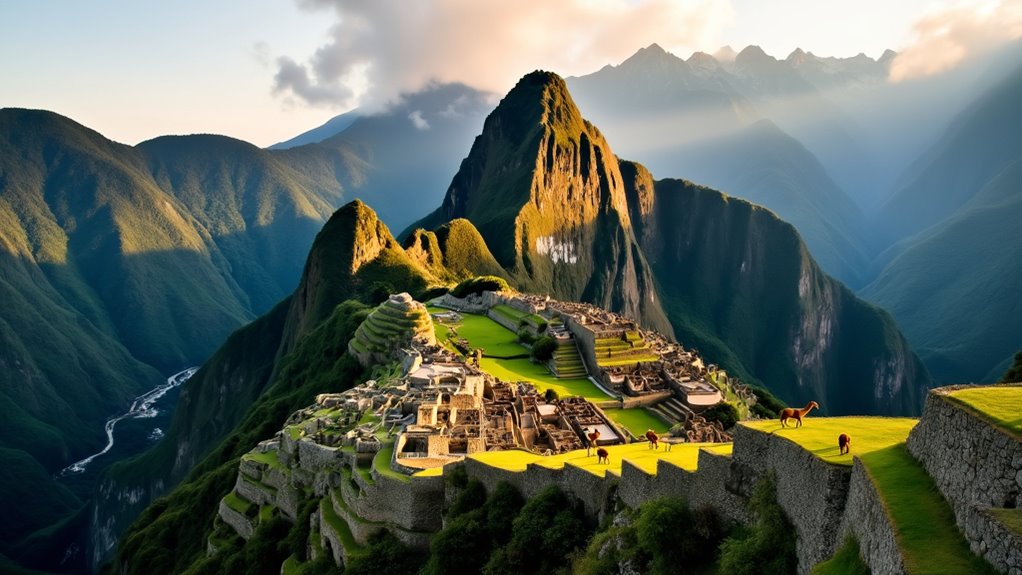
Book your Machu Picchu tickets 3-6 months ahead, especially for Huayna Picchu summit permits. Spend 2-3 days acclimatizing in Cusco before your visit. Choose Circuit 1 for iconic Guardian’s House photos and arrive early to beat the 5,000+ daily visitors. Stay overnight in Aguas Calientes for easier morning access. Hire a licensed guide and target shoulder seasons like October for ideal weather. Pack layers and comfortable hiking shoes for exploring additional trails like the Inca Bridge and Sun Gate that’ll elevate your ancient citadel experience.
- Book Your Tickets and Permits Several Months Ahead
- Plan for 2-3 Days in Cusco or Sacred Valley to Acclimatize
- Choose Circuit 1 for the Classic Postcard Photo at Guardian’s House
- Wake Up Early for Your Entry Slot to Beat Crowds and Heat
- Add Huayna Picchu or Machu Picchu Mountain for Summit Views
- Pack Smart With Layers and Stay Within the Strict Item Restrictions
- Hire a Licensed Guide at the Gate or Book One in Advance
- Take the Train to Aguas Calientes and Stay at Least One Night
- Target Shoulder Season Months for Better Weather and Fewer Crowds
- Walk the Inca Bridge and Sun Gate if Your Circuit Allows
- The Sum Up
Book Your Tickets and Permits Several Months Ahead
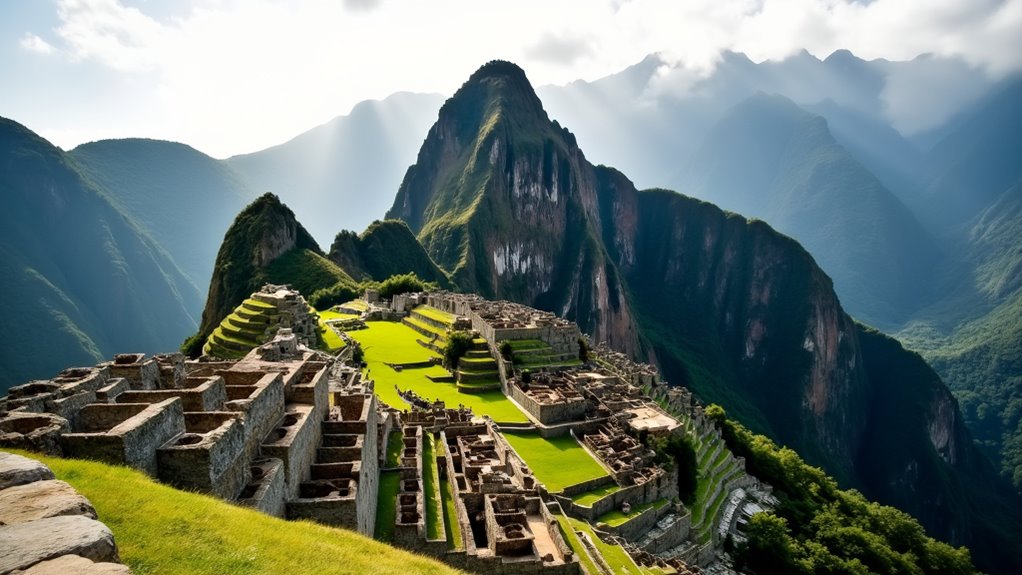
Since Machu Picchu caps daily visitors at roughly 4,500–5,600 people and receives over 1.5 million travelers annually, you’ll need to secure your tickets 3–6 months ahead for peak season visits from May through September.
The government’s strict daily quotas protect the ruins but create frequent sell-outs.
Don’t rely on last-minute purchases at the Aguas Calientes office—you’ll likely face an extra day in town with limited circuit options. In-person sales are restricted to just 1,000 tickets daily for the following day, making walk-up purchases extremely risky during busy periods.
Instead, book early to lock in your preferred date, circuit, and time slot.
Popular choices like Circuit 2 and Huayna Picchu combinations sell out fastest, requiring booking at the longer end of the advance window.
Early booking prevents missed visits and disappointing compromises.
Plan for 2-3 Days in Cusco or Sacred Valley to Acclimatize
Before rushing to Machu Picchu, you’ll need 2–3 days at altitude to let your body adjust and avoid the headaches, nausea, and fatigue that plague unprepared visitors. Cusco sits at 11,150 feet, while Sacred Valley towns like Urubamba and Ollantaytambo offer gentler elevations around 8,900–9,500 feet.
Start in the Sacred Valley for easier acclimatization, then move to higher elevations gradually. Spend your first day with light activities only—no intense hiking. Stay hydrated, eat light meals, and limit alcohol during your first 48 hours.
Consider this strategy: arrive in Cusco, immediately transfer to Sacred Valley for two nights, then visit Machu Picchu. Save Cusco exploration for after your trek when you’re fully adjusted. Many tour operators offer overnight stays in Aguas Calientes before your Machu Picchu visit, allowing for better altitude adjustment and early morning access to the citadel.
Choose Circuit 1 for the Classic Postcard Photo at Guardian’s House
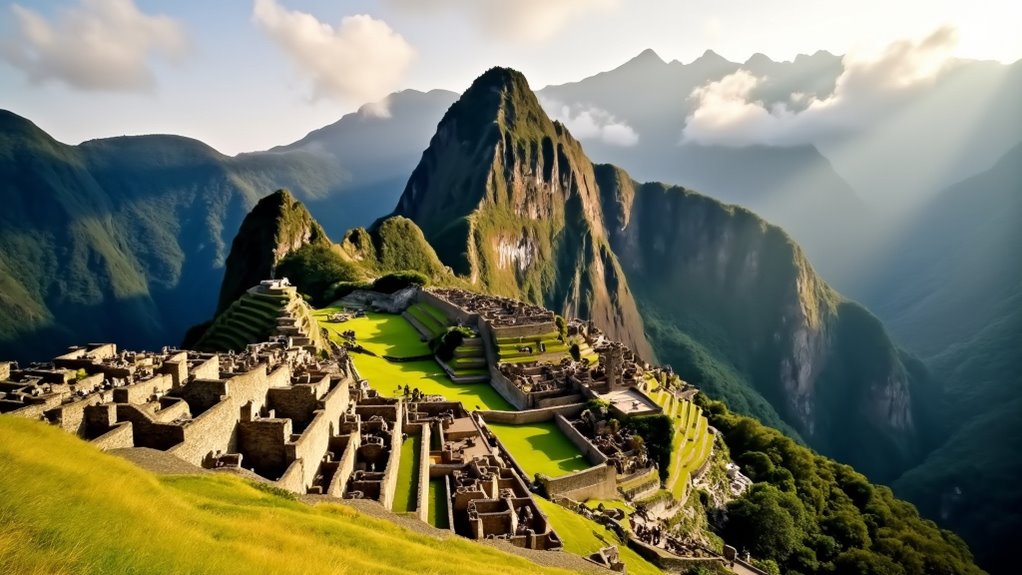
While Machu Picchu offers four different circuit routes, you’ll want to book Circuit 1 if capturing that iconic postcard shot tops your priority list. This panoramic route provides exclusive access to the Guardian’s House viewpoint—the exact spot where those classic promotional photos are taken.
You’ll reach the site’s highest accessible point at 2,450 meters, framing the complete citadel with Huayna Picchu mountain rising dramatically behind the ruins.
Expect a 10-15 minute uphill walk from the main entrance to reach this coveted viewpoint. The upper platform accommodates only 30-40 people simultaneously, so arrive early to secure prime positioning.
Security staff may limit your time to 15 minutes during peak hours between 8:00-10:00 AM when crowds converge on this must-see panoramic spot. The structure features three large windows that were strategically designed to monitor the ancient entrance routes and drawbridge below.
Wake Up Early for Your Entry Slot to Beat Crowds and Heat
Although Machu Picchu’s gates open at 6:00 AM, you’ll need to wake up well before dawn to maximize your advantage over the daily influx of 4,000+ visitors. Queue for buses around 5:30 AM from Aguas Calientes to secure earliest entry slots when the site remains relatively quiet until 8:30 AM.
Early arrival delivers multiple benefits beyond crowd avoidance. You’ll experience cooler temperatures before stone surfaces retain heat, while reduced UV exposure protects against intense high-altitude sun. Morning mist often burns off by 9-10 AM, creating ideal photography conditions.
Current regulations require time-stamped tickets with specific entry windows, making early slots strategically valuable. Peak season sees 5,000+ daily visitors, so dawn departures ensure schedule reliability despite limited bus capacity and transport constraints. The site welcomed 1.5 million visitors in 2024, marking a full recovery to pre-pandemic levels.
Add Huayna Picchu or Machu Picchu Mountain for Summit Views
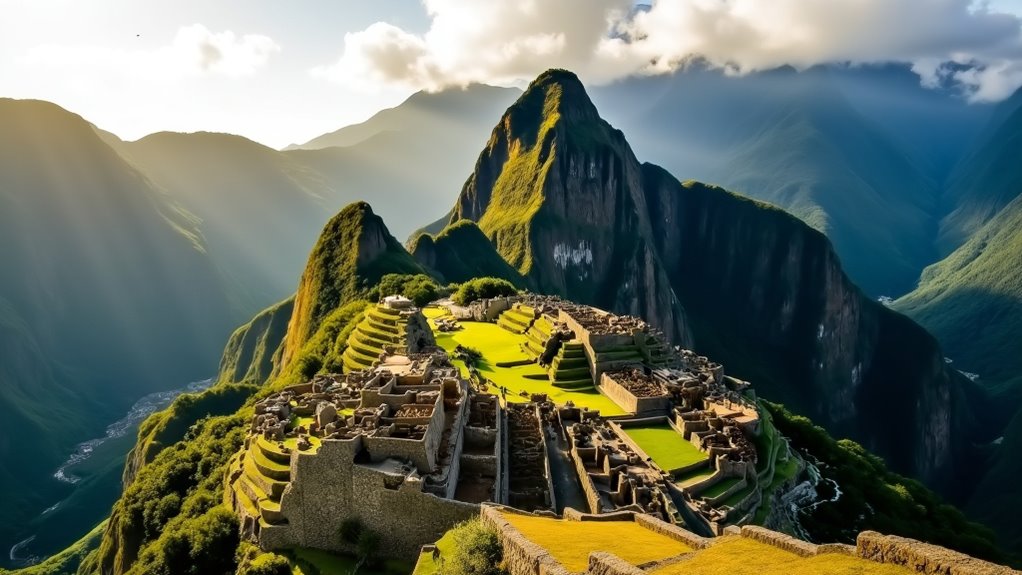
After securing your early morning entry to the citadel, you’ll want to maximize your visit by adding one of two summit hikes that transform your Machu Picchu experience from ground-level exploration to breathtaking aerial perspectives.
Choose Huayna Picchu for the classic postcard view looking down over the entire citadel. This challenging 1.5-2.5 hour climb features steep 60° inclines and narrow paths with sheer drop-offs, plus access to the Temple of the Moon.
Alternatively, select Machu Picchu Mountain for broader panoramic vistas of surrounding peaks and valleys. This moderate 2.5-3.5 hour hike offers steadier 30° inclines and a larger summit area perfect for photography. The dry season from May to September provides the clearest skies for optimal views, though it attracts more visitors.
Both require advance permits limited to 300-400 daily visitors, so book early alongside your citadel entry.
Pack Smart With Layers and Stay Within the Strict Item Restrictions
Since Machu Picchu’s mountain climate shifts dramatically throughout the day—from chilly pre-dawn temperatures around 5°C to warm afternoon highs near 24°C—you’ll need strategic layering that adapts quickly while fitting within the site’s strict 20-25 liter backpack limits.
Pack a moisture-wicking base layer, thin fleece mid-layer, and compact waterproof shell. Choose quick-dry hiking pants and packable accessories like a hat and buff. The high humidity and sudden weather changes from sun to fog make breathable, multi-use items essential. During the dry season months of April through October, you can expect clearer skies and less rainfall, making this the optimal time for outdoor exploration.
Stay within entry restrictions by avoiding tripods, drones, umbrellas, and large camera gear. Leave big backpacks at hotel storage in Aguas Calientes. Bring only small snacks, water in non-glass containers, and minimal electronics to speed through security checks.
Hire a Licensed Guide at the Gate or Book One in Advance
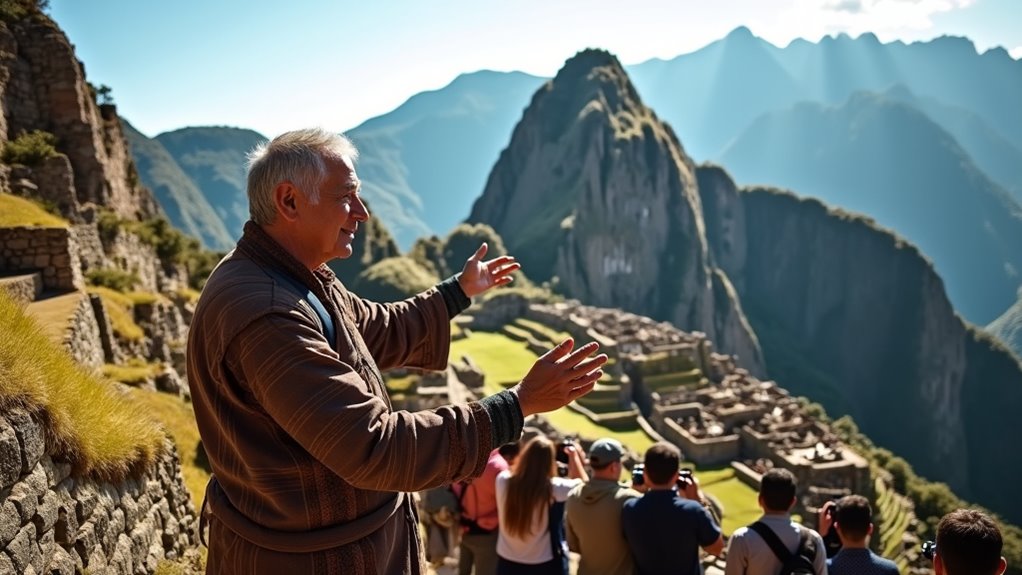
Once you’ve sorted your gear and understand the entry requirements, you’ll need to secure a licensed guide—and this isn’t optional anymore. Updated 2024-2025 regulations mandate professional guides with tourism degrees for all Machu Picchu circuits.
You’ve got two options: hire at the gate or book in advance. At the entrance, licensed guides wait near ticket control offering shared group tours at lower costs, though availability gets tight during peak months (June-August). Look for official ID badges—blue cards for COLITUR university-trained guides, vertical cards for GERCETUR institute-trained ones.
Booking ahead through Cusco agencies costs $150-$300 per group but includes logistics coordination. Either way, expect 2-3 hour tours with groups capped at 10 visitors per guide. Guide quality significantly impacts your overall experience at this once-in-a-lifetime destination.
Take the Train to Aguas Calientes and Stay at Least One Night
While you can technically reach Machu Picchu in a long day trip from Cusco, taking the train to Aguas Calientes and staying overnight transforms your visit from a rushed marathon into a manageable experience.
You’ll catch early morning buses to Machu Picchu, avoiding crowds and securing the best photo opportunities.
Book your train from Ollantaytambo rather than Cusco—the journey’s only 1h 45m versus 4h 30m, and you’ll experience less altitude exposure.
PeruRail’s Expedition ($60-$85) and Inca Rail’s Voyager ($55-$70) offer budget-friendly options with scenic Sacred Valley views.
Reserve tickets well in advance, especially during high season. Pack light since train companies have strict luggage policies with PeruRail allowing only 11 pounds and Inca Rail permitting 17 pounds.
Aguas Calientes provides accommodations ranging from hostels to luxury hotels, plus time to explore thermal baths and local markets before your big day.
Target Shoulder Season Months for Better Weather and Fewer Crowds
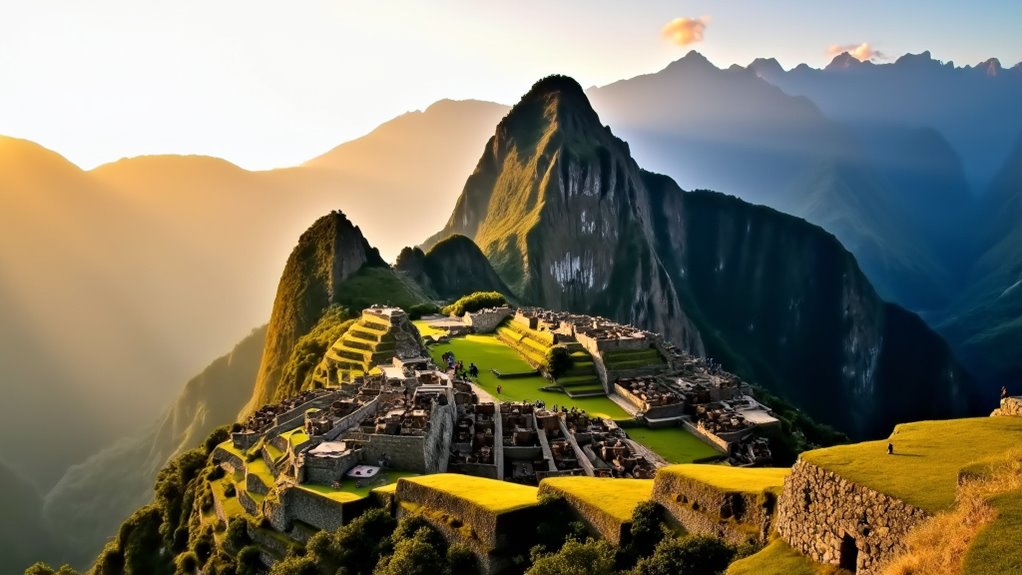
Although Machu Picchu draws visitors year-round, targeting shoulder season months—April, May, September, October, and November—delivers the sweet spot between favorable weather and manageable crowds.
You’ll experience daytime temperatures around 21–22°C (70–72°F) with mostly clear skies, while avoiding the peak season chaos of June through August.
October stands out as particularly ideal, offering low rainfall (just 94mm), pleasant temperatures, and excellent hiking conditions for the Inca Trail and Salkantay trek.
You’ll find thinner crowds on major trails and quieter access to Huayna Picchu.
These months also provide prime photography conditions with clear skies and lush, green landscapes. Early mornings during these periods offer golden-lit views with serene, tranquil experiences as the sun illuminates the ancient ruins.
November marks the shift toward rainy season but still offers manageable light showers and fewer travelers than peak months.
Walk the Inca Bridge and Sun Gate if Your Circuit Allows
If your Machu Picchu circuit includes upper-sector access, you’ll want to prioritize walks to both the Inca Bridge and Sun Gate—two remarkable archaeological features that showcase the site’s defensive ingenuity and ceremonial importance.
Both require separate registrations at on-site control points, with limited daily quotas and possible weather closures.
The Inca Bridge trail takes 40-60 minutes round-trip, leading to a viewpoint of the narrow stone pathway carved into steep cliffs. This defensive choke point once controlled western access through removable wooden planks. The bridge offers stunning views of the Urubamba River far below in the valley.
The Sun Gate hike spans 45-75 minutes round-trip, reaching Machu Picchu’s monumental eastern entrance where Inca Trail trekkers traditionally first glimpse the citadel.
You’ll enjoy panoramic views of the ruins and surrounding Andes from this ceremonial threshold.
The Sum Up
You’ve got everything you need to make your Machu Picchu visit unforgettable. Book those permits early, give yourself time to acclimatize, and don’t skip the guide—you’ll miss essential history without one. Arrive early, choose your circuit wisely, and consider adding a mountain hike if you’re up for it. Stay overnight in Aguas Calientes to maximize your time, and remember that shoulder season offers the best balance of weather and crowds.