
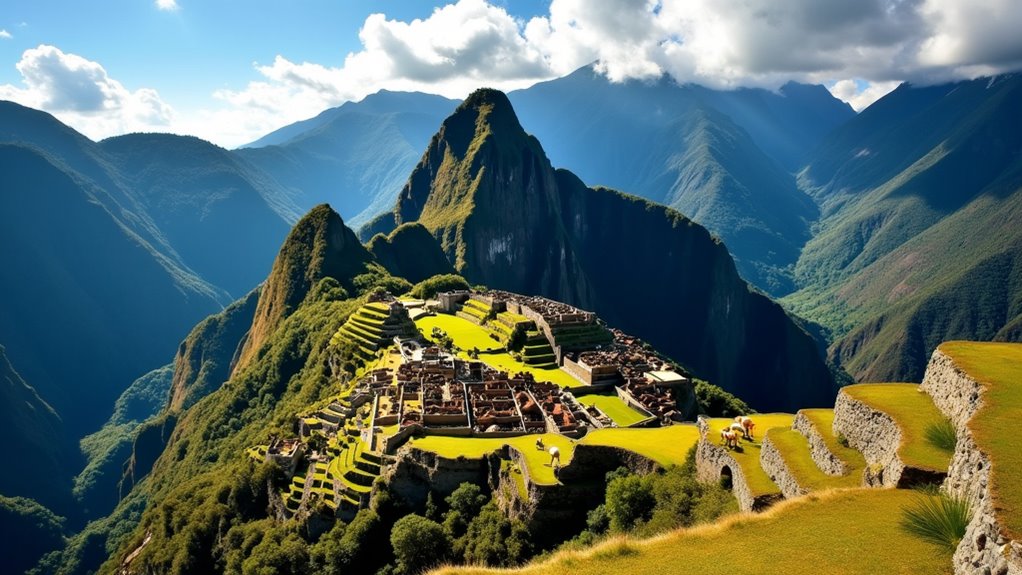
You’ll discover Peru’s incredible diversity through twelve unforgettable experiences: explore Machu Picchu at sunrise, wander Cusco’s ancient streets and San Pedro Market, take scenic trains through Sacred Valley to Ollantaytambo, and hike Pisac’s terraced ruins. Navigate Lake Titicaca’s floating reed islands, track wildlife in Tambopata’s rainforest, and surf Peru’s northern coast while sampling fresh ceviche. Don’t miss Lima’s world-renowned restaurants, the magical water circuit fountains, Arequipa’s colonial architecture, Colca Canyon’s soaring condors, and Amazon river cruises that reveal even more hidden treasures.
- Explore Machu Picchu at Dawn Before the Crowds Arrive
- Wander Cusco’s San Pedro Market and Inca Stone Streets
- Take the Train Through Sacred Valley to Ollantaytambo
- Eat Your Way Through Lima’s World-Class Restaurant Scene
- Navigate the Floating Reed Islands of Lake Titicaca
- Spot Andean Condors Soaring Over Colca Canyon
- Cruise the Amazon River From Iquitos
- Walk Arequipa’s White Stone Colonial Center
- Hike the Pisac Ruins Above Sacred Valley
- Experience Lima’s Magic Water Circuit After Dark
- Track Wildlife in Tambopata National Reserve
- Surf and Sample Ceviche on Peru’s Northern Coast
- The Sum Up
Explore Machu Picchu at Dawn Before the Crowds Arrive
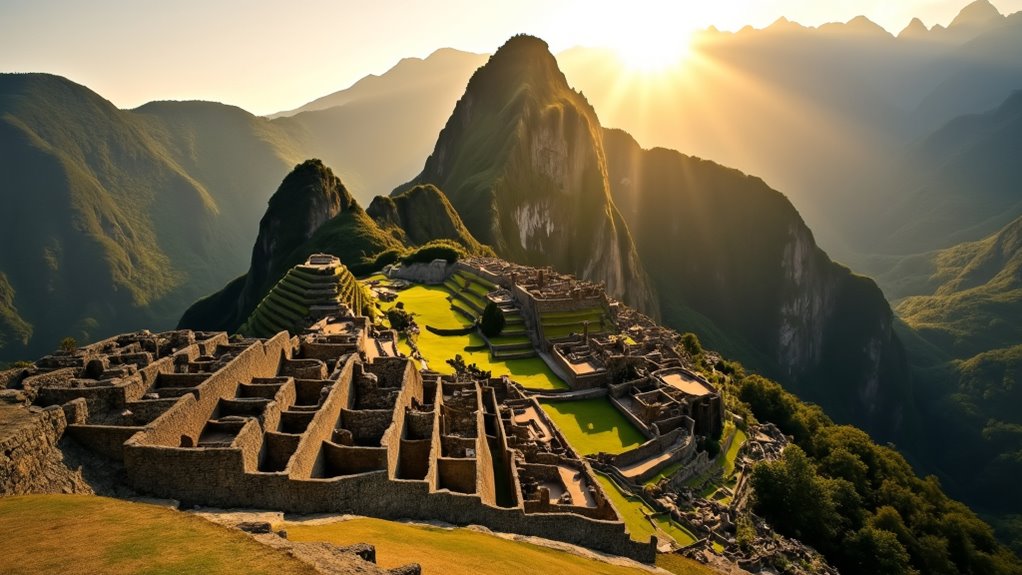
Although Machu Picchu opens at 6:00 AM daily, you’ll need to secure your sunrise entry tickets weeks or months in advance, especially during peak season from May through August. Stay overnight in Aguas Calientes to catch the first buses departing after 5:00 AM.
You’ll reach the citadel by 5:45 AM, just as sunrise occurs between 5:50-6:30 AM depending on season.
Head directly to the Guardhouse mirador for iconic postcard views, or position yourself on the upper terraces near the main plaza for unobstructed eastern views.
The early morning hours offer peaceful exploration, cooler temperatures, and dramatic lighting perfect for photography. Professional guided tours typically last 2-2.5 hours and provide expert insights into the archaeological significance of key sites and viewpoints.
You’ll experience mystical mist rising from the Urubamba River while avoiding the crowds that arrive later.
Wander Cusco’s San Pedro Market and Inca Stone Streets
San Pedro Market sits just four blocks southwest of Cusco’s main plaza, where you’ll discover the city’s authentic commercial heart operating since 1925. Walk the Mantas-Marqués-Santa Clara route through streets lined with Inca stonework to reach this sprawling covered market.
You’ll find Cusqueños shopping for daily essentials among stalls selling fresh produce trucked in from surrounding valleys, herbal remedies, coca leaves, and exotic highland fruits. Sample cheap set menus, soups, and chicharrones while exploring aisles displaying whole animal cuts and traditional Andean grains like quinoa and chuño. The market also features vendors wearing traditional Andean clothing, creating an authentic cultural atmosphere throughout your visit.
The market opens daily from 6:30 a.m. to 6:30 p.m., with Sunday morning hours only. Plan 1-2 hours to experience this cultural hub showcasing Andean syncretism.
Take the Train Through Sacred Valley to Ollantaytambo
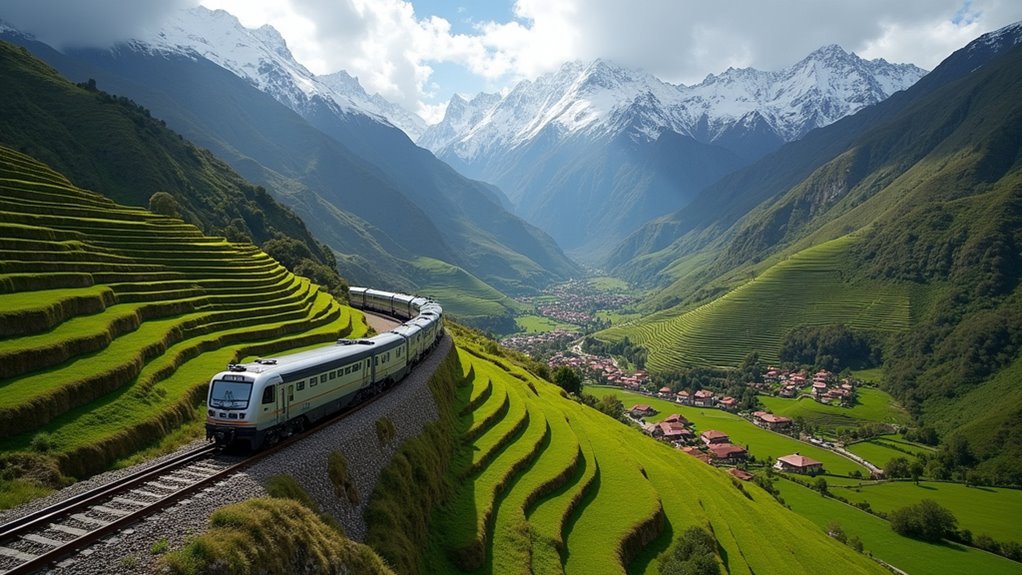
When you’re ready to journey toward Machu Picchu, the train route from Ollantaytambo offers Peru’s most scenic and convenient rail experience through the Sacred Valley.
You’ll reach Ollantaytambo station via a 1.5-2 hour road transfer from Cusco, then board trains operated by PeruRail or Inca Rail for the 1.5-2 hour segment to Aguas Calientes.
Choose from standard tourist services or premium options like Vistadome and Hiram Bingham, featuring panoramic windows and gourmet meals. For the ultimate luxury experience, the premium trains include an Observatory car where you can enjoy drinks while taking in the breathtaking Andean scenery.
The route follows the Urubamba River through narrowing valleys, past terraced fields and traditional villages beneath snow-capped Andean peaks.
Book tickets well in advance, especially during dry season (May-September).
Pack light—train companies enforce strict hand-luggage limits for this popular route.
Eat Your Way Through Lima’s World-Class Restaurant Scene
Lima’s culinary revolution has transformed Peru’s capital into a global gastronomic powerhouse, where you’ll find world-renowned restaurants alongside neighborhood gems serving authentic Peruvian flavors.
Start with fine-dining heavyweights like Maido (ranked No.1 in The World’s 50 Best Restaurants 2025) for cutting-edge Nikkei cuisine, or Central’s 17-course tasting menu mapping Peru’s ecosystems from coast to Amazon.
Experience iconic dishes at specialized spots: ceviche at La Mar, lomo saltado at Panchita, and chifa at Madam Tusan.
Structure your food crawl by neighborhood—Miraflores concentrates upscale venues and cevicherías, while Barranco offers creative bistros like Mérito. Book a private tour with local guides who can weave together culinary stops with historical context and personalized storytelling.
Don’t miss anticuchos (grilled beef heart) and ají de gallina for authentic criollo comfort food that defines Lima’s street-level dining culture.
Navigate the Floating Reed Islands of Lake Titicaca
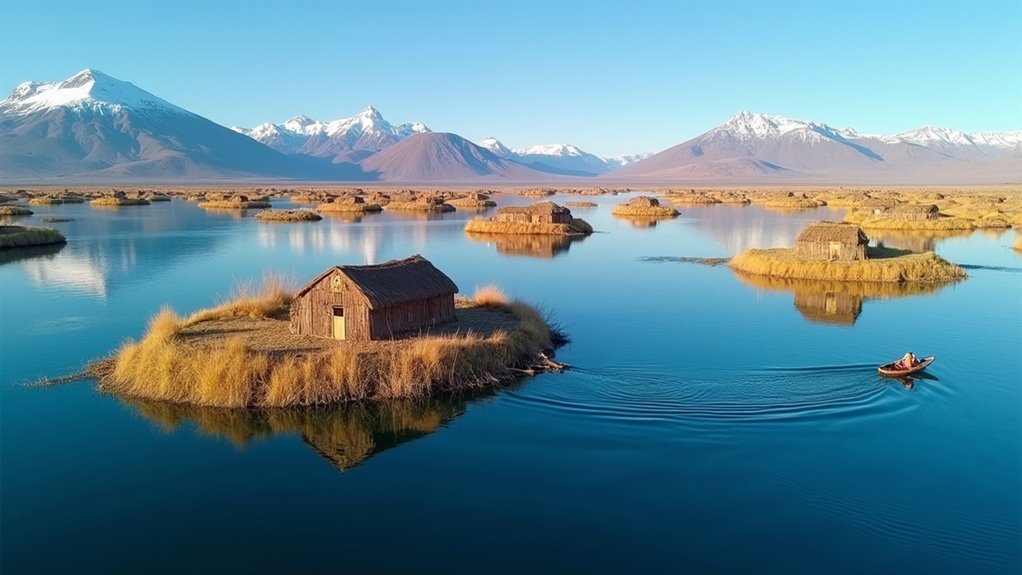
Where else can you walk on water and experience a living culture that predates the Inca Empire? Lake Titicaca’s floating reed islands offer exactly that adventure. You’ll boat 20-30 minutes from Puno to reach these remarkable totora reed constructions, where 1,200 Uros people maintain ancient traditions across 60-70 artificial islands.
At 3,810 meters above sea level, you’ll witness homes, boats, and entire communities built entirely from thick, buoyant reeds. The Uros constantly maintain these structures, adding fresh layers every few weeks as lower sections decompose. You can walk across spongy surfaces up to 12 feet thick, purchase traditional handicrafts, and take reed boat rides. Many homes now feature solar panels, blending traditional construction with modern amenities.
These floating refuges originally protected inhabitants from Inca invasions, demonstrating remarkable indigenous engineering that continues thriving today.
Spot Andean Condors Soaring Over Colca Canyon
Witnessing Andean condors glide effortlessly through Colca Canyon ranks among Peru’s most spectacular wildlife encounters. You’ll watch these massive birds—boasting wingspans up to 10.5 feet—soar at eye level from Cruz del Cóndor viewpoint, positioned 1,200 meters above the valley floor.
The canyon’s depth of 3,400 meters creates powerful thermals that lift condors thousands of meters without flapping. Arrive before 8 a.m. during the dry season (April–November) for prime viewing conditions when temperature gradients produce stronger updrafts.
These New World vultures can live up to 75 years and hold sacred significance in Andean cosmology, representing the heavens in Inca tradition. Local Collagua communities have inhabited this region for centuries, maintaining deep spiritual connections to these magnificent birds. Alternative viewpoints along the Chivay–Cabanaconde road offer less crowded perspectives of this extraordinary wildlife spectacle.
Cruise the Amazon River From Iquitos
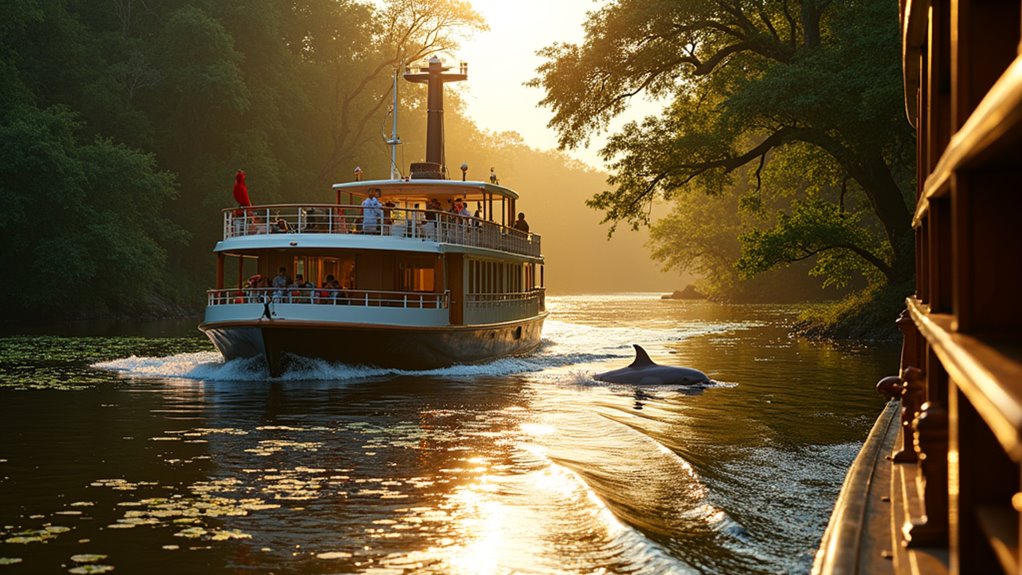
Deep in Peru’s northern rainforest, Iquitos serves as your launching point for Amazon River cruises that penetrate the heart of one of Earth’s most biodiverse ecosystems. You’ll board luxury vessels holding 28-40 passengers at Nauta, 1.5 hours from Iquitos by road.
These floating boutique hotels feature air-conditioned suites, panoramic windows, and all-inclusive packages covering meals, excursions, and transfers.
Daily skiff expeditions take you through Pacaya-Samiria National Reserve‘s waterways, where you’ll spot pink river dolphins, sloths, monkeys, and hundreds of bird species. You’ll participate in 2-3 daily excursions including swimming with dolphins, piranha fishing, birdwatching, hiking, and cultural interactions with local indigenous communities.
Choose between 3-4 day samplers or immersive 7-8 day journeys.
High-water season (December-May) offers flooded-forest exploration, while low-water months provide jungle hiking opportunities.
Expect to invest $3,000-5,000 for shorter cruises.
Walk Arequipa’s White Stone Colonial Center
The colonial heart of Arequipa unfolds in luminous white sillar stone, where over 500 heritage buildings create one of South America’s most architecturally cohesive historic centers. You’ll walk through 49 original Spanish grid blocks, admiring the UNESCO-protected integration of European baroque designs with indigenous masonry techniques.
The pale volcanic stone provides earthquake resistance while creating stunning visual unity across churches, casonas, and public buildings.
Don’t miss the imposing Cathedral dominating Plaza de Armas, with its neoclassical façade and Carrara marble altar. Explore Santa Catalina Monastery, a walled city-within-a-city featuring vibrant painted cloisters and narrow colonial alleys. The monastery’s architecture spans five centuries, with styles ranging from the 16th to the 19th centuries.
The San Lázaro district preserves pre-Hispanic hamlet layouts, while three towering volcanoes—Misti, Chachani, and Pichu Pichu—frame your exploration of this remarkable “White City.”
Hike the Pisac Ruins Above Sacred Valley
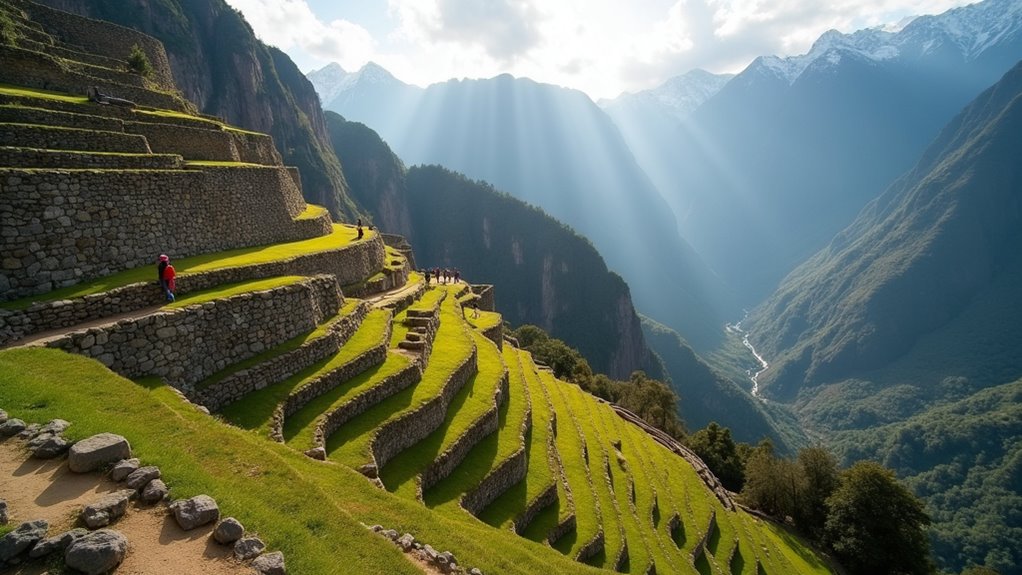
From Arequipa’s colonial splendor, Peru’s ancient Inca legacy beckons in the Sacred Valley, where Pisac’s mountainside ruins offer one of the country’s most rewarding archaeological hikes. Perched 3,125–3,525 meters above sea level, these intact ruins rival Ollantaytambo in significance.
You’ll face a challenging 610-meter climb from Pisac town, taking about 1.5 hours for acclimatized hikers. Alternatively, take a taxi to the upper entrance and hike downhill through the complex—a smart strategy that lets you explore without exhausting yourself on the ascent.
The route winds through sophisticated agricultural terraces, ceremonial areas including the Intihuatana complex, and narrow stone tunnels. From the 3,525-meter Mirador viewpoint, you’ll enjoy panoramic Sacred Valley vistas. Many visitors combine their ruins exploration with browsing the vibrant Pisac Market, where local artisans sell traditional crafts and textiles in this renowned Inca marketplace setting.
Allow half a day to properly traverse this remarkable archaeological site.
Experience Lima’s Magic Water Circuit After Dark
While Peru’s ancient ruins showcase the country’s archaeological treasures, Lima’s Magic Water Circuit transforms the capital into a modern spectacle where technology meets artistry in Parque de la Reserva.
You’ll witness 13 choreographed fountains combining colored lights, lasers, and music in this urban water show near Estadio Nacional. The highlight’s the 15-minute Fantasy Fountain multimedia performance featuring projections on water screens.
Visit Wednesday through Sunday from 3:00 pm to 10:30 pm, with main shows at 7:15 pm, 8:15 pm, and 9:30 pm. Arrive around dusk to experience fountains in daylight before the full nighttime spectacle begins. The park holds the Guinness World Record for largest fountain set in a public park.
Standard admission costs S/4-5 for adults, with children under 5 entering free. Position yourself centrally facing the main fountain for ideal viewing, and expect 2-4 hours for the complete circuit experience.
Track Wildlife in Tambopata National Reserve

Where else can you encounter 600+ bird species, giant river otters, and jaguars within a single protected area? Tambopata National Reserve‘s 270,000+ hectares of lowland Amazon rainforest deliver some of the world’s highest species density for its size.
You’ll maximize wildlife encounters through strategic timing and locations. Visit macaw clay licks at dawn to witness hundreds of colorful parrots feeding on mineral-rich clay. Paddle oxbow lakes like Lake Sandoval for giant river otter sightings and hoatzin observations. Take guided night walks to spot tarantulas, poison dart frogs, and nocturnal mammals.
Book guided dawn and dusk hikes when primates and birds are most active. Use canopy walkways for elevated monkey troop viewing. Look for the towering kapok trees, which can reach 60-70 feet tall and serve as crucial wildlife habitat throughout the forest canopy. Rely on local naturalist guides for track identification and safe navigation through this biodiverse wilderness.
Surf and Sample Ceviche on Peru’s Northern Coast
Peru’s northern coast delivers year-round warm water surfing and world-class ceviche in a tropical setting that contrasts sharply with the country’s colder southern breaks.
You’ll find excellent waves in Tumbes and Piura departments, where Máncora serves as the main surf hub with its friendly left-hand point break and glassy morning conditions. The area works for all skill levels—beginners can learn on Máncora’s mellow sandy-bottom waves, while advanced surfers tackle powerful barrels at nearby Lobitos, Piscinas, and Baterías.
March through November offers the most consistent swells. The region maintains a low-key atmosphere with minimal crowds, allowing surfers to share waves with just a few locals.
After your sessions, hit beachfront cevicherías in Máncora, Los Órganos, or Lobitos for ultra-fresh Pacific fish prepared in classic lime-chile marinades by local fishing communities.
The Sum Up
You’ve got enough adventures here to fill multiple trips to Peru. Don’t try cramming everything into one visit—you’ll burn out and miss the details that make each experience special. Pick three to five activities that match your interests and travel style. Book Machu Picchu permits months ahead, and always carry cash for markets and remote areas. Peru’s altitude will hit you hard, so arrive early to acclimatize before tackling highland destinations.