
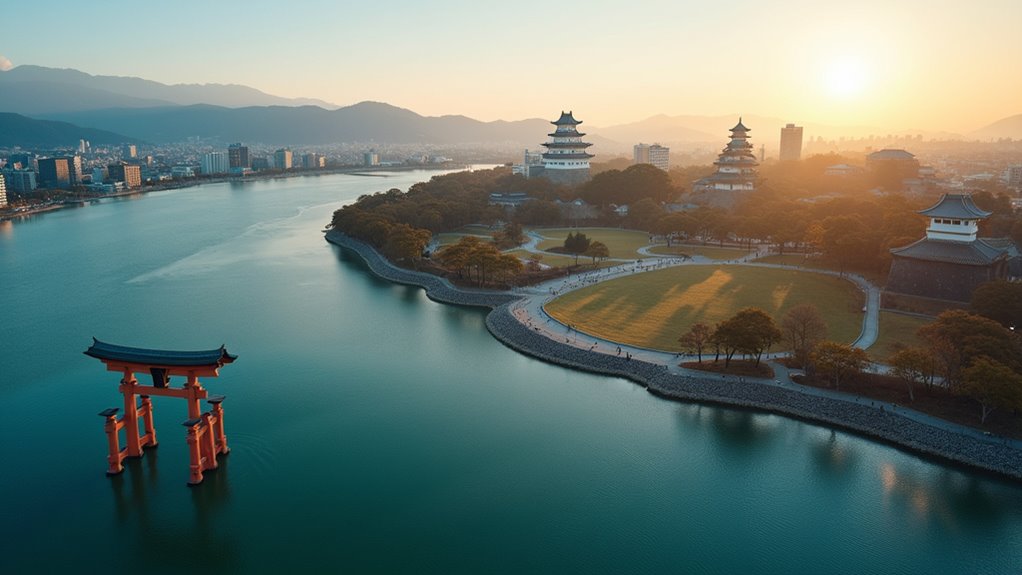
Hiroshima’s transformation from tragedy to hope creates one of Japan’s most meaningful travel experiences. Visitors discover a city where solemn memorials stand alongside ancient shrines, where floating torii gates frame mountain vistas, and where locals serve up the nation’s best okonomiyaki with quiet pride. The city’s blend of profound history and everyday Japanese culture offers travelers something deeper than typical sightseeing. Here’s what makes Hiroshima an essential stop on any Japan itinerary.
- Peace Memorial Park and the Atomic Bomb Dome
- Hiroshima Peace Memorial Museum
- Miyajima Island’s Floating Torii Gate
- Itsukushima Shrine on Miyajima
- Hiroshima Castle
- Shukkeien Garden
- Mitaki Temple and Its Three Waterfalls
- Hiroshima-Style Okonomiyaki Tasting
- Hondori Street Shopping and Dining
- Daishoin Temple on Miyajima Island
- Kintaikyo Bridge Day Trip to Iwakuni
Peace Memorial Park and the Atomic Bomb Dome
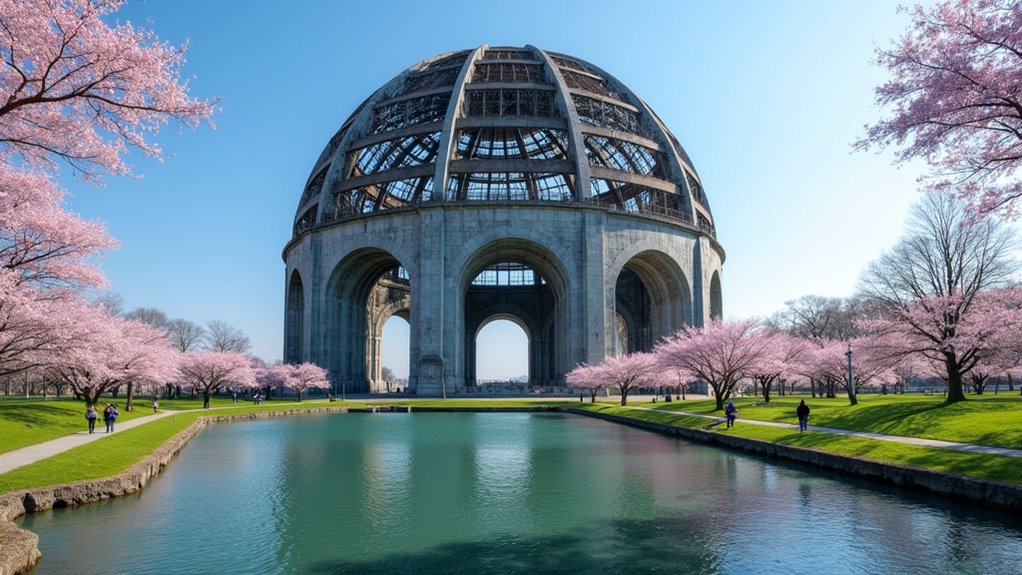
Where else can visitors witness such a powerful demonstration to both human tragedy and the enduring hope for peace? Peace Memorial Park spans 122,000 square meters and serves as both memorial and symbol of Hiroshima’s resilience.
The preserved Atomic Bomb Dome stands as the park’s most striking feature—a skeletal building that survived near the hypocenter, offering visitors an unforgettable glimpse into August 1945.
Inside the Peace Memorial Museum, over 19,000 artifacts tell the bombing’s story through sobering exhibits that don’t shy away from radiation’s devastating effects.
The Children’s Peace Monument adds another layer of remembrance, while surrounding memorials reinforce the park’s dedication to promoting peace.
Getting there is straightforward: take Streetcar Line 2 from JR Hiroshima Station for a 15-minute ride to this essential destination.
Hiroshima Peace Memorial Museum
How does one truly comprehend the magnitude of nuclear devastation? The Hiroshima Peace Memorial Museum provides sobering answers through its collection of over 19,000 artifacts from August 6, 1945.
Visitors encounter personal belongings, photographs, and scientific exhibits that detail radiation’s devastating effects on human bodies and the city itself.
The museum doesn’t shy away from difficult truths. Melted lunch boxes, torn clothing, and testimonies from survivors create an emotionally powerful experience that transcends language barriers.
Interactive displays explain the bomb’s mechanics and aftermath, while preserved artifacts tell individual stories of loss and resilience.
Plan at least two hours for your visit. The museum’s educational mission extends beyond historical documentation—it actively promotes nuclear disarmament and global peace through its unflinching presentation of atomic warfare’s human cost.
Miyajima Island’s Floating Torii Gate
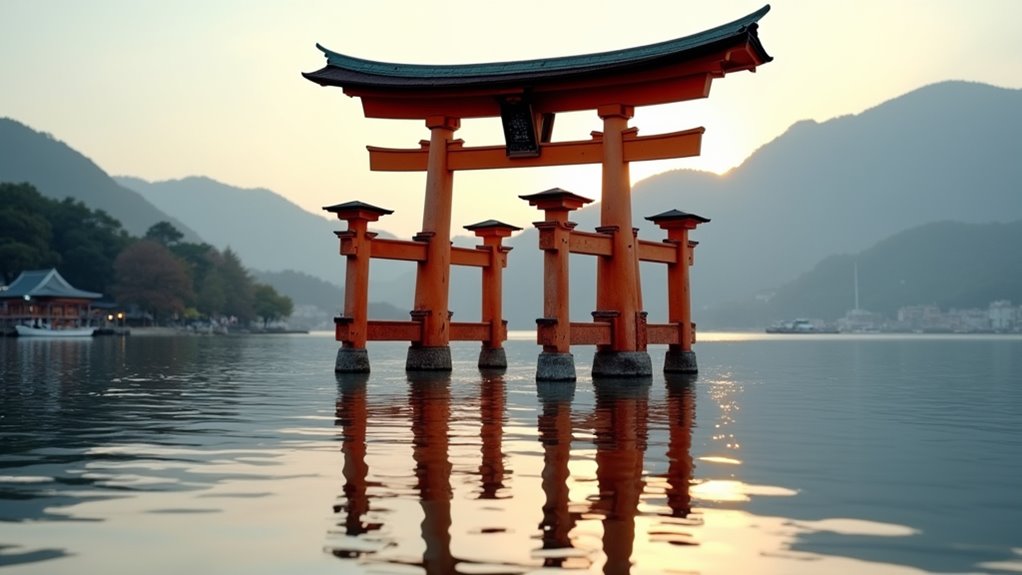
What transforms a simple gate into one of Japan’s most photographed landmarks? The answer lies in Miyajima Island’s vermilion Grand Torii Gate, which creates a breathtaking illusion of floating on water during high tide.
Part of Itsukushima Shrine, this UNESCO World Heritage Site has welcomed visitors since 593 AD, making it one of Japan’s oldest Shinto shrines.
Timing your visit around high tide offers the most dramatic views, when the gate appears to rise from the sea itself. During low tide, you can walk directly to the structure for close-up photos.
The island’s friendly wild deer add charm to your visit, while walking paths provide scenic routes through nature.
Don’t miss the seasonal fireworks events, including spectacular underwater displays that illuminate this iconic symbol.
Itsukushima Shrine on Miyajima
Why does Itsukushima Shrine hold such reverence among Japan’s thousands of sacred sites? Dating back to 593 AD, this UNESCO World Heritage Site represents one of Japan’s most spiritually significant locations.
The shrine’s vermilion structures appear to float on water during high tide, creating an otherworldly atmosphere that’s captivated visitors for centuries.
Beyond the famous torii gate, the shrine complex itself offers remarkable architecture and cultural depth. Visitors can explore traditional buildings constructed over the water, witness Shinto ceremonies, and appreciate intricate woodwork that’s withstood typhoons and time.
The shrine’s design reflects ancient beliefs about sacred islands being too holy for ordinary people to set foot on land. Plan your visit around tidal schedules to experience both floating and walkable perspectives.
Hiroshima Castle
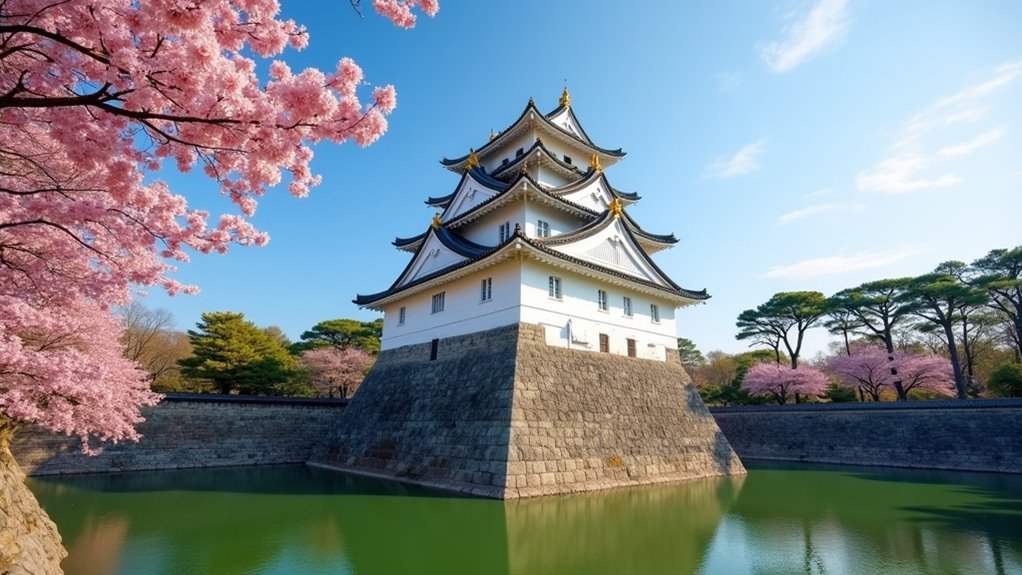
Rising from Hiroshima’s central district, the reconstructed castle stands as a proof to the city’s resilience and determination to preserve its heritage. Originally built in 1589 by Mori Terumoto, the structure was destroyed during the atomic bombing and rebuilt in 1958 as a museum showcasing Hiroshima’s feudal history.
Visitors can explore historical exhibits inside while enjoying interactive experiences like trying on samurai armor for photos. The castle grounds feature scenic moats and gardens that provide peaceful walking areas. Don’t miss the top floor’s panoramic views stretching across the city to Miyajima Island.
The castle opens daily from 9:00 am to 6:00 pm with entrance fees around 370 yen. The surrounding grounds remain free to explore, making it accessible for budget-conscious travelers.
Shukkeien Garden
Just a short walk from Hiroshima Castle, visitors can discover one of Japan’s most exquisite examples of traditional landscape design. Shukkeien Garden, created during the Edo period by Hiroshima’s feudal lord, transforms 240 years of history into a living masterpiece.
This miniature landscape garden artfully combines ponds, streams, islets, and bridges to create ever-changing seasonal views.
The garden’s crown jewel, the historic Koko-kyo Bridge, gained international recognition when world leaders visited during the G7 Hiroshima Summit.
Visitors shouldn’t miss the authentic Japanese tea experience available amid these tranquil surroundings.
The garden’s central location makes it easily accessible from other major attractions, offering a peaceful respite from urban exploration.
Each season brings different foliage colors, making multiple visits worthwhile for photography enthusiasts.
Mitaki Temple and Its Three Waterfalls
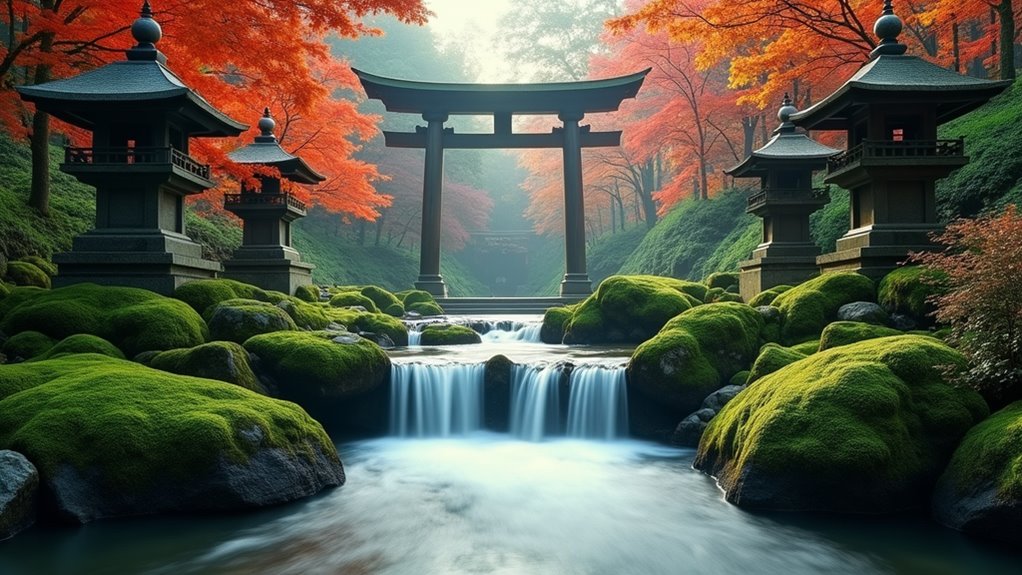
While the city center offers profound historical insights, Mount Mitaki provides visitors with a completely different spiritual dimension through its ancient temple and three cascading waterfalls. This serene Buddhist temple creates a peaceful contrast to Hiroshima’s urban environment, making it perfect for contemplative walks through wooded paths.
The temple’s three waterfalls serve as natural focal points, where visitors often pause to appreciate the tranquil sounds of flowing water. Religious artifacts and traditional Buddhist ceremonies add cultural depth to the experience.
The mountain setting offers fresh air and scenic surroundings that visitor reviews consistently praise for their peaceful ambiance.
Located conveniently close to other historical sites, Mitaki Temple provides an excellent opportunity to experience Japan’s spiritual heritage while escaping the city’s bustle.
Hiroshima-Style Okonomiyaki Tasting
After exploring Hiroshima’s spiritual side, visitors shouldn’t miss experiencing the city’s most beloved culinary creation: Hiroshima-style okonomiyaki. This savory layered pancake differs markedly from its Osaka counterpart, featuring distinct layers rather than mixed ingredients.
The dish begins with a thin crepe-like batter, followed by mountains of cabbage, bean sprouts, pork, and yakisoba noodles, all topped with a fried egg and special sauce.
Downtown Hondori Street offers numerous okonomiyaki restaurants where locals and travelers gather around hot griddles. Many establishments let diners watch skilled chefs craft these masterpieces with practiced precision.
The interactive dining experience becomes part of the culture, as visitors witness generations-old techniques passed down through family-run shops. Each restaurant adds its own twist, making okonomiyaki hunting an essential Hiroshima adventure.
Hondori Street Shopping and Dining
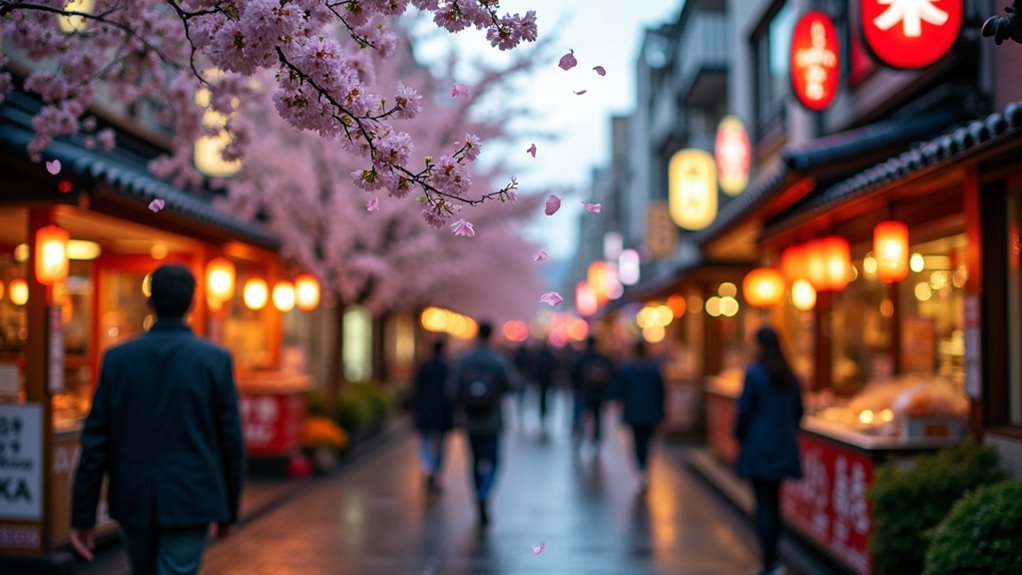
Beyond satisfying hunger with okonomiyaki, Hondori Street serves as Hiroshima’s bustling commercial heart where shopping and dining converge in a vibrant pedestrian paradise. This covered arcade stretches through downtown, offering everything from department stores to quirky boutiques and local specialty shops.
Visitors can browse for traditional crafts, modern fashion, and Hiroshima-themed souvenirs while sampling street food and regional delicacies. The pedestrian-only zone creates a relaxed atmosphere where families and friends gather to explore at their own pace.
Local restaurants serve authentic Hiroshima cuisine beyond okonomiyaki, including fresh oysters and regional sake. The street connects seamlessly with surrounding districts, making it an ideal base for exploring the city’s cultural offerings while experiencing contemporary Japanese urban life.
Daishoin Temple on Miyajima Island
Where can visitors find the most spiritually enriching experience on Miyajima Island? Daishoin Temple stands as the island’s most important Buddhist temple, offering a profound spiritual journey beyond the famous torii gate.
This sacred complex houses over 500 stone statues of Buddhist disciples, creating an atmosphere of deep reverence and contemplation.
Visitors can spin prayer wheels while climbing the temple steps, each turn believed to offer the same merit as reciting prayers.
The temple’s main hall contains precious religious artifacts, while smaller shrines dot the mountainside grounds.
Unlike the crowds at Itsukushima Shrine, Daishoin provides a more intimate spiritual experience.
The temple’s peaceful gardens and mountain setting offer stunning views of Hiroshima Bay, making it perfect for quiet reflection and culture.
Kintaikyo Bridge Day Trip to Iwakuni
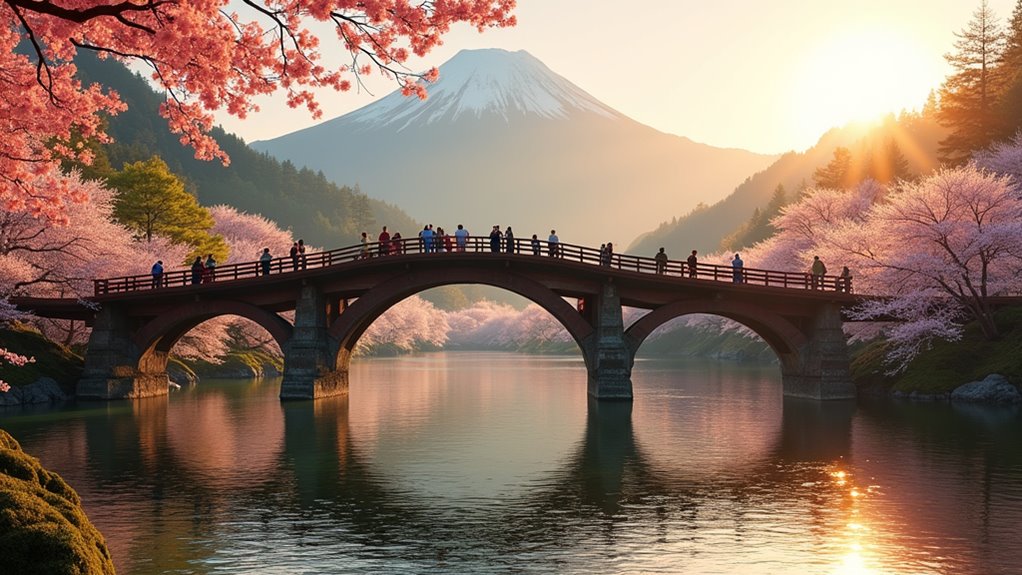
While Miyajima Island offers incredible spiritual experiences, travelers shouldn’t miss the opportunity to explore one of Japan’s most celebrated engineering marvels just a short distance away. Kintaikyo Bridge in Iwakuni showcases five elegant wooden arches spanning the Nishiki River, representing centuries of Japanese craftsmanship and ingenuity.
This historic structure, originally built in 1673, has been meticulously maintained using traditional techniques passed down through generations.
The bridge creates stunning reflections in the river below, particularly beautiful during cherry blossom season and autumn foliage. Visitors can cross the bridge for a small fee, exploring the surrounding park and sampling local ice cream vendors.
From Hiroshima, the journey takes about 45 minutes by train, making it an ideal half-day excursion that perfectly complements the region’s cultural offerings.