
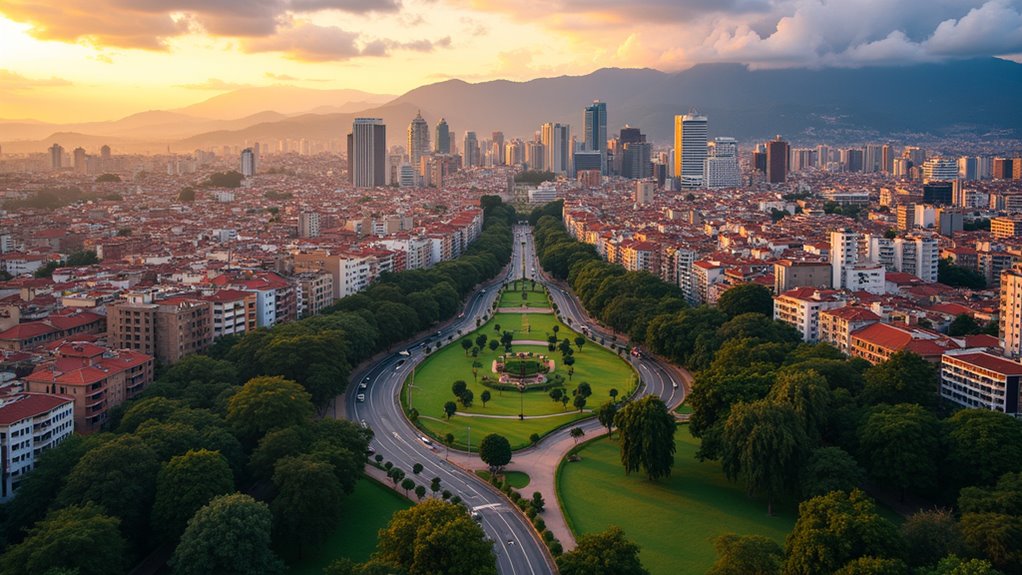
You’ll discover Bogotá’s rich heritage by exploring La Candelaria’s cobblestone streets and vibrant murals, then visiting the renowned Gold Museum with over 34,000 pre-Hispanic artifacts. Ascend Monserrate via cable car for panoramic city views, browse Fernando Botero’s masterpieces at the free Museo Botero, and experience local culture at bustling Paloquemao Market. Don’t miss Chapinero’s specialty coffee scene, Villa De Leyva’s colonial charm, Usaquén’s Sunday flea market, and Zona Rosa’s energetic nightlife scene for the complete Colombian capital experience.
- Explore La Candelaria’s Colonial Streets and Street Art
- Visit the Gold Museum to See Pre-Hispanic Treasures
- Take the Cable Car or Funicular Up Monserrate
- Browse Fernando Botero’s Art at the Free Museo Botero
- Experience Local Life at Paloquemao Market
- Learn to Cook Colombian Dishes in a Hands-On Class
- Join a Walking Tour Through Plaza De Bolívar and Historic Sites
- Discover Chapinero’s Coffee Culture and Modern Scene
- Take a Day Trip to Colonial Villa De Leyva
- Shop and Eat at Usaquén’s Sunday Flea Market
- Experience Bogotá’s Nightlife in Zona Rosa
- The Sum Up
Explore La Candelaria’s Colonial Streets and Street Art
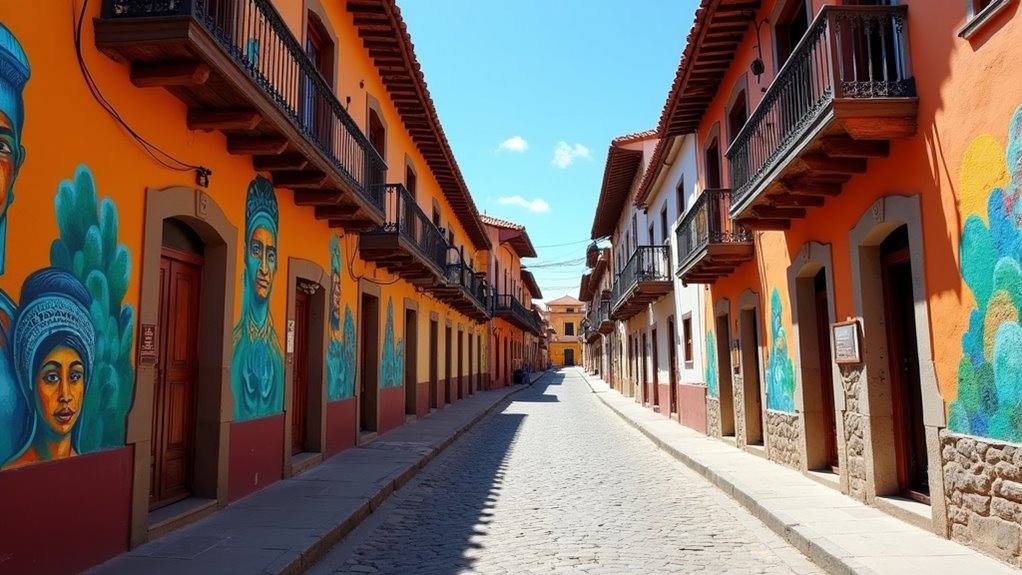
Step into La Candelaria and you’ll find yourself walking through Bogotá’s oldest neighborhood, where 500 years of history unfold along cobblestone streets that haven’t changed much since Spanish colonizers laid them out in 1538.
You’ll discover colonial and republican-style houses with wooden balconies and interior patios lining narrow alleys that climb steep slopes toward the mountains.
The neighborhood’s bohemian spirit comes alive through vibrant murals covering entire façades, where street artists blend Colombian history, political themes, and indigenous heritage with bold colors. This creative energy is supported by the area’s incredible concentration of 500 cultural institutions, including theaters, research centers, and museums that make La Candelaria a true cultural hub.
Walk the side streets like Belén and Las Aguas for the best contrast between preserved 17th-century architecture and contemporary graffiti.
Plan a full afternoon exploring on foot—it’s the only way to appreciate hidden courtyards and the creative energy that makes this historic heart so mesmerizing.
Visit the Gold Museum to See Pre-Hispanic Treasures
When you enter Bogotá’s Gold Museum, you’ll encounter the world’s largest collection of pre-Hispanic gold artifacts—over 34,000 gold objects among 55,000 total pieces that reveal how indigenous cultures like the Muisca, Quimbaya, and Tairona used precious metals not as currency, but as sacred conduits to the divine.
Don’t miss the iconic Muisca Raft, which depicts the ceremony that inspired the El Dorado legend, and the Poporo Quimbaya coca-lime vessel.
You’ll explore four thematic halls covering cosmology, rituals, and metallurgy techniques. The immersive “gold offering room” uses sound and light effects to recreate ceremonial atmospheres.
Plan four hours for your visit, rent audio guides for deeper context, and appreciate how these masterpieces expressed spiritual power rather than wealth. The museum operates Tuesday to Saturday from 9 am to 6 pm, and Sundays from 10 am to 4 pm.
Take the Cable Car or Funicular Up Monserrate
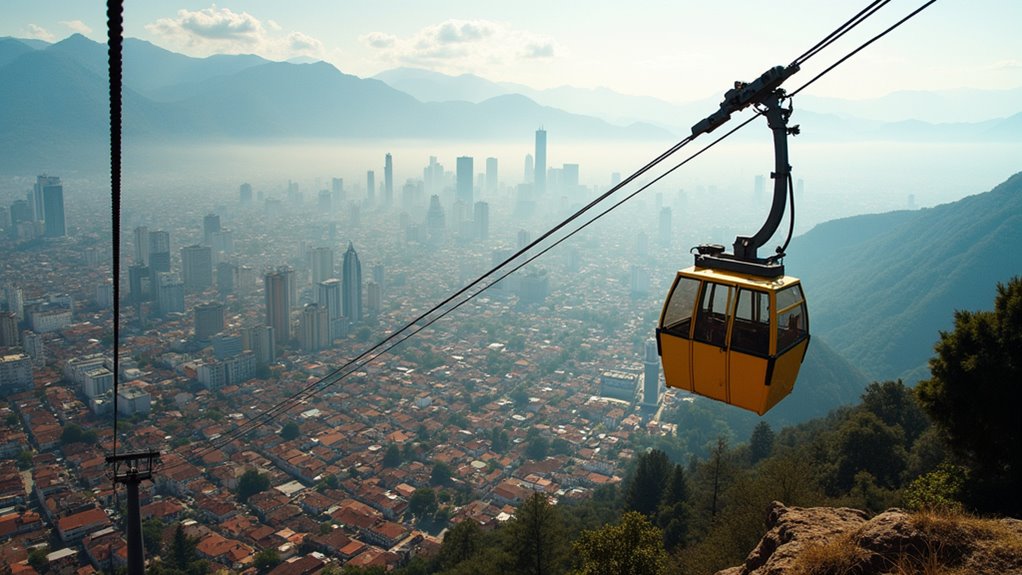
Rising 3,152 meters above sea level, Monserrate Hill offers Bogotá’s most spectacular panoramic views through two distinct transport options that have carried visitors to this sacred peak for nearly a century.
You’ll choose between the historic funicular (operating since 1929) or the cable car system inaugurated in 1955. The funicular provides an enclosed 4-minute journey through tunnels and over bridges, while the cable car’s panoramic windows showcase sweeping city vistas during its 820-meter ascent. At the summit, you’ll find the Basilica of the Lord of Monserrate, drawing both religious pilgrims and travelers to this sacred destination.
Both systems operate on different schedules—funicular runs morning to afternoon, cable car covers midday to evening for sunset visits.
Round-trip fares vary between weekdays and weekends. Budget at least 1.5-2 hours total, including potential queuing time.
The base station sits near Carrera 2E No. 21-48, easily accessible by taxi from central neighborhoods.
Browse Fernando Botero’s Art at the Free Museo Botero
Since Fernando Botero donated his remarkable collection to Colombia in 2000, you’ll find one of Latin America’s most significant art museums nestled within a restored colonial mansion in La Candelaria’s historic heart.
The Museo Botero houses 123 works showcasing the artist’s signature “Boterismo” style—exaggerated volumes and sensual forms that include his famous “Mona Lisa” interpretation and powerful pieces from his violence in Colombia series.
You’ll also discover 85 international masterpieces from Botero’s private collection, featuring works by Picasso, Dalí, Monet, and Matisse. The collection was declared an asset of cultural interest for the nation by the Colombian Ministry of Culture in 2012.
Best of all, admission remains completely free every day except Tuesday.
Consider renting audio guides in English, French, or Spanish for around COP$10,000 to enhance your experience exploring this cultural treasure.
Experience Local Life at Paloquemao Market
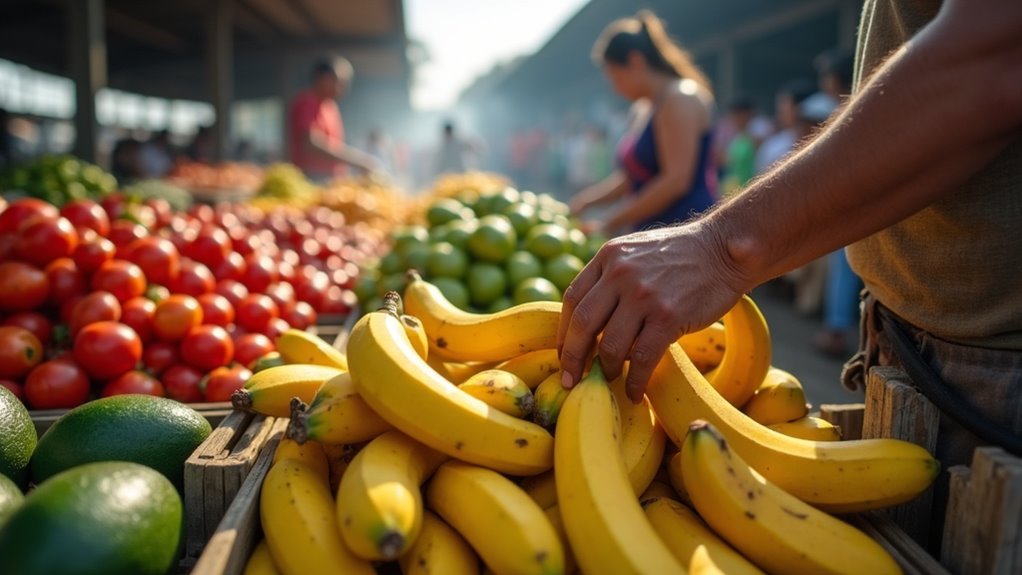
While the Museo Botero showcases Colombia’s artistic heritage, Paloquemao Market immerses you in the country’s vibrant food culture and daily rhythms. Located in Santa Fe district, this massive wholesale market operates from early morning until late afternoon, with vendors offering samples of exotic fruits like feijoa, lulo, and granadilla.
You’ll find fresh juices made to order, traditional Colombian dishes at local prices, and an extensive selection of herbs and spices.
The outdoor flower section creates a sensory feast, especially on Tuesdays and Saturdays when activity peaks. This market attracts local farmers and foodies rather than travelers, creating an authentic atmosphere focused on fresh, unpretentious produce. Arrive early morning for the best experience—most vendors start closing 1-2 hours before official times.
Take a taxi from La Candelaria rather than walking, and plan 1-2 hours to explore thoroughly.
Learn to Cook Colombian Dishes in a Hands-On Class
After exploring Bogotá’s bustling markets, you can dive deeper into Colombian culture by learning to prepare traditional dishes in hands-on cooking classes throughout the city. These 3-5 hour experiences accommodate 6-12 participants in small groups, ensuring personalized instruction as you actively cook 3-4 authentic recipes.
You’ll master flagship dishes like ajiaco santafereño—Bogotá’s signature three-potato soup—alongside everyday staples including arepas, empanadas, and patacones.
Many classes begin with market visits to neighborhoods like La Perseverancia, where you’ll identify Colombian potato varieties and tropical produce while practicing vendor interactions. Instructors share historical context and regional variations, making recipes accessible for beginners yet engaging for experienced cooks.
Several operators combine cooking with salsa lessons or aguardiente tastings for extensive culture. These authentic experiences provide cultural insights into Colombia’s diverse culinary heritage, which has been influenced by indigenous, Spanish, African, and Arab cultures.
Join a Walking Tour Through Plaza De Bolívar and Historic Sites
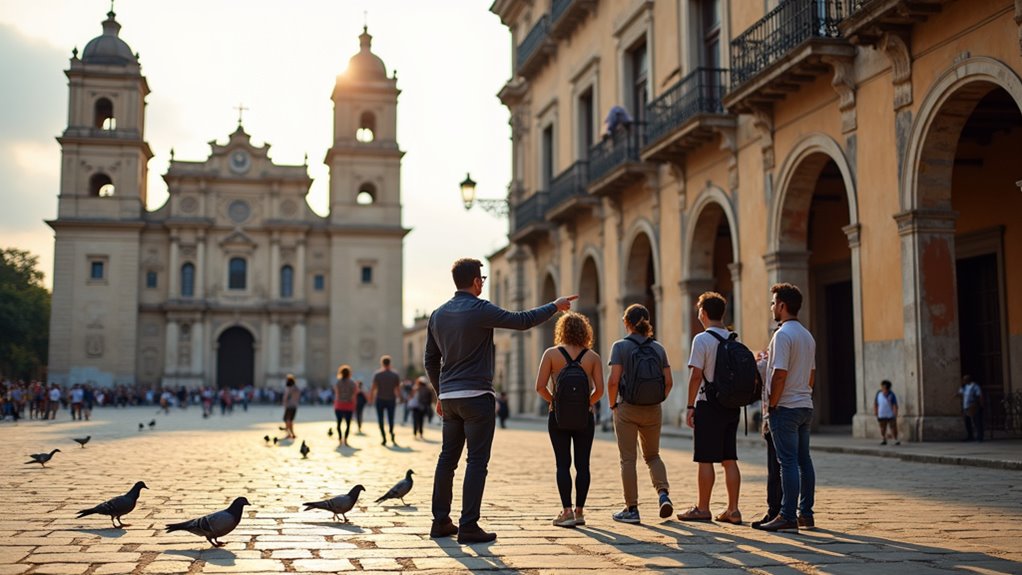
Beyond exploring Colombian cuisine, you can uncover Bogotá’s rich political and architectural heritage through walking tours that center on Plaza de Bolívar, the city’s historic heart since 1539. These 2-3 hour guided walks navigate La Candelaria‘s colonial streets, connecting key landmarks like Catedral Primada, Capitolio Nacional, and Palacio de Justicia surrounding the plaza.
You’ll explore Chorro de Quevedo, where Bogotá’s founding legends unfold, and discover vibrant street art in Callejón del Embudo that illustrates contemporary social movements.
Tours operate in small groups with Spanish-speaking guides, though multilingual options exist. Many follow free-tour formats with tip-based compensation. The meeting point is conveniently located in front of the Museum of Gold, where guides gather under distinctive red umbrellas.
Guides weave narratives spanning indigenous presence, Spanish conquest, independence movements, and pivotal events like El Bogotazo, while incorporating local tastings of chicha and exotic fruits from nearby markets.
Discover Chapinero’s Coffee Culture and Modern Scene
When Colombia’s coffee capital meets modern urban sophistication, you’ll find yourself in Chapinero, where third-wave coffee culture thrives alongside Bogotá’s most progressive neighborhood scene.
Explore Zona G and Chapinero Alto’s concentration of specialty cafés serving single-origin beans from Huila, Nariño, and Tolima with complete farm traceability.
You’ll discover roasteries doubling as training labs, where baristas demonstrate V60, Chemex, and syphon brewing methods. Join guided cuppings and brewing workshops that reveal Colombia’s coffee heritage through flavor wheels and origin maps.
These venues showcase the country’s shift from large estates to smallholder production. Many cafés honor the tradition of small coffee farmers who first challenged the wealthy landowner monopolies during the late 1800s, fundamentally reshaping Colombia’s agricultural landscape.
As evening arrives, experience hybrid coffee-cocktail bars and gastro-restaurants where espresso meets fine dining.
The district’s LGBTQ+-friendly atmosphere and creative spaces transform quiet morning coffee shops into vibrant evening venues hosting art exhibitions and live music.
Take a Day Trip to Colonial Villa De Leyva
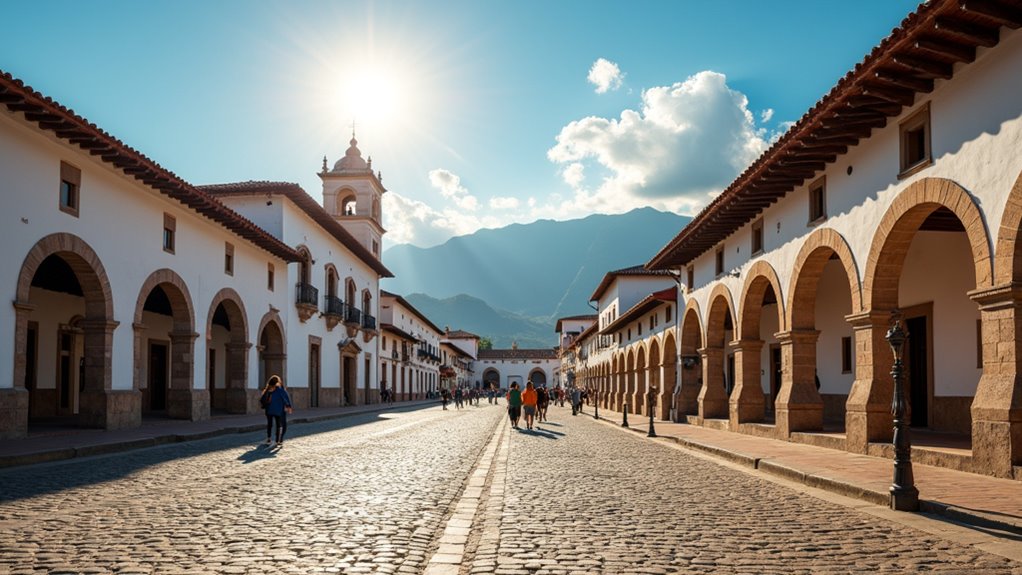
Just three hours northeast of Bogotá lies Villa de Leyva, Colombia’s most perfectly preserved colonial town and a UNESCO-recognized heritage site that transports visitors back to the 16th century. You’ll need an early 7:00 a.m. departure for this worthwhile day trip that spans 11-12 hours total.
The town centers around Plaza Mayor, one of South America’s largest cobblestone squares, surrounded by whitewashed colonial buildings housing cafés, restaurants, and boutique shops. Wander the preserved streets lined with clay-tile roofs and colonial mansions at your own pace.
Most tours include stops at Boyacá Bridge (marking Colombia’s independence battle), the ancient Muisca observatory El Infiernito, stunning Pozos Azules blue ponds, and the unique Casa Terracota clay house for a thorough cultural experience. Don’t miss the Fossil Museum, which showcases over 500 paleontological pieces from the Cretaceous era.
Shop and Eat at Usaquén’s Sunday Flea Market
While most travelers focus on Bogotá’s central markets, you’ll discover a more refined shopping and dining experience at Usaquén’s Sunday Flea Market. The market is set along cobblestone streets and surrounded by colonial charm, creating the perfect backdrop for a leisurely weekend outing.
Browse dozens of stalls featuring handcrafted Colombian goods—jewelry, textiles, ceramics, and leather items—at reasonable prices that beat airport shops. You’ll find higher-quality crafts and less touristy souvenirs compared to central-city markets. Many artisans work with recycled materials, creating unique pieces that promote sustainable practices while showcasing local creativity.
The surrounding area offers excellent restaurants, cafés, and street food stalls serving arepas, empanadas, and Colombian coffee. Street musicians and performers add to the festive atmosphere.
Plan 3-4 hours for shopping and dining, arriving early morning to avoid crowds or early afternoon for maximum entertainment. Access via taxi or Uber from central Bogotá.
Experience Bogotá’s Nightlife in Zona Rosa
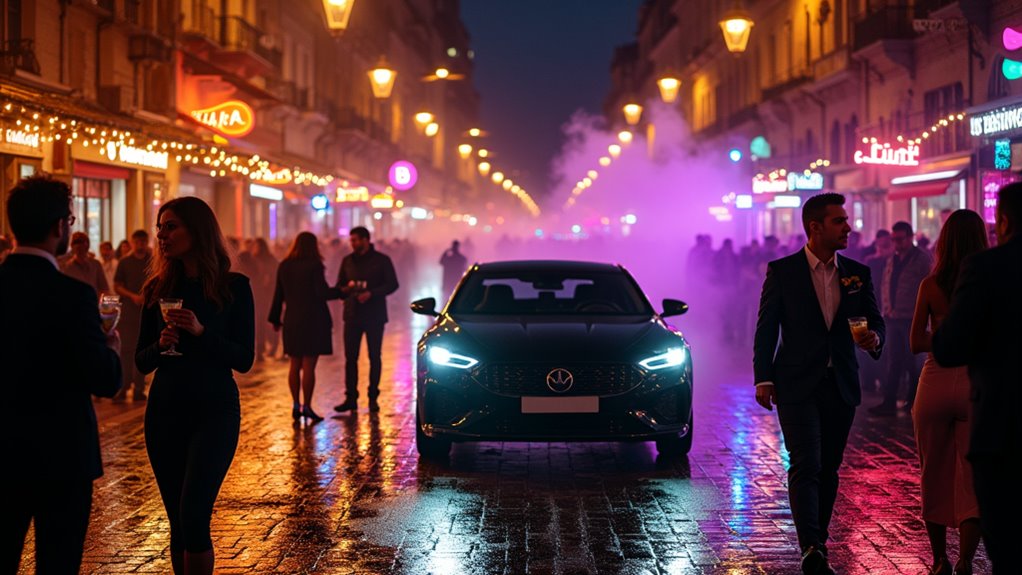
After exploring Bogotá’s daytime markets, you’ll want to experience the city’s vibrant after-dark scene in Zona Rosa, the capital’s premier nightlife destination. This northern district centers around pedestrian-only Zona T, where you’ll find concentrated bars, clubs, and haute cuisine restaurants forming one dense going-out zone.
Start your evening at cocktail specialists like Yumi Yumi or Huerta Coctelería Artesanal for inventive drinks. Then hit Irish pubs like McCarthy’s for draft beer and live music.
Clubs pump reggaeton, techno, and crossover hits until late hours, with peak energy beginning after 9 p.m. Located between Calle 80 and Calle 85, this area specifically caters to young crowds seeking diverse musical experiences from dancehall to guaracha.
Expect higher drink prices and smart-casual dress codes at upscale venues. Weekend cover charges apply at premium clubs.
The mixed crowd of locals, professionals, and travelers creates an energetic atmosphere perfect for Friday and Saturday nights.
The Sum Up
You’ve got everything you need for an unforgettable Bogotá experience. Start with La Candelaria’s colonial charm, then learn about pre-Columbian gold treasures. Don’t miss Monserrate’s panoramic views or Botero’s distinctive sculptures. Plunge into local culture at Paloquemao Market and Chapinero’s coffee scene. Take that day trip to Villa de Leyva, hunt for treasures at Usaquén’s market, and cap off your nights in Zona Rosa. Bogotá’s waiting—go explore it all.