Introduction
This detailed review covers a popular guided day trip from Osaka to Kyoto and Nara, designed for travelers eager to see Japan’s most iconic sights without the hassle of planning every detail themselves. While we haven’t personally taken this exact tour, it’s a well-reviewed option that promises a rundown of Kyoto’s temples and castles, as well as Nara’s famous deer and giant Buddha.
What we particularly like about this tour is how it combines efficient high-speed train travel with a carefully curated itinerary that hits many highlights in one day. The guides get high praise for their knowledge and friendliness, making it easier to absorb the complex history and cultural significance of each site.
Plus, the inclusion of admission tickets and transportation in the price offers good value—especially for first-time visitors who want a structured and informative experience.
One thing to consider is that, given the packed schedule and group size, the day can feel somewhat rushed for those wanting a more in-depth visit or time to linger at each spot. But if your goal is a broad survey of Kyoto and Nara’s most famous landmarks, this tour is a strong choice.
It suits travelers with limited time, those eager for a guided overview, and anyone who appreciates the convenience of organized transportation and expert commentary.
- Key Points
- Exploring the Itinerary Step-by-Step
- Departure and Transportation
- First Stop: Nijo Castle
- The Golden Pavilion: Kinkaku-ji
- Kyoto Imperial Palace or Kitano Tenmangu Shrine
- Lunch Break
- Transition to Nara: Kasuga Shrine and Todai-ji
- The Big Highlight: Todai-ji Temple
- Return to Osaka
- The Experience from Reviews
- Final Thoughts
- FAQs
- More 1-Day Tours in Osaka
- More Tour Reviews in Osaka
Key Points
 1 / 3
1 / 3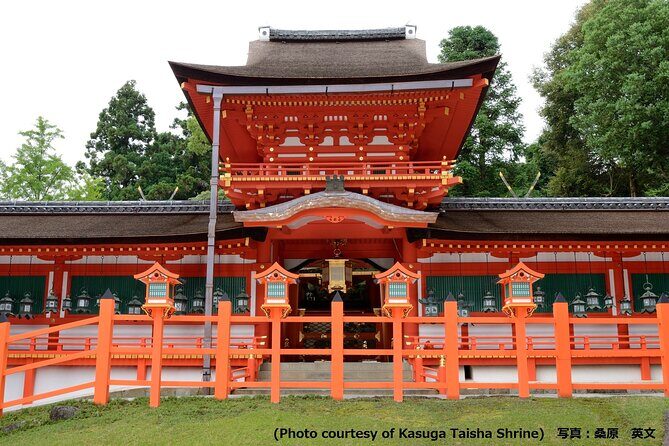 2 / 3
2 / 3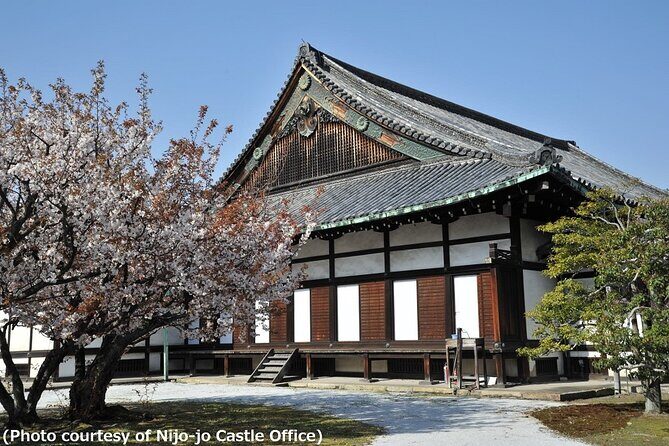 3 / 3
3 / 3- Efficient use of transportation with bullet train and public transit helps maximize sightseeing time.
- Knowledgeable guides enhance the experience with insightful commentary and smooth organization.
- The tour packs many highlights into one day, making it ideal for quick visits, but may be a little rushed.
- Included admission tickets and transport add value, especially compared to solo planning.
- The trip is well-reviewed for its overall organization and the quality of sites visited.
- Be prepared for large group dynamics and some tight timing at each stop.
Exploring the Itinerary Step-by-Step
You can also read our reviews of more tours and experiences in Osaka
Departure and Transportation
The tour begins early, with a meeting point in Osaka, followed by a journey on the shinkansen (bullet train) to Kyoto. This is a major advantage—saving hours compared to traveling by regular train or bus. The bullet trains are fast, comfortable, and a quintessential Japanese experience. While the seats are non-reserved, the overall speed and convenience make it worth the slight uncertainty of seating.
Travelers who value quick, hassle-free transport will appreciate how this sets the tone for a smooth day. One review highlights this: “Enjoyed comfortable Shinkansen travel between Shin-Osaka and Kyoto,” and many praise the time-saving aspect of the high-speed train.
First Stop: Nijo Castle
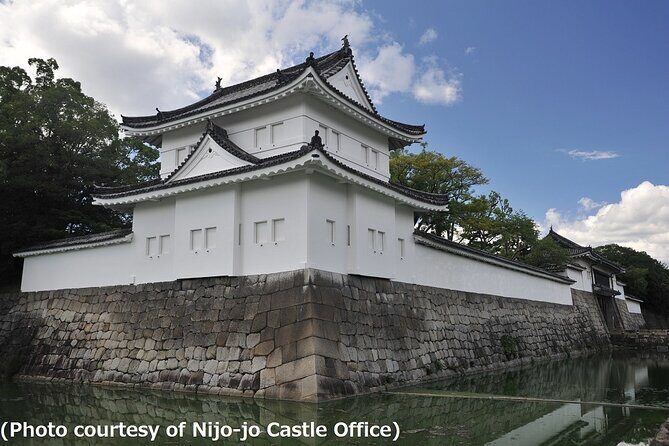
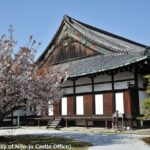
Once in Kyoto, the tour kicks off at Nijo Castle, a UNESCO World Heritage site completed in 1626. Built to accommodate the Tokugawa Shogun, the castle’s simple, elegant exterior contrasts with its richly decorated interiors, especially the Ninomaru Palace with its stunning carvings and details. It’s a powerful reminder of the shogunate’s control, and its historical importance is palpable.
While the tour doesn’t enter the Honmaru Palace or the painting gallery, the 50-minute visit is enough to appreciate the craftsmanship. Reviewers love the way guides explain the castle’s significance: “The impressive, elaborate carvings and decors in Ninomaru Palace are a must-see.”
The Golden Pavilion: Kinkaku-ji
Next, the tour heads to Kinkaku-ji (Golden Pavilion), arguably Kyoto’s most famous temple. The gold leaf façade shimmering against the surrounding pond and gardens creates a view that’s both serene and striking. You’ll have about 45 minutes to stroll the grounds, take photos, and soak in the tranquil atmosphere.
Many visitors comment on how crowded it can get, especially with school groups in peak seasons, but the overall beauty remains undeniable. The reflection of the temple in the pond often becomes a highlight for photographers.
Kyoto Imperial Palace or Kitano Tenmangu Shrine
The next stop is the Kyoto Imperial Palace, which served as the residence of Japan’s emperors until about 150 years ago. The guided tour takes you through some of the opulent chambers, giving a glimpse into imperial life. If the palace is closed, the group visits Kitano Tenmangu Shrine, notable for its connection to learning and its beautiful main hall—especially attractive during plum blossom or autumn leaf seasons.
Reviewers note that the palace’s interior is impressive, though some mention that site closures can lead to alternative visits—so flexibility is key.

Lunch Break
If you selected the “With Lunch” option, you’ll enjoy a buffet featuring Japanese and Western-style dishes. The meal provides a nice energy boost for the busy afternoon. Some travelers, like one reviewer, mention the meal as “great,” though vegetarians should specify in advance. For those who opt out, there’s time near Kyoto Station for a quick snack or own meal.
Transition to Nara: Kasuga Shrine and Todai-ji
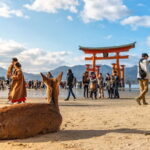
In the afternoon, the tour moves to Nara, Japan’s ancient capital and a UNESCO World Heritage site. First up is Kasuga Grand Shrine, famed for its hanging lanterns and friendly deer wandering across Nara Park. Visitors often enjoy interacting with the deer, which are considered messengers of the gods—some reviewers mention how they bow to ask for food, and how they can be quite assertive if you’re not firm.
The main sanctuary area will be accessible starting January 2025, adding an extra highlight for visitors. The shrine’s peaceful atmosphere and deer are a favorite for many travelers.
The Big Highlight: Todai-ji Temple
The tour’s finale is Todai-ji, home to Japan’s iconic Great Buddha. This massive wooden structure is awe-inspiring, especially when you see the bronze Buddha statue seated within. The temple’s architecture, combined with the 3,000 stone and bronze lanterns lining the approach, makes for unforgettable sights.
Travelers describe it as “impressive,” and many quote the size of the Buddha as “impressive to behold.” The 1 hour and 10 minutes at Todai-ji allow plenty of time for photos and marveling at this architectural feat.
Return to Osaka
After a full day of sightseeing, you’ll take the Kintetsu Railway back to Osaka. The group is guided from Nara Station to Osaka Namba Station, making sure everyone gets safely back to the city. The tour ends generally around 6:30 pm, providing a long but satisfying day.
The Experience from Reviews
Reviewers frequently praise the guides’ knowledge and friendliness, with comments like “The guides, organization was terrific” and “Hatchi made the trip exciting with her stories.” The organization and flow are generally appreciated, though some note that large groups can make the experience rushed.
A few cautionary points emerge: some travelers found the pace too quick—“about an hour per stop”—which might leave those interested in photography or exploring more frustrated. Others mention the challenge of hearing guides clearly, especially without individual headsets. This could impact the experience if you’re particularly keen on getting every detail.
Pricing at around $226 per person offers value considering the included transportation, entrance fees, and guide services, particularly for those who want to avoid the hassle of planning. However, some critics feel it’s expensive for what is a guided overview rather than an in-depth exploration.
Final Thoughts
This tour provides a well-organized, informative way to cover Kyoto and Nara’s key sights in one day. It’s perfect for first-time visitors or travelers short on time who want a structured introduction, especially with the convenience of bullet train travel. The guides’ knowledge and the ease of transportation help make the experience enjoyable, even if it’s a bit brisk.
While it may not suit those who prefer exploring at a leisurely pace or enjoy discovering hidden gems independently, it’s an excellent choice for those wanting a comprehensive, guided overview with good value for money. The inclusion of admission tickets and transportation helps streamline the day and reduces stress, making it a smart option for busy travelers.
If you’re someone who appreciates knowledgeable guides, stunning scenery, and efficient travel, this tour could very well be your best bet for experiencing Kyoto and Nara’s highlights in one memorable day.
Kyoto and Nara Day Trip – Golden Pavilion and Todaiji from Osaka
FAQs
What is included in the tour price?
The tour covers transportation including the Shinkansen between Osaka and Kyoto, public transit within Kyoto and Nara, admission tickets to Nijo Castle, Kinkaku-ji, Kasuga Shrine, and Todai-ji, plus a guide. Lunch is included if you select the “With Lunch” option.
How long is the tour?
The tour lasts approximately 11 hours and 15 minutes, starting early in Osaka and ending around 6:30 pm in Osaka Namba Station.
Are the trains reserved seats?
No, all trains have non-reserved seats, so seating is not guaranteed. The high-speed train does save a lot of time but does mean some uncertainty in seating.
Is the tour suitable for children or seniors?
Most travelers can participate, but keep in mind the pace and group size. Some reviews note that it might not be ideal for older travelers due to the quick pace and large groups.
Can I customize the itinerary?
Not really—this is a set tour with a fixed schedule. If a site is closed, the itinerary might be adjusted to visit an alternative attraction like Nishi Hongan-ji Temple.
How do I get back to my hotel after the tour?
The tour ends at Osaka Namba Station, and you will need to make your own arrangements to return to your hotel from there. The guide provides guidance, but no hotel drop-off is included.
In short, this guided day trip offers an efficient way to see Kyoto and Nara’s most celebrated sites, with expert guides, good value, and the thrill of Japan’s bullet train experience. It’s best suited for travelers who want a structured, no-hassle overview rather than a deep dive into each location.