
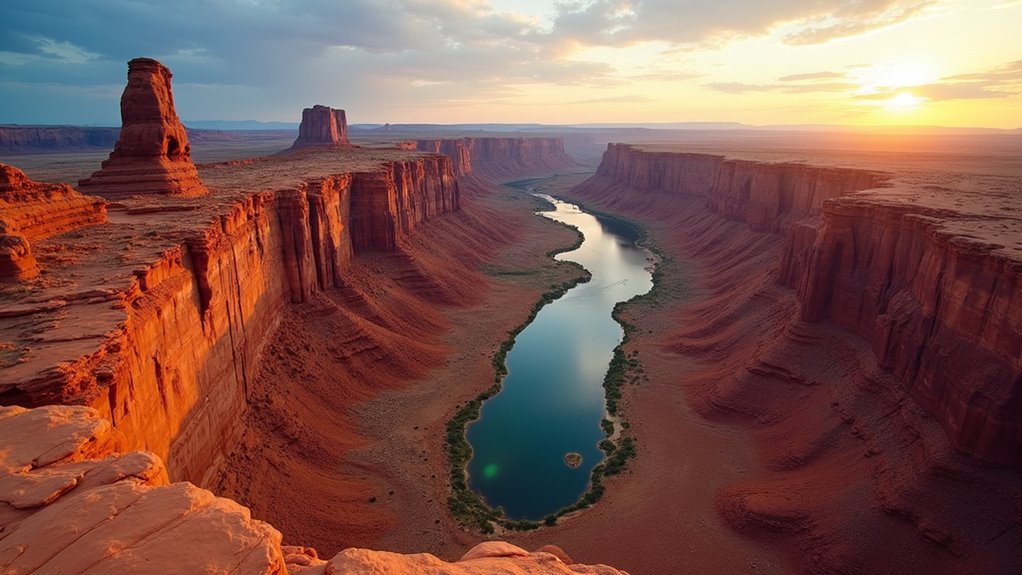
You’ll want to start with Delicate Arch’s iconic 3-mile hike and catch sunrise at Mesa Arch for incredible photography. Drive the scenic park roads to see Balanced Rock and Windows Section easily. Dead Horse Point offers jaw-dropping Colorado River views, while a half-day river float trip provides water-level desert perspectives. Don’t miss Highway 279’s ancient petroglyphs and world-class mountain biking on Slickrock Trail. Cap off your visit with stargazing under Moab’s exceptionally dark skies—there’s much more adventure waiting beyond these highlights.
- Hike to Delicate Arch for Utah’s Most Famous Natural Wonder
- Catch Sunrise at Mesa Arch in Canyonlands National Park
- Drive the Park Roads for Easy Access to Balanced Rock and Windows Section
- Take in the Dramatic Views at Dead Horse Point State Park
- Float the Colorado River on a Half-Day Scenic Trip
- Explore Moab’s Red Rock Country on a Guided 4×4 Tour
- Drive the La Sal Mountain Loop for Alpine and Desert Scenery
- Hunt for Petroglyphs Along Highway 279
- Mountain Bike the Slickrock Trail or Beginner-Friendly Routes
- Stargaze in Some of Utah’s Darkest Skies
- The Sum Up
Hike to Delicate Arch for Utah’s Most Famous Natural Wonder
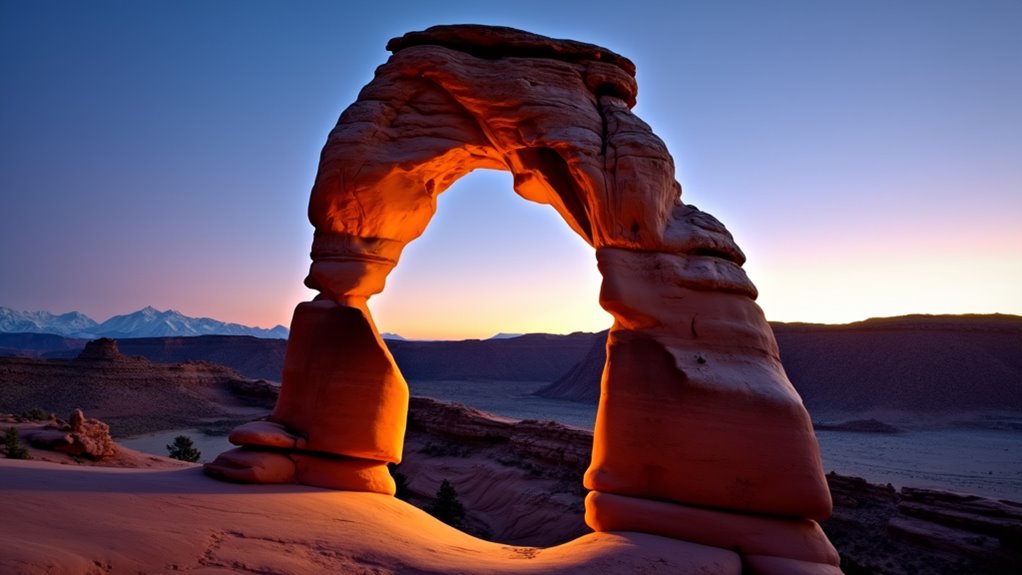
When you’re visiting Arches National Park for the first time, you can’t skip the hike to Delicate Arch—it’s Utah’s most iconic natural landmark and the park’s crown jewel.
This 3-mile round trip moderate hike from Wolfe Ranch requires about 2-3 hours and gains 550 feet through exposed slickrock terrain.
You’ll need plenty of water and sun protection since there’s zero shade along the route.
The trail gets crowded midday through sunset, so start at sunrise for cooler temps and fewer people.
Park entrance fees apply, but there’s no additional cost for hiking.
The payoff? Standing before a magnificent 65-foot freestanding arch that graces Utah’s license plates. Along the way, you’ll discover petroglyphs near Wolfe Ranch that depict ancient stories from Desert Archaic, Ancestral Puebloan, and Fremont Indian peoples who occupied this area dating back to 10,000 B.C.
Just remember—no pets allowed on this trail, and don’t climb the arch itself.
Catch Sunrise at Mesa Arch in Canyonlands National Park
If you’re willing to wake up before dawn, Mesa Arch in Canyonlands National Park delivers one of the Southwest’s most spectacular sunrise experiences.
This easy 0.6-mile loop hike takes just 10-15 minutes each way, making it perfect for photographers and casual hikers alike.
Arrive at the trailhead 45-60 minutes before sunrise to secure the best viewing spots. The arch faces east, creating a stunning “glow effect” when morning light reflects off canyon walls below, illuminating the sandstone in fiery orange tones for 30-60 minutes.
The drive from Moab takes 40-50 minutes via UT-313. Visit during winter weekdays for smaller crowds, or expect competition for prime photo positions during peak seasons (April-June, September-October).
Dress warmly—winter mornings often start below freezing. Perched at the edge of a 1,200-foot cliff over Buck Canyon, the arch also frames breathtaking views of the La Sal Mountains and White Rim country beyond.
Drive the Park Roads for Easy Access to Balanced Rock and Windows Section
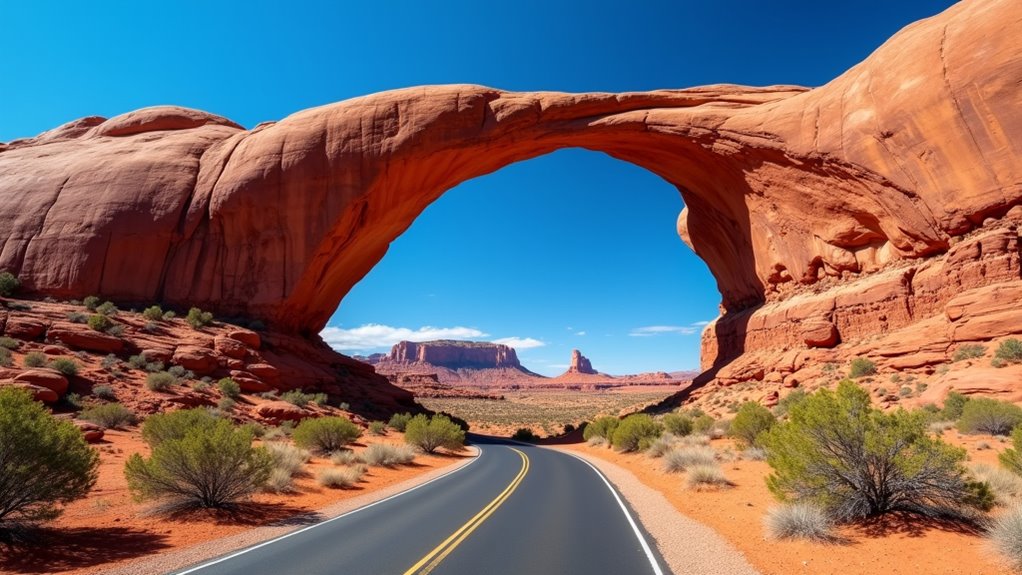
While Mesa Arch requires an early morning commitment, Arches National Park’s scenic drive lets you experience iconic formations like Balanced Rock and the Windows Section at your own pace from the comfort of your car.
The 36-mile round-trip route follows fully paved roads suitable for any passenger vehicle, making it perfect for budget-conscious travelers who don’t want to invest in specialized gear.
You’ll find Balanced Rock midway along the main road with convenient pullouts for photos.
Continue to the Windows Section via a short paved spur where you can park near North Window, South Window, and Double Arch.
Both stops offer excellent roadside viewing, though short walks provide better angles. For a more adventurous drive, consider the Shafer Canyon switchbacks that connect Canyonlands National Park with Moab via scenic unpaved roads.
Allow 2-4 hours for the complete drive with stops.
Take in the Dramatic Views at Dead Horse Point State Park
Just 45 minutes from Moab, Dead Horse Point State Park delivers what’s frequently called one of the world’s most photographed scenic vistas—and at a fraction of the cost of many tourist attractions. You’ll stand 2,000 feet above the Colorado River on dramatic cliffs, taking in expansive views of Canyonlands National Park’s sculpted pinnacles and red sandstone canyons.
The park’s 8-mile rim trail network connects multiple overlooks, with paved segments making viewpoints accessible for most visitors. You can drive right to the main overlook area, requiring just short walks to reach prime photo spots.
Open 6 a.m. to 10 p.m., you’ll catch stunning sunrise or sunset views. As an International Dark Sky Park, it’s also perfect for stargazing after dark. Rangers host telescope viewing programs and moonlit walks for visitors interested in exploring the exceptional night sky conditions.
Float the Colorado River on a Half-Day Scenic Trip
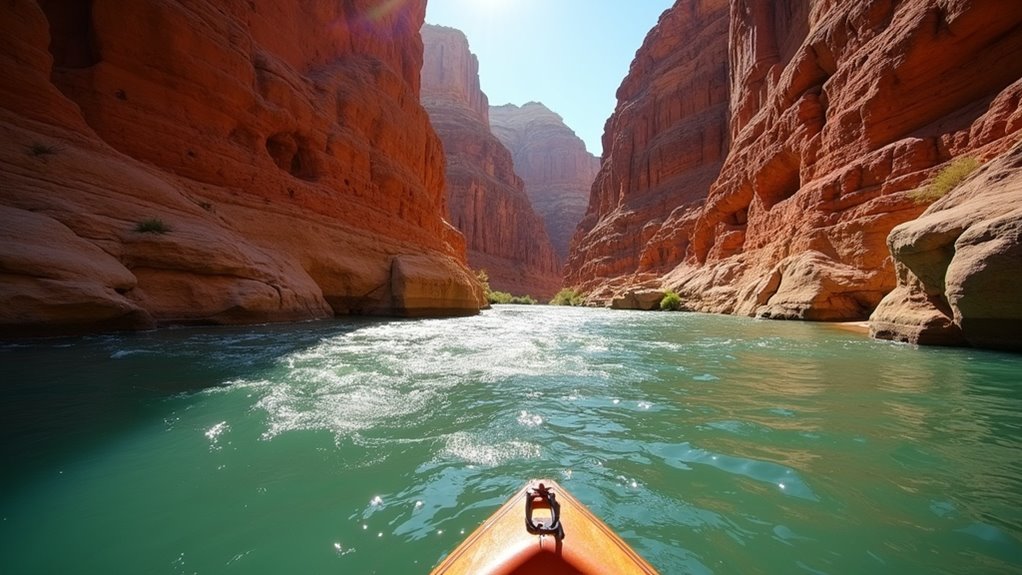
Seven miles of gentle rapids and towering red sandstone scenery make a half-day Colorado River float trip one of Moab’s most accessible adventures.
You’ll paddle through the famous Fisher Towers section with Class I-II rapids that won’t intimidate beginners, while enjoying Castle Valley’s dramatic desert landscapes from a unique water-level perspective.
Most outfitters offer multiple daily departures at 9:00 am, noon, and 2:00 pm, fitting perfectly around your other Moab activities.
The 4-4.5 hour commitment includes shuttles, safety orientation, and 2-3 hours on the water.
Everything’s provided—life jackets, paddles, and professional guides—with river access fees included in commercial rates. Professional guides handle the primary rowing in oar-assisted rafts, though you can paddle voluntarily when requested for extra help through rapids.
Kids as young as four can join, making this family-friendly adventure an ideal escape from crowded viewpoints.
Explore Moab’s Red Rock Country on a Guided 4×4 Tour
Though Moab’s national parks showcase stunning red rock formations, you’ll access the region’s most dramatic backcountry terrain on a guided 4×4 tour that takes you far beyond crowded viewpoints.
Choose between UTV “you-drive” adventures where you’ll pilot Polaris machines following an expert guide, or ride-along Jeep tours that let professionals tackle the toughest obstacles while you enjoy panoramic views of the Colorado River and La Sal Mountains.
Popular routes like Hell’s Revenge feature steep slickrock domes and fossilized sand dunes, while gentler options like Chicken Corners emphasize scenic overlooks over technical challenges. The T-Rex Hell’s Revenge tour has been recognized as a top 10 adrenaline rush experience in the United States.
Most tours run 3-4 hours with hotel pickup included.
Book spring and fall trips well ahead—demand peaks during these ideal weather windows, and small groups of 10-12 participants fill quickly.
Drive the La Sal Mountain Loop for Alpine and Desert Scenery
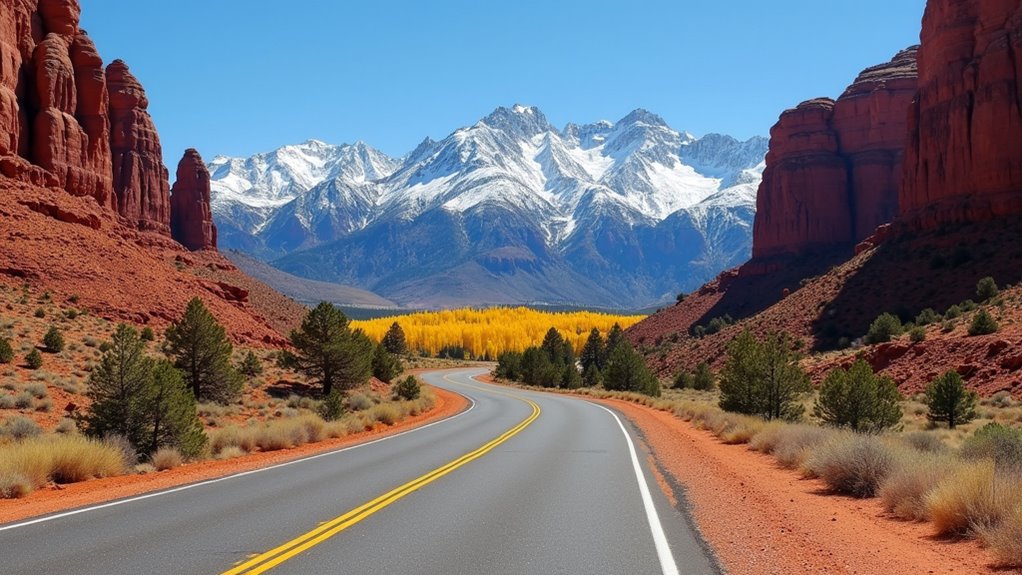
When you’re ready to escape Moab’s crowds without leaving your rental car behind, the 60-mile La Sal Mountain Loop delivers a stunning contrast between high alpine forests and classic red-rock desert terrain.
You’ll climb nearly 5,500 feet from desert floor to alpine peaks, experiencing temperature drops up to 30°F along the way.
Start six miles south of Moab on US-191, turning east toward Ken’s Lake. The fully paved route takes 2.5-4 hours with stops, winding through Castle Valley’s iconic formations like Priest and Nuns before ascending into aspen and pine forests.
You’ll enjoy panoramic views of Canyonlands National Park and the Colorado River corridor. Along the way, you can stop at Big Bend Recreation Site for river views and picnicking opportunities.
The loop reconnects via Highway 128, completing your circuit back to Moab without spending a dime on admission fees.
Hunt for Petroglyphs Along Highway 279
Just four miles from downtown Moab, Highway 279‘s towering sandstone cliffs harbor one of Utah’s most accessible collections of ancient rock art. You’ll spot brown “Indian Writing” signs marking pullouts where hundreds of petroglyphs cover the cliff faces above the paved road.
Pack binoculars—many figures sit high on the rock walls, depicting bighorn sheep, human forms, and hunting scenes carved by Archaic and Ancestral Puebloan peoples thousands of years ago. The main viewing stop sits 5.1 miles along Highway 279, offering easy walks to panel bases.
Combine your petroglyph hunt with dinosaur tracks at Poison Spider Trailhead for a complete ancient history experience. You can view from car at many locations, making this an accessible adventure for all mobility levels. Budget 1-2 hours total, and use designated pullouts only—this narrow highway sees fast-moving traffic.
Mountain Bike the Slickrock Trail or Beginner-Friendly Routes
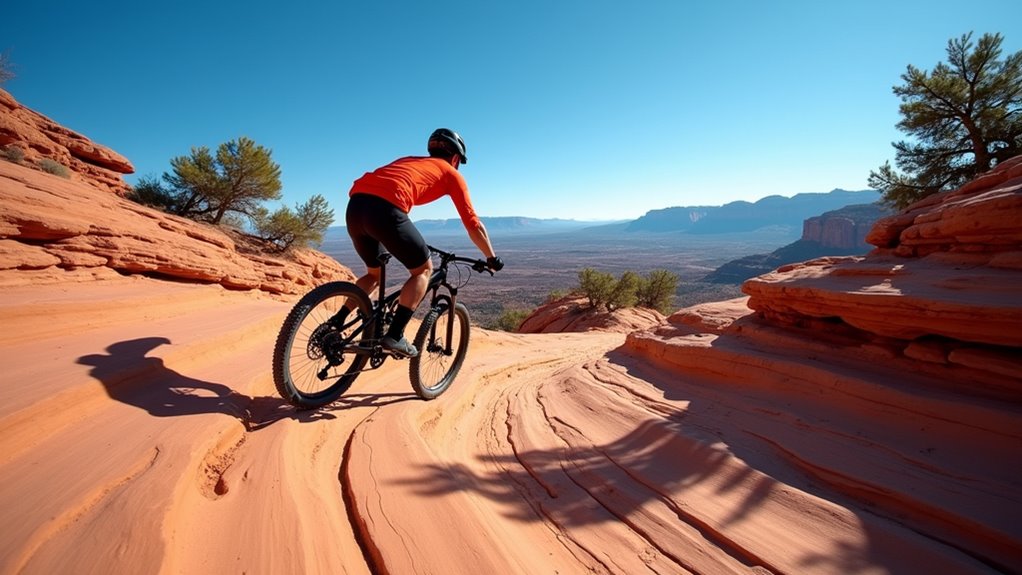
While Moab’s legendary Slickrock Trail draws mountain bikers from around the world, you don’t need expert skills to experience the area’s incredible slickrock riding. The 10.5-mile Slickrock Trail challenges experienced riders with steep climbs and technical terrain over grippy Navajo sandstone, offering stunning views of the La Sal Mountains and Colorado River.
However, beginners shouldn’t miss out—try the shorter Practice Loop or head to beginner-friendly areas like Willow Springs, featuring gentle trails like Carousel and Wizard on smooth slickrock. For those seeking easier options near Arches National Park, the Bar-M Loop Trail offers varied terrain that’s more accessible to novice riders.
You’ll need a recreation pass for Sand Flats Recreation Area, available at the entrance booth. Pack plenty of water (3-4 liters), snacks, and repair tools.
Spring and fall offer the best riding conditions, avoiding summer’s extreme heat.
Stargaze in Some of Utah’s Darkest Skies
After exploring Moab’s red rock formations during the day, you’ll discover the area transforms into one of the world’s premier stargazing destinations once darkness falls. Moab earned its International Dark Sky Community designation in 2021, joining nearby Arches and Canyonlands National Parks as certified dark sky locations.
You’ll see up to 2,500 stars with your naked eye—dramatically more than typical urban environments allow. Head to free spots like Arches’ Panorama Point or Dead Horse Point State Park for ideal viewing.
The Milky Way’s galactic core appears March through November, while major meteor showers like the Perseids can produce 50-75 meteors per hour. With ideal conditions and binoculars, you might even spot Saturn’s rings among the celestial wonders.
Plan your visit during new moon periods for darkest conditions, and bring layers since desert temperatures drop considerably after sunset.
The Sum Up
You’ll find endless adventure in Moab without breaking the bank. Most hiking trails are free, and many activities like stargazing and petroglyphs hunting won’t cost you anything. Pack plenty of water, bring your own snacks, and don’t forget sunscreen and a hat. Start with easier trails if you’re new to desert hiking, then work your way up to more challenging adventures. You’ll leave planning your next visit before you’ve even headed home.