
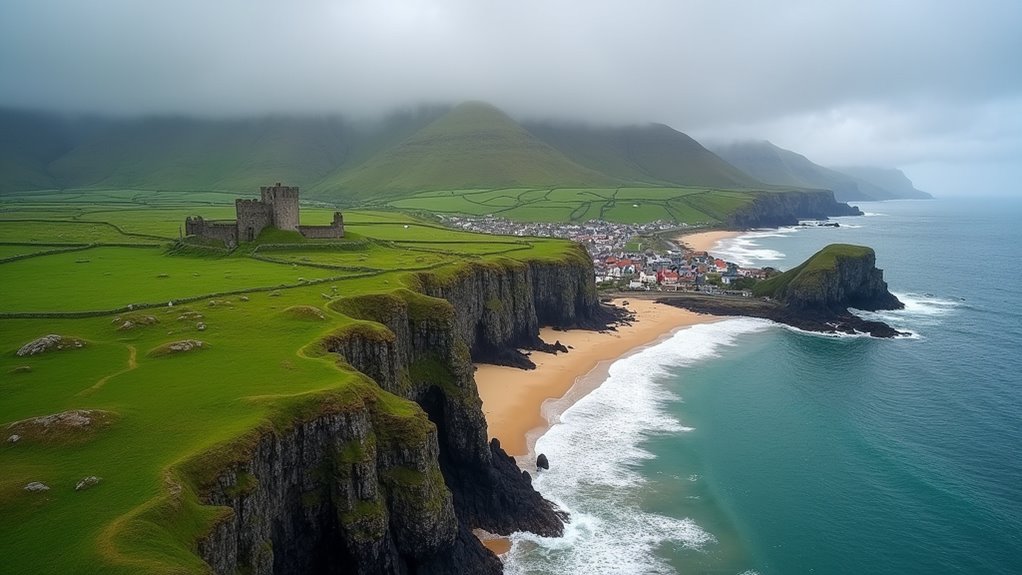
You’ll find Northern Ireland packed with experiences that won’t break the bank, from free walks along dramatic coastlines to affordable heritage sites that tell centuries of stories. Whether you’re drawn to Belfast’s gritty political history, the otherworldly landscapes of the Causeway Coast, or charming folk museums, this compact region delivers incredible value for travelers. Here’s how to make the most of your visit while keeping costs manageable and creating memories that’ll last a lifetime.
- Explore Titanic Belfast and the Shipyard Quarter
- Walk the Giant’s Causeway and Drive the Causeway Coastal Route
- Take a Black Taxi Tour of Belfast’s Peace Walls and Political Murals
- Hike in the Mourne Mountains
- Cross the Carrick-a-Rede Rope Bridge
- Discover Belfast’s Cathedral Quarter After Dark
- Step Back in Time at the Ulster American Folk Park
- Explore Derry’s City Walls and Tower Museum
- Visit the Atmospheric Ruins of Dunluce Castle
- Experience Northern Ireland’s Craft Distilleries and Local Food Scene
- The Sum Up
Explore Titanic Belfast and the Shipyard Quarter
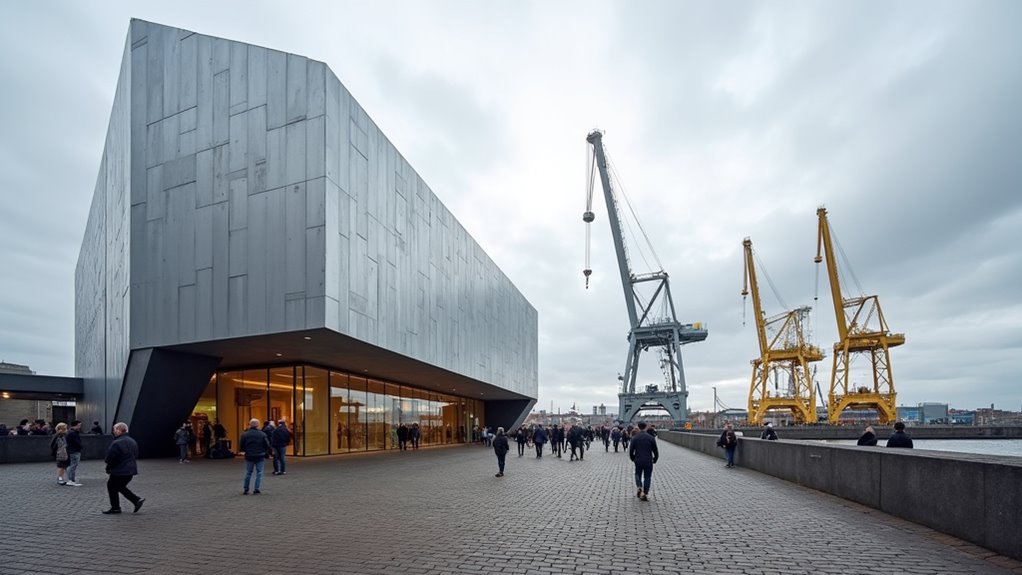
When you visit Northern Ireland, Titanic Belfast should top your list of must-see attractions. Located on the historic Harland & Wolff shipyard where the famous ship was built, this world-class museum spans nine galleries with immersive exhibits, dark rides, and interactive displays that chronicle Titanic’s complete story.
You’ll experience the shipyard’s construction process through moving platforms and special effects. Explore recreated rooms like the Wireless Room, and view deep-sea footage from the actual wreck.
Your ticket includes access to SS Nomadic, the last surviving White Star Line ship, where you can walk the decks and explore cabins. The restored vessel provides a tangible connection to Titanic’s maritime heritage and offers an authentic piece of history beyond the main museum experience.
At £24.95 for adults online, plan 2.5-3.5 hours total. The museum’s conveniently located just 1.5 miles from Belfast city center.
Walk the Giant’s Causeway and Drive the Causeway Coastal Route
As Northern Ireland’s most iconic natural wonder, the Giant’s Causeway delivers an unforgettable experience that won’t break your budget. You’ll walk among 40,000 interlocking basalt columns formed 60 million years ago, with some towering 12 meters high.
While visitor center tickets start around £9, you can access the Causeway itself for free on foot.
Book advance tickets to secure parking, or save money by arriving via public transport, bicycle, or walking.
Four hiking trails offer varied perspectives along 5 kilometers of stunning coastline.
Visit early morning or sunset to avoid crowds and capture better photos. The site has been recognized as a UNESCO World Heritage Site since 1986, cementing its global significance as both a natural wonder and cultural landmark.
Extend your adventure by driving the scenic Causeway Coastal Route, connecting charming towns like Bushmills, Portrush, and Ballycastle for a complete coastal experience.
Take a Black Taxi Tour of Belfast’s Peace Walls and Political Murals
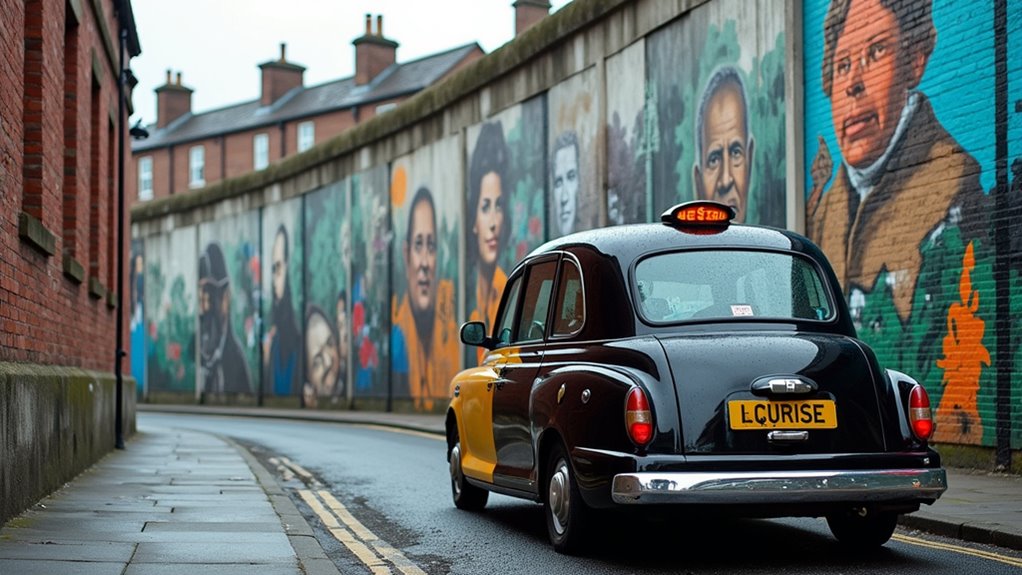
Since Belfast’s black taxi tours began informally during the mid-1990s ceasefires, they’ve become one of the most authentic ways to understand Northern Ireland’s complex history without spending a fortune.
You’ll ride in vintage London-style black cabs through West Belfast’s Falls Road and Shankill Road neighborhoods, where peace walls still separate Catholic and Protestant communities.
Local guides from both sides share personal stories about The Troubles, explaining the political murals that commemorate figures like Bobby Sands.
You’ll see where over 3,500 people died during the conflict, with nearly 70% of deaths occurring within 500 meters of these walls.
The two-hour tours let you sign peace messages on the walls and witness how former conflict barriers have transformed into symbols of hope and reconciliation. Paradoxically, more walls exist today than before the 1998 Good Friday Agreement, making these tours even more relevant for understanding Belfast’s ongoing journey toward peace.
Hike in the Mourne Mountains
Just thirty miles south of Belfast, the Mourne Mountains offer some of Ireland’s most rewarding hiking without the crowds you’ll find at more famous peaks. You’ll discover well-signposted trails suitable for every ability level, from family-friendly Hen Mountain (354m) with its grassy paths to challenging Slieve Donard, Northern Ireland’s highest peak at 850m.
Start with the moderate Doan summit from Ott Car Park for spectacular 360-degree views, or tackle Slieve Binnian’s 7-11km loop featuring granite tors and the historic Mourne Wall.
The extensive trail network includes over 7.5 miles of marked paths, plus forest walks around Tollymore and Castlewellan. Tollymore Forest Park alone encompasses 630 hectares of woodland with eight different walking routes including the popular Stepstones Loop.
Budget-conscious hikers appreciate the free parking at multiple trailheads and optional guided walks for safer navigation through boggy terrain.
Cross the Carrick-a-Rede Rope Bridge
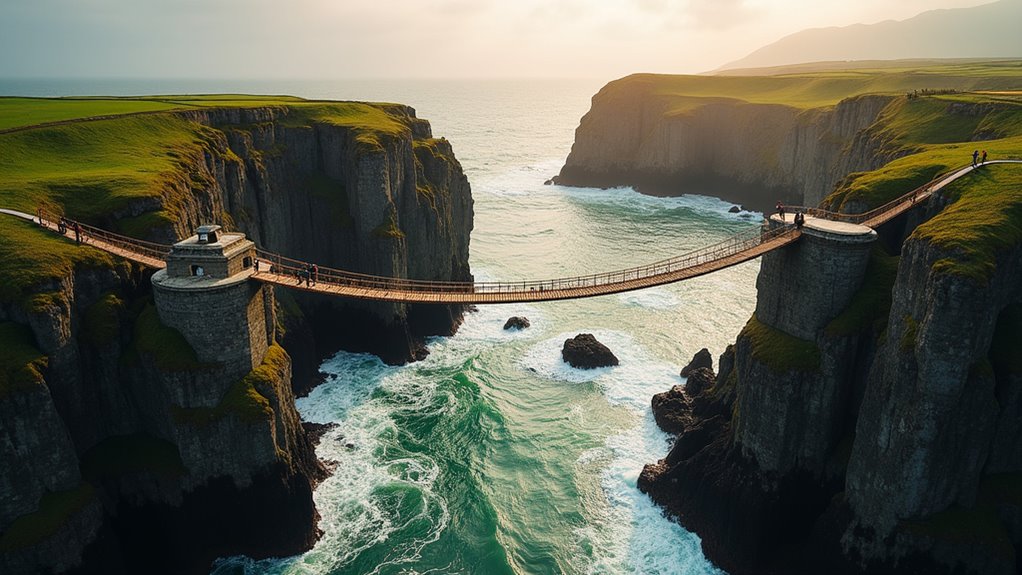
Though originally built by salmon fishermen in 1755, the Carrick-a-Rede Rope Bridge now offers one of Northern Ireland’s most thrilling experiences without breaking your budget.
You’ll cross 20 meters of swaying suspension bridge hanging 98 feet above crashing Atlantic waves—definitely not for the faint-hearted.
The 1km walk from the car park adds to your adventure through stunning coastal scenery.
Once across, you’ll explore Carrick Island’s 400-year-old Fisherman’s Cottage and enjoy panoramic views of Rathlin Island and Scotland’s coastline.
Book tickets online in advance since nearly half a million visitors flock here annually.
The National Trust maintains this Area of Special Scientific Interest, making it both thrilling and educational. The bridge is taken down annually in late October due to harsh weather conditions and reconstructed each March for the tourist season.
Just remember—some visitors need boat evacuation after crossing, so consider your return journey carefully.
Discover Belfast’s Cathedral Quarter After Dark
When evening falls over Belfast’s cobblestone streets, the Cathedral Quarter transforms into Northern Ireland’s premier nightlife destination. Historic warehouses now house everything from traditional Irish music sessions to cutting-edge comedy shows.
You’ll find excellent free entertainment at The Dirty Onion’s beer garden, where live music plays nightly without cover charges.
For authentic Belfast atmosphere, head to McHugh’s, dating to 1711, where traditional music sessions unfold among exposed beams and perfectly poured Guinness.
The Duke of York stays open until 1 am with memorabilia-lined walls and local beers.
The National offers cocktails and weekend DJs.
The Harp Bar, housed in a former bonded warehouse for Old Bushmills Distillery, provides nightly live music featuring both local and international acts in a traditional setting.
Between venues, you’ll discover vibrant street art and historic architecture.
The Quarter’s proximity to hotels and public transport makes exploring multiple venues easy and affordable.
Step Back in Time at the Ulster American Folk Park
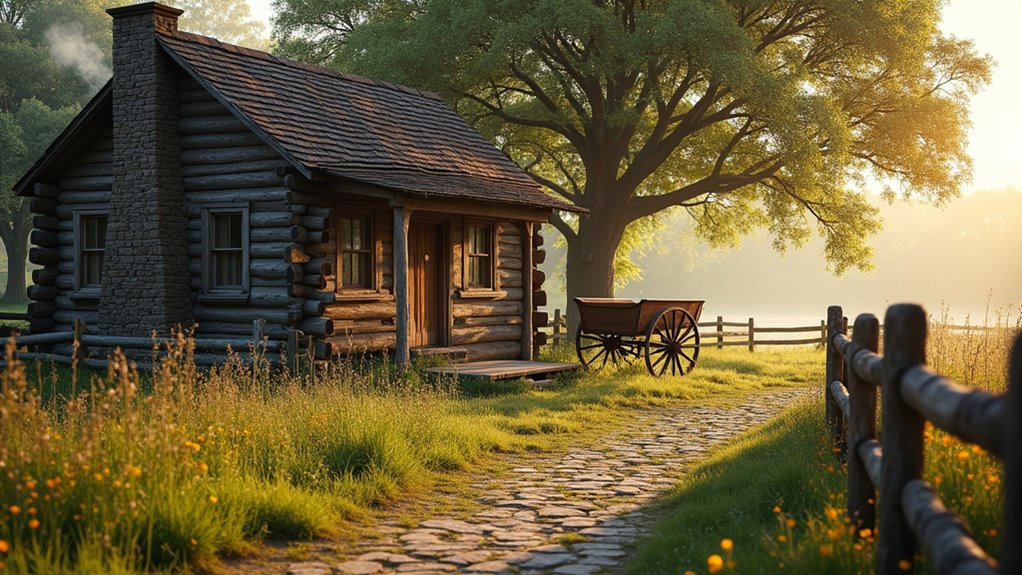
Located just outside Omagh in County Tyrone, the Ulster American Folk Park offers an immersive journey through three centuries of Irish emigration to America without breaking your travel budget. You’ll explore over 30 restored buildings, from Irish thatched cottages to American log cabins, while costumed guides demonstrate traditional crafts like wool spinning and willow weaving.
Don’t miss the full-size immigrant ship replica that shows the harsh Atlantic crossing conditions. The museum also hosts a Bluegrass Music Festival every September, celebrating the musical connections between Ireland and America. The Mellon Homestead tells Thomas Mellon’s remarkable story from Ulster farmer to American banking dynasty founder.
Plan 2-3 hours to fully experience the exhibits, including tastings of traditional soda bread. The museum’s accessible facilities include a café, gift shop, and picnic areas, making it perfect for families year-round.
Explore Derry’s City Walls and Tower Museum
As Europe’s most complete walled city, Derry offers you an unparalleled walk through 400 years of history along its perfectly preserved 17th-century fortifications. You’ll circle the entire historic center on foot, covering about one mile of walkable ramparts built between 1613-1619.
Don’t miss the famous cannon “Roaring Meg” at Ferryquay Gate’s double bastion—part of Europe’s largest collection of cannons with known origins.
The walls never fell during the 1689 Siege of Derry, earning the city its “Maiden City” nickname. The siege began when 13 apprentices courageously locked the city gates against James II loyalists, sparking the first major conflict of the Williamite War in Ireland. After exploring the fortifications, visit the Tower Museum within the walls to dive deeper into Derry’s maritime heritage and Spanish Armada connections.
With 466,000 annual visitors, you’re experiencing one of Northern Ireland’s most popular historical attractions.
Visit the Atmospheric Ruins of Dunluce Castle
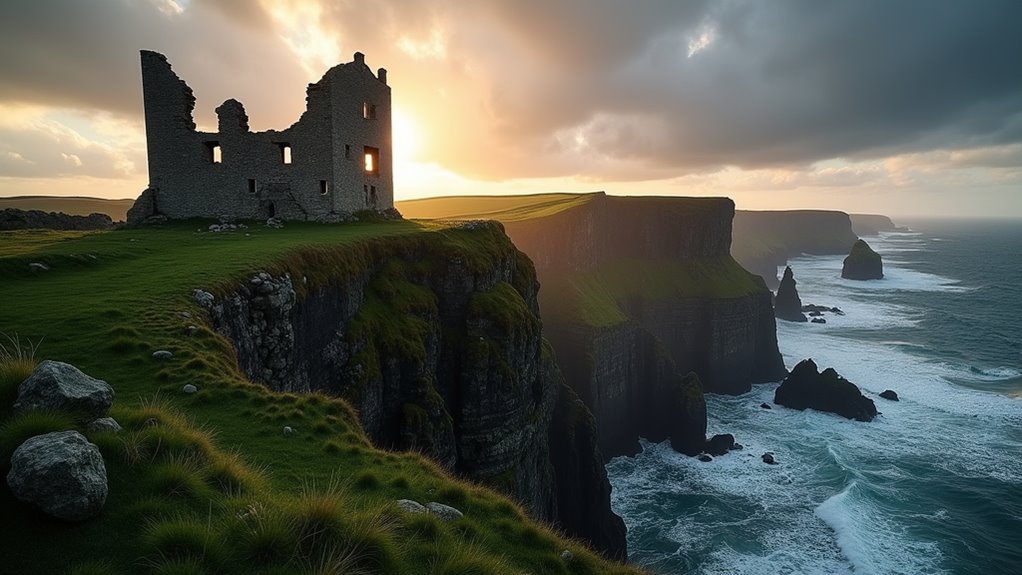
Why settle for castle photos when you can explore one of Ireland’s most dramatically positioned ruins in person? Dunluce Castle perches on basalt cliffs connected to mainland by a narrow bridge, offering breathtaking coastal views that’ll make your Instagram followers jealous.
You’ll wander through 16th and 17th-century stone ruins including the gatehouse, great hall, and towers. The dramatic kitchen collapse into the sea around 1639 adds to the castle’s haunting atmosphere.
Don’t miss the recently excavated “lost town of Dunluce” nearby, where you can walk cobbled streets and explore merchants’ houses dating back centuries. Recent archaeological discoveries have revealed even older structures with corner doorways that predate the known 17th-century settlement.
Archaeological displays showcase recovered artifacts telling stories of feuds, betrayals, and battles. The castle’s turbulent history spans Norman conflicts to Irish uprisings, making every crumbling wall worth exploring.
Experience Northern Ireland’s Craft Distilleries and Local Food Scene
After exploring ancient castle ruins, you’ll want to taste Northern Ireland’s modern renaissance in craft spirits and local cuisine. Visit Old Bushmills Distillery, the world’s oldest licensed whiskey distillery with over 400 years of tradition, or discover newer gems like Echlinville and Rademon Estate.
You’ll find over 20 distilleries producing everything from whiskey to gin using field-to-glass methods.
Book guided tours that include tastings and hands-on blending experiences at places like Two Stacks Whiskey. Many distilleries offer scenic rural settings where you can purchase spirits on-site. Don’t miss the Armagh Cider Company, Northern Ireland’s first commercial craft cider producer established in 2005 in the renowned Orchard County.
Pair your tastings with Northern Ireland’s exceptional local food scene—distillery taprooms serve artisanal dishes prepared to complement their beverages, creating an authentic taste of the region’s agricultural bounty.
The Sum Up
You’ll find Northern Ireland offers incredible value with many free attractions like the Giant’s Causeway, city walls, and peace wall tours. Pack comfortable hiking boots for the Mournes and coastal walks—you’ll save on transport costs. Book distillery tours in advance for better deals, and don’t miss the free museums in Belfast. With affordable B&Bs and hearty pub meals under £15, you’ll experience world-class history, stunning landscapes, and warm hospitality without breaking the bank.