
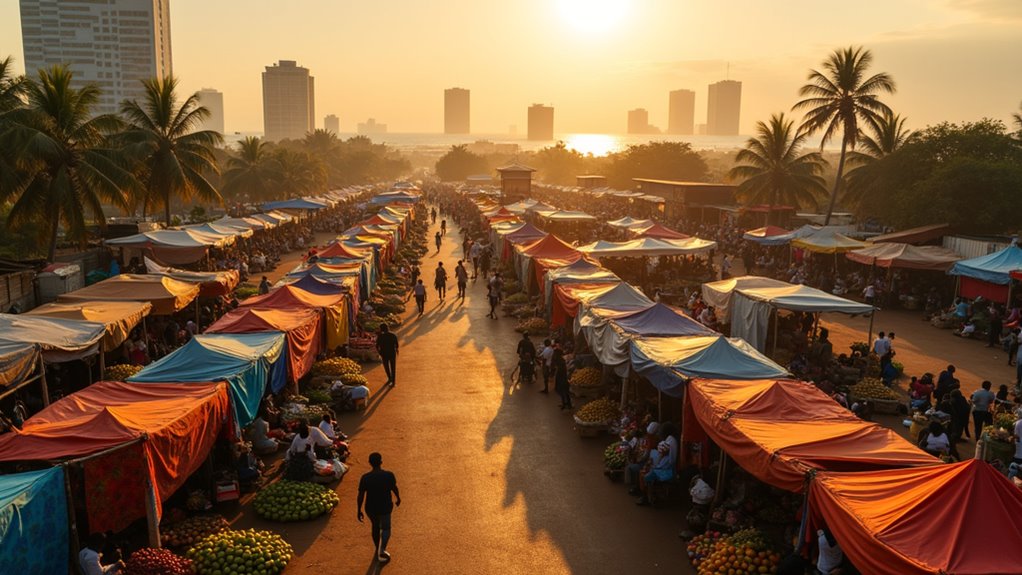
You’ll find Accra pulsing with energy that’s impossible to ignore—from the haunting corridors of centuries-old castles to vibrant street art splashed across crumbling colonial walls. Ghana’s capital doesn’t just offer activities; it delivers experiences that’ll shift your perspective on West African history and culture. Whether you’re drawn to sobering historical sites or prefer hunting for textiles in chaotic markets, this city rewards curious travelers who venture beyond the obvious tourist stops.
- Visit Kwame Nkrumah Memorial Park to Understand Ghana’s Independence Story
- Explore the Dungeons and History at Osu Castle
- Wander Through Jamestown’s Fishing Community and Colonial Streets
- Haggle for Textiles and Local Goods at Makola Market
- Take a Day Trip to Elmina Castle’s Sobering Slave Fort
- Relax at Labadi Beach for Horseback Riding and Live Music
- Escape to Aburi Botanical Gardens for Nature Walks in the Hills
- Experience Accra’s Jazz Scene at +233 Jazz Bar & Grill
- Hunt for Street Art and Murals in Jamestown’s Alleyways
- Sample Jollof Rice and Kelewele at Osu Night Market
- The Sum Up
Visit Kwame Nkrumah Memorial Park to Understand Ghana’s Independence Story
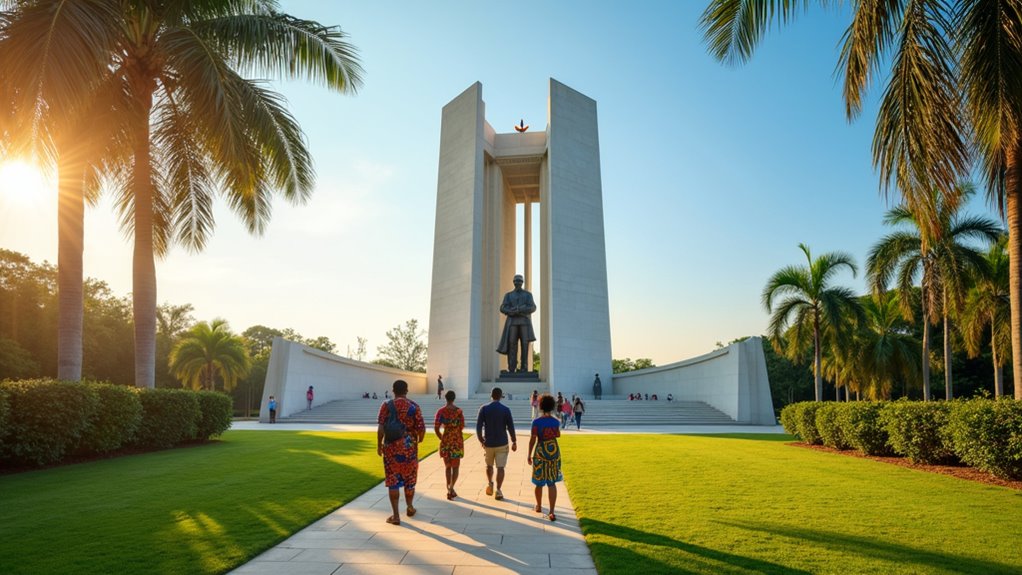
When you step into Kwame Nkrumah Memorial Park in downtown Accra, you’re standing on the exact spot where Ghana declared its independence from British rule in 1957. This 5.3-acre park transforms former British colonial polo grounds into a powerful symbol of African sovereignty and pride.
You’ll find a striking bronze statue of Dr. Kwame Nkrumah positioned exactly where he proclaimed independence, captured in his famous “Forward ever, backward never” stance.
The marble mausoleum, designed like traditional Ashanti swords, houses his remains and a museum filled with rare artifacts from Ghana’s independence movement. The peaceful reflecting pool near the mausoleum enhances the site’s solemnity and symbolizes life and purity in this sacred space.
Don’t miss the guided tours that explain colonialism’s complexities and Nkrumah’s Pan-African vision.
With 98,000 annual visitors, it’s one of Ghana’s most important historical sites for understanding the country’s journey to freedom.
Explore the Dungeons and History at Osu Castle
Standing on the cliff overlooking the Atlantic Ocean in Osu, you’ll encounter one of Ghana’s most haunting yet essential historical sites—Osu Castle, originally built by the Swedes in 1652 as Fort Christiansborg.
You’ll walk through dungeons with three-meter thick walls where thousands of enslaved Africans endured horrific conditions before passing through the infamous “Door of No Return.” The underground chambers, deliberately designed with poor ventilation and lighting, held men, women, and children in cramped quarters. Sand floors absorbed human waste in these deplorable spaces. The dungeon rooms are accessed via a circular staircase that resembles the interior of a shell.
Above these dungeons, you’ll find a chapel where European traders worshipped, creating a disturbing juxtaposition. The castle changed hands multiple times between European powers and African resistance fighters, making it central to understanding Ghana’s complex colonial history.
Wander Through Jamestown’s Fishing Community and Colonial Streets

Just a short walk from Osu Castle, you’ll discover Jamestown, one of Accra’s oldest districts where the Ga people have maintained their fishing traditions for over 300 years. You’ll witness fishermen launching colorful boats along the coast while women smoke and sell their catch at bustling markets.
The community operates as a traditional matriarchal society, where women control household finances and pass down trade skills through generations.
Wander the colonial streets lined with remnants of European influence—Fort James from 1673, the historic lighthouse rebuilt in 1892, and street names like Guggisberg Avenue and Commodore Street. These architectural fragments tell stories of when Jamestown served as the Gold Coast‘s richest commercial hub. The area hosts the annual Chale Wote Street Art Festival, where Ghanaian and international artists transform the historic streets into vibrant galleries celebrating contemporary African culture.
Despite modernization pressures, this fishing village remains Accra’s cultural heartbeat, preserving authentic Ga traditions and maritime heritage.
Haggle for Textiles and Local Goods at Makola Market
While the aroma of spices fills the air and vibrant fabrics catch your eye from every direction, you’ll find yourself at the heart of West Africa’s commercial energy in Makola Market. This colonial-era marketplace divides into specialized sections: Central Makola showcases traditional wax prints and kente cloth, while Kantamanto houses Ghana’s largest second-hand clothing market.
Visit weekday mornings for cooler temperatures and better bargaining opportunities when vendors restock their colorful textile displays. Haggling isn’t just expected—it’s essential. You can typically negotiate prices down 20-30% through respectful bargaining. Navigate the market’s unmarked streets and winding alleyways that connect different sections of this vast commercial maze.
On-site tailors offer custom garments from your chosen fabrics, creating authentic souvenirs.
Keep your belongings secure during busy Saturdays, and use taxis or tro-tros since parking’s limited around this bustling cultural hub.
Take a Day Trip to Elmina Castle’s Sobering Slave Fort
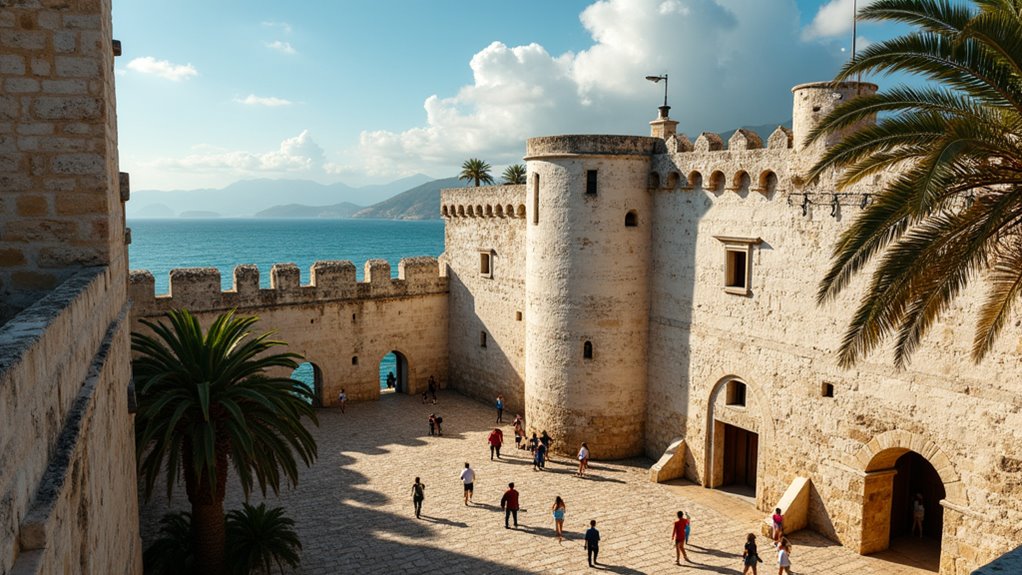
Where else can you confront one of history’s darkest chapters while standing in the oldest European building south of the Sahara? Elmina Castle, just 125 kilometers west of Accra, offers a powerful day trip that’ll challenge and educate you about Ghana’s colonial past.
Built by the Portuguese in 1482 for gold trade, this fortress became a major slave depot where approximately 6,000 enslaved Africans passed through annually during its peak. You’ll tour the brutal dungeons that held 200 people in horrific conditions, see the chapel converted for slave auctions, and walk the fortified walls.
This UNESCO World Heritage Site attracts over 78,000 visitors yearly as both tourist destination and pilgrimage site. The castle changed hands from Portuguese to Dutch control in 1637, who continued the slave trade operations for nearly 150 years before it eventually became a British possession. Guided tours explain the transatlantic slave trade‘s devastating impact while preserving these essential memories.
Relax at Labadi Beach for Horseback Riding and Live Music
After exploring Ghana’s complex history at Elmina Castle, you’ll find the perfect counterbalance at Labadi Beach, where Accra’s most vibrant shoreline pulses with live music and offers unique horseback rides along the Atlantic.
You can gallop along the sandy coastline with local operators providing guided excursions for all experience levels—just confirm safety practices beforehand.
The beach truly comes alive with traditional drumming, dancing, and live performances featuring highlife, hiplife, and Afrobeat music, especially on weekends.
You’ll discover basic facilities including showers, restrooms, and chair rentals, plus lifeguards monitoring swimming areas. Food vendors serve local specialties like grilled tilapia, banku, and fried yams right along the shore.
Located near Osu Castle and the upscale Labadi Beach Hotel, this palm-fringed stretch creates an energetic social hub perfect for experiencing authentic Ghanaian culture.
Escape to Aburi Botanical Gardens for Nature Walks in the Hills
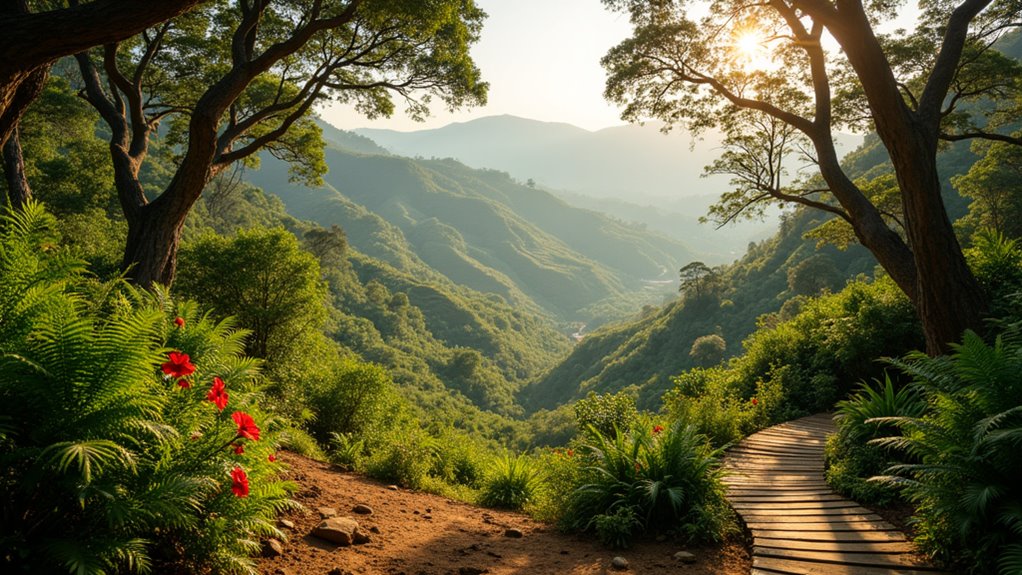
When the coastal heat becomes overwhelming, you’ll find your perfect escape just 30 minutes from Accra at Aburi Botanical Gardens. Here, cool mountain breezes and 160 acres of lush tropical greenery await in the Akuapem Hills.
You’ll discover diverse sections like the Palm Walk, lined with towering palms, and the dense Bamboo Grove with hiking trails leading to scenic viewpoints.
The gardens showcase an impressive collection of tropical species including mahogany, cedar, silk cotton trees, and aromatic cinnamon plants. This historic sanctuary was established in March 1890, making it one of West Africa’s oldest botanical institutions.
At 1,500 feet above sea level, you’ll enjoy panoramic views of the Eastern Region while exploring winding paths through this historic botanical sanctuary.
It’s Ghana’s perfect nature retreat for cooling off and reconnecting with tranquil surroundings.
Experience Accra’s Jazz Scene at +233 Jazz Bar & Grill
As evening settles over Accra, you’ll discover the city’s most authentic jazz experience at +233 Jazz Bar & Grill on Dr Isert Street.
Here, live bands fill the air with soulful highlife, blues, and jazz six nights a week. You can enjoy performances from both the main floor and the U-shaped upstairs gallery that overlooks the stage.
The venue stays open until 4:00 AM on weekends, giving you plenty of time to savor their grilled specialties like burgers, kebabs, and pork chops alongside local and international drinks. When live bands perform, there’s typically a modest entrance fee of around GH10.
With free off-street parking and both indoor and outdoor seating options, it’s Accra’s premier destination for live music enthusiasts seeking an authentic Ghanaian cultural experience.
Hunt for Street Art and Murals in Jamestown’s Alleyways
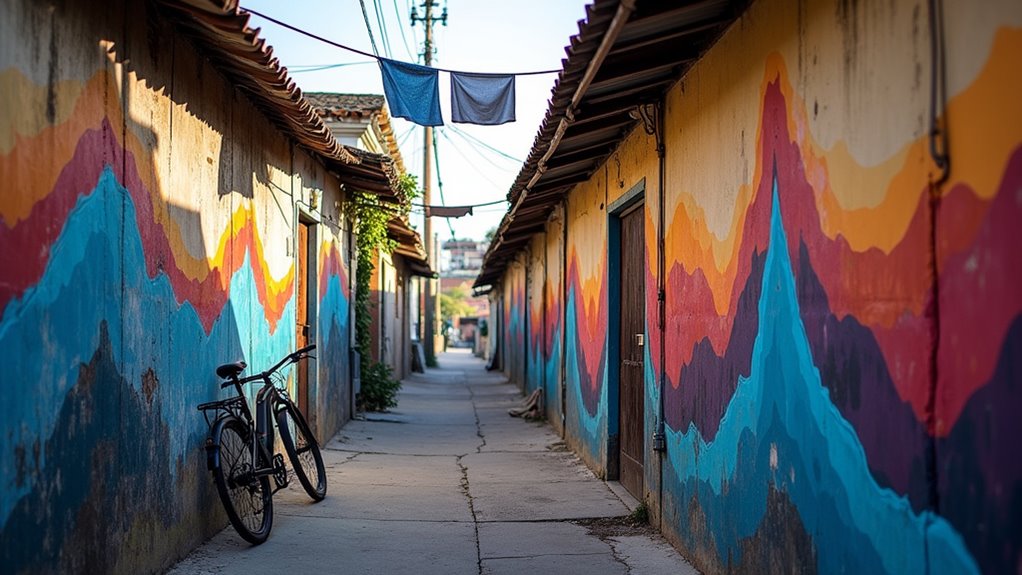
While most travelers stick to Accra’s main attractions, you’ll uncover the city’s most vibrant artistic soul by wandering through Jamestown’s narrow alleyways. Here, every corner reveals colorful murals that transform crumbling walls into powerful storytelling canvases.
This historic neighborhood showcases Ghana’s rich cultural heritage through street art that blends traditional motifs with contemporary expressions.
Join the popular Jamestown Arts Walking Tour to discover works by local artists like Tai, who creates stunning 3D metal sculptures and aluminum murals. You’ll explore the Brazil House gallery, interact with community artists, and learn about the annual Chale Wote Street Art Festival’s lasting impact. The comprehensive tour also includes a visit to Ghana’s oldest photo gallery, where vintage photographs document the neighborhood’s artistic evolution.
Weekend visits offer the best opportunities to meet artists actively working on new pieces while enjoying scenic backdrops near James Fort.
Sample Jollof Rice and Kelewele at Osu Night Market
Where can you experience Ghana’s most authentic street food scene while the city comes alive under neon lights? Head to Osu Night Market on Basel Street, where vendors serve steaming plates of Jollof rice 24 hours daily. You’ll taste this iconic West African dish made with tomato sauce, onions, and aromatic spices, often paired with fried plantains or grilled meat.
Don’t miss kelewele – spicy fried plantains seasoned with ginger and pepper that deliver the perfect sweet-spicy crunch. Street vendors prepare these golden cubes fresh, wrapping them in newspaper for easy snacking as you explore. The market’s vibrant atmosphere features local musicians and cultural displays that provide authentic insights into Ghanaian traditions.
Consider joining a guided food tour lasting 2-3 hours, where local guides share vendor stories while you sample eight different dishes for around $80-110.
The Sum Up
You’ll find Accra’s blend of history, culture, and modern energy absolutely mesmerizing. From sobering historical sites like Osu Castle to vibrant neighborhoods like Jamestown, there’s something for every traveler. Don’t miss the local markets for authentic crafts, and make sure you sample the incredible street food. Whether you’re exploring colonial architecture, relaxing in botanical gardens, or dancing to jazz music, Accra offers unforgettable experiences that’ll leave you planning your return trip.