
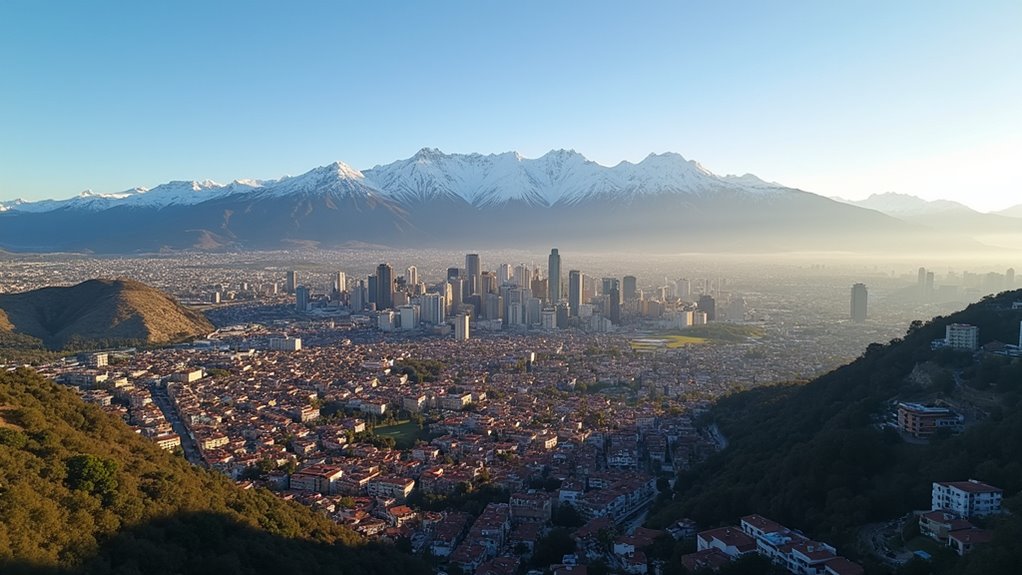
You’ll want to start at Plaza de Armas, Santiago’s colonial heart since 1541, then ride the historic funicular up Cerro San Cristóbal for 360° Andean views. Explore Pablo Neruda’s quirky La Chascona house-museum and sample authentic empanadas de pino and completos from street vendors. Don’t miss the National Museum of Fine Arts‘ 5,500-work collection or modern Las Condes district’s Sky Costanera observatory. Consider day trips to dramatic Cajón del Maipo or UNESCO-listed Valparaíso for the complete Chilean experience that awaits below.
- Explore Plaza De Armas and Santiago’s Colonial Heart
- Ride the Funicular Up Cerro San Cristóbal for Panoramic Views
- Discover Chile’s Artistic Heritage at the National Museum of Fine Arts
- Wander Through Pablo Neruda’s Quirky Casa Museo La Chascona
- Experience Santiago’s Modern Side in Las Condes and Sky Costanera
- Get Lost in the Bohemian Streets of Barrio Lastarria
- Dive Into Santiago’s Nightlife Scene in Barrio Bellavista
- Sample Empanadas and Completos Like a Local
- Take a Day Trip to the Dramatic Cajón Del Maipo
- Visit the Colorful Port City of Valparaíso
- Climb Cerro Santa Lucía for Central City Views and History
- The Sum Up
Explore Plaza De Armas and Santiago’s Colonial Heart
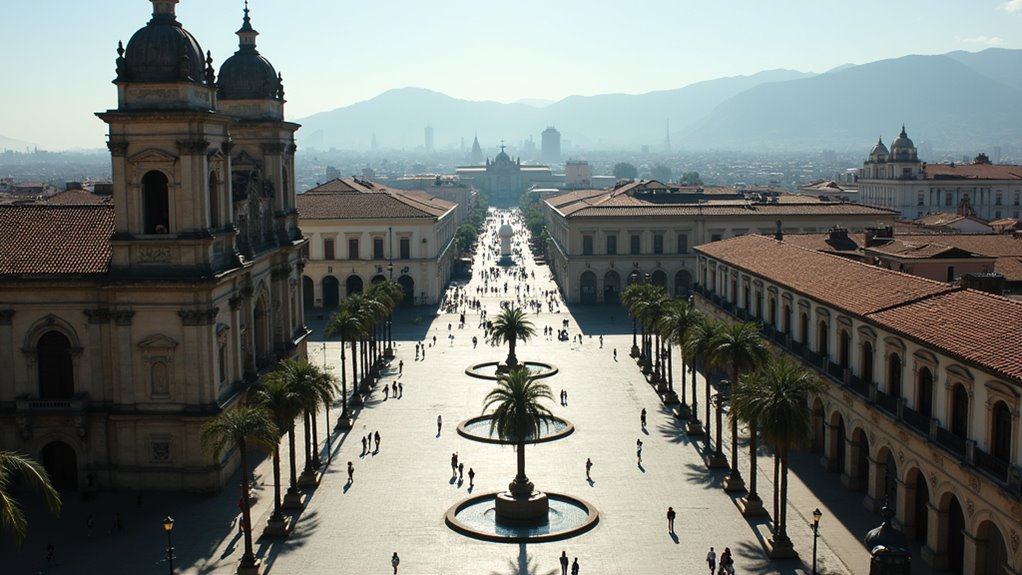
When you step into Plaza de Armas, you’re entering the beating heart of Santiago that has pulsed with life since Pedro de Valdivia founded it in 1541. This colonial square serves as Chile’s official kilometer zero, surrounded by architectural treasures that tell Santiago’s story.
You’ll find the Metropolitan Cathedral’s neoclassical twin towers dominating one corner, while the former Royal Courthouse now houses the National History Museum with exhibits spanning pre-Columbian to modern eras.
The old Governor’s House operates as the Central Post Office, and the colonial Cabildo still functions as Santiago’s municipality.
Don’t miss Pedro de Valdivia’s equestrian statue and the monument to Indigenous Peoples. The plaza buzzes with activity from local street performers, painters, and photographers who contribute to its vibrant cultural atmosphere. The plaza’s two ceremonial esplanades, designed by architect Rodrigo Pérez de Arce, create perfect spaces for soaking up this historic atmosphere.
Ride the Funicular Up Cerro San Cristóbal for Panoramic Views
After exploring Santiago’s colonial foundations at street level, you’ll want to gain perspective on the modern metropolis from above. The historic funicular railway on Cerro San Cristóbal, operating since 1925, provides the perfect solution.
Board at the Pío Nono station in Bellavista for a 15-20 minute ascent up the southeastern slope.
The summit rewards you with 360° panoramic views stretching from Gran Torre Santiago to the snow-capped Andes Mountains. You’ll find multiple viewing terraces surrounding the 22-meter Virgin Mary statue and sanctuary complex.
Visit during golden hour for ideal photography conditions when warm light illuminates the cityscape. Morning visits offer clearer air and better visibility before afternoon haze settles over the city.
Purchase round-trip tickets at the base, though many visitors ride up and walk down for varied perspectives through Santiago’s largest urban park.
Discover Chile’s Artistic Heritage at the National Museum of Fine Arts
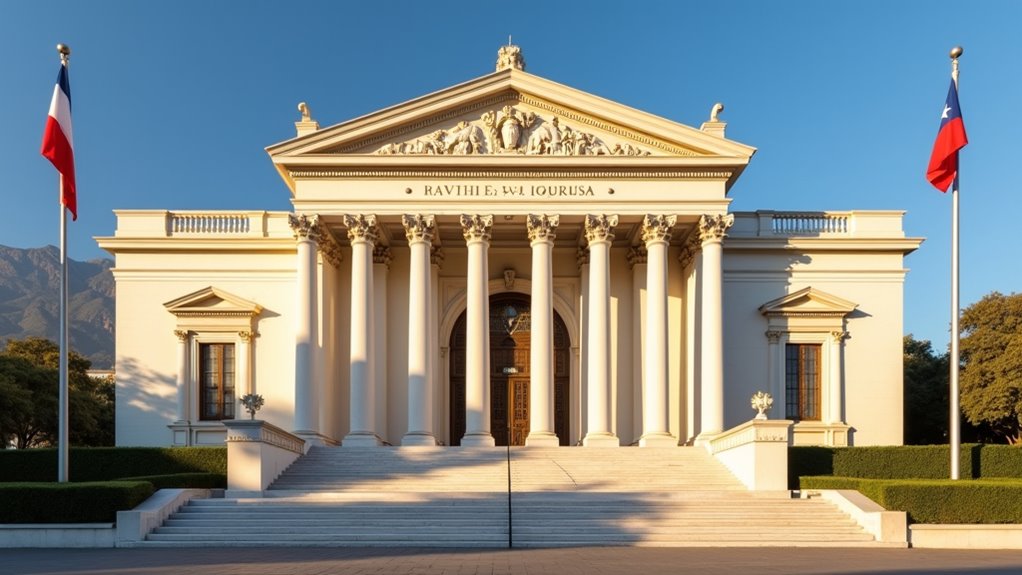
While Santiago’s modern skyline impresses from Cerro San Cristóbal, the city’s cultural soul reveals itself within the grand halls of the National Museum of Fine Arts. You’ll find Latin America’s oldest art museum housed in a stunning 1910 Neoclassical palace designed by Emilio Jéquier, inspired by Paris’s Petit Palais. Marvel at the magnificent Belgian glass roof weighing 115,000 kg in the central hall.
The museum’s 5,500 works span Chilean colonial art to contemporary masters like Roberto Matta. It also features exceptional international collections, including Spanish Golden Age and Dutch Golden Age paintings. You can explore rotating exhibitions and take advantage of the indoor connection to the Contemporary Art Museum.
Located in scenic Parque Forestal, it’s perfectly positioned for combining art appreciation with riverside walks. Best of all, you can experience this cultural treasure with free admission for all visitors, making it an accessible highlight of any Santiago itinerary.
Wander Through Pablo Neruda’s Quirky Casa Museo La Chascona
From Santiago’s premier art institution, shift your cultural exploration to the intimate world of Chile’s most celebrated poet. Pablo Neruda’s La Chascona offers a fascinating glimpse into the Nobel laureate’s unconventional lifestyle and artistic obsessions.
Built in 1953 for his secret lover Matilde Urrutia, this quirky hillside museum showcases Neruda’s maritime-inspired architecture and eclectic collections.
You’ll discover multiple small structures clustered together, featuring a ship’s cabin dining room and lighthouse-inspired living spaces. The museum displays Neruda’s curated treasures: books, shells, bottles, and a remarkable 1955 Diego Rivera painting of Matilde.
Located in bohemian Barrio Bellavista, La Chascona provides guided tours in multiple languages through narrow rooms filled with whimsical objects that reflect the poet’s humor and creative spirit. The museum also serves as the headquarters of the Pablo Neruda Foundation, continuing the poet’s cultural legacy.
Experience Santiago’s Modern Side in Las Condes and Sky Costanera
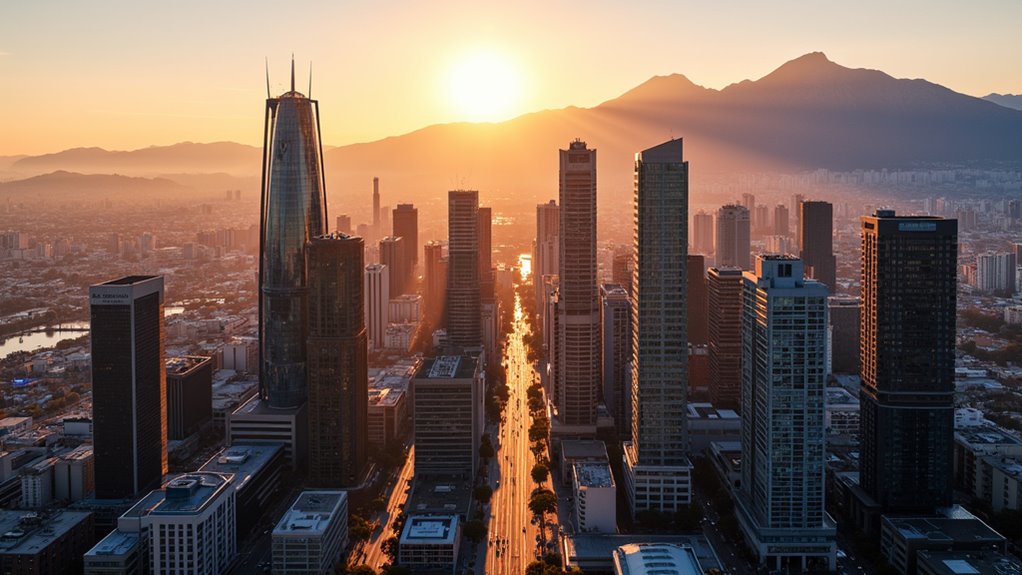
As you explore Santiago’s cultural treasures, the gleaming towers of Las Condes reveal the city’s ambitious modern identity. This affluent district showcases Chile’s economic power through high-rise offices, luxury apartments, and contemporary architecture along El Golf and Apoquindo corridors.
You’ll find prestigious shopping at Parque Arauco Mall and Alto Las Condes, where international brands mix with local favorites.
Don’t miss Sky Costanera atop Gran Torre Santiago, Latin America’s tallest skyscraper. High-speed elevators whisk you to the observation deck in under a minute, delivering breathtaking 360° views of Santiago and the Andes Mountains. The luxury shopping mall within Costanera Center offers additional retail options alongside these spectacular panoramic city views.
For family activities, visit Parque Araucano’s green spaces, perfect for picnics and biking.
Las Condes perfectly balances urban sophistication with outdoor recreation, exemplifying Santiago’s successful modernization.
Get Lost in the Bohemian Streets of Barrio Lastarria
After experiencing Santiago’s gleaming modernity, you’ll discover the city’s artistic soul in Barrio Lastarria, where cobblestone streets and 19th-century facades create an intimate bohemian atmosphere. This heritage zone centers around Plaza Mulato Gil de Castro, home to the Museo de Artes Visuales with 1,400 Chilean artworks and five rotating exhibition halls.
You’ll find dense concentrations of cafés, wine bars, and restaurants along Lastarria and Rosal streets, perfect for sidewalk dining with European flair. Browse independent bookstores and artisan stalls while street festivals bring poetry, music, and theater to the narrow lanes. The area was officially designated a Zona Típica in 1997, recognizing its outstanding historical and cultural significance.
The neighborhood borders Parque Forestal, connecting you to the Museo Nacional de Bellas Artes and providing easy access to Santa Lucía Hill‘s historic gardens.
Dive Into Santiago’s Nightlife Scene in Barrio Bellavista
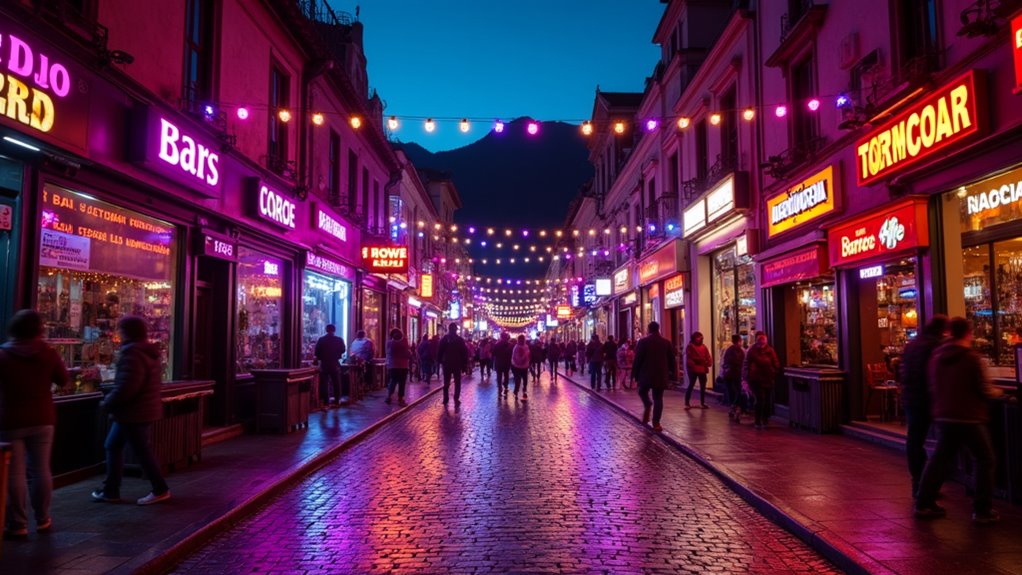
When Santiago’s sun sets, Barrio Bellavista transforms into the city’s undisputed nightlife capital, where cobblestone streets fill with revelers and music spills from dozens of bars and clubs packed into just a few blocks.
You’ll find the action centered on Pío Nono Street, lined with student pubs and shot bars, plus the enclosed Patio Bellavista complex housing multiple venues in one secure courtyard.
Start your night around 9 PM with dinner and drinks, then bar-hop until 1 AM when clubs hit their peak.
Club La Feria draws electronic music fans, while Bar Constitución hosts live indie bands. Don’t miss La Piojera, famous for its terremoto cocktail, a traditional Chilean drink that’s become legendary among locals and visitors alike.
Expect crowds of students, young professionals, and travelers partying until 4-5 AM, with street performers adding festival vibes to Santiago’s bohemian nightlife hub.
Sample Empanadas and Completos Like a Local
Since empanadas rank as Chile’s national dish alongside completos (loaded hot dogs), you’ll discover Santiago’s true culinary soul by sampling these beloved street foods at mom-and-pop establishments where locals queue during rush hours.
Start with empanada de pino—Chile’s iconic baked empanada stuffed with ground beef, onions, hard-boiled egg, raisins, and black olives.
Head to the historic corner of Bandera and Huérfanos in El Centro, where they produce 2,000 fresh empanadas daily, or visit Empanadas Famosas at Av. Pdte Balmaceda 1236 for 24 flavors. These empanadas are generously sized and often considered a full meal, so sharing allows you to taste multiple flavors without overordering.
Try completos at Dominó’s old-school soda fountains—these oversized hot dogs come piled with mashed avocado, chopped tomato, and generous mayonnaise.
Pair everything with Chilean papaya-flavored “Pap” soda for an authentic local experience.
Take a Day Trip to the Dramatic Cajón Del Maipo
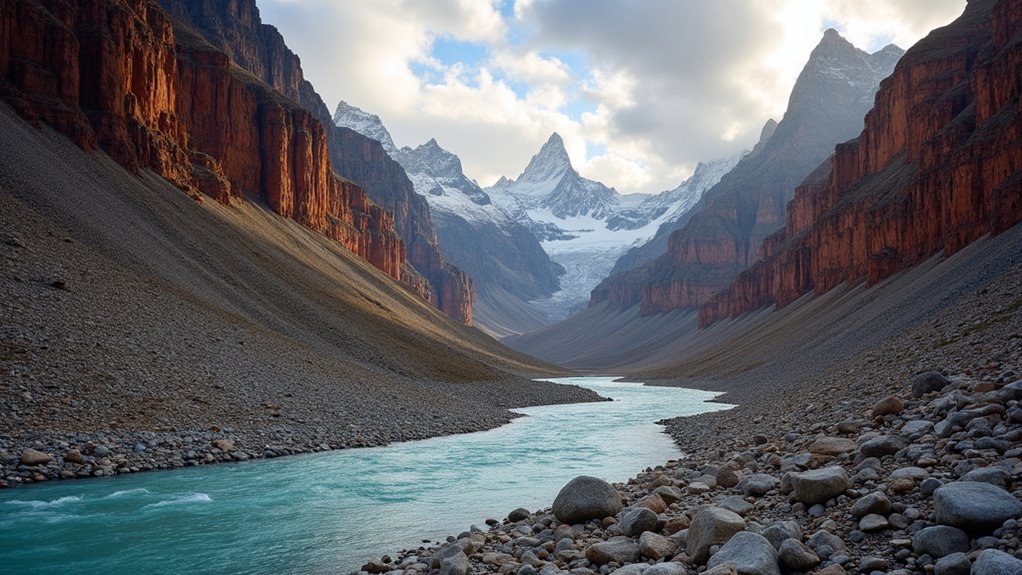
Just an hour’s drive southeast from Santiago’s urban sprawl, Cajón del Maipo unfolds as one of Chile’s most accessible yet dramatic mountain escapes.
The turquoise Maipo River carves through steep Andean canyons beneath snow-capped peaks reaching 3,500 meters above sea level.
You’ll want to book a full-day tour that includes the spectacular Embalse El Yeso reservoir, created in 1964 and considered Santiago’s primary water source. These excursions typically last around 9-10 hours and include guided commentary in Spanish with English support available.
Most tours stop at San José de Maipo, a colonial mountain town declared a National Monument, plus the abandoned Tinoco Tunnel with its rail remnants and local ghost legends.
If you’re driving independently, take Avenida La Florida southeast.
Otherwise, catch Metro Line 4 to Plaza de Puente Alto, then transfer to buses heading into the canyon for this unforgettable Andean adventure.
Visit the Colorful Port City of Valparaíso
Two hours northwest of Santiago by bus or car, the UNESCO World Heritage port city of Valparaíso sprawls across forty-two hills in a spectacular amphitheater overlooking the Pacific, where centuries of maritime history blend with South America’s most vibrant street art scene.
You’ll explore the historic cerros via century-old funiculars like Ascensor Concepción, paying just 100-200 pesos per ride. Wander through Cerro Concepción and Cerro Alegre‘s brightly painted houses and immigrant-era architecture, then hunt for spectacular murals around Paseo Gervasoni.
Don’t miss La Sebastiana, Pablo Neruda’s quirky hillside house-museum, or the panoramic views from Paseo 21 de Mayo. Plaza Sotomayor anchors the lower city, while the active port at Muelle Prat showcases Valparaíso’s continued maritime importance. The architecture throughout the city reflects distinctive French, English, and German influences brought by European immigrants during the colonial and trading eras.
Climb Cerro Santa Lucía for Central City Views and History
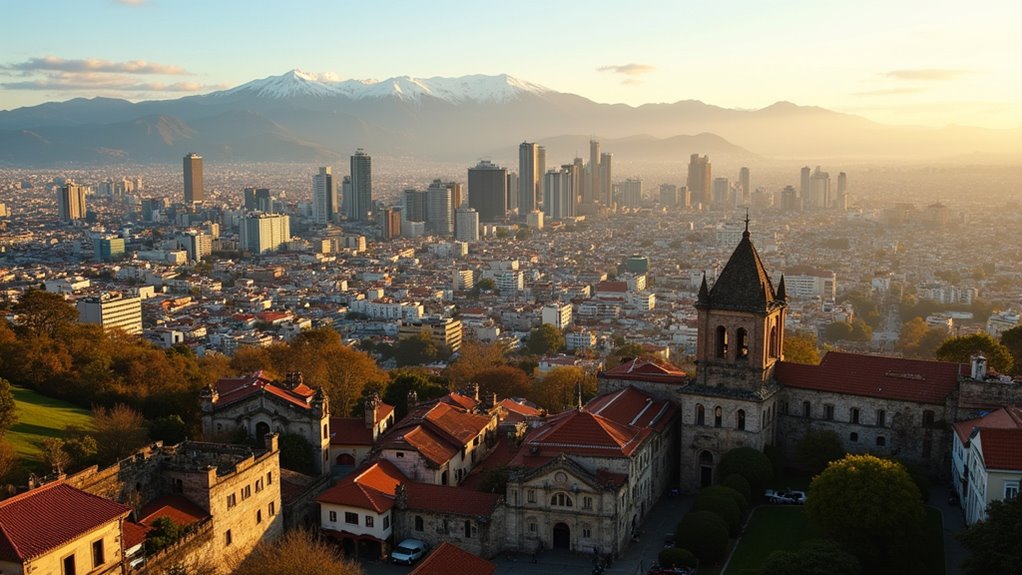
Back in Santiago’s city center, Cerro Santa Lucía rises 69 meters above the downtown streets as both the birthplace of Chile’s capital and one of its most accessible panoramic viewpoints. Pedro de Valdivia founded Santiago here in 1541, and you’ll find a stone slab with text from his original letter to Emperor Charles V describing the territory.
The moderate climb takes you through ornate neo-classical architecture, colonial-era walls, and landscaped gardens created during mayor Benjamín Vicuña Mackenna’s 1872 transformation. This hill is actually a volcanic remnant that dates back 15 million years, making your climb a journey through both human history and geological time.
At the summit, you’ll enjoy 360-degree views spanning Santiago’s historic center, modern skyline, and distant Andes mountains.
Plan 1-3 hours for your visit, wearing comfortable walking shoes. You can easily reach the hill via Santa Lucía metro station and combine it with exploring the nearby Lastarria neighborhood.
The Sum Up
You’ll find Santiago offers an incredible mix of colonial charm, artistic culture, and modern sophistication. Don’t miss the essential neighborhoods like Las Condes and the historic center, but make time for day trips to Cajón del Maipo and Valparaíso. Try local specialties like empanadas and completos at traditional spots. Plan at least four days to cover the main attractions, and remember that the city’s elevation means you’ll need sunscreen year-round.