
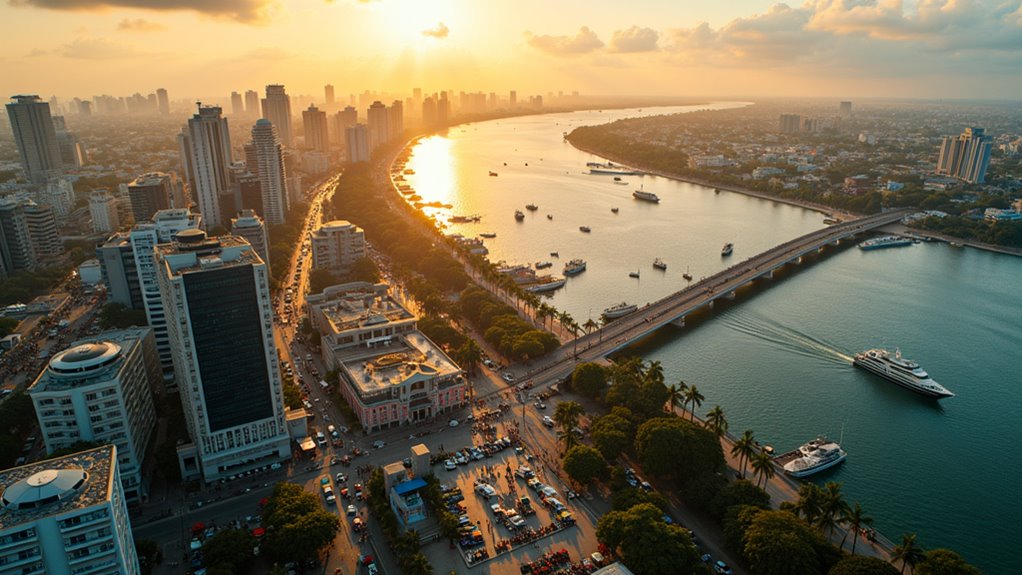
You’ve probably heard Lagos described as chaotic, overwhelming, or just another sprawling African city. But Nigeria’s commercial capital offers surprisingly diverse experiences that won’t break your budget. From walking through ancient history at world-class museums to haggling for textiles in bustling markets, Lagos rewards travelers who look beyond the surface. Whether you’re drawn to Fela Kuti’s musical legacy or prefer quiet moments on secluded beaches, this city has something unexpected waiting for you.
- Explore the National Museum Lagos for Ancient Nok Culture Artifacts
- Walk Africa’s Longest Canopy Bridge at Lekki Conservation Centre
- Take a Sobering Journey Through Badagry’s Slave Trade History
- Haggle for Textiles and Crafts at Balogun Market
- Experience Fela Kuti’s Legacy at Kalakuta Museum and New Afrika Shrine
- Discover Nigeria’s Largest Art Collection at Nike Art Gallery
- Relax at Tarkwa Bay Beach After a Short Boat Ride
- Visit the Floating Stilted Community of Makoko
- Enjoy Live Music and Cultural Shows at Freedom Park
- Browse Local Artworks and Souvenirs at Lekki Market
- The Sum Up
Explore the National Museum Lagos for Ancient Nok Culture Artifacts
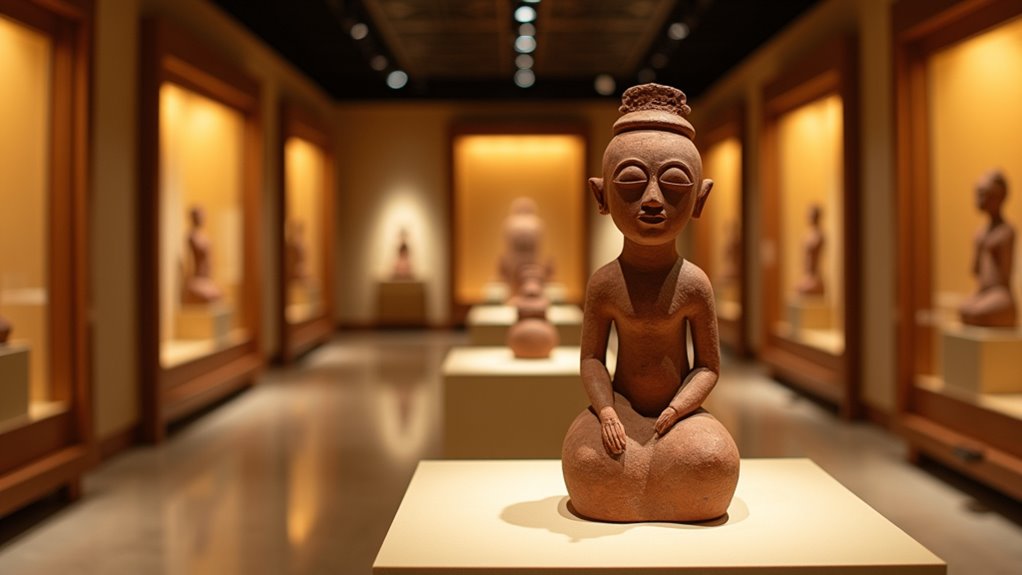
When you step into the National Museum Lagos, you’ll discover one of Africa’s most significant archaeological treasures without breaking the bank. The museum’s crown jewel is the Jemaa Head, a terracotta masterpiece dating from 900-200 BC that showcases the sophisticated artistry of Nigeria’s ancient Nok culture.
You’ll explore artifacts from a civilization that thrived from 1500 BCE to 500 CE, including detailed sculptures of warriors, animals, and religious figures. These terracotta works reveal early ironworking techniques and complex social hierarchies that shaped West African history. The museum also features masquerade costumes adorned with sequins, coins, and beads that were traditionally used during chiefs’ funeral ceremonies.
Located in accessible Onikan on Lagos Island, the museum houses 47,000 artifacts representing over 300 ethnic communities. You’ll gain invaluable insight into Nigeria’s prehistoric period while connecting with ancestral heritage that influences contemporary Nigerian artists today.
Walk Africa’s Longest Canopy Bridge at Lekki Conservation Centre
If you’re seeking an adrenaline rush that won’t drain your wallet, the canopy walkway at Lekki Conservation Centre delivers Africa’s longest treetop adventure at just N2,500 (about $3). You’ll traverse 401 meters across six swaying towers, each standing 72-74 feet above the jungle floor.
The narrow walkway provides 360-degree views of Lagos’s coastal ecosystem while offering close encounters with monkeys, birds, and diverse wildlife below.
Don’t attempt this if you’re afraid of heights or have health issues—it’s physically demanding. Secure your belongings tightly since dropped items can’t be retrieved.
The centre’s open daily from 8:30 a.m. to 5 p.m., located at kilometer 19 on Lekki-Epe Expressway. This conservation initiative was established in 1990 by the Nigerian Conservation Foundation to preserve Nigeria’s biodiverse coastal ecosystem. Budget an additional N1,000 for ground access.
Take a Sobering Journey Through Badagry’s Slave Trade History
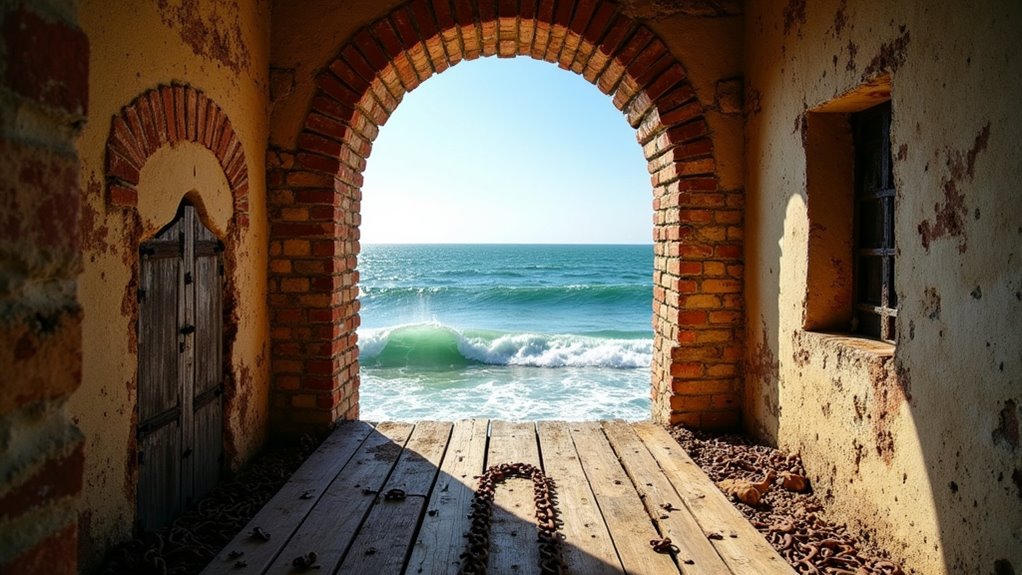
Though confronting difficult history isn’t easy, Badagry’s slave trade museums offer an essential education that’ll reshape your understanding of West Africa’s past. You’ll visit the Badagry Heritage Museum and the “V” Slave Market Museum, where 550,000 Africans were shipped to the Americas over 400 years.
Walk through original slave cells to witness the harsh detention conditions captives endured. Your guided tour includes the haunting “spirit attenuation well” where enslaved people were forced to drink, supposedly making them forget their past before boarding ships at the “Point of No Return.”
The Brazilian Baracoon and various monuments trace the complete journey from capture to shipment. At the Mobee Royal Family Slave Museum, you’ll see authentic manacles and mouth locks that were used to restrain enslaved people. These sobering sites cost minimal entrance fees but provide invaluable perspective on humanity’s darkest chapters.
Haggle for Textiles and Crafts at Balogun Market
As you step into the bustling chaos of Balogun Market on Lagos Island, you’ll discover one of West Africa’s largest textile hubs where savvy shoppers can score incredible deals on African prints, lace, and handcrafted goods.
Haggling isn’t optional here—it’s essential for getting fair prices on Ankara fabrics and brocade materials.
Come prepared with small naira notes and research fabric prices beforehand. Start your negotiations markedly lower than asking prices, then work your way up patiently.
The market operates Monday through Saturday from 8 AM to 6 PM, with early arrival ensuring the best selection before crowds arrive.
Navigate through Happy Plaza, Dubai Mall, and Breadfruit Plaza to compare quality across vendors. Beyond fabrics, you’ll find vendors offering everything from shoes and handbags to hair extensions and authentic Lagos street food.
Many sellers accept WhatsApp orders, making future purchases convenient even from home.
Experience Fela Kuti’s Legacy at Kalakuta Museum and New Afrika Shrine
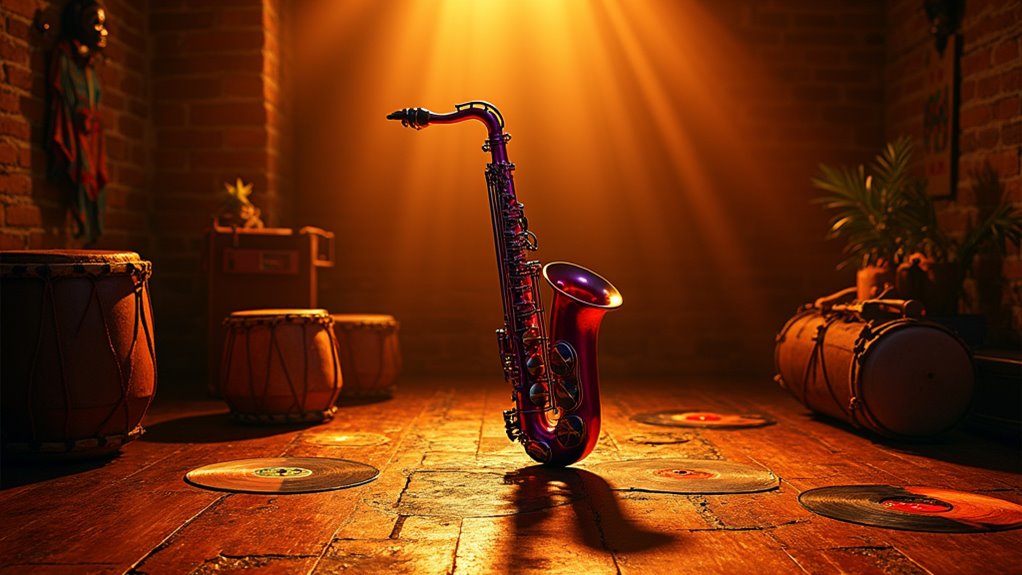
While most travelers rush to Lagos’s beaches and markets, you’ll find one of Nigeria’s most powerful cultural experiences at the Kalakuta Museum in Ikeja. Here, Fela Kuti’s revolutionary spirit lives on. Built on his original commune site, this museum preserves the Afrobeat legend‘s bedroom, instruments, and handwritten lyrics exactly as he left them.
You’ll walk through the compound where soldiers attacked in 1977, turning tragedy into triumph. The name “Kalakuta” itself was Fela’s satirical mockery of a prison cell he once inhabited, transforming oppression into defiant art.
The guided tours cost little but deliver immense value, explaining how Fela’s music became political resistance. Don’t miss his gravesite on the premises.
For nighttime entertainment, head to the New Afrika Shrine where Egypt 80 still performs. Time your visit during October’s Felabration festival for the ultimate experience combining music, history, and activism.
Discover Nigeria’s Largest Art Collection at Nike Art Gallery
You’ll discover Africa’s artistic soul at Nike Art Gallery in Lekki, where over 25,000 pieces from 500+ Nigerian artists fill five floors of creative brilliance. This massive collection showcases everything from traditional Adire textiles and beadwork to contemporary paintings and sculptures, making it one of Africa’s largest art galleries.
You’ll explore Nigerian history and cultural identity through stunning artworks spanning multiple mediums and styles.
The gallery features pieces by African Masters alongside emerging talents, giving you insight into the country’s evolving art scene. The gallery serves as an enabling environment that actively supports the growth of art throughout Africa.
Best of all, entry’s completely free. You can also join hands-on workshops learning traditional crafts like Adire dyeing and bead making.
Located at 2 Oba Yekini Elegushi Road, it’s easily accessible by car or public transport, making it perfect for budget-conscious cultural exploration.
Relax at Tarkwa Bay Beach After a Short Boat Ride
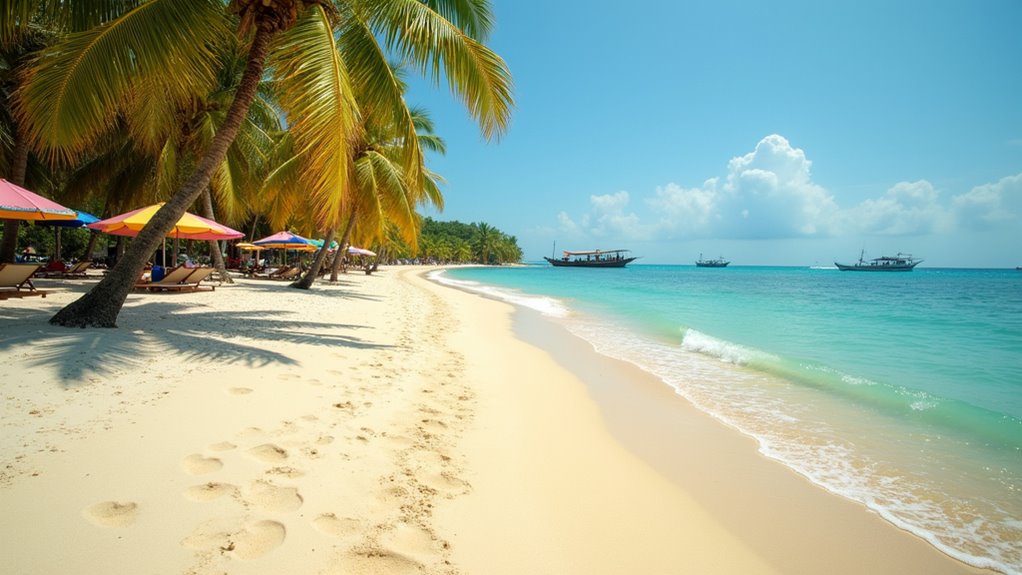
When you need an escape from Lagos’s bustling streets, Tarkwa Bay Beach offers the perfect retreat just a short boat ride away from the mainland.
You’ll catch boats from various jetties like CMS or Walter Carrington for ₦300-₦4,000 round trip, with departures every 30 minutes.
This artificial beach features golden sand and calm waters perfect for swimming, jet-skiing, or surfing lessons at GP Surf School.
You can even enjoy horseback rides along the shore.
Entry costs ₦500, plus another ₦500 for chair and tent rentals.
Pack essentials like sunscreen and snacks, though local vendors sell food and drinks.
For fewer crowds, visit weekdays rather than busy weekends.
The scenic boat ride itself showcases Lagos’s coastline landmarks. As evening approaches, the beach transforms into a lively social hub with bars and vendors creating a vibrant sunset atmosphere.
Visit the Floating Stilted Community of Makoko
Just twenty minutes by canoe from Lagos Island, you’ll discover Makoko—a remarkable floating village that’s home to over 80,000 residents living in stilted houses above Lagos Lagoon. Known as the “Venice of Africa,” this 19th-century fishing settlement offers an authentic glimpse into waterborne community life where canoes replace cars as transportation.
You’ll navigate narrow waterways past homes, markets, workshops, and schools all built on wooden stilts. The highlight is the innovative Makoko Floating School—a three-story sustainable structure serving 100 children daily with solar panels and rainwater collection systems.
While visiting this culturally diverse community of Eegun, Ilaje, and Awori peoples, you’ll witness remarkable resilience and craftsmanship, from traditional boat-building to vibrant small-scale commerce thriving despite infrastructural challenges. The community’s daily life is deeply connected to the tides and seasonal changes, with residents adapting their routines to the natural rhythms of the lagoon.
Enjoy Live Music and Cultural Shows at Freedom Park

Transformed from Her Majesty’s Broad Street Prison into a vibrant cultural hub, Freedom Park offers one of Lagos’s most unique venues for live music and performances. You’ll find regular concerts, theater shows, and cultural festivals in the open-air amphitheater, where historical ambiance meets contemporary entertainment.
The venue celebrates diverse Nigerian and African musical traditions, making it perfect for discovering local talent.
Beyond live shows, you can explore the heritage museum featuring preserved prison cells and colonial-era artifacts. The museum houses photographs and accounts that document the stories of freedom fighters who were once detained in this very location. The Wole Soyinka Gallery showcases rotating art exhibitions, while family-friendly amenities include picnic areas and playgrounds.
Located on Lagos Island’s Broad Street, the park charges a small entry fee. Use public transport since parking’s limited, and check programming schedules for the best experience.
Browse Local Artworks and Souvenirs at Lekki Market
Lekki Market on Oba Elegushi Street delivers an authentic shopping experience where you’ll discover original African artworks, traditional textiles, and handcrafted souvenirs at budget-friendly prices.
You’ll find carved wooden masks, beadwork, jewelry, paintings, and sculptures by local artists. The market’s open daily from 9:00 AM to 6:00 PM with free entry, though you’ll want to arrive early for the best deals and cooler temperatures.
Haggling’s expected here, so don’t accept first prices. Bring cash since card payments aren’t reliable, and set a spending limit beforehand. Most visitors typically spend between ₦5,000 to ₦20,000 depending on their purchases.
The roads are rough, so consider a taxi or ride-share rather than driving. Ask for “Oba Elegushi Art Market” if you’re using public transport.
This cultural hub supports local artisans while offering you authentic Nigerian crafts unavailable elsewhere.
The Sum Up
You’ll find Lagos offers incredible experiences without breaking the bank. From free museum visits to affordable market bargaining, there’s something for every budget. Don’t miss the canopy walk at Lekki Conservation Centre or a boat ride to Tarkwa Bay – both offer great value. Pack comfortable shoes for walking markets and museums, bring cash for local vendors, and you’ll discover why Lagos captivates travelers seeking authentic Nigerian culture and history.