
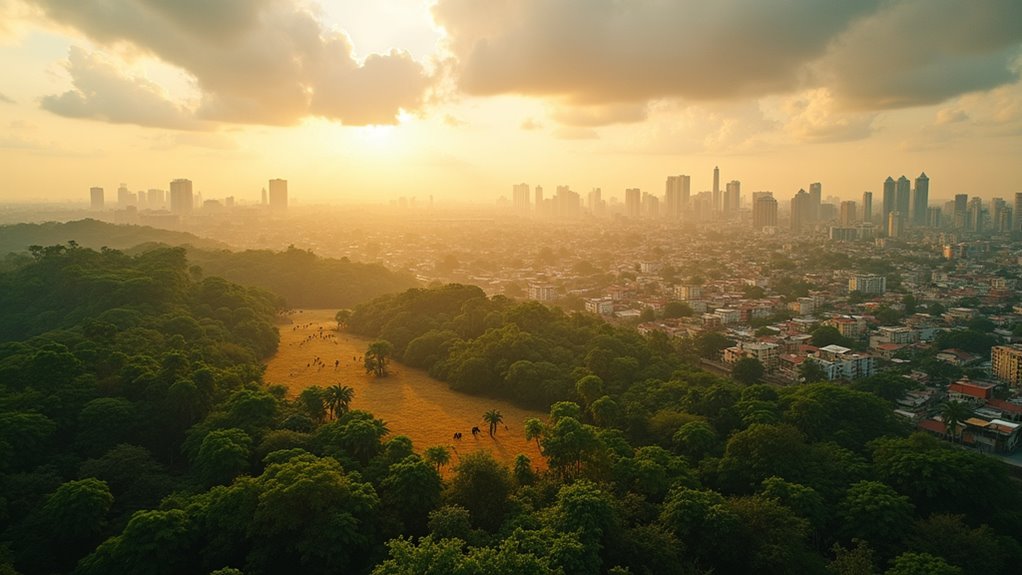
You’ve probably heard the usual advice about visiting Nigeria’s major cities, but there’s so much more beyond Lagos and Abuja that won’t break your budget. From climbing ancient hills to tracking wildlife in pristine national parks, Nigeria offers incredible experiences that most travelers completely miss. Whether you’re drawn to sacred groves, thundering waterfalls, or vibrant cultural festivals, these eleven activities will show you a side of Nigeria that goes far beyond the typical tourist trail.
- Stand Before the Legendary Face of Zuma Rock
- Climb the 667 Stone Steps of Idanre Hill
- Experience the Thunder of Gurara Waterfall in Rainy Season
- Track Chimpanzees and Elephants in Gashaka Gumti National Park
- Walk Among Ancient Spirits at Osun-Osogbo Sacred Grove
- Follow the Sobering Trail of Badagry’s Slave Trade Route
- Compete With 5,000 Fishermen at Argungu Fishing Festival
- Dance Through Africa’s Biggest Street Party at Calabar Carnival
- Cross the Canopy Walkway at Lekki Conservation Centre
- Catch Live Afrobeat at Fela’s New Afrika Shrine
- Escape to Medieval Luxury at Kajuru Castle
- The Sum Up
Stand Before the Legendary Face of Zuma Rock
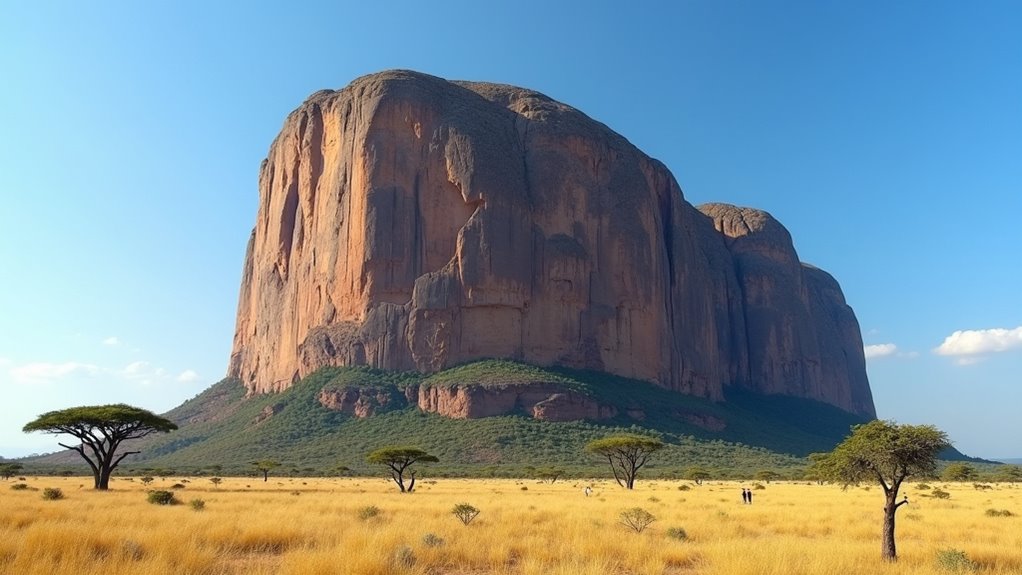
When you’re driving along the Abuja-Kaduna road, you can’t miss the massive human face staring back at you from Zuma Rock’s weathered surface. This 725-meter monolith towers over the landscape near Abuja, creating one of Nigeria’s most striking natural landmarks.
You’ll find eyes, nose, and mouth carved by centuries of erosion—a phenomenon that’s earned this rock a spot on the 100 naira banknote.
Access is completely free, making it perfect for budget travelers. You can hike to the summit in about five hours for panoramic savanna views, or simply explore the base for photos and picnicking. The rock is composed of igneous rocks, specifically gabbro and granodiorite that formed this impressive geological structure.
Local guides offer cultural stories about the Gbagyi people who once used this “Gateway to Abuja” as their spiritual guardian and defensive retreat.
Climb the 667 Stone Steps of Idanre Hill
If you’re craving an adventure that combines physical challenge with deep culture, Idanre Hill’s 667 ancient stone steps will deliver exactly that. Located 45 minutes from Akure in Ondo State, this 800-year-old settlement sits atop a 500-million-year-old rock formation where entire communities once thrived.
Each step takes you deeper into Yoruba history, passing ancient shrines, relics from an 1896 primary school, and the mystical Agboogun’s Footprint. You’ll discover preserved flora and fauna that haven’t been disturbed since 1923, plus breathtaking views from the summit. The hill stands 3000 feet above sea level, creating a unique ecosystem that supports endangered species like Perret’s toad and special monkeys.
The climb’s free, though you’ll pay nominal entrance fees. Pack water and comfortable shoes—those stone steps demand respect. This UNESCO World Heritage site offers an unbeatable combination of workout, history lesson, and cultural experience that won’t break your budget.
Experience the Thunder of Gurara Waterfall in Rainy Season
From the ancient stone steps of Idanre to the thundering cascades of Niger State, Nigeria’s natural wonders offer experiences that’ll leave you breathless without emptying your wallet.
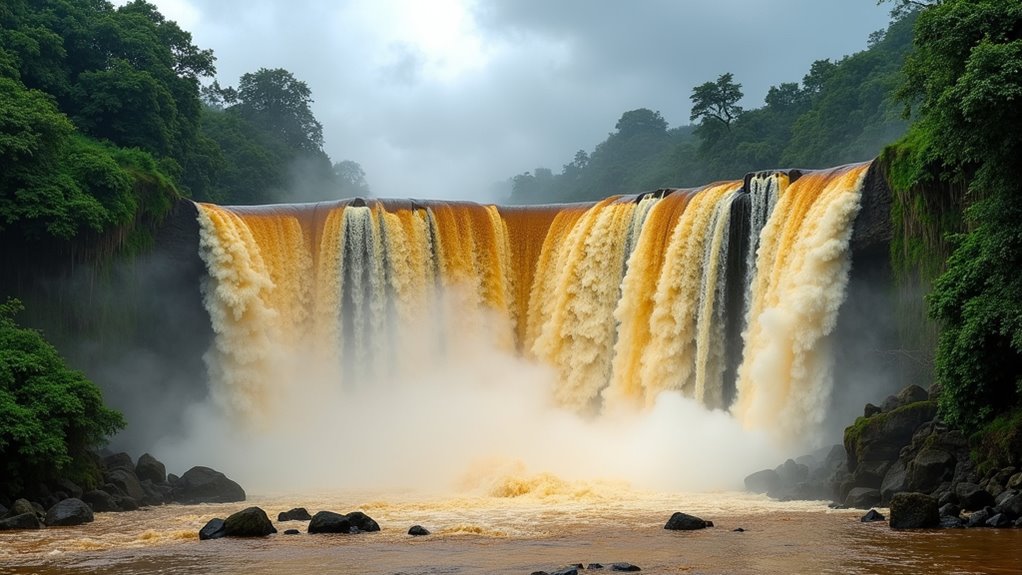
Gurara Waterfall transforms into a spectacular 30-meter torrent during rainy season, when the entire 200-meter cliff face erupts with rushing water. You’ll witness nature’s raw power as the swollen Gurara River creates a deafening roar that earned this place its “thunder” reputation.
Visit between June and October for maximum impact, though May-June offers the perfect balance of drama without overwhelming currents. At just 500-1,000 Naira entrance fee, you’ll access viewing platforms, picnic areas, and hiking trails.
The lush vegetation and misty spray create an Instagram-worthy backdrop that’s easily accessible from Abuja via Suleja-Minna Road. Long before becoming a tourist destination, local communities held this sacred site in reverence, worshipping the deities Gura and Rara that gave their names to both the river and waterfall.
Track Chimpanzees and Elephants in Gashaka Gumti National Park
Deep in Nigeria’s largest national park, you’ll commence on Africa’s most challenging wildlife tracking adventure without the East African price tags. Gashaka-Gumti National Park spans vast wilderness near Cameroon’s border, protecting the most endangered chimpanzee subspecies and elusive forest elephants.
You’ll trek montane forests with experienced local guides, tracking Nigeria-Cameroon chimpanzees through their natural habitat around research sites like German-Fort. Forest elephants require more patience—look for footprints, dung, and browsing signs in dense woodland zones.
Access starts with flights to Yola, then lengthy drives into remote park boundaries. The Gashaka Primate Project supports your tracking experience through ongoing research.
You’ll encounter over 100 mammal species across diverse ecosystems from rainforest to savannah, making this Nigeria’s premier wildlife destination. Your wildlife viewing extends beyond mammals to include over 500 bird species that inhabit the park’s varied terrain.
Walk Among Ancient Spirits at Osun-Osogbo Sacred Grove
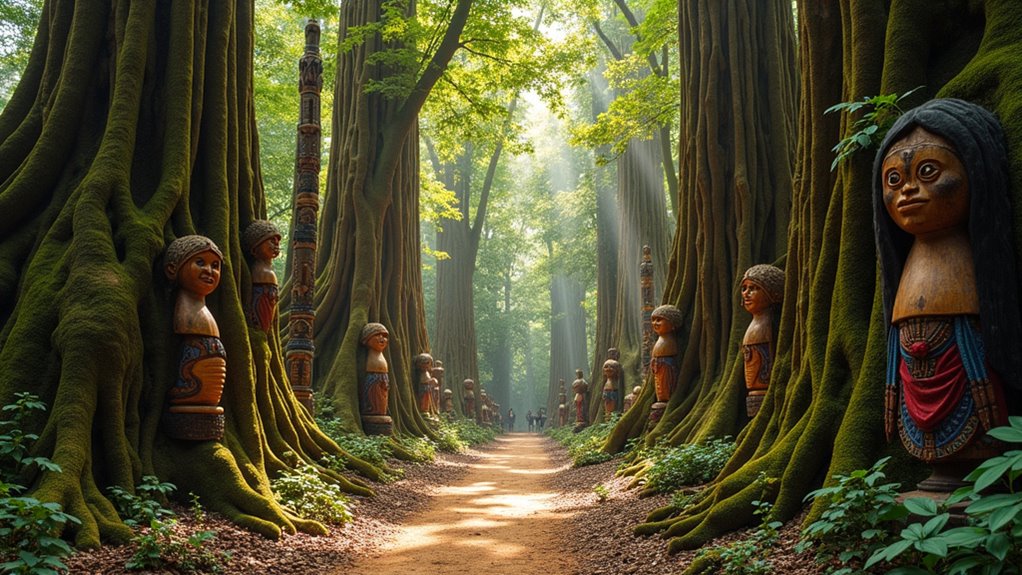
Where ancient Yoruba spirituality meets living forest, you’ll discover Nigeria’s most sacred grove along the meandering Osun River. This 400-year-old sanctuary spans 75 hectares of pristine woodland, where traditional shrines blend with contemporary sculptures created by Austrian anthropologist Susanne Wenger and local artists.
You’ll walk paths lined with sacred art honoring Osun, the Yoruba fertility goddess, while experiencing one of Nigeria’s last primary forests near urban centers. The grove remains an active worship site where daily rituals continue centuries-old traditions.
Visit during the annual Osun-Osogbo Festival in July-August for the full cultural experience, though the UNESCO World Heritage site offers spiritual encounters year-round. Entry fees are modest, making this profound journey into Yoruba cosmology accessible for budget travelers seeking authentic culture.
The grove serves as a natural herbal pharmacy with over 400 plant species, including more than 200 used for therapeutic purposes by traditional healers.
Follow the Sobering Trail of Badagry’s Slave Trade Route
Along Nigeria’s coast in Badagry, you’ll confront one of history’s most painful chapters as you trace the exact path where over 550,000 enslaved Africans took their final steps on home soil.
Start at the Badagry Heritage Museum, where 15th-century slave chains tell their silent stories.
Walk the historic route to the “Spirit Attenuation Well,” where captives supposedly forgot their past before embarkation.
Continue to the Seriki Abass Baracoon, a former slave jail displaying heavy shackles and branding tools.
End at the “Point of No Return” beach, where coconut palms frame the spot where wooden canoes carried the enslaved to waiting ships. The site features an incomplete Ark of Embarkation monument that frames a symbolic tunnel representing the darkness captives faced.
This free walking trail takes about three hours and offers profound historical reflection you won’t find elsewhere in Nigeria.
Compete With 5,000 Fishermen at Argungu Fishing Festival
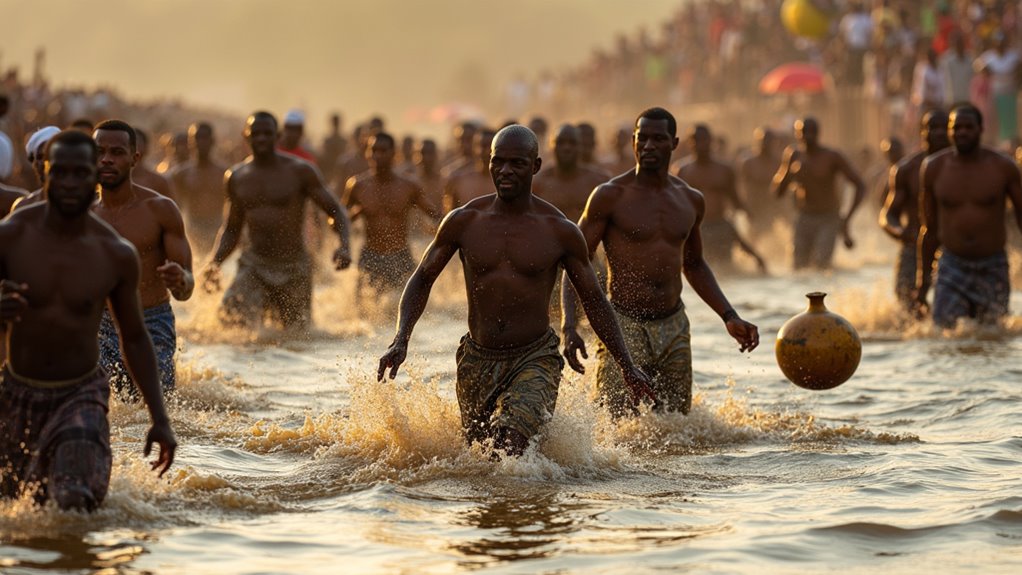
When the horn blasts at Nigeria’s legendary Argungu Fishing Festival, you’ll join 5,000 fishermen in a spectacular one-hour fishing frenzy that’s unlike anything else on Earth. This four-day festival in Kebbi State happens annually between February and March, featuring traditional fishing competitions on the Matan Fada River.
You’ll need to use only traditional tools—hand nets, gourds, or your bare hands. Modern equipment’s strictly forbidden to protect fish stocks.
The largest catch wins prizes up to $7,500, making this competition seriously competitive.
Beyond fishing, you’ll experience canoe racing, wrestling, boxing, and cultural nights with traditional music and dance. The festival also features art and trade exhibitions showcasing locally made products and crafts alongside traditional cuisines like tuwo shinkafa and kilishi. This UNESCO-recognized festival celebrates the end of harvest season while promoting peace between communities. It’s an authentic culture that won’t break your budget.
Dance Through Africa’s Biggest Street Party at Calabar Carnival
Nigeria’s festival calendar doesn’t stop with traditional fishing competitions—it explodes into pure celebration at the Calabar Carnival, Africa’s biggest street party that’ll sweep you into a whirlwind of music, dance, and spectacular costumes. You’ll join over 150,000 visitors dancing through 12 kilometers of Calabar’s streets, watching bands like Passion 4 and Master Blasta compete in the Battle of Bands.
The carnival runs for two weeks, blending Nigerian traditions with Caribbean influences. You can catch ticketed events like Funfest and the Calabar Fashion Show for extra entertainment. The 2024 edition was declared the most successful in 20 years, with attendance jumping by 42% and over 1.2 billion viewers watching globally.
Getting there’s affordable—89% of visitors arrive by road. The festival showcases Cross River State’s rich culture while participants from 25+ countries create an unforgettable international atmosphere you won’t find elsewhere.
Cross the Canopy Walkway at Lekki Conservation Centre
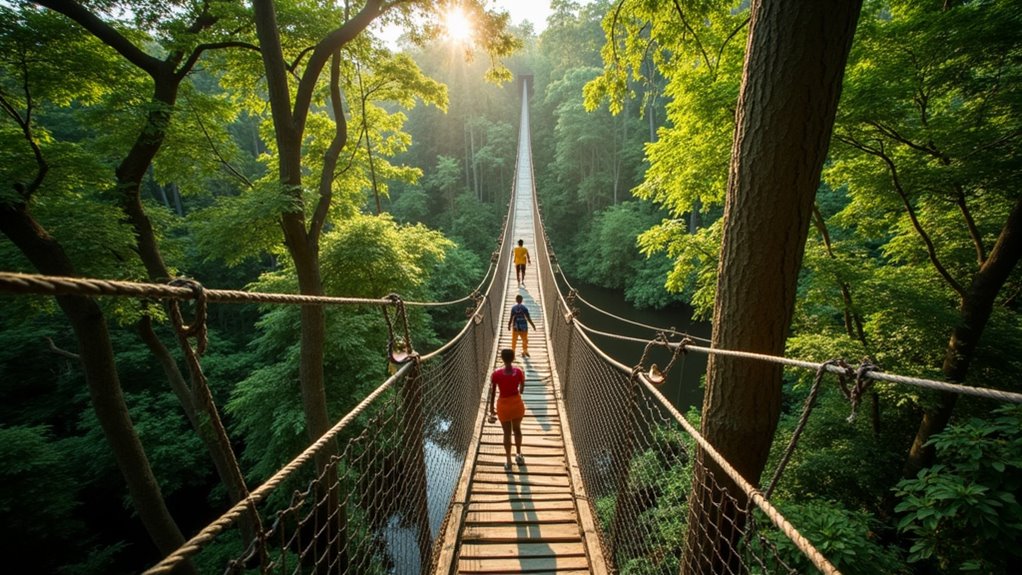
How do you experience one of Africa’s most thrilling wildlife adventures without leaving Lagos? You’ll head to Lekki Conservation Centre, just 19km down the Lekki-Epe Expressway.
For N1000-N2500, you’ll access Africa’s longest canopy walkway – a heart-pounding 401-meter suspended bridge soaring 22 meters above rainforest and wetlands.
The walkway connects six towers through swaying bridges that’ll test your nerves while delivering spectacular 360-degree views. You’ll spot monkeys, rare birds, crocodiles, and tortoises as you explore 78 hectares of preserved mangroves and savannah. This biodiverse ecosystem has been protected since 1990 by the Nigerian Conservation Foundation.
Don’t worry if you’re afraid of heights – the nature trails below offer equally rewarding wildlife encounters.
Open daily 8:30am-5pm, it’s Lagos’s perfect day trip combining conservation education with adventure, plus picnic areas and treehouses for families.
Catch Live Afrobeat at Fela’s New Afrika Shrine
From wildlife encounters to musical legends, Lagos offers experiences that’ll leave you breathless. You can’t visit Nigeria without experiencing live Afrobeat at Fela’s New Afrika Shrine in Ikeja.
This legendary venue keeps the revolutionary spirit of Fela Kuti alive through electrifying performances by his sons, Femi and Seun Kuti.
Head there on Thursdays or Sundays to catch Femi’s performances, or visit the last Saturday of each month for Seun’s shows. Entry’s generally free, making it budget-friendly for any traveler.
The open-air setting immerses you in authentic Afrobeat culture, surrounded by photos of iconic activists like Malcolm X and Nelson Mandela. The venue also features traditional folk music and displays of Yoruba deities throughout the space.
You’ll step into living history while supporting local musicians and the community that depends on this cultural hub.
Escape to Medieval Luxury at Kajuru Castle
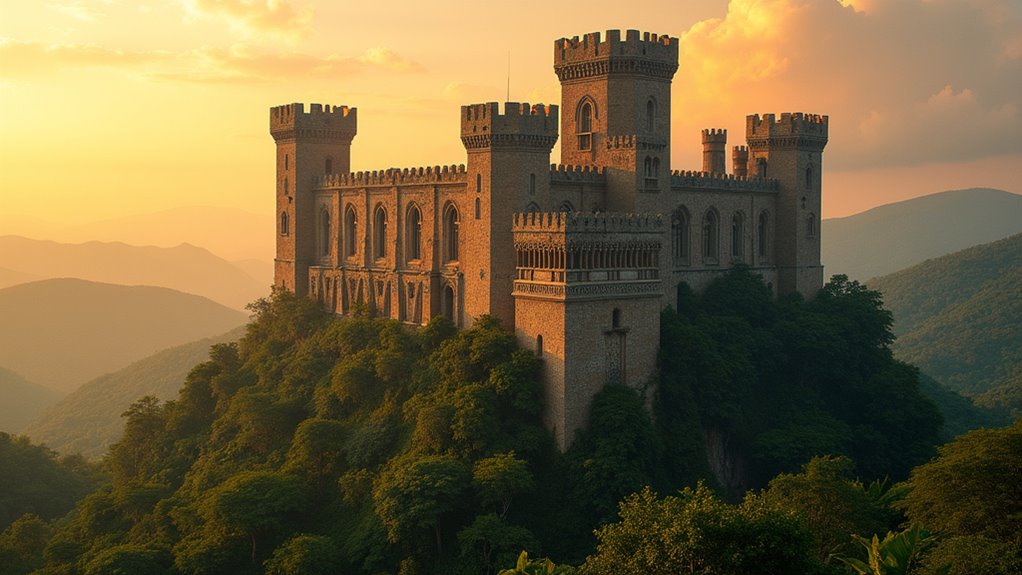
While most castles require a trip to Europe, you’ll find an authentic medieval experience right in Kaduna State at Kajuru Castle.
Built by German expatriate Burg Heinrichswalde between 1978-1983, this hilltop fortress blends Bavarian architecture with African aesthetics.
You’ll explore turrets, dungeons, and a grand hall featuring knight’s armor displays.
The castle sits 40 kilometers south of Kaduna City—about 45 minutes by car or taxi from the airport.
Beyond touring the medieval interiors, you can hike the surrounding terrain, try rock climbing, or spot local birds. The castle hosts cultural events like historical reenactments and medieval-themed parties throughout the year.
The castle operates as a luxury villa with themed rooms, a swimming pool, and sauna.
It’s pricier than standard hotels but offers an exclusive fairy-tale experience you won’t find elsewhere in Nigeria.
The Sum Up
You’ve got incredible adventures waiting across Nigeria without breaking the bank. From free hikes up Idanre Hill to affordable safari experiences in Gashaka Gumti, there’s something for every budget. Don’t miss the vibrant street festivals and sacred groves that’ll give you authentic cultural experiences money can’t buy elsewhere. Pack light, bring your sense of adventure, and you’ll discover why Nigeria’s one of Africa’s most rewarding destinations.