
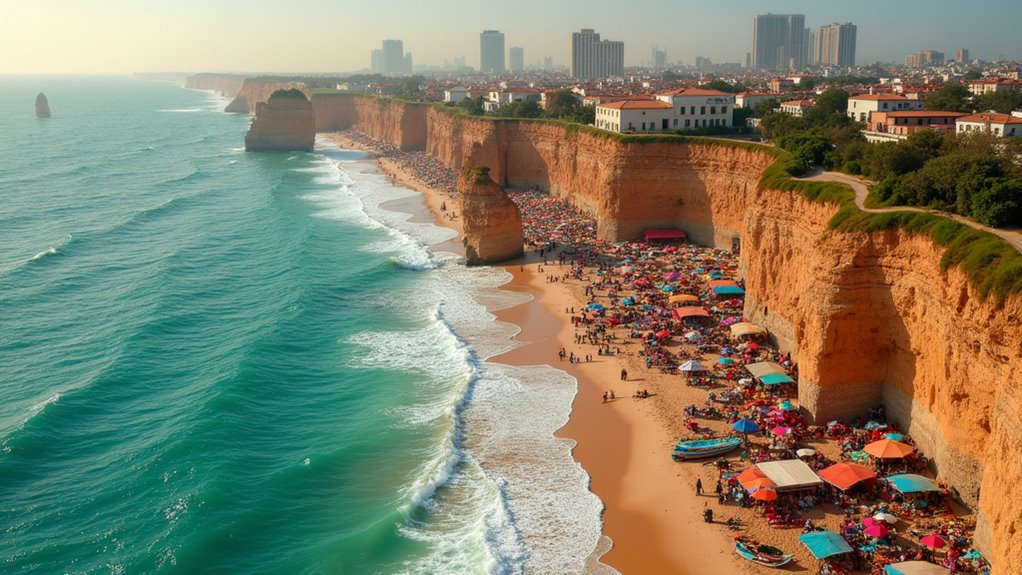
You’ve probably heard Dakar’s name thrown around in travel circles, but you might not know what actually makes Senegal’s capital worth your time. Here’s the thing—this isn’t your typical West African city experience. Sure, you’ll find the expected bustling markets and historic sites, but Dakar serves up surprises that’ll shift your perspective on urban Africa. From monuments that’ll make you question everything you thought you knew to islands that hold centuries of stories.
- Climb to the African Renaissance Monument for Those Panoramic Views
- Take the Ferry to Gorée Island and Walk Through Slave History
- Get Lost in Sandaga Market’s Maze of Local Commerce
- Visit the Mosque of the Divinity in Ouakam’s Seaside Setting
- Explore the Medina’s Traditional Village Streets and Grand Mosque
- Shop for Fresh Produce and Crafts at Marché Kermel
- Photograph the Presidential Palace and Place De L’indépendance
- Discover Dakar’s Religious Tolerance at the Cathedral of African Remembrance
- Experience the Sensory Overload of Tilene Market
- Plan Your Day Trip Around Fort Estrée and Gorée’s Museums
- The Sum Up
Climb to the African Renaissance Monument for Those Panoramic Views
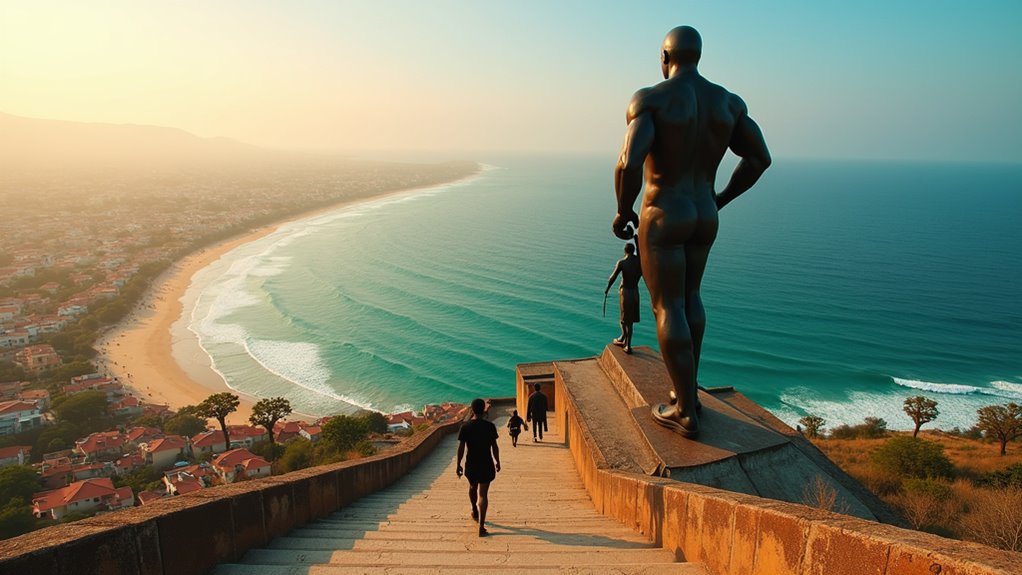
When you’re ready to work up a sweat for some truly spectacular views, the African Renaissance Monument delivers an unforgettable climb that’s worth every step. Standing 52 meters tall atop Collines des Mamelles, this bronze giant overlooks the Atlantic Ocean from Ouakam suburb.
You’ll tackle 186 steps to reach the summit, but don’t worry—there are convenient stopping points and benches along the way.
The monument depicts a family reaching toward the sky, symbolizing Africa’s emergence and unity. Unveiled in 2010, the statue was built by North Korean company Mansudae Overseas Projects, known for constructing large monuments across Africa.
Once you’re inside, you can take the elevator through 15 floors or continue climbing stairs to the viewing platform in the statue’s head.
The panoramic views of Dakar and the peninsula make this Africa’s tallest statue a must-visit destination.
Take the Ferry to Gorée Island and Walk Through Slave History
After taking in those sweeping views from the African Renaissance Monument, you’ll want to explore Dakar’s most profound historical site by catching a ferry to Gorée Island. Ferries depart every two hours from Dakar’s passenger port, with the 25-minute ride costing around $9-10 for travelers. Don’t forget your passport—copies won’t work.
Once you arrive on this car-free island, you’ll walk cobblestone streets to visit the powerful House of Slaves museum, which memorializes the transatlantic slave trade. Plan at least 2-3 hours to explore the colorful buildings and historical sites meaningfully. You’ll also have opportunities to browse local crafts from artisans selling their work throughout the island’s charming streets.
Visit Tuesday through Sunday since museums close Mondays. Bring comfortable shoes, sun protection, and water. Consider a guided tour to fully understand this UNESCO World Heritage site‘s complex history.
Get Lost in Sandaga Market’s Maze of Local Commerce
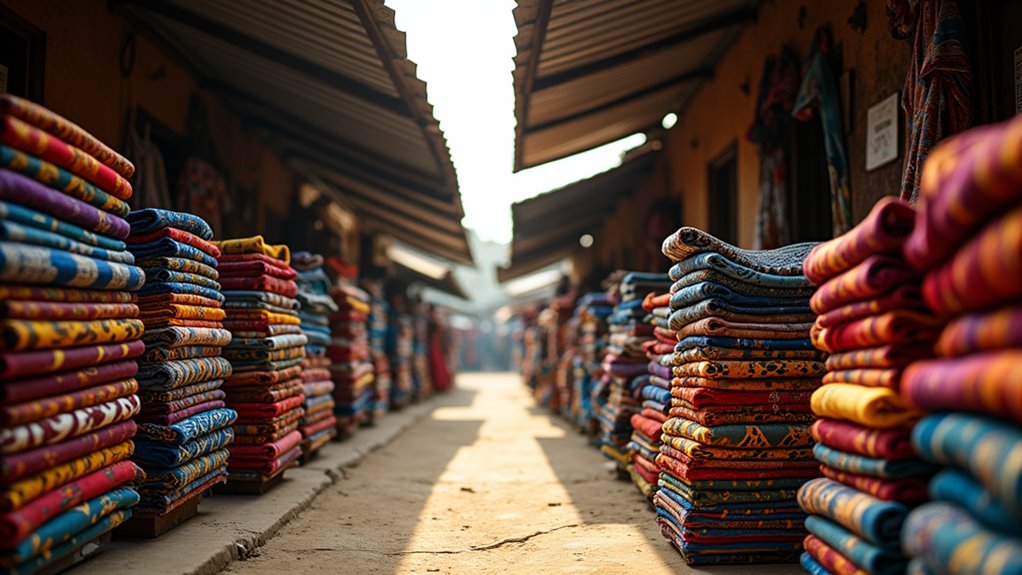
Once you’ve absorbed Gorée Island’s weighty history, you’ll crave the sensory overload of Sandaga Market, Dakar’s sprawling commercial heart.
Where three stories of windowless corridors house hundreds of vendors hawking everything from fresh fish to handwoven textiles. You’ll navigate dense networks of stalls selling spices, traditional crafts, cheap sandals, and electronics while haggling becomes second nature.
The 1930s building’s Sudano-Sahelien architecture creates a maze-like atmosphere that’s both overwhelming and intoxicating. Don’t expect organization—that’s the beauty.
You’ll discover local musical instruments, authentic Senegalese fabrics, and countless everyday items. The informal outdoor stalls spill onto surrounding streets, creating an endless treasure hunt where getting lost is half the adventure. For generations, this market has served as more than just commerce—it’s been a vital meeting point where locals connect, share stories, and maintain the social fabric of Dakar’s community.
Visit the Mosque of the Divinity in Ouakam’s Seaside Setting
While Sandaga Market overwhelms your senses with commerce and chaos, the Mosque of the Divinity in Ouakam offers something entirely different—a breathtaking fusion of spiritual serenity and coastal beauty that’ll stop you in your tracks.
Perched on Atlantic cliffs in this historic fishing village, the mosque’s twin 45-meter minarets and gleaming dome create stunning silhouettes against ocean horizons. You’ll climb a long staircase to reach this architectural marvel, where modern Islamic design meets Senegalese craftsmanship.
Though you can’t enter the mosque’s interior as a non-Muslim visitor, the exterior alone captivates. The surrounding area buzzes with transformed Ouakam‘s new energy—fresh shops, vibrant culture, and thriving beachside activities. You’re witnessing where divine vision became reality, transforming both landscape and community. Each year, the community celebrates with a unique ritual of covering the mosque with earth, honoring the sacred traditions that brought this spiritual landmark to life.
Explore the Medina’s Traditional Village Streets and Grand Mosque
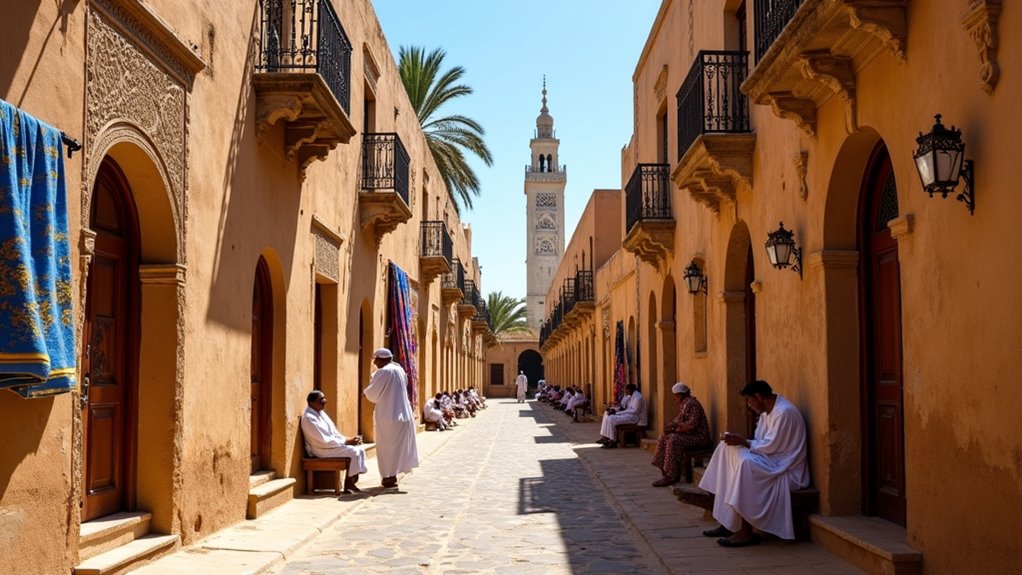
Step into Dakar’s Medina neighborhood, and you’ll discover a maze of narrow, winding streets that pulse with authentic Senegalese life. You’ll find residential homes mixed with small shops and local markets, where street vendors and artisans create a bustling atmosphere that’s been preserved for generations.
The architecture blends Senegalese and Islamic influences, reflecting the area’s cultural significance for Wolof and other ethnic communities.
Don’t miss the Grand Mosque of Dakar, completed in 1964 with Moroccan and French architectural influences. Its 67-meter minaret dominates the skyline, while Islamic geometric patterns decorate the interior. The mosque’s design bears striking similarities to the Mausoleum of Mohammed V in Rabat, showcasing the shared architectural heritage across North and West Africa.
You’ll need to dress modestly and remove your shoes before entering. The mosque houses the Islamic Institute of Dakar, symbolizing Senegal’s post-independence embrace of its Islamic heritage.
Shop for Fresh Produce and Crafts at Marché Kermel
The distinctive circular rotunda of Marché Kermel stands as Dakar’s most architecturally striking marketplace, where you’ll discover an authentic blend of fresh local produce and traditional Senegalese crafts under one historic roof.
Built in 1860 and reconstructed after a 1993 fire, this neo-Moorish structure offers a sensory-rich experience in Dakar’s Plateau district. The design combines European prefabricated cast iron construction with North African decorative elements, creating the only neo-Moorish architectural design in the city.
You’ll find tropical fruits, vegetables, and fresh seafood at the market’s heart, alongside food stalls serving thieboudienne and other local dishes.
Browse traditional crafts including wood carvings, colorful wax-print fabrics, and handmade jewelry around the perimeter.
The market’s open daily from 8 AM to 8 PM with no entrance fee.
Visit mornings for the freshest produce and liveliest atmosphere, and don’t forget to bargain when shopping for souvenirs.
Photograph the Presidential Palace and Place De L’indépendance
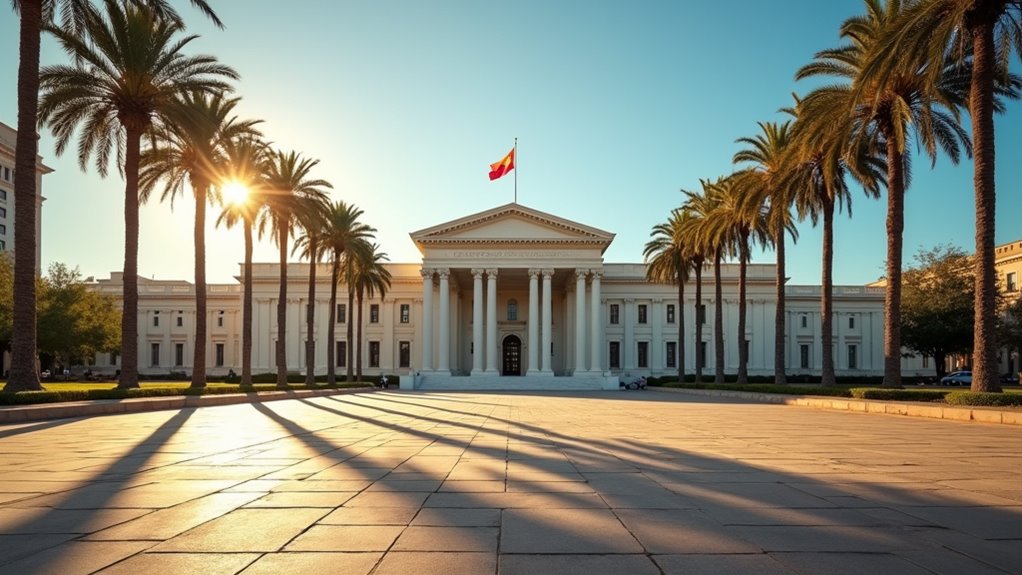
Standing majestically in Dakar’s city center, the Presidential Palace offers one of the capital’s most impressive photographic subjects with its striking Neoclassical architecture and ceremonial grandeur. Built between 1902-1907 during French colonial rule, this historic monument features tower-topped design and lush surrounding gardens that create stunning visual compositions.
You’ll capture the palace’s French classical motifs and modernized post-independence elements from exterior vantage points only—tourist entry isn’t permitted. The guards in colonial-style uniforms add ceremonial flair to your shots.
Just steps away, Place de l’Indépendance provides additional photographic opportunities with its symmetrical layout and vibrant public atmosphere. The area is easily accessible through self-guided exploration using mobile walking tour apps that help you navigate to prime viewing spots.
Visit during daytime for *superior* lighting that enhances architectural details. Use wide-angle shots to showcase the palace’s grandeur while including human elements for scale and context.
Discover Dakar’s Religious Tolerance at the Cathedral of African Remembrance
Beyond Dakar’s political landmarks lies a powerful proof to the city’s remarkable religious harmony—the Cathedral of African Remembrance stands as more than just a beautiful Gothic structure. You’ll witness firsthand how Senegal’s 97.2% Muslim majority and 2.7% Christian minority coexist peacefully in this secular nation where religious discrimination is constitutionally prohibited.
Built in the early 20th century by Father Daniel Brottier, this cathedral represents something extraordinary—Catholic schools have welcomed Muslim students since missionaries arrived, establishing a tolerance precedent that continues today.
You’ll discover that 65.7% of Senegalese trust their religious leaders, who actively work together against extremism. Religious leaders from different faiths regularly emphasize peaceful coexistence and promote societal harmony throughout the nation. Walking through this sacred space, you’ll understand why Senegal serves as a global example of interfaith respect and friendship between religious authorities.
Experience the Sensory Overload of Tilene Market
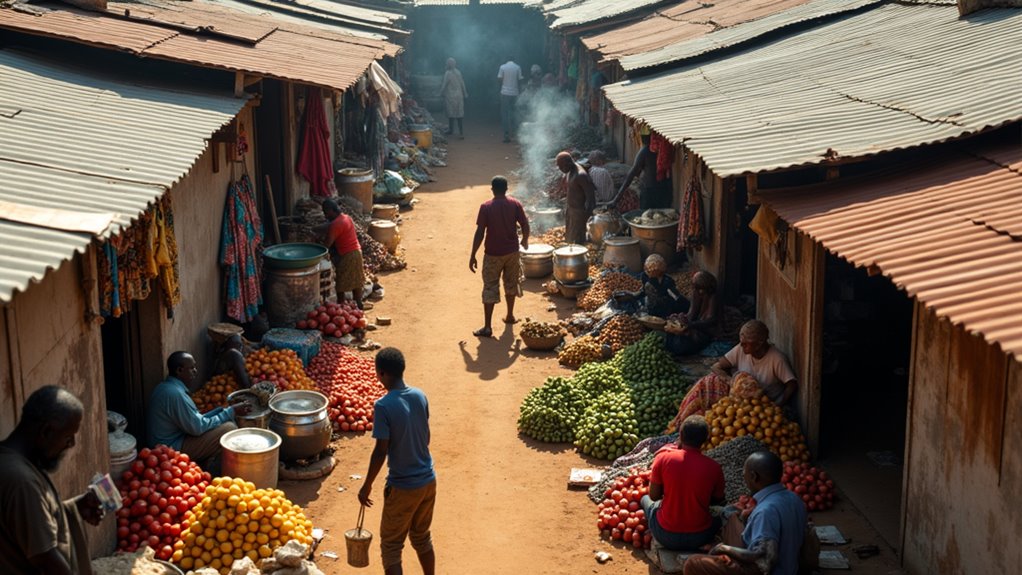
As you step into Tilene Market along Avenue Blaise Diagne, you’ll immediately understand why locals call it the heartbeat of Dakar’s Médina district. The vibrant chaos hits all your senses—colorful textiles catch your eye while fragrant spices fill the air.
You’ll navigate uneven surfaces past vendors selling everything from fresh produce to traditional jewelry, with goats occasionally wandering through the aisles.
Don’t miss the ‘zone grigri’ for medicinal plants and traditional remedies. The leather goods section showcases skilled local craftsmanship, while textile stalls offer fabrics perfect for clothing. Generations of merchants have passed down their trading expertise, creating a rich tapestry of family businesses throughout the market.
Visit weekday mornings for better selection and fewer crowds. Bargaining isn’t just expected—it’s part of the authentic experience that makes Tilene Market an unforgettable culture.
Plan Your Day Trip Around Fort Estrée and Gorée’s Museums
After soaking up the energy of Dakar’s bustling markets, you’ll want to explore the profound historical depths that Gorée Island offers just a short ferry ride away. The 25-30 minute journey from Dakar sets the stage for your historical immersion—arrive early to snag upper deck seats for scenic views.
Start at Fort d’Estrées, now housing the Historical Museum of Senegal. You’ll navigate 12-13 exhibition rooms showcasing artifacts from the Paleolithic Age through independence. The circular route efficiently guides you through different ethnic groups and colonial periods. The fort’s construction took four years between 1852 and 1856, originally designed for harbor defense before its transformation into this important cultural institution.
Next, visit the powerful House of Slaves with its haunting “Door of No Return.” Built in 1776, this pink-hued building reveals cramped cells and weighing rooms where enslaved Africans endured unimaginable suffering before deportation.
The Sum Up
You’ll find Dakar’s charm lies in its contrasts—ancient mosques alongside modern monuments, bustling markets next to peaceful islands. Don’t rush through your visit; take time to chat with locals, haggle at markets, and soak up the atmosphere. Whether you’re climbing monuments for views or reflecting on history at Gorée Island, Dakar rewards travelers who embrace its rhythm. Pack comfortable shoes, bring your camera, and prepare for a city that’ll surprise you.