
You’ll find that Senegal offers far more than most West African destinations, from confronting powerful history on Gorée Island to walking alongside lions in wildlife reserves. The country’s pink lakes, bustling markets, and untouched beaches create experiences you won’t encounter elsewhere. Whether you’re tracking elephants through national parks or steering through mangrove mazes by boat, each adventure reveals a different side of Senegalese culture. Here’s how to make the most of your time in this surprisingly diverse nation.
- Visit Gorée Island and Confront History at the House of Slaves
- Marvel at the Pink Waters of Lake Retba and Watch Salt Harvesters at Work
- Experience Walking With Lions at Fathala Wildlife Reserve
- Take a Boat Tour Through Djoudj National Bird Sanctuary During Migration Season
- Explore Dakar’s Markets and Climb to the African Renaissance Monument
- Discover the Ancient Stone Circles of Sine Ngayene
- Go Island Hopping in the Saloum Delta’s Mangrove Maze
- Relax on the Pristine Beaches of Cap Skirring in Casamance
- Track Wildlife on Foot in Niokolo-Koba National Park
- Join Local Fishermen at Mbour’s Morning Fish Market
- The Sum Up
Visit Gorée Island and Confront History at the House of Slaves
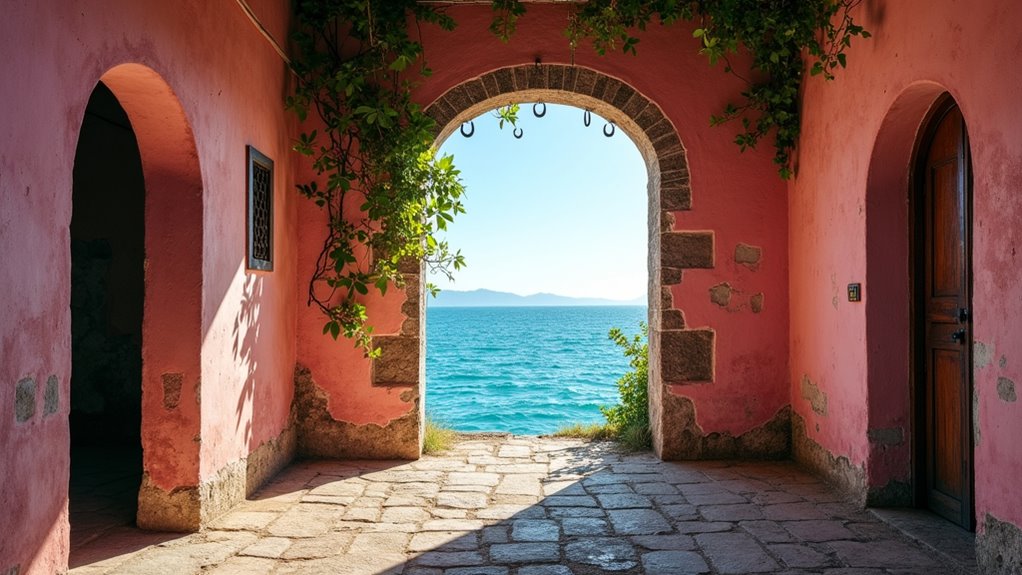
Just three kilometers off Dakar’s coast, Gorée Island confronts you with one of humanity’s darkest chapters through its preserved slave trading history. You’ll take a short ferry ride to reach this UNESCO World Heritage Site, where the pink-hued House of Slaves awaits your visit.
Built in 1776, this three-story museum reveals cramped basement cells where enslaved Africans were chained before forced transport to the Americas. You’ll walk through narrow corridors and witness the infamous “Door of No Return,” symbolizing their final departure from Africa.
The museum, opened in 1962, serves as both memorial and education center. You’ll join travelers, students, and diaspora members seeking connection to this painful history. The island once hosted up to 28 slave houses that supplied enslaved people to the Americas and Brazil for over three centuries.
Plan several hours to fully absorb this sobering but essential cultural experience.
Marvel at the Pink Waters of Lake Retba and Watch Salt Harvesters at Work
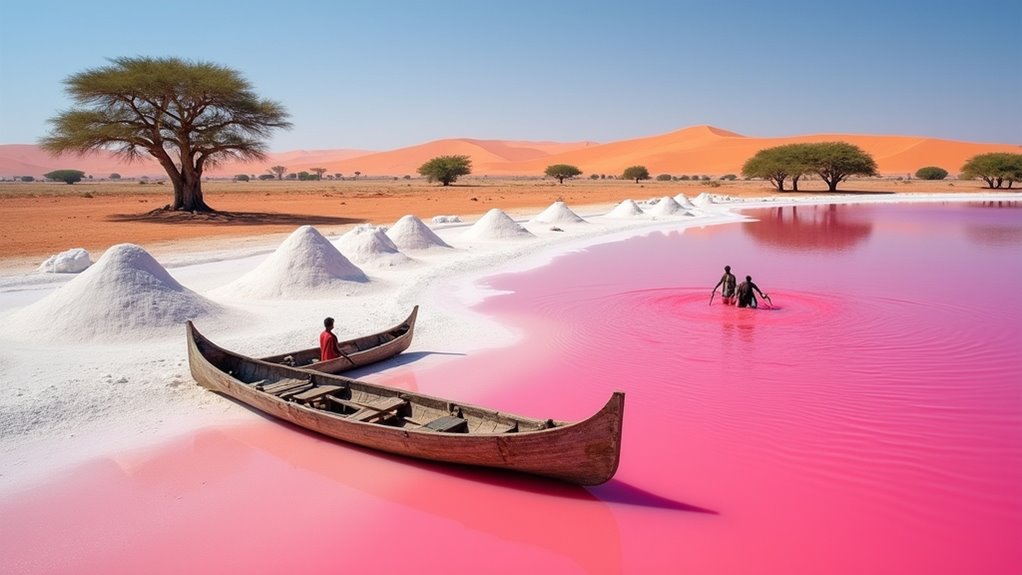
Thirty kilometers northeast of Dakar, Lake Retba’s otherworldly pink waters will captivate you from the moment you arrive at this natural wonder.
The Dunaliella salina microalgae creates this stunning rose hue, most vibrant during dry season months from November to June when salinity reaches 40%.
You’ll witness 3,000 salt harvesters working tirelessly, extracting over 45,000 tons annually using traditional methods. These workers protect themselves with shea butter while spending 6-7 hours daily in the harsh conditions.
Take a traditional canoe ride across the shallow 3-kilometer lake and chat with collectors about their demanding craft.
Don’t miss floating effortlessly in the hypersaline waters—the buoyancy rivals the Dead Sea. This remarkable lake is the second saltiest water body in the world, surpassed only by Ethiopia’s Gaet’ale Pond.
Purchase handcrafted salt souvenirs while experiencing authentic Senegalese “teranga” hospitality from welcoming local communities.
Experience Walking With Lions at Fathala Wildlife Reserve
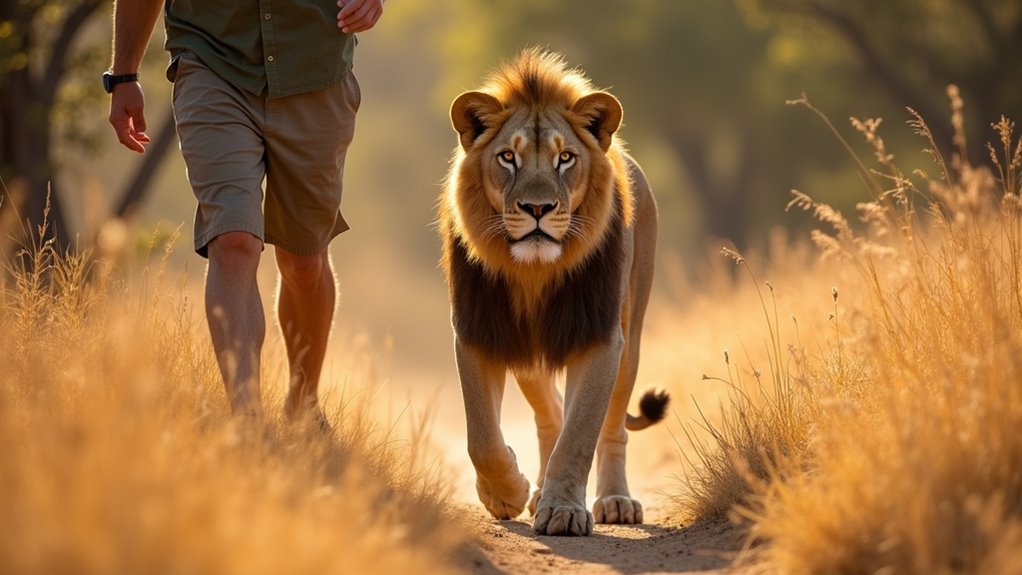
Sixty kilometers from Dakar, Fathala Wildlife Reserve offers one of Africa’s most controversial yet thrilling experiences—walking alongside lions in their natural habitat.
You’ll join small groups for 30-60 minute guided walks through the 6,000-hectare reserve, accompanied by armed rangers who’ll brief you on safety protocols.
The experience lets you walk within touching distance of habituated lions while capturing incredible photos.
Tours typically cost $200-250 per person and include transportation from Dakar, game drives to spot elephants and giraffes, and sometimes lunch at Fathala Lodge.
However, consider the ethical implications—animal welfare advocates criticize these encounters.
Some visitors describe professional guides and alert lions, while others report circus-like conditions. The park offers these lion walks five times daily using trained or potentially drugged animals, raising serious animal welfare concerns.
You’ll need to decide whether this once-in-a-lifetime opportunity aligns with your values.
Take a Boat Tour Through Djoudj National Bird Sanctuary During Migration Season
When millions of migratory birds transform Senegal’s wetlands into one of Africa’s greatest natural spectacles, you’ll want to experience Djoudj National Bird Sanctuary from the water. Visit between November and April when over 1.5 million birds overwinter in this UNESCO World Heritage Site near Saint-Louis.
Book a pirogue tour with local guides who’ll navigate the channels where up to 400 species congregate. January’s peak offers incredible Great White Pelican colonies—28,000 birds nesting simultaneously. You’ll spot flamingos, African spoonbills, and purple herons in dense concentrations.
Start early morning from Saint-Louis for ideal bird activity and photography lighting. Pack binoculars, cameras, sun protection, and insect repellent. The half-day boat excursion through this fragile Senegal River Delta ecosystem provides unparalleled access to Africa’s most important migratory bird sanctuary. Budget approximately 5,000 CFA per person for a two-hour shared boat trip through the sanctuary’s waterways.
Explore Dakar’s Markets and Climb to the African Renaissance Monument
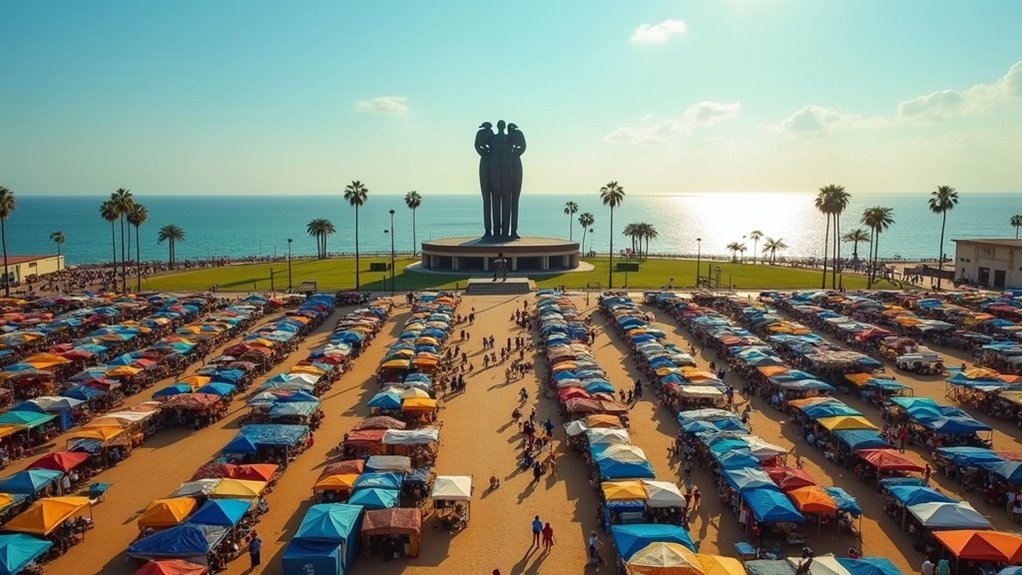
From Senegal’s natural wonders to its vibrant urban heart, Dakar’s bustling markets offer an entirely different sensory adventure that’ll immerse you in West African culture.
Start at Sandaga Market, the city’s largest, where over 1,000 vendors sell everything from vibrant wax fabrics to handcrafted jewelry. You’ll find colorful West African textiles at Marché HLM, while Soumbédioune specializes in woven baskets and fresh fish.
Don’t accept first prices—negotiation’s expected and part of the experience. Browse made-to-measure clothing services, sample authentic street food like brochettes, and sip local mint tea in designated areas. The market operates daily from 10 am to 3 pm, with the best shopping happening during morning hours when crowds are lighter.
After exploring these maze-like market alleyways, climb to the towering African Renaissance Monument for panoramic city views and a perfect contrast to your ground-level culture.
Discover the Ancient Stone Circles of Sine Ngayene
Step into one of Africa’s most mysterious archaeological wonders at Sine Ngayène, where 52 ancient stone circles and over 1,100 carved monoliths have stood sentinel across the Senegalese landscape for nearly three millennia. You’ll find this UNESCO World Heritage site northwest of Sine-Saloum, spanning 13 acres of sacred ground where laterite pillars form precise geometric patterns.
Walk among these towering monuments—some reaching 19 feet in diameter—and you’re experiencing burial grounds that evolved from simple earth tumuli to elaborate multi-stage ceremonies. The site’s quarry, located one kilometer east, reveals how ancient societies organized massive construction projects. Archaeological excavations have uncovered copper bracelets, iron spearheads, and turquoise beads that demonstrate the site’s connections to extensive trade networks across ancient Africa.
Plan your visit to appreciate both the archaeological significance and the sophisticated civilization that created this extraordinary cemetery complex between 700-1350 CE.
Go Island Hopping in the Saloum Delta’s Mangrove Maze
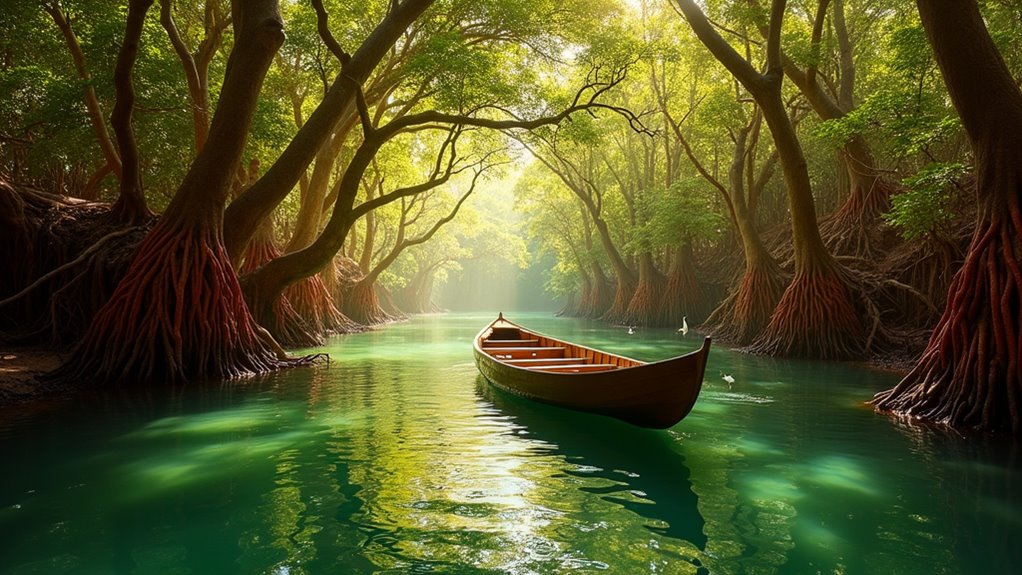
Navigate the Saloum Delta’s labyrinthine waterways aboard a traditional pirogue, and you’ll discover why this 180,000-hectare maze ranks among West Africa’s most spectacular natural wonders. You’ll weave through 200+ islands connected by winding bolongs, where mangrove forests create tunnels of green overhead.
The brackish waters teem with life—spot pelicans, flamingos, and over 250 bird species while dolphins occasionally surface nearby. The delta also serves as a crucial nursery for fish, crustaceans, and molluscs, supporting the vibrant marine ecosystem you’ll witness during your journey.
Stop at shell mounds that tower like ancient monuments, built from centuries of oyster gathering. These 218 archaeological sites reveal fascinating glimpses into coastal civilizations.
Visit traditional fishing villages on islands like Mar Lodj, where you’ll taste fresh-caught seafood and learn local customs. Book guided tours through the Bamboung Marine Protected Area for the richest wildlife encounters.
Relax on the Pristine Beaches of Cap Skirring in Casamance
When you reach Cap Skirring’s coastline in the lush Casamance region, you’ll find yourself on some of West Africa’s most stunning white sand beaches, where powdery shores meet crystal-clear Atlantic waters beneath swaying coconut palms.
You can choose from luxury resorts like Club Med Cap Skirring or cozy guesthouses with direct beach access. Spend your days swimming and sunbathing, then experience the vibrant evening atmosphere when locals gather for music and dancing on the beach, sharing Djoola cultural traditions.
The area offers excellent dining from beachside restaurants serving both Senegalese cuisine and international dishes. The region’s diverse landscapes extend from these pristine beaches to dense forests and expansive rice fields inland. Visit during the dry season for ideal weather, and you’ll discover why this unspoiled paradise perfectly balances natural beauty with authentic culture.
Track Wildlife on Foot in Niokolo-Koba National Park
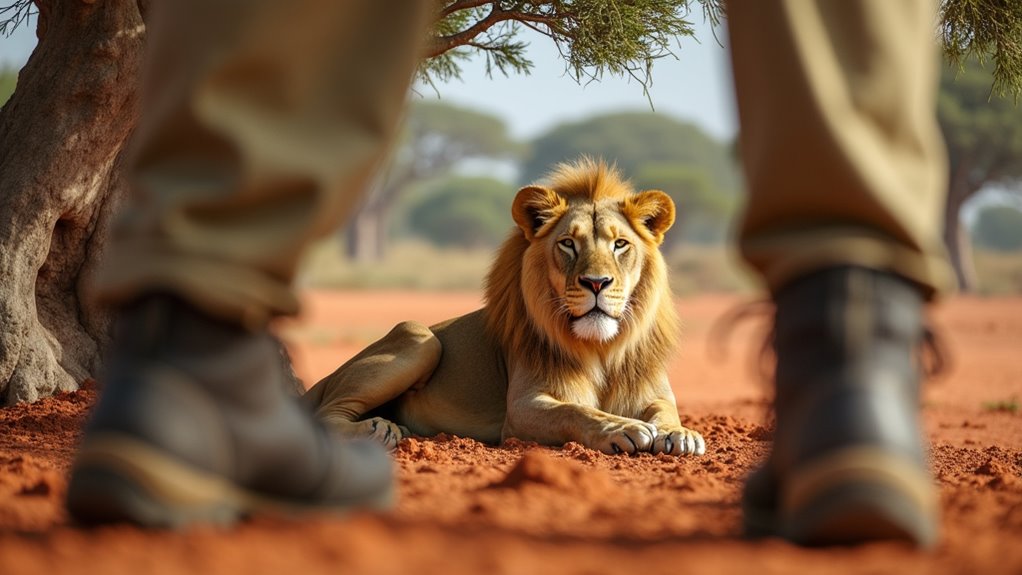
While Casamance offers coastal relaxation, Senegal’s interior holds equally compelling adventures for wildlife enthusiasts. You’ll discover Niokolo-Koba National Park harbors over 70 mammal species, including the critically endangered West African lions whose population has doubled since 2011. Track these magnificent cats alongside Derby elands, chimpanzees, and leopards through gallery forests and savannahs near the Gambia River.
Recent conservation efforts have dramatically reduced poaching, making foot safaris safer and more rewarding. You might spot the rare giant pangolin or witness elephant recovery firsthand—a male named Ousmane was recently filmed after six years of absence. The park’s remarkable recovery earned recognition when UNESCO removed Niokolo-Koba from the List of World Heritage Sites in Danger in 2024.
With intensive ranger patrols and improved infrastructure, you’ll experience one of West Africa’s most successful wildlife recovery stories while supporting vital conservation funding through ecotourism.
Join Local Fishermen at Mbour’s Morning Fish Market
As dawn breaks over Mbour’s bustling coastline, you’ll witness one of Senegal’s most authentic cultural spectacles at the country’s second-largest fishing port. Colorful wooden pirogues return with their Atlantic catch while fishermen unload baskets of diverse fish species onto the sandy beach.
You’ll see donkeys and horses pulling century-old wooden carts, transporting fresh catches to market stalls where vendors slice fish to order.
Don’t navigate this sensory-rich chaos alone—hire a local guide for safety and cultural insight. They’ll arrange 3-4 hour tours including visits to fishermen’s homes and pirogue stations. The vibrant artisanal economy is evident throughout the port, where traditional fishing methods continue to sustain local communities.
Take local transport (clandos) south from Mbour’s garage area to reach the market. Visit during late afternoon and evening for peak activity, when refrigerated trucks prepare overnight shipments to Dakar.
The Sum Up
You’ll find Senegal’s magic lies in its perfect blend of adventure and culture. Don’t just visit the tourist spots—engage with locals at morning markets, join fishermen hauling in their catch, and share tea with villagers in the Delta. Pack light cotton clothes, bring a good camera for those pink lake shots, and always carry cash for market bargaining. Most importantly, embrace the slower pace and let Senegal’s warmth transform your perspective on travel.