
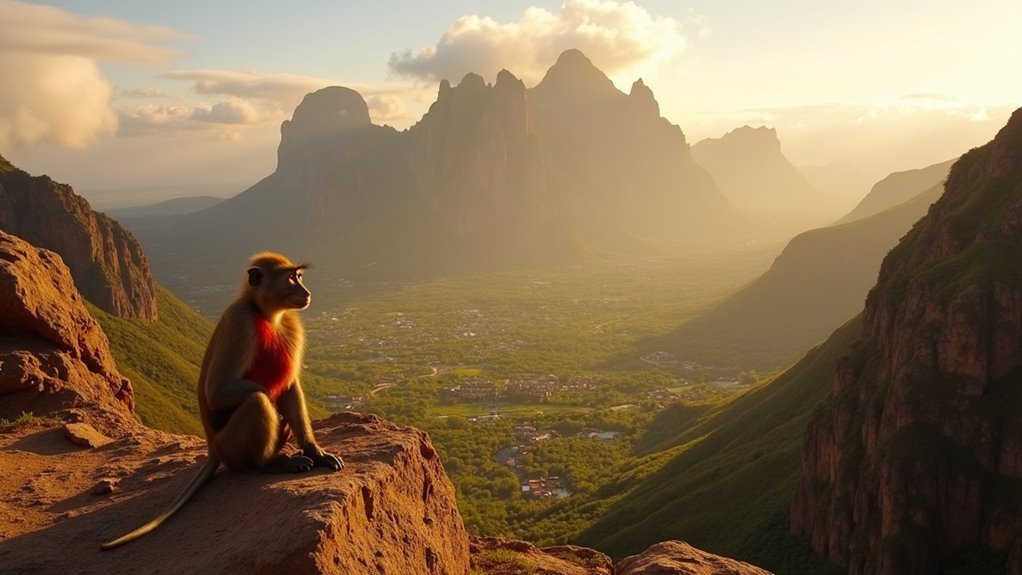
You’ll find Ethiopia offers experiences unlike anywhere else on Earth. From churches carved directly into volcanic rock to landscapes that look more Martian than African, this ancient land challenges everything you think you know about travel. Whether you’re drawn to centuries-old religious sites, encounters with indigenous communities, or geological wonders that defy explanation, Ethiopia’s diverse attractions promise to reshape your understanding of what adventure truly means.
- Marvel at Lalibela’s Rock-Hewn Churches
- Explore the Royal Castles of Gondar
- Trek Through the Simien Mountains National Park
- Venture Into the Danakil Depression’s Alien Landscape
- Discover Ancient Aksum’s Towering Obelisks
- Navigate Harar’s Historic Walled City
- Experience Addis Ababa’s Merkato Market Chaos
- Meet the Tribes of the Omo Valley
- Climb to Abuna Yemata Guh Church
- Witness the Timkat Festival Celebrations
- Cruise Lake Tana’s Island Monasteries
- The Sum Up
Marvel at Lalibela’s Rock-Hewn Churches
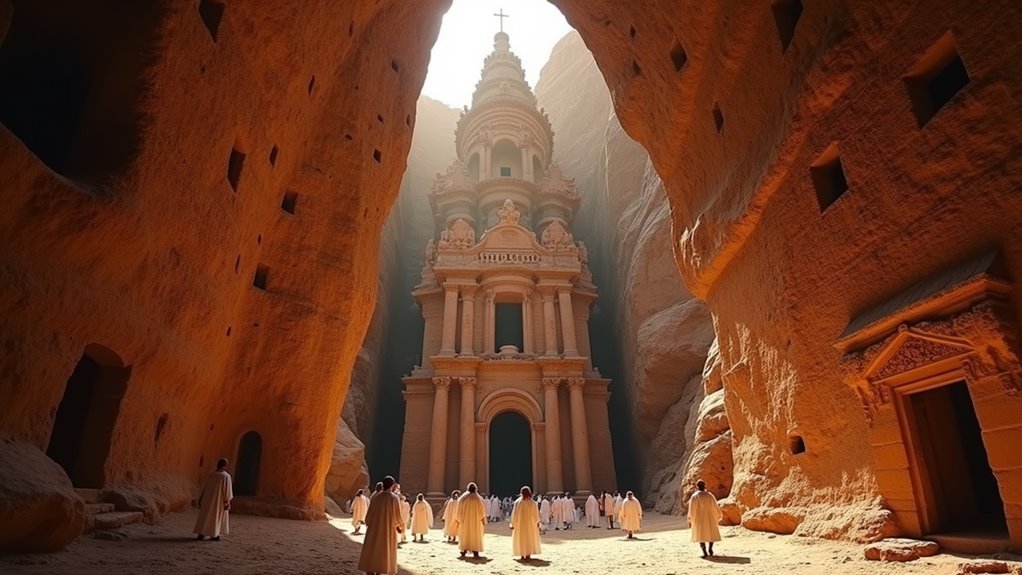
When you arrive at Lalibela, you’ll witness one of the world’s most extraordinary architectural achievements—eleven medieval churches carved entirely from volcanic rock during the 12th and 13th centuries. King Lalibela created this “New Jerusalem” when Muslim conquests blocked pilgrimages to the Holy Land.
You’ll explore monolithic structures hewn top-down from red volcanic scoria, connected by tunnels and passages. Don’t miss Biete Medhani Alem, the world’s largest monolithic church, and the iconic cross-shaped Church of St. George.
Each carved window, door, and pillar carries deep symbolic meaning. The architectural elements imitate earlier periods but showcase unique design and style that distinguish these churches from their historical predecessors.
These aren’t museum pieces—you’ll observe active worship by Ethiopian Orthodox priests and join over 100,000 annual pilgrims. The churches remain Ethiopia’s spiritual heartland, where ancient faith continues today.
Explore the Royal Castles of Gondar
As you journey north from Lalibela to Gondar, you’ll discover Ethiopia’s answer to Camelot—a fortress city where emperors ruled from stone castles for nearly three centuries.
The Royal Enclosure, Fasil Ghebbi, showcases a fascinating blend of Portuguese Baroque, Hindu, Arab, and Ethiopian architectural styles within 900-meter-long defensive walls.
You’ll explore Emperor Fasilides’ remarkably preserved palace, featuring battlemented walls and a distinctive square tower designed by an Indian architect. Wander through the ruins of Emperor Iyasu I’s grand palace and discover ancillary buildings like royal kitchens, steam baths, and stables.
The complex’s twelve entrances and three bridges create an authentic medieval fortress atmosphere. This vast compound spans approximately 70,000 square meters, making it one of Ethiopia’s most impressive royal complexes.
Gondar represents Ethiopia’s golden age of imperial power, when this strategic location near Lake Tana served as the kingdom’s political and cultural heart.
Trek Through the Simien Mountains National Park
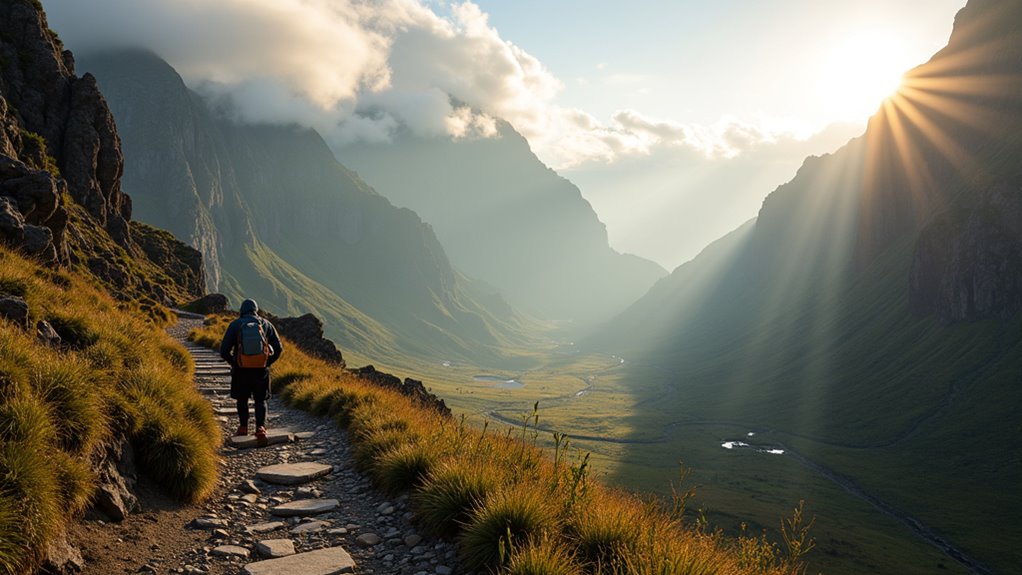
Beyond Gondar’s imperial splendor, Ethiopia’s rugged highlands beckon with some of Africa’s most spectacular mountain trekking. You’ll find yourself ascending from 3,200 meters to Mount Bwahit’s 4,430-meter summit, traversing dramatic escarpments and Erica heather forests.
Classic treks last 5-6 days from Debark to Chennek Camp, though ultimate adventures stretch 12-13 days through highland and lowland terrain.
You’ll encounter endemic wildlife like Ethiopian wolves, Walia ibex, and Gelada baboon troops along ridgeline trails. Key campsites include Sankaber, Geech, and Chennek, with spectacular viewpoints at Imet Gogo and Jinbar waterfall.
Expect steep, challenging terrain requiring good fitness and proper gear. Daily distances range 10-25 kilometers through alpine moorlands and along cliff-edge paths offering panoramic valley views. The ultimate challenge leads to Ras Dejen at 4,533 meters, Ethiopia’s highest peak, where panoramic vistas stretch over ten thousand square kilometers.
Venture Into the Danakil Depression’s Alien Landscape
While the Simien Mountains offer highland adventures, Ethiopia’s northeastern frontier presents an entirely different challenge – the otherworldly Danakil Depression. You’ll find yourself 125 meters below sea level in one of Earth’s hottest places, where temperatures often exceed 48°C and create landscapes that look genuinely alien.
You can witness Erta Ale’s permanent lava lake bubbling within an active shield volcano, explore Dallol’s vibrant acidic hot springs with their rainbow-colored mineral deposits, and traverse vast salt flats where Afar people mine salt using traditional methods.
The depression sits at the junction of three tectonic plates, creating extraordinary geological activity. This extreme environment serves as a planetary analogue for Mars research, attracting scientists studying astrobiology and microbial life in conditions that mirror extraterrestrial environments.
You’ll need local guides and proper preparation for this hyperarid environment, but the experience offers unparalleled access to active continental rifting in action.
Discover Ancient Aksum’s Towering Obelisks
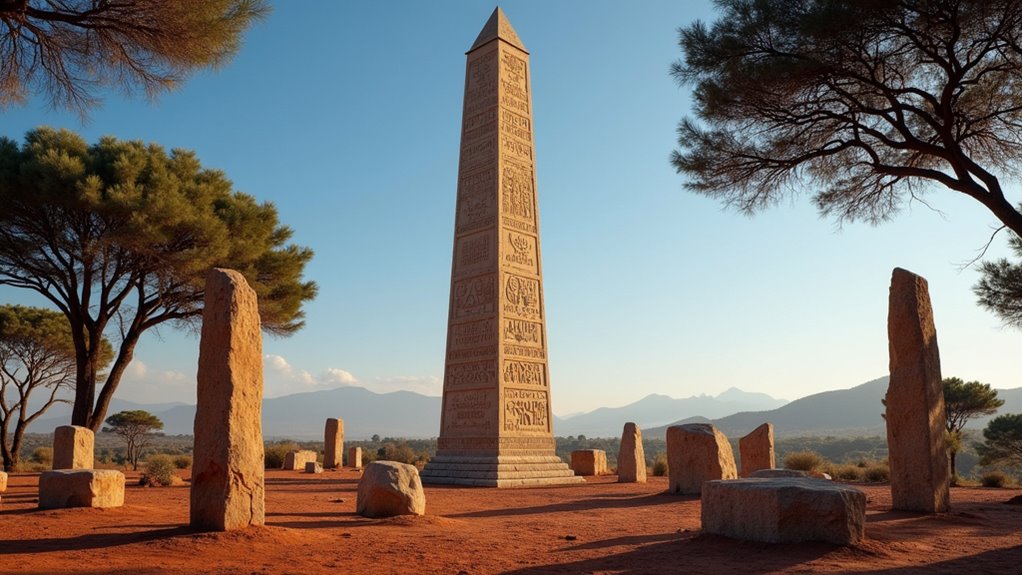
Deep in Ethiopia’s northern highlands, you’ll encounter one of Africa’s most remarkable archaeological treasures – the towering granite obelisks of ancient Aksum. These magnificent stelae, carved from single pieces of stone between the 3rd and 5th centuries CE, served as funerary markers for Aksumite rulers and elites.
You’ll marvel at intricate relief carvings depicting false doors and windows that mirror ancient multi-story buildings. The famous Obelisk of Axum stands 24 meters tall, weighing 160 tonnes – it’s the only large stela that never toppled until Italian forces removed it in 1937. After 70 years in Rome, it returned home in 2008.
Explore the northern Stelae Field‘s 120+ monuments, underground burial chambers, and palace ruins within this UNESCO World Heritage Site that reveals the sophisticated Aksumite civilization‘s architectural mastery. Many stelae feature altars with grooves for blood sacrifices, reflecting the ancient religious practices that preceded Christianity in the region.
Navigate Harar’s Historic Walled City
Step through one of the six ancient gates and you’ll find yourself transported into Harar Jugol, Ethiopia’s remarkable walled city that’s remained virtually unchanged since the 16th century.
You’ll navigate a maze of narrow alleyways connecting 2,000 traditional houses within this UNESCO World Heritage Site, where Islamic architecture blends with African and Arab influences.
Explore the fourth holiest city in Islam, home to 82 mosques and over 100 shrines dating back centuries. Three of these mosques trace their origins to the 10th century, making them among the oldest religious structures in the city.
You’ll discover traditional Harari houses (gego) built with adobe materials alongside Indian-influenced two-story buildings that reflect the city’s rich cultural exchange.
The 3.5-kilometer defensive wall, standing five meters high, protected this regional stronghold from invasions while preserving its unique identity as a center for Islamic scholarship and commerce.
Experience Addis Ababa’s Merkato Market Chaos
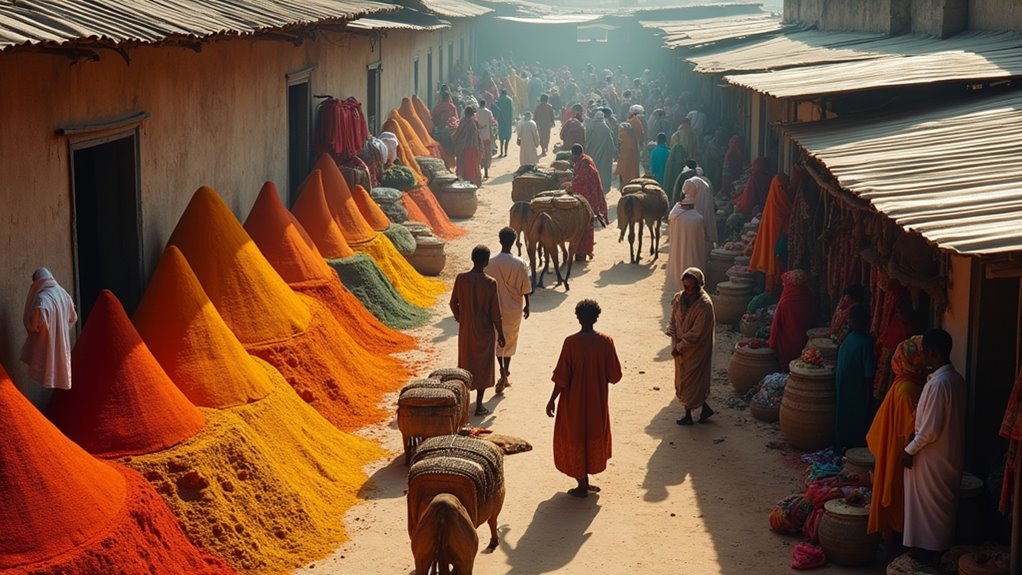
When you enter Merkato, Africa’s largest open-air market, you’ll immediately understand why locals call it organized chaos. Spanning 1.7 square kilometers, this labyrinthine marketplace attracts 300,000 daily visitors exploring crowded alleyways filled with everything from coffee and spices to scrap metal and electronics.
You’ll find product-specific sections serving as landmarks in this maze-like environment. Don’t expect tourist-friendly pricing—foreigners often pay more than locals. The sensory overload is intense: vibrant sights, diverse languages, and aromatic spices create an authentic Ethiopian experience.
Navigate carefully through the bustling corridors where children transport goods and vendors sit among towering merchandise piles. This market serves as home to approximately 200,000 residents who live and work within its boundaries. While challenging to explore without guidance, Merkato offers an unfiltered glimpse into Ethiopia’s traditional commerce and urban culture that modernization hasn’t touched.
Meet the Tribes of the Omo Valley
After experiencing the urban energy of Addis Ababa’s markets, you’ll discover an entirely different side of Ethiopian culture in the remote Omo Valley. Here, 16 distinct ethnic tribes maintain traditional lifestyles that’ve remained largely unchanged for centuries.
You’ll witness remarkable cultural practices among these communities. The Mursi women wear distinctive lip plates, while Hamar men prove their manhood through bull-jumping ceremonies. The Karo people create intricate body art using natural pigments, and you’ll observe the Daasanach combining pastoralism with flood-based farming near Lake Turkana.
Each tribe follows seasonal migration patterns and relies heavily on cattle herding. You’ll see dome-shaped homes, experience ceremonial stick fighting demonstrations, and learn about purification rituals. The Bodi tribe celebrates the Holiday of the Fat Men, where men spend six months gaining weight and the fattest man receives special recognition. This culture offers authentic insights into Ethiopia’s diverse heritage.
Climb to Abuna Yemata Guh Church
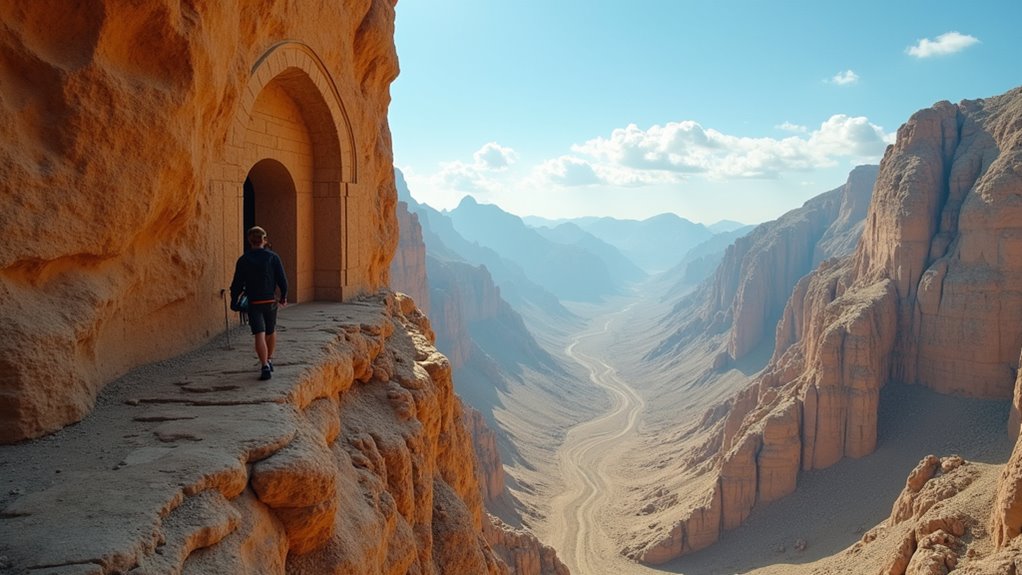
Perched dramatically on a sandstone pinnacle 2,580 meters above sea level, Abuna Yemata Guh Church challenges even the most adventurous travelers with one of the world’s most hair-raising climbs to reach a place of worship. You’ll scale sheer cliff faces using natural handholds, cross narrow stone bridges with 250-meter drops on either side, and navigate precarious wooden footbridges during the 45-minute ascent.
Once inside this 6th-century rock-hewn church, you’ll discover remarkably preserved 15th-century frescoes depicting the nine saints and twelve apostles. The vibrant paintings, created from local flowers and minerals, remain vivid thanks to the dry mountain climate. The church’s library houses ancient manuscripts written in Geez script, including an Orthodox Bible with colorful goatskin pages dating back to 610 CE.
This active Ethiopian Orthodox church still hosts masses and baptisms, making your treacherous climb a genuine spiritual pilgrimage.
Witness the Timkat Festival Celebrations
Every January, Ethiopia transforms into a vibrant tapestry of white-robed pilgrims, ancient rituals, and joyous celebration during Timkat, the country’s most spectacular religious festival. You’ll witness priests carrying sacred Tabots through colorful processions to nearby rivers, where they’ll bless the holy water at dawn.
Don’t miss the Ketera ceremony on the festival’s eve, featuring traditional horns and rhythmic drumming.
Head to Gondar for the most authentic experience, where ancient structures come alive with thousands of worshippers. You can also join celebrations in Addis Ababa’s Jan Meda or explore village festivities throughout the highlands. The celebration reflects Ethiopia’s status as one of the earliest Christian nations, having adopted Christianity in the 4th century CE.
The festival commemorates Jesus Christ’s baptism and offers you a chance to observe 1,600 years of Ethiopian Orthodox tradition while experiencing the country’s remarkable cultural unity.
Cruise Lake Tana’s Island Monasteries
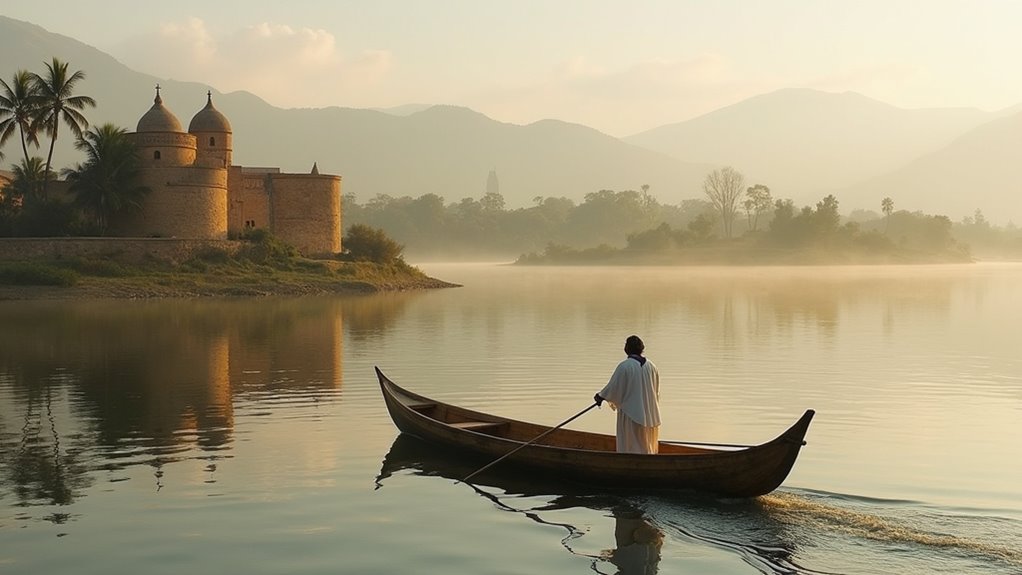
More than thirty islands dot the expansive waters of Lake Tana, Ethiopia’s largest lake, where ancient monasteries have preserved centuries of religious tradition and imperial history. You’ll discover over 19 monasteries dating back to the 14th century, many housing glass coffins containing remains of Ethiopian emperors like Yekuno Amlak and Fasilidas.
Take a 2-3 hour boat ride from Bahir Dar to reach these sacred sites. You’ll walk through islands filled with coffee and fruit trees to find round churches adorned with 600-year-old murals and illuminated manuscripts.
Note that some monasteries like Daga Estefanos restrict female visitors due to religious customs.
Consider traveling by traditional papyrus tankwa boats for an authentic experience while exploring these spiritual centers that once safeguarded Ethiopian Orthodox Christianity. Lake Tana sits 1800 meters above sea level, making it one of Africa’s highest major bodies of water.
The Sum Up
You’ll find Ethiopia offers an incredible mix of ancient history, stunning landscapes, and vibrant culture that’ll leave you amazed. Whether you’re exploring thousand-year-old churches carved from rock, trekking through dramatic mountain ranges, or experiencing the warmth of local festivals, each adventure reveals something extraordinary. Don’t just visit the popular sites—take time to connect with local communities and learn about traditions that’ve survived for centuries. Ethiopia’s waiting to surprise you.