
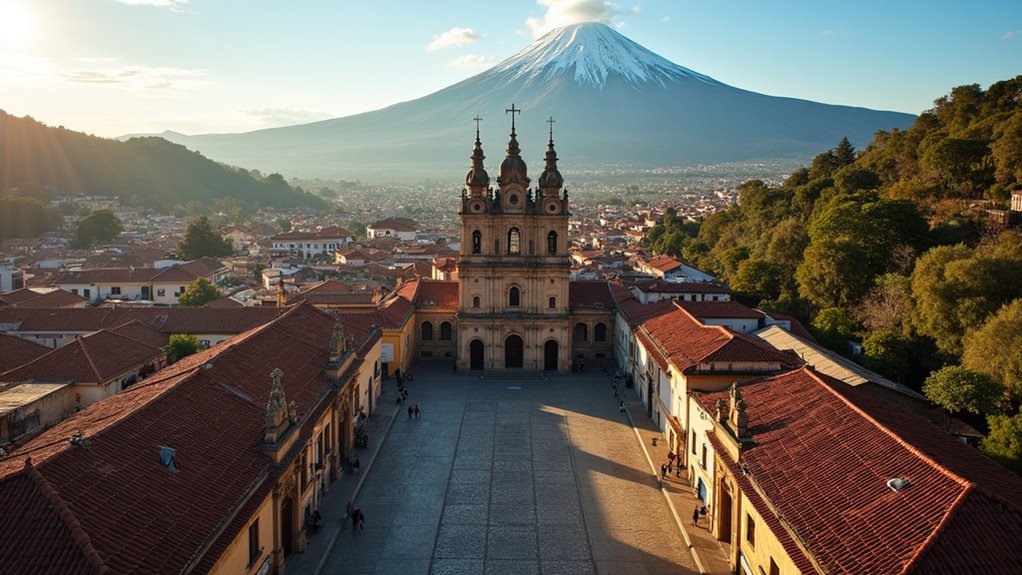
You’ll find endless excitement in Quito’s UNESCO World Heritage Old Town, where colonial churches like gold-leafed Compañía de Jesús showcase baroque splendor. Take the Teleférico cable car up Pichincha volcano for breathtaking Andean views, then climb El Panecillo hill‘s panoramic vistas. Explore Guayasamín’s world-renowned art museums, shop traditional handicraft markets, and venture to nearby Mindo Cloud Forest‘s 500+ bird species. The Metropolitan Park offers urban hiking while historic churches reveal centuries of indigenous-European fusion. This remarkable capital seamlessly blends cultural heritage with natural adventure opportunities awaiting your discovery.
- Wander Quito’s UNESCO World Heritage Old Town
- Take the Teleférico Cable Car Up Pichincha Volcano
- Climb El Panecillo for Panoramic City Views
- Stand on the Equator at Mitad Del Mundo
- Explore Oswaldo Guayasamín’s Art Museums
- Experience Local Culture on Calle La Ronda
- Shop for Handicrafts at Traditional Markets
- Take a Day Trip to Mindo Cloud Forest
- Visit the Ornate Churches of the Historic Center
- Hike in Metropolitan Park and Urban Green Spaces
- The Sum Up
Wander Quito’s UNESCO World Heritage Old Town
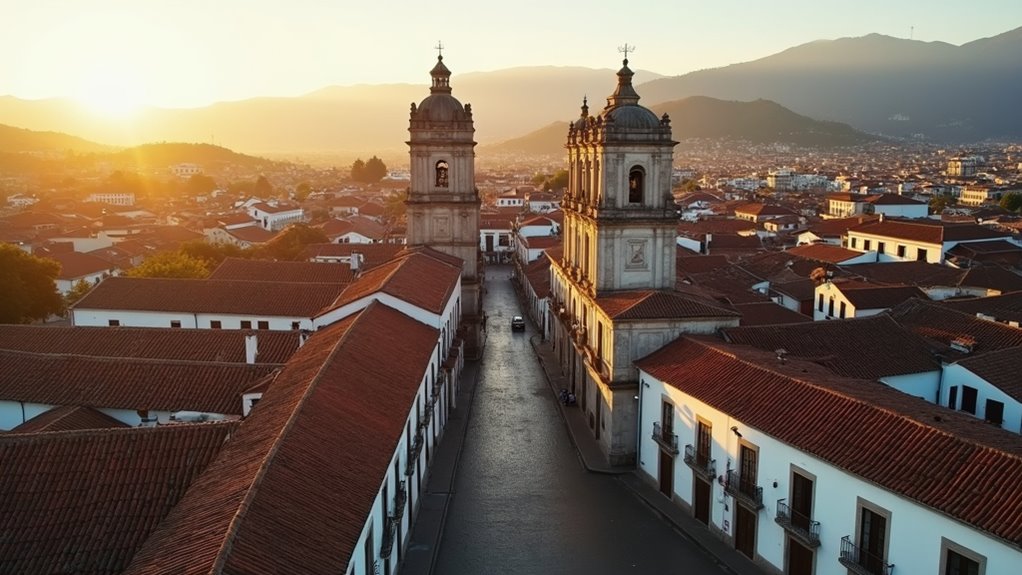
Step into Quito’s Old Town and you’ll find yourself walking through the world’s first UNESCO World Heritage Site, designated in 1978 for its extraordinary preservation of colonial architecture. Covering 800 acres, this living cultural district showcases the distinctive Baroque School of Quito, where indigenous and European artistic traditions merged beautifully.
Start at Plaza de la Independencia, surrounded by the Presidential Palace and Metropolitan Cathedral. Don’t miss the Basilica del Voto Nacional with its unique gargoyles shaped like Galápagos animals, or the 16th-century Church of San Francisco displaying intricate Escuela Quitena artwork. The area’s distinctive wrought iron balconies and colorful buildings create the perfect backdrop for photography as you wander the historic streets.
Explore Calle La Ronda‘s artisan workshops and traditional restaurants. Wear comfortable shoes for cobblestone streets, and visit Sunday mornings for lively festivals featuring music, dancing, and local food vendors celebrating Quito’s vibrant heritage.
Take the Teleférico Cable Car Up Pichincha Volcano
When you’re ready to escape Quito’s bustling streets for breathtaking Andean vistas, the Teleférico cable car offers one of South America’s most spectacular urban adventures. This high-altitude gondola climbs Pichincha volcano‘s eastern slopes, ascending from 2,950 meters to over 4,000 meters—making it among the world’s highest cable cars.
You’ll pay around $8-9 for a round-trip ticket during the 10-20 minute journey to Cruz Loma ridge. At the top, explore páramo landscapes, enjoy panoramic views of Quito’s basin and distant volcanoes like Cotopaxi, and experience the famous “swing in the clouds” photo opportunities. You can also take photos with friendly llamas that roam the summit area.
Arrive early on weekends to avoid two-hour queues, and bring warm clothing—the temperature drops considerably at this altitude.
Climb El Panecillo for Panoramic City Views
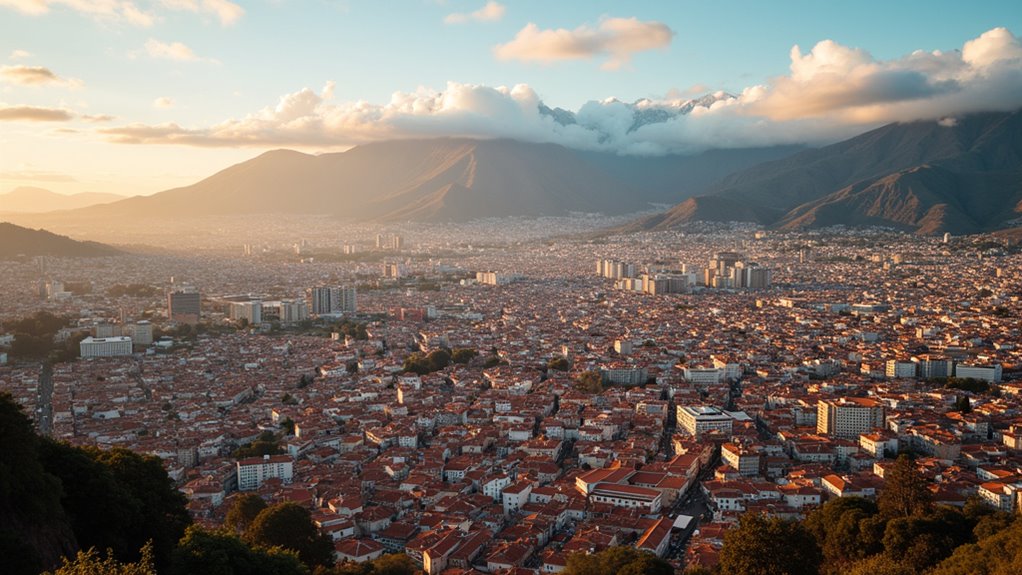
Rising 200 meters above Quito’s colonial heart, El Panecillo offers the city’s most accessible panoramic viewpoint—crowned by the world’s tallest aluminum sculpture, a magnificent 30-meter Winged Virgin that’s watched over the capital since 1975.
From this 3,000-meter elevation, you’ll capture sweeping views of historic churches, colonial plazas, and distant Andean peaks.
The hill’s Indigenous name “Yavirac” reflects its pre-Hispanic sacred significance, while Spanish colonizers dubbed it “Panecillo” for its bread-roll shape. This site once housed a sun temple where indigenous people performed their worship rituals before Spanish conquistadores destroyed it.
Take a taxi or join a guided tour rather than walking—security concerns make independent hiking inadvisable.
Visit day or night for contrasting perspectives: daylight reveals Quito’s unchanged four-century urban layout, while evening illuminates colonial domes and spires.
The summit features restaurants and an interior museum showcasing construction history.
Stand on the Equator at Mitad Del Mundo
After capturing Quito’s urban sprawl from above, venture 13 kilometers north to San Antonio parish where you’ll find one of Ecuador’s most photographed tourist attractions—the towering 98-foot monument at Mitad del Mundo.
You’ll join countless visitors straddling the thick yellow line for that classic “one foot in each hemisphere” photo, though the actual equator lies 240 meters away near Catequilla.
The complex resembles a theme park with souvenir shops, cafés, and the Museo Etnográfico showcasing Ecuador’s indigenous cultures through traditional clothing and artifacts. Pay the $5 entrance fee to explore exhibits, then climb the monument for panoramic views. This monument stands on a location determined by a French geodesic expedition from 1736 led by Charles-Marie de La Condamine, whose calculations were slightly off but created this enduring landmark.
While GPS purists debate accuracy, this half-day trip remains quintessentially Quito—combining science, history, and tourist tradition.
Explore Oswaldo Guayasamín’s Art Museums
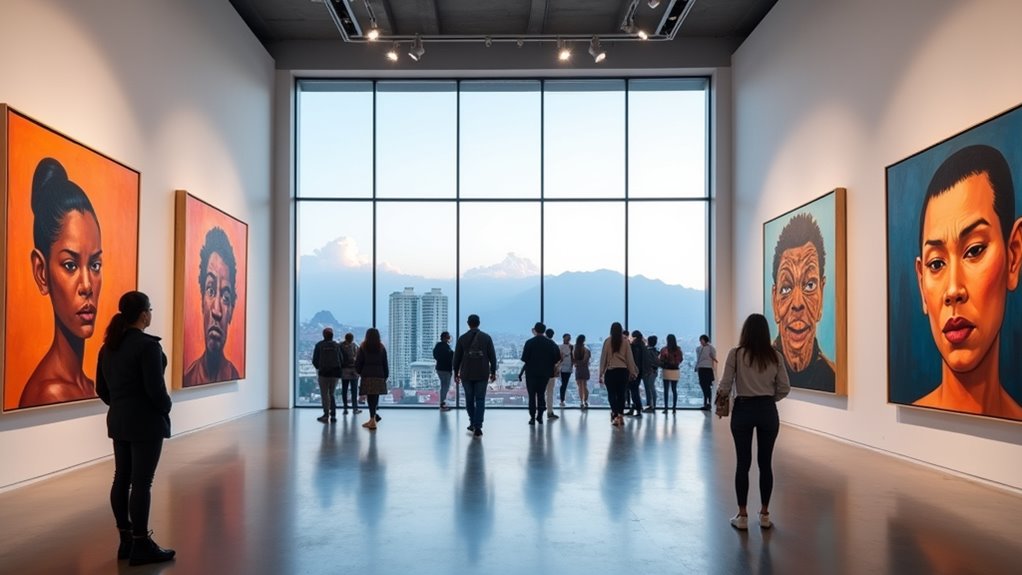
Twenty minutes northeast of Quito’s historic center, you’ll discover Ecuador’s most important artistic legacy at the Fundación Guayasamín museum complex in Bellavista.
Your entrance ticket covers both the Casa Museo Guayasamín and the striking Capilla del Hombre, where you’ll explore the preserved home and workspace of Ecuador’s most influential 20th-century artist.
Inside the modernist house, guided tours reveal rooms filled with Guayasamín’s personal collections spanning pre-Columbian ceramics, colonial religious art, and his own powerful paintings depicting human suffering and social justice. The museum displays artifacts arranged by thematic categories such as bowls, fertility figurines, and burial masks.
The temple-like Capilla del Hombre showcases monumental canvases celebrating Latin American dignity and struggle.
Visit Tuesday through Sunday from 9:30am to 4:45pm, and don’t miss the panoramic views of Quito from this hillside location.
Experience Local Culture on Calle La Ronda
While most travelers rush through Quito’s historic center, you’ll discover the city’s authentic cultural soul by wandering down Calle La Ronda, a narrow cobblestone street that’s served as the heartbeat of local artistic life for over 400 years. Originally an ancient Inca footpath, this pedestrian-only lane transformed into Ecuador’s premier bohemian quarter where poets, musicians, and artists still gather today.
Visit after sunset when lanterns illuminate colonial balconies and live music spills from intimate cafés. Sip canelazo, the traditional hot spiced drink, while watching artisans craft instruments and silverwork in open workshops. The street’s revival began with a careful restoration in 2006 that brought back its historical charm after decades of decline.
You’ll hear authentic pasillos folk songs that were born in these very taverns, experiencing living heritage rather than tourist theater in this beautifully restored cultural corridor.
Shop for Handicrafts at Traditional Markets
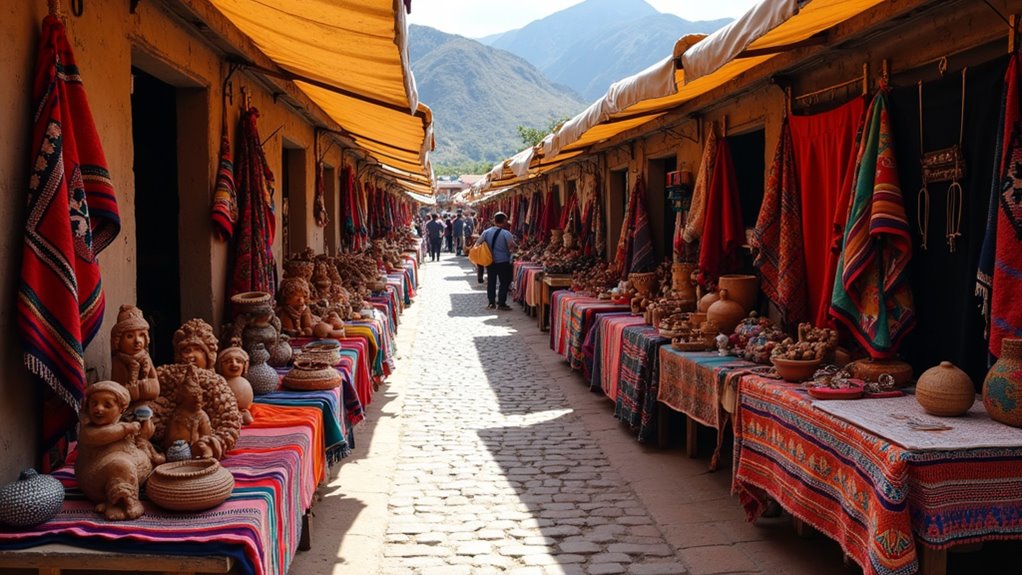
Three bustling markets form Quito’s handicraft shopping triangle, where you’ll find Ecuador’s finest artisan work at prices that won’t empty your wallet. La Mariscal Artisan Market’s 198 stalls showcase alpaca wool ponchos, leather goods, and ceramics in dense corridors perfect for comparison shopping.
El Ejido’s open-air market offers a relaxed atmosphere where local artisans sell hand-embroidered textiles and llama figurines near Parque El Ejido.
For ethically-sourced purchases, visit fair trade shops like Tienda El Quinde near Plaza Grande, where your money directly supports rural communities.
Bargaining’s expected at traditional markets—aim for 10-30% discounts. Bring cash since card acceptance is limited.
Visit weekday mornings for smaller crowds and better artisan interaction while exploring Ecuador’s rich textile heritage. The La Mariscal market also features wooden carvings and masks representing indigenous cultures alongside artworks by local painters.
Take a Day Trip to Mindo Cloud Forest
After collecting handcrafted treasures in Quito’s markets, escape to Mindo Cloud Forest for Ecuador’s most accessible wilderness adventure just two hours from the capital. You’ll discover one of the world’s most biodiverse hotspots, where over 500 bird species thrive in perpetually misty cloud forests between 1,200–1,800 meters elevation.
Take the Tarabita cable car across the canopy to access the Ruta de las Cascadas, featuring seven spectacular waterfalls connected by easy-to-moderate trails.
Start early to maximize birdwatching opportunities—you’ll spot toucans, tanagers, and numerous hummingbirds at feeding stations. Adventure seekers can experience thrilling tube rafting on the Mindo River, where conditions range from gentle floats to exciting class III–V rapids. Full-day tours from Quito cost $80–190 and typically combine waterfall hiking, wildlife observation, and cultural experiences like chocolate tours.
Budget travelers can catch public buses from Terminal La Ofelia for an independent adventure.
Visit the Ornate Churches of the Historic Center
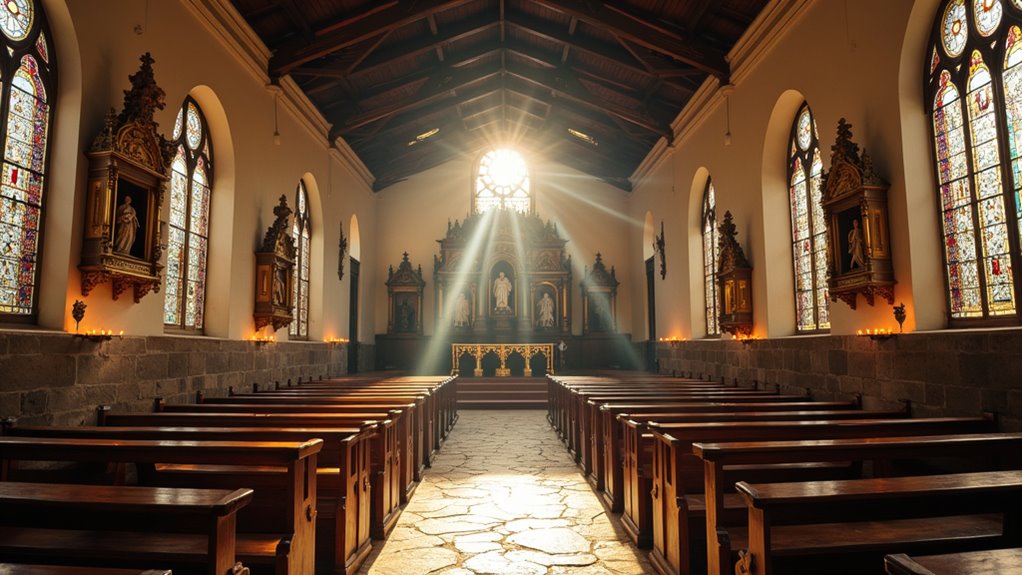
Beyond Mindo’s natural wonders, Quito’s historic center showcases South America’s most spectacular collection of colonial churches, where centuries of artistic mastery merge European baroque traditions with indigenous Andean craftsmanship.
Start at the Compañía de Jesús, Latin America’s most important baroque temple. You’ll be mesmerized by its gold-leaf interior covering every nave, altar, and column—earning its “Golden Church” nickname. The facade blends Solomonic columns with indigenous motifs.
Next, explore San Francisco Church, built over an ancient Inca temple site. Its Renaissance-Mudejar-Baroque fusion houses masterful Quito School art. The complex includes the Fray Pedro Gocial Museum showcasing religious artifacts and colonial heritage.
Don’t miss the Basilica del Voto Nacional, the Americas’ largest neo-Gothic basilica featuring gargoyles shaped like Ecuadorian animals.
Finally, visit the Metropolitan Cathedral anchoring Plaza Grande, showcasing Ecuador’s highest Catholic temple within this UNESCO World Heritage urban ensemble.
Hike in Metropolitan Park and Urban Green Spaces
When you need a break from Quito’s bustling streets and thin air, Metropolitan Park offers 580 hectares of eucalyptus forests and open meadows at 2,890 meters elevation—making it one of the city’s most essential green lungs.
You’ll find trails ranging from casual walks to challenging 4.4-kilometer loops with 129 meters of elevation gain, plus dedicated mountain biking routes.
The Ashintaco gorge attracts serious birdwatchers with over 70 species, including endangered varieties and vibrant vermillion flycatchers.
Don’t miss the resident llama herd grazing near playgrounds.
Multiple miradores provide stunning Andes views on clear days. The popular Guanguiltagua trail spans 2.7 miles with moderate difficulty, perfect for those seeking a manageable scenic walk.
For easier options, visit Parque La Carolina’s 3.7-kilometer perimeter route or Parque Itchimbía’s hilltop views overlooking the historic center.
The Sum Up
You’ve got everything needed for an unforgettable Quito experience. Start with the colonial Old Town’s cobblestone streets, then ascend Pichincha for breathtaking Andean views. Don’t miss the equatorial monument and Guayasamín’s powerful indigenous art. Balance urban exploration with nature at Mindo’s cloud forests. Quito’s unique blend of pre-Columbian heritage, Spanish colonial architecture, and modern Ecuadorian culture creates an authentic South American adventure you won’t find elsewhere.