
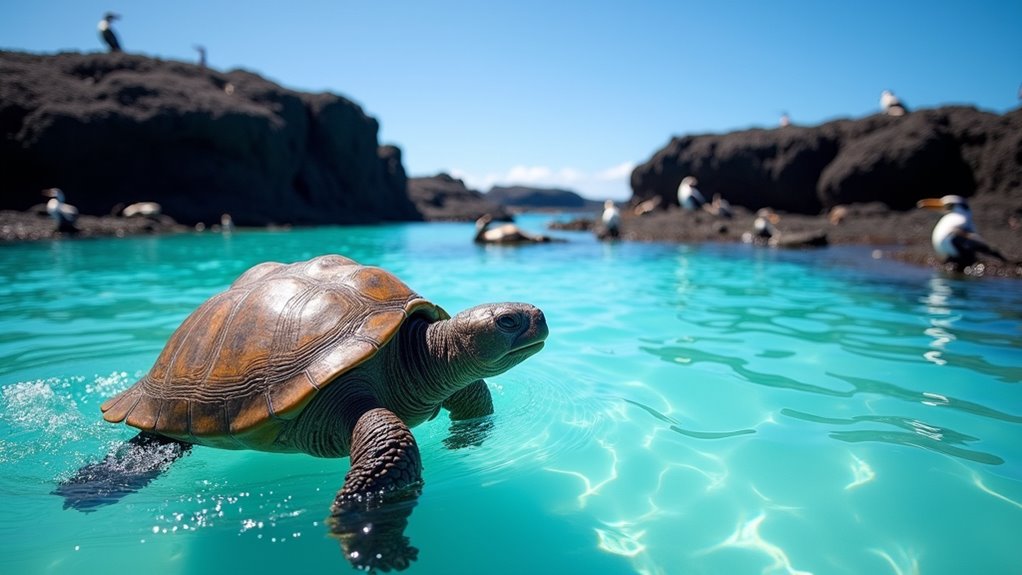
You’ll find extraordinary adventures in the Galápagos, from snorkeling with playful sea lions at Playa Tijeretas to hiking Sierra Negra‘s massive 9-kilometer volcanic caldera. Dive Kicker Rock’s underwater cliffs to spot hammerhead sharks, meet giant tortoises roaming freely at Rancho Primicias, and paddle through Sombrero Chino’s lava formations. Watch blue-footed boobies perform courtship dances, explore Las Tintoreras’ shark-filled channels, and take multi-day yacht tours with Zodiac landings to remote islands where Darwin’s legacy comes alive through unforgettable wildlife encounters.
- Snorkel With Sea Lions at Playa Tijeretas
- Dive the Underwater Cliffs at Kicker Rock
- Meet Giant Tortoises at Rancho Primicias
- Hike Sierra Negra Volcano on Isabela Island
- Explore the Lava Channels at Las Tintoreras
- Kayak Through Mangrove Lagoons
- Walk the Pristine Sands of Tortuga Bay
- Watch Blue-Footed Boobies at Gardner Bay
- Paddle Around Sombrero Chino’s Rock Formations
- Visit the Charles Darwin Research Station
- Take a Multi-Day Yacht Tour With Zodiac Landings
- The Sum Up
Snorkel With Sea Lions at Playa Tijeretas
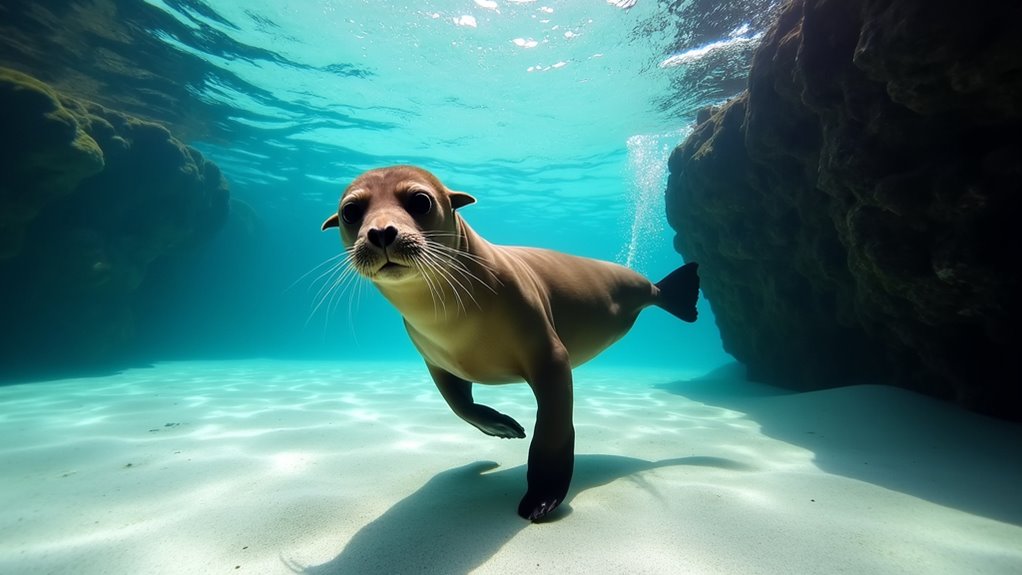
Just a 15-20 minute walk from Puerto Baquerizo Moreno through the Interpretation Center trail, Playa Tijeretas offers one of the Galápagos’ most accessible and rewarding snorkeling experiences.
You’ll enter the crystal-clear waters from a rocky platform rather than a sandy beach, so plan your visit during high tide for easier access.
This free snorkeling spot transforms into a sea lion playground where curious juveniles often approach swimmers, darting playfully around you. Near the snorkeling area, you’ll find a cave inhabited by sea lions who are frequently seen lounging on the nearby dock.
You’ll also spot green sea turtles, marine iguanas, and colorful reef fish.
Morning visits provide calmer conditions before afternoon winds intensify.
Bring your own gear and wetsuit during cooler months.
Maintain several meters’ distance from resting sea lions and watch for defensive body language like barking or rapid movements.
Dive the Underwater Cliffs at Kicker Rock
Rising 145 meters from the Pacific like a sleeping lion, Kicker Rock (León Dormido) delivers the Galápagos’ most exhilarating underwater encounter. This eroded volcanic tuff cone creates dramatic underwater cliffs where hammerhead sharks patrol the depths alongside Galápagos sharks, sea lions, and eagle rays.
You’ll drift dive along towering walls at 15-25 meters depth, positioning yourself in the narrow channel where currents funnel marine life past your mask. The site demands intermediate diving skills due to moderate-to-strong currents, but rewards you with the archipelago’s best hammerhead viewing from June to November. Most diving excursions feature two dives per trip, allowing you to explore different sections of this remarkable underwater landscape.
Book tours departing Puerto Baquerizo Moreno at 7:30 AM for $190-200, including gear and lunch. Water temperatures peak January-May (23-30°C) with ideal visibility, though cooler months offer more shark activity.
Meet Giant Tortoises at Rancho Primicias
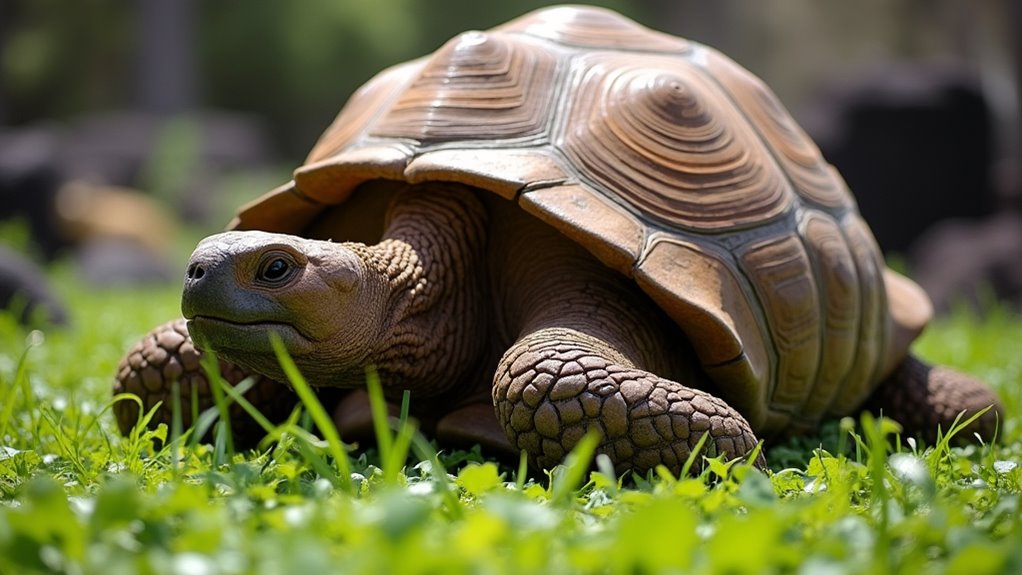
While most Galápagos tortoise encounters happen at breeding centers, Rancho Primicias delivers something more authentic—dozens of wild giant tortoises roaming freely across highland pastures and forest trails.
Located 30-40 minutes from Puerto Ayora, this private reserve sits on traditional migration routes, virtually guaranteeing sightings as tortoises graze, wallow in muddy ponds, and sun themselves.
You’ll receive rubber boots upon entry—essential for orienteering the muddy terrain around wallowing areas where tortoises congregate.
Self-guided trails let you explore at your own pace while maintaining respectful distances from these ancient giants. Keep your eyes open for Darwin’s Finches and other endemic bird species that call the reserve home.
The property also features one of Santa Cruz’s largest accessible lava tunnels, plus an on-site café serving quality meals between tortoise encounters.
Hike Sierra Negra Volcano on Isabela Island
Standing at the rim of one of the world’s largest volcanic calderas, you’ll witness the raw geological forces that continue shaping the Galápagos archipelago. Sierra Negra’s 9-kilometer-wide crater showcases dark basalt flows from multiple eruptions, including the most recent in 2018.
This 16-kilometer round-trip hike requires 5-7 hours and covers moderate terrain with 200-340 meters elevation gain. You’ll start through lush highland vegetation before reaching sparse lava fields near the rim. The volcano is estimated to be approximately 535,000 years old based on its massive volume and historic eruption patterns.
The optional extension to Volcán Chico reveals jagged aa lava formations and active volcanic features.
All visitors must hire certified guides through Puerto Villamil operators, who’ll arrange transport to the trailhead. Access may close without notice during volcanic activity, so check current conditions before planning your visit.
Explore the Lava Channels at Las Tintoreras
After experiencing Isabela’s volcanic power from above, you’ll discover how that same geological force shaped one of the archipelago’s most unique marine environments below sea level.
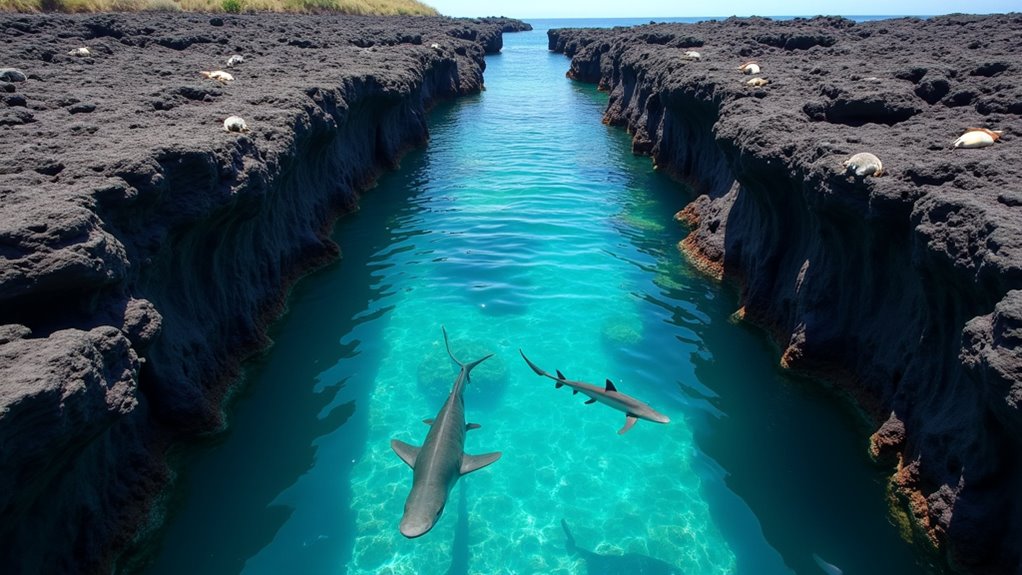
Las Tintoreras features narrow lava channels carved between black aa flows, some only 2–3 meters wide and filled with crystal-clear seawater. You’ll take a 10-minute panga ride south from Puerto Villamil to reach this 12.4-hectare site.
The main attraction is watching whitetip reef sharks resting in these confined channels, especially visible at low tide. You’ll follow a 1.4-kilometer trail over jagged lava rock to marked viewpoints overlooking the sharks below.
The site also hosts one of the archipelago’s largest marine iguana colonies, plus sea turtles, sea lions, and occasional Galápagos penguins. The landscape features dark volcanic rock covered with white lichen, creating a striking contrast against the turquoise waters. Snorkeling opportunities provide underwater views of this unique ecosystem.
Kayak Through Mangrove Lagoons
As you trade the rugged lava formations of Las Tintoreras for the serene waterways of the Galápagos’ mangrove lagoons, you’ll discover an entirely different side of the archipelago’s marine ecosystem.
Puerto Villamil on Isabela and calm inlets around Santa Cruz offer prime kayaking through sheltered channels where juvenile reef fish, green sea turtles, and white-tipped reef sharks glide beneath crystal-clear waters.
These guided excursions cover 2-3 kilometers over 1-2 hours, perfect for beginners seeking technical paddling through narrow corridors.
Morning or late afternoon timing provides ideal wildlife activity and calmer winds.
You’ll observe marine iguanas basking on mangrove roots while blue-footed boobies and frigatebirds nest overhead. The small group sizes allow access to less visited lagoon sites while reducing ecological impact on these sensitive ecosystems.
National park regulations require certified guides and limit group sizes, ensuring this low-impact experience preserves these critical nursery habitats.
Walk the Pristine Sands of Tortuga Bay
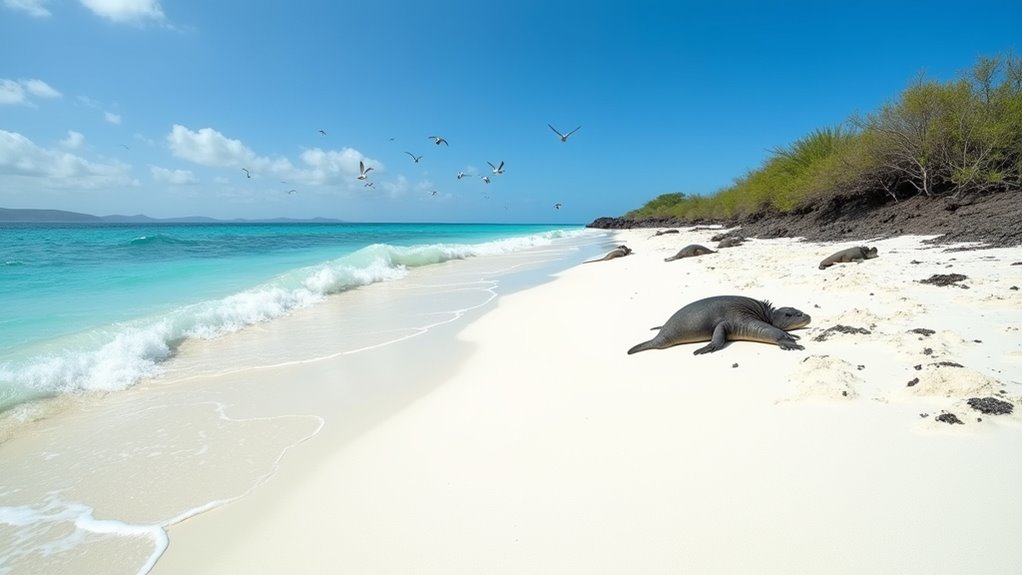
When you reach the end of the 2.5-kilometer paved trail from Puerto Ayora, you’ll encounter one of South America’s most spectacular beaches stretching before you in pristine perfection. Tortuga Bay‘s white coral sand contrasts dramatically with jet-black lava formations and turquoise waters. You’ll walk along firm sand for kilometers, spotting marine iguanas basking on volcanic rocks and green sea turtles that gave this bay its name.
Continue twenty minutes to Playa Mansa‘s sheltered cove for swimming in calm waters—the outer beach’s strong currents make it unsafe. Here you can snorkel among colorful reef fish, rays, and occasionally white-tip reef sharks. The mangrove-fringed lagoon behind attracts flamingos and diverse birdlife. The trail to the beach crosses arid vegetation where you can observe abundant birdlife, including the famous Darwin’s Finches. Remember to register at the park office and bring all supplies.
Watch Blue-Footed Boobies at Gardner Bay
Where else can you witness one of nature’s most charismatic seabirds performing their legendary courtwork dance just meters away? Gardner Bay on Española Island offers unparalleled access to one of the Galápagos’ largest blue-footed booby colonies.
You’ll watch males lift their brilliant blue feet in high-stepping displays while sky-pointing and spreading wings to attract mates. The birds nest on open ground near the coast, creating perfect viewing opportunities from marked visitor areas.
Beyond courtship rituals, you’ll observe spectacular plunge dives from 80 feet as boobies hunt schooling fish at speeds reaching 60 mph. The sheltered bay’s white-sand beach provides ideal conditions for watching these synchronized feeding flights. These distinctive seabirds rely primarily on sardines and anchovies for their diet, making the nutrient-rich waters around the Galápagos essential for their survival.
With approximately 20,000 breeding pairs archipelago-wide, Española represents a vital stronghold for this iconic species.
Paddle Around Sombrero Chino’s Rock Formations
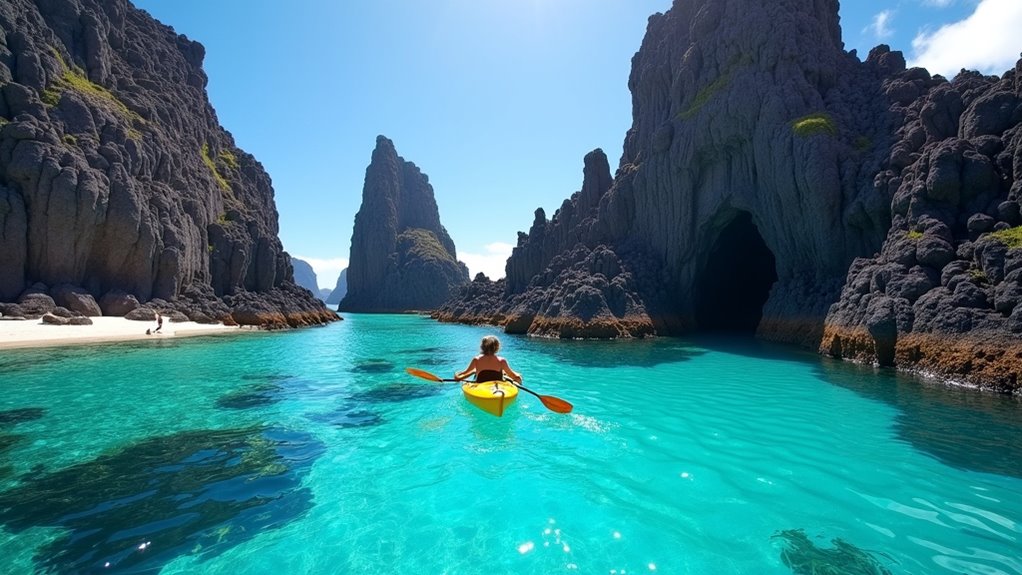
Paddling through the sheltered channel between Sombrero Chino and Santiago Island brings you face-to-face with some of the Galápagos’ most dramatic volcanic geology. You’ll navigate calm waters alongside solidified lava flows, spatter cone formations, and stratified volcanic layers that tell the story of ancient eruptions.
The protected channel keeps swells manageable while you explore lava tunnels and pillow lava formations uplifted from the seafloor.
From your kayak, you’ll spot Galápagos sea lions lounging on black lava slabs and Sally Lightfoot crabs clinging to intertidal rocks. Marine iguanas bask on volcanic ledges while penguins dart through the clear waters. White-tipped reef sharks may glide beneath your kayak in these calm waters.
The iconic “Chinese hat” silhouette creates stunning photography opportunities, especially against contrasts of white coral sand, turquoise water, and jagged lava outcrops.
Visit the Charles Darwin Research Station
Located in Puerto Ayora on Santa Cruz Island, the Charles Darwin Research Station serves as the scientific headquarters for Galápagos conservation efforts and offers visitors an essential educational experience about the archipelago’s unique ecosystems.
You’ll explore the natural history interpretation center, which explains the islands’ ecology, evolution, and conservation challenges through detailed exhibits.
The station’s famous giant tortoise breeding programs showcase successful species recovery efforts, while displays detail ongoing research on iconic wildlife like penguins, flightless cormorants, and hammerhead sharks. The conservation work has dramatically increased tortoise populations from approximately 3,000 in the 1970s to nearly 20,000 today.
You can learn about invasive species control, climate impacts, and Darwin’s historic 1830s visit that shaped evolutionary theory.
The facility’s educational exhibits provide vital context for understanding the scientific importance of your Galápagos experience.
Take a Multi-Day Yacht Tour With Zodiac Landings
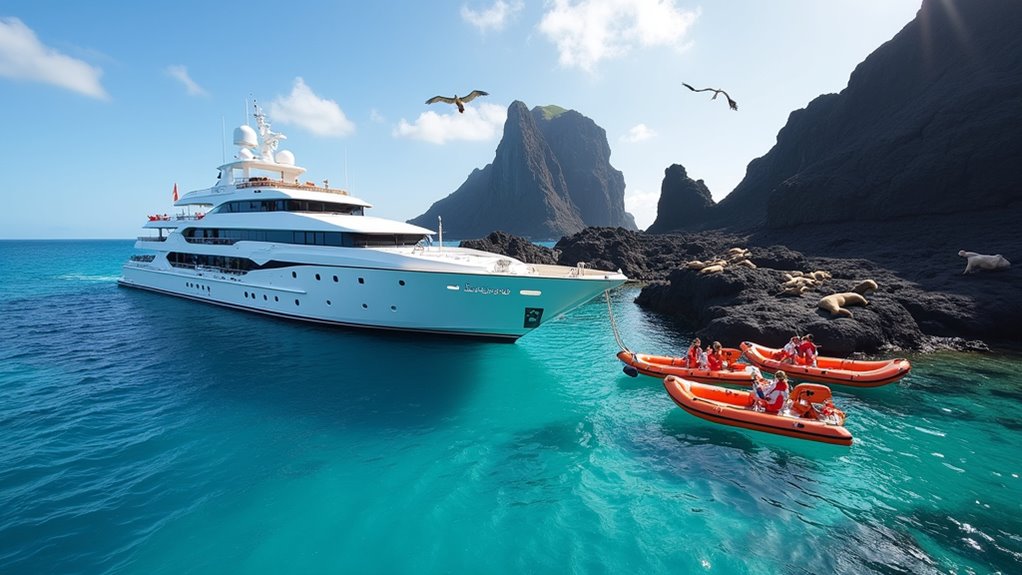
While the Darwin Research Station provides excellent scientific context for your visit, experiencing the Galápagos’ most remote and pristine locations requires a multi-day yacht expedition with Zodiac landings. These 4–14-day liveaboard itineraries on small yachts (16–20 guests) maximize your time across remote islands, covering 8–12 islands per week through set national park routes.
Zodiacs serve as essential shuttles from your anchored yacht to sites without docks, enabling both wet and dry landings. You’ll access specialized habitats like mangrove channels, volcanic landscapes, and remote bird colonies on Genovesa and North Seymour.
Twice-daily outings mix hiking, snorkeling, and coastal cruises while licensed naturalist guides ensure low-impact wildlife viewing. Expert-designed itineraries specifically target 11-12 species from the Galápagos’ Big 15 wildlife list within just 5-7 days for optimal viewing opportunities. This all-inclusive format eliminates daily packing while providing stable accommodations and professional briefings.
The Sum Up
You’ll discover unmatched wildlife encounters and volcanic landscapes across the Galápagos’ diverse islands. Don’t rush—you’ll want time to snorkel with playful sea lions, observe ancient tortoises, and witness unique bird behaviors. Book guided tours for restricted areas like the Darwin Research Station, but leave room for spontaneous exploration. Pack underwater gear, sturdy hiking boots, and sun protection. You’re visiting a living laboratory where every activity connects you directly to evolutionary history in action.