
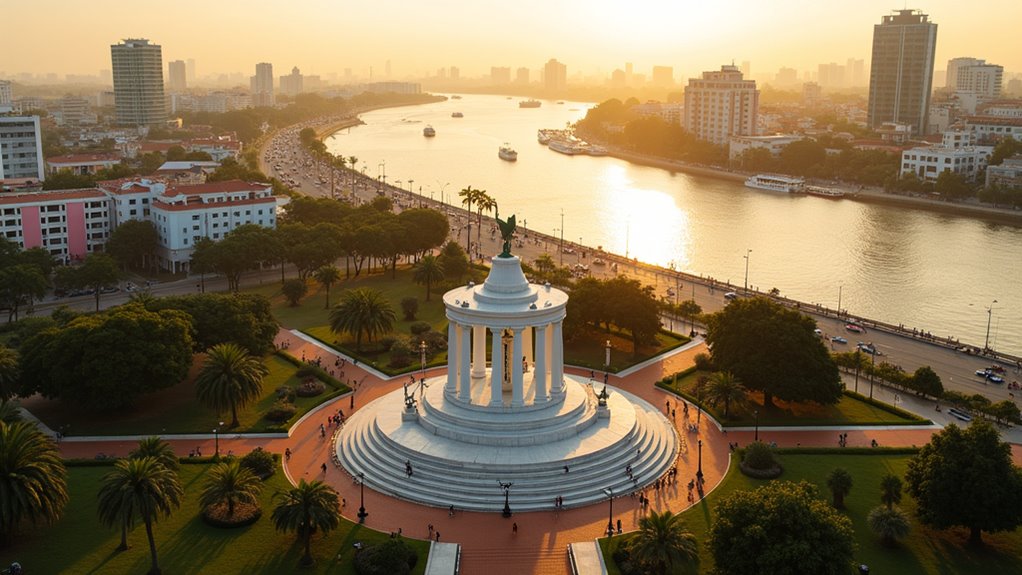
Start your Guayaquil adventure with an evening stroll along Malecón 2000’s illuminated boardwalk, then climb Cerro Santa Ana’s 444 steps for stunning sunset views. You’ll find free entertainment at Parque Seminario meeting friendly iguanas, exploring colorful Las Peñas colonial streets, and browsing MAAC Museum’s archaeological treasures. Day trips to Parque Histórico offer culture, while traditional markets serve authentic seafood at budget prices. These experiences showcase Ecuador’s coastal culture perfectly for your exploration ahead.
- Walk the Malecón 2000 Boardwalk in the Evening
- Climb the 444 Steps of Cerro Santa Ana for Sunset Views
- Meet the Iguanas at Parque Seminario
- Explore Colonial Las Peñas Neighborhood
- Take a Day Trip to Parque Histórico Guayaquil
- Browse Pre-Columbian Art at MAAC Museum
- Rent a Rowboat at Malecón Del Salado
- Shop and Dine at Plaza Lagos in Samborondón
- Sample Local Seafood at Traditional Markets
- The Sum Up
Walk the Malecón 2000 Boardwalk in the Evening
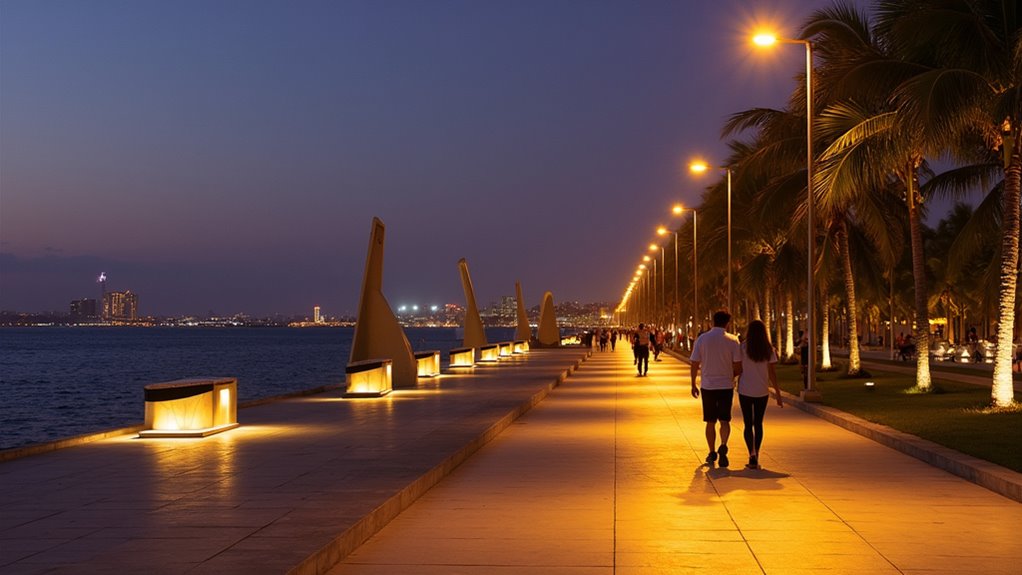
Since Guayaquil’s heat can be oppressive during the day, you’ll find the Malecón 2000 boardwalk transforms into its most enjoyable version after sunset. The 1.5-mile riverfront promenade offers cooling breezes and atmospheric lighting that highlights key landmarks like the illuminated Moorish Clock Tower and the iconic Rotonda monument honoring Bolívar and San Martín.
You’ll discover budget-friendly food stands alongside upscale restaurants, creating options for every wallet. The boardwalk’s three distinct sections provide varied experiences—from museums and fountains in the north to shopping and dining in the south.
Well-patrolled with visible security, it’s considered one of Guayaquil’s safest evening destinations. The flat, paved paths accommodate all visitors, while nearby attractions like La Perla Ferris wheel and evening river cruises extend your nighttime exploration. The boardwalk remains open until after midnight, giving you plenty of time to explore its full length and enjoy the cooler nighttime temperatures.
Climb the 444 Steps of Cerro Santa Ana for Sunset Views
While the Malecón offers river-level perspectives, Cerro Santa Ana’s 444-step climb rewards you with Guayaquil’s most spectacular panoramic views—especially at sunset when golden light transforms the cityscape below.
This historic hill forms Guayaquil’s original settlement, where colorful restored houses now house budget-friendly cafes and artisan shops. The numbered steps guide your 20-45 minute ascent, with rest points and benches breaking up the workout.
You’ll pass through the charming Las Peñas neighborhood before reaching the summit’s lighthouse, chapel, and historic fort with defensive cannons.
Time your climb to arrive 30 minutes before sunset for ideal lighting. The lighthouse offers 360-degree views worth the extra climb. The area is generally safe with security guards present, particularly on weekends when crowds provide additional safety through numbers.
Take the Red Line T1 bus to Las Peñas stop for easy access from downtown.
Meet the Iguanas at Parque Seminario
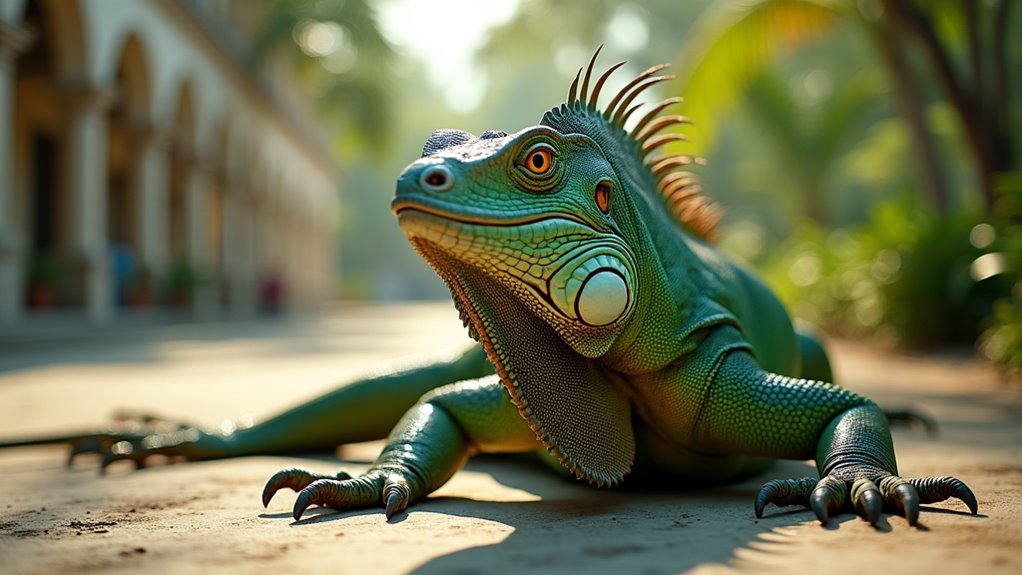
After soaking in Guayaquil‘s sweeping vistas from above, you’ll discover the city’s most unique wildlife encounter right in its historic heart. Parque Seminario, lovingly nicknamed “Iguana Park,” hosts around 350 green iguanas roaming freely among visitors.
These dog-sized reptiles sunbathe on benches, climb trees, and create extraordinary photo opportunities you won’t find elsewhere.
Located across from the main cathedral, this 19th-century park offers free access to witness these gentle giants up close. The park features ornamental ponds with fish and turtles that complement the iguana habitat.
Visit during morning or late afternoon when iguanas are most active.
Remember the golden rules: don’t touch or feed them, despite their docile nature.
Watch overhead for tree-dwelling iguanas and move calmly to avoid startling them.
This peaceful urban oasis perfectly blends Guayaquil’s history with its most emblematic wildlife.
Explore Colonial Las Peñas Neighborhood
Just a short walk from Iguana Park, you’ll enter Guayaquil’s oldest neighborhood, where Las Peñas’ narrow cobblestone streets transport you back to the 16th century.
This free-to-explore barrio showcases bright candy-colored colonial houses that now house art galleries, cafés, and boutique shops.
You’ll find Guayaquil’s artistic heart along Calle Numa Pompilio Llona, where 400-year-old structures display local artwork and murals.
Visit during late afternoon for golden hour photography of the colorful facades.
The neighborhood connects seamlessly to Santa Ana Hill’s famous 444-step stairway, leading to panoramic river views.
Wear comfortable walking shoes for the cobblestones and steep terrain.
This pedestrian-friendly area offers the perfect introduction to Guayaquil’s colonial heritage without spending a peso on entrance fees. After exploring, treat yourself to helado from a local vendor – this popular Ecuadorian ice cream makes the perfect refreshing end to your walking tour.
Take a Day Trip to Parque Histórico Guayaquil
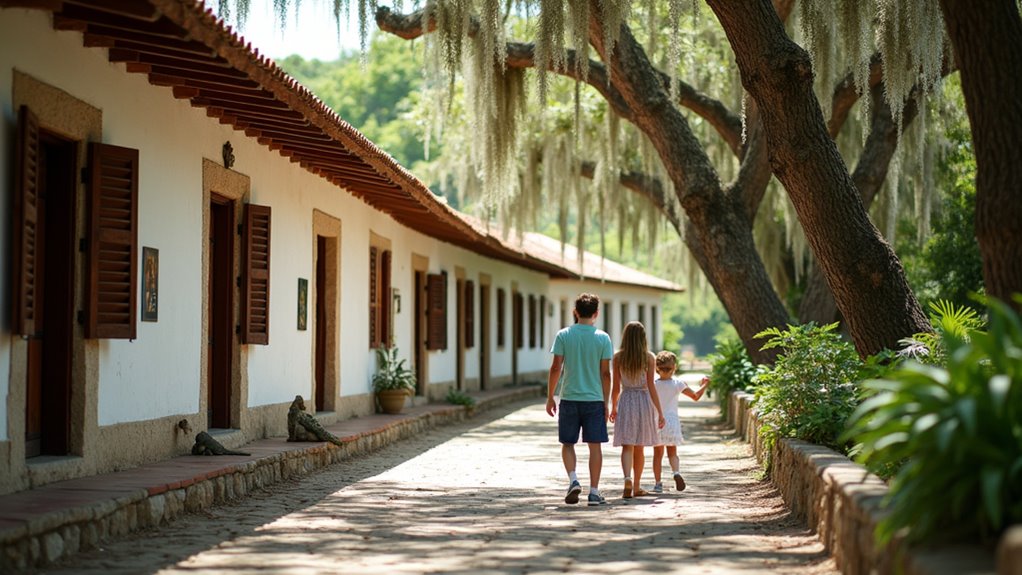
When you’re ready to escape Guayaquil’s urban bustle, head northeast to Parque Histórico Guayaquil in Samborondón for an immersive journey through Ecuador’s coastal heritage. This 8-hectare cultural park divides into three zones that’ll teach you about local wildlife, rural traditions, and early 20th-century architecture.
Walk elevated paths through mangrove ecosystems to spot native monkeys and birds, then explore recreated farm life complete with cacao plantings that built Ecuador’s economy. Don’t miss the historic wooden mansions relocated from downtown Guayaquil and the theatrical performances depicting 19th-century coastal life.
Plan 2-4 hours for your visit, arrive in the morning for better wildlife viewing, and enjoy reasonable entry fees plus free parking. The park operates Wednesday through Sunday with different hours and pricing for weekdays versus weekends and holidays.
Browse Pre-Columbian Art at MAAC Museum
Back in the city center, learn about Ecuador’s ancient coastal heritage at the Museo Antropológico y de Arte Contemporáneo (MAAC), where you’ll find one of the country’s most impressive collections of Pre-Columbian artifacts.
Located along Malecón 2000’s waterfront, this modern museum houses 50,000 archaeological pieces from coastal cultures like Valdivia, Chorrera, and Manteño.
You’ll discover intricate ceramic pottery, burial urns, and ritual objects that reveal daily life from thousands of years ago. The air-conditioned galleries provide welcome relief from Guayaquil’s heat while you explore.
Best of all, admission’s completely free. Visit weekday mornings for smaller crowds, and plan 1-2 hours for your visit. The museum also features rotating exhibitions of contemporary Ecuadorian art alongside immersive digital displays.
Since exhibits are primarily in Spanish, consider downloading a translation app beforehand.
Rent a Rowboat at Malecón Del Salado
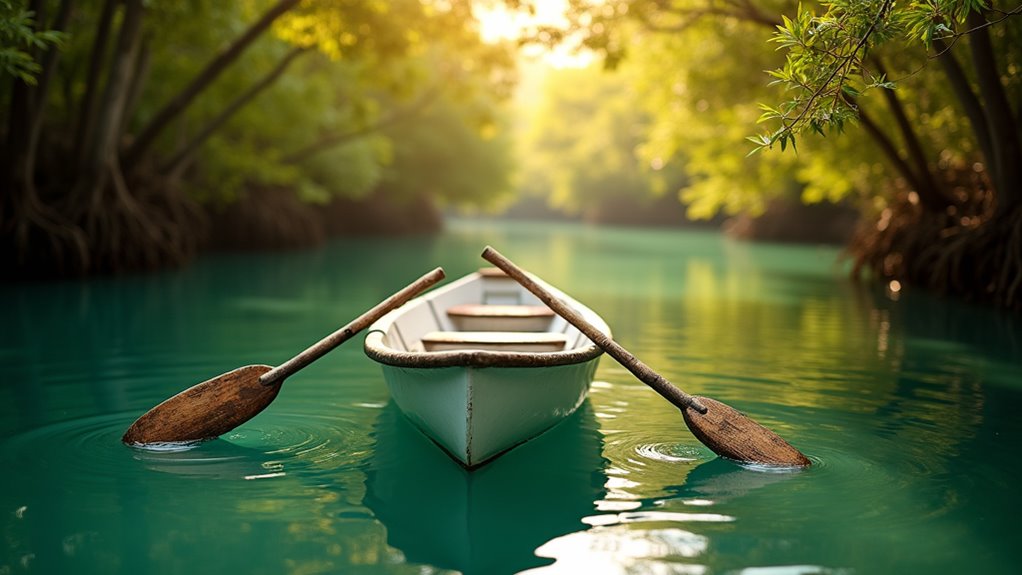
Why not experience Guayaquil from the water? Head to Malecón del Salado’s rowboat pier for a peaceful 30-minute paddle around the Estero Salado mangrove estuary.
You’ll pay just $4 per boat (not per person), making it budget-friendly for couples or small families. Add $2 if you’d prefer a local rower to handle the paddling while you relax under the boat’s parasol.
The waterfront setting offers stunning views of modern bridges and mangroves, plus you’re steps from Plaza de los Mariscos for fresh seafood afterward. For an alternative water experience, consider taking a Guayas River cruise from the main Malecón 2000 area, which provides scenic views of the city’s skyline from a different perspective.
Time your visit for early evening—you can row during daylight hours, then stick around for the illuminated “Agua Danzante” fountain shows at 7:00, 7:30, and 8:00 pm.
The malecón also features playgrounds and cafés for a complete family outing.
Shop and Dine at Plaza Lagos in Samborondón
If you’re craving upscale dining and boutique shopping, Plaza Lagos in Samborondón delivers Guayaquil’s most polished evening experience. Located in La Puntilla area, this Mediterranean-inspired complex features two dozen restaurants serving everything from South American fusion to Spanish tapas around an artificial lagoon.
Expect to pay above-average prices, but the quality matches the premium setting.
The boutique shopping focuses on designer fashion and lifestyle brands rather than mass retail. You’ll find the atmosphere most magical during evening hours when ambient lighting transforms the colonial-style architecture and live music fills the courtyards. For exclusive dining experiences, consider making Omakase reservations at one of the high-end Asian restaurants featuring open kitchens and chef’s choice menus.
Budget around $10 for taxi fare from downtown – it’s a 20-30 minute ride depending on traffic. Dress smart-casual to fit the affluent clientele, and plan your visit for late afternoon through evening when the plaza truly comes alive.
Sample Local Seafood at Traditional Markets
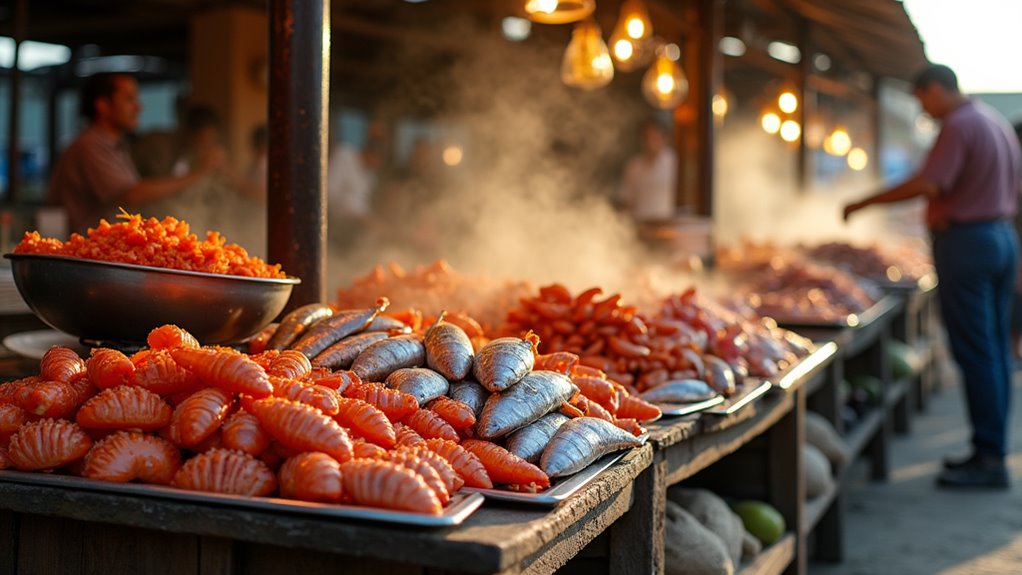
While Plaza Lagos showcases Guayaquil’s upscale dining scene, the city’s authentic seafood culture thrives in its bustling traditional markets where fishermen’s daily catch becomes steaming bowls of ceviche and encebollado.
Start your morning at Mercado Caraguay, the “beating heart” of Guayaquil’s seafood trade in Barrio Cuba. You’ll find vendors serving fresh ceviche de camarón in plastic cups alongside grilled corvina at rock-bottom prices. The basic infrastructure emphasizes authenticity over comfort.
For easier access, visit Mercado 9 de Octubre, one of Guayaquil’s largest markets, where seafood counters mix with tropical fruits. Try encebollado—the city’s beloved tuna stew that locals swear cures hangovers. For a more refined market experience, head to Picanteria la Culata near the pier, where traditional seafood preparations meet a lively atmosphere with spontaneous salsa dancing.
Don’t miss encocado de mariscos and arroz con camarones, paired with crispy chifles for the complete coastal experience.
The Sum Up
You’ll find Guayaquil’s charm in its free attractions like the iguana park and colonial streets, balanced with affordable cultural experiences at MAAC Museum. Don’t miss the sunset from Cerro Santa Ana—it’s worth every step. Eat at local markets for authentic flavors without tourist prices. Plan your Parque Histórico visit for weekdays when it’s less crowded. Mix waterfront strolls with neighborhood exploration to experience both modern Ecuador and its colonial roots authentically.