
The Cape of Good Hope day trip is the one Cape Town excursion every visitor should do. In 10 hours you loop the entire Cape Peninsula — 90km of Atlantic coastline, the lighthouse at Cape Point, the sign where the Indian and Atlantic Oceans supposedly meet, and a beach covered in penguins. It’s South Africa’s greatest hits for under $50 per person.
I’ve now done this tour three times — once as a first-timer with a big group, once as a private tour with friends, and once with my parents. It works in all three configurations, but the experience changes a lot.
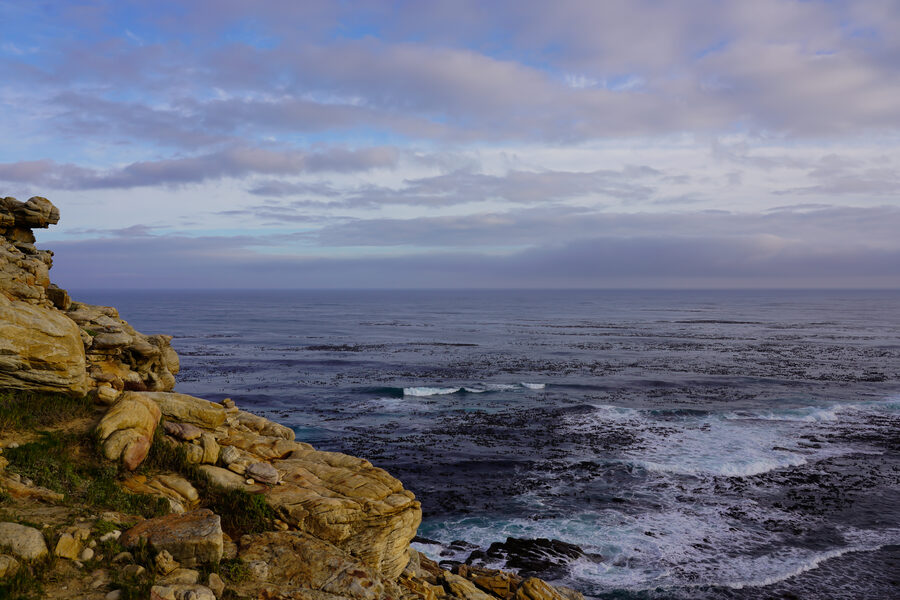
In this guide I’ll walk through three tours that cover the classic Cape Peninsula circuit, explain what you’ll actually see (and what’s hype), and cover the best times to go. I’ll also flag the two main penguin-viewing options and when the difference matters.
- Three Cape Tours I’d Book
- What the Day Actually Looks Like
- Tour #1 — Cape of Good Hope, Seals and Penguins Day Tour (Budget)
- Cape of Good Hope, Seals and Penguins — per person
- Tour #2 — Cape Point and Penguin Colony Full Day Tour (Standard)
- Cape Point and Penguin Colony Full Day — 5 per person
- Tour #3 — Full-Day Private Tour with Cape Point and Penguins (Private)
- Full-Day Private Tour — 2 per person
- Cape Point vs Cape of Good Hope — The Common Confusion
- Boulders Beach — The Penguin Colony
- Chapman’s Peak Drive
- What Else Fits in the Day
- Best Time to Go
- Wind at Cape Point — The Thing Nobody Mentions
- Packing the Day
- Baboons at Cape Point — Take This Seriously
- Pairing With Other Cape Town Trips
- Frequently Asked Questions
- A Note on Tour Quality Between Seasons
- My Bottom Line
Three Cape Tours I’d Book
Cape Peninsula day tours range from $35 for a bare-bones shared coach to $300+ for private tours with wine tasting. The right choice depends on how much flexibility you want and how many people are in your group.
My budget pick is the $39 Cape Town: Cape of Good Hope, Seals and Penguins Day Tour — 327 detailed responses at 4.8 stars make it the most battle-tested option. For a more polished shared tour, the $115 Cape Point and Penguin Colony Full Day Tour is the go-to with 519 detailed responses. For couples or families wanting a dedicated guide, the $202 Full-Day Private Tour with Cape Point and Penguins is worth the jump.
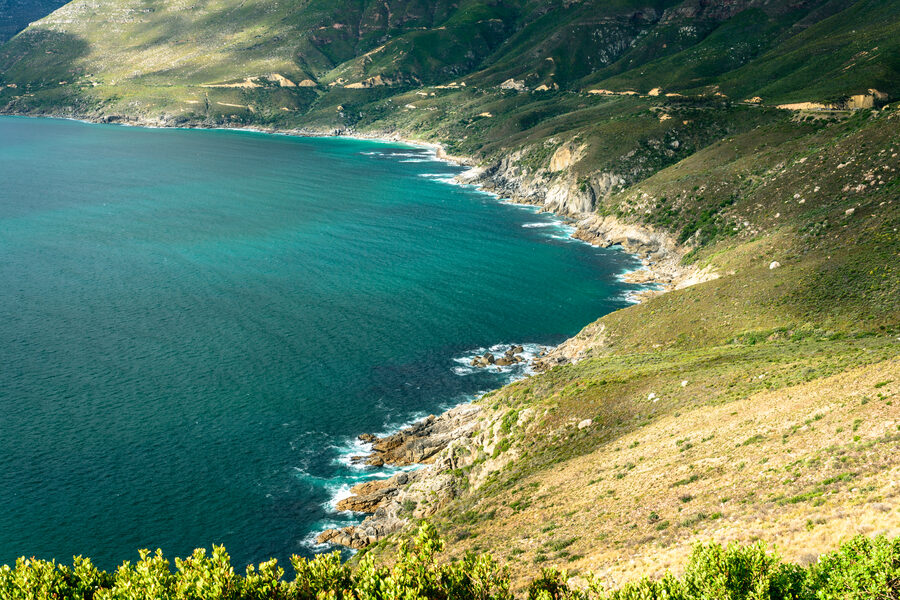
All three include hotel pickup, the Cape of Good Hope reserve entry fees, Boulders Beach penguin entry, and a drive over Chapman’s Peak. Lunch is usually at Hout Bay at your own cost.
What the Day Actually Looks Like
7:30 to 8:30am pickup from your hotel. The route goes clockwise around the Peninsula: Sea Point, Camps Bay, Llandudno, Hout Bay, Chapman’s Peak Drive, Noordhoek, Cape Point, Cape of Good Hope, Simon’s Town (Boulders Beach), and back via Muizenberg and Kirstenbosch.
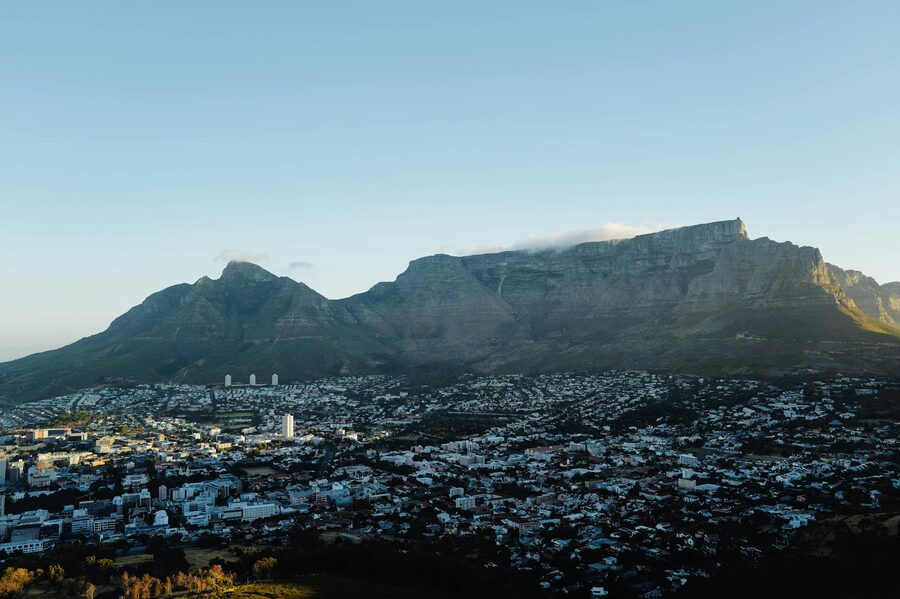
First stop is usually Camps Bay beach or the 12 Apostles mountain viewpoint. Then you drive through Hout Bay for a quick 15-minute stop at the harbor — the optional seal boat trip launches from here ($10-15 extra for 40 minutes).
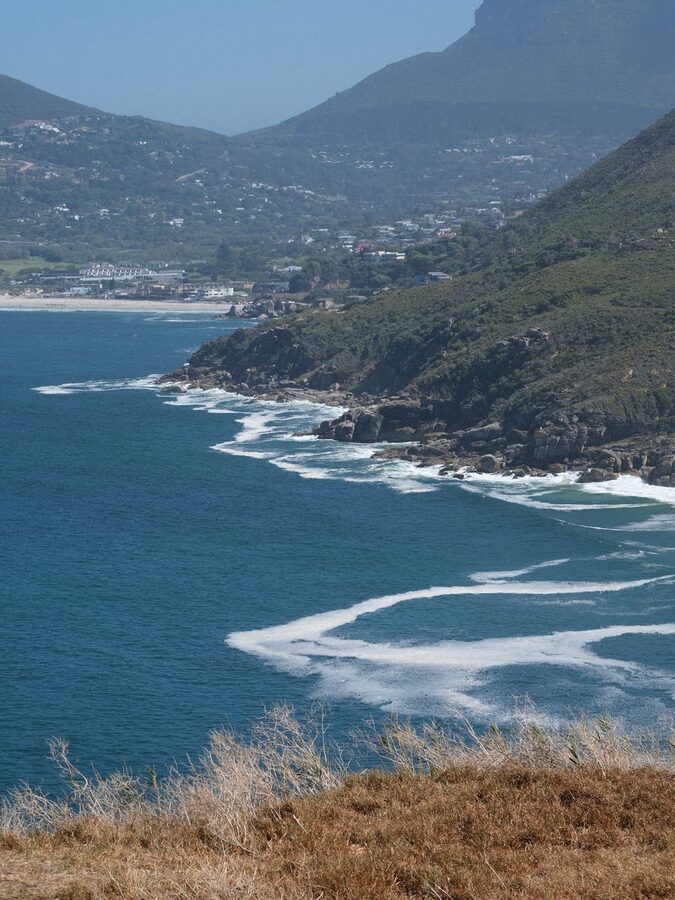
Chapman’s Peak Drive is 30 minutes of slow curves hanging over the Atlantic. You’ll stop at the midpoint viewpoint for 10 minutes. Then Noordhoek, the False Bay side, and into Cape Point Nature Reserve around 11:30am.
Tour #1 — Cape of Good Hope, Seals and Penguins Day Tour (Budget)
Cape of Good Hope, Seals and Penguins — $39 per person
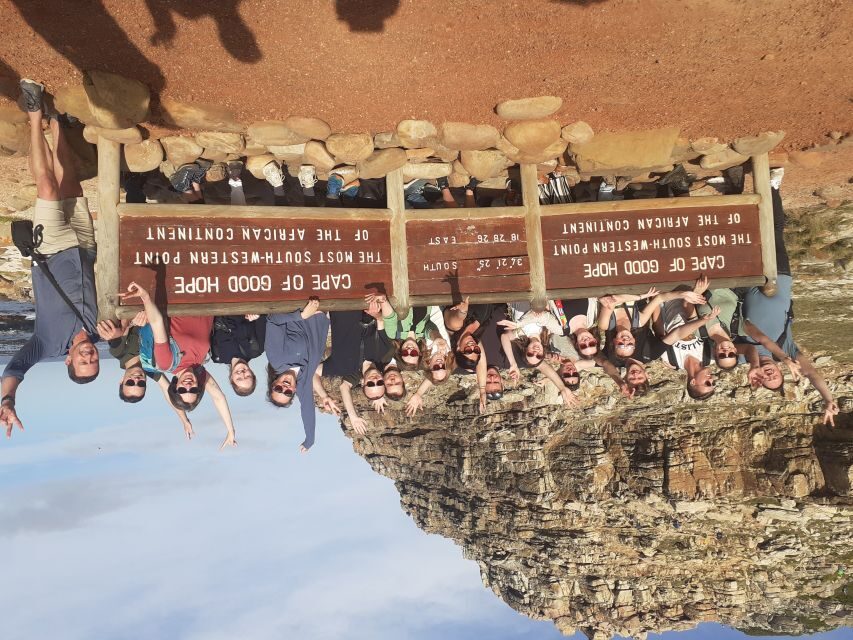
At $39 this is extraordinary value. You get hotel pickup, a coach with an English-speaking guide, the full peninsula circuit, all entrance fees (Cape Point Reserve and Boulders Beach), and a stop at the seal boat in Hout Bay.
The coach is typically 20-25 seats with other English-speaking guests from around the world. Pace is efficient — 30-45 minutes at each major stop. Lunch is on your own in Simon’s Town or Hout Bay (budget $15-25).
This is the consistent operator on this price tier with 327 detailed responses averaging 4.8 stars. See our Cape tour review for the full walk-through.
Tour #2 — Cape Point and Penguin Colony Full Day Tour (Standard)
Cape Point and Penguin Colony Full Day — $115 per person
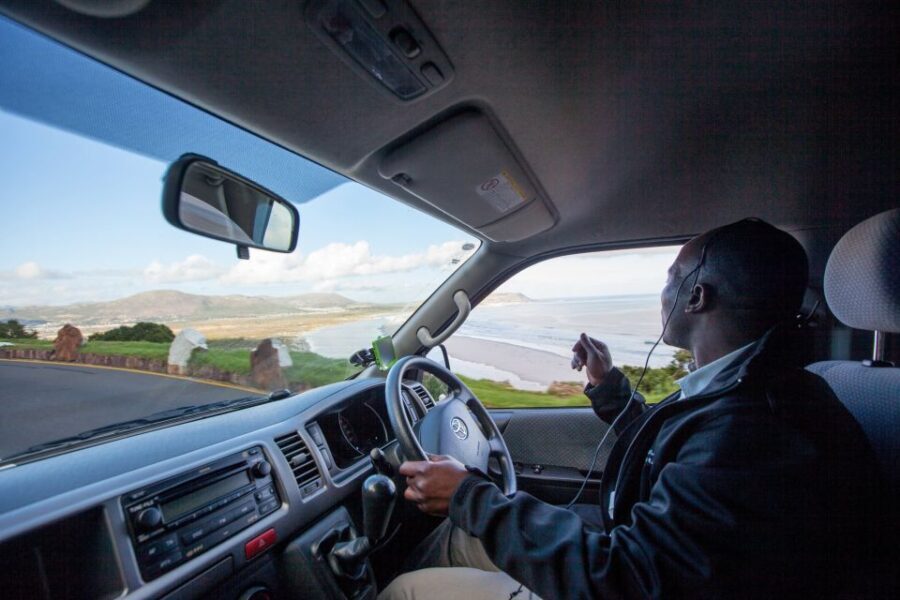
This is the upgrade I’d pay for if traveling solo or as a couple and you want a less rushed experience. Smaller coach (typically 15-20 passengers), more experienced guide, and a slower pace — you get 45-60 minutes at the major stops rather than 30.
The price includes Cape Point Funicular ride (saves a 20-minute uphill walk), all park fees, Boulders Beach access, and a free lunch voucher at a mid-range restaurant in Simon’s Town or Hout Bay.
With 519 detailed responses averaging 4.5 stars, this has volume credibility. See the full tour details in our Cape Point and Penguin Colony review.
Tour #3 — Full-Day Private Tour with Cape Point and Penguins (Private)
Full-Day Private Tour — $202 per person

This is the option to pick for a group of 2-4. You get a private vehicle (typically a Mercedes Vito van for 4-6 passengers), a dedicated driver-guide with deep Cape knowledge, and the pace is entirely yours. Want to skip Hout Bay and spend two hours at Boulders? Fine.
The $202 per person assumes a group of 4. For a couple the per-person cost is higher, but you’re still paying for the vehicle. The tour includes Cape Point Reserve entry, Boulders Beach, and a standard wine tasting at a Constantia estate on the way back.
At 5.0 stars across 22 responses, this is a consistent private experience. Details are in our private Cape tour review.
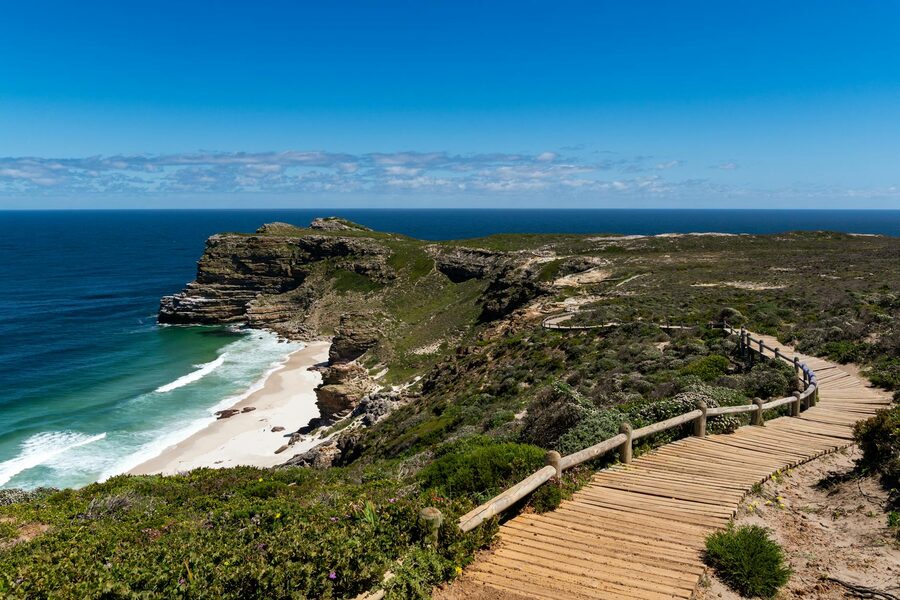
Cape Point vs Cape of Good Hope — The Common Confusion
These are two different places, about 2km apart, both inside the same nature reserve. Almost every Cape Peninsula tour visits both.
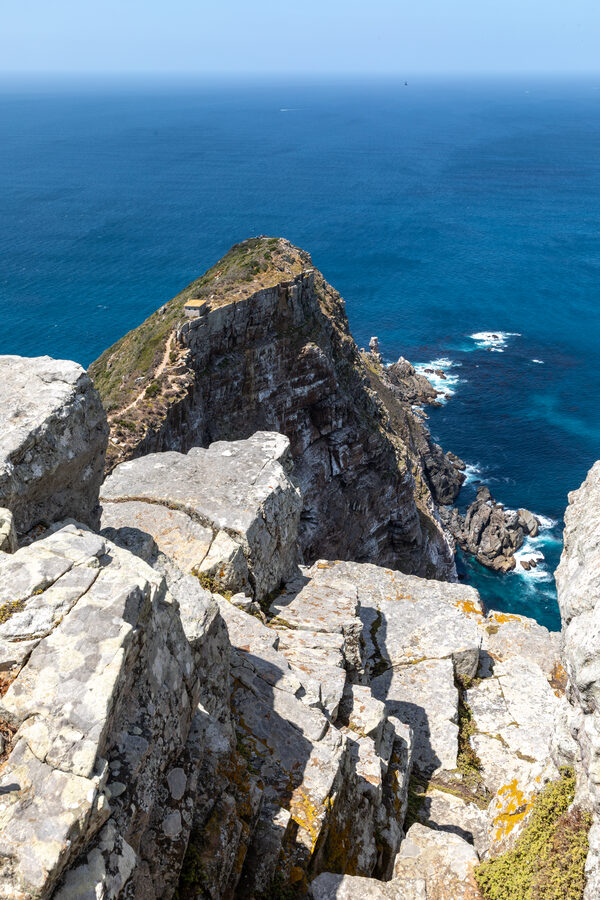
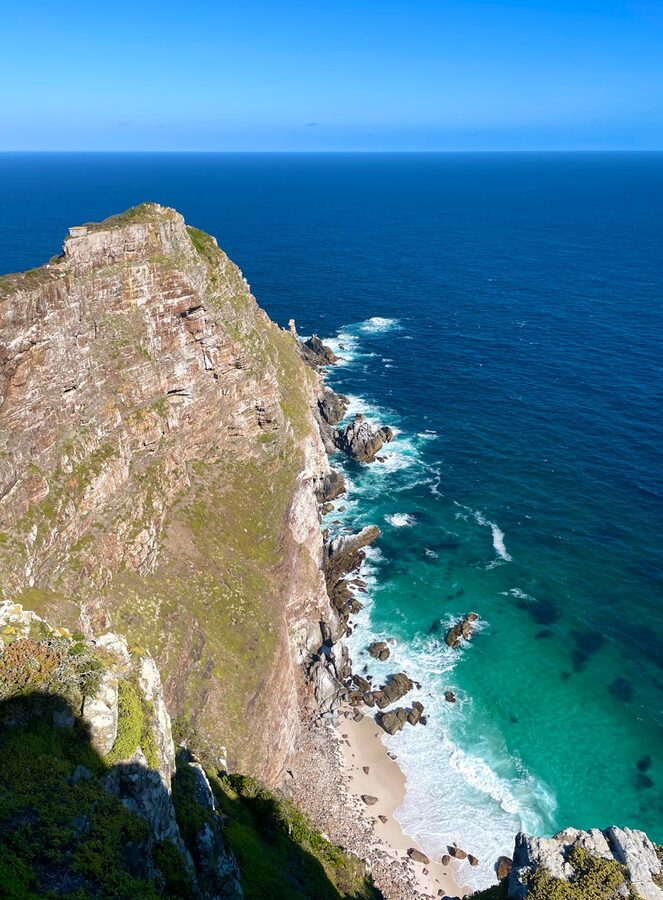
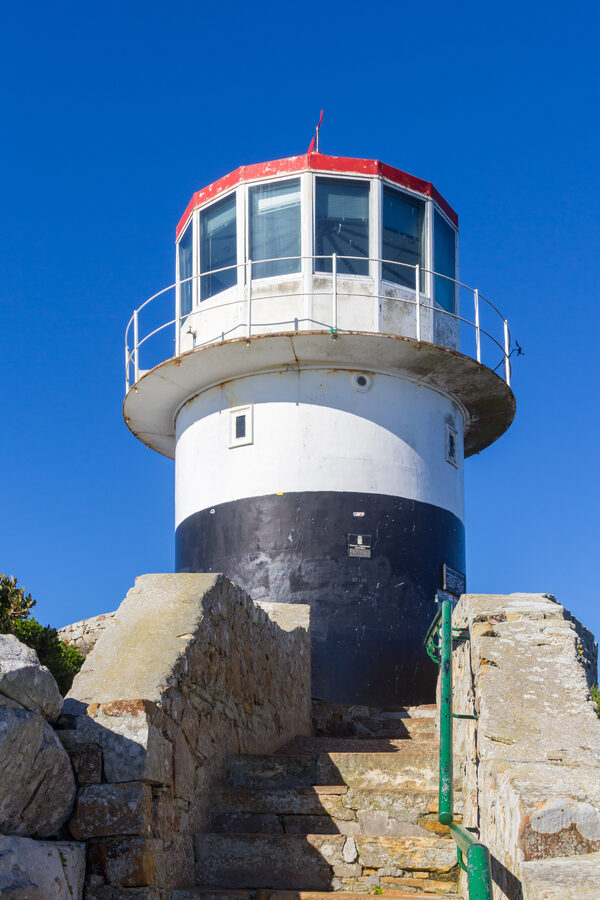
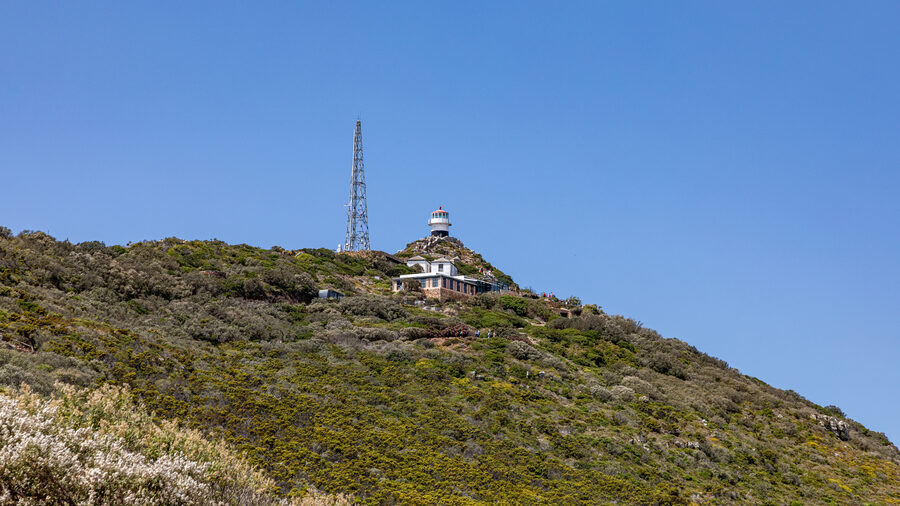
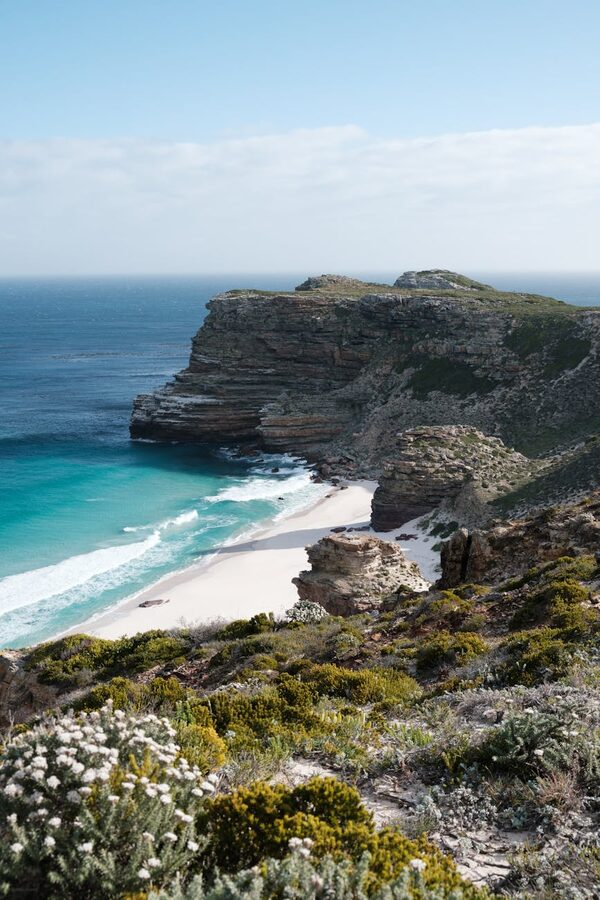
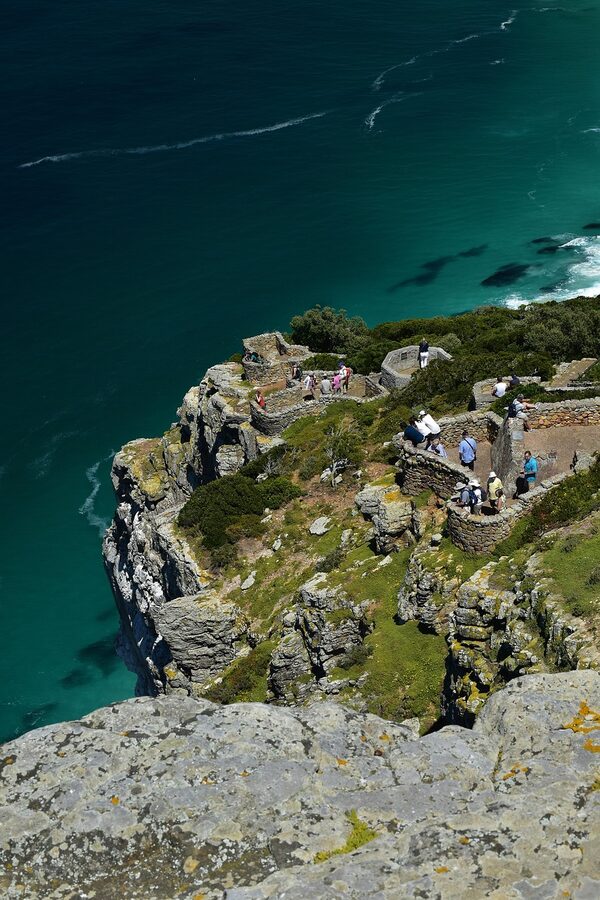
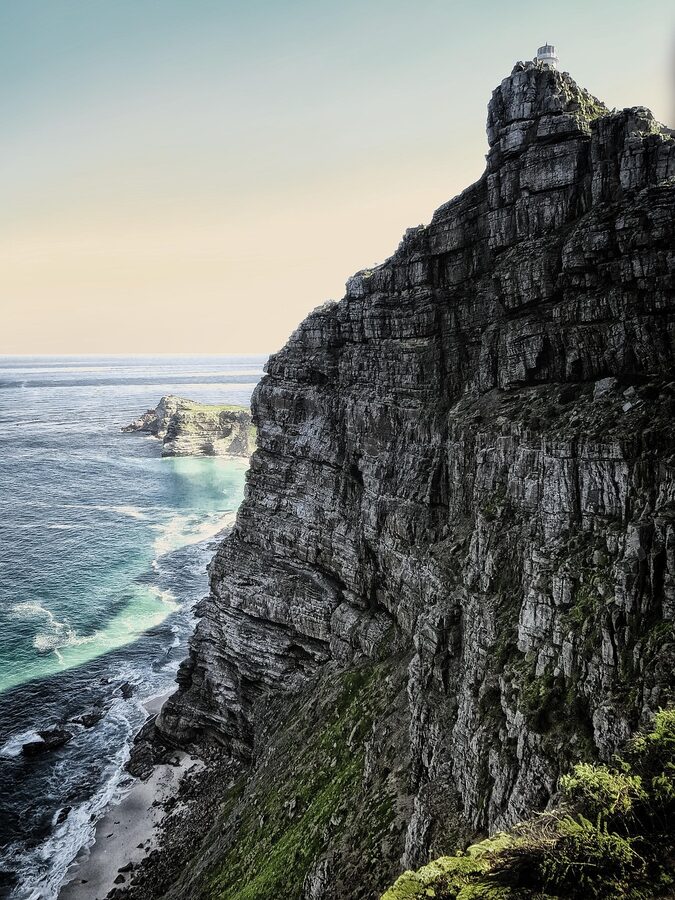
Cape Point: the tall dramatic cliff with the lighthouse. You take a funicular (or walk 10-15 minutes uphill) to a viewing platform with 360-degree views. The old and new lighthouses are both here.
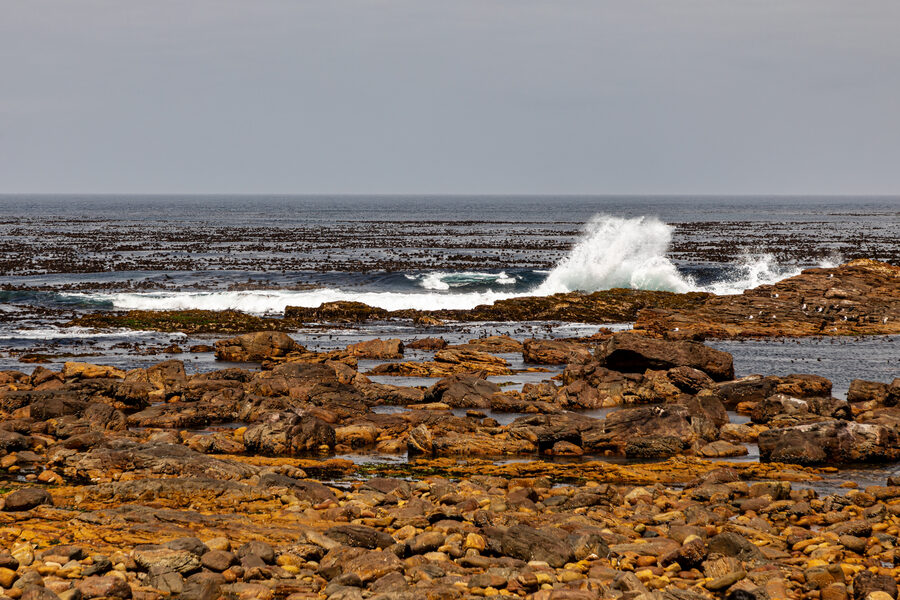
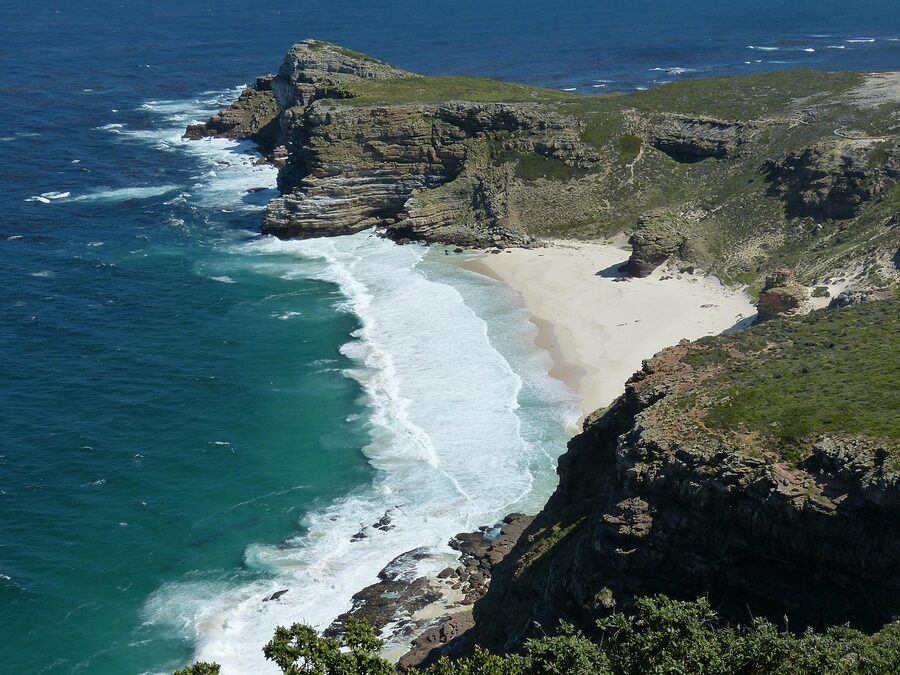
Cape of Good Hope: the low rocky promontory with the sign. You drive (or walk 30 minutes from a parking lot) to the famous “Cape of Good Hope — the south-westernmost point of the African continent” sign.
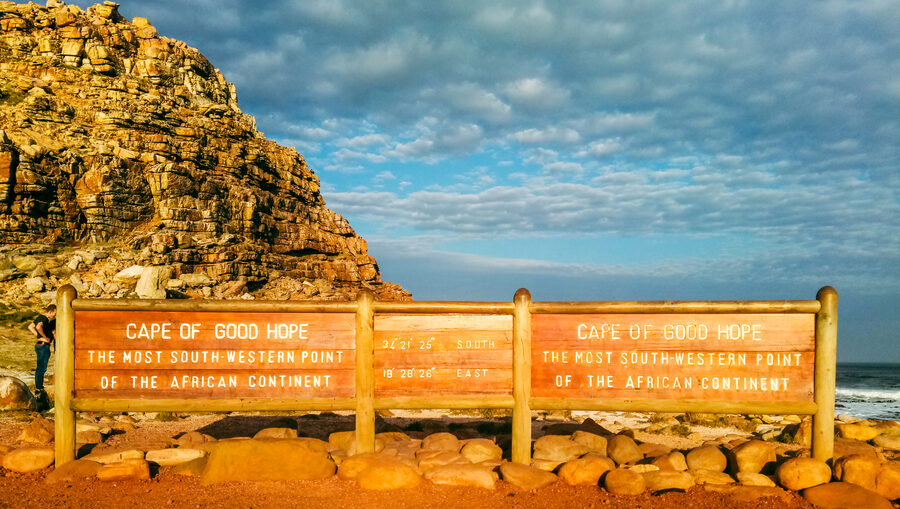
Myth to dispel: the Indian and Atlantic Oceans do NOT meet at the Cape of Good Hope. The official meeting point is further east at Cape Agulhas, 150km away. The Cape of Good Hope is the southwestern-most tip; Agulhas is the southern-most.
Boulders Beach — The Penguin Colony
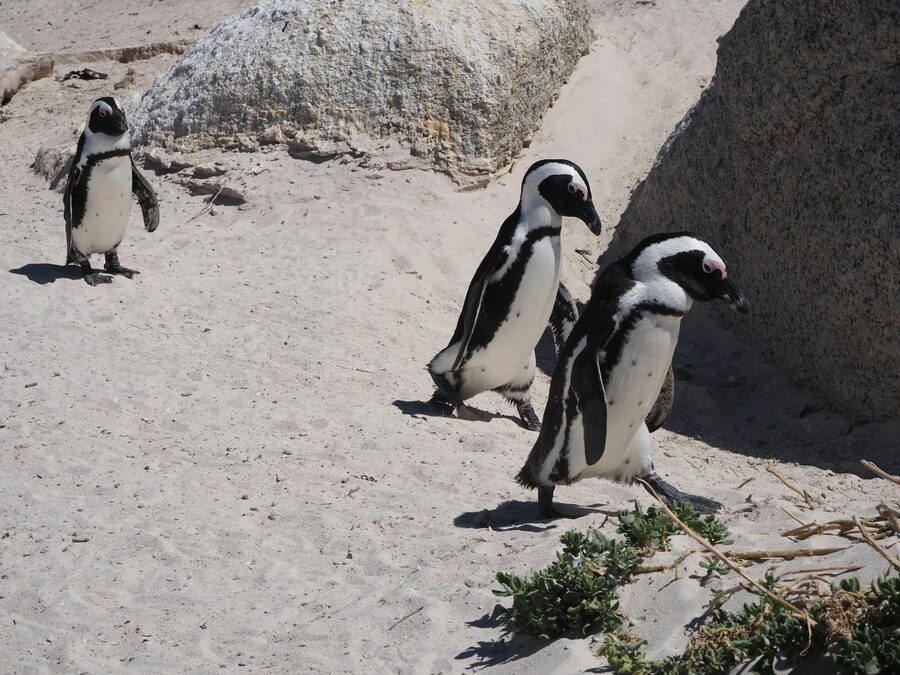
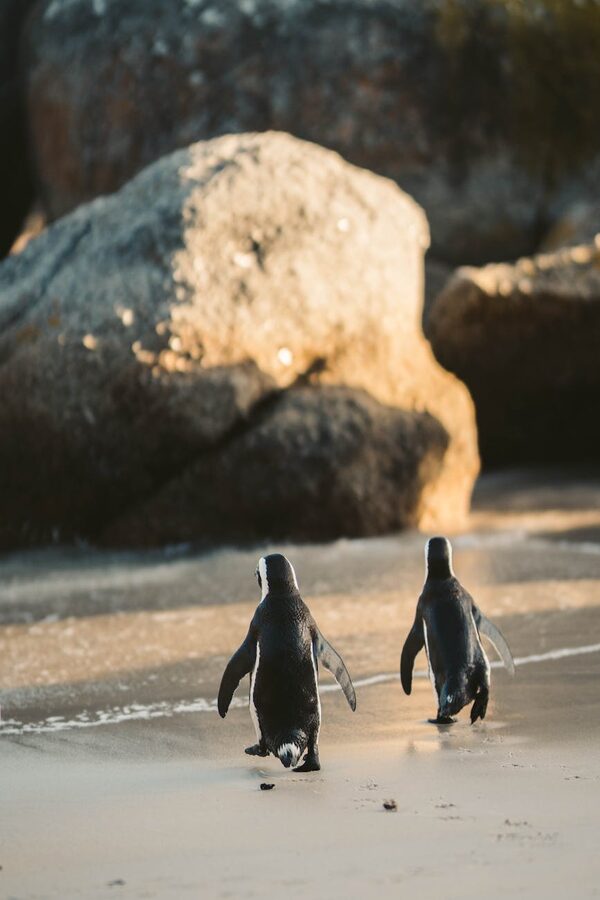
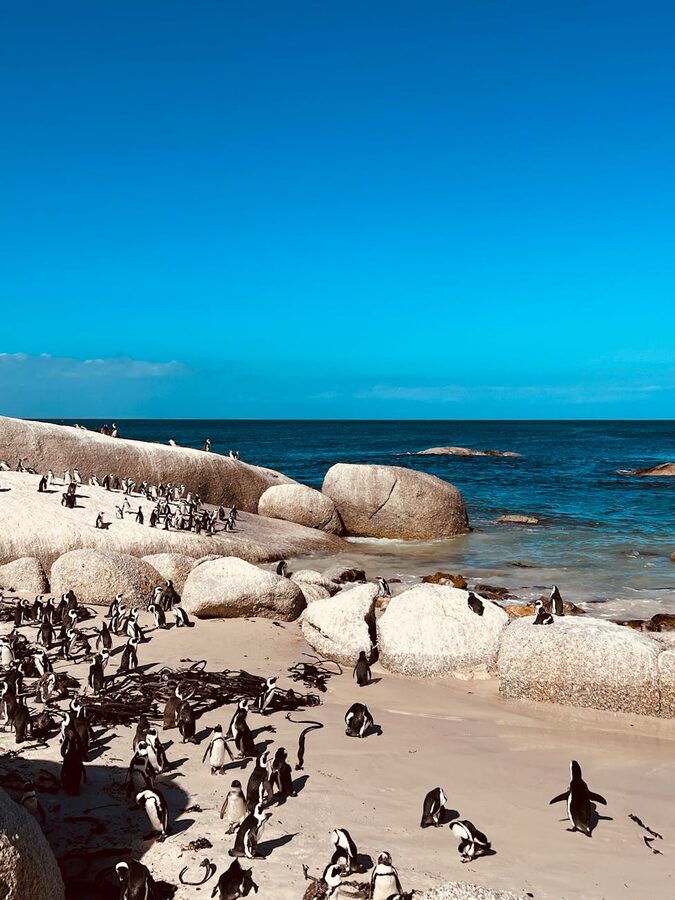
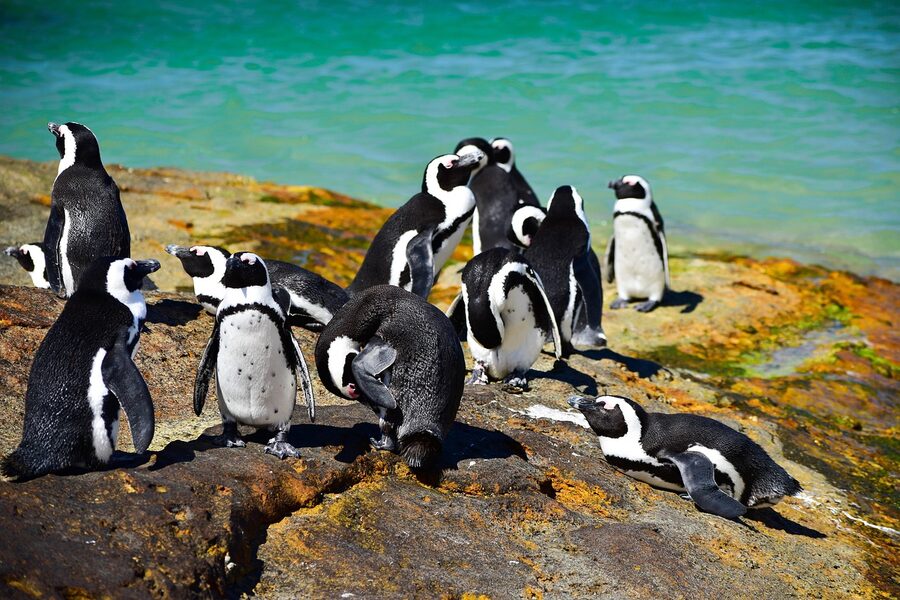
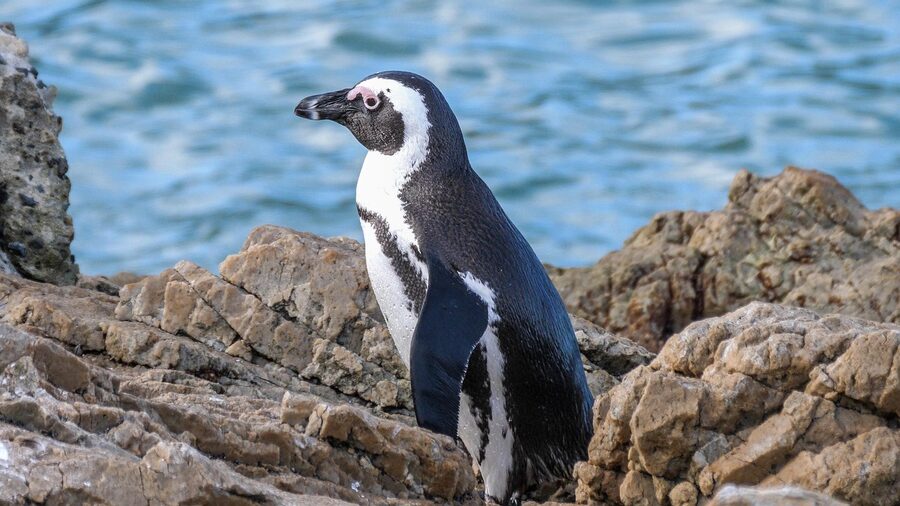
This is where you see African penguins (endangered, about 40,000 left in the wild) in their natural habitat. The colony started with two breeding pairs in 1982 and now numbers about 2,200 individuals at Boulders specifically.
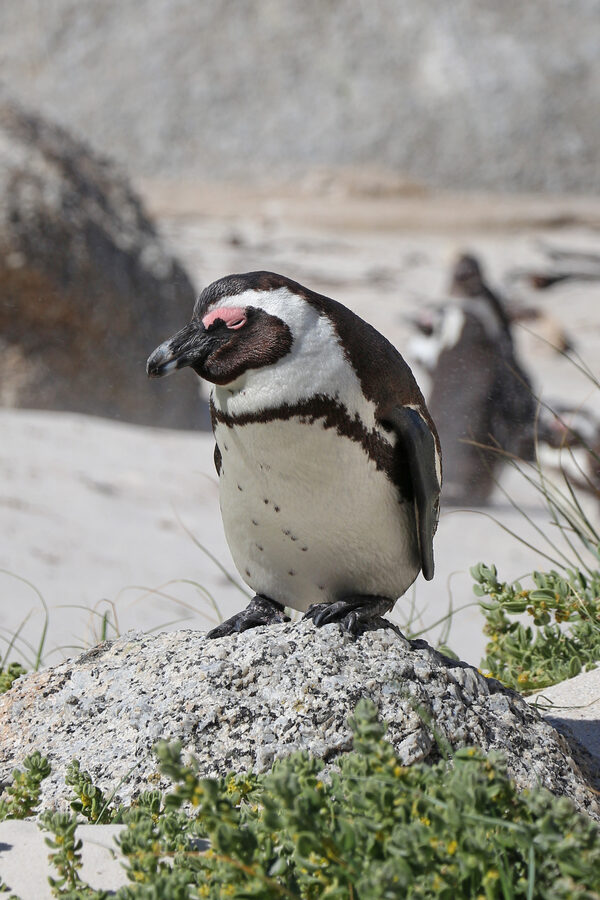
There are two viewing options: the boardwalk at Foxy Beach (pay entry, stay on wooden platform) and Boulders Beach proper (pay entry, walk among the penguins with no physical barrier — they wander freely around you).
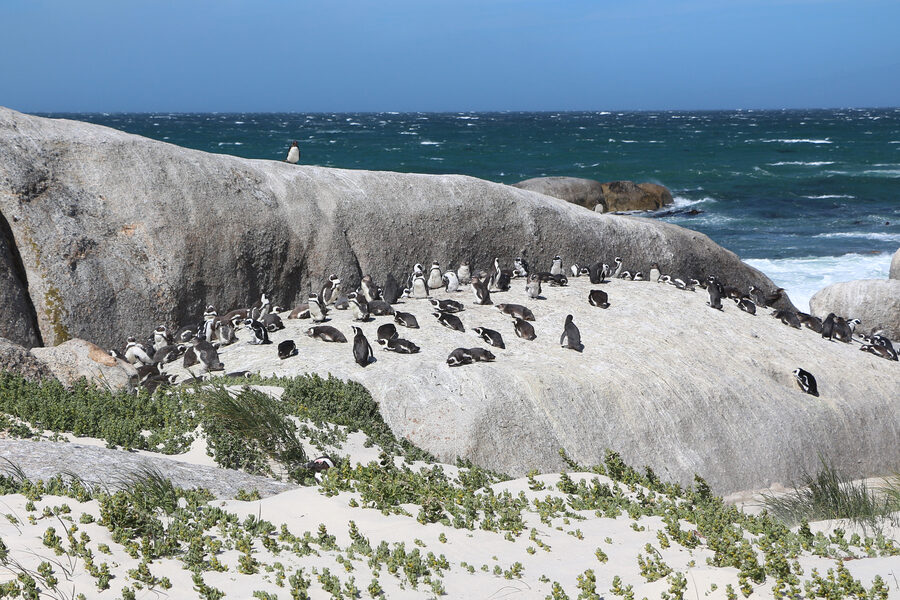
Most tours use Foxy Beach (it’s closer to the parking area). If you want to walk on the beach with penguins, ask your guide in advance — it’s a 5-minute walk from the Foxy Beach boardwalk.
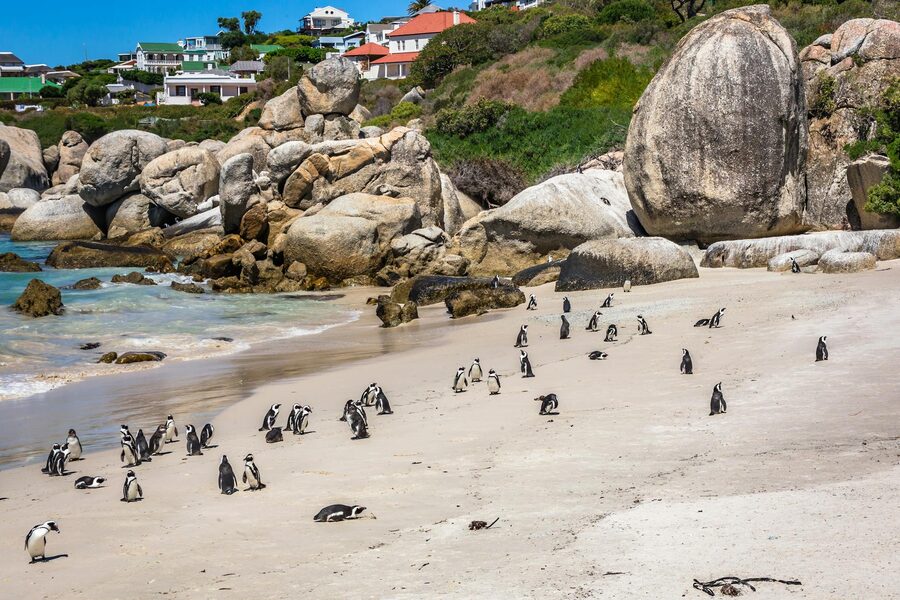
Don’t touch the penguins. They look friendly but will bite with a mildly painful beak. Bring zoom lens or phone telephoto; the birds don’t approach you, but get surprisingly close if you sit still.
Chapman’s Peak Drive
9km toll road carved into the cliff face above the Atlantic. Completed in 1922 and rebuilt multiple times after rockfalls. The midpoint viewpoint is the main stop — you’re 160 meters above the ocean with sweeping views back to Hout Bay.
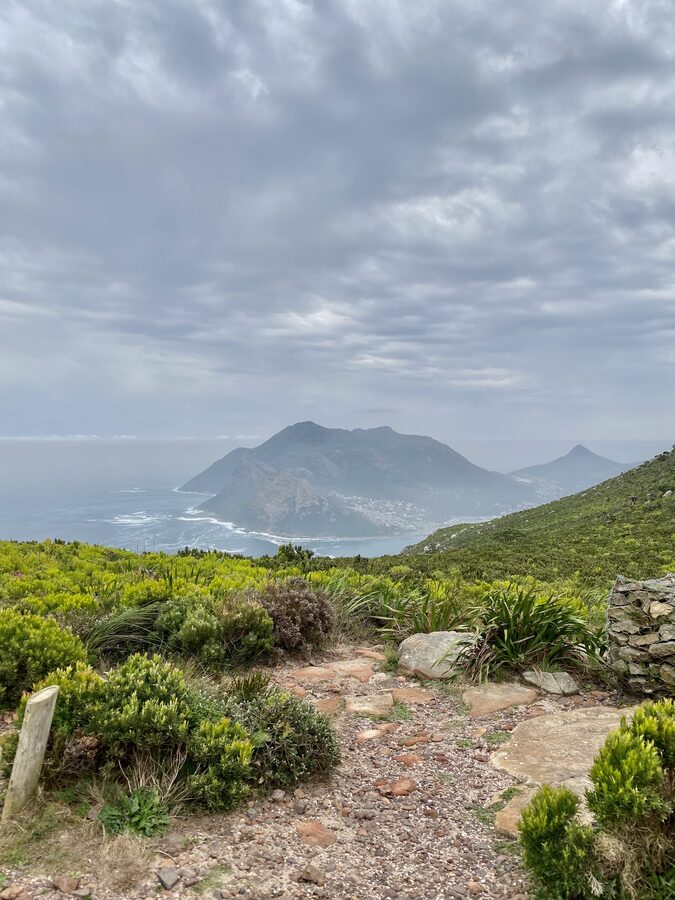
Toll is R80 (about $4 USD) per vehicle — included in all tour prices. The road closes occasionally for weather; if it’s closed your tour will re-route via Ou Kaapseweg, which is a less dramatic but still scenic drive.
What Else Fits in the Day
Some tours add one or two of these as options: the seal boat trip at Hout Bay (40 minutes, $12, see Cape fur seals at Duiker Island), Kirstenbosch Botanical Gardens on the return, or a short wine tasting at a Constantia estate.
The seal boat is worth it if you like wildlife. Kirstenbosch is worth it if you like gardens and have 90+ minutes. Wine tasting is worth it only on the private tour; group tours rush it.
Best Time to Go
October through April: South African summer, warm and dry. The busiest tourist months are December-February (with Christmas holidays) — book early. Peak temps at Cape Point can hit 28°C but the wind brings it down.
May through September: winter, cool and wet. Rain probability 30-50% on any given day; layering is essential. Fewer crowds, and the whales arrive in June-November for calving off the Hermanus coast nearby.
Best month for most travelers: late February to early April. Temperatures comfortable, crowds easing after Christmas, and the wind is less relentless than in January.
Wind at Cape Point — The Thing Nobody Mentions
Cape Point is windy. Very windy. The Cape Doctor (as locals call the southeasterly wind) blows hard November through March and can knock you over. Wear layers; the temperature difference between parking lot and lighthouse platform can be 10°C because of wind chill.
Secure your hat. Hold cameras with two hands on viewing platforms. Don’t wear loose-fitting dresses or skirts; they don’t behave well.
Packing the Day
Closed shoes (trainers or hiking shoes) — you’ll walk 3-5km total. Layers (t-shirt + light jacket in summer, add a fleece in winter). Sunglasses and sunscreen even in winter. Water bottle. Phone and camera. Small bag of cash for lunch and snacks.
Binoculars if you have them — especially useful for the seal boat or to spot ostriches, baboons, and eland that roam the Cape Point reserve.
Baboons at Cape Point — Take This Seriously
Chacma baboons live wild inside the Cape Point Nature Reserve. They are not cute; they are strong, smart, and regularly snatch food, cameras, and bags from tourists. Never carry food visibly.
Keep car windows up and doors locked at the Cape Point parking lot. Don’t leave anything visible on car seats. If a baboon approaches, back away slowly and don’t make eye contact.
Pairing With Other Cape Town Trips
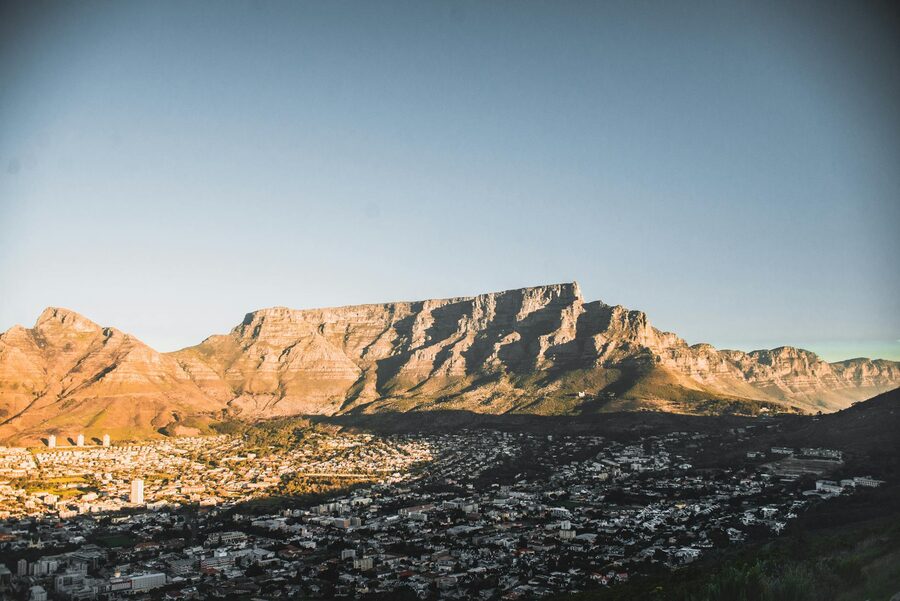
The Cape Peninsula day is a must. After it, good add-ons include: Table Mountain cable car (half-day, pick a clear day), Robben Island ferry (half-day, pre-book 2 weeks out), Winelands day in Stellenbosch (full day), and shark cage diving in Gansbaai (full day, June-August best).
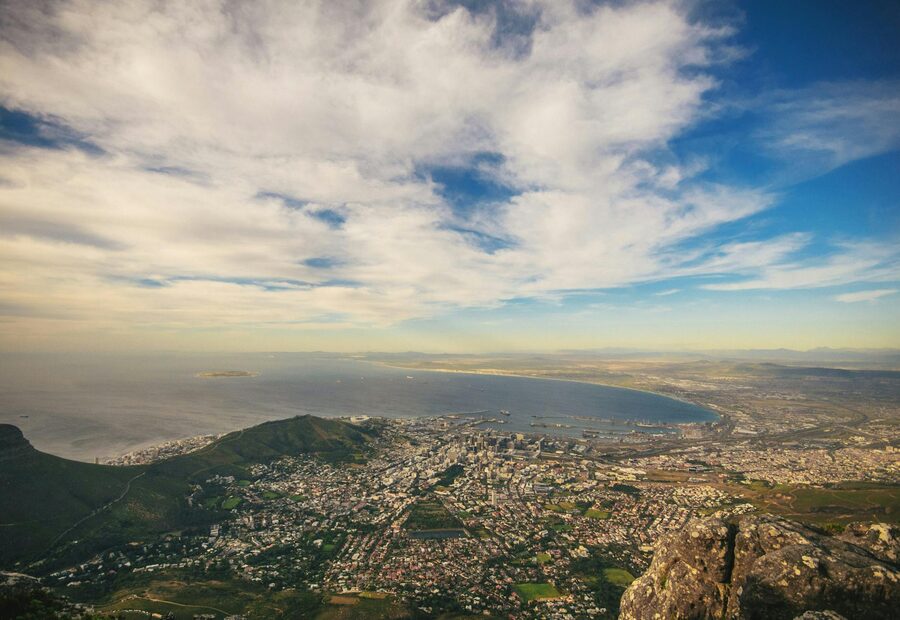
For a classic 5-day Cape Town trip: day 1 Table Mountain, day 2 Cape Peninsula, day 3 Winelands, day 4 Robben Island plus V&A Waterfront, day 5 shark cage or Hermanus whale watching.
Frequently Asked Questions
How long is the day? 9-10 hours door to door. Pickup 7:30-8:30am, drop-off 5:30-6:30pm.
Are the penguins always there? Yes, year-round. Numbers dip slightly in molt season (November-December) when birds are less mobile, but still visible.
Can I do this on my own? Yes, if you rent a car. Budget $40 rental, $30 fuel, $25 Cape Point entry, $10 Boulders Beach. Cheaper than group tour if you’re 3-4 people; similar cost at 2 and more flexible.
Is it worth it in winter? Yes — fewer crowds, whales nearby, cheaper hotels. Pack for rain.
Can kids enjoy this? Yes. Penguins are the highlight for kids; Cape Point lighthouse funicular is also a hit.
What’s the food like at Hout Bay? Fish and chips at Mariner’s Wharf is the classic choice ($15-20). Better food at Fish on the Rocks nearby.
Should I buy a Cape Point Reserve ticket separately? No — every legitimate tour includes it.
Is the seal boat worth it? If you like marine wildlife, yes ($12, 40 minutes, live seals 10m from the boat). If you’re penguin-focused or short on time, skip.
A Note on Tour Quality Between Seasons
Guides matter more than vehicles. A good guide transforms the Cape day — they’ll tell you about Vasco da Gama rounding the Cape in 1497, point out the unique fynbos vegetation in the reserve (one of the world’s six plant kingdoms), and know where the whales are breaching if you’re there in season.
On shared tours, you don’t pick your guide. On private tours, you often can — ask for “a guide with naturalist or history background” when booking, not just a driver.
If the weather is poor on your booked date, reschedule if you can. Cape Point in driving rain is still beautiful but photo opportunities are limited. Most operators allow free rescheduling up to 24 hours before.
My Bottom Line
The Cape Peninsula day is the single best excursion in Cape Town. You hit the Atlantic coast, two world-famous capes, a penguin colony, and the dramatic lighthouse — all in one well-planned day. It’s the reason most travelers leave South Africa loving Cape Town.
Book the $39 Cape of Good Hope, Seals and Penguins if you want proven value. Step up to the $115 Cape Point and Penguin Colony Full Day for better pace and vehicles. Choose the $202 Full-Day Private Tour if you’re a small group wanting control over the pace.
Dress in layers for wind, watch for baboons, don’t touch the penguins. And if you only have one day in Cape Town, make it this one — no regrets.