
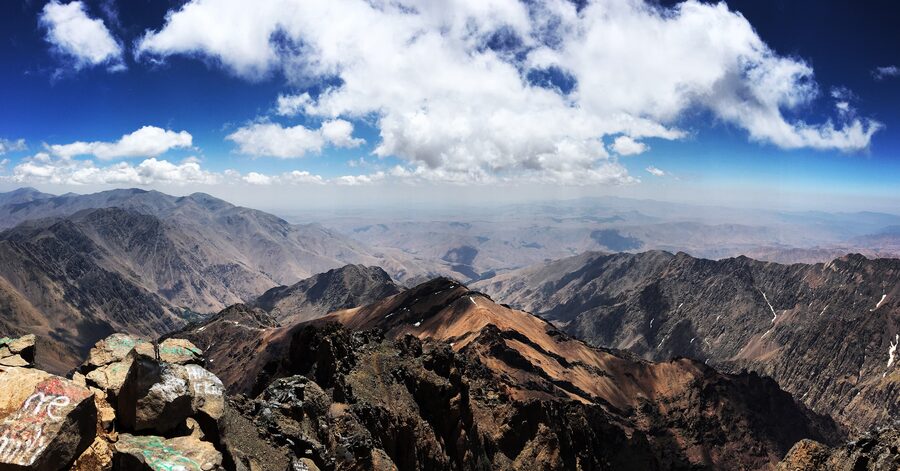
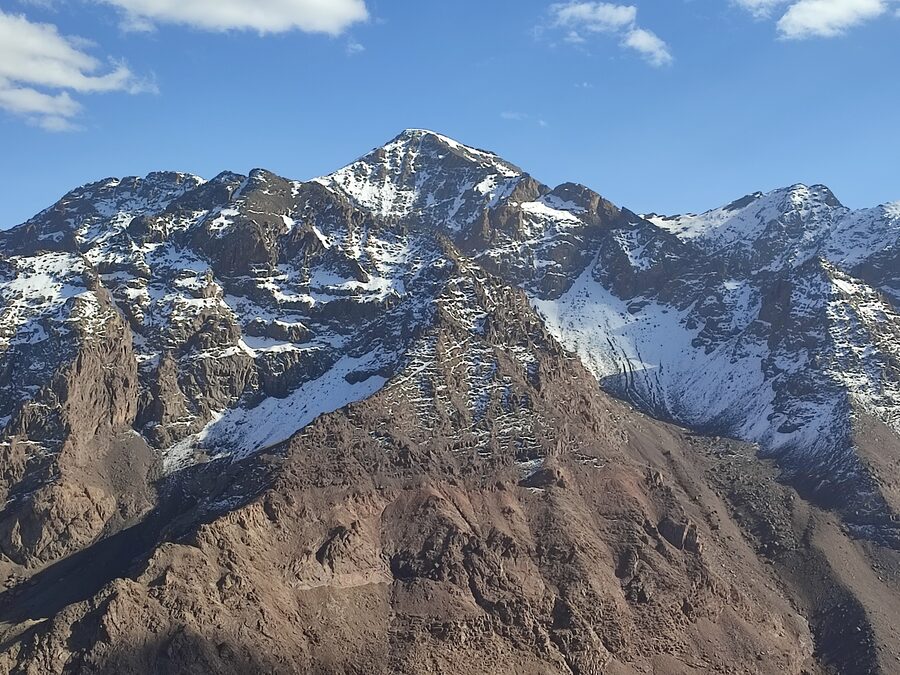
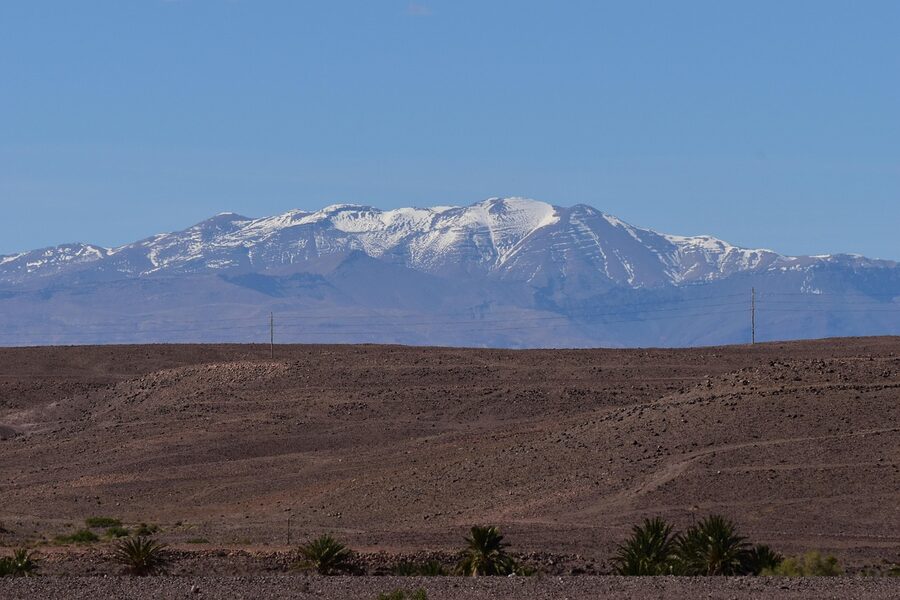
Mount Toubkal is the highest peak in North Africa — 4,167 meters of granite and scree two hours south of Marrakech. Climbing it takes two days, doesn’t require technical gear in summer, and delivers one of the finest summit views in the Arab world. From the top you can see the Sahara to the south and the Atlantic to the northwest on a clear morning.
The standard trek follows the same route pilgrims and Berber herders have used for centuries. Day 1: Imlil to the Toubkal Refuge at 3,207m. Day 2: alpine start at 4am, summit around 9am, back to Imlil by 3pm. Hard but doable for any fit hiker.
This guide covers three Mount Toubkal trek options at different price points, what fitness level is required, when to go, and what gear you actually need for each season.
- Three Mount Toubkal Treks Worth Booking
- Fitness Level Required
- Tour #1 — Toubkal Ascension 2 Days (Top Pick)
- Toubkal Ascension 2 Days — 7.31 per person
- Day 1 — Imlil to Toubkal Refuge
- Day 2 — Summit Push
- Tour #2 — Climb Mount Toubkal 2 Days from Marrakech All Included
- Climb Mount Toubkal 2 Days from Marrakech — 5.21 per person
- Tour #3 — 2-Day Private Tour to Toubkal Summit from Imlil
- 2-Day Private Tour to Toubkal Summit from Imlil — 4.22 per person
- When to Climb
- What to Pack
- Altitude — What to Expect
- The Refuge Experience
- Safety Considerations
- Imlil — The Base Village
- Fitting Toubkal Into a Morocco Trip
- Before the Trek — Prep in Marrakech
- Frequently Asked Questions
- Alternative and Longer Trek Options
- History of the Route
- My Bottom Line
Three Mount Toubkal Treks Worth Booking
Toubkal treks run from $174 for a private 2-day from Imlil to $337 for a 2-day all-inclusive from Marrakech. The difference is mostly whether the trek includes Marrakech hotel pickup and hotel night arrangements.
My top pick is the $337 Toubkal Ascension 2 Days — 185 detailed responses at 5.0 stars makes this the proven choice. For a slightly cheaper all-inclusive, the $325 Climb Mount Toubkal 2 Days from Marrakech covers the same ground. If you’re already in Imlil, book the $174 2-Day Private Tour to Toubkal Summit from Imlil.
All three include Berber guide, mountain refuge accommodation, and three meals. Equipment rental (ice axe, crampons for winter) is usually additional at $20-40.
Fitness Level Required
Toubkal is a walk-up, not a climb. No technical gear needed in summer (June-October). The effort is sustained rather than extreme — you’re at altitude (3,000-4,000m) for 14-16 hours over two days.
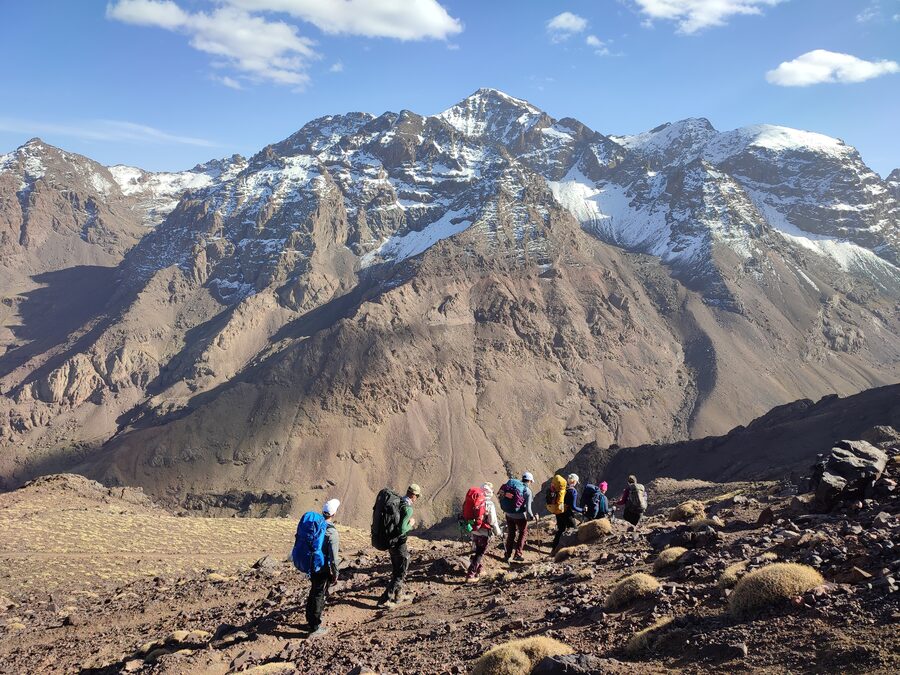
Fitness benchmark: if you can hike 5-6 hours with 800m elevation gain at sea level, you can do Toubkal with a guide. You’ll feel the altitude above 3,500m but you won’t be in trouble.
Children 14+ fine with adult supervision. Under 14 skip — altitude and exposure risk rises for smaller bodies. Seniors 60+ fine if they’re active hikers.
Tour #1 — Toubkal Ascension 2 Days (Top Pick)
Toubkal Ascension 2 Days — $337.31 per person
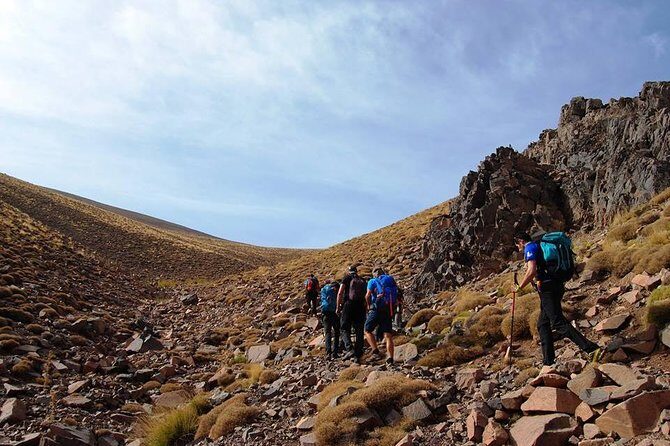
Pickup 8am from Marrakech, drive to Imlil (60km, 90 minutes), start trek 10:30am. Refuge at 3pm. Overnight at Toubkal Refuge. Summit push 4am day 2, summit by 9am, descent to Imlil by 3pm, back to Marrakech by 5pm.
Includes licensed mountain guide, muleteers to carry heavy gear (you carry a day pack), refuge accommodation, and three meals. Equipment rental for winter (ice axe, crampons) is extra.
5.0 stars across 185 detailed responses — the volume gold standard for this route. Full plan in our Toubkal 2-day ascent review.
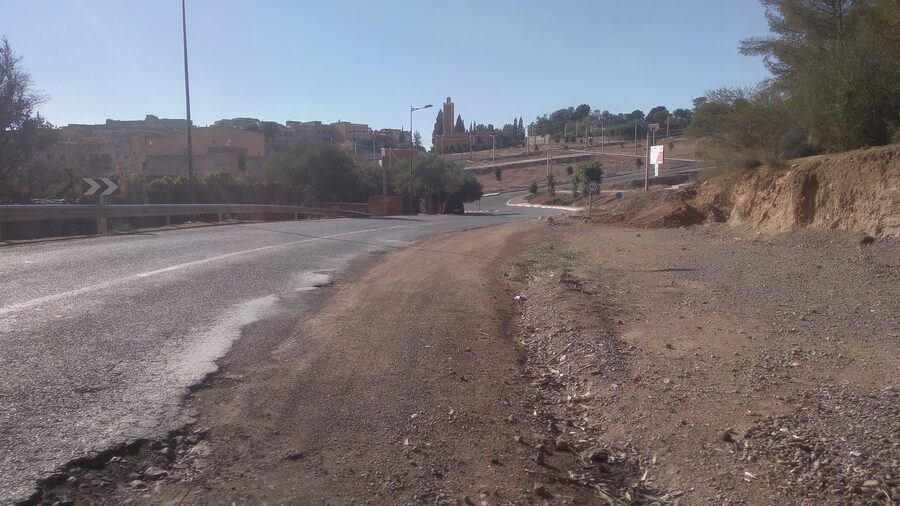
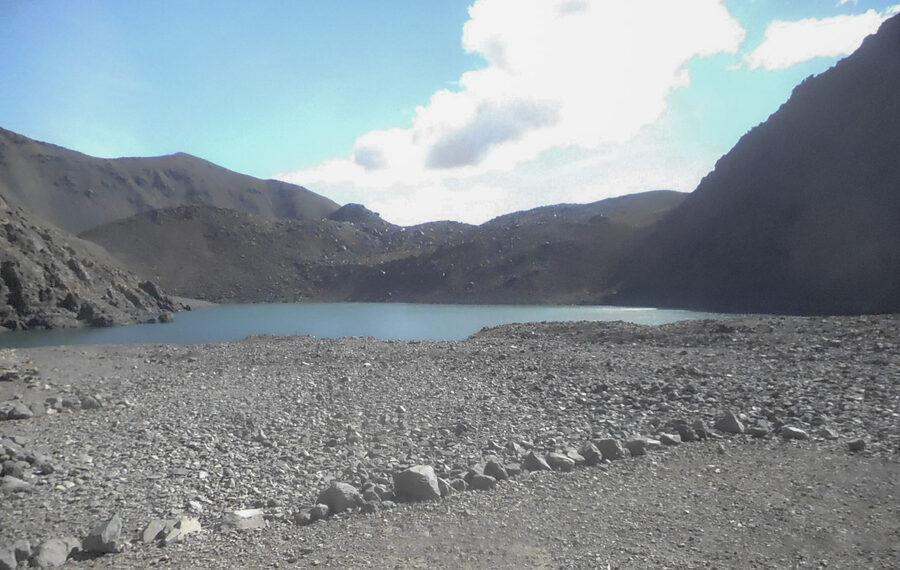
Day 1 — Imlil to Toubkal Refuge
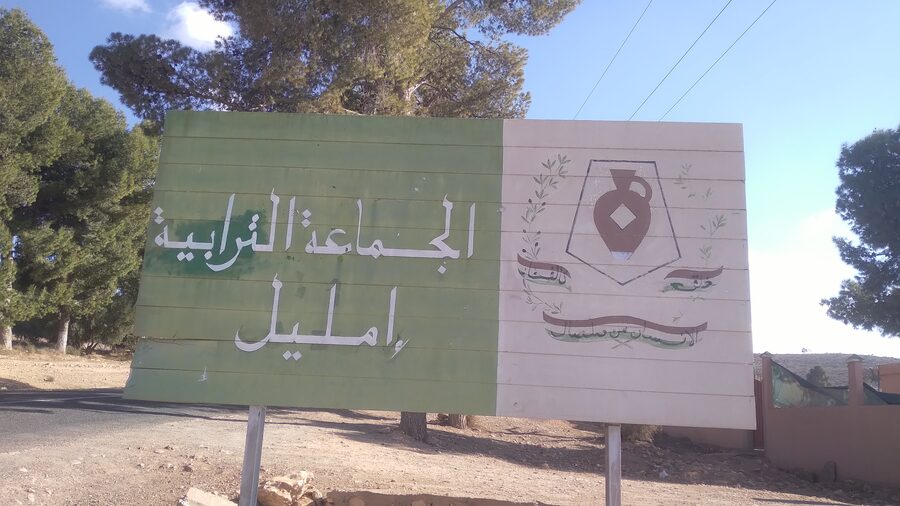
The trail from Imlil starts at 1,740m. You climb up the Mizane Valley through walnut and cherry orchards, past the shrine of Sidi Chamharouch at 2,310m, and onto the valley floor leading to the refuges.
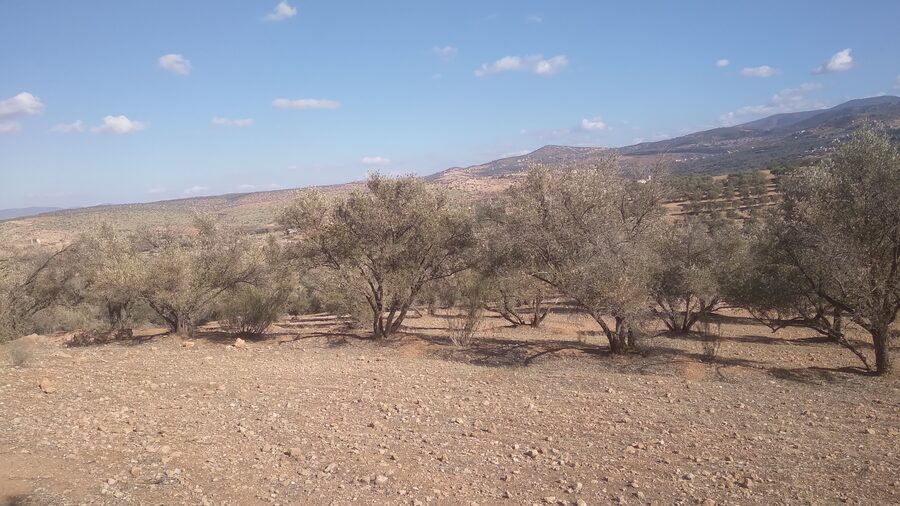
Distance day 1: 11km. Elevation gain: 1,470m. Time: 4-6 hours at moderate pace. The trail is rocky but unambiguous; there’s almost no navigation required.
The Toubkal Refuge (Refuge du Toubkal, also called Refuge CAF) sits at 3,207m. Dorm-style bunks, shared bathrooms, dinner and breakfast included. It’s basic but comfortable — think hostel at altitude.
Day 2 — Summit Push
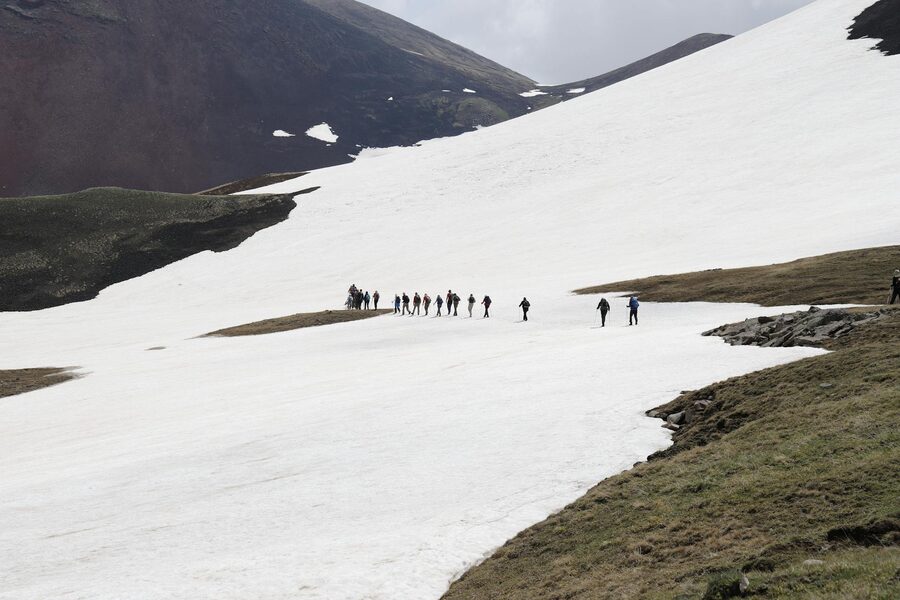
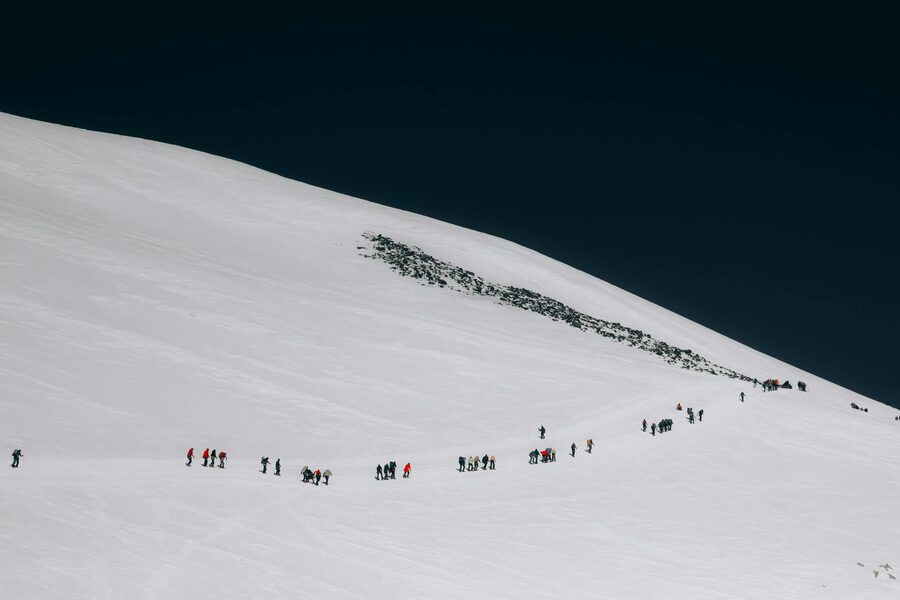
4am wake-up. Quick breakfast, headlamps on, out of the refuge by 4:45am. The first 90 minutes are in the dark — a headlamp trail of hikers moving single-file up the steep scree slope toward the col.
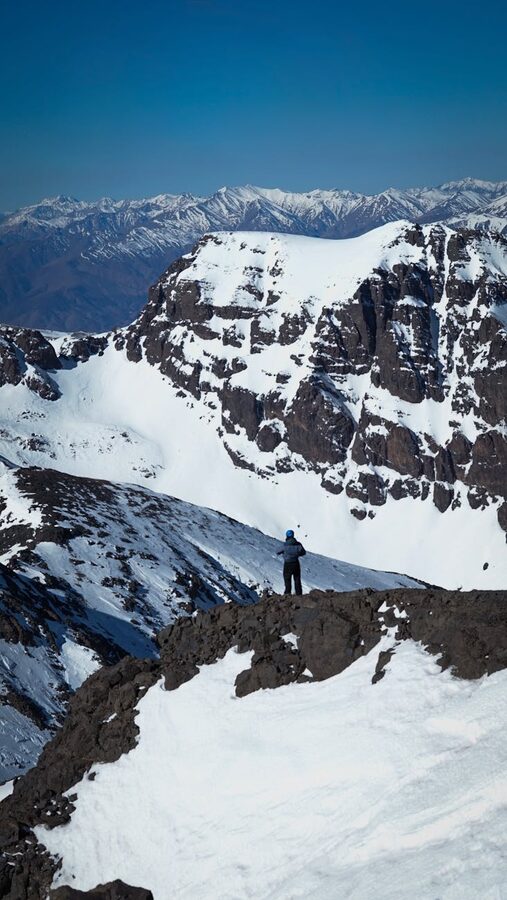
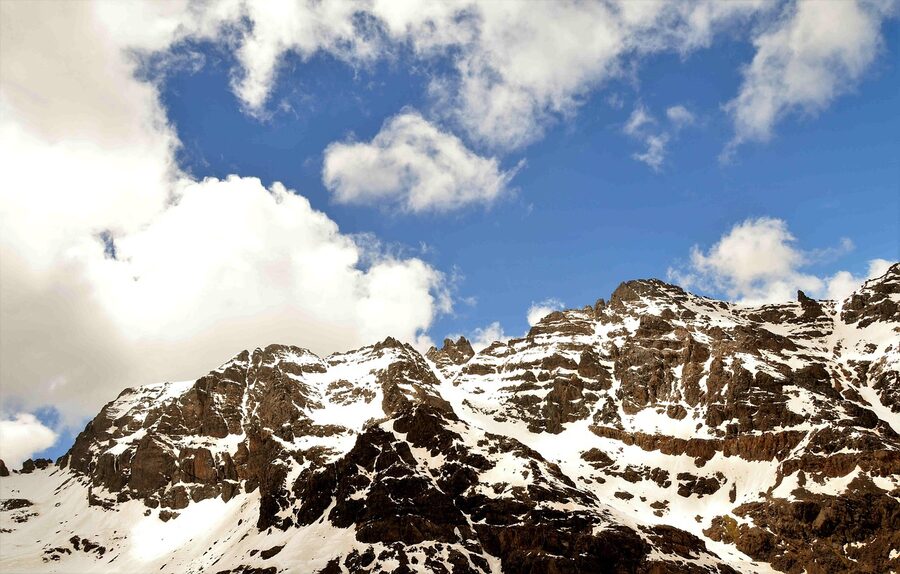
Sunrise around 6:30am depending on season. You’re probably at 3,900m by then. The light reveals a Martian landscape of red rock and distant peaks.
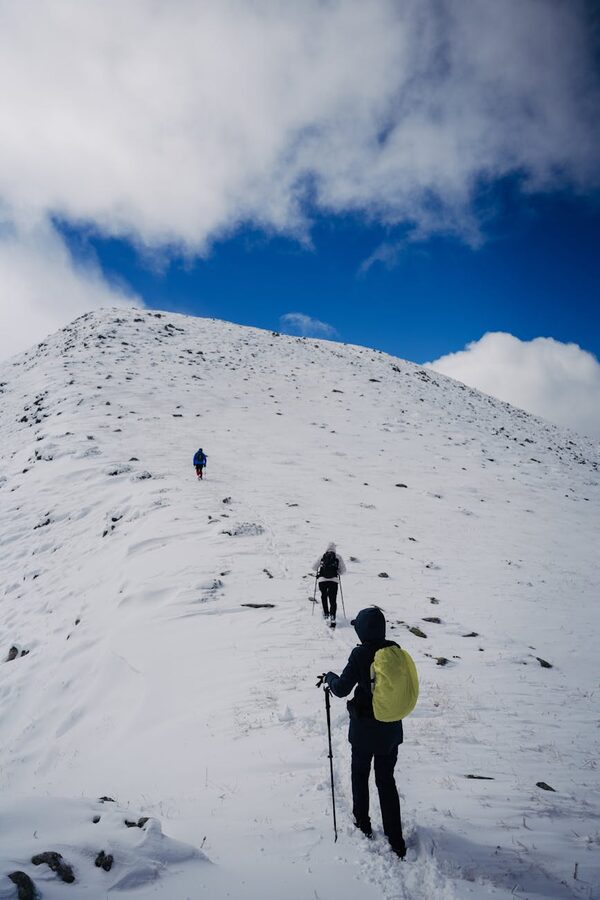
Summit ridge begins at 4,000m. The final 150m is a gentle walk along the ridge to the summit marker. You reach the top between 8:30 and 9:30am depending on pace and weather.
Summit time: 20-30 minutes for photos, quick rest, and weather window awareness. Descent starts by 10am at the latest — weather deteriorates fast after noon in most seasons.
Tour #2 — Climb Mount Toubkal 2 Days from Marrakech All Included
Climb Mount Toubkal 2 Days from Marrakech — $325.21 per person
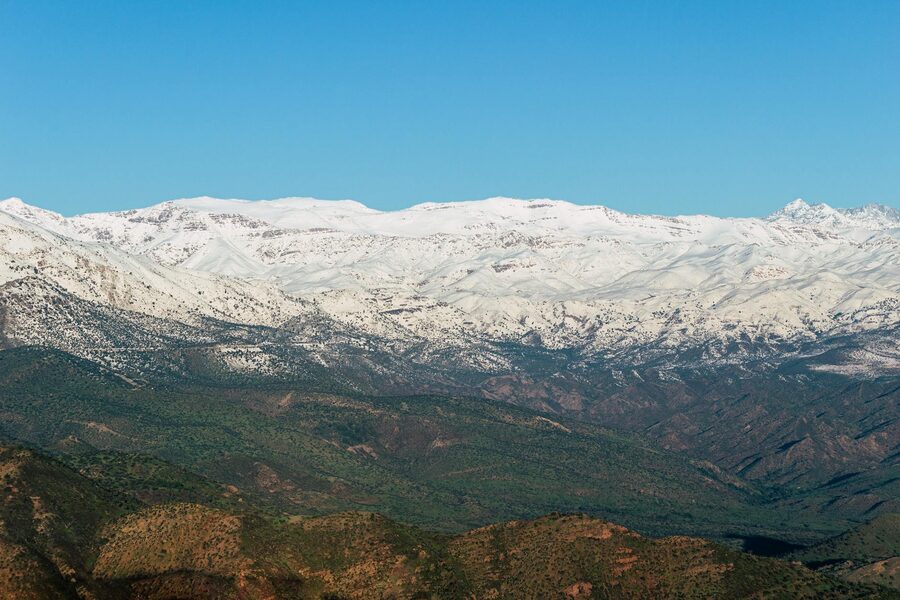
Virtually identical to Tour #1 at a slightly lower price. All transfers, mountain guide, muleteers, Toubkal Refuge, and meals included. 5.0 stars across 24 detailed responses.
Group size typically 4-10 hikers, making this more social than a private ascent. Good if you’re a solo traveler wanting to meet other hikers.
Full details in our Climb Toubkal 2 Days review.
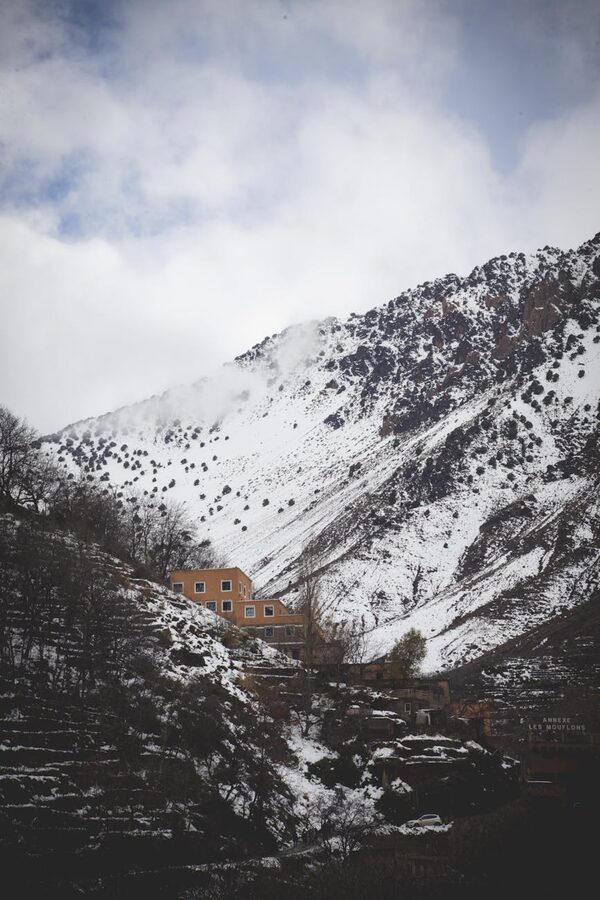
Tour #3 — 2-Day Private Tour to Toubkal Summit from Imlil
2-Day Private Tour to Toubkal Summit from Imlil — $174.22 per person
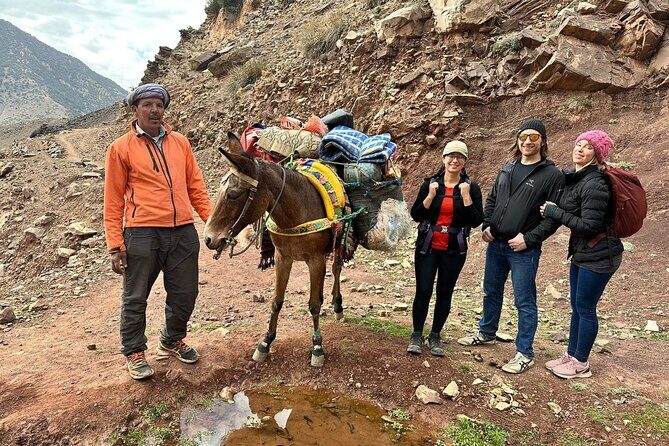
If you’re already staying in Imlil (and many hikers do — the village has guesthouses starting at $30/night), skip the Marrakech transfer and book this private ascent directly from the village.
Same guide, same route, same refuge, same meals. You save 40-50% by staying in Imlil the night before and after the trek rather than driving from Marrakech.
5.0 stars across 39 detailed responses. Details in our Toubkal private ascent from Imlil review.
When to Climb
Best season: April through early November. April-May has wildflowers and clear views. September-October has stable cool weather.
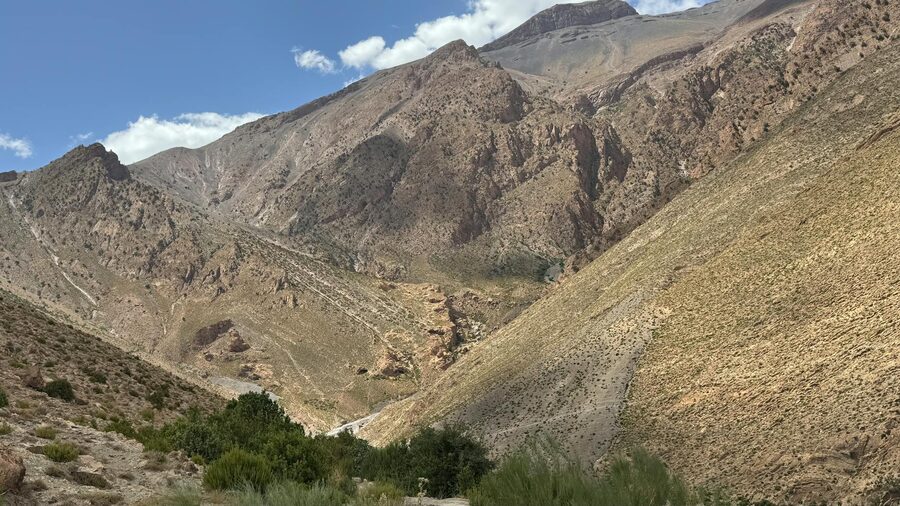
Peak summer (June-August): hot below 2,500m, temperate at the refuge, cold near the summit. Water is the main consideration — plan 3-4L per day.
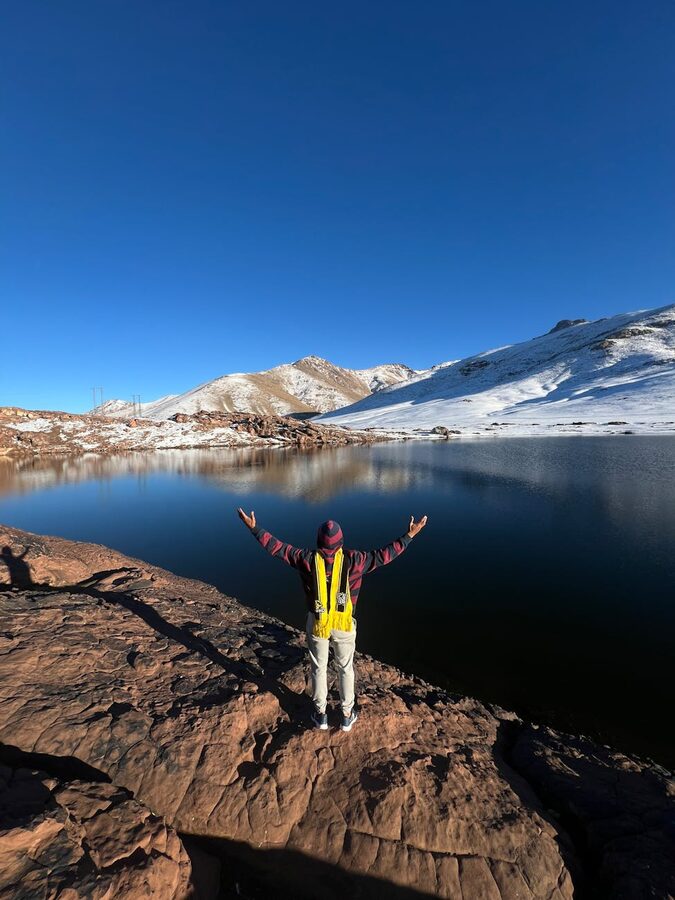
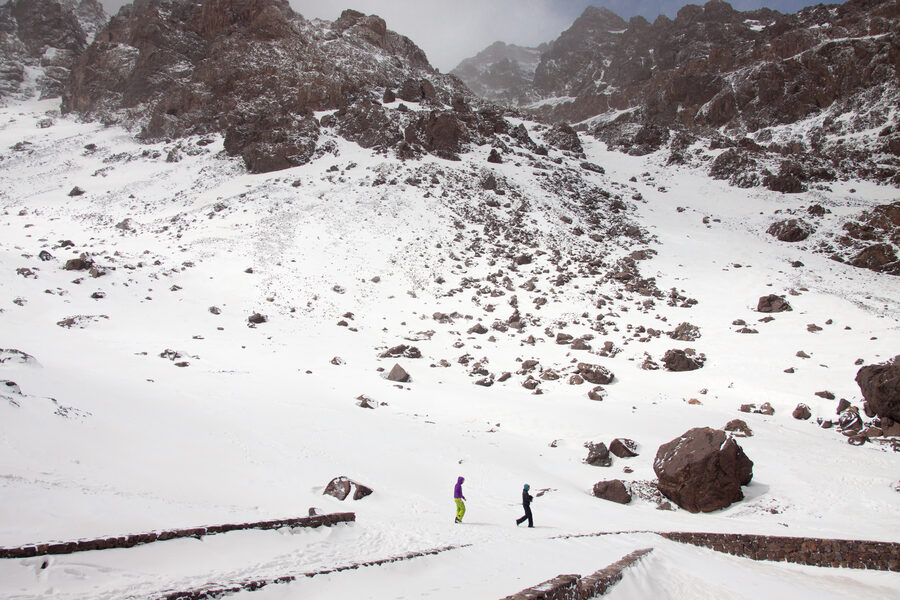
Winter (December-March): snow and ice on the upper route. Requires crampons and an ice axe. Only attempt with a winter-certified guide. Much harder than summer but genuinely alpine.
What to Pack
Day pack (20-30L), hiking boots (broken in), hiking poles, headlamp with extra batteries, water bottle or hydration system (minimum 2L capacity), warm layers, rain shell, sunglasses, sunscreen, hat.
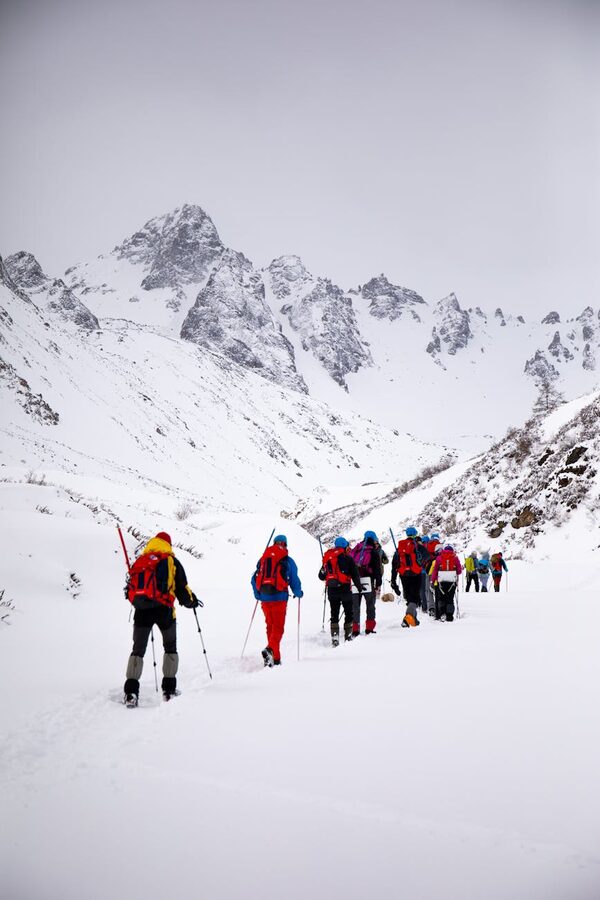
Winter additions: insulated jacket, waterproof pants, warm gloves, crampons, ice axe, balaclava. Most can be rented in Imlil for $10-20 per item per day.
Sleep setup: refuge provides bunks and blankets. A sleeping bag liner is recommended (not required). Some hikers bring their own sleeping bag if they’re particular about cleanliness.
Altitude — What to Expect
Above 3,500m most people feel the altitude. Mild headache, shortness of breath on exertion, slightly disrupted sleep. This is normal.
More serious altitude sickness (severe headache, nausea, dizziness) is rare at 4,167m but possible. If you feel worse than mild discomfort, tell the guide immediately. Descent is the only cure.
Preparation: arrive in Marrakech (altitude 450m) 1-2 days before the trek. Stay hydrated. Don’t drink alcohol the night before the refuge night. Eat plenty of carbs at dinner.
The Refuge Experience
Toubkal Refuge and the adjacent Refuge Neltner are both dormitory-style mountain huts. Beds are bunks with foam mattresses; blankets provided. Hot showers sometimes available ($5 extra).
Dinner at 7pm — typically a pasta or tagine, bread, vegetable soup, tea. Breakfast at 4am for summit-day hikers is just bread, jam, and tea. Bring snacks for the climb.
Wi-Fi: none. Cellular signal: spotty. Plan for a digital detox. Bring a power bank; there are no outlets for hikers.
Safety Considerations
The main risks: altitude sickness (rare but possible), weather changes (afternoon storms in summer), and falls on the scree slope. All managed by going with a certified guide.
Recent years have brought some tragic incidents (the 2018 murder of two Scandinavian hikers in a remote valley) but the standard Toubkal route sees no security concerns. Go with a licensed guide and stick to the main trail.
Emergency protocol: guides carry satellite phones. Mountain rescue in the High Atlas is organized but slow (helicopter evacuation is rare; typical rescue is foot/mule-based). Insurance with mountain rescue coverage is recommended.
Imlil — The Base Village
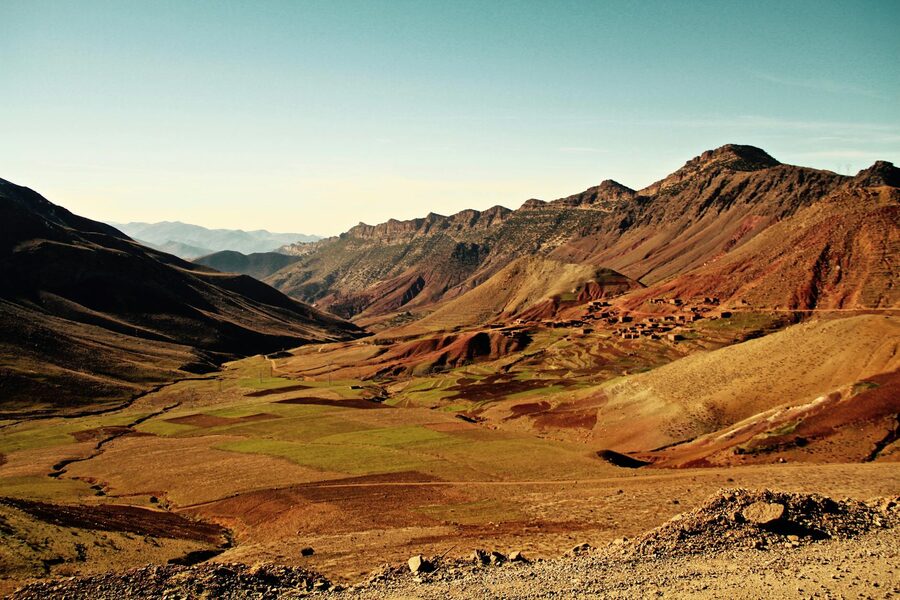
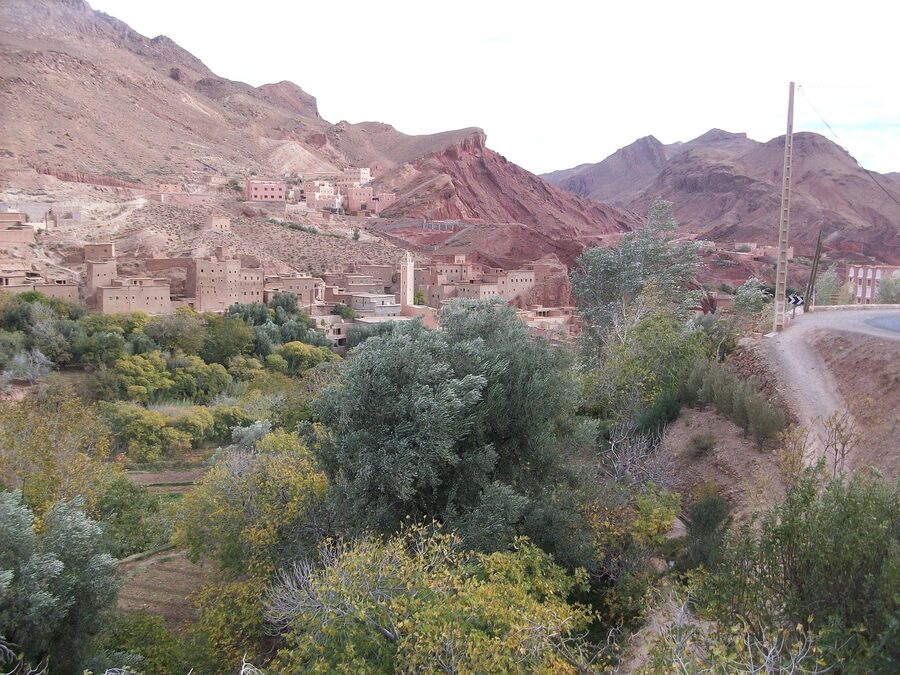
Imlil is a Berber village at 1,740m, 64km south of Marrakech. Population 500. It’s the trailhead for Toubkal and has enough guesthouses, cafes, and gear rental shops to function as a proper base for multi-day hikes.
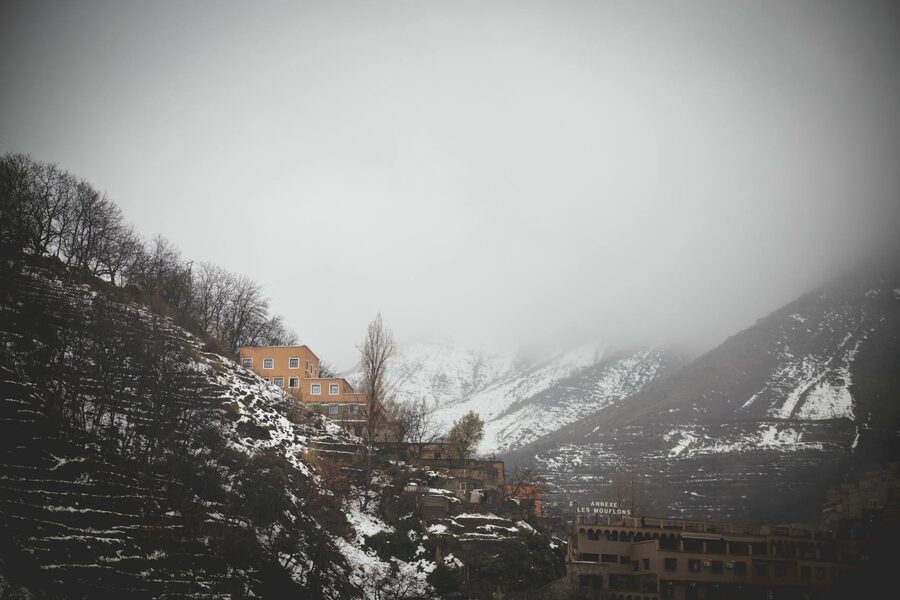
If you want to avoid the Marrakech transfer on day-of-trek morning, spend the night before in Imlil. Kasbah Toubkal is the upscale option ($150-300/night); many guesthouses and dar-style B&Bs run $30-60 including breakfast.
Fitting Toubkal Into a Morocco Trip
Toubkal is a dedicated 2-3 day commitment within a longer Morocco trip. Don’t try to squeeze it in; give it its own window.
Classic 10-day Morocco trip with Toubkal: 2 days Marrakech (Bahia, medina), 3 days Toubkal (including Imlil nights before and after), 2 days Ourika Valley or Essaouira side trip, 3 days Sahara desert.
For shorter Morocco trips (under a week), skip Toubkal — it’s a significant commitment.
Before the Trek — Prep in Marrakech
Spend 1-2 days in Marrakech before the trek. This serves as light acclimatization (Marrakech is 450m, the first Toubkal night is at 3,207m). Use the time to check gear, buy missing items, and rest.
Gear check: properly fitted boots with trekking socks, hiking poles, warm layers, rain jacket, headlamp, day pack. If anything’s missing, Imlil has cheaper gear than Marrakech.
Hydration: start drinking lots of water 24 hours before the trek. Dehydration at altitude is dangerous. Aim for 3-4 liters per day starting on arrival in Marrakech.
Food: eat big carbohydrate dinners the 2 nights before the trek. Your muscles need stored glycogen for the 1,500m elevation gain on day 1.
Frequently Asked Questions
How hard is the Toubkal trek? Moderate-strenuous. Accessible for any regular hiker. Altitude is the main challenge, not technical difficulty.
Is winter ascent possible? Yes but requires crampons, ice axe, and winter guide. Costs 20-30% more and is significantly more demanding.
Can I do it without a guide? Technically yes — the route is unambiguous. But a guide is mandatory in winter and strongly recommended in summer. $150-200 of the package price is the guide fee.
What about acclimatization? 2-day pace is fast. Some hikers add a 3-day option with acclimatization hike on day 1. Worth considering if you’re sea-level based.
Is food vegetarian-friendly? Yes, let the operator know. Moroccan cuisine has lots of vegetable options.
What if I can’t make it to the summit? No shame in turning back. The refuge and the views from the col (4,000m) are still extraordinary.
Should I tip the guide and muleteers? Yes. 200-400 dirham per hiker for the guide, 100-200 for the muleteers.
Is travel insurance needed? Strongly recommended with mountain rescue coverage. Check your policy specifically for altitude trekking.
Alternative and Longer Trek Options
Toubkal Circuit (5-7 days): the extended version visits Lake Ifni, the Azzaden Valley, and other summits around the Toubkal massif. Good for experienced trekkers wanting more than a summit push.
Mgoun Massif (4-5 days): Morocco’s second-highest mountain at 4,068m. Less crowded than Toubkal. Starts from Ait Bouguemez valley, 5-hour drive from Marrakech.
Saghro Mountains (3-4 days): lower elevation (peaks around 2,500-2,700m) but more remote. Good for shoulder season when Toubkal is too cold or too hot.
All three are arranged through Marrakech-based trekking agencies rather than the standard tourist platforms. Expect $150-250/day including all logistics.
History of the Route
Toubkal was first climbed in 1923 by a French military officer (Marquis de Segonzac) during the French protectorate. Before that, Berber shepherds had been walking the route for centuries to summer pastures.
The standard refuge at 3,207m was built in 1935 by the Club Alpin Français. It’s been upgraded multiple times but retains its basic form. The route is essentially unchanged — same trail the first summit party used 100 years ago.
Today 15,000-20,000 hikers summit each year. Peak months (May and September) see 200+ people on the summit per day. Outside those months you’ll have more solitude.
My Bottom Line
Mount Toubkal is the best adventure summit in North Africa — doable for regular hikers, spectacular in scenery, and a genuine mountain experience with Berber cultural immersion built in.
Book the $337 Toubkal Ascension 2 Days for the consensus top pick with 185 detailed responses. Pick the $325 Climb Mount Toubkal 2 Days All Included for a similar package. Save money with the $174 2-Day Private Tour from Imlil if you’re already in the village.
For the full Morocco high-altitude context, see also the Atlas Mountains day hike if you want a taste before committing to the full summit.
Arrive fit. Pack warm layers even in summer. Acclimatize in Marrakech for 1-2 days first. And don’t book the summit day on a tight departure schedule — weather can delay by 24 hours.