
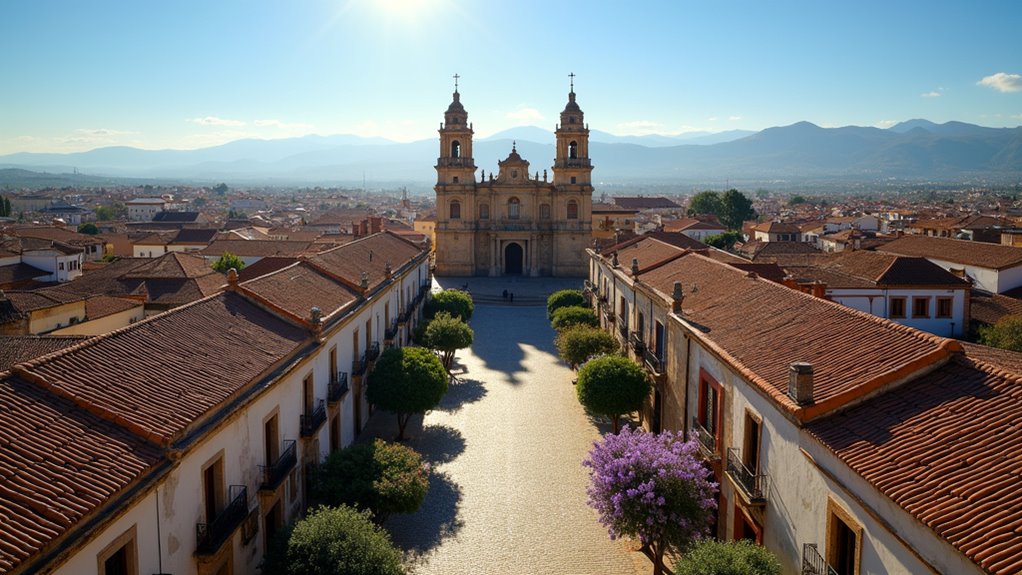
You’ll find Córdoba offers an incredible mix of UNESCO World Heritage sites, natural escapes, and cultural experiences. Start with the historic Jesuit Block and Plaza San Martín, then admire the Neo-Gothic Capuchin Church and browse local crafts at Paseo de las Artes. Escape to Parque Sarmiento’s green spaces or take day trips to mystical Capilla del Monte and car-free La Cumbrecita in the Sierras. The complete guide below reveals Argentina’s most underrated destination.
- Explore the UNESCO World Heritage Jesuit Block
- Stroll Around Plaza San Martín and the Historic Center
- Marvel at the Neo-Gothic Capuchin Church
- Discover Art and Culture at Paseo Del Buen Pastor
- Escape to Parque Sarmiento and Plaza Del Bicentenario
- Take a Day Trip to La Cumbrecita in the Sierras
- Experience the Mystique of Capilla Del Monte and Cerro Uritorco
- Browse Local Crafts at Paseo De Las Artes
- Venture to the Historic Jesuit Estancias in the Countryside
- The Sum Up
Explore the UNESCO World Heritage Jesuit Block
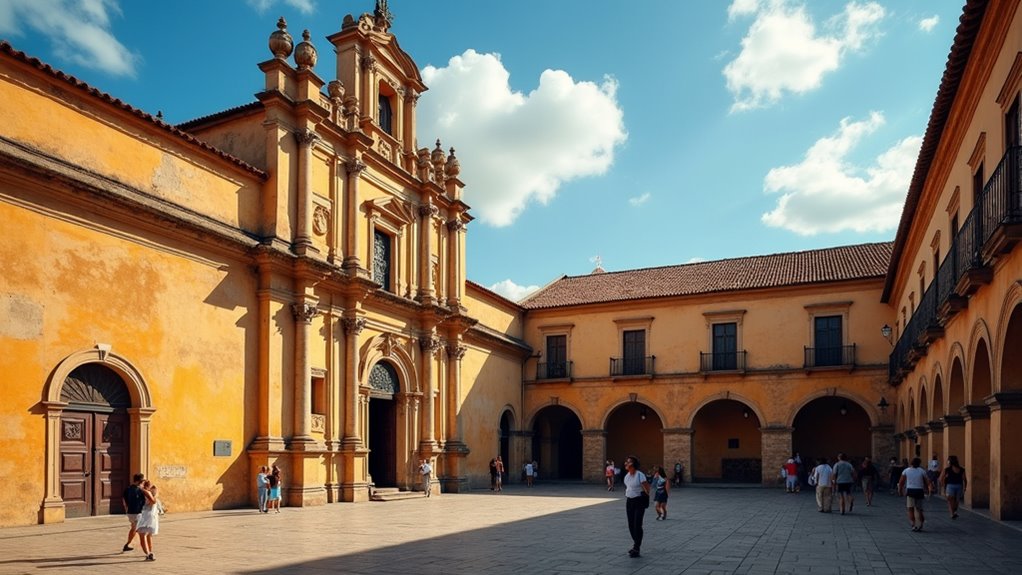
When you step into Córdoba’s historic center, the UNESCO World Heritage Jesuit Block stands as the city’s most significant cultural treasure. Founded in 1599, this remarkable complex showcases 150 years of Jesuit innovation combining evangelization, education, and commerce.
You’ll discover five interconnected buildings within the original urban block. Start at the baroque Church of the Society of Jesus, featuring its distinctive ship-hull wooden ceiling. Explore the Jesuit Priests’ Residence and the historic Colegio Máximo, now part of Argentina’s oldest university. Don’t miss the ornate Domestic Chapel with its rich interior decorations.
The architecture brilliantly fuses European baroque style with local building traditions, using regional stone and indigenous craftsmanship. This UNESCO site represents a unique cultural experiment that shaped Córdoba’s identity as “La Docta.” The complex also housed the Monserrat Secondary School, which continues the Jesuit educational legacy alongside the university.
Stroll Around Plaza San Martín and the Historic Center
After exploring the Jesuit Block, you’ll find yourself naturally drawn to Plaza San Martín, Córdoba’s beating heart since 1577. This central square served as the colonial Plaza Mayor, hosting markets and festivals that shaped the city’s character.
You’ll notice the bronze equestrian monument to General San Martín at the center, surrounded by historic Carrara marble fountains from 1876. The plaza offers perfect vantage points for photographing the Cathedral and the white-arched Cabildo Histórico, now home to the Museo de la Ciudad.
Take time to wander the tree-lined paths and explore Pasaje Santa Catalina connecting to nearby plazas. The square buzzes with daily life—from street performances to cultural events—making it an ideal starting point for discovering Córdoba’s historic center. The plaza also serves as a vital civic space, regularly hosting political rallies and public demonstrations that reflect the city’s contemporary social fabric.
Marvel at the Neo-Gothic Capuchin Church
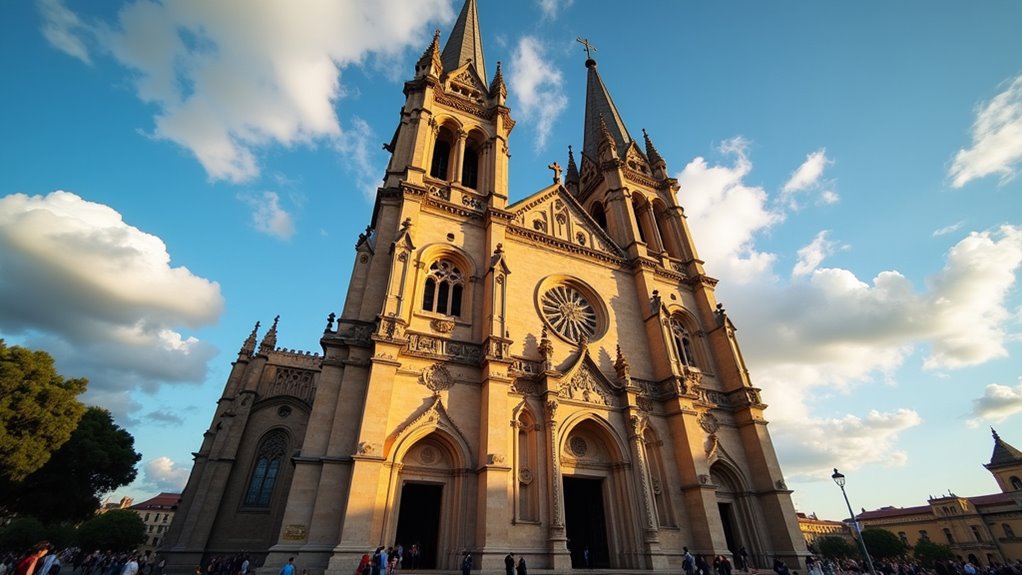
Rising dramatically from Nueva Córdoba’s bustling streets, the Neo-Gothic Capuchin Church (Iglesia del Sagrado Corazón de Jesús) stands as one of Argentina’s most striking examples of 20th-century religious architecture. Designed by architect Augusto Ferrari and completed in 1933, this reinforced concrete marvel combines Gothic and Romanesque elements with approximately 70 pastel-colored columns adorning its exterior.
You’ll find the church at Buenos Aires and Obispo Oro streets, opposite Paseo del Buen Pastor. The richly sculpted facade features statues of Moses and Jesus flanking the main portal.
The interior showcases twelve ceiling panels painted with exact starry skies from each month of 1930. Don’t miss viewing the illuminated towers at night—they create a dramatic Gothic silhouette that’s earned recognition as an “artificial wonder of Córdoba.”
Discover Art and Culture at Paseo Del Buen Pastor
Just across from the Neo-Gothic Capuchin Church, you’ll discover Paseo del Buen Pastor—a striking 10,000-square-meter cultural complex that transforms a former women’s prison into one of Córdoba’s premier art and entertainment destinations.
The $5 million redevelopment preserved the original 1906 chapel, now Córdoba’s only Greek-style chapel serving as an arts center with remarkable acoustics.
You’ll find rotating exhibitions featuring contemporary Argentine artists, plus frescoes by renowned local painters Emilio Caraffa and Manuel Cardeñosa decorating the chapel’s interior.
The modernist complex offers glass-framed walkways, exhibition galleries, and open plazas hosting concerts, festivals, and cultural events year-round.
This adaptive reuse project exemplifies urban renewal, contrasting the site’s confining past with today’s open, accessible cultural programming that celebrates both historical memory and artistic expression. The complex sits in the heart of Nueva Córdoba, blending seamlessly into this upscale residential and commercial district.
Escape to Parque Sarmiento and Plaza Del Bicentenario
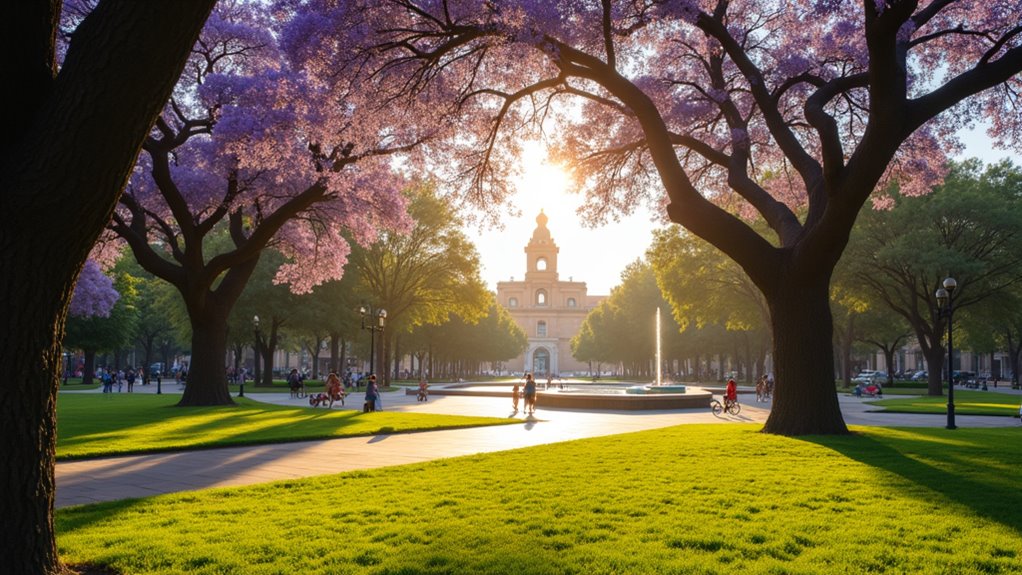
When you need a break from Córdoba’s bustling streets, head to Parque Sarmiento—the city’s largest public park spanning over 100 hectares of landscaped green space that serves as an urban oasis near the historic center.
You’ll find tree-lined paths perfect for jogging or cycling, a central lagoon where you can rent pedal boats, and multiple playgrounds for families.
Don’t miss the historic Eiffel Wheel, designed by the Eiffel Tower’s creator, offering panoramic city views and spectacular sunset photography opportunities.
The park’s open 24 hours daily, making it ideal for early-morning exercise or evening strolls.
Visit the century-old public pool for budget-friendly swimming, or explore the rose gardens and open-air theater. Sample local flavors with choripanes from food stalls scattered throughout the park, offering an authentic taste of Córdoba’s street food culture.
Nearby Plaza del Bicentenario adds contemporary urban design to your green space experience in the Nueva Córdoba district.
Take a Day Trip to La Cumbrecita in the Sierras
While Córdoba city offers plenty of urban attractions, you’ll discover Argentina’s most enchanting alpine escape just two hours away in La Cumbrecita—a completely car-free village nestled 1,450 meters high in the Sierras Grandes mountains. Drive 120 kilometers via Route 5 and Provincial Route 109, parking at the entrance before exploring on foot.
You’ll wander stone streets lined with Swiss-style houses featuring wooden facades and flower-filled balconies. Hike 25 minutes to the impressive 14-meter Big Waterfall along Almback stream, or climb to Mirador Cerro Cumbrecita for panoramic valley views.
The surrounding forests offer excellent trout fishing and hiking trails. This unique hamlet was founded in 1934 by Helmut Cabjolsky, a Berlin native who transformed the land into a lush Alpine-style retreat after moving to Argentina. Pack sturdy footwear for rocky terrain and plan to stay overnight if you want to fully learn about this pedestrian paradise.
Experience the Mystique of Capilla Del Monte and Cerro Uritorco
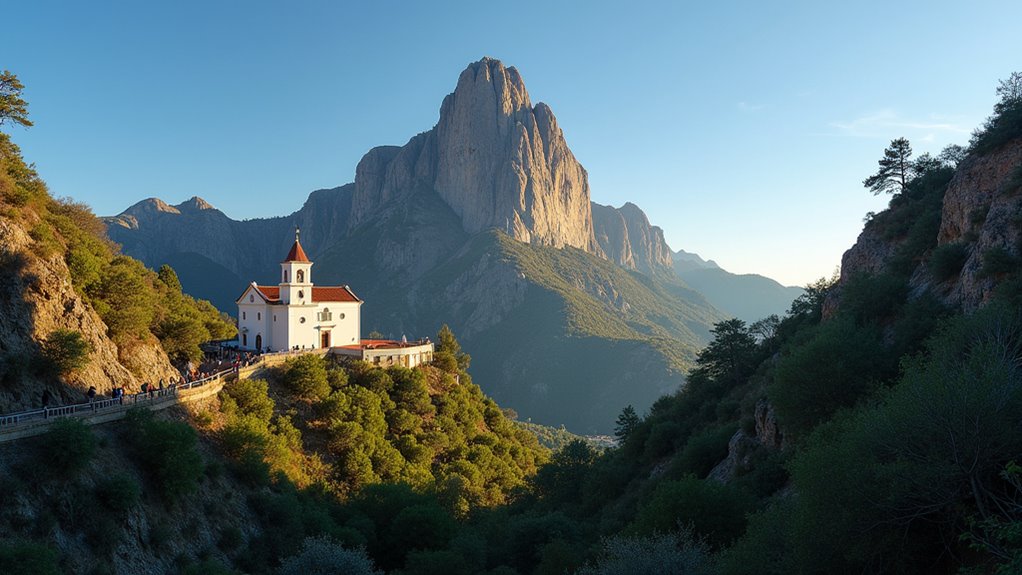
Beyond the alpine charm of La Cumbrecita, another mystical mountain experience awaits you 100 kilometers north of Córdoba city in Capilla del Monte, where UFO enthusiasts and spiritual seekers gather at the base of the legendary Cerro Uritorco.
This UFO-obsessed town embraces its esoteric reputation with shops selling crystals, amulets, and UFO merchandise while offering yoga and meditation practices.
You’ll find Cerro Uritorco, the highest peak in Sierras Chicas at 1,949 meters, just 3 kilometers from town center. For those seeking a different challenge, the nearby Cerro Las Gemelas twin mountains offer an alternative climbing adventure with their own spiritual significance.
The demanding full-day hike across private land costs around 30,000 ARS and rewards you with 360° panoramic views.
Whether you’re drawn by decades of UFO folklore, reports of mystical energy, or simply spectacular mountain vistas, this spiritual hotspot offers an otherworldly adventure.
Browse Local Crafts at Paseo De Las Artes
After exploring the mystical mountains around Córdoba, you’ll discover the city’s vibrant arts scene comes alive at Paseo de las Artes in the bohemian Barrio Güemes. This weekend evening market transforms narrow streets into a labyrinth of stalls featuring handmade pottery, textiles, leather goods, and jewelry.
You’ll find everything from simple souvenirs to sophisticated crafts at reasonable prices, with vendors often willing to negotiate discounts.
The fair centers around the historic 1889 Paseo de las Artes building, complemented by specialized sections like the Plant and Flower Fair and Paseo del Niño. Surrounding bars, cafés, and restaurants create a perfect shopping-nightlife combination. Look for stalls with genuine craftspeople rather than resellers to ensure you’re purchasing authentic handmade items.
Visit on weekend afternoons for the best atmosphere, but plan to leave by closing time around 22:00 for safety reasons.
Venture to the Historic Jesuit Estancias in the Countryside
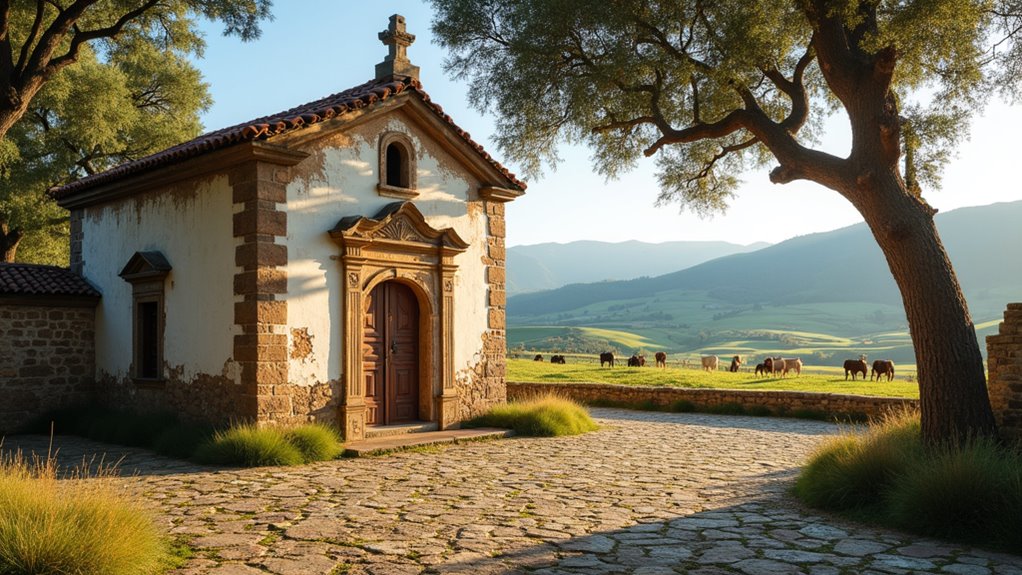
Scattered across the countryside surrounding Córdoba, five historic Jesuit estancias form a UNESCO World Heritage Site that reveals Argentina’s colonial past through remarkably preserved 17th and 18th-century estates.
You’ll discover unique attractions at each estancia. Visit Jesús María’s National Jesuit Museum to explore original wineries and exhibits on Indigenous and Afro-descendant history. Santa Catalina impresses with its monumental baroque church façade and ranch structures nestled in the Sierras Chicas. Alta Gracia integrates seamlessly into town life, offering a museum complex overlooking the main plaza. Remote La Candelaria provides isolated mountain landscapes with surviving hydraulic systems.
Each estate showcases the fusion of European, Indigenous, and African cultures through advanced agricultural systems, baroque architecture, and workshops that once financed Córdoba’s university and missionary work. The estancias are easily accessible as day trips from Córdoba city, located about 35-50 km away and reachable by bus or car.
The Sum Up
You’ll find Córdoba offers an incredible mix of colonial history, vibrant culture, and natural beauty. Don’t miss the UNESCO-listed Jesuit sites or the charming mountain towns in the Sierras. Whether you’re exploring historic plazas, admiring Gothic architecture, or browsing local crafts, there’s something for every traveler. Plan at least three days to experience the city’s highlights, and consider extending your stay to fully explore the surrounding countryside and mountain escapes.