
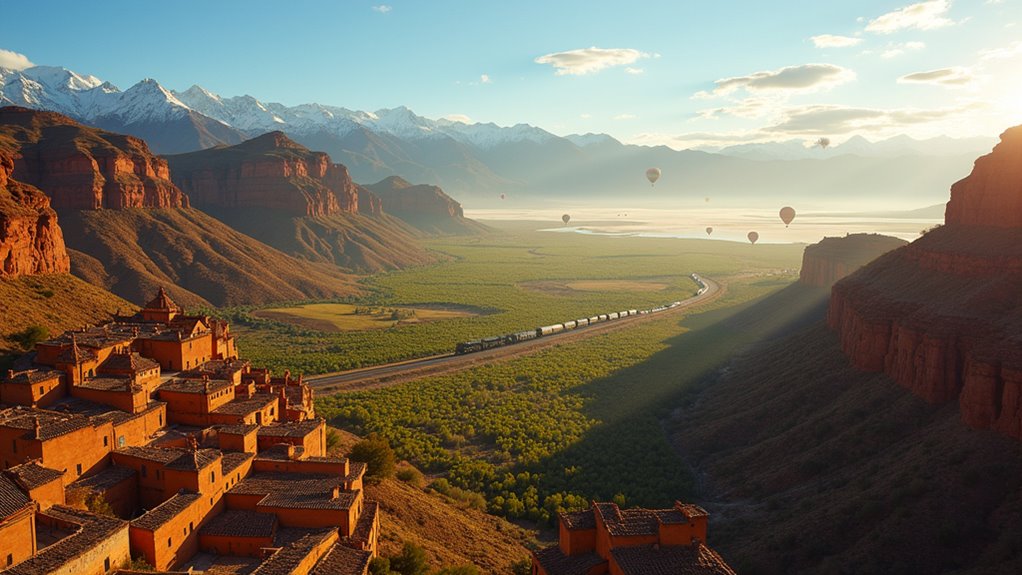
You’ll discover Salta’s colonial charm at Plaza 9 de Julio, then ascend Cerro San Bernardo by cable car for stunning valley views. Visit MAAM’s fascinating Inca mummies, drive the dramatic Quebrada de las Conchas to Cafayate’s wineries, and explore remote Calchaquí Valley villages. Experience Cachi’s mountain culture, ride the famous Train to the Clouds, venture to the otherworldly Salinas Grandes salt flats, and learn about Iruya’s authentic Andean traditions for the complete northwestern Argentina adventure.
- Wander Salta’s Colonial Heart Around Plaza 9 De Julio
- Take the Cable Car Up Cerro San Bernardo for Valley Views
- Visit MAAM to See Inca Mummies and High-Altitude Archaeology
- Drive the Quebrada De Las Conchas to Cafayate Wine Country
- Explore the Remote Villages of the Calchaquí Valleys
- Experience Cachi and Los Cardones National Park
- Ride the Train to the Clouds Through the High Andes
- Day Trip to Salinas Grandes Salt Flats
- Discover Iruya’s Mountain Village Culture
- The Sum Up
Wander Salta’s Colonial Heart Around Plaza 9 De Julio
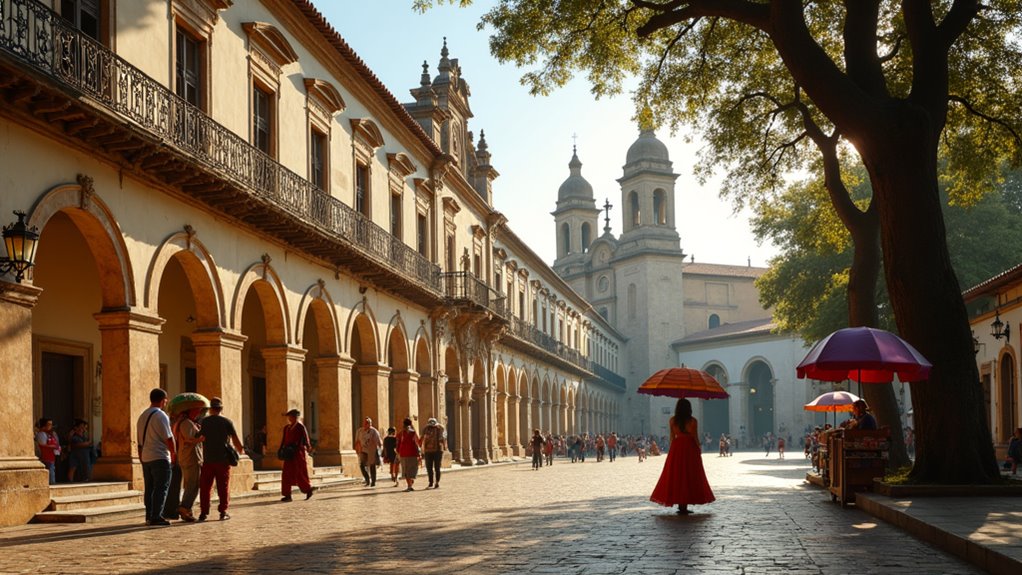
Since Salta’s founding in 1582, Plaza 9 de Julio has served as the city’s beating heart—and you’ll immediately understand why as you step onto its tree-lined paths surrounded by some of Argentina’s finest colonial architecture.
Over 250 trees create a lush canopy above benches where locals gather to share mate and children play beneath towering jacarandas.
The plaza’s centerpiece monument honors independence leader General Juan Antonio Álvarez de Arenales, while the stunning Salta Cathedral dominates the square with its neo-baroque façade. With a 4.6 rating from over 52,000 reviews, visitors consistently praise the plaza’s scenic beauty and vibrant cultural atmosphere.
Don’t miss the 18th-century Cabildo, now housing the History Museum of the North.
Visit during evening hours when colonial buildings illuminate and surrounding cafés come alive—it’s the perfect starting point for exploring Salta’s historic core.
Take the Cable Car Up Cerro San Bernardo for Valley Views
Time your visit for late afternoon when golden light bathes the valley—it’s magical for photography.
The summit complex features restaurants serving regional cuisine, artificial waterfalls, and shopping for local crafts.
Pro tip: while the cable car operates daily 9:00-19:00, accessing the hill itself is free if you’re up for the staircase trail climb.
The 25-gondola system carries 300 people hourly, so arrive early during peak season. Each gondola accommodates 15 people for the scenic ascent to this famous viewpoint.
Visit MAAM to See Inca Mummies and High-Altitude Archaeology
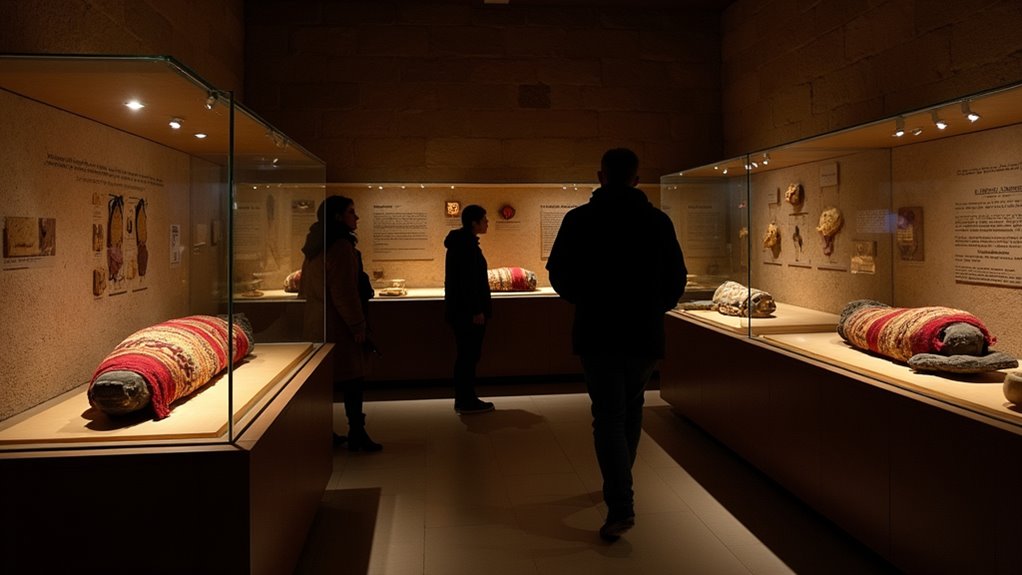
While most archaeological museums showcase pottery shards and stone tools, Salta’s Museum of High Altitude Archaeology (MAAM) displays something far more extraordinary: three perfectly preserved 500-year-old Inca children discovered frozen atop Volcán Llullaillaco at nearly 22,000 feet.
You’ll find the museum on Plaza 9 de Julio, where only one mummy rotates on display in a specialized cryogenic capsule maintaining sub-zero temperatures.
The exceptional preservation allows you to see intact skin, hair, and traditional textiles alongside over 100 burial offerings including miniature figurines and finely woven garments.
These children were sacrificed in Capacocha ceremonies, representing Inca mountain worship and imperial power.
The museum’s scientific approach includes CT scans and tissue analysis, revealing their elite diets and increased coca consumption before death. The compact museum allows visitors to explore all exhibits thoroughly within 1.5 hours, making it an efficient yet profound cultural experience.
Drive the Quebrada De Las Conchas to Cafayate Wine Country
Beyond Salta’s archaeological treasures lies one of Argentina’s most spectacular drives: the 180-kilometer journey along Ruta Nacional 68 through Quebrada de las Conchas to Cafayate wine country. This fully paved route transforms into dramatic red-brown canyon scenery after 1.5 hours south of Salta.
Don’t miss Garganta del Diablo‘s narrow amphitheater, Los Tres Cruces’ panoramic valley views, and Los Médanos’ sand dunes accessible via a 10-minute walk. The sculpted rock formations—El Anfiteatro, El Sapo, Las Ventanas—create continuous photo opportunities along signposted roadside stops.
Rent a car for maximum flexibility over fixed tour schedules. Allocate a full day rather than the basic 3-4 hour drive time. Early starts provide ideal lighting and cooler temperatures for the short hikes at each viewpoint. Plan to stay 2-3 days in Cafayate to fully explore the region and enjoy the local wineries.
Explore the Remote Villages of the Calchaquí Valleys
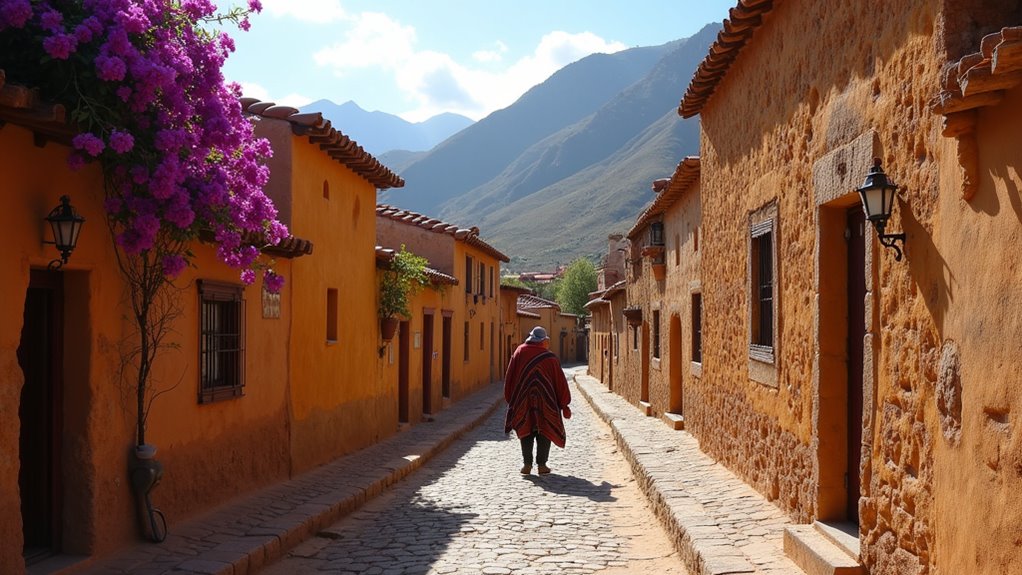
From Cafayate, venture deeper into Argentina’s northwest along the legendary Ruta 40 to discover the Calchaquí Valleys‘ remote villages, where colonial adobe architecture and pre-Hispanic traditions survive largely untouched by modern tourism.
In Molinos, you’ll find perfectly preserved 18th-century streets and the former governor’s residence, now a museum showcasing regional history. Don’t miss the high-altitude vineyards producing exceptional reds at 2,400 meters elevation.
Seclantás offers authentic textile workshops where families demonstrate ancestral loom techniques passed down through generations.
San Carlos provides insight into early Spanish colonial life with its quiet plaza and original church. The surrounding valleys supported the Santamariano culture from approximately 1000 to 1480 AD, with evidence of sophisticated irrigated agriculture systems still visible today.
Between villages, explore the remarkable Granero Inca—25 stone storage silos representing Argentina’s best-preserved Inca ruins.
Plan for 4×4 access beyond Cachi, especially approaching La Poma‘s mountain roads.
Experience Cachi and Los Cardones National Park
As you ascend the dramatic Cuesta del Obispo mountain road, you’ll enter one of Argentina’s most spectacular high-altitude landscapes where Los Cardones National Park protects 64,000 hectares of giant cactus forests and pre-Puna ecosystems.
Stop at Piedra del Molino viewpoint (3,348 meters) for panoramic vistas before crossing the straight 11-kilometer Recta del Tin Tin—an ancient Inca route alignment.
The park’s cardón grande cacti reach 4-6 meters tall, creating Argentina’s highest-density giant cactus concentration between 2,700-3,500 meters elevation.
Your destination, colonial Cachi town (2,280 meters), features whitewashed adobe houses, cobblestone streets, and the 18th-century Church of San José. Near the town center, explore the ancient Pucará de Las Pilitas, a pre-Inca archaeological site featuring educational ruins and strategic hilltop views.
The 3-5 hour drive from Salta offers dramatic altitude changes from subtropical valleys to high-Andean plateaus.
Ride the Train to the Clouds Through the High Andes
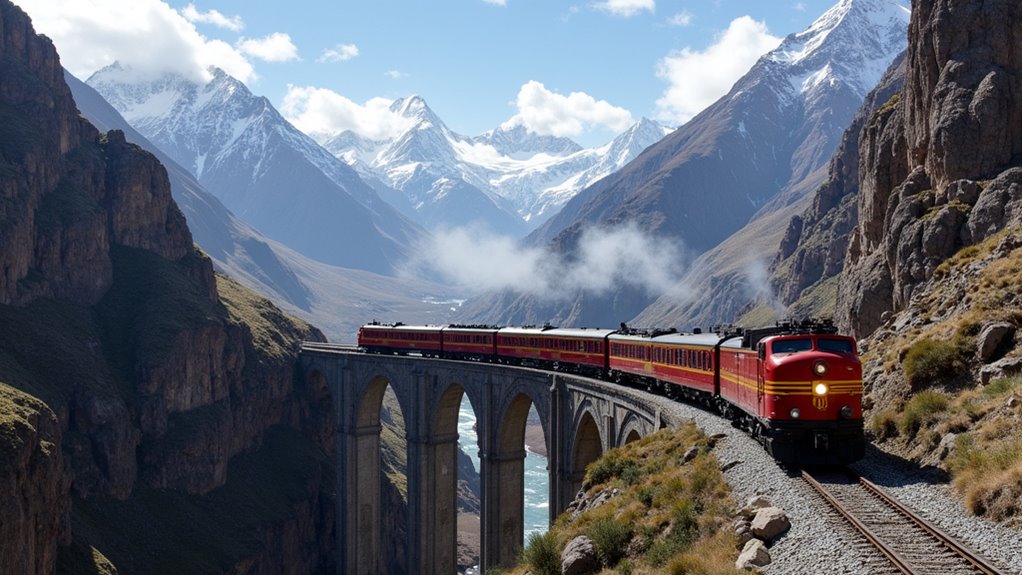
Argentina’s legendary Train to the Clouds (Tren a las Nubes) carries you on one of the world’s highest railway journeys, climbing from Salta’s subtropical valleys to 4,220 meters above sea level at La Polvorilla Viaduct. This engineering marvel traverses 29 bridges, 21 tunnels, and 13 viaducts through dramatic Andean terrain.
Most excursions combine bus transport from Salta to San Antonio de los Cobres with the spectacular train segment to La Polvorilla. Expect 13-16 hour days with early departures and evening returns. The journey passes through diverse landscapes including cardon fields, alder forests, and traditional shepherd towns.
The 3,000-meter elevation gain demands preparation—sleep well, eat lightly, and avoid alcohol beforehand to prevent altitude sickness.
Pack layers for extreme temperature variations and bring sun protection. The train operates on select dates only, so book ahead and confirm schedules for this unforgettable high-altitude adventure.
Day Trip to Salinas Grandes Salt Flats
While most visitors associate Argentina’s northwest with colorful mountains and colonial towns, the otherworldly Salinas Grandes salt flats offer an entirely different spectacle—a blindingly white expanse of crystallized salt stretching across 212 square kilometers at 3,450 meters above sea level.
You’ll traverse the dramatic Cuesta de Lipán mountain road, reaching 4,170 meters before descending to this ancient lakebed. The 12-hour day trip from Salta covers 270 kilometers via Ruta Nacional 52, typically combining stops at Purmamarca’s Cerro de los Siete Colores. Tours typically depart with an early start and include visits to additional highlights like the Quebrada del Toro gorge and Santa Rosa de Tastil ruins.
Once there, you’ll walk across polygonal salt patterns and photograph turquoise evaporation pools where locals harvest salt using traditional methods. Expect to pay approximately ARS 5,000 entrance fee and budget 40-60 minutes exploring this stark, horizon-stretching landscape.
Discover Iruya’s Mountain Village Culture
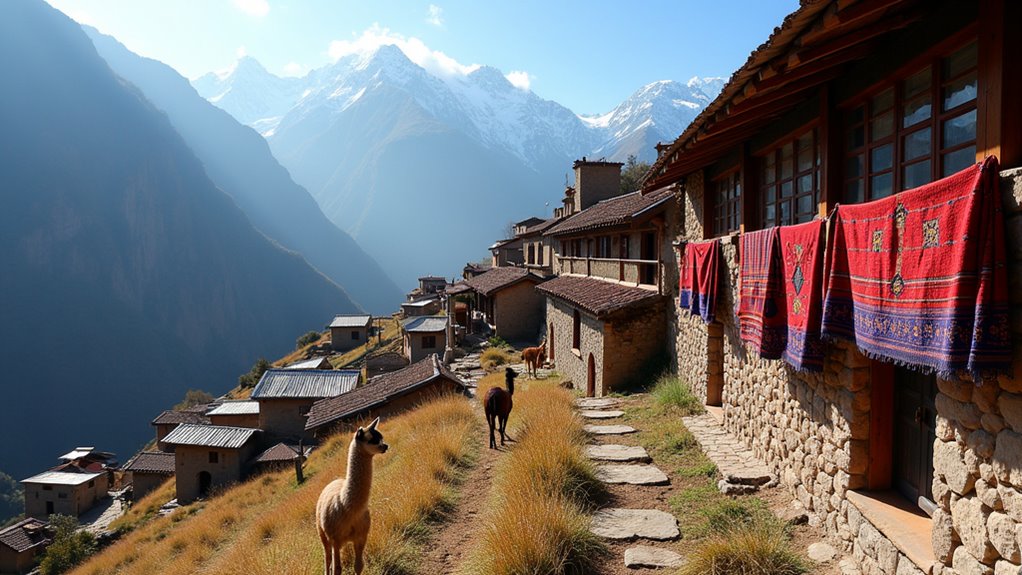
Perched dramatically at 2,780 meters above sea level, the remote village of Iruya represents one of Argentina’s most authentic Andean cultural experiences—a place where Quechua traditions blend seamlessly with colonial influences across steep cobblestone streets and adobe houses stacked like terracotta blocks against the mountainside.
You’ll reach this highland sanctuary via a challenging three-hour journey from Humahuaca, traversing narrow cornice roads and river crossings that amplify the village’s sense of isolation.
Once there, explore the terraced hillsides where locals maintain 250-year-old agricultural practices, herding llamas and goats as their ancestors did. For the more adventurous, trek the 8-kilometer route to San Isidro for spectacular mountain vistas and an immersive outdoor experience.
Don’t miss the central church overlooking the main square, where Catholic festivals merge with Indigenous beliefs.
Visit during feast days to witness processions featuring traditional Andean music and dress—authentic cultural expressions rarely seen elsewhere.
The Sum Up
You’ll find Salta’s magic lies in its stunning contrasts—from colonial cobblestones to snow-capped peaks, ancient mummies to world-class wines. Don’t rush through these experiences; each deserves time to truly appreciate. Book accommodations early during peak season (June-August), and always carry water and sun protection for high-altitude excursions. Whether you’re sipping Torrontés in Cafayate or standing atop the clouds at 4,200 meters, Salta will redefine your understanding of Argentina’s diverse landscapes and rich cultural heritage.