
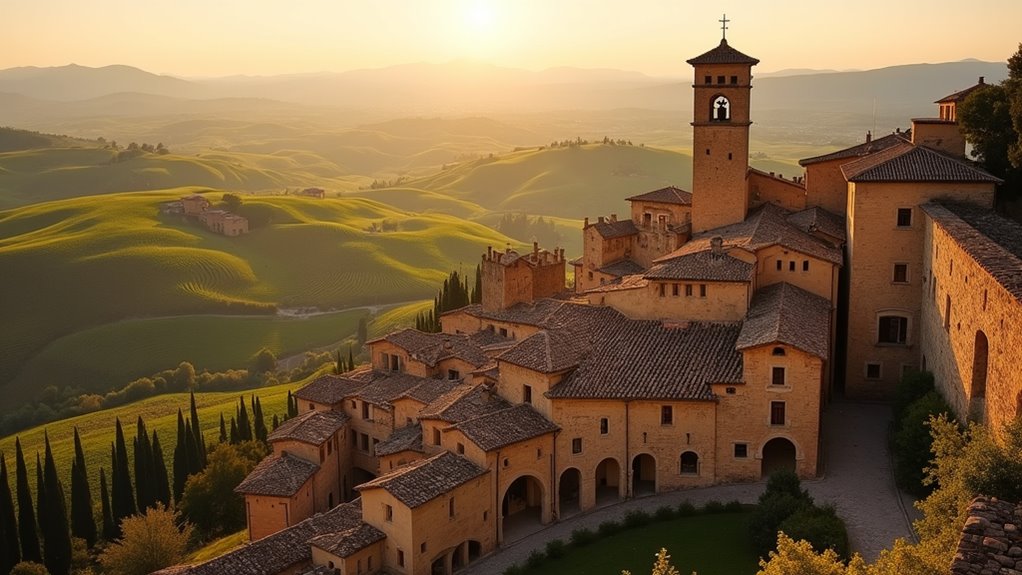
You’re standing in one of Tuscany’s most photogenic hilltop towns, but don’t let Montepulciano’s postcard-perfect appearance fool you into thinking it’s just another tourist trap. This medieval gem offers genuine experiences that won’t break your budget—from climbing ancient towers for stunning views to discovering wine cellars carved into volcanic rock. The trick is knowing where locals actually go and which attractions deliver real value for your time and money.
- Start at Piazza Grande and Climb the Town Hall Tower
- Marvel at the Temple of San Biagio
- Taste Vino Nobile in Underground Wine Cellars
- Walk the Historic Corso From Gate to Summit
- Watch Pulcinella Strike the Hour
- Hunt for Etruscan Artifacts at Palazzo Bucelli
- Catch Sunset From the Orfanotrofio Viewpoint
- Duck Into the Civic Museum at Palazzo Neri Orselli
- The Sum Up
Start at Piazza Grande and Climb the Town Hall Tower
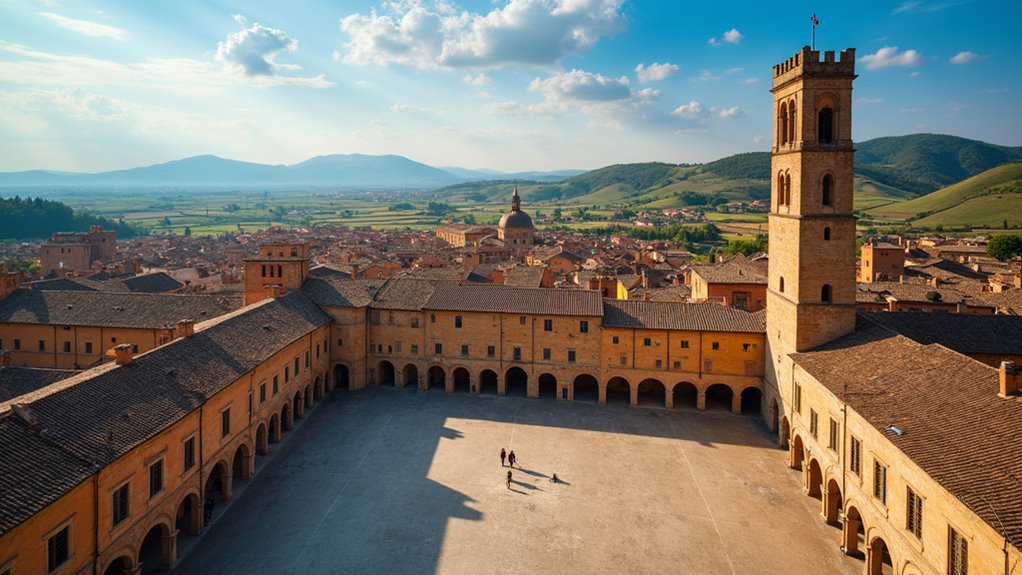
When you arrive in Montepulciano, head straight to Piazza Grande—the town’s beating heart where locals have gathered for centuries. This central square houses the impressive Palazzo Comunale, built in the early 15th century and modeled after Florence’s Palazzo Vecchio. You’ll notice its distinctive burgundy stone base and travertine upper sections topped with Guelph battlements.
Don’t miss climbing the tower’s 67 narrow stairs to reach the battlements. Yes, it’s steep, but the 360-degree views are worth every step. From the top, you’ll see Montepulciano’s terracotta rooftops, the surrounding Val d’Orcia valleys, and on clear days, towns like Pienza and Siena.
The climb offers glimpses of medieval construction details while providing the perfect introduction to Tuscany’s stunning landscape. Film buffs might recognize the Palazzo as a filming location for the Twilight sequel New Moon, where Edward’s dramatic scene with Bella was shot during a festival sequence.
Marvel at the Temple of San Biagio
Why does this Renaissance masterpiece sit alone in the Tuscan countryside instead of within Montepulciano’s walls? Legend says two local women witnessed the Virgin’s eyes move on a fresco, inspiring this sacred site’s construction between 1518-1545.
You’ll find Antonio da Sangallo the Younger‘s architectural genius in every travertine detail. The golden stone shifts color with changing light, creating Instagram-worthy shots throughout the day. Notice how only one of two planned bell towers was completed – budget constraints aren’t new!
Inside, you’ll discover Angelo Righi’s biblical frescoes and a stunning 1550 stained glass window. The temple’s isolation enhances its monumental presence against rolling hills. The design exemplifies classical symmetry that defined Renaissance architectural principles. It’s free to visit, making this sublime example of Tuscan Renaissance architecture perfect for budget-conscious travelers seeking authentic beauty.
Taste Vino Nobile in Underground Wine Cellars
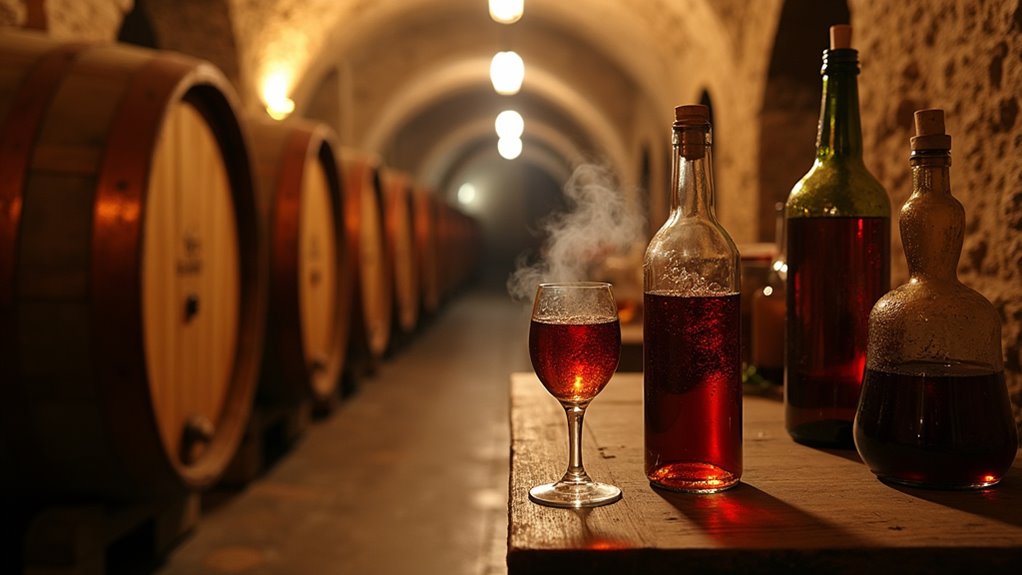
After soaking in Renaissance beauty above ground, head beneath Montepulciano’s historic palaces to discover wine cellars that’ve been perfecting Vino Nobile for centuries. These underground galleries, carved into tufa rock since the Middle Ages, maintain perfect aging conditions at 14°C with natural humidity control.
Visit historic wineries like Contucci, Talosa, or Ercolani for cellar tours and tastings. You’ll walk through Gothic-Renaissance brick archways where massive Slavonian oak barrels—some over 40 years old—age the region’s prized wines.
The porous volcanic stone naturally regulates temperature, creating ideal storage conditions that’ve remained unchanged for generations. Some cellars, like those at Talosa, are built above caves containing Etruscan ruins from the 2nd century, adding layers of ancient history to your wine experience.
Tastings typically include Vino Nobile paired with local pecorino cheese and olive oil. These atmospheric cellars beneath palaces like Palazzo Tarugi offer an authentic glimpse into Montepulciano’s winemaking heritage.
Walk the Historic Corso From Gate to Summit
Once you’ve explored the underground wine cellars, take Montepulciano’s most scenic route by walking the historic Corso di Montepulciano—the main street that winds one kilometer uphill from Porta al Prato gate to the summit at Piazza Grande.
This pedestrian-friendly walk lets you experience daily life while browsing local shops, cafés, and artisan boutiques without expensive tour costs.
Stop at the Pulcinella Tower for photos and views of the Tuscan countryside.
The gentle incline makes it manageable for most visitors, though you can catch the hop-on hop-off bus if you’d prefer riding up and walking down instead. As you stroll through the historic streets, you’ll pass notable landmarks including the beautiful Sant’Agostino church.
At Piazza Grande’s summit, you’ll enjoy 360-degree panoramic views of Val d’Orcia and nearby lakes—the perfect reward for your uphill journey.
Watch Pulcinella Strike the Hour
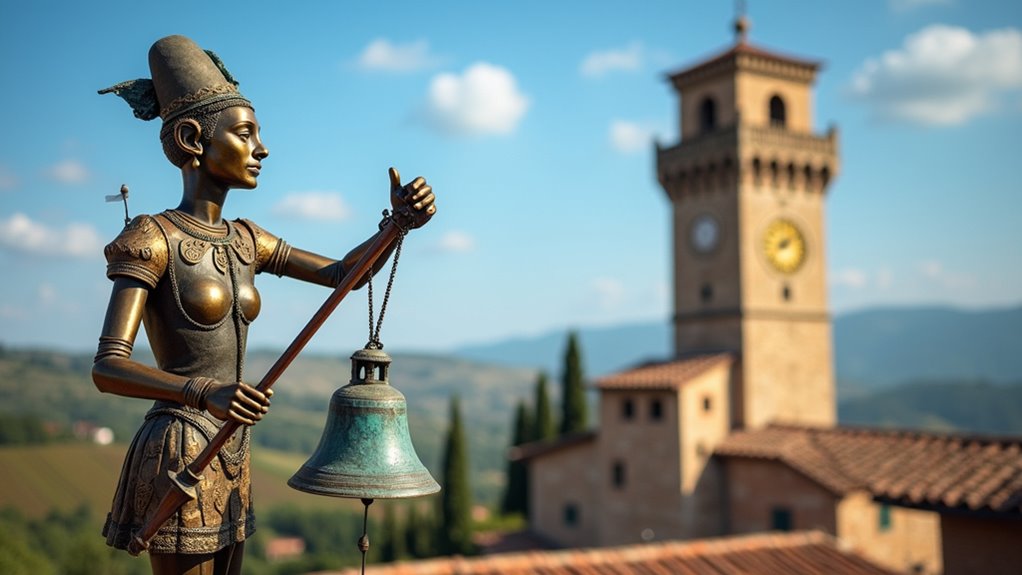
Every hour and quarter-hour, you’ll hear the distinctive chime of Pulcinella striking his bell from the medieval tower on Piazza Michelozzo—one of Montepulciano’s most charming free attractions.
This wooden automaton dressed in traditional white costume mechanically swings his stick to mark the time, delighting visitors with its whimsical performance.
You’ll find the Tower of Pulcinella near the Church of Sant’Agostino, positioned halfway along Via di Gracciano.
The commedia dell’arte figure dates back to the 17th century, brought from Naples by a Campanian priest. The tower itself showcases the town’s medieval architecture that characterizes Montepulciano’s historic streets.
Time your visit around the hour to catch the full show, then explore the picturesque square‘s cafes and shops.
It’s a perfect photo opportunity that captures Montepulciano’s theatrical spirit without spending a euro.
Hunt for Etruscan Artifacts at Palazzo Bucelli
While most visitors hunt for Renaissance masterpieces in Montepulciano, you’ll discover something far more ancient at Palazzo Bucelli—a treasure trove of Etruscan artifacts literally built into the building’s walls. Pietro Bucelli, an 18th-century antiquarian, embedded urns, inscriptions, and funerary objects he’d collected from nearby Chiusi directly into his palace’s lower façade.
You’ll spot centaurs, gorgons, winged horses, and rare Etruscan names written in Roman letters as you stroll past this free outdoor museum. The palace sits centrally near Piazza Grande, making it an easy addition to your walking route. The building itself resembles a treasure chest of aesthetic appeal with its unique archaeological façade.
This unusual archaeological display offers you a tangible connection between Montepulciano’s ancient Etruscan roots and Renaissance heritage—no admission fee required.
Catch Sunset From the Orfanotrofio Viewpoint
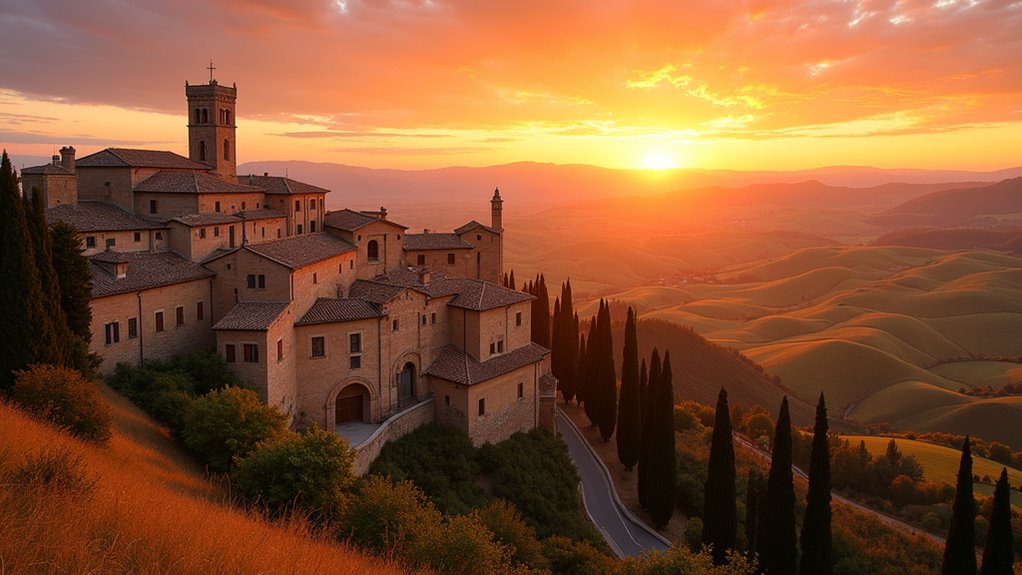
After exploring Montepulciano’s historic streets, you’ll want to end your day at the Orfanotrofio viewpoint for one of Tuscany’s most spectacular sunsets. Located near the historic Orfanotrofio Antoniano, this free viewpoint offers panoramic vistas across Val d’Orcia valley’s rolling hills, vineyards, and cypress-lined roads.
You’ll find the best vantage points along grassy patches and safe roadside areas—no official platforms exist. Arrive during golden hour for ideal lighting and bring comfortable shoes since the terrain’s uneven. Pack water and snacks for an impromptu picnic while watching the sun sink behind Tuscan hills.
The spot’s easily accessible from town center by foot, with parking available nearby. Just remember to respect the nearby orphanage’s privacy and prepare for crowds during peak sunset times. For photography enthusiasts, consider bringing a zoom lens to capture the full sweep of the winding cypress roads that make this area so iconic.
Duck Into the Civic Museum at Palazzo Neri Orselli
When you need a break from Montepulciano’s hillside walking, head to the Civic Museum at Palazzo Neri Orselli for an air-conditioned cultural escape that won’t break your budget. At just €6 per adult (including an English audio guide), you’ll explore one of the town’s rare surviving 14th-century Sienese buildings on Via Ricci.
The palace itself tells Montepulciano’s story through its brick façade and beautiful inner courtyard with loggia.
Inside, you’ll climb spiral staircases through four levels of exhibits spanning the 13th through 19th centuries. The collections showcase medieval and Renaissance pieces that highlight the historic rivalry between Siena and Florence. The museum is also known as Palazzo Ricci and stands as one of Montepulciano’s significant historic landmarks.
It’s perfectly positioned near Piazza Grande, so you can easily combine it with other attractions while staying cool during hot afternoons.
The Sum Up
Pack comfortable walking shoes since you’ll be climbing cobblestone streets and tower steps all day. Most attractions won’t break the bank—many churches are free, and wine tastings start around €10. You’ll cover everything easily in a day or two, but don’t rush the wine cellars or sunset viewpoint. Bring a camera for those cypress-lined roads, and remember that many sites close for lunch, so plan accordingly.