
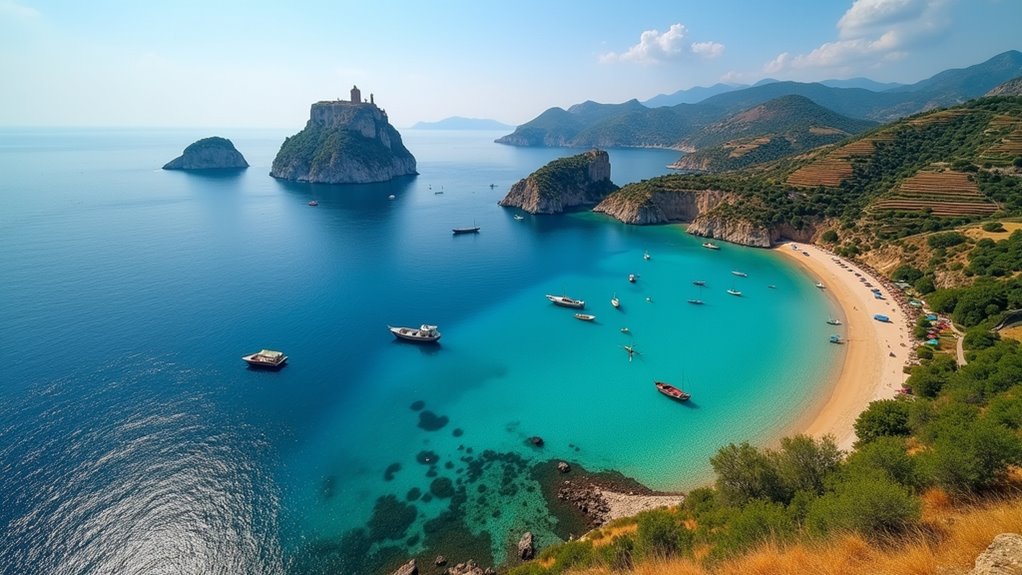
You don’t need a massive budget to discover Italy’s best-kept secret. The Tuscan Archipelago’s seven islands offer incredible experiences that most travelers completely overlook. From hiking ancient peaks to exploring underwater museums, you’ll find adventures here that rival the mainland’s famous attractions—but with fewer crowds and lower prices. Whether you’re drawn to Napoleon’s exile hideouts or pristine beaches that locals want to keep secret, these eight experiences will transform how you see Mediterranean island life.
- Hike Monte Capanne on Elba for the Best Island Views
- Explore Napoleon’s Portoferraio Residences and Fortresses
- Dive Capraia’s Underwater Archaeological Sites
- Wander Giglio Castello’s Medieval Streets and Saracen Tower
- Snorkel With Dolphins at Giannutri’s Secluded Coves
- Tour Rio Marina’s Iron Mining Heritage Sites
- Walk Among Roman Ruins on Remote Pianosa Island
- Beach-Hop Elba’s Southern Coast From Cavoli to Fetovaia
- The Sum Up
Hike Monte Capanne on Elba for the Best Island Views
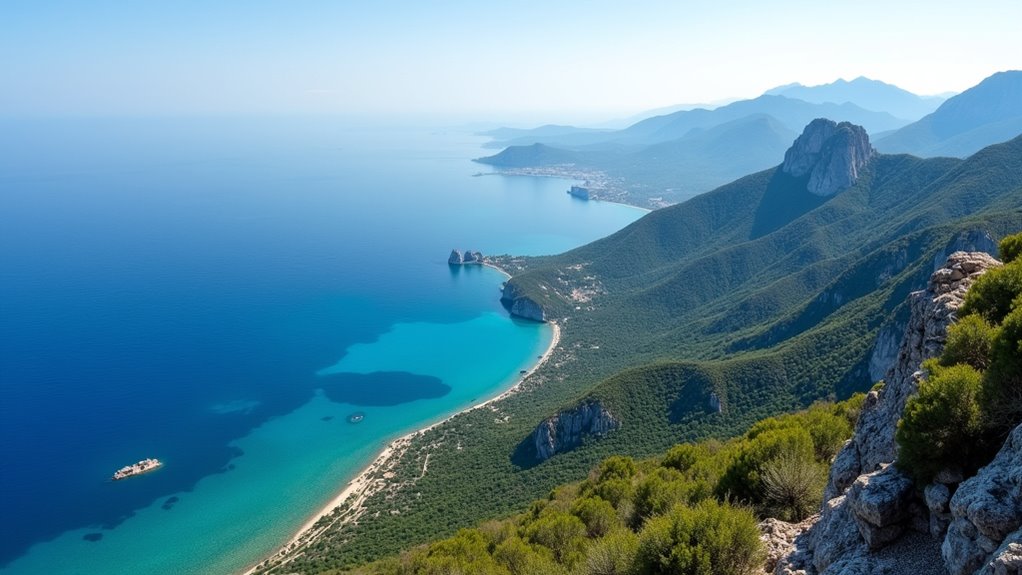
When you’re looking for the most spectacular views on Elba Island, Monte Capanne’s summit delivers an unbeatable 360-degree panorama that’ll make the challenging hike worthwhile.
At 1,019 meters, this demanding 3-hour climb from Marciana requires good fitness and sturdy boots for steep, rocky terrain.
You’ll save money by hiking instead of taking the €20 cable car, though consider the cable car for your descent if you’re feeling tired.
Pack water and snacks, plus check weather conditions beforehand since the summit gets windy.
The trail passes natural springs like Fonte Napoleone, where you can refill water bottles for free.
On clear days, you’ll spot neighboring islands including Corsica, Pianosa, and Montecristo.
The route covers 8.4 km with 640 meters of ascent and crosses small mountain streams that flow year-round.
Bring navigation tools since some sections are poorly marked.
Explore Napoleon’s Portoferraio Residences and Fortresses
Although Napoleon’s exile to Elba might seem like a historical footnote, his beautifully preserved residences and surrounding fortresses offer you an intimate glimpse into the deposed emperor’s daily life for just €5 per site.
Start at Palazzina dei Mulini, Napoleon’s official residence perched between two Renaissance forts in Portoferraio’s historic center. You’ll walk through his study, bedroom, and reception halls filled with Empire-style furnishings and his original military campaign bed.
Then visit Villa di San Martino, his private countryside retreat 5km away. The neoclassical villa features stunning frescoes, including the Egyptian Hall’s zodiac ceiling and the symbolic Room of the Doves. During his brief rule, Napoleon modernized the island’s agricultural methods and developed its infrastructure.
Don’t miss exploring Forte Stella and Forte Falcone, the defensive strongholds that protected Napoleon’s exile headquarters.
Dive Capraia’s Underwater Archaeological Sites
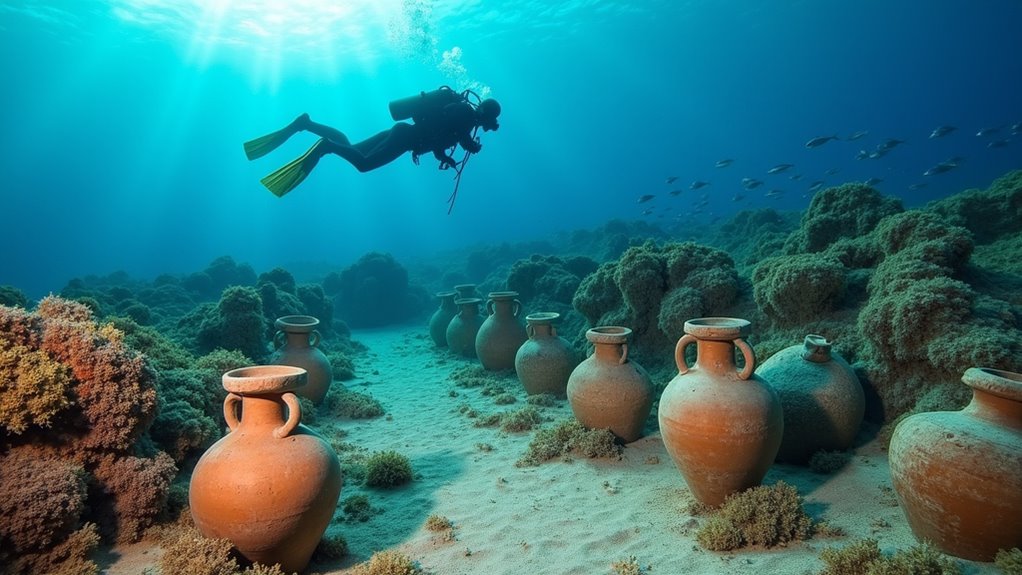
While most visitors stick to Capraia’s rugged coastline, you’ll discover an underwater museum beneath the waves where ancient Roman merchant ships rest alongside their scattered cargo of amphorae. You can explore these archaeological sites through Capraia Diving Service Ltd., which offers equipment rentals and guided dives to Roman wrecks near Capo Sant’Andrea at around 50 meters depth.
The crystal-clear waters provide up to 40 meters visibility, making artifact identification easier. You’ll find amphorae deposits from Greek-Italic to Roman Imperial periods scattered across depths of 140 to 570 meters.
Besides archaeological treasures, you’ll encounter vibrant coral reefs, underwater caves, and diverse marine life within the Tuscan Archipelago National Park‘s protected waters. As the third largest island in the Tuscan Archipelago National Park, Capraia offers extensive underwater terrain to explore with rich biodiversity. Book guided tours for safety and proper site preservation.
Wander Giglio Castello’s Medieval Streets and Saracen Tower
Perched 400 meters above the Tyrrhenian Sea, Giglio Castello transports you back to the 12th century through its maze of narrow stone streets and towering medieval walls.
You’ll discover ten defensive towers—seven rectangular, three circular—built by Pisans and later reinforced by the Medici family against Saracen pirates.
As you wander the compact village, notice the arches and balzuoli (external stairways) that define the streetscape.
The defensive layout deliberately confuses invaders with limited access points and intricate gate systems featuring ante-chambers. Following the last major raid, Ferdinand III ordered construction of a water cistern to ensure the fortress could withstand prolonged sieges.
Don’t miss the imposing Rocca Aldobrandesca fortress dominating the settlement.
Near Giglio Porto, you’ll find Torre del Saraceno, a 16th-century watchtower that complemented the castle’s defenses.
These free-to-explore medieval streets offer an authentic glimpse into centuries of island fortification.
Snorkel With Dolphins at Giannutri’s Secluded Coves
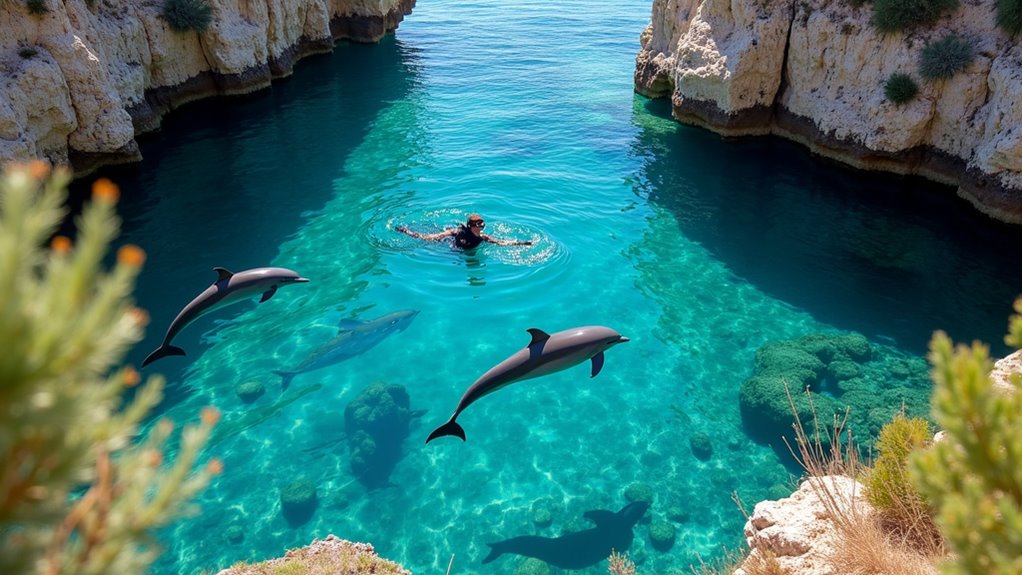
From Giglio’s medieval fortifications, you’ll find an entirely different adventure awaits at nearby Giannutri, where crystal-clear waters and protected marine habitats create perfect conditions for snorkeling alongside dolphins.
The island sits within the Cetacean Sanctuary, where bottlenose and spinner dolphins frequently appear during snorkeling excursions.
You’ll explore prime spots like Punta Secca, Le Piscine, and Cala Ischiaiola, where limestone cliffs create incredibly transparent waters.
Equipment rentals are available locally, keeping costs manageable.
Full-day tours from Porto Ercole or Giglio Porto last about eight hours, combining snorkeling with dolphin watching.
The Posidonia seagrass meadows support rich marine life, while ancient Roman shipwrecks add historical intrigue to your underwater exploration. Access requires a €5.50 daily fee payable to park authorities, which helps maintain the protected marine environment.
Professional guides ensure you’re following park regulations while maximizing wildlife encounters.
Tour Rio Marina’s Iron Mining Heritage Sites
As you leave behind Giannutri’s underwater wonders, Rio Marina on Elba Island offers a completely different adventure through centuries of iron mining history that shaped Mediterranean civilization.
You’ll discover deposits exploited since Etruscan times, when the island earned its nickname “Aithalia” from countless smoking furnaces.
The Mining Park’s guided tours let you explore via miniature train or walking excursions through open-air sites where miners once hand-drilled and blasted magnetite and hematite.
You can visit authentic tunnels and see life-size miner shelter replicas that showcase the harsh working conditions.
Don’t miss the Mining Museum in Palazzo del Burò, displaying original tools, vintage photographs, and mineral collections.
These affordable experiences reveal how this small island powered Mediterranean ironworking for over two millennia. The mining operations officially ceased in 1980, ending centuries of continuous extraction that had made Elba one of the Mediterranean’s most important iron ore sources.
Walk Among Roman Ruins on Remote Pianosa Island
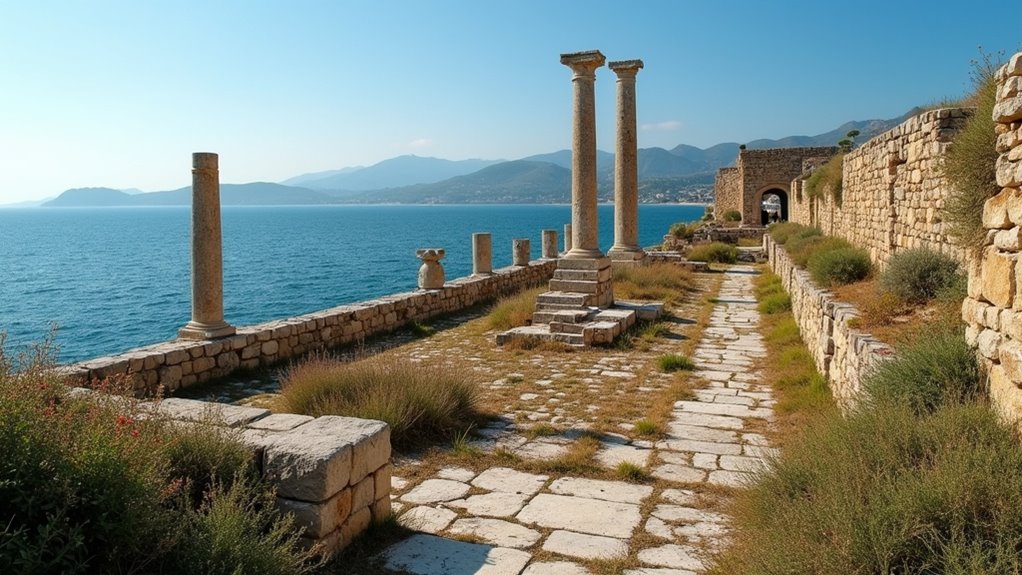
While Rio Marina showcases industrial heritage, Pianosa Island transports you back two millennia to walk through remarkably preserved Roman ruins scattered across this flat, windswept landscape.
You’ll explore Villa Agrippa, where Emperor Augustus’s exiled grandson lived from 7-14 AD, featuring stunning black and white mosaic floors decorated with mythological sea creatures. The villa’s thermal baths, called “Bagni di Agrippa,” and marble walls reveal Roman luxury even in exile.
Don’t miss the extensive catacombs beneath the village—covering 3.5 hectares, they’re among Italy’s largest early Christian burial sites north of Rome. You’ll discover Roman fish-farming ponds, saltworks, and an ancient aqueduct system that sustained this remote settlement.
Tours include both surface ruins and underground galleries, offering incredible value for history enthusiasts. Access is limited to 250 travelers per day through organized excursions from Elba, ensuring this protected archaeological site maintains its pristine condition.
Beach-Hop Elba’s Southern Coast From Cavoli to Fetovaia
Elba’s southern coast delivers the island’s finest sandy beaches, where you can spend days hopping between distinctive coves without breaking your budget. Start at Cavoli, where younger crowds gather on golden sand with crystal-clear water—perfect for swimming and easily reached by local bus.
Next, drive to Fetovaia’s stunning turquoise bay surrounded by granite cliffs. The calm, shallow waters make it family-friendly, though you’ll need to walk from parking areas down a steep road.
Don’t miss Marina di Campo, Elba’s longest beach at 1,400 meters, offering shallow waters ideal for kids plus nearby shops and restaurants.
For quieter vibes, head to smaller Seccheto with its natural rock pools and minimal crowds. Consider stopping at Innamorata bay for its romantic sandy setting and spectacular sunset views. Each beach offers different amenities and atmospheres while maintaining that signature southern coast charm.
The Sum Up
You’ll find the Tuscan Archipelago delivers incredible value for your vacation budget. These eight experiences won’t break the bank—many hiking trails and beaches are free, while ferry passes between islands offer affordable multi-day exploration. Pack your snorkel gear, comfortable walking shoes, and a sense of adventure. You’re getting centuries of history, pristine nature, and unforgettable memories without the crowds or premium prices of mainland Tuscany’s tourist hotspots.