
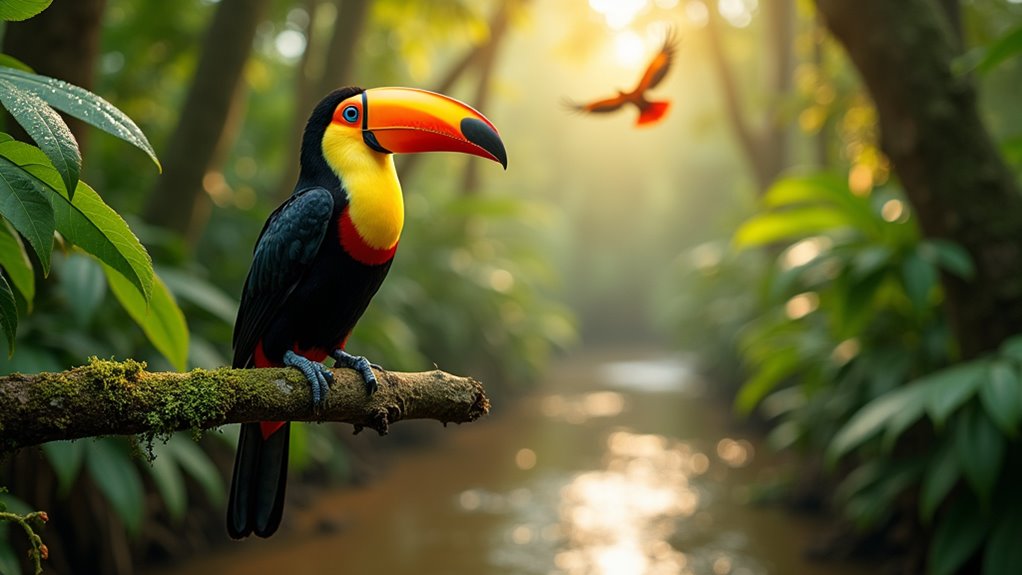
You’ll want to witness the stunning Meeting of Waters near Manaus, take night safaris to spot caimans, and experience dawn clay lick viewing in Tambopata where hundreds of colorful macaws gather. Don’t miss canopy walks at Tahuayo Lodge, swimming with pink river dolphins at Janauacá Lake, and exploring Anavilhanas National Park’s 400+ island system. Try piranha fishing with indigenous communities and join guided jungle treks. Multi-day Rio Negro cruises offer extensive wildlife encounters that reveal the rainforest’s hidden treasures.
- Witness the Meeting of the Waters Near Manaus
- Take a Night Safari to Spot Caimans and Nocturnal Wildlife
- Experience Clay Lick Viewing at Dawn in Tambopata
- Walk the Canopy Bridges and Ziplines at Tahuayo Lodge
- Go Pink River Dolphin Swimming at Janauaca Lake
- Explore Yasuni National Park for World-Class Birdwatching
- Join Guided Jungle Treks With Local Nature Experts
- Try Piranha Fishing With Indigenous Communities
- Visit Anavilhanas National Park’s Island System
- Take a Multi-Day River Cruise on the Rio Negro
- The Sum Up
Witness the Meeting of the Waters Near Manaus
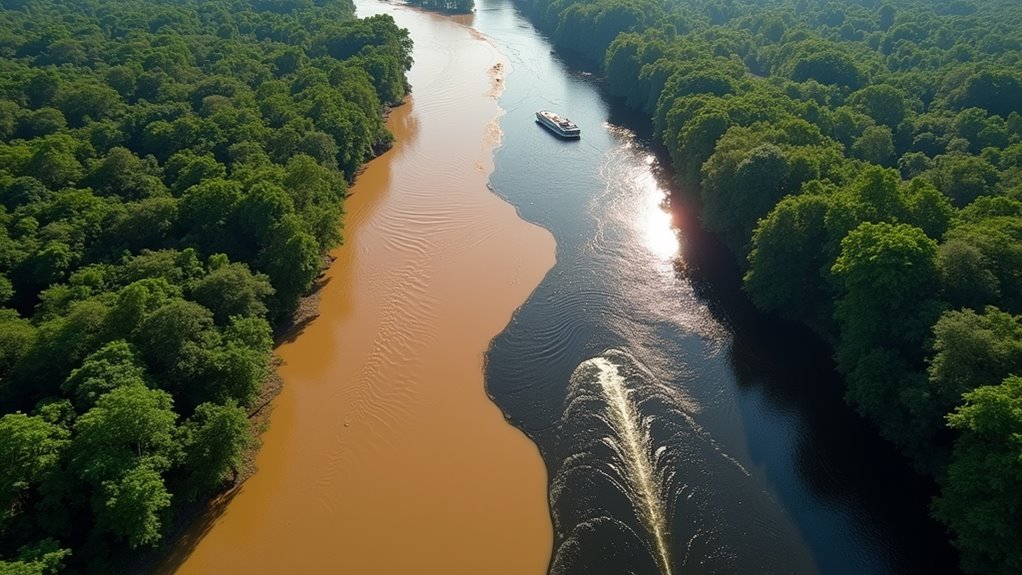
When you visit the Amazon near Manaus, you’ll witness one of nature’s most striking visual phenomena: the Meeting of the Waters, where the blackwater Rio Negro and the pale, sandy Solimões River flow side by side without immediately mixing.
This dramatic contrast exists because of temperature, density, and flow velocity differences between the rivers. The distinct boundary persists for approximately 6 kilometers before gradually blending downstream.
You’ll access this confluence by boat from Manaus—it’s about 20 kilometers from the city center, requiring 30-60 minutes of river travel. Most operators offer half-day tours that navigate along the color boundary. Tours often include opportunities to observe local flora and fauna while navigating to the confluence.
Visit on clear, sunny days for ideal viewing conditions, as strong light enhances the contrast between the dark and sandy waters.
Take a Night Safari to Spot Caimans and Nocturnal Wildlife
As darkness falls over the Amazon rainforest, you’ll discover an entirely different world of wildlife activity during guided night safaris that reveal caimans, nocturnal mammals, and elusive reptiles hidden throughout the day.
You’ll spot spectacled and black caimans along riverbanks through their distinctive eyeshine under spotlight beams during boat excursions. Professional naturalist guides lead small groups of 6-12 guests on 1-2 hour adventures, using regulated lighting to minimize wildlife stress.
Night walks from jungle lodges reveal active amphibians, tree frogs, and arboreal mammals in humid conditions. Blackwater creeks and oxbow lakes in protected areas offer prime viewing opportunities, especially during the dry season when lower water levels concentrate wildlife. Many tours include visits to specialized clay licks where you can observe nocturnal animals gathering to consume essential minerals.
You’ll experience the rainforest’s nocturnal soundscape while learning conservation practices that protect these vulnerable ecosystems.
Experience Clay Lick Viewing at Dawn in Tambopata
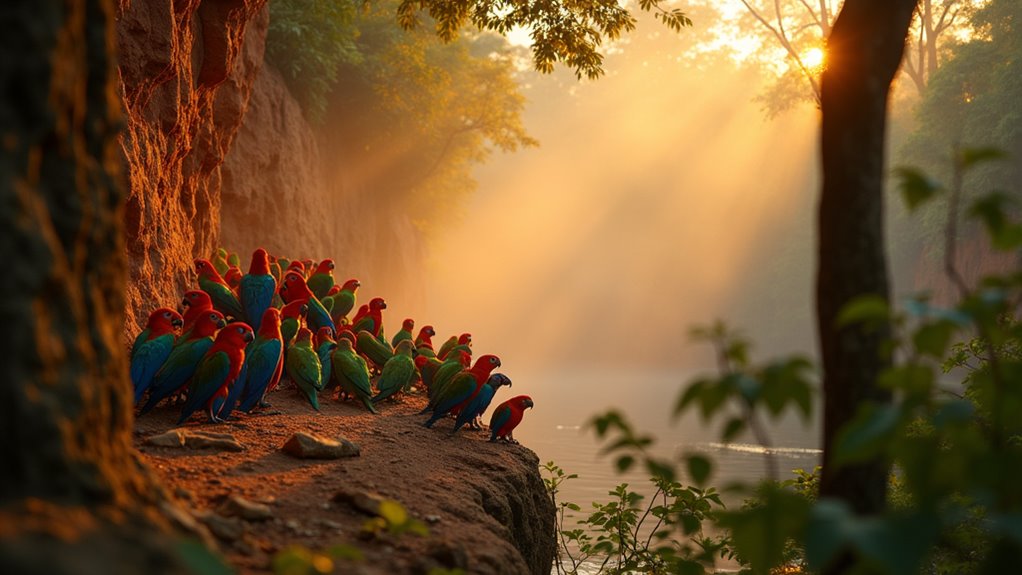
Before sunrise breaks over Tambopata’s rainforest canopy, you’ll position yourself on a sandbar or river island approximately 80 meters from towering clay banks where hundreds of macaws and parrots gather for one of the Amazon’s most spectacular wildlife displays.
Your 4:30 a.m. departure leads to prime viewing at sites like Chuncho clay lick, where up to 15 species create deafening choruses while consuming essential minerals.
You’ll witness their staged approach: assembly in nearby trees, aerial reconnaissance flights, then mass landings once predators are ruled out.
The “living rainbow” of scarlet and blue-and-yellow macaws against golden morning light provides extraordinary photographic opportunities. The birds spend approximately 30-45 minutes actively mining clay from the exposed riverbank before departing to continue their daily foraging routines.
Visit during dry months from April to November for peak activity and ideal clay access conditions.
Walk the Canopy Bridges and Ziplines at Tahuayo Lodge
Deep within the Tamshiyacu-Tahuayo Regional Conservation Area near Iquitos, you’ll discover the Amazon’s longest canopy zipline system at Tahuayo Lodge.
This system features four ziplines that connect six elevated platforms built around massive emergent trees reaching 28 meters above the jungle floor. You’ll access this remarkable system via boat from the lodge, then experience four separate zipline rides through the pristine rainforest canopy.
The 500-meter walkway connects 14 emergent trees at 35 meters high, offering unparalleled wildlife viewing opportunities among over 600 recorded bird species.
Safety features include dual cables and full harnesses managed by trained guides. For those seeking an elevated challenge, you can reach the canopy using a Monkey Ladder, climbing ascenders, or pulley hoist system.
The system’s unique “canoe bridge” spans seasonally flooded forest, creating an unforgettable perspective of this biodiverse ecosystem that’s included with your lodge stay.
Go Pink River Dolphin Swimming at Janauaca Lake
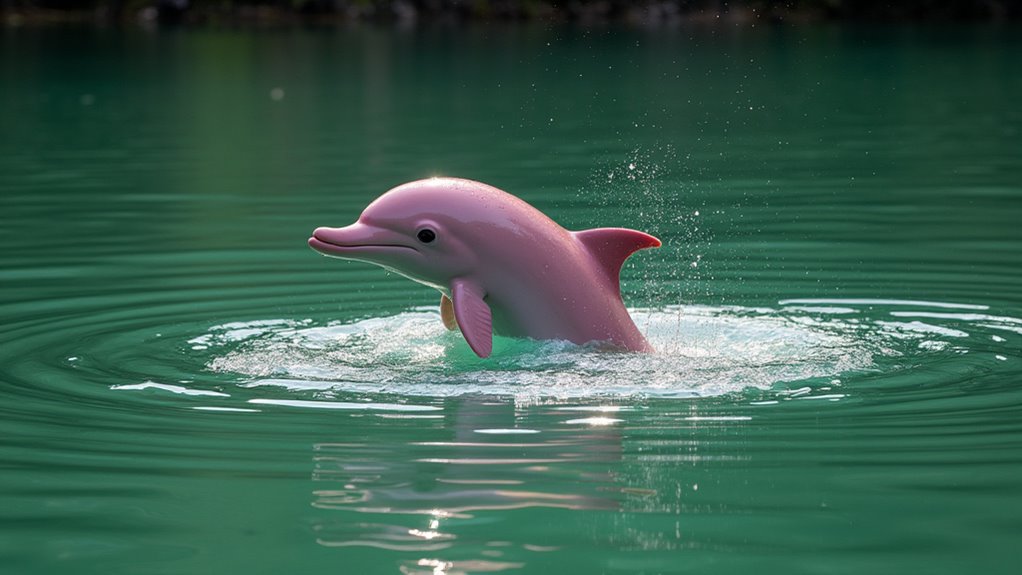
When you venture to Janauacá Lake southwest of Manaus, you’ll encounter one of the Amazon’s most extraordinary wildlife experiences: swimming alongside pink river dolphins in their natural habitat. These massive freshwater cetaceans—reaching 2.7 meters and 160 kilograms—develop their distinctive pink coloration from dense blood vessels and scar tissue as they age.
You’ll access this lake system via river boat from Manaus on full-day or multi-day tours.
The dolphins congregate near confluences and lake mouths where fish populations thrive, using powerful echolocation to hunt over 50 prey species in the turbid waters. Their unfused cervical vertebrae allow them to turn their heads up to 90 degrees, helping them navigate through flooded forest areas with remarkable agility.
Follow ethical guidelines: don’t touch their blowholes, grab fins, or chase them. Avoid loud splashing that causes stress.
These endangered animals face severe threats from habitat loss, pollution, and climate change—respecting their space guarantees sustainable encounters.
Explore Yasuni National Park for World-Class Birdwatching
Nestled in Ecuador’s Amazon basin, Yasuni National Park stands as one of Earth’s premier birdwatching destinations, harboring over 600 recorded species within its pristine rainforest boundaries. You’ll encounter incredible diversity across 50+ bird families, from 50 antbird species to 37 colorful tanagers and 80 flycatcher varieties.
Target iconic species like the elusive Harpy Eagle, prehistoric Hoatzin along oxbow lakes, and the spectacular Guianan Cock-of-the-rock.
Terra firme forest trails reveal skulking antbirds, while canopy towers provide access to toucans and cotingas impossible to spot from ground level. Ecuador’s remarkable positioning between Andean forests and Amazonian lowlands creates this exceptional biodiversity hotspot.
Start birding at dawn when activity peaks. Hire local guides with scopes and call knowledge—they’ll dramatically increase your sighting success. Bring quality binoculars and regional field guides to navigate this overwhelming avian paradise effectively.
Join Guided Jungle Treks With Local Nature Experts
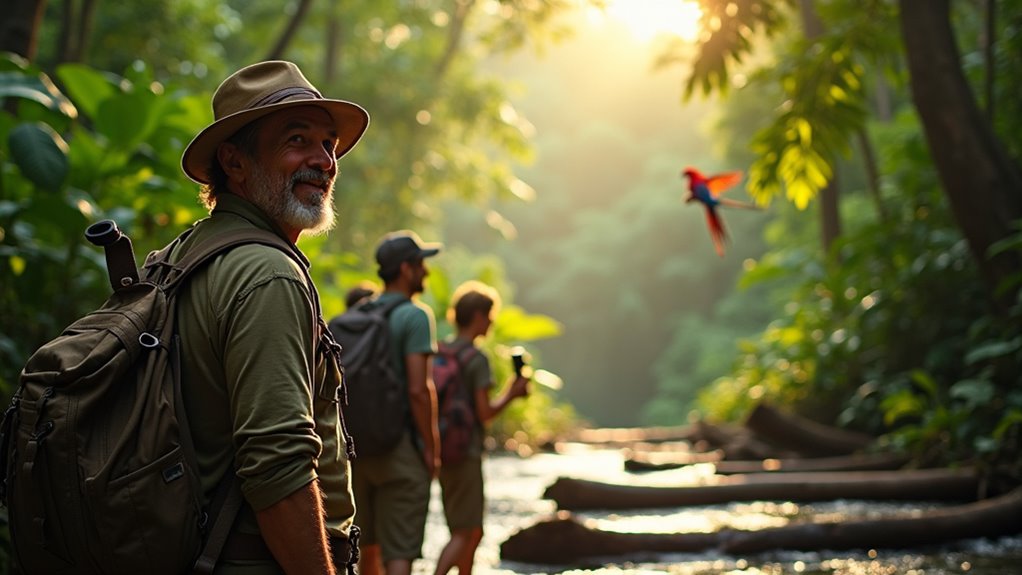
Beyond spotting extraordinary birds from canopy towers and forest trails, you’ll want to explore deeper into Yasuni’s complex ecosystem alongside expert local guides who’ve spent lifetimes traversing these dense rainforests. These naturalists dramatically increase your wildlife spotting chances while sharing invaluable knowledge about medicinal plants, animal behavior, and survival techniques passed down through generations.
You’ll join small groups of 8-12 participants for enhanced safety and minimal environmental impact. Professional guides navigate safely through terrain that can disorient independent trekkers within minutes, carrying essential communication equipment and medical supplies.
They’ll teach you ecosystem dynamics, forest stratification, and Leave No Trace practices while adjusting routes based on weather conditions and wildlife activity. Evening programs feature ecology talks and culture experiences that deepen your understanding of rainforest conservation.
Your participation directly supports conservation efforts and provides sustainable income alternatives to logging for local communities.
Try Piranha Fishing With Indigenous Communities
While piranhas often dominate sensational headlines about Amazonian dangers, you’ll discover a completely different reality when fishing alongside indigenous communities who’ve coexisted with these misunderstood fish for millennia. These skilled fishermen will teach you traditional handline techniques using fresh bait like fish viscera or crabs in shallow tributaries where piranhas congregate.
You’ll need sturdy gear—rods rated for 20+ pounds with steel leaders and 6/0 hooks to handle their powerful jaws and razor-sharp teeth. Always use pliers when removing hooks; never handle piranhas directly. Your guides understand that most of the 30+ piranha species aren’t aggressive toward humans. For many young locals, catching a piranha represents a rite of passage into adulthood and fishing mastery.
The reward? Sampling “caldo de piranha,” a nutritious soup that’s been sustaining communities for generations while experiencing authentic Amazonian culture.
Visit Anavilhanas National Park’s Island System
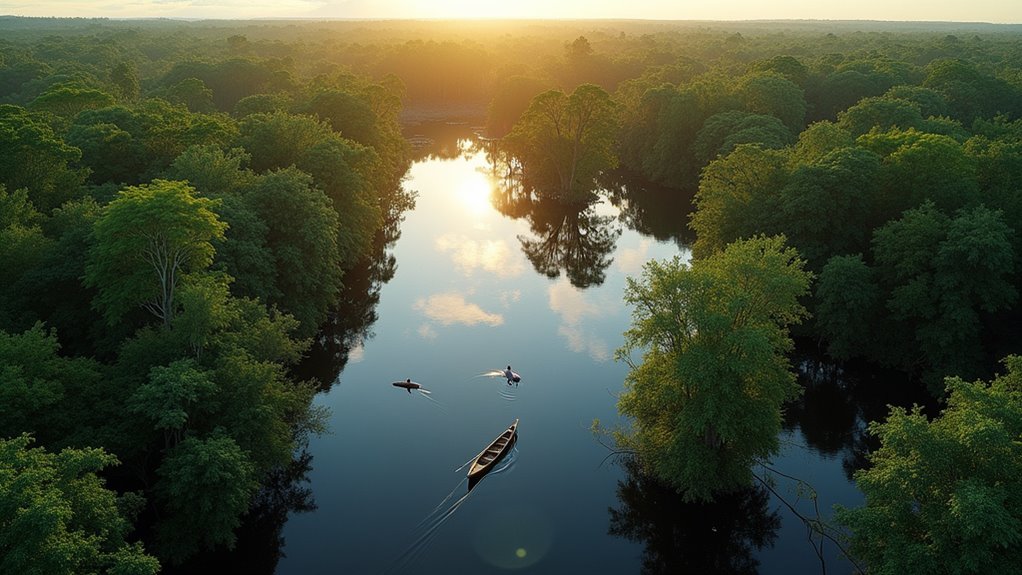
Just 100 kilometers upriver from Manaus, you’ll find Anavilhanas National Park—home to the world’s second-largest river archipelago with over 400 islands scattered across the dark waters of the Rio Negro.
This UNESCO World Heritage Site transforms dramatically with seasonal floods, creating a labyrinth of waterways that rise 8-12 meters between dry and wet seasons.
Navigate narrow channels called paranás by boat to spot pink river dolphins, four caiman species, and 14 of the Amazon’s 15 freshwater turtle species.
During high water, you’ll paddle through flooded forests where treetops emerge from submerged landscapes.
When waters recede, exposed beaches provide perfect swimming spots.
The park protects jaguars, giant otters, and Amazon manatees across its 350,000 hectares of pristine wilderness. The park’s remarkable fish diversity includes 368 species, representing 82% of all recorded species in the Rio Negro.
Take a Multi-Day River Cruise on the Rio Negro
For a more immersive Amazon experience, set out on a multi-day Rio Negro cruise that carries you deep into the world’s largest river basin. These 4-7 day expeditions typically travel 200-230 miles upstream from Manaus aboard intimate vessels carrying just 18-30 passengers.
You’ll enjoy en suite cabins, regional cuisine, and expert naturalist guides.
Daily excursions via small launches target pink river dolphins, primates, sloths, and diverse birdlife including macaws and herons. Night trips spotlight caimans and other nocturnal species. Forest walks explore flooded igapó and terra firme ecosystems, while community visits reveal traditional Amazonian lifestyles. The journeys also navigate through the varzea forest ecosystem, where specialized wildlife and fish like piranhas thrive in the floodplain environment.
Some itineraries include ancient petroglyphs and colonial ruins at Airão Velho. Most cruises conclude at the Meeting of Waters, where Rio Negro meets the Amazon River.
The Sum Up
You’ve got the blueprint for an unforgettable Amazon adventure. Don’t try to cram everything into one trip—the rainforest demands patience and respect. Book with reputable local guides who know the terrain and wildlife patterns. Pack light, waterproof gear and prepare for humidity. Whether you’re spotting caimans at night or swimming with pink dolphins, you’ll return home with stories that’ll last a lifetime. The Amazon won’t disappoint if you come prepared.