

Travelers often find themselves torn between Hoi An’s UNESCO-protected Ancient Town and the surrounding countryside’s hidden gems. This Vietnamese coastal city doesn’t require a hefty budget to access its most memorable experiences – from floating lanterns down the Thu Bon River to cycling through emerald rice paddies. The real challenge isn’t finding things to do, but deciding which authentic encounters deserve precious vacation days when temple visits, island escapes, and culture all compete for attention.
- Wander the Japanese Covered Bridge and Ancient Town Streets
- Take a Lantern-Lit Evening Stroll Along Thu Bon River
- Cycle Through Rice Paddies to Rural Villages and Temples
- Explore the Incense-Filled Phuc Kien Assembly Hall
- Browse Central Market for Fresh Produce and Local Life
- Day Trip to My Son Sanctuary’s Ancient Cham Temples
- Swim and Eat Seafood at An Bang Beach
- Visit Tan Ky House and Historic Heritage Buildings
- Take a Boat Tour to Cham Islands for Snorkeling
- Climb the Marble Mountains Near Danang
- Experience Ba Mu Temple’s Lily Pond and Quiet Courtyards
Wander the Japanese Covered Bridge and Ancient Town Streets
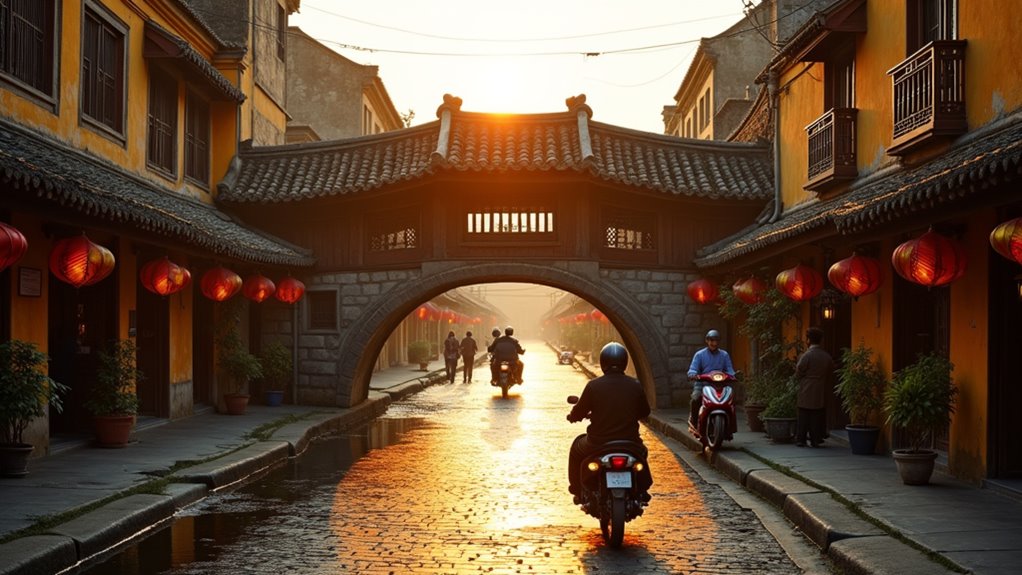
Every visitor’s journey through Hoi An starts with the iconic Japanese Covered Bridge, a 400-year-old architectural gem that’s become the town’s most recognizable symbol. This charming wooden bridge connects the town’s main sections while housing a small temple dedicated to weather gods.
From there, wandering the Ancient Town‘s narrow streets reveals centuries of history at every turn. Travelers will discover yellow-painted timber houses showcasing Chinese, Japanese, and French architectural influences from the 15th-19th centuries.
The UNESCO World Heritage site comes alive through its colorful hanging lanterns that transform ordinary alleyways into magical pathways.
Key stops include the well-preserved Tan Ky ancestral house and ornate Phuc Kien Assembly Hall. Most heritage sites charge small entrance fees, making exploration affordable for budget-conscious visitors.
Take a Lantern-Lit Evening Stroll Along Thu Bon River
When the sun sets over Hoi An, the Thu Bon River transforms into an enchanting waterway lined with glowing lanterns that reflect off the gentle current. Visitors can walk along the riverfront promenade and Cau An Bridge for stunning views of traditional boats adorned with colorful lights drifting peacefully downstream.
The evening stroll costs nothing but offers priceless photo opportunities and culture. Local vendors sell floating candle boats for a few thousand dong, allowing travelers to participate in the nightly lantern ritual by releasing their wishes onto the water.
The best viewing spots are near the Japanese Covered Bridge and central waterfront area, where the lantern displays are most vibrant and the atmosphere most festive.
Cycle Through Rice Paddies to Rural Villages and Temples
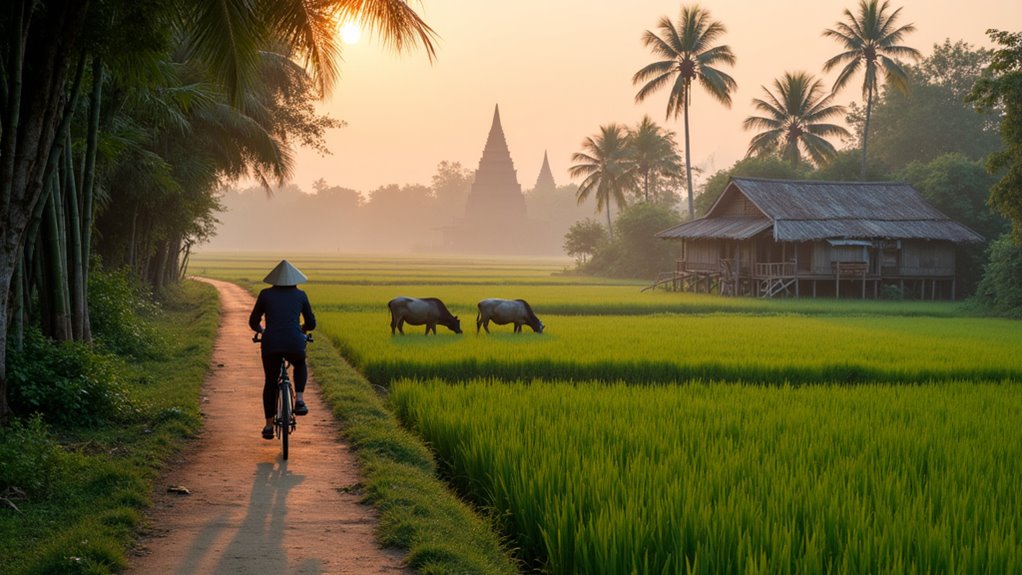
Beyond the bustling Ancient Town, Hoi An’s countryside reveals a different side of Vietnam through winding cycling paths that lead past emerald rice paddies, traditional villages, and hidden temples. Most hotels offer complimentary bicycles, making this an affordable way to explore beyond the tourist center.
Cyclists can spot water buffalo grazing in fields while pedaling through authentic Vietnamese agricultural landscapes. The routes connect multiple Buddhist temples and pagodas, where visitors experience local spirituality and historic architecture firsthand.
Village encounters provide glimpses into traditional daily life that’s remained unchanged for generations.
These cycling adventures offer flexibility to discover hidden gems at your own pace. The peaceful rural setting contrasts beautifully with Hoi An’s busy streets, creating memorable experiences without expensive tour costs.
Explore the Incense-Filled Phuc Kien Assembly Hall
While Hoi An’s temples offer spiritual refuge, the Phuc Kien Assembly Hall stands out with its dramatic incense-filled atmosphere and intricate Chinese architecture. Built by Chinese merchants from Fujian province, this 17th-century hall showcases elaborate dragon carvings and traditional feudal design elements that’ll transport visitors back centuries.
The hall’s most striking feature is the thick clouds of incense smoke from countless burning cones, creating an almost mystical ambiance. Visitors can admire the detailed woodwork, colorful murals, and ornate altar dedicated to Thien Hau, the sea goddess.
The temple’s courtyard provides peaceful moments for reflection.
Entry costs just a few dollars, making it budget-friendly. It’s easily accessible by bike from the Ancient Town center, and early morning visits offer the most atmospheric lighting for photography.
Browse Central Market for Fresh Produce and Local Life

After soaking in the spiritual atmosphere of ancient temples, travelers can experience Hoi An’s vibrant daily life at Central Market, where locals shop for everything from dragon fruit to fresh catch of the day. This bustling hub opens early morning when vendors arrange colorful displays of tropical fruits, vegetables, and aromatic spices.
Visitors can wander through dedicated sections showcasing Vietnam’s agricultural bounty – from ripe mangoes and papayas to exotic herbs used in traditional cooking. The seafood area features the day’s fresh catches, while meat vendors display their selections alongside chattering locals negotiating prices.
The market provides authentic culture without entrance fees, making it perfect for budget-conscious travelers. It’s an ideal spot to practice basic Vietnamese phrases, observe daily routines, and photograph the vibrant chaos of local commerce in action.
Day Trip to My Son Sanctuary’s Ancient Cham Temples
Since most travelers crave experiences beyond Hoi An’s bustling markets, a day trip to My Son Sanctuary offers an incredible journey through Vietnam’s ancient Cham civilization. This UNESCO World Heritage site sits about 40 kilometers from Hoi An and showcases temple ruins dating from the 7th to 13th centuries.
Visitors can explore dozens of red brick towers and sanctuaries that once served as the spiritual center of the Cham Kingdom. The complex features intricate Hindu carvings and architectural details that survived centuries of warfare and natural weathering.
Most tour operators offer affordable half-day or full-day trips from Hoi An, including transportation and guided commentary. Early morning departures help beat the heat and crowds.
Budget travelers can also reach My Son via local buses for a fraction of organized tour costs.
Swim and Eat Seafood at An Bang Beach
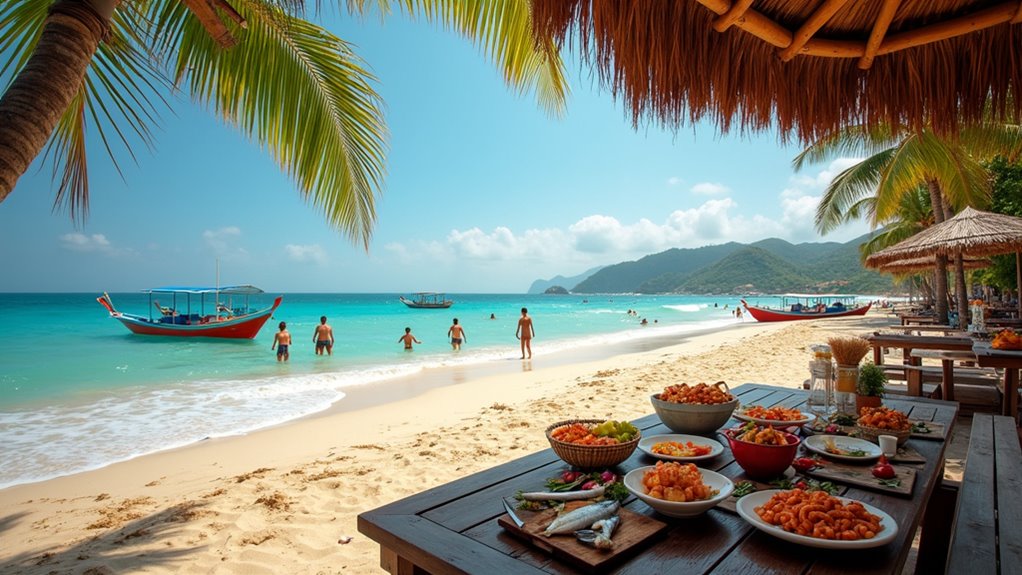
After exploring ancient temples and historical sites, travelers often seek relaxation by the water, and An Bang Beach delivers exactly that just 10 minutes from Hoi An’s Ancient Town. This sandy stretch offers clear waters perfect for swimming and cooling off from Vietnam’s heat.
The beach’s real draw lies in its seafood restaurants lining the shore. Fresh catches arrive daily, and prices remain reasonable compared to tourist-heavy areas. Visitors can enjoy grilled fish, prawns, and crab while sitting at beachside tables with ocean views.
Local eateries serve cold beer and traditional Vietnamese dishes alongside international options.
Most travelers rent bicycles from their hotels and cycle to the beach, making it an affordable day trip. The laid-back atmosphere provides the perfect counterbalance to Hoi An’s bustling Ancient Town.
Visit Tan Ky House and Historic Heritage Buildings
While most visitors admire Hoi An’s architecture from the streets, stepping inside Tan Ky House reveals how wealthy merchant families actually lived during the town’s trading heyday. This 200-year-old ancestral home showcases Chinese, Japanese, and Vietnamese architectural elements through its carved wooden furniture, mother-of-pearl inlays, and traditional courtyard design.
Visitors can explore five heritage sites with a single ticket purchased at the tourist office for around 120,000 VND. Besides Tan Ky House, the pass includes access to assembly halls, museums, and other historic homes.
Each building tells stories of Hoi An’s multicultural past through detailed woodwork, ancient artifacts, and preserved living spaces. These heritage buildings offer respite from crowded streets while providing authentic glimpses into centuries-old trading traditions and family life.
Take a Boat Tour to Cham Islands for Snorkeling

Beyond exploring Hoi An’s historic architecture, travelers can escape to the pristine waters surrounding Cham Islands for world-class snorkeling adventures. This group of eight islands offers crystal-clear waters teeming with colorful marine life, making it perfect for underwater exploration.
Budget-friendly boat tours typically include round-trip transportation, snorkeling equipment, and lunch, providing excellent value for day-trippers. The islands’ protected coral reefs showcase vibrant fish species and underwater landscapes that’ll captivate both beginners and experienced snorkelers.
Most tours depart from Hoi An’s riverfront in the morning, allowing visitors to maximize their time exploring multiple snorkeling spots. The pristine beaches also provide opportunities for swimming and relaxation between underwater sessions.
It’s an ideal escape from the bustling Ancient Town while experiencing Vietnam’s stunning coastal beauty.
Climb the Marble Mountains Near Danang
Just a short drive from Hoi An, the Marble Mountains rise dramatically from the coastal plains near Danang, offering adventurous travelers a perfect blend of natural beauty and spiritual discovery. These five limestone hills contain hidden caves, ancient pagodas, and Buddhist temples carved directly into the rock formations.
Visitors can climb stone steps to explore atmospheric caves filled with statues and shrines, while panoramic viewpoints reward the effort with sweeping views of Danang’s coastline and beaches below. The mountains are easily accessible by motorbike or taxi from Hoi An, making them an ideal half-day excursion.
Entry fees remain budget-friendly, and the site provides excellent photo opportunities combining Vietnam’s natural landscapes with centuries-old spiritual architecture. Early morning visits offer cooler temperatures and fewer crowds.
Experience Ba Mu Temple’s Lily Pond and Quiet Courtyards
After exploring limestone peaks and coastal vistas, travelers seeking spiritual tranquility will find Ba Mu Temple offers a completely different but equally rewarding experience.
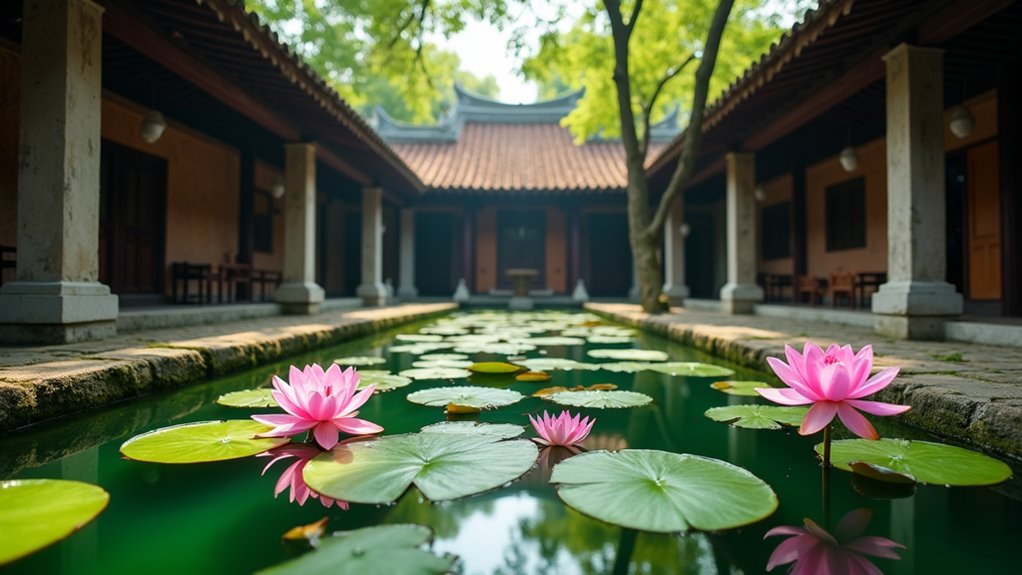
Dating back to 1626, this historic temple creates an atmosphere of deep contemplation with its incense-filled courtyards and reflective lily pond that mirrors the sky above.
Visitors can wander through quiet spaces where locals come to pray, observing traditional Buddhist practices firsthand.
The temple’s serene lily pond serves as a focal point for meditation and photography, while the surrounding courtyards provide peaceful corners for reflection.
Entry is typically free, making it perfect for budget-conscious travelers.
The temple’s proximity to Hoi An‘s center allows easy access by bicycle, combining spiritual exploration with the town’s eco-friendly transportation options.