
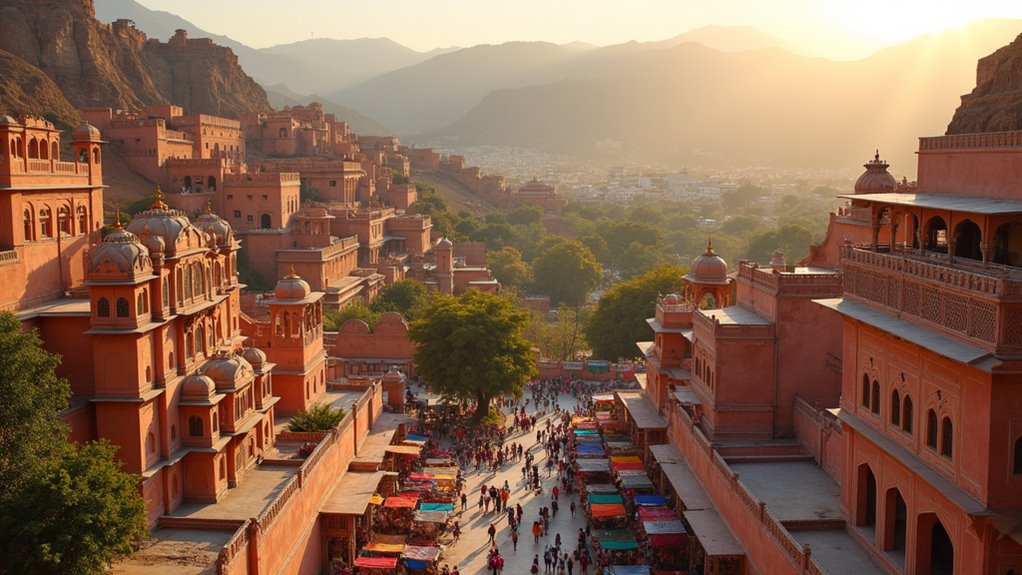
Travelers seeking authentic experiences in India’s Pink City often overlook Jaipur’s lesser-known treasures while rushing between famous landmarks. The city’s maze-like bazaars hide artisan workshops where centuries-old techniques still flourish, while ancient astronomical instruments reveal secrets that modern technology can’t match. Smart visitors who venture beyond the typical tourist trail discover that Jaipur’s most mesmerizing moments happen in unexpected corners—from temple monkeys at sunrise to rooftop views that cost nothing but reward everything.
- Climb Up to Amber Fort’s Mirrored Halls and Courtyards
- Wander Through the Pink City’s Grid-Planned Old Quarter
- Marvel at Hawa Mahal’s 953 Honeycomb Windows
- Explore the World’s Largest Stone Sundial at Jantar Mantar
- Photograph the Floating Jal Mahal Water Palace
- Visit the Monkey-Filled Springs at Galta Ji Temple
- Discover Jaigarh Fort’s Massive Jaivana Cannon
- Tour the Royal Rooms of City Palace Complex
- Catch Sunset Views From Nahargarh Fort
- Browse Johari Bazaar’s Jewelry and Textile Stalls
- Stroll Through Sisodia Rani’s Terraced Gardens
- See Ancient Artifacts at Albert Hall Museum
Climb Up to Amber Fort’s Mirrored Halls and Courtyards
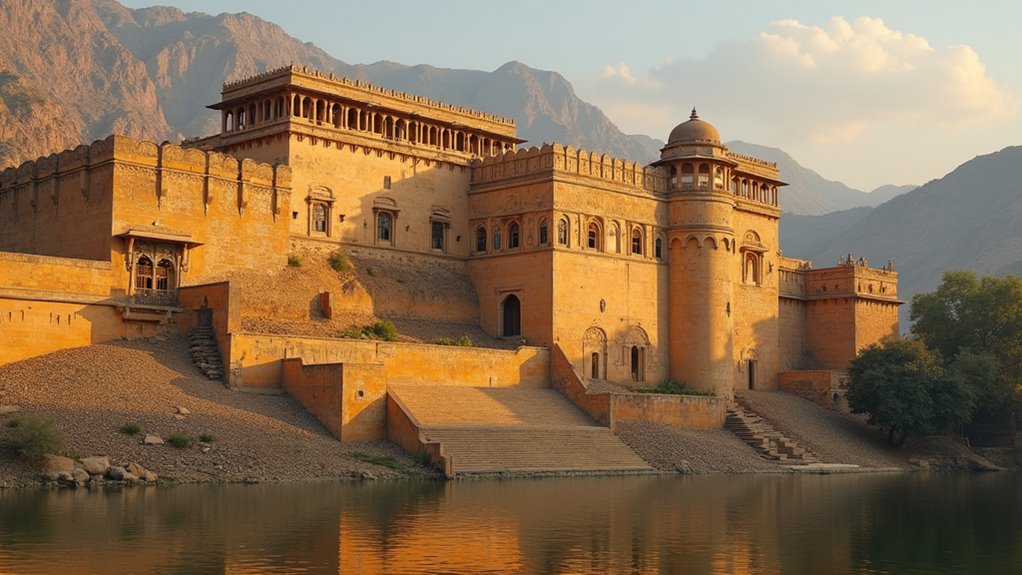
While most visitors approach Amber Fort by vehicle today, climbing the original ramped pathway reveals why this 16th-century fortress became one of Rajasthan’s most formidable strongholds. The steep ascent builds anticipation for the fort’s architectural treasures, including the spectacular Sheesh Mahal where thousands of mirrors create a starlit effect with just a phone’s flashlight.
Budget-conscious travelers should visit early morning to avoid crowds and heat while saving money on parking fees. Don’t miss the Diwan-e-Khas with its intricate marble inlay work and the ornate Ganesh Pol gateway.
The Hindu-Mughal architectural fusion throughout the complex tells the story of Rajasthan’s cultural synthesis, making each courtyard a lesson in royal craftsmanship and strategic design.
Wander Through the Pink City’s Grid-Planned Old Quarter
Since Jaipur became India’s first planned city in the 18th century, maneuvering its Old Quarter remains remarkably straightforward thanks to architect Vidyadhar Bhattacharya’s grid design based on ancient Vastu Shastra principles. The walled city’s nine rectangular sectors make navigation intuitive for visitors exploring on foot.
The pink-painted buildings, commissioned in 1876 to welcome the Prince of Wales, symbolize hospitality in Rajput culture. Central bazaars like Johari Bazaar and Bapu Bazaar offer excellent bargaining opportunities for jewelry, textiles, and handicrafts at budget-friendly prices.
City Palace anchors the Old Quarter’s heart, featuring courtyards, gardens, and the Maharaja Sawai Mansingh II Museum. Visitors can combine multiple attractions within walking distance, making it cost-effective to spend entire days exploring without transportation expenses.
Marvel at Hawa Mahal’s 953 Honeycomb Windows
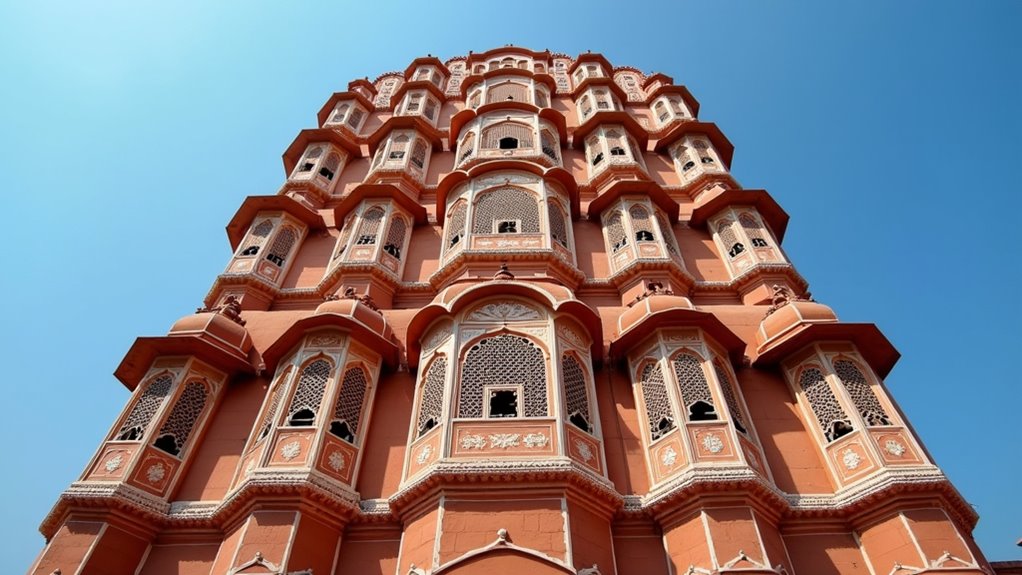
While the exterior dazzles visitors, the interior is surprisingly modest. The real attraction lies in climbing to upper levels for panoramic views of the Old City’s bustling bazaars below.
Entry fees are minimal, making it budget-friendly. Visit during morning or late afternoon when sunlight enhances the pink sandstone’s warmth.
The palace connects directly to the City Palace complex, allowing easy exploration on foot.
Explore the World’s Largest Stone Sundial at Jantar Mantar
Just steps away from the City Palace, Jantar Mantar houses one of India’s most remarkable scientific achievements—the world’s largest stone sundial. This UNESCO World Heritage Site showcases Maharaja Sawai Jai Singh II’s passion for astronomy through 19 massive masonry instruments built in 1724.
The towering Samrat Yantra stands 27 meters tall and measures local time accurately within two seconds. Visitors can witness how ancient astronomers tracked celestial movements using the Jai Prakash Yantra’s hemispherical bowls and the Ram Yantra’s cylindrical structures. Each instrument demonstrates sophisticated mathematical principles that predicted eclipses and mapped stars.
The observatory’s entrance fee remains budget-friendly, and guided tours help decode these complex astronomical tools. Early morning visits offer cooler temperatures and better lighting for photography while exploring this scientific marvel.
Photograph the Floating Jal Mahal Water Palace
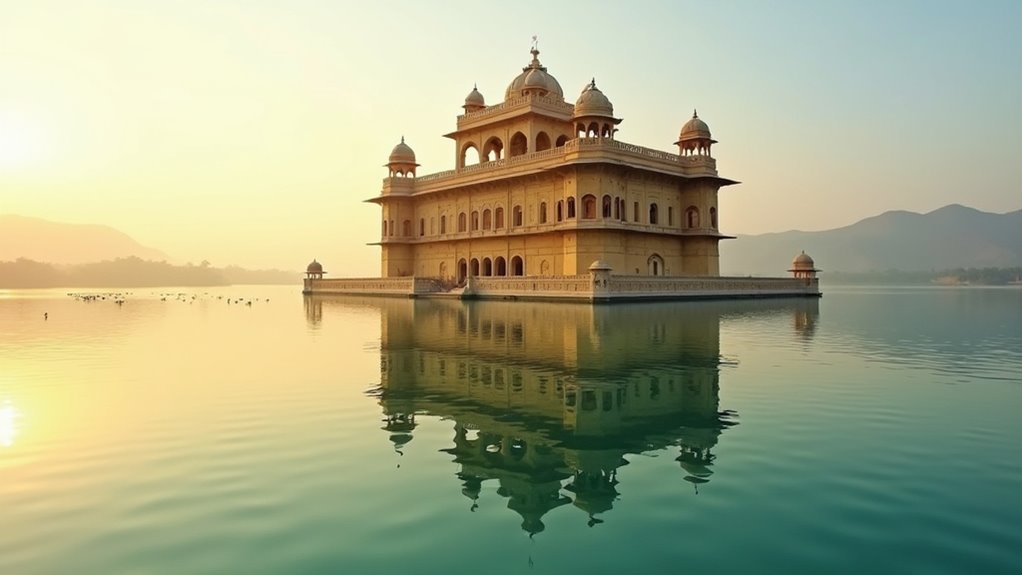
Rising from the shimmering waters of Man Sagar Lake, the five-story Jal Mahal creates one of India’s most enchanting photographic subjects with only its top floor visible above the surface. This 18th-century royal hunting lodge appears to float like a mirage, offering photographers dramatic compositions against the Aravalli hills backdrop.
While boating access remains restricted for conservation, visitors can capture stunning images from the lakeside viewpoints at Gaitore and designated photography spots along the shore. Golden hour provides the most spectacular lighting, transforming the palace’s pink sandstone into a glowing jewel.
The free viewing areas make this an accessible attraction for budget travelers. Combining the water palace visit with nearby Amber Fort creates an efficient day exploring Jaipur’s royal architecture and scenic landscapes.
Visit the Monkey-Filled Springs at Galta Ji Temple
Nestled in the rugged hills on Jaipur’s eastern outskirts, Galta Ji Temple offers visitors an authentic spiritual experience where sacred natural springs feed ancient stone tanks surrounded by hundreds of playful langur monkeys.
The temple complex, dedicated to Lord Hanuman, features several kunds (holy pools) where pilgrims bathe in the believed healing waters. Visitors can explore pavilions and shrines while observing resident monkeys in their natural habitat—though it’s wise to secure belongings and avoid feeding them.
The peaceful atmosphere contrasts sharply with Jaipur’s bustling center, making it perfect for contemplation. Entry is free, and the 20-minute auto-rickshaw ride from the city center costs around ₹150-200, making this spiritual retreat budget-friendly.
Discover Jaigarh Fort’s Massive Jaivana Cannon
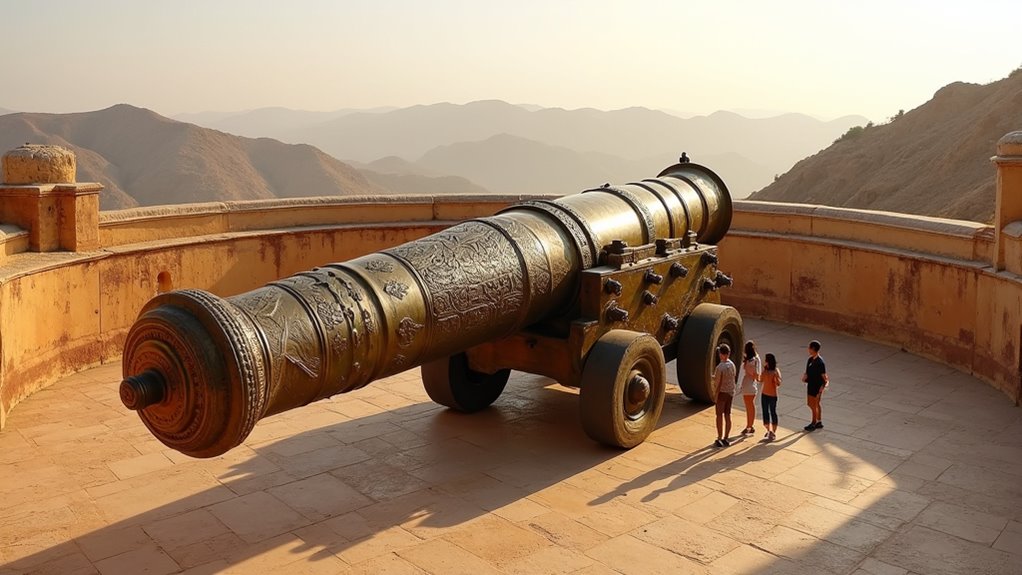
Perched adjacent to the famous Amber Fort, Jaigarh Fort houses the world’s largest cannon on wheels—the mighty Jaivana—making it a must-see destination for history enthusiasts and military buffs visiting Jaipur.
This massive weapon, cast in 1720, weighs 50 tons and has a barrel length of 20 feet, though it was never fired in battle.
Beyond the cannon, visitors can explore the fort’s well-preserved armory, which displays ancient weapons and military artifacts.
The fort’s ingenious water harvesting system demonstrates Rajput engineering prowess.
Budget-conscious travelers will appreciate the reasonable entry fee and the fort’s proximity to Amber Fort, allowing them to visit both historical sites in one trip while enjoying panoramic views of the Aravalli hills.
Tour the Royal Rooms of City Palace Complex
After exploring Jaipur’s hilltop fortresses, visitors can step into the opulent world of Rajput royalty at the City Palace complex, where centuries of architectural splendor and living heritage await in the heart of the Old City.
Built by Maharaja Sawai Jai Singh II starting in 1729, this sprawling complex showcases courtyards, gardens, and palatial buildings that blend Mughal and Rajput styles.
The Maharaja Sawai Mansingh II Museum houses royal costumes, weapons, and manuscripts, while the ornate Mubarak Mahal displays textiles and artifacts.
Chandra Mahal remains the royal family’s residence, adding authenticity to the experience.
Entry fees are reasonable, and the palace’s central location makes it easily accessible on foot from other Old City attractions like Hawa Mahal and Jantar Mantar.
Catch Sunset Views From Nahargarh Fort
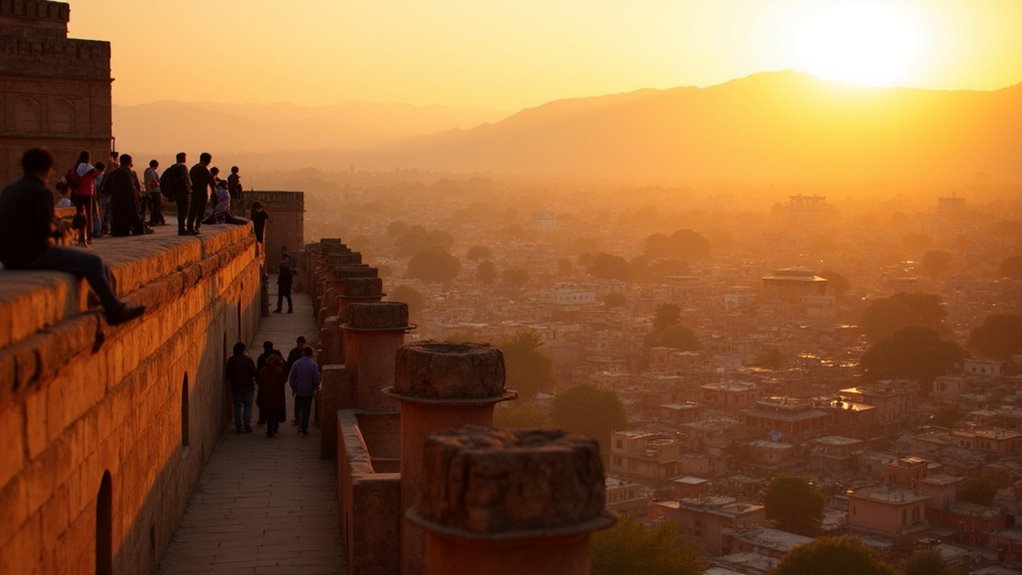
While the City Palace showcases royal grandeur at ground level, Nahargarh Fort offers travelers one of Rajaipur’s most spectacular vantage points for watching the sun set over the Pink City. Perched high on the Aravalli hills, this 18th-century fort provides panoramic views that stretch across Jaipur’s rooftops to the distant desert horizon.
The fort’s strategic hilltop location, originally designed for defense alongside Jaigarh and Amber forts, now serves as the city’s premier sunset destination. Visitors can explore the fort’s architecture while waiting for golden hour, when the pink sandstone buildings below glow in warm light.
The entry fee is modest, and local buses or auto-rickshaws provide affordable transport. Arrive an hour before sunset to secure the best viewing spots and explore the fort’s courtyards and ramparts.
Browse Johari Bazaar’s Jewelry and Textile Stalls
Beyond the fort walls and elevated views, Jaipur’s street-level treasures await discovery in the bustling lanes of Johari Bazaar, where centuries-old trading traditions continue to thrive. This historic marketplace forms part of the Old City’s central bazaar system, specializing in precious jewelry, gemstones, and traditional textiles that reflect Rajasthan’s rich craftsmanship heritage.
Shoppers can explore family-run businesses that’ve operated for generations, offering everything from kundan jewelry and silver bangles to hand-block printed fabrics and embroidered textiles. Bargaining is expected and essential – start at half the quoted price.
The bazaar’s narrow lanes buzz with activity from morning until evening, making it ideal for culture. Visitors should carry cash, as many vendors don’t accept cards, and allow several hours to properly browse the countless stalls and shops.
Stroll Through Sisodia Rani’s Terraced Gardens
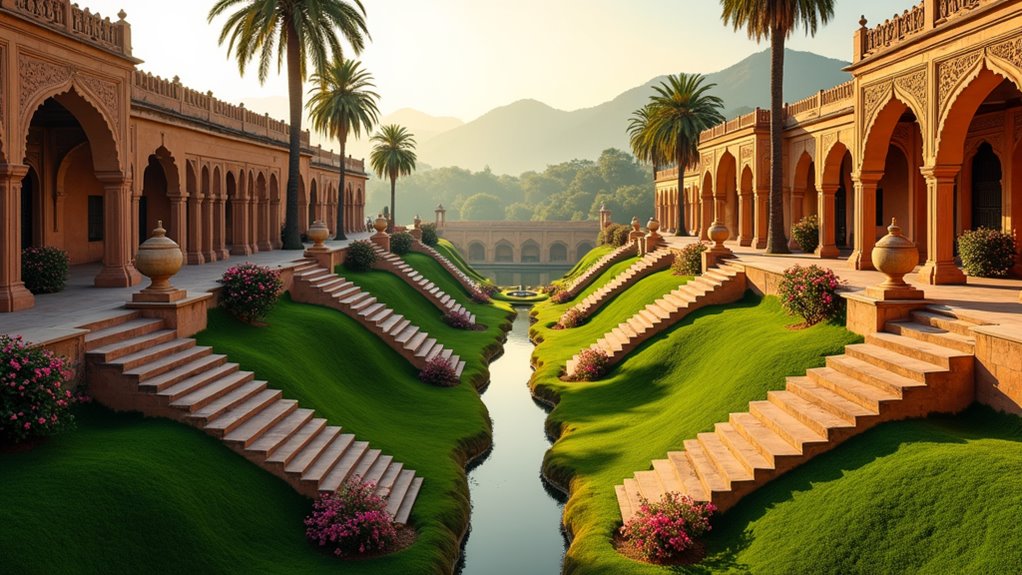
Though tucked away on Jaipur’s outskirts, Sisodia Rani Garden and Palace rewards visitors with one of Rajasthan’s most romantic royal retreats. It was built by Maharaja Sawai Jai Singh II for his second queen.
The terraced gardens cascade down hillsides in traditional Mughal style, featuring fountains, water channels, and painted pavilions depicting Krishna legends and romantic tales.
Visitors can explore multi-level gardens adorned with vibrant murals showcasing Krishna’s life, particularly his romance with Radha.
The palace’s painted galleries display intricate frescoes that have survived centuries.
Entry fees remain modest, making this an affordable cultural experience.
Early morning visits offer cooler temperatures and better lighting for photography.
The site’s peaceful atmosphere provides respite from Jaipur’s bustling streets, while its artistic heritage offers insight into royal Rajput romance and garden design traditions.
See Ancient Artifacts at Albert Hall Museum
Housed within an impressive Indo-Saracenic building that’s become an architectural landmark itself, Albert Hall Museum serves as Jaipur’s oldest museum and offers visitors an extensive journey through centuries of art, culture, and history.
The museum’s collections span arms and armor, ancient manuscripts, natural history specimens, and decorative arts that showcase Rajasthan’s rich heritage. Travelers can explore galleries featuring miniature paintings, textiles, and folk art while learning about regional craftsmanship techniques passed down through generations.
The museum’s affordable entry fee makes it an excellent budget-friendly attraction. Photography enthusiasts should visit during golden hour when the building’s sandstone facade glows magnificently.
Plan at least two hours to properly explore the diverse exhibits and appreciate the architectural details of this cultural treasure.