
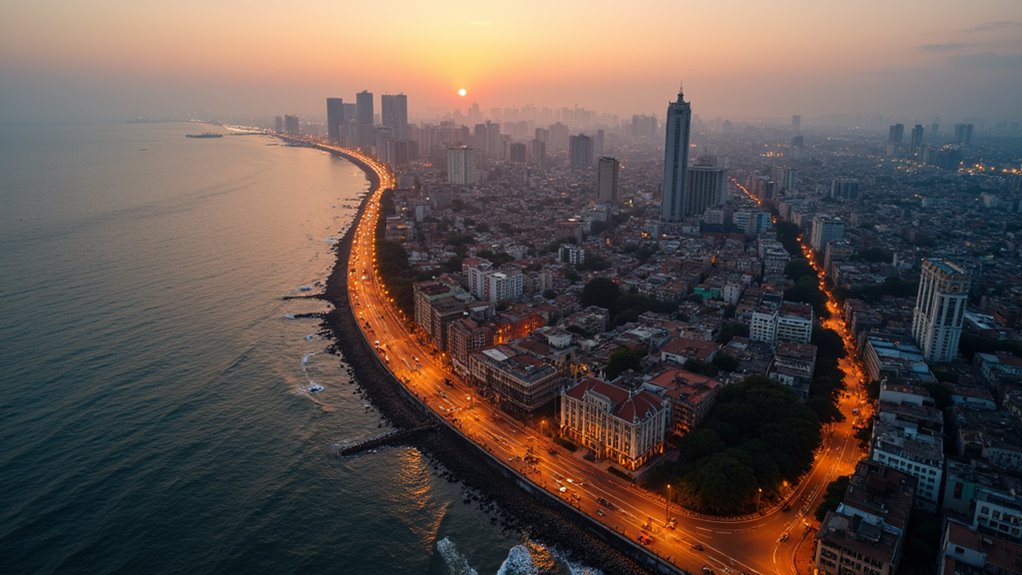
Mumbai’s sprawling metropolis can overwhelm first-time visitors with its sheer size and endless options. Smart travelers know that focusing on the city’s essential attractions makes all the difference between a scattered tourist experience and truly understanding India’s commercial capital. From colonial-era landmarks to ancient cave temples, the city offers remarkable diversity without breaking the bank. The key lies in knowing which spots deliver the most authentic Mumbai experience for your time and money.
- Gateway of India: Mumbai’s Grand Welcome Mat
- Chhatrapati Shivaji Maharaj Terminus: Victorian Railway Masterpiece
- Elephanta Caves: Ancient Rock Temples by Ferry
- Marine Drive: The Queen’s Necklace Promenade
- Crawford Market and Colaba Causeway: Shopping Like a Local
- Kanheri Caves: Buddhist Retreat in the National Park
- Haji Ali Dargah: Walking on Water to a Sacred Shrine
- Bandra-Worli Sea Link: Engineering Marvel With a View
- Chowpatty Beach: Street Food Paradise
- Siddhivinayak Temple: Mumbai’s Most Beloved Ganesha
- Mani Bhavan: Gandhi’s Mumbai Home
- Sanjay Gandhi National Park: Urban Jungle Safari
- Rajabai Clock Tower and Fort District: Colonial Architecture Walk
Gateway of India: Mumbai’s Grand Welcome Mat
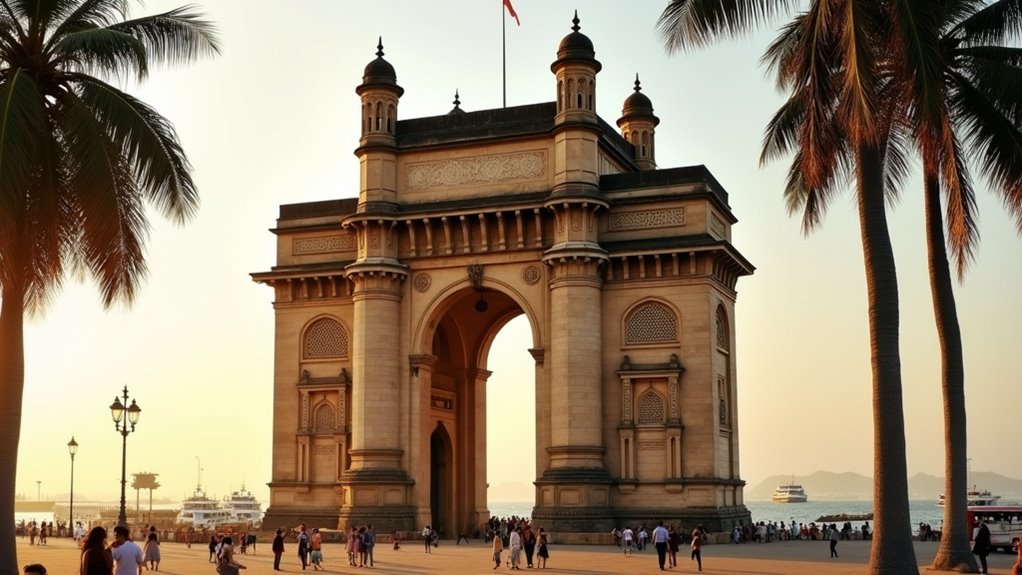
Standing proudly at the water’s edge in Colaba, the Gateway of India serves as Mumbai’s most iconic landmark and the perfect starting point for any city exploration. This 26-meter-high stone arch, completed in 1924, was built to commemorate King George V and Queen Mary’s 1911 visit to India.
The monument’s impressive Indo-Saracenic architecture makes it a photographer’s dream, especially during golden hour when the Arabian Sea provides a stunning backdrop. Visitors can easily spend hours here people-watching, feeding pigeons, or simply soaking in the bustling atmosphere.
The best part? It’s completely free to visit.
From here, travelers can catch ferries to Elephanta Caves or explore nearby Colaba Causeway for budget-friendly shopping and street food adventures.
Chhatrapati Shivaji Maharaj Terminus: Victorian Railway Masterpiece
From Colaba’s waterfront grandeur, travelers can journey north to encounter another of Mumbai’s architectural marvels that showcases the city’s colonial legacy in spectacular fashion. Chhatrapati Shivaji Maharaj Terminus, formerly Victoria Terminus, stands as a breathtaking fusion of Victorian Gothic Revival and traditional Indian architecture. Completed in 1887, this UNESCO World Heritage Site functions as one of India’s busiest railway stations while serving as a living museum of colonial craftsmanship.
The station’s intricate stone carvings, turrets, and pointed arches create an almost cathedral-like atmosphere for daily commuters and visitors alike. Budget travelers will appreciate that simply walking through costs nothing, offering an incredible architectural experience without spending a rupee.
The terminus perfectly represents Mumbai’s ability to blend functional infrastructure with artistic grandeur.
Elephanta Caves: Ancient Rock Temples by Ferry
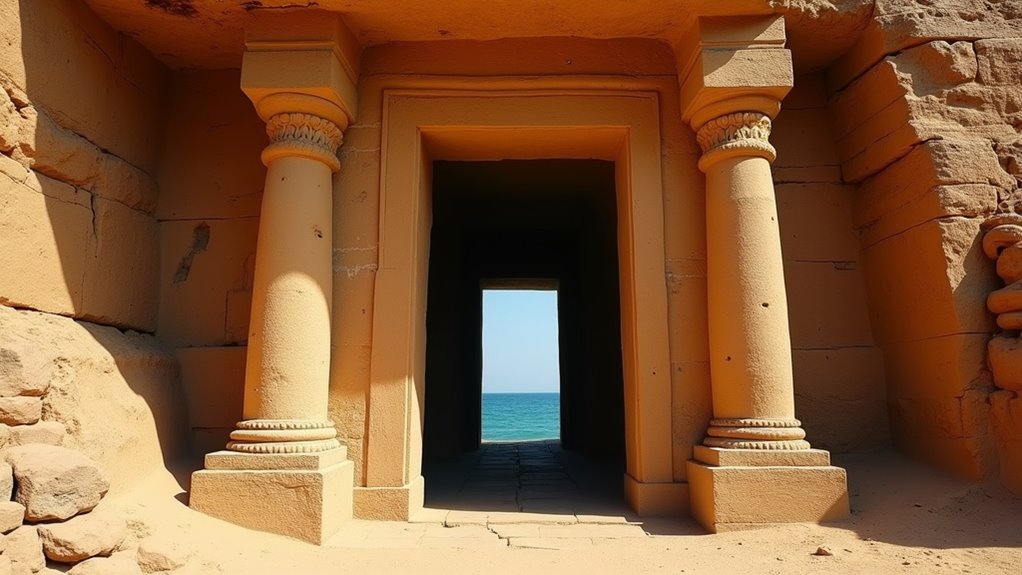
While Mumbai’s mainland showcases Victorian grandeur, a short ferry ride reveals the city’s ancient spiritual heritage at Elephanta Caves. This UNESCO World Heritage Site sits on Elephanta Island, featuring rock-cut temples dating from the 5th-8th centuries dedicated to Lord Shiva.
The main cave houses the stunning 5.45-meter Trimurti Sadashiva sculpture, carved from a single rock and depicting three aspects of Shiva. Ferry rides from Gateway of India take about an hour each way and cost around ₹15-20.
Once there, visitors can explore the intricate carvings and peaceful temple atmosphere. Plan for a half-day trip, bringing water and comfortable shoes for the uphill walk.
The caves offer a perfect escape from Mumbai’s urban chaos while connecting visitors with India’s ancient artistic traditions.
Marine Drive: The Queen’s Necklace Promenade
The iconic Marine Drive curves along Mumbai’s coastline for 3.6 kilometers, earning its nickname “Queen’s Necklace” from the string of streetlights that illuminate the promenade at night. This curved stretch in South Mumbai offers spectacular views of the Arabian Sea and serves as the city’s most beloved waterfront walkway.
Visitors can stroll along the wide promenade at any hour, though sunset provides the most dramatic scenery. The seawall creates perfect seating for watching waves crash against the rocks below. Street vendors sell everything from roasted corn to ice cream at budget-friendly prices.
Marine Drive connects several key areas, making it easily accessible by local trains, buses, or taxis. The promenade remains free to enjoy, offering one of Mumbai’s best experiences without spending a rupee.
Crawford Market and Colaba Causeway: Shopping Like a Local
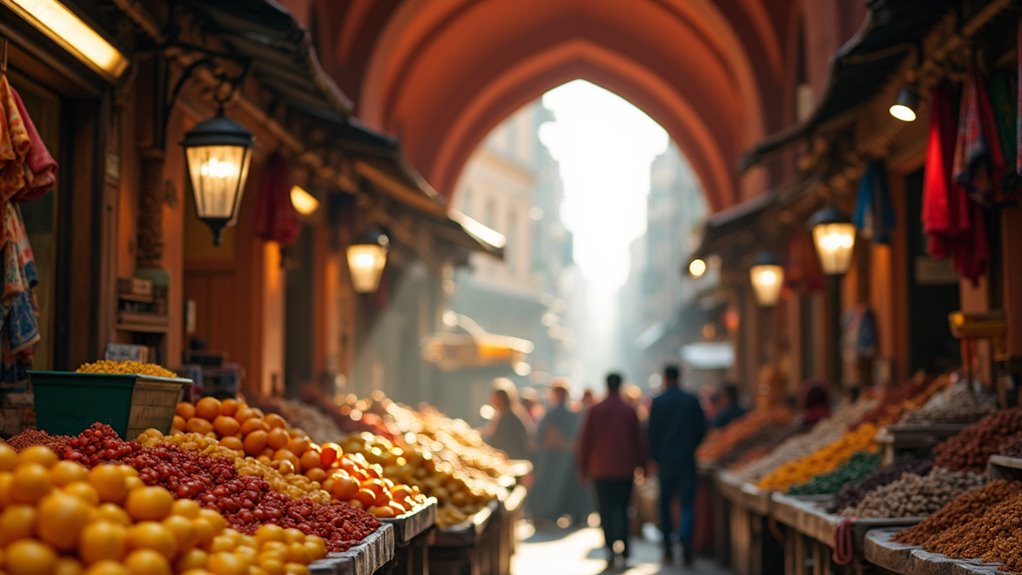
Since Mumbai’s shopping scene ranges from luxury malls to street-side stalls, savvy travelers head to Crawford Market and Colaba Causeway for authentic local bargaining experiences.
Crawford Market, housed in an 1869 Victorian Gothic building in Fort, offers fresh produce, spices, and household goods at wholesale prices. Vendors expect haggling, so start at half the quoted price and negotiate upward.
Colaba Causeway connects the Gateway of India to Colaba’s bustling streets, where countless stalls sell everything from leather goods to vintage jewelry. Street food vendors serve Mumbai favorites between shopping sprees.
Both locations stay open late, making evening visits ideal when temperatures drop. Cash remains king here, and carrying small denominations helps during negotiations.
These markets showcase Mumbai’s commercial spirit without the tourist markup found elsewhere.
Kanheri Caves: Buddhist Retreat in the National Park
After exploring Mumbai’s vibrant commercial hubs, travelers seeking spiritual heritage can escape to Kanheri Caves, where ancient Buddhist monks once meditated in peaceful solitude. Located within Sanjay Gandhi National Park, these 109 rock-cut caves date from the 1st century BCE to the 10th century CE, showcasing incredible Buddhist architecture and artistry.
The caves served as a monastic complex featuring viharas, chaityas, and stupas with intricate carvings and ancient inscriptions. Visitors can explore meditation halls, living quarters, and prayer chambers that tell stories of centuries-old Buddhist traditions.
Budget-conscious travelers will appreciate the affordable entry fee of just ₹5 for the caves, plus ₹40 for park admission. The site offers a revitalizing contrast to Mumbai’s urban chaos, combining history, spirituality, and nature in one remarkable destination.
Haji Ali Dargah: Walking on Water to a Sacred Shrine
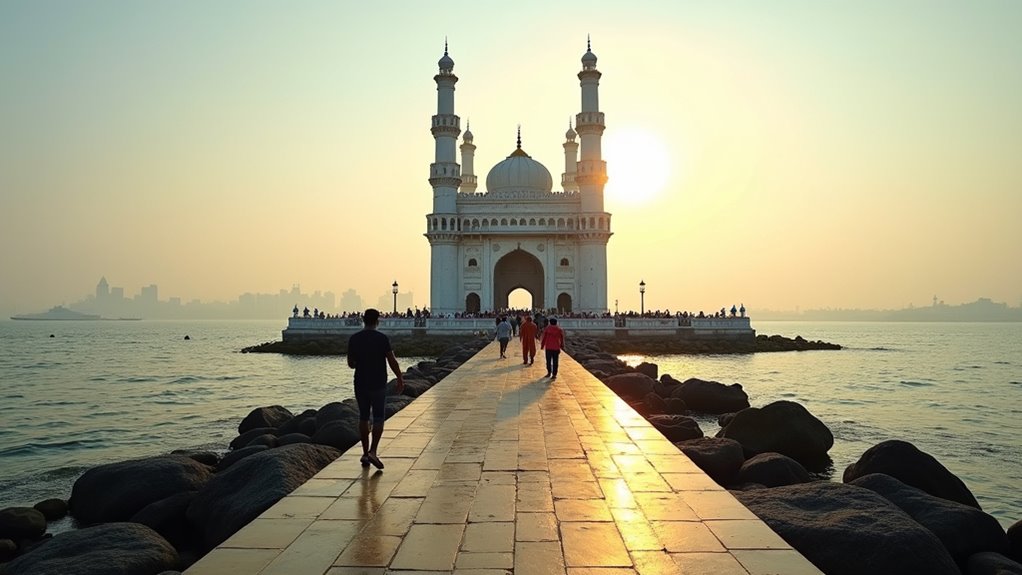
While most religious sites offer conventional access, Haji Ali Dargah presents visitors with an extraordinary pilgrimage experience—walking across a narrow 500-meter causeway that’s only accessible during low tide. This mosque and tomb sits on a small island off Worli, creating a unique spiritual journey where visitors literally walk on water.
The dargah serves as a major Sufi pilgrimage site, drawing devotees from all faiths who come to seek blessings. Timing your visit is vital—check tide schedules beforehand to avoid getting stranded.
The causeway can be crowded, especially on Thursdays and Fridays, so arrive early for a more peaceful experience.
Entry is free, making it an affordable spiritual adventure that combines Mumbai’s maritime character with its religious diversity.
Bandra-Worli Sea Link: Engineering Marvel With a View
When Mumbai needed to ease traffic congestion between its western suburbs and business district, engineers responded with the Bandra-Worli Sea Link—a stunning 5.6-kilometer cable-stayed bridge that’s become the city’s most recognizable modern landmark since opening in 2009.
The bridge connects Bandra and Worli, cutting travel time considerably while offering spectacular views of the Arabian Sea and Mumbai’s skyline.
Visitors don’t need to pay extra to experience this engineering marvel—simply take a taxi or bus across it during your travels.
The best photo opportunities come from nearby viewpoints like Worli Sea Face or Bandstand Promenade, where you can capture the bridge’s dramatic cables and towers.
Evening visits provide the most stunning views when the structure’s lights illuminate against the darkening sky.
Chowpatty Beach: Street Food Paradise
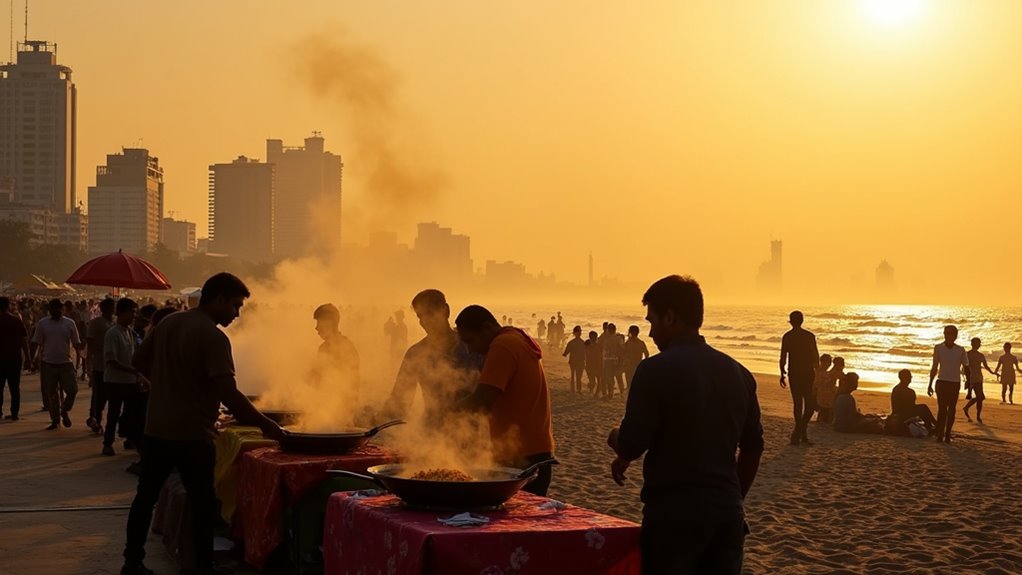
As evening descends over Mumbai, locals and travelers flock to Chowpatty Beach—a 1.5-kilometer stretch near Girgaum that’s transformed into the city’s most famous street food destination. The beach buzzes with vendors serving Mumbai’s iconic dishes at wallet-friendly prices.
Pav bhaji, the city’s signature spiced vegetable curry with buttered bread rolls, costs around ₹50-80 per plate. Sweet-toothed visitors can’t miss the creamy kulfi, sold by vendors pushing colorful carts along the sand.
Beyond food, Chowpatty hosts Mumbai’s most spectacular Ganesh Chaturthi celebrations, when thousands gather for the annual deity immersion ceremony.
The beach offers stunning sunset views over the Arabian Sea, making it perfect for budget-conscious travelers seeking authentic Mumbai experiences without spending much.
Siddhivinayak Temple: Mumbai’s Most Beloved Ganesha
Though Mumbai houses countless temples, none captures devotees’ hearts quite like Siddhivinayak Temple, the city’s most revered Ganesha shrine that’s attracted millions of worshippers since 1801. Located in Prabhadevi, this temple features a stunning gold-plated inner roof and houses a black stone Ganesha idol adorned with precious gold ornaments.
The temple draws everyone from Bollywood celebrities to business tycoons seeking Lord Ganesha’s blessings for success and prosperity. Tuesday’s traditionally the busiest day, with queues stretching for hours. Smart visitors arrive early morning or late evening to avoid crowds.
Entry’s free, though donations are welcome. The temple’s architectural beauty and spiritual energy create an unforgettable experience. Whether you’re religious or simply curious about Mumbai’s culture, Siddhivinayak offers insight into the city’s deep devotional traditions.
Mani Bhavan: Gandhi’s Mumbai Home
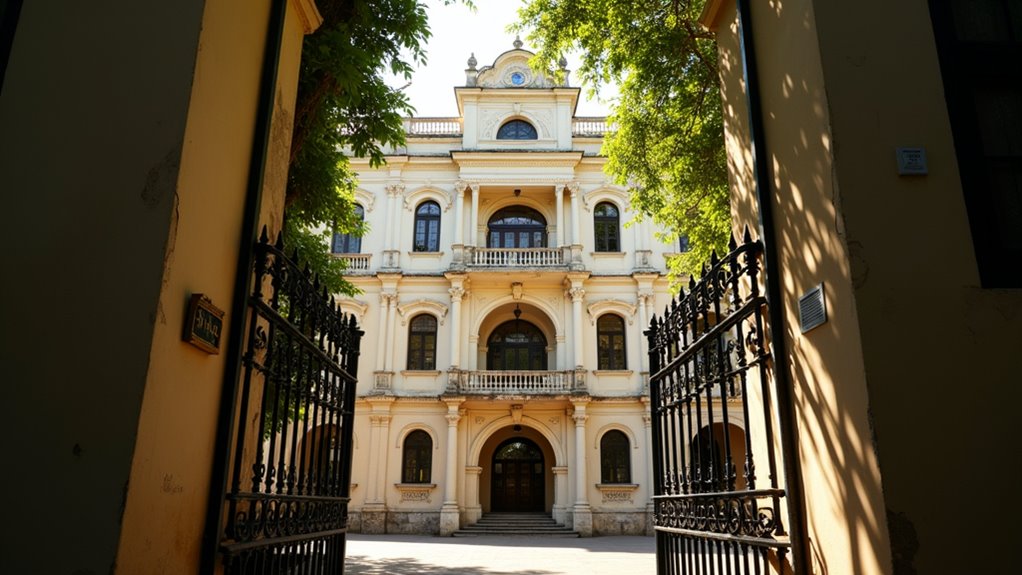
From spiritual devotion to political revolution, Mumbai’s historic sites tell remarkable stories of India’s past. Mani Bhavan in Gamdevi stands as one of Mumbai’s most significant historical landmarks, serving as Mahatma Gandhi’s residence from 1917 to 1934.
This three-story building has been transformed into a museum that offers visitors an intimate glimpse into the Father of the Nation’s life during his vital Mumbai years.
The museum displays Gandhi’s personal belongings, photographs, and documents that chronicle his political activities and philosophy. Visitors can see the room where he stayed, complete with his spinning wheel and simple furniture.
The museum also houses a library with over 50,000 books on Gandhi’s life and teachings. Entry fees are minimal, making it an affordable cultural experience for budget-conscious travelers.
Sanjay Gandhi National Park: Urban Jungle Safari
While Mumbai’s concrete jungle sprawls endlessly in every direction, Sanjay Gandhi National Park offers an extraordinary escape just within the city limits. Spanning 104 square kilometers in the northern suburbs, it’s one of the world’s largest national parks within a city.
The park features tiger and lion safaris, ancient Kanheri Caves, and over 1,000 plant species that serve as Mumbai’s green lung.
Entry costs ₹40 for adults, with an additional ₹5 for the Buddhist caves dating from the 1st century BCE to 10th century CE. Visitors can explore 109 rock-cut caves, enjoy boating on the lake, or spot wildlife during safari rides.
It’s an affordable day trip that combines nature, history, and adventure without leaving Mumbai’s boundaries.
Rajabai Clock Tower and Fort District: Colonial Architecture Walk
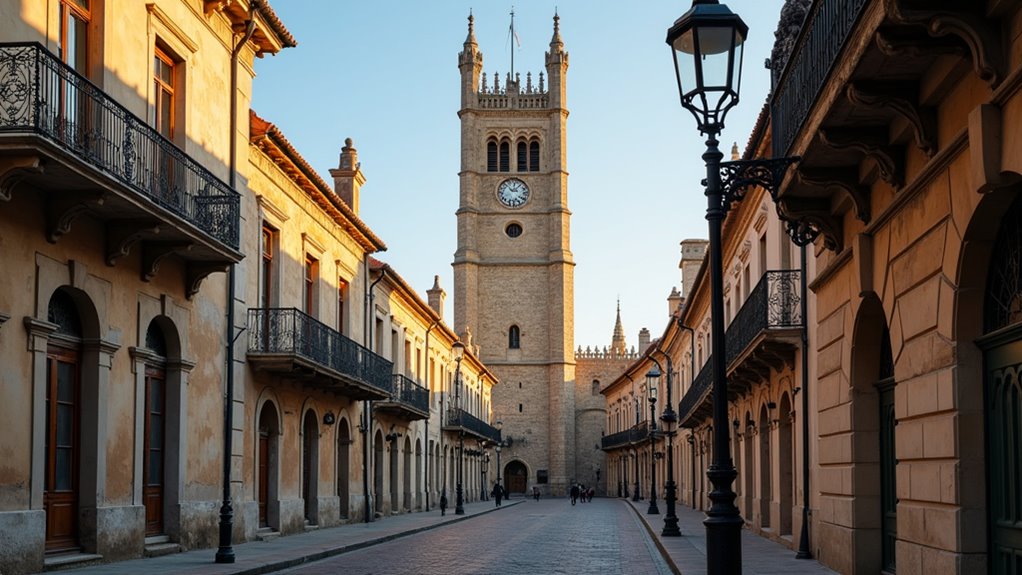
After exploring Mumbai’s natural side, the city’s colonial heritage awaits in the historic Fort district, where British architectural grandeur still dominates the skyline. The 85-meter Rajabai Clock Tower stands as the centerpiece, completed in 1878 and inspired by London’s Big Ben with Venetian Gothic elements.
Start at the UNESCO-listed Chhatrapati Shivaji Maharaj Terminus, where Victorian Gothic meets Indian architecture in stunning detail. Walk to Flora Fountain, built in 1864 and depicting the Roman goddess Flora. Then explore Crawford Market’s Victorian Gothic structure from 1869.
The entire area’s walkable, making it a budget-friendly exploration that costs nothing but time. Colonial-era buildings line every street, creating an outdoor museum of British architectural legacy that’s easily covered in half a day.