
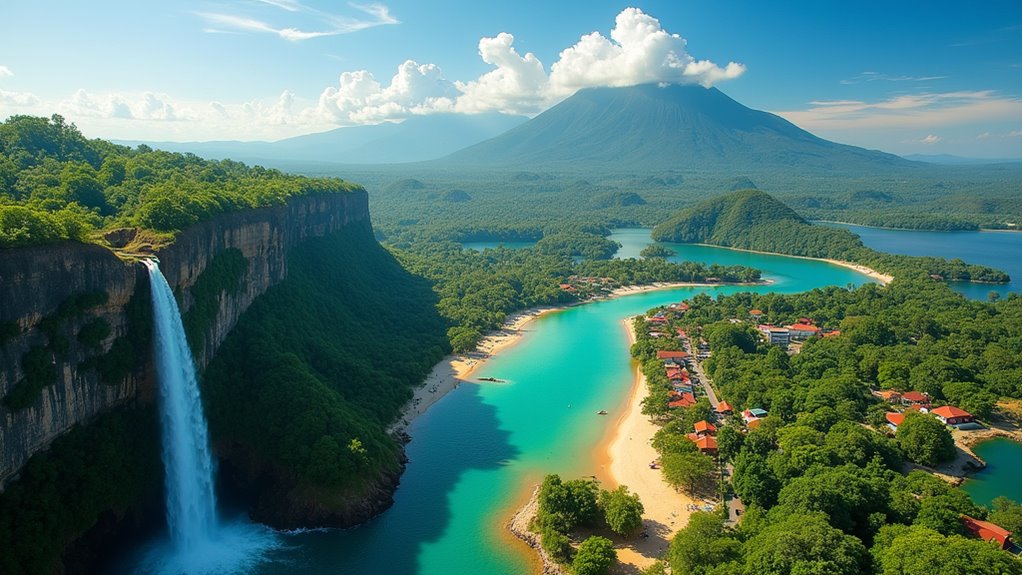
You’ll discover Venezuela’s extraordinary landscapes through nine unforgettable adventures: stand beneath Angel Falls’ thunderous 979-meter cascade, trek Mount Roraima’s ancient tepui summit, sail Los Roques’ pristine coral archipelago, and ride Mérida’s cable car to 4,765 meters. Safari through Los Llanos wetlands spotting caimans, hike El Ávila above Caracas, navigate the Orinoco Delta’s maze of rivers, explore Margarita Island’s colonial heritage, and walk across Médanos De Coro’s towering sand dunes. Each destination offers insider access to Venezuela’s most spectacular natural wonders.
- Stand at the Base of Angel Falls, the World’s Tallest Waterfall
- Trek to the Summit of Mount Roraima’s Ancient Tepui
- Sail Through Los Roques Archipelago’s Coral Gardens
- Ride the Mérida Cable Car to Venezuela’s Highest Peaks
- Safari Through Los Llanos Wetlands for Caimans and Capybaras
- Explore Caracas and Hike El Ávila for City Views
- Navigate the Orinoco Delta’s Maze of Rivers
- Beach-Hop Around Margarita Island’s Colonial Towns
- Walk Across the Sand Dunes of Médanos De Coro
- The Sum Up
Stand at the Base of Angel Falls, the World’s Tallest Waterfall
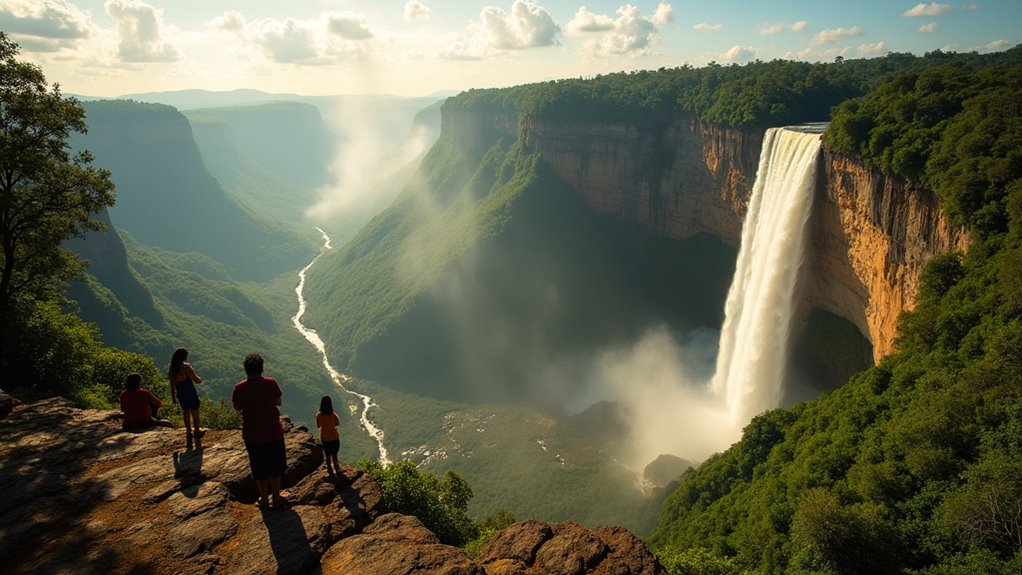
When you stand at the base of Angel Falls, you’ll experience the raw power of the world’s tallest uninterrupted waterfall as it plunges 979 meters from Auyán-tepui’s clifftop in Venezuela’s remote Canaima National Park.
The massive 807-meter main drop—16 times higher than Niagara—atomizes water into dense mist that creates an intense spray zone where you can swim in natural pools.
Getting there requires flying to Canaima village, then taking a 3-5 hour motorized canoe journey upriver, followed by an overnight jungle camp stay and short hike. The falls were named after aviator Jimmie Angel, who explored the area and flew over the waterfall in 1933.
Visit during rainy season (May-November) for maximum water volume and thunderous sound echoing through the tepui amphitheater.
Dry season reduces flow but ensures reliable river navigation for boat access.
Trek to the Summit of Mount Roraima’s Ancient Tepui
You’ll need 6-8 days for this 85-95km trek, starting from Paraitepuy village with a mandatory local guide. The route follows “La Rampa,” the only non-technical path up the sheer cliffs, gaining 900 meters on summit day through cloud forest.
On top, you’ll explore Crystal Valley’s quartz formations, natural rock pools called “Jacuzzis,” and the Venezuela-Brazil-Guyana border’s Triple Point. This ancient tepui formation is approximately two billion years old, making it one of Earth’s oldest geological structures.
Camp under rock overhangs called “Los Hoteles” that shelter you from daily rains.
Pack light—10kg maximum—and prepare for challenging river crossings and slippery conditions.
Sail Through Los Roques Archipelago’s Coral Gardens
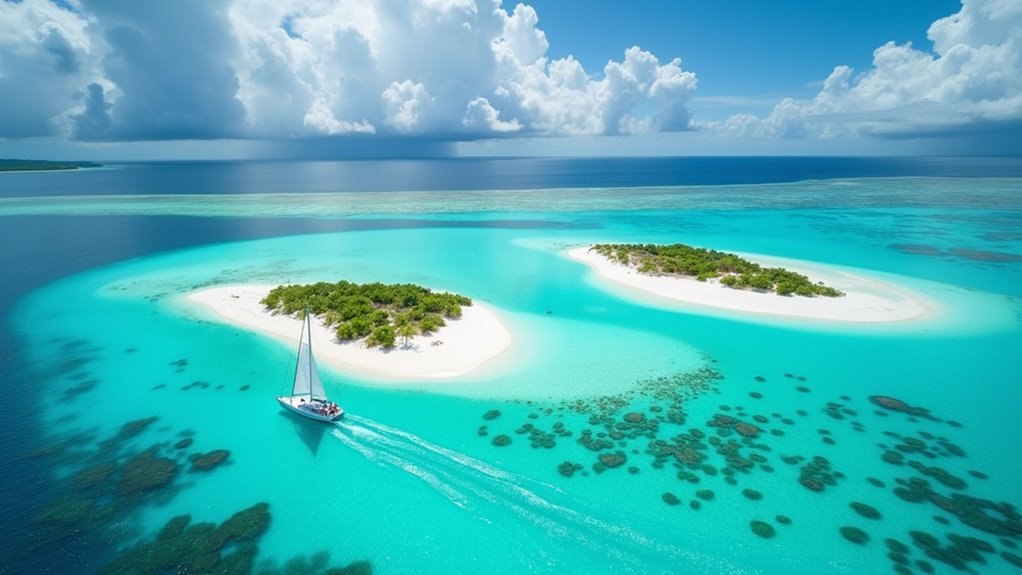
After conquering Venezuela’s ancient tepuis on foot, shift your adventure to the crystalline waters surrounding Los Roques Archipelago, where over 350 coral cays and sand banks create one of the Caribbean’s most pristine sailing destinations.
You’ll navigate 1,500 km² of protected coral reefs and shallow lagoons, accessing some of the Atlantic’s best-preserved underwater ecosystems. Constant trade winds provide reliable sailing conditions while you anchor near remote cays for world-class snorkeling and diving.
The barrier reef systems host diverse marine life including barracuda, tarpon, and threatened sea turtles. Chart your course carefully through designated channels to avoid extensive shoals, then explore coral gardens teeming with colorful sponges, schooling fish, and vibrant reef communities in crystal-clear Caribbean waters. Base yourself at Gran Roque, the main cay that serves as the archipelago’s hub with guesthouses, an airstrip, and essential visitor services.
Ride the Mérida Cable Car to Venezuela’s Highest Peaks
Rising from Mérida’s subtropical valley at 1,640 meters to the glaciated summit of Pico Espejo at 4,765 meters, the Mukumbarí cable car delivers you through five distinct ecological zones during its record-breaking 12.5-kilometer ascent—making it one of the world’s highest and longest aerial tramway systems.
The hour-long journey progresses through La Montaña’s panoramic views of the “Sleeping Giant” mountain profile, La Aguada’s cooler Andean terrain, and Loma Redonda’s above-treeline vistas before reaching Pico Espejo.
From the terminus, you’ll spot Venezuela’s highest peak, Pico Bolívar (4,978 meters), plus neighboring summits like Pico Humboldt and Pico Bonpland. This engineering marvel has been operating for over 40 years, representing a significant technological achievement in high-altitude cableway construction. The cable car serves as your base camp for technical mountaineering routes or simply experiencing Venezuela’s rare glaciated landscapes.
Safari Through Los Llanos Wetlands for Caimans and Capybaras
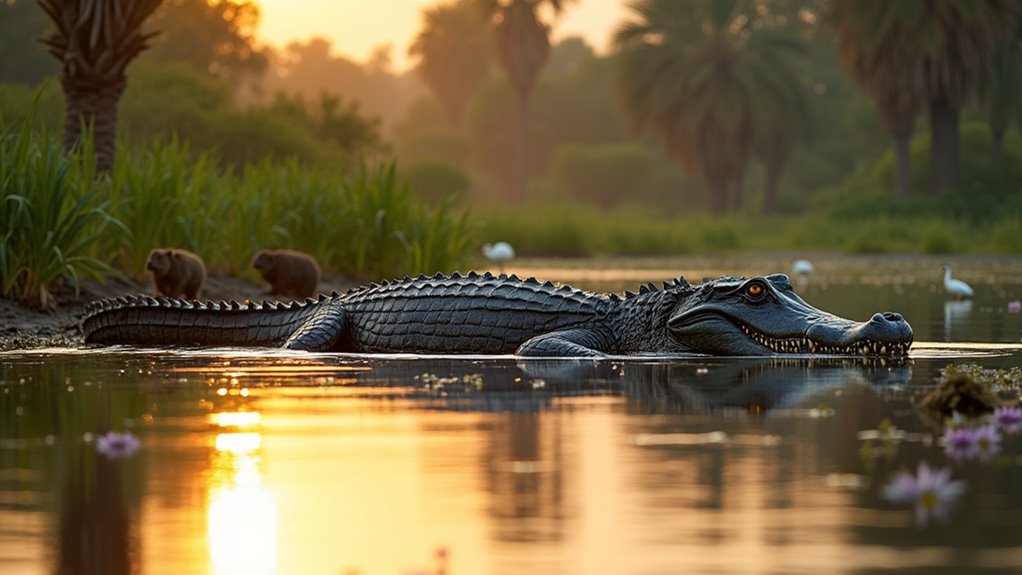
While Venezuela’s Andean peaks offer high-altitude adventures, the country’s lowland wetlands provide an entirely different wildlife experience that’s among South America’s best. Los Llanos, Venezuela’s vast tropical grassland, transforms into a wildlife paradise during wet season (May-November) when floodwaters concentrate animals around higher ground.
You’ll spot spectacled caimans basking on riverbanks and capybaras—the world’s largest rodents—gathering in massive groups near water. Book boat safaris through flooded savannas and lagoons, especially night tours when caiman eyes reflect spotlights.
During dry season (December-April), land-based 4×4 safaris access receding waters where wildlife concentrates. Target early morning and late afternoon for ideal viewing.
This remarkable ecosystem spans 570,000 square kilometers across Venezuela and Colombia, creating one of South America’s most expansive wildlife viewing areas.
Major safari hubs in Apure, Barinas, and Portuguesa states offer multi-day packages combining boat and land excursions.
Explore Caracas and Hike El Ávila for City Views
Venezuela’s capital offers one of South America’s most rewarding urban hiking experiences, where you’ll climb El Ávila (officially Waraira Repano National Park) for spectacular panoramic views of both Caracas sprawling below and the Caribbean Sea stretching northward.
The challenging 10-kilometer round trip ascent gains 1,500 meters elevation, requiring 4-6 hours through humid cloud forest terrain. Start from Altamira’s Sabas Nieves trailhead for the most accessible route, though expect steep, rocky paths that become slippery in mountain humidity. Essential gear includes trail shoes with firm grip to navigate the rocky and uneven terrain safely.
For less strenuous sightseeing, take the Teleférico cable car ascending over 7,000 feet to viewpoints near the historic Humboldt Hotel. Time your hike for late afternoon to catch sunset over the city lights contrasting against Caribbean waters—creating Venezuela’s most iconic urban vista.
Navigate the Orinoco Delta’s Maze of Rivers
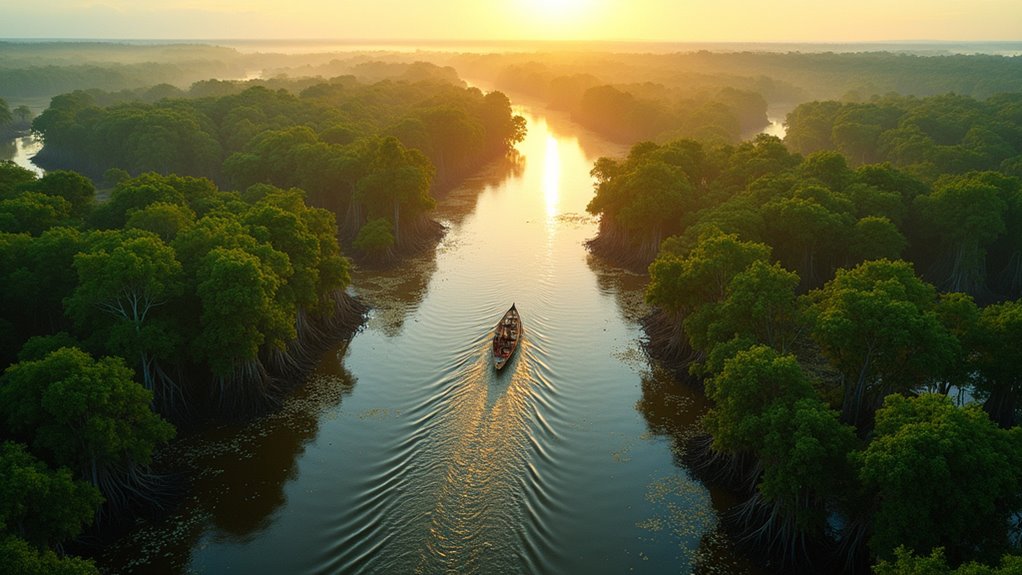
Though reaching Venezuela’s Orinoco Delta requires commitment—most trips involve multi-day expeditions from Tucupita through roadless wetlands—you’ll discover one of South America’s most pristine river wilderness areas.
Where over 36,000 square kilometers of interconnected channels create a labyrinthine waterworld that’s remained virtually unchanged for centuries.
Navigate the maze aboard dugout canoes with Warao guides who’ll reveal hidden caños threading through dense palm forests and mangrove corridors.
You’ll encounter stilt villages where boat people have mastered delta life for generations, witness incredible biodiversity from river dolphins to exotic birds, and experience the progression from freshwater channels to brackish estuaries approaching the Atlantic. The delta supports over 1,000 bird species including herons, ibises, and scarlet macaws soaring above the canopy.
This neotropical delta offers unparalleled expedition-style exploration through one of Earth’s most extensive tropical wetland systems.
Beach-Hop Around Margarita Island’s Colonial Towns
Where else can you combine Caribbean beach-hopping with 16th-century colonial architecture in such compact fashion? Margarita Island’s colonial towns sit within easy driving distance, letting you create same-day heritage-and-beach circuits across varied elevations and coastlines.
Start in La Asunción, the inland capital founded in 1561, where you’ll find Venezuela’s oldest church (Cathedral of La Asunción, completed 1621) and the restored Santa Rosa Castle.
Head east to Pampatar’s sheltered bay, combining urban beaches with the imposing Royal Fortress of San Carlos Borromeo from the late 1600s.
Finish north in Juan Griego, Venezuela’s northernmost port, famous for sunset views from the waterfront and La Galera Fortress, site of fierce independence battles.
The island’s 420,000+ residents concentrate in the eastern Porlamar-Pampatar corridor, where modern shopping complements your colonial explorations. Between towns, explore artisan villages like Los Millanes, where local craftspeople demonstrate traditional cigar rolling techniques passed down through generations.
Walk Across the Sand Dunes of Médanos De Coro
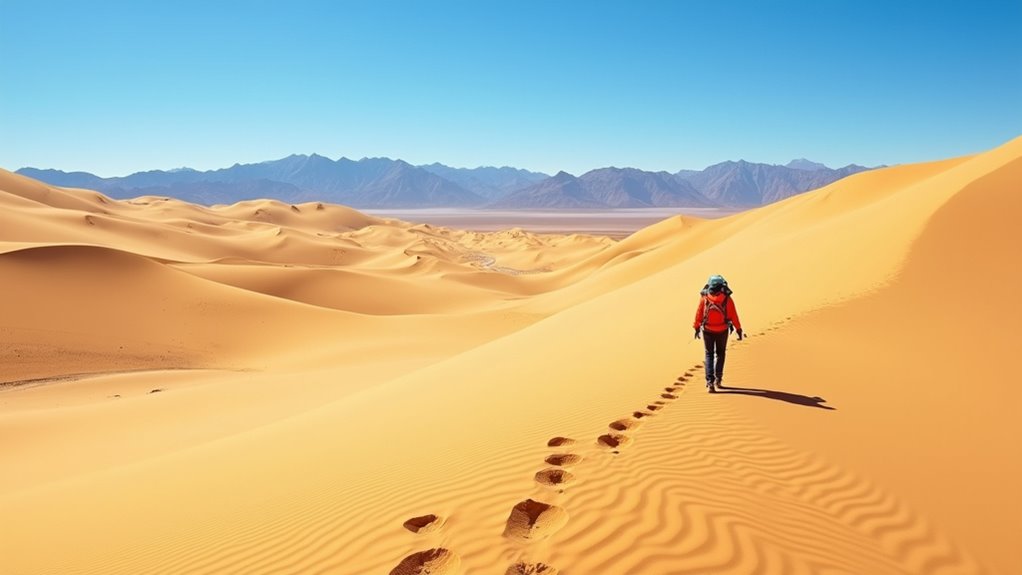
You can walk the steep but manageable dunes during cooler morning or late-afternoon hours, enjoying panoramic views of this “mini Sahara of the Caribbean.” Local operators offer sandboarding experiences on selected slopes near the highway access point.
The constantly reshaping landscape creates ever-changing photo opportunities where desert meets sea. These massive dunes can reach heights of up to 40 meters, making them an impressive natural landmark.
Pack water, sun protection, and closed shoes—blowing sand and intense heat demand preparation. Buses and taxis from Coro provide easy access to this roadside natural wonder.
The Sum Up
You’ll discover Venezuela’s incredible diversity spans from ancient tepuis to Caribbean beaches, wetland safaris to mountain peaks. Don’t underestimate travel times between regions—distances are vast and infrastructure varies. Pack for multiple climates since you’ll encounter everything from tropical humidity to alpine conditions. Check current entry requirements and consider hiring local guides for remote areas like Roraima and the Orinoco Delta. Venezuela’s natural wonders rival anywhere on Earth, but proper planning guarantees you’ll experience them safely.